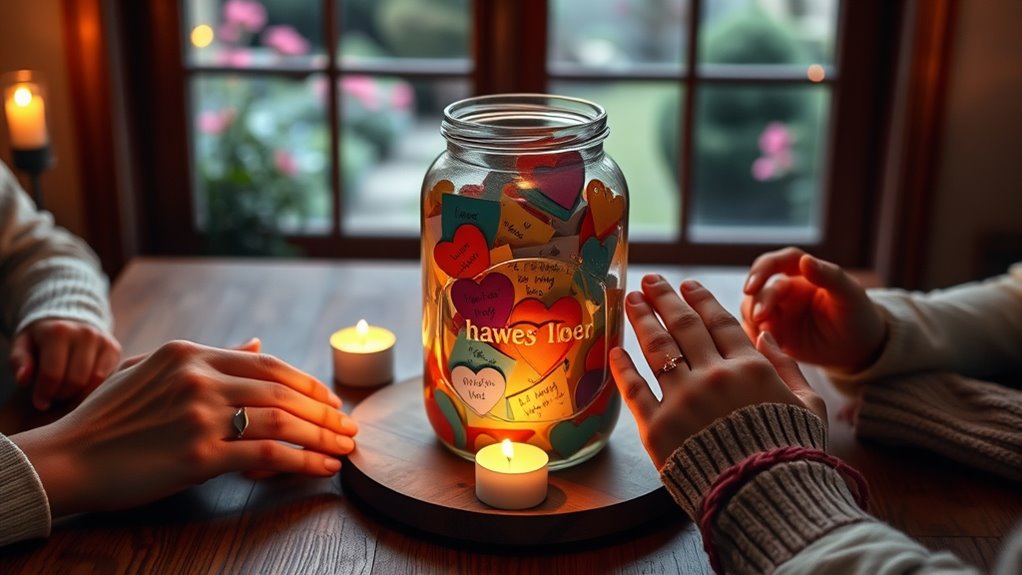

Creating a family gratitude jar helped ease your pandemic anxiety by giving everyone a simple way to focus on positive moments and shared appreciation. Writing notes or sharing grateful thoughts encouraged emotional connection and shifted your family’s mindset from worry to hope. The daily practice grounded you amid uncertainty and strengthened your bonds. Over time, the jar became a symbol of resilience, encouraging a hopeful outlook. Keep exploring how this small ritual can bring lasting comfort and healing during tough times.

Turn the school run and nap time into listening time
- Thousands of audiobooks, podcasts and originals
- Listen on your phone, tablet or Echo — also offline
- Cancel anytime
Key Takeaways
- The gratitude jar provided a tangible focus, shifting attention from pandemic fears to positive memories and moments of thankfulness.
- Regular reflection through the jar fostered emotional connection and support among family members during stressful times.
- Incorporating gratitude journaling and mindfulness routines helped reduce anxiety and promote calmness within the family.
- The jar served as a visual reminder of hope, resilience, and the good amid uncertainty, strengthening collective resilience.
- Sharing gratitude activities helped reframe perspectives, fostered a sense of normalcy, and promoted healing from pandemic-related stress.

A Family Gratitude Jar is a simple yet impactful way to foster appreciation and strengthen your family bonds. During the chaos of the pandemic, it became an unexpected anchor for us, helping us navigate fear and uncertainty. One of the most effective tools we used was incorporating mindfulness exercises into our daily routine. You might sit together for a few minutes each morning, take deep breaths, and focus on the present moment. This practice helps calm anxious thoughts and brings awareness to what you’re grateful for, grounding your family amid the stress. As you breathe deeply, encourage everyone to reflect on small, positive moments from the day or week. These mindfulness exercises help you stay centered and foster a sense of calm, which is essential when anxiety runs high. Incorporating pressure relief techniques like deep breathing can further enhance emotional well-being during stressful times.
Practicing daily mindfulness helps calm anxiety and grounds your family in gratitude.
Another crucial element was gratitude journaling, which we adapted into a family activity. Each evening, we would take turns writing down or sharing what we appreciated most about the day. You can set up a shared journal or simple slips of paper that go into your gratitude jar. This practice shifts focus from worries to gratitude, reminding everyone of the good things that still exist despite the chaos around us. Over time, this consistent habit helped you and your family recognize the small blessings—like a kind gesture, a favorite meal, or just a moment of laughter. When you regularly reflect on what you’re thankful for, it becomes easier to manage feelings of fear and helplessness.
The gratitude jar itself became a physical symbol of hope and resilience. Whenever you or your family members felt overwhelmed, you could pull out a note or add a new one, creating a visual reminder of the good amid adversity. This act of writing and sharing gratitude helped you shift your mindset from scarcity to abundance. It encouraged conversations about what truly matters, strengthening your emotional bonds. As everyone contributed, you felt more connected and supported, especially during those lonely or anxious moments.
Implementing these mindfulness exercises and gratitude journaling into your routine turned a simple jar into a sanctuary of positivity. It allowed you to pause, reflect, and reconnect with what’s truly important. The pandemic challenged your family’s resilience, but these small daily acts helped you heal emotional wounds, reduce anxiety, and foster a sense of hope. Your Family Gratitude Jar became more than just a container; it became a symbol of your collective strength and a reminder that gratitude can be a powerful force, even in the darkest times.
As an affiliate, we earn on qualifying purchases.
Frequently Asked Questions
How Long Did It Take to See Results From the Gratitude Jar?
When asking about timing expectations for seeing results from a gratitude jar, it’s important to remember that emotional benefits can vary. Typically, you might notice positive changes within a few days to a week as you regularly reflect on gratitude. Consistency helps, and over time, you’ll likely feel more grounded and less anxious. Keep practicing patience—your mindset will gradually shift, making gratitude a natural part of your daily life.
Can Gratitude Jars Work for Individual or Just Family Use?
Starting with a personal practice, gratitude jars can definitely work for individuals too. They offer emotional benefits like boosting positivity and reducing stress. By dedicating a jar to yourself, you create a simple, sustainable space for self-reflection and gratitude. This daily dose of appreciation helps you develop a mindful mindset, making gratitude jars a versatile tool for nurturing your emotional well-being, whether solo or with family.
What Materials Are Best for Creating a Gratitude Jar?
You should choose creative materials like colorful paper, decorative jars, or repurposed containers for your gratitude jar. Opt for storage options that are sturdy, easy to open, and visually appealing, like glass jars or painted tins. Personalize with markers, stickers, or ribbons to make it special. The key is selecting materials that inspire you to regularly add notes and keep your gratitude practice engaging and meaningful.
How Often Should Family Members Add to the Gratitude Jar?
You might find it interesting that adding to your gratitude jar daily creates powerful routines. By making it a daily reminder, your family can enjoy emotional benefits like increased positivity and connection. You should encourage everyone to contribute at least once a day, turning gratitude into a natural part of your day. This consistent practice helps everyone stay mindful and appreciative, fostering a supportive environment during challenging times.
Are There Age-Specific Tips for Involving Young Children?
When involving young children in a gratitude jar, focus on age-appropriate activities to encourage child participation. Use simple prompts or drawings to help them express what they’re thankful for, making it fun and engaging. Keep activities short and manageable, and offer guidance without pressure. This way, kids develop gratitude skills naturally, fostering emotional growth and a positive family atmosphere during challenging times.
Conclusion
In the end, what seemed like a simple jar of notes surprisingly became our greatest safeguard against pandemic anxiety. You never expect that a small act of gratitude could heal deep fears, yet here you are, proof that sometimes the tiniest gestures hold the biggest power. Ironically, it’s not the grand plans or perfect routines, but a humble jar that reminds you to find hope in everyday moments—even in chaos. Sometimes, simplicity truly is the best medicine.
Fall Picks
fall essentials
As an affiliate, we earn on qualifying purchases.