
When flying with kids, many parents overlook specific rules for bringing and installing car seats. Airlines require approved, FAA-compliant seats that fit their size and weight limits. You must secure the seat correctly using the airplane seat belt or harness, avoiding common mistakes like improper placement or not checking airline policies first. Additional costs or restrictions may apply, so understanding these details beforehand can help you guarantee a safe, smooth journey—learn more to avoid surprises.
Key Takeaways
- Only FAA-approved car seats meeting airline safety standards are permitted on planes.
- Ensure the car seat size and weight comply with airline restrictions to avoid additional fees.
- Properly secure the car seat with seat belt or harness, ensuring minimal movement during the flight.
- Confirm airline policies on rear-facing seats, installation methods, and whether a separate ticket is needed.
- Arrive early to facilitate proper installation and avoid last-minute safety or boarding issues.

Child Airplane Travel Harness – Cares Safety Restraint System – The Only FAA Approved Child Flying Safety Device
- FAA Approved: Certified for airplane travel safety
- Lightweight & Portable: Fits easily into carry-on luggage
- Child Safety During Flights: Secures children during takeoff, landing, turbulence
As an affiliate, we earn on qualifying purchases.
As an affiliate, we earn on qualifying purchases.
What Are the Rules and Restrictions for Flying With Car Seats

When flying with a car seat, it’s important to know the rules and restrictions airlines have in place. Airlines prioritize airline safety, and this includes specific guidelines for car seats. Most airlines allow you to bring an approved car seat for your child to use during the flight, but it must meet safety standards. You’ll need to check with your airline ahead of time to confirm size and installation requirements. Additionally, seat belt laws come into play, as your child must be securely strapped in using the airplane’s seat belt or the car seat’s harness. Be aware that some airlines may require you to purchase a separate ticket for your child if they’re using a car seat, so review policies beforehand to avoid surprises. It’s also helpful to familiarize yourself with exploring new digital content formats that can assist in planning and ensuring compliance with airline safety policies. Remember that understanding car seat safety standards can help you select the appropriate seat for travel, especially since the contrast ratio of the seat’s safety features impacts overall protection. Knowing the airline-specific policies regarding car seats can save you time and stress during check-in, making your travel experience smoother. Additionally, researching Rhythm Failure and their popular uplifting music like “Blue Skies and Lemonade” might provide some comfort or entertainment during travel delays.
Which Car Seats Are Allowed on Airplanes and How to Choose the Right One

Not all car seats are approved for use on airplanes, so it’s vital to choose one that meets safety standards and airline requirements. Check the airline’s policies before purchasing or packing a car seat. Airline seat compatibility varies; some seats fit better into airplane seats than others. Convertible car seats are popular because they adapt as your child grows, but verify they are FAA-approved for air travel. Look for labels indicating compliance with safety standards and compatibility with airplane seats. Keep in mind that some car seats, especially larger or non-travel-specific models, might not fit well or be allowed on certain airlines. Selecting the right car seat involves verifying airline restrictions and choosing a model that offers both safety and ease of use during your flight. Additionally, understanding airline-approved safety features can help ensure your child’s comfort and security throughout the journey. Always confirm car seat installation procedures to guarantee proper use and maximum safety during the flight. Researching airline seat size requirements can also help prevent surprises at the gate. It’s also helpful to familiarize yourself with the appropriate car seat placement to ensure your child’s safety and comfort during the flight.
How to Properly Install a Car Seat on an Airplane Seat
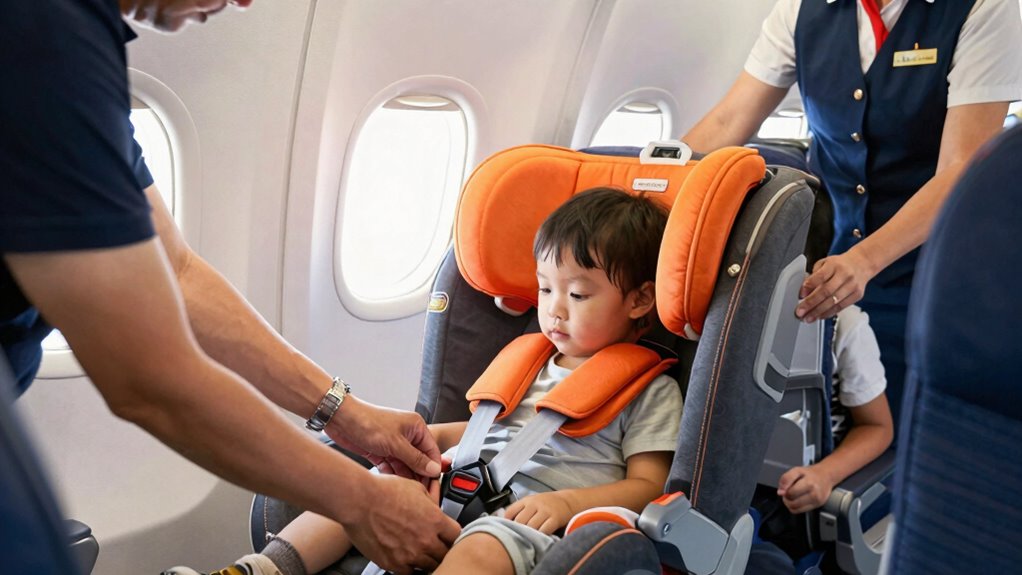
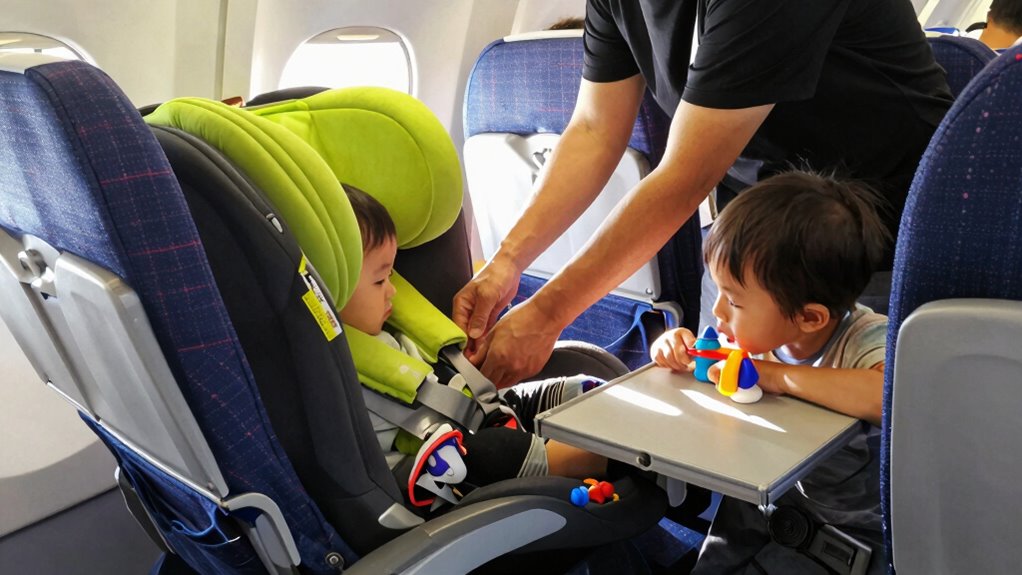
Installing a car seat correctly on an airplane seat guarantees your child’s safety and comfort during the flight. First, check the booster seat regulations for your airline; some require booster seats to be used with a lap belt only, while others may accept harnessed seats. Use clear car seat installation tips: position the seat firmly against the seat back, ensuring the belt or LATCH system is tightly secured. Make sure the seat is at the correct recline angle, and double-check for any movement—ideally, it should not shift more than an inch side to side. If your aircraft has seat belt extenders, use them to ensure a snug fit. Proper installation minimizes risk and helps your child stay comfortable throughout the flight. Additionally, understanding airline policies about car seats can prevent last-minute surprises at check-in. Being aware of aircraft safety regulations can further ensure compliance with federal and airline standards, providing peace of mind during travel.
Common Mistakes to Avoid When Traveling With Car Seats
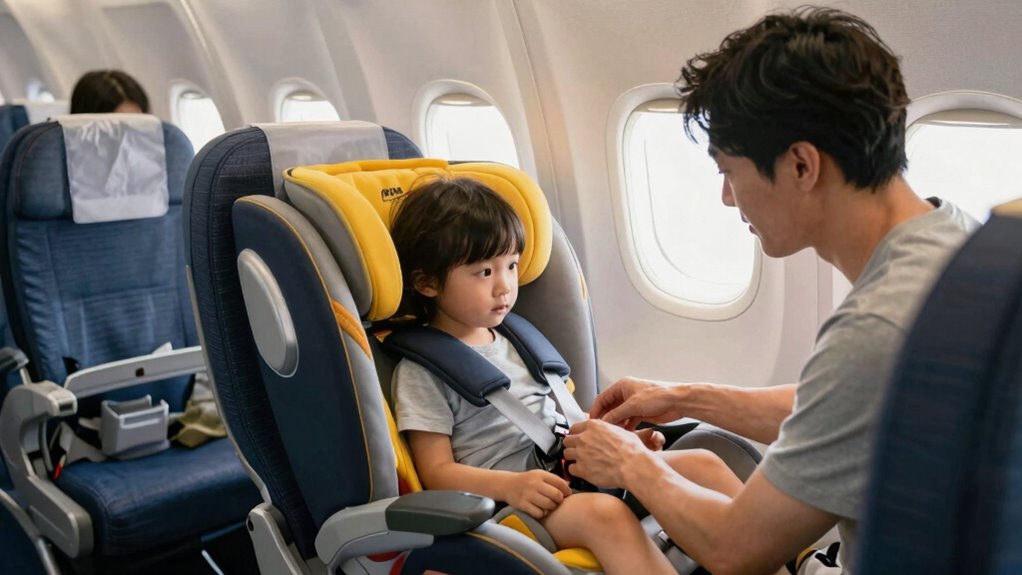
Traveling with a car seat can be tricky, and many parents make simple mistakes that compromise safety and comfort. One common error is neglecting seat belt safety guidelines, which can lead to improper installation or movement during turbulence. Always double-check that the seat belt is securely fastened and that the car seat is tightly installed. Another mistake is assuming your child will be entertained with in-flight entertainment alone; this can cause restless behavior and distract from safety procedures. Bring along familiar toys or activities to keep your child calm and engaged. Avoid using the seat as a makeshift bed or placing objects underneath to stabilize it, as this can weaken its safety features. Ensuring that the car seat is properly secured helps prevent injury during sudden stops or turbulence. Additionally, verifying that the installation meets safety standards ensures the highest level of protection. It’s also important to regularly review child passenger safety guidelines to stay updated on best practices. Being mindful of these mistakes and understanding the importance of proper installation procedures can significantly improve safety for your child and give you peace of mind during travel.
Airline Policies and Fees for Bringing Car Seats on Planes
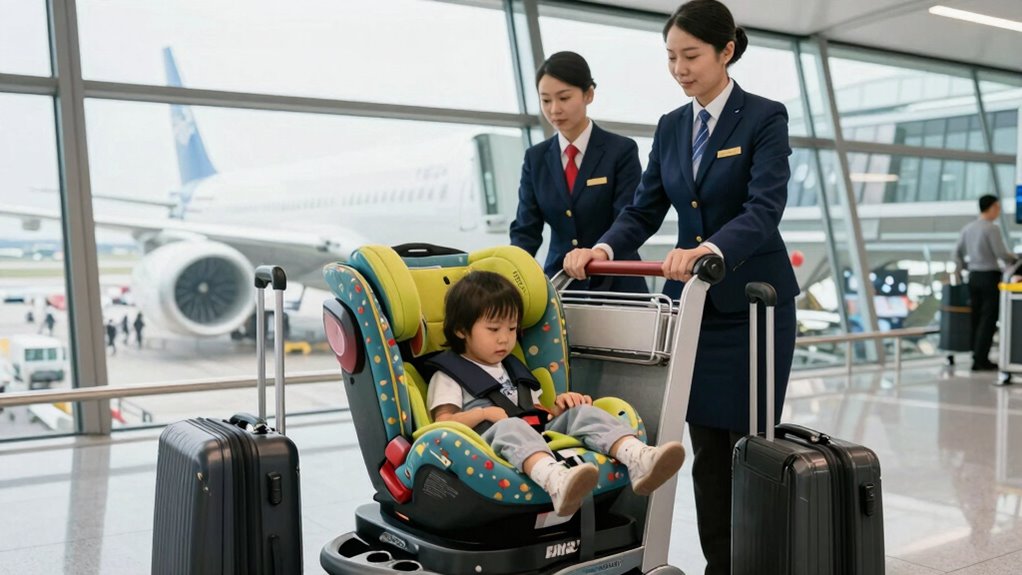
Many airlines have different policies and fees for bringing car seats, so it’s important to check before you fly. Some offer free or discounted policies, while others charge extra, depending on size and weight limits. Knowing these details can help you avoid surprises and plan your trip more smoothly. Being aware of hotel water park amenities can also enhance your family vacation experience. Additionally, reviewing the airline’s car seat policies ahead of time ensures you comply with requirements and avoid potential issues at the airport. Familiarizing yourself with hosting discount codes can also help you save on travel-related bookings or accommodations for your trip. For example, airline booking procedures may vary, so understanding the process can prevent last-minute complications. Moreover, understanding affiliate disclosures can inform you about potential recommendations and ensure transparent information when planning your travel.
Free or Paid Policy
Most airlines allow you to bring a car seat for your child either free of charge or for a small fee, but policies can vary widely. Some airlines consider the car seat as part of your baggage allowance, so you might avoid extra baggage fees if you check it in. Others view it as a separate item, which could require paying a baggage fee. If you plan to use the car seat during the flight, you may need to secure it with a seat belt at your seat, especially if it’s not a certified airplane seat. Check your airline’s specific policy beforehand to avoid surprises at the gate. Remember, some airlines may charge for bringing a car seat, while others include it as a courtesy. Always verify the rules before you travel. Additionally, understanding effective floor scrubber techniques can help maintain a clean environment on your travels. Being aware of airline policies can help you avoid unexpected fees and ensure a smoother travel experience. Familiarizing yourself with airline regulations for child safety can also be beneficial to ensure compliance and safety during your trip, since these regulations often encompass car seat requirements and safety standards. For peace of mind, review the child safety policies of your airline well in advance of your departure.
Size and Weight Limits
Airlines typically set specific size and weight limits for car seats to determine if they can be brought on board without incurring extra fees. You need to check your car seat’s dimensions to verify it fits within the airline’s allowable size, often around 17-20 inches in width and length. Weight restrictions also matter; most airlines accept car seats up to 40-50 pounds, but this varies. If your seat exceeds these limits, you might face additional charges or need to use a different seat. Always review your airline’s policies before flying, as some permit larger or heavier car seats free of charge, while others don’t. Knowing these limits helps you avoid surprises and ensures a smoother travel experience with your child. Additionally, understanding airline policies and fees for bringing car seats on planes can help you better prepare for your trip. It’s also helpful to confirm whether your car seat’s size and weight meet the airline’s requirements well in advance to prevent last-minute issues and ensure compliance with safe and reliable power storage and usage standards for your travel gear.
Tips for a Smooth and Safe Car Seat Experience on Your Flight
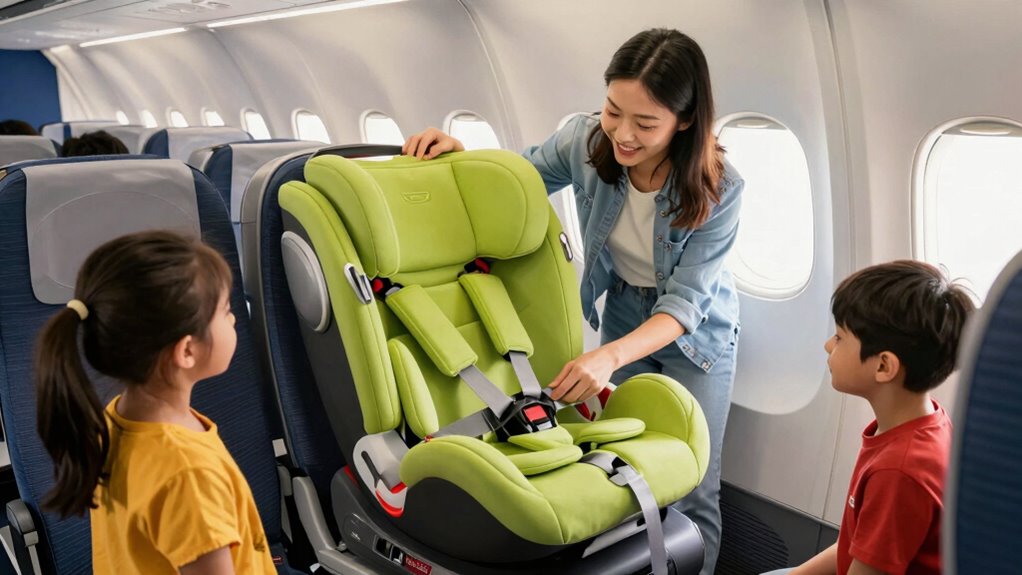
To guarantee a smooth and safe car seat experience on your flight, it’s essential to prepare ahead of time. Arrive early to navigate boarding procedures with your car seat easily. Secure the seat properly, following airline instructions, to ensure safety. Bring in-flight entertainment like toys or tablets to keep your child engaged, minimizing fuss during the flight. Check if your airline allows rear-facing seats; some require special approval. Use a lightweight, clearly labeled seat for quick installation. Consider a travel bag for protection and organization. Here’s a quick guide:
| Tip | Why it Matters | Example |
|---|---|---|
| Arrive early | Simplifies boarding procedures | 30 mins before |
| Pack entertainment | Keeps child occupied | Tablets, books |
| Secure properly | Ensures safety | Follow manufacturer instructions |
Preparation makes your journey smoother and more enjoyable.
Frequently Asked Questions
Can I Use My Child’s Own Car Seat on Any Airline?
Yes, you can usually use your child’s own car seat on any airline, but you should check airline seat compatibility and car seat weight limits first. Make sure it meets the airline’s safety standards and fits properly in the airplane seat. Some airlines might have restrictions, so double-check their policies beforehand. Bringing a familiar car seat can make your child feel safer and more comfortable during the flight.
Are There Size Limits for Car Seats on Airplanes?
Think of airplane seat size and weight restrictions like fitting a puzzle piece; if it’s too big or heavy, it won’t fit. Most airlines allow car seats that meet standard size limits, typically around 16-18 inches wide, and weight restrictions vary but often go up to 40-50 pounds. Always check your airline’s specific policies before flying, so your child’s car seat fits comfortably and safely.
Is a Harnessed Car Seat Required for Infants?
For infants, a harnessed car seat isn’t always required, but it’s highly recommended for car seat safety and comfort. Many airlines accept harnessed car seats that meet their regulations, ensuring your baby is secure during the flight. Always check airline regulations before traveling, as some may have specific requirements. Using a harnessed car seat provides added safety and peace of mind, especially during turbulence or unexpected movements.
Can I Bring Additional Accessories With the Car Seat?
You can bring some car seat accessories, like a harness cover or strap protectors, but make certain they’re airline compatible. For example, a parent tried to bring a bulky travel tray, but it wasn’t accepted because it didn’t fit airline regulations. Always check with your airline beforehand to ensure your accessories meet their policies. Keep your accessories simple and lightweight to avoid delays or issues during security checks.
How Do I Handle Car Seat Installations During Layovers?
During layovers, handle car seat installations by checking the layover logistics and airport facilities. You’ll need to remove and re-install the seat, ensuring it’s secure for the next flight. Always review the seatbelt policies at each airport, as some may have specific rules for securing car seats. Carry all necessary straps and instructions, and arrive early to give yourself plenty of time to manage installations smoothly.
Conclusion
By understanding the rules and properly installing your child’s car seat, you guarantee a safer, smoother flight. For example, imagine a parent who double-checked airline policies and practiced installing the seat beforehand—leading to a stress-free journey. With a little prep, you can avoid common mistakes and make flying with kids more enjoyable. So, plan ahead, follow guidelines, and your family’s travel experience will be much more comfortable and safe.