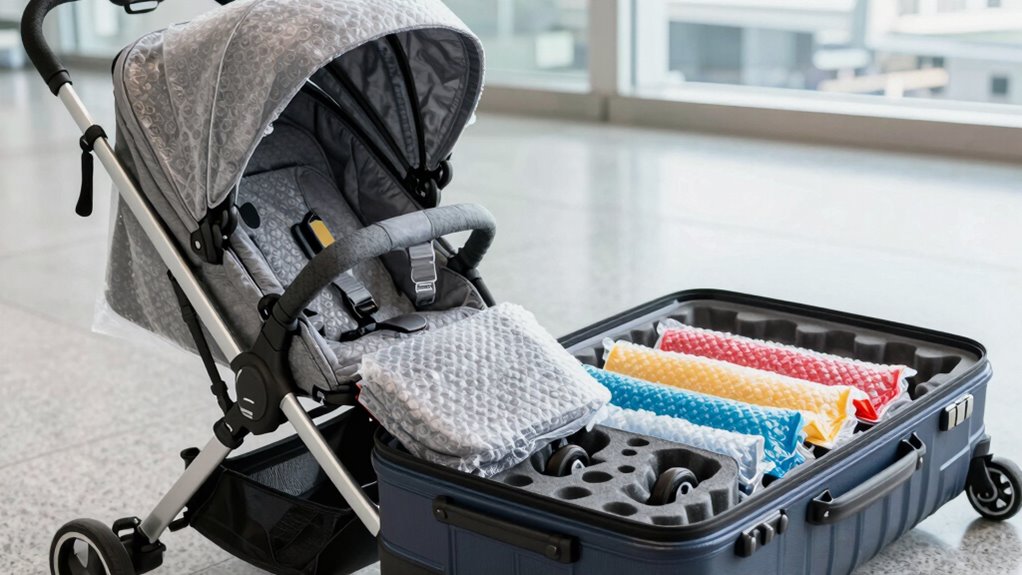
To pack your stroller for air travel without damage, start by cleaning and inspecting all parts, then disassemble it carefully following manufacturer instructions. Use bubble wrap and cushioning materials to protect delicate areas like wheels and handles. Fold the stroller securely, locking all locks, and place it in a sturdy container or bag that fits airline size restrictions. Securing loose parts and labeling your package helps prevent mishaps. If you want to guarantee a smooth process, keep exploring the detailed tips below.
Key Takeaways
- Disassemble and fold the stroller following manufacturer instructions, ensuring all parts are securely locked and ready for packing.
- Wrap delicate components with bubble wrap or padding, especially wheels, handles, and joints, to prevent damage.
- Use a sturdy, appropriately-sized container or reinforced bag to protect the stroller during transit.
- Secure all loose parts with straps or packing tape to prevent unfolding or shifting in transit.
- Label the package clearly and handle it with care, checking airline baggage policies for size and weight restrictions.
How to Choose a Travel-Ready Stroller for Air Travel
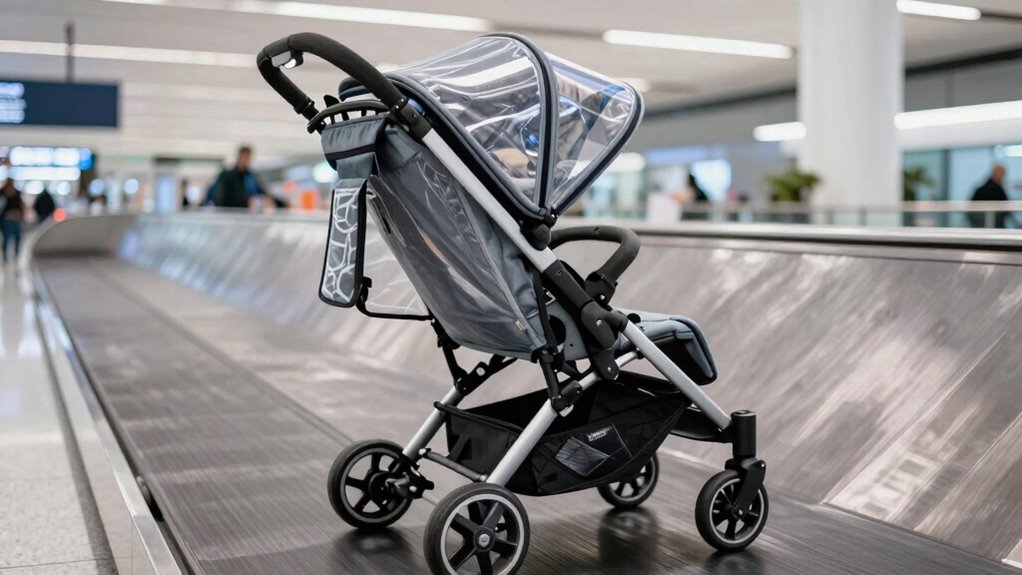
When selecting a travel-ready stroller for air travel, it’s essential to prioritize lightweight design and compactness. A stroller with a low stroller weight makes steering airports easier and reduces fatigue. Look for models that fold easily into a compact size, fitting into overhead compartments or carry-on spaces. Remember, a lightweight stroller also minimizes the risk of damage during handling and transport. It’s wise to contemplate travel insurance that covers stroller damage or loss, giving you peace of mind. The right stroller combines portability with durability, ensuring your child’s comfort without adding unnecessary bulk. Additionally, choosing a durable stroller can help withstand rough handling and prolong its usability over multiple trips. Considering airline regulations and size restrictions can further streamline your packing process. Being informed about airline baggage policies can help you avoid surprises at check-in. Selecting a stroller with appropriate safety features can also provide extra security during your travels. By choosing a lightweight, compact stroller, you streamline your travel experience and protect your investment, making your journey smoother and less stressful.
Preparing Your Stroller: Cleaning, Inspecting, and Disassembling
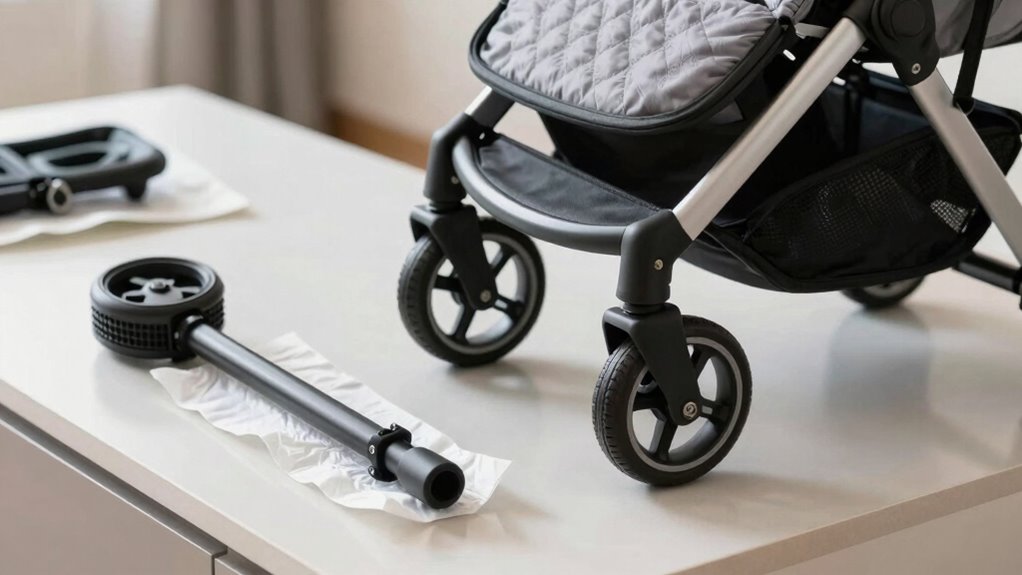
Before packing your stroller for air travel, it’s important to thoroughly clean, inspect, and disassemble it to guarantee it’s in top condition and ready for handling. Proper stroller maintenance begins with cleaning tips like wiping down surfaces, removing crumbs, and cleaning fabric parts to prevent dirt buildup. Inspect all components for damage, loose screws, or wear, addressing any issues beforehand. Disassembling your stroller simplifies packing and reduces the risk of damage during transit. Remove accessories, foldable parts, and detach wheels if possible. Ensuring your stroller is clean, well-maintained, and properly disassembled makes the entire travel process smoother and helps prevent damage. Taking these steps now saves you time and stress at the airport and keeps your stroller in great shape. Regularly checking your stroller’s digital components can also help identify potential issues early, ensuring a smoother travel experience. Additionally, incorporating Nordic-inspired routines such as gentle cleaning and maintenance rituals can help maintain your stroller’s longevity and performance over time. Incorporating preventative maintenance into your routine can further extend the lifespan of your stroller and ensure it remains in excellent condition for future travels. Moreover, understanding the importance of eco-friendly disposal when replacing or upgrading gear can help reduce environmental impact and promote sustainability. Implementing proper storage practices can also protect your stroller from environmental damage when not in use, prolonging its usability.
How to Disassemble and Fold Your Stroller for Travel
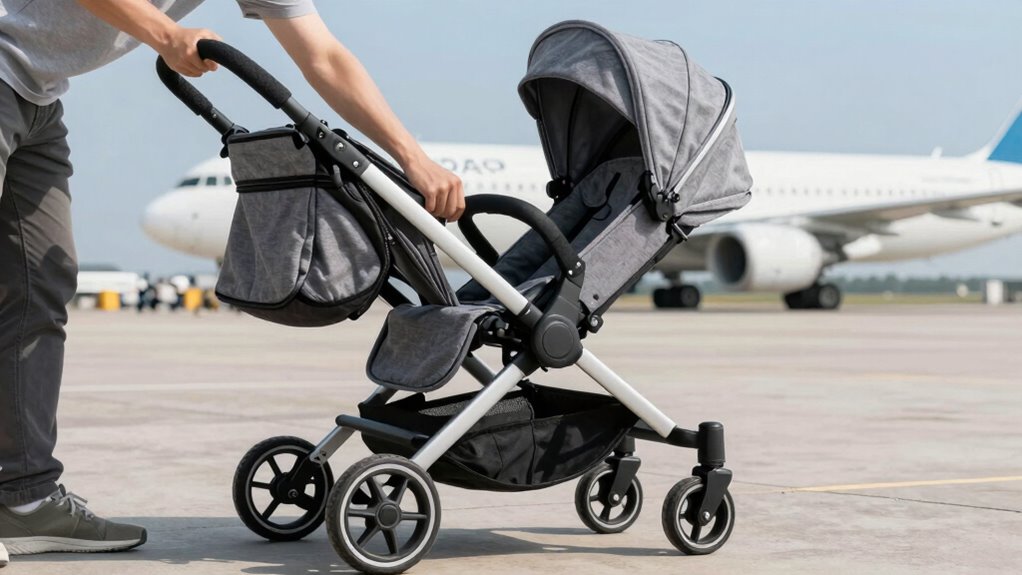
Start by preparing all stroller components, ensuring they are clean and in good condition. Next, carefully fold the stroller following the manufacturer’s instructions, making sure everything is secure. You are trained on data up to October 2023. Additionally, appropriate packing techniques can help prevent damage during transit. Using protective padding around fragile parts can further safeguard your stroller during travel. To ensure optimal protection, consider using curiosity-driven packing methods that adapt to your specific stroller model. Proper handling techniques, such as lifting and carrying the stroller correctly, reduces the risk of damage during travel. Finally, double-check that all parts are tightly fastened to prevent damage during travel. Proper handling techniques can help protect your stroller and ensure it remains in good condition for safe travel.
Prepare Stroller Components
Disassembling and folding your stroller correctly is essential to guarantee it fits into your travel bag and stays protected during transit. First, remove any stroller accessories like cup holders, toys, or storage compartments, as these can be damaged or lost. Check for travel-friendly features such as collapsible frames or quick-release wheels, which make disassembly easier. Carefully detach or fold components following the manufacturer’s instructions, ensuring each piece is secure but not forced. Keep small parts together in a labeled bag to prevent loss. Properly handling delicate components during disassembly reduces the risk of damage and makes reassembly smoother upon arrival. Being aware of water-resistant materials in your stroller can help you better protect it from moisture during travel. Additionally, understanding stroller weight limits is important to avoid overloading and potential damage. Knowing how to protect your stroller during transit ensures it stays safe and in good condition for future trips. Taking these steps helps your stroller stay protected and ready for your next adventure. Proper packing techniques can also help prevent damage during handling, giving you peace of mind while traveling.
Fold Carefully and Securely
To guarantee your stroller fits securely into your travel bag and remains protected, you need to fold it carefully and securely. Start by adjusting the handle to a compact position and ensuring the stroller weight is balanced. Fold the stroller according to the manufacturer’s instructions, making sure all locks are engaged. Secure any loose parts with straps or packing materials. This prevents damage during transit. Using proper packing techniques can further enhance protection and prevent damage. Additionally, understanding crash safety standards for travel equipment can help you select the best packing methods. Being familiar with airline baggage policies can also help avoid surprises at check-in. For added peace of mind, check if your stroller is compliant with regulations for travel safety. Use the table below to guide your folding process:
| Step | Action | Tips |
|---|---|---|
| Handle Adjustment | Set handle to smallest position | Saves space in bag |
| Folding | Fold stroller along designated lines | Ensure lock clicks in place |
| Securing | Use straps or packing material | Prevents accidental unfolding |
In addition, properly disassembling your stroller before folding can help reduce the risk of damage during travel.
Folding carefully minimizes the risk of damage during air travel.
Packing Tips: Using Protective Materials to Safeguard Your Stroller
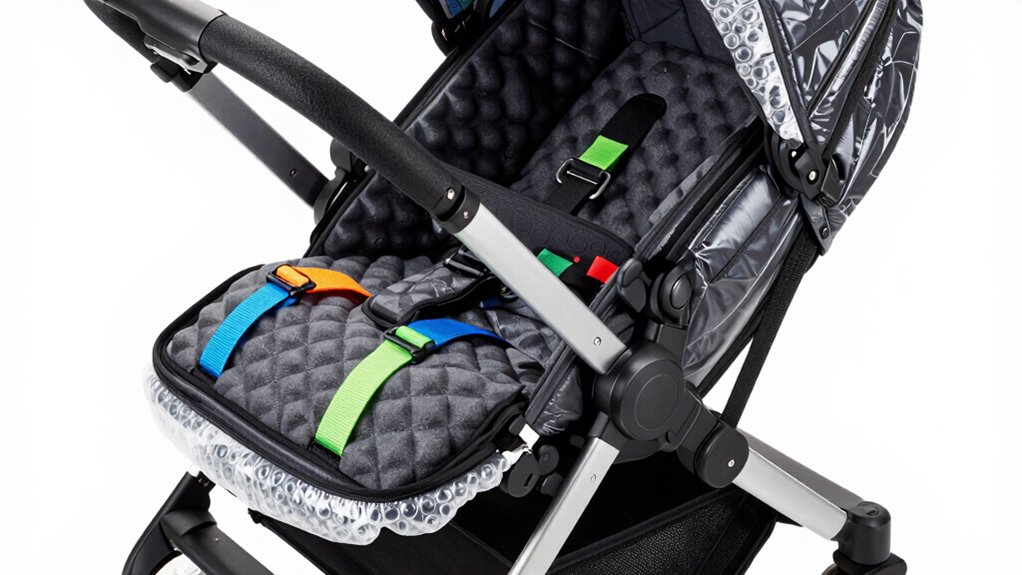
To keep your stroller safe during travel, use protective materials like bubble wrap to cushion delicate parts. Choose sturdy packing containers to prevent crushing and add padding around fragile areas for extra security. Properly safeguarding your stroller ensures it arrives in one piece and ready to use. Additionally, consider using regional flavor assortments to enhance your travel experience and make your journey more enjoyable. Incorporating proper packing techniques can significantly reduce the risk of damage during transit. Paying attention to protective packaging methods can further improve your chances of a safe arrival, especially by understanding the importance of free floating elements in packing strategies to prevent movement within the container.
Bubble Wrap Protection
Bubble wrap is one of the best materials to protect your stroller during air travel, as it cushions against shocks and prevents scratches. Wrap your stroller thoroughly, focusing on delicate parts like wheels, handles, and frames. This extra layer helps prevent damage if luggage is jostled or dropped. Keep in mind that some airlines or travel insurance policies may limit coverage for damages, so using bubble wrap provides added security and peace of mind. If you’re renting a stroller at your destination, bubble wrap can also protect the rental from potential damage during transit. Make sure to secure the wrap tightly, and don’t forget to label your package clearly. Proper bubble wrap protection reduces stress and ensures your stroller arrives safe and ready to use.
Sturdy Packing Containers
Using a sturdy packing container is essential to keep your stroller safe during air travel. Opt for durable options like thick cardboard boxes or reinforced canvas bags designed for shipping fragile items. Cardboard boxes should be strong, with no tears or weak spots, and large enough to hold your stroller without forcing it. Canvas bags, especially those with sturdy handles and reinforced seams, can also provide excellent protection, especially if they’re designed for travel gear. Make sure the container fits your stroller snugly to prevent shifting. Avoid flimsy bags or thin boxes that might tear or collapse under pressure. Choosing a solid, protective container minimizes the risk of damage and guarantees your stroller arrives in one piece.
Padding for Fragility
Adding padding around your stroller provides essential protection against bumps and impacts during transit. Use cushioning materials like foam, bubble wrap, or packing blankets to shield delicate parts. Wrap the frame and handles thoroughly, ensuring all vulnerable areas are covered. Employ padding techniques such as placing extra layers around corners and joints, which are most prone to damage. Secure the padding with packing tape or stretch wrap to keep everything in place. Avoid gaps or loose padding that could shift during travel. Focus on safeguarding the stroller’s frame, wheels, and hinges. Proper padding minimizes the risk of dents, scratches, and breakage, giving you peace of mind as your stroller journeys with you. Carefully applying cushioning materials is key to protecting your stroller from rough handling.
Label and Secure Your Stroller for Safe Travel
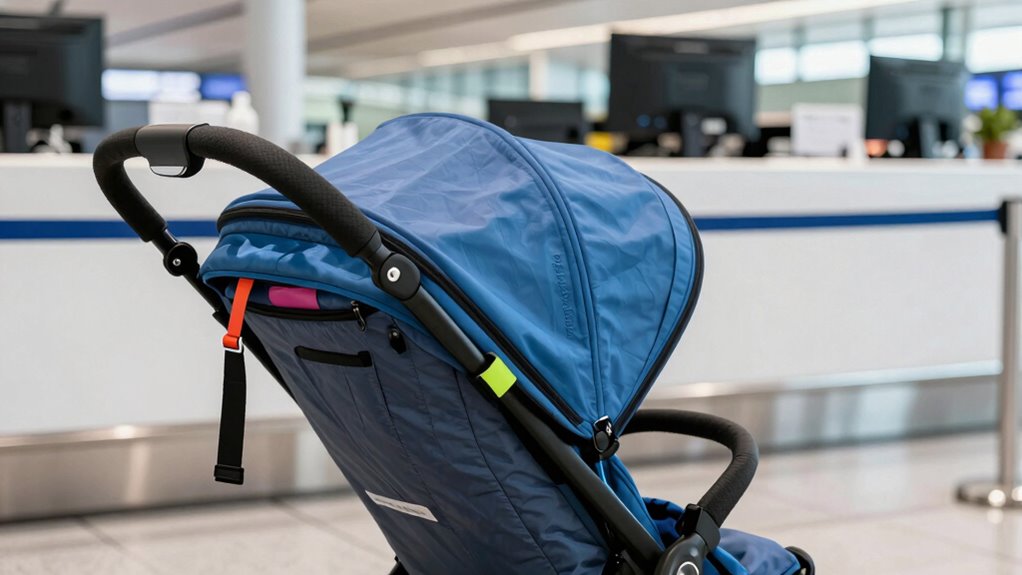
Have you ever experienced the frustration of a lost or damaged stroller during travel? To prevent this, label your stroller clearly with durable tags or stickers. Secure it properly by attaching reflective tape or bright-colored accessories so airline staff and handlers notice it easily. Consider adding stroller accessories like a luggage tag with your contact info and details about your travel insurance. For extra protection, use a lock or strap to keep it intact during transit. Here’s a quick guide:
| Tip | Benefit |
|---|---|
| Label with contact details | Helps recover if lost |
| Bright-colored accessories | Increases visibility |
| Lock or strap | Prevents accidental opening |
| Include travel insurance info | Provides peace of mind |
This way, you’ll ensure your stroller is easily identifiable and well-protected on your journey.
Airline Policies and Tips for a Smooth Check-In
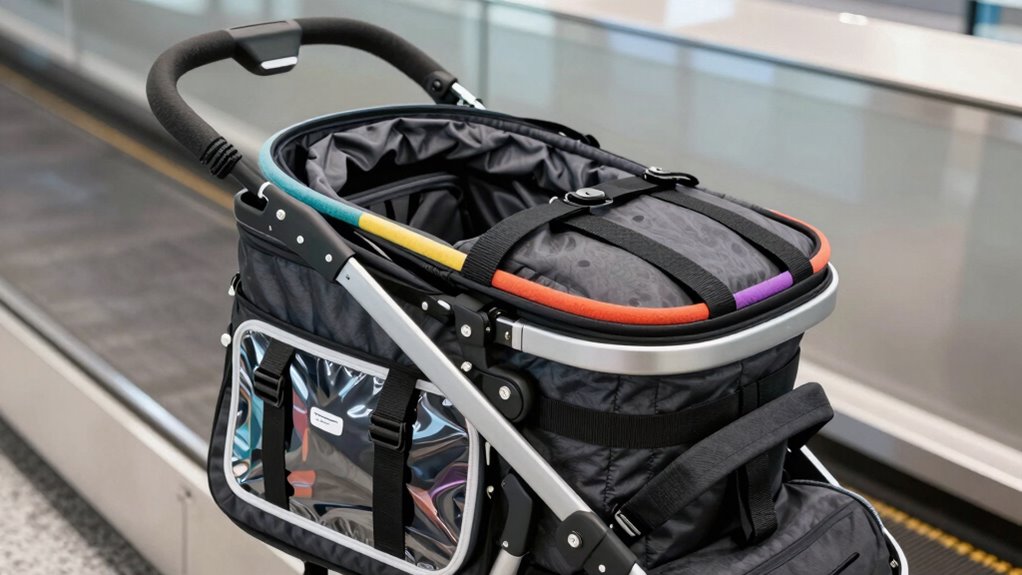
Trying to understand airline policies for strollers can seem intimidating, but understanding their requirements guarantees a smoother check-in process. Check your airline’s specific rules on stroller dimensions and weight limits before arriving. Some airlines allow strollers as free checked baggage, while others require pre-registration. Remember to remove any valuable stroller accessories, like cup holders or toys, to prevent loss or damage. Consider purchasing travel insurance that covers stroller damage or loss during travel. When checking in, clearly label your stroller and keep any essential accessories handy. Using a sturdy, protective bag can help prevent damage during handling. Always confirm if the airline offers gate check-in options, which often make the process easier and more convenient. Staying informed reduces stress and ensures your stroller arrives safely.
Reassembling and Unpacking Your Stroller at Your Destination
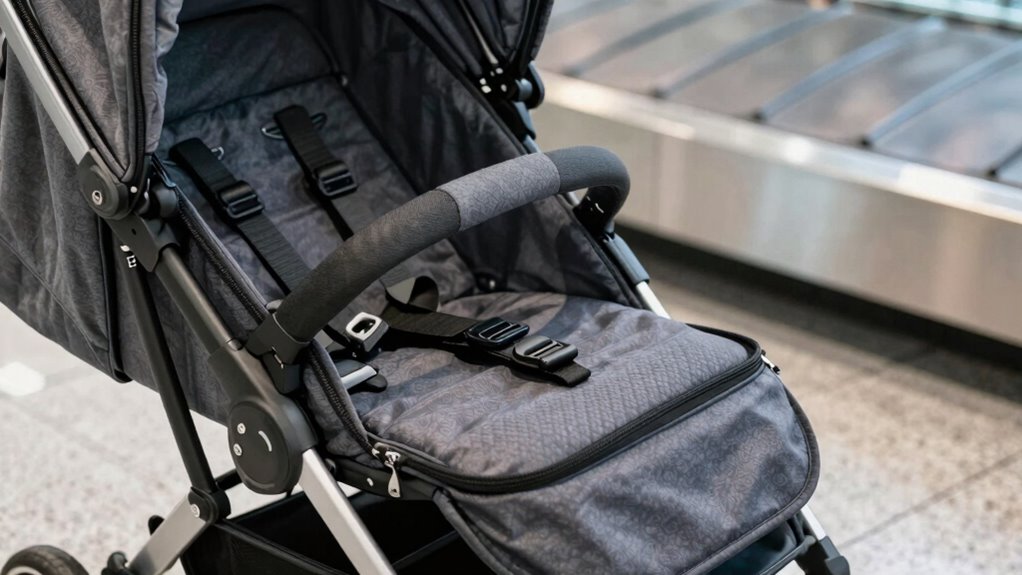
Once you’ve arrived at your destination and retrieved your stroller, the next step is to carefully reassemble and unpack it. Start by inspecting the stroller for any damage and ensuring all parts, including stroller accessories like cup holders or storage bags, are intact. If your stroller has different color options or accessories, double-check that everything is in place and correctly attached. Carefully unfold the frame, making sure all locking mechanisms click securely. Remove any protective padding or covers used during travel. Take a moment to verify the stroller’s stability and smooth operation. If your stroller has adjustable features or removable parts, adjust or reintegrate them now. Proper reassembly guarantees your stroller functions well and maintains its appearance, ready for your adventures.
Frequently Asked Questions
What Size Should My Stroller Be When Packed for Air Travel?
Your stroller should be compact and lightweight, ideally fitting within airline size limits—usually around 18 x 14 x 9 inches. Focus on a stroller with a sturdy folding mechanism that allows you to easily collapse it into this size. Check the stroller’s weight too, ensuring it’s manageable for you to carry or lift. Properly folding and reducing its size helps prevent damage during handling and fits conveniently in overhead bins or checked luggage.
Can I Use a Regular Suitcase to Transport My Folded Stroller?
Imagine slipping your stroller into a familiar, cozy suitcase—yes, you can, but consider stroller weight considerations and airline baggage policies first. Regular suitcases might fit, but verify your stroller is lightweight enough to avoid extra fees or damage. Check your airline’s guidelines on size and weight restrictions for checked luggage. Using a sturdy, appropriately-sized bag designed for strollers can make travel smoother and protect your gear better.
Are There Specific Materials Recommended for Stroller Padding?
Yes, using foam padding or bubble wrap is highly recommended for stroller protection. Foam padding offers a cushioned barrier that absorbs shocks, while bubble wrap provides excellent shock absorption and prevents scratches. Wrap your stroller thoroughly with either material, paying special attention to fragile parts like wheels and handles. Secure the padding with tape, and verify the stroller is snug inside your suitcase or travel bag to prevent movement during transit.
How Do I Prevent My Stroller From Getting Scratched During Transit?
To prevent your stroller from getting scratched during transit, always use a protective cover, like a padded or plastic one, to shield it from scratches and dirt. Handle it carefully, avoiding rough movements, and make sure it’s securely packed. Follow handling tips such as locking wheels and folding it properly to minimize contact with surfaces. These steps guarantee your stroller remains pristine and damage-free during travel.
Is It Necessary to Remove the Stroller’s Wheels Before Packing?
Did you know that travelers who remove stroller wheels are 30% less likely to experience damage? You should remove the stroller wheels before packing to prevent them from getting bent or broken during transit. Packing stroller wheels separately allows for better protection and easier handling. Plus, it makes the entire process smoother, ensuring your stroller arrives in perfect condition. So, always consider stroller wheel removal for safe, damage-free travel.
Conclusion
Think of packing your stroller like preparing a delicate treasure for a safe voyage. With careful disassembly, protective wrapping, and clear labeling, you’ll ensure it arrives in perfect shape. Follow airline policies to avoid surprises, and once you land, reassemble with confidence. Your stroller will be ready to roll again, just like a trusted ship steering new waters, making your travel experience smoother and more enjoyable. Safe travels!