
Ensuring household safety for pets and toddlers means addressing small, often overlooked hazards like accessible toys, small objects, and unsecured chemicals. You should regularly check your home for choking risks, secure cords, enhance cabinet safety, and keep harmful substances out of reach. Teaching pets and kids boundaries and supervising their interactions also prevents accidents. By staying vigilant and proactive, you can create a safer environment for everyone—keep going to learn more essential tips and strategies.
Key Takeaways
- Regularly conduct safety audits to identify and secure small objects, cords, and hazardous chemicals out of children’s and pets’ reach.
- Use safety gates, outlet covers, and corner protectors to prevent injuries from falls, bites, or accidental contact with dangerous areas.
- Store household chemicals, medications, and sharp items in locked cabinets and properly dispose of expired or hazardous materials.
- Supervise interactions between pets and toddlers, teaching gentle behavior and recognizing stress signals to prevent bites or scratches.
- Incorporate pet- and child-friendly, non-toxic plants and remove choking hazards to create a safer home environment for everyone.
As an affiliate, we earn on qualifying purchases.
Why Small Safety Oversights Can Lead to Big Risks for Kids and Pets
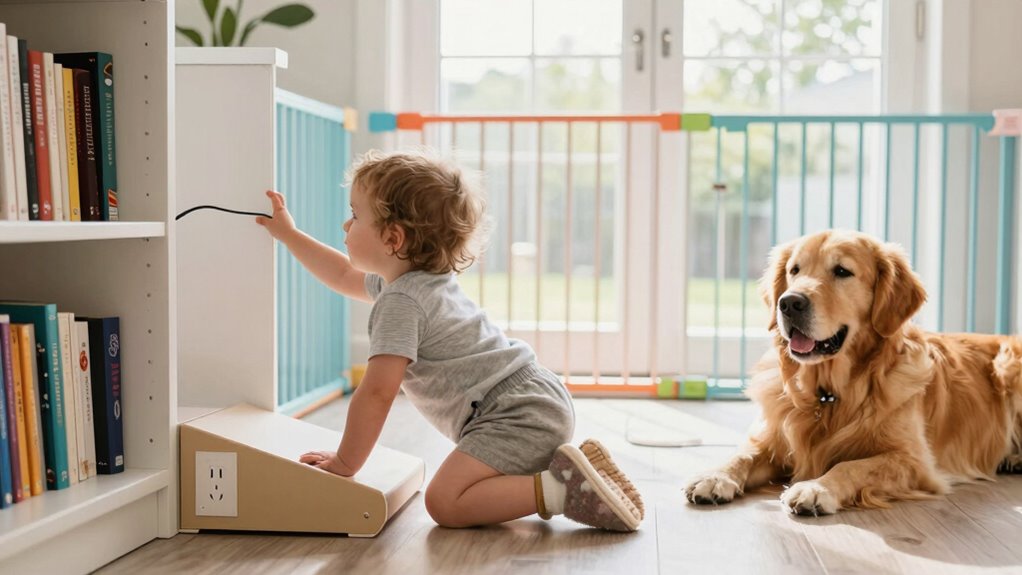
Even small safety oversights can quickly turn into serious risks for both kids and pets. As your toddler develops, their curiosity grows, and they may unknowingly trigger unsafe pet behaviors. For example, leaving small objects within reach can encourage pets to chew or swallow, risking choking or injury. Likewise, neglecting to secure hazardous items like cleaning supplies or sharp tools can lead to accidents. These minor oversights might seem harmless now, but they can escalate rapidly as both your child and pet explore their environment. Understanding how pet behavior and toddler development intersect helps you recognize potential hazards before they become emergencies. For instance, knowing about Free Floating risks allows you to better anticipate hazards that are not anchored or contained, reducing the chance of accidents. Staying vigilant and addressing even tiny safety gaps ensures a safer home for everyone, especially when considering hidden dangers that may not be immediately obvious. Recognizing small objects that are easily accessible can prevent pets and toddlers from engaging in dangerous behaviors. Additionally, being aware of environmental hazards within your home can help you identify and eliminate unseen risks before they cause harm.
How to Create a Safe, Pet- and Toddler-Friendly Home
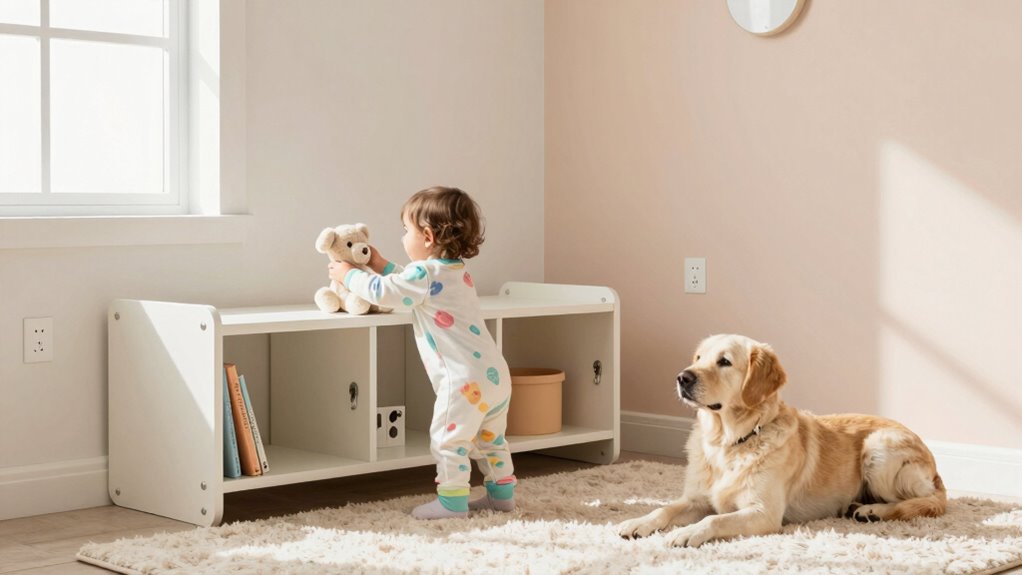
Creating a safe, pet- and toddler-friendly home involves proactive planning and thoughtful organization. To achieve this, focus on key pet proofing essentials and toddler proofing basics. Start by securing cords, wires, and small objects that pose choking hazards. Next, install safety gates at stairways and doorways to restrict access to unsafe areas. Use corner protectors on furniture and outlet covers to prevent injuries. Additionally, understanding the importance of future economic considerations can help in planning long-term safety strategies for your household. Being aware of toxin-free products and materials is crucial to minimize exposure to harmful chemicals. Incorporate non-toxic cleaning supplies and choose eco-friendly furniture options to further enhance your home’s safety. Conducting regular safety audits and staying informed about household hazards can help you adapt your safety measures as your child and pet grow. For example, considering water safety measures is essential if you have pools or water features in your home or yard. Finally, design spaces that are both engaging and safe for your little ones and furry friends.
Common Hidden Hazards That Could Endanger Your Little One and Furry Friend
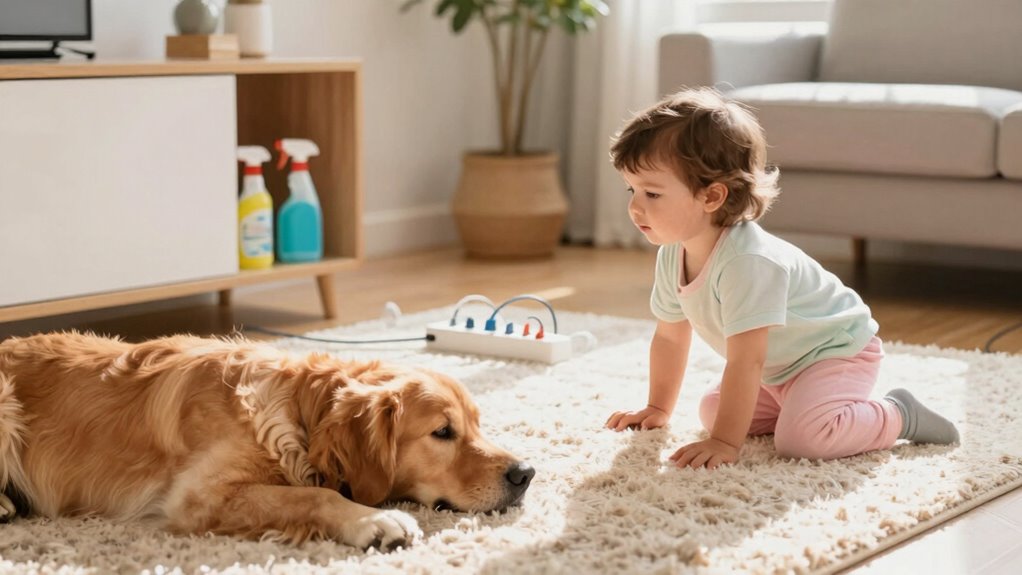
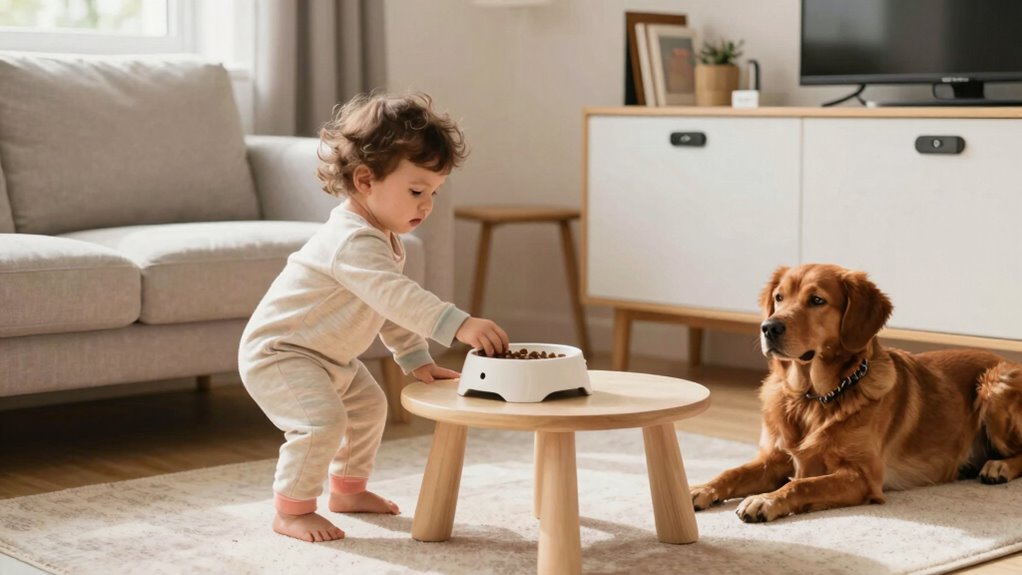
Many common household items and features can pose unexpected dangers to your little one and furry friend if you’re not vigilant. For example, pet food might seem harmless, but if left within reach, small or moldy pieces can cause choking or upset stomach. Similarly, pet toys may contain small parts or strings that could be swallowed or cause choking hazards. Sharp edges on pet bowls or toys can also injure curious toddlers or pets. Additionally, some household cleaning supplies or medications might be mistaken for treats. Always store pet food, toys, and other items out of reach, and regularly inspect toys for damage. Proper storage of household items can help prevent accidents and keeps your home safe for everyone. Being aware of these hidden hazards helps prevent accidents and keeps your home safe for everyone. Regular safety checks can help identify potential dangers before they cause harm. Ensuring that child-proofing measures are in place, such as securing cabinets and using safety gates, further reduces risks in your household. Regularly evaluating household hazards is also essential to maintain a safe environment for both children and pets. Monitoring household safety consistently allows for prompt action to mitigate new risks as they arise.
How to Interact Safely With Your Pets and Toddlers
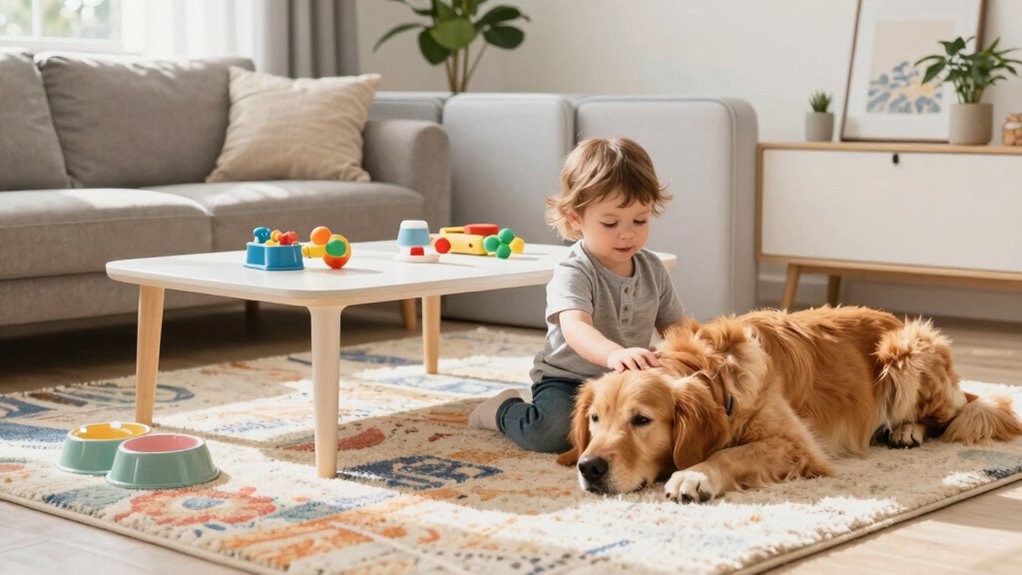
To keep both your pets and toddlers safe, it’s important to establish gentle, respectful interactions between them. Here are four key tips:
- Supervise all interactions, especially during pet grooming or toddler feeding, to prevent accidental bites or scratches. Ensuring proper supervision techniques can help mitigate unexpected behaviors. Using positive reinforcement can also encourage calm and friendly interactions. Incorporating training tools such as gentle leashes or barriers can further enhance safety during these interactions.
- Teach your toddler to be gentle, using calm words and soft touches when petting.
- Avoid forcing your pet into interactions they’re uncomfortable with, and watch for signs of stress.
- Keep feeding areas separate, so neither pet nor child tries to steal food, which can lead to aggressive behavior or choking hazards.
- Incorporate smart design principles to create safe, accessible spaces tailored for both pets and children. Additionally, implementing home automation safety features, such as sensor alerts or automatic locks, can further enhance household security and prevent accidents.
Household Items That Can Harm Kids and Pets: And How to Keep Them Away

Many household items can pose serious risks to your kids and pets, especially hazardous chemicals and small, sharp objects. Keeping these items out of reach is essential to prevent accidents and injuries. Let’s explore how to identify and safely store these dangers to protect your loved ones. Using smart locks and security gear can also help secure cabinets and storage areas containing hazardous items. Regularly inspecting your home for hidden hazards can further reduce the risk of accidents. Being aware of common household dangers helps you implement effective safety measures accordingly. Conducting home safety assessments regularly can help identify potential risks before they cause harm. Incorporating low light office plants that are non-toxic can also improve your home’s safety environment for both kids and pets.
Hazardous Household Chemicals
Hazardous household chemicals pose a serious risk to kids and pets, who may accidentally ingest or come into contact with them. To keep everyone safe, prioritize proper chemical storage and label awareness. Always store chemicals in high, locked cabinets out of reach. Regularly check labels to understand what’s inside and ensure they’re clearly visible. Remember, even common items can be dangerous if mishandled. Here are four key tips:
- Store cleaning supplies, paints, and automotive fluids safely away from children and pets.
- Use childproof locks on cabinets containing chemicals.
- Dispose of expired or unused chemicals properly.
- Educate everyone in the household on the importance of reading labels and handling chemicals responsibly. Incorporating knowledge of Fin and Forage can help in understanding safe storage practices for various household items, ensuring a more comprehensive approach to household safety. Additionally, being aware of piercing care and hygiene can help prevent infections from accidental chemical exposure or improper handling.
- Being vigilant about chemical storage helps prevent accidental poisoning and keeps your home safe, emphasizing the importance of household safety protocols for protecting loved ones. Additionally, understanding chemical safety guidelines supports developing effective safety routines within the home.
Sharp and Small Items
Keeping household chemicals stored safely is vital, but it’s also important to pay attention to small and sharp items that can pose serious risks to kids and pets. Small parts like coins, buttons, or jewelry can be swallowed or choke on, while sharp edges from scissors, knives, or broken glass can cause cuts or punctures. To stay safe, organize items in secure containers and keep them out of reach. Use the table below to identify common hazards and their safe storage solutions:
| Item Type | Hazard | Storage Tip |
|---|---|---|
| Small parts | Choking, ingestion | Keep in childproof containers |
| Sharp edges | Cuts, punctures | Store in locked drawers or cabinets |
| Breakables | Sharp shards, injury | Use high shelves or safety bins |
Tips for Training Your Pets to Coexist Safely With Kids
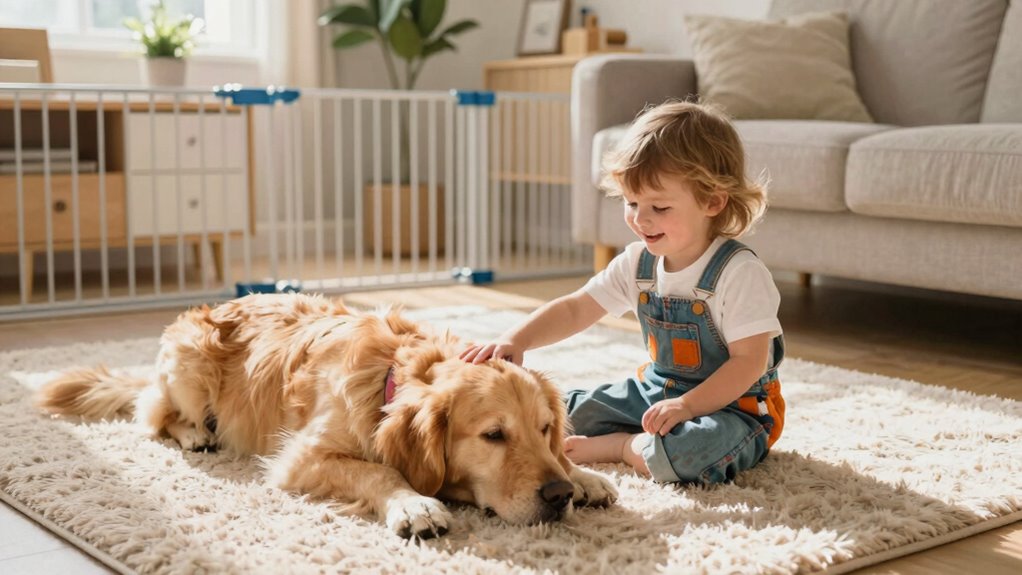
Training your pets to coexist peacefully with children requires consistent effort and clear boundaries. To improve pet behavior and support toddler training, follow these tips:
- Establish Rules: Set consistent boundaries for your pet, like not jumping or nipping, to prevent accidents.
- Use Positive Reinforcement: Reward good pet behavior around kids with treats or praise, encouraging safe interactions.
- Gradually Introduce: Slowly introduce your pet to your toddler, observing reactions and adjusting training as needed.
- Supervise Interactions: Always supervise pet and toddler interactions to reinforce safe behaviors and prevent misunderstandings.
Supervision Strategies to Keep Kids and Pets Safe During Play
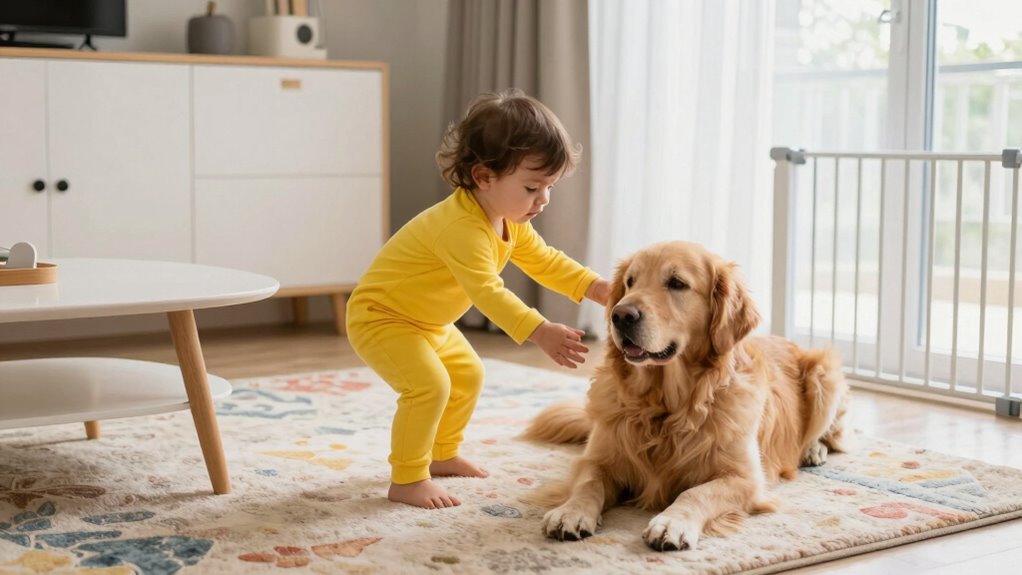
Supervising playtime between kids and pets is essential for ensuring safety and building positive relationships. Your active presence helps you observe pet behavior and catch potential issues early. Pay attention to how your pet responds to toddler communication—some animals may misinterpret playful gestures or loud noises. Set clear boundaries during play, such as avoiding roughhousing that could trigger aggressive pet behavior. Encourage gentle interactions and teach your toddler to recognize signals from your pet, like growling or backing away. Constant supervision helps prevent accidental bites or scratches and ensures both your child and pet feel safe. Remember, even well-trained pets can become overwhelmed if not monitored, so stay attentive and intervene when necessary to foster a safe environment.
Regular Safety Checks to Maintain a Secure Home for Your Family
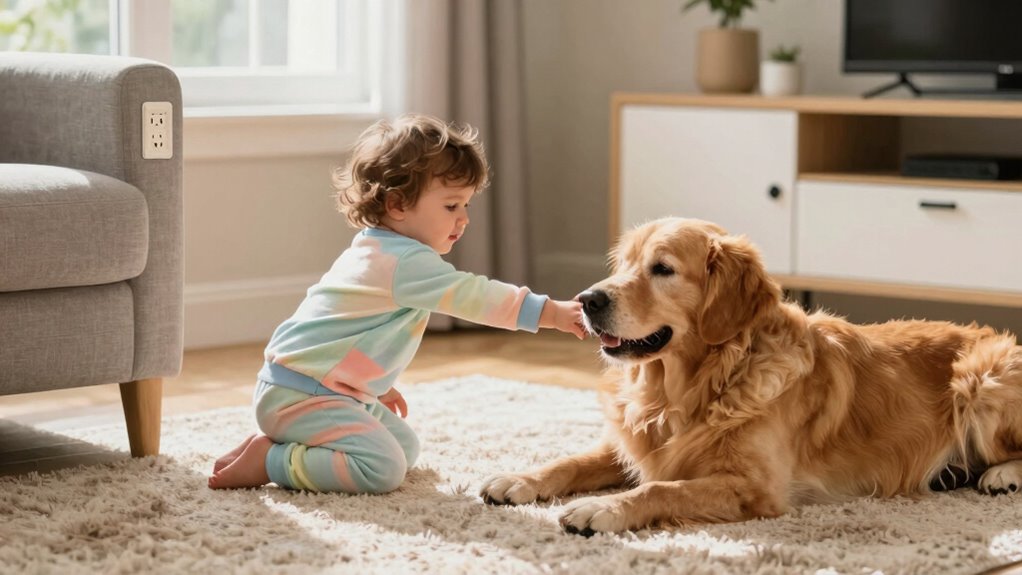
Regular safety checks are essential to keep your home secure for your family. You should regularly perform safety audits and look for potential hazards that might have transformed over time. Staying proactive ensures your environment remains safe for both your kids and pets.
Regular Safety Audits
To keep your home safe for both your pet and toddler, conducting regular safety audits is essential. These audits help you spot potential hazards before they become accidents. During each check, review your pet proofing routines and toddler safety measures, ensuring everything remains secure and up-to-date.
Here are four key areas to focus on:
- Inspect electrical cords and outlets, securing or hiding them.
- Check that furniture and heavy objects are stable and anchored.
- Remove or safely store small items and choking hazards.
- Reassess door and window locks to prevent escapes or falls.
Regular safety audits keep your home secure and help you stay proactive in maintaining a safe environment for your family’s growing needs.
Update Household Hazards
Maintaining a safe home environment means continuously updating household hazards as your pet and toddler grow and change. Regularly inspect your home and yard for potential dangers, especially garden hazards that may develop over time. Check outdoor safety measures, like securing fences and removing toxic plants or sharp tools that could harm curious little explorers. Keep an eye out for new hazards, such as loose bricks or hidden debris in the yard. Inside, ensure that furniture is stable and that cords or small objects are out of reach. Updating household hazards isn’t a one-time task; it’s ongoing. As your child and pet grow, their abilities change, making it essential to reevaluate and adapt your safety measures regularly to keep your home secure.
Frequently Asked Questions
How Can I Identify Hidden Household Hazards for Kids and Pets?
You can identify hidden household hazards by thoroughly inspecting your home for hazardous chemicals and sharp objects. Check cabinets, drawers, and storage areas where these items might be tucked away. Keep chemicals in high, locked cabinets, and ensure sharp objects like knives or tools are out of children’s and pets’ reach. Regularly walk through your space, looking for potential dangers, and make adjustments to keep your home safe for everyone.
What Are Easy Ways to Toddler-Proof Pet Areas?
Think of toddler-proofing your pet areas as creating a safe adventure zone. You can install pet barrier solutions to keep curious toddlers away from danger zones. Organize pet toys neatly to prevent choking hazards, and use gates to restrict access to hazardous spots. Regularly check for small objects or wires. By keeping everything tidy and secure, you guarantee both your toddler and pet enjoy a safe, happy space together.
How Do I Teach My Toddler Safe Interactions With Pets?
You should teach your toddler safe interactions with pets by setting clear toddler boundaries and modeling gentle pet training. Show them how to pet softly, avoid pulling fur or tails, and respect the pet’s space. Use simple commands like “gentle” and praise your child when they follow them. Consistent supervision and positive reinforcement help your toddler learn respectful, safe ways to interact with pets, fostering a harmonious relationship.
Which Household Plants Are Toxic to Children and Pets?
Certain household plants, like lilies, dieffenbachia, and azaleas, are poisonous flora that can harm children and pets. You should always verify plant safety before bringing new plants home and keep toxic plants out of reach. If you suspect poisoning, contact your vet or poison control immediately. Staying aware of plant safety helps you protect your loved ones from accidental poisoning and ensures a safer home environment.
How Often Should Safety Audits Be Performed in a Pet and Toddler Home?
You should perform routine checks and hazard assessments every three to six months. This frequency helps catch new dangers as your home evolves with your toddler and pets. Don’t wait for an incident—safety is an ongoing process. Regular audits reveal hidden hazards, ensuring your environment stays secure. Stay alert and proactive; a quick inspection now could prevent a future accident. Keep safety at the forefront, always.
Conclusion
Remember, safety is a team effort in your home. Even small oversights can turn into big problems if you’re not vigilant. Keep a watchful eye, stay proactive, and don’t assume things will always be fine. It’s better to be safe than sorry—sometimes, a tiny detail can make all the difference. By staying alert and prepared, you can create a safe haven where both your little one and furry friend can thrive together.