The best toys and games for kids match a child’s age and interests while making it easy for the family to join in. I’d put ThinkFun Gravity Maze first for its mix of hands-on building and logic challenges, with Move2Play Pass The Potato standing out for active group play and Chuckle & Roar Alphabet Matching for simple early learning. The main tradeoff is between toys that encourage movement and social play, games that build a focused skill, and portable or compact picks that work in smaller spaces. Age range, supervision, setup, and how many people can play all affect whether a toy gets regular use. Read on for my full comparison and picks by play style.

Turn the school run and nap time into listening time
- Thousands of audiobooks, podcasts and originals
- Listen on your phone, tablet or Echo — also offline
- Cancel anytime
Complete the kit


Key Takeaways
- Gravity Maze ranks first because its build-and-solve format gives kids a clear challenge to return to, while more luck-driven games in this group suit shorter, livelier rounds.
- Pass The Potato and The Floor Is Lava! favor movement and group participation; they need enough clear floor space to work well.
- Alphabet Matching and the Magnetic Wooden Fishing Game offer simple ways to practice early skills, though adults may need to guide younger children.
- Kanoodle and the 220-game handheld console are easier to store and carry than larger active-play options, but they offer more individual play.
- The lineup’s strongest picks have a clear use: logic practice, family action, early learning, or outdoor play. Choosing by a child’s real play habits matters more than choosing a toy with the broadest age label.
| TOMY Pop Up Super Mario Family Action Game |  | Best Family Game Night Pick | Number of Players: 2-4 | Recommended Age: 4+ | Play Modes: Classic Play, Coin Collection, Team Play | VIEW LATEST PRICE | See Our Full Breakdown |
| Let’s Go Fishin’ Game by Pressman |  | Best for Preschoolers | Players: 1-4 | Recommended Age: 4 and up | Includes: Deluxe plastic game base, 21 colorful fish, mini fishing poles | VIEW LATEST PRICE | See Our Full Breakdown |
| Handheld Game Console for Kids – 220 Retro Video Games, 3.0″ LCD Screen | 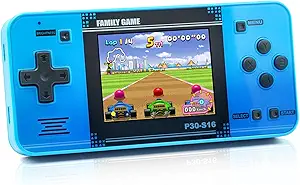 | Best Budget Screen-Time Option | Screen Size: 3.0 inches | Battery: 860mAh lithium-ion, rechargeable | Number of Games: 220 preloaded retro titles | VIEW LATEST PRICE | See Our Full Breakdown |
| ThinkFun Gravity Maze – Falling Marble Logic Game |  | Best STEM Learning Pick | Recommended Age: 8-14 | Challenge Levels: 60 progressive challenges | Number of Towers: 9 | VIEW LATEST PRICE | See Our Full Breakdown |
| Yeeeasy Tangle-Free Parachute Toys, Outdoor Flying Game, 4 Pieces |  | Best Budget Outdoor Stocking Stuffer | Quantity: 4 pieces | Material: High-quality, non-toxic materials | Design: Tangle-free parachute | VIEW LATEST PRICE | See Our Full Breakdown |
| Chuckle & Roar Alphabet Matching Memory Game for Toddlers |  | Best Early Literacy Pick | Recommended Age: 3 years and up | Material: Cardboard | Game Type: Matching memory game | VIEW LATEST PRICE | See Our Full Breakdown |
| Ziogogco 48-Piece Balance Stacking Blocks Game |  | Best Family Game Night Pick | Piece Count: 48 pieces | Colors: Blue, red, green, yellow | Includes: 1 base, 22 draw cards | VIEW LATEST PRICE | See Our Full Breakdown |
| NASHRIO Magnetic Wooden Fishing Game for Preschoolers |  | Best Motor Skills Builder | Brand: NASHRIO | Age Range: 36 months and up | Material: Wood | VIEW LATEST PRICE | See Our Full Breakdown |
| Move2Play Pass The Potato – Active Family Game for Kids Ages 3-8+ |  | Best Party Game | Brand: Move2Play | Age Range: 6 months and up (best for 3-8+) | Model Number: FOOD102 | VIEW LATEST PRICE | See Our Full Breakdown |
| Educational Insights Kanoodle | 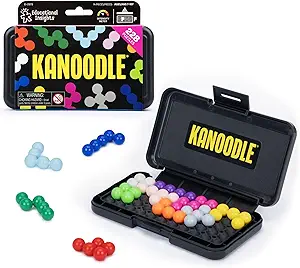 | Best Quiet Puzzle Game | Puzzle Pieces: 12 pieces | Puzzle Count: 228 puzzles | Formats: 2D and 3D challenges | VIEW LATEST PRICE | See Our Full Breakdown |
| Goliath The Floor is Lava! Game by Endless Games |  | Best for Active Family Play | Players: 2–6 | Age range: 5 years and up | Foam safety stones: 25 | VIEW LATEST PRICE | See Our Full Breakdown |
| BooTaa 29-Inch Large Dart Board for Kids with Sticky Balls |  | Best for Casual Target Practice | Board diameter: 29 inches | Suitable age: 3–12 years | Material: Nylex fabric and plastic | VIEW LATEST PRICE | See Our Full Breakdown |
| Skillmatics Guess in 10 Game – National Geographic Animals |  | Best for Animal-Loving Beginners | Age range: 6 years and up | Game cards: 50 | Clue cards: 6 | VIEW LATEST PRICE | See Our Full Breakdown |
| Hasbro Gaming Operation Electronic Board Game |  | Best for Steady-Hand Challenges | Age guidance: 6+ | Players: 1 or more | Game type: Electronic board game | VIEW LATEST PRICE | See Our Full Breakdown |
| Ayeboovi Toss and Catch Ball Game Outdoor Toys for Kids |  | Best for Outdoor Pair and Group Play | Age range: 3 years and up | Paddles: 4 | Balls: 4 sticky balls | VIEW LATEST PRICE | See Our Full Breakdown |
More Details on Our Top Picks
TOMY Pop Up Super Mario Family Action Game
TOMY’s Pop Up Super Mario earns the family game night slot because it solves the problem most kids’ board games ignore: keeping siblings of different ages engaged at the same table. Its three play modes — Classic, Coin Collection, and Team Play — mean a 4-year-old and a 9-year-old can compete on roughly even footing, something single-mode games like Skillmatics Guess in 10 can’t manage with preschoolers in the mix. The pop-up mechanic delivers genuine suspense without requiring reading skills, which separates it from heavier strategy entries like ThinkFun Gravity Maze. The tradeoff is depth: experienced board gamers will outgrow it quickly, and the four-player cap leaves out bigger families. Compared with Hasbro’s Operation, another action-board hybrid, this one scales better for mixed-age groups but offers less nostalgic pull for parents.
Pros:- Three distinct play modes keep repeat sessions fresh
- Works for pre-readers, so younger siblings aren’t excluded
- Builds color recognition and decision-making without feeling like homework
- Fast setup makes it realistic for weeknight play
Cons:- Too luck-driven to hold older kids’ interest long-term
- Hard four-player ceiling excludes larger families
Best for: Families with kids aged 4-10 who want a single game the whole household can play together without arguments
Not ideal for: Families with more than four people or kids over 10 who find luck-based pop-up mechanics too simple
- Number of Players:2-4
- Recommended Age:4+
- Play Modes:Classic Play, Coin Collection, Team Play
- Skills Developed:Decision-making, color recognition, speech
- Setup:Quick, minimal assembly
- Theme:Super Mario
Our verdict“Buy this if you want one game that bridges a wide age gap; skip it if your kids already prefer strategy-heavy titles.”
Let’s Go Fishin’ Game by Pressman
When the goal is entertaining a 4-year-old without adult supervision of every rule, Let’s Go Fishin’ still outperforms most modern alternatives. The rotating pond and chomping fish create immediate, self-explanatory play — no reading, no turn-taking disputes — which gives it an edge over the Magnetic Wooden Fishing Game for kids who need motion and noise to stay engaged. It’s also playable solo, unlike the TOMY Pop Up Super Mario game, so an only child gets real value from it. The honest drawback is shelf life: by age 6 or 7 most kids find the loop repetitive, and the fish setup between rounds is a small chore. Compared with quieter skill-builders like the Chuckle & Roar Alphabet Memory Game, this pick trades cognitive depth for pure hand-eye coordination practice and raw excitement.
Pros:- Solo play works, so one child can use it without a partner
- Real hand-eye coordination and timing practice disguised as fun
- Durable plastic base and 21 fish survive enthusiastic handling
- Rules are grasped in seconds by pre-readers
Cons:- Repetitive loop limits how long it stays interesting
- Manual reset of all fish between rounds slows things down
- Appeal fades sharply once kids pass early elementary age
Best for: Parents of 3-5 year olds who want an independent-play toy that builds fine motor skills
Not ideal for: Kids 7 and up, who will find the single repetitive mechanic boring within a few sessions
- Players:1-4
- Recommended Age:4 and up
- Includes:Deluxe plastic game base, 21 colorful fish, mini fishing poles
- Skills Developed:Hand-eye coordination, timing
- Gameplay:Rotating pond with opening and closing fish mouths
- Solo Play:Yes
Our verdict“A short-lived but genuinely useful motor-skills toy for the preschool window — buy it for ages 3-5, not older.”
Handheld Game Console for Kids – 220 Retro Video Games, 3.0″ LCD Screen
This handheld console fills a niche the board games in this roundup don’t touch: portable, parent-controlled screen entertainment for car rides and waiting rooms. With 220 preloaded retro titles, it sidesteps app purchases, internet access, and in-game purchases entirely — a real advantage over handing a child a tablet. Compared with the ThinkFun Gravity Maze, it’s obviously not building spatial reasoning, but puzzle and reflex genres among the 220 games carry mild cognitive value. The 3.0-inch screen and 860mAh battery are the compromises: graphics look dated next to modern devices, the game library is fixed forever, and sound is serviceable at best. Kids raised on tablets may shrug at the visuals, while younger children who’ve never seen a Switch will find it genuinely exciting. It’s the travel-bag filler, not the centerpiece.
Pros:- 220 preloaded games with no downloads, ads, or purchases to manage
- Lightweight ergonomic body fits small hands for travel use
- Rechargeable battery avoids constant battery replacement
- Closed system means no internet exposure
Cons:- Fixed library — no new games can ever be added
- Small 3-inch screen and dated visuals disappoint tablet-era kids
- Basic speaker quality
Best for: Parents who want a cheap, closed-system distraction for road trips without giving a child phone or tablet access
Not ideal for: Kids accustomed to modern consoles or tablets, who will find the small screen and dated graphics underwhelming
- Screen Size:3.0 inches
- Battery:860mAh lithium-ion, rechargeable
- Number of Games:220 preloaded retro titles
- Color:Blue
- Design:Ergonomic, lightweight, portable
- Expandability:None — preloaded games only
Our verdict“A sensible travel-only purchase for younger kids; don’t expect it to compete with a real console at home.”
ThinkFun Gravity Maze – Falling Marble Logic Game
Gravity Maze is the strongest pure thinking toy in this lineup, aimed squarely at the 8-12 range that most entries here underserve. Its 60 escalating challenge cards turn spatial reasoning into a puzzle with clear progression — a structure the Educational Insights Kanoodle also uses, but Gravity Maze’s tower-stacking and real falling marble give it a more satisfying physical payoff. Unlike the TOMY Pop Up Super Mario game, it works just as well solo as with a group, making it a genuine quiet-time activity. The tradeoffs are real, though: younger siblings under 8 will hit a wall quickly, setup between challenges takes patience, and once all 60 puzzles are solved the structured replay value thins out. Families seeking open-ended building rather than guided puzzles should look at the Ziogogco Balance Stacking Blocks instead.
Pros:- 60 challenges ramp from easy to genuinely difficult, giving months of progression
- Builds real spatial reasoning and engineering intuition
- Excellent solo activity that doesn’t require a partner or supervision
- Physical marble-run payoff rewards each solved puzzle
Cons:- Frustrating for kids under the recommended age floor
- Setup between challenges slows the pacing
- Structured replay value declines once all cards are completed
Best for: Parents of 8-12 year olds who want screen-free solo brain-building play with measurable progression
Not ideal for: Households with children under 8, or buyers wanting open-ended replay after the 60 challenges run out
- Recommended Age:8-14
- Challenge Levels:60 progressive challenges
- Number of Towers:9
- Marbles:3
- Includes:Game grid, towers, marbles, target piece
- Play Style:Solo or collaborative logic puzzle
- Skills Developed:Problem-solving, spatial reasoning, engineering
Our verdict“The clear choice for older kids who like puzzles — just don’t hand it to a 6-year-old expecting them to keep up.”
Yeeeasy Tangle-Free Parachute Toys, Outdoor Flying Game, 4 Pieces
Sometimes the cheapest option earns its place through simplicity, and these tangle-free parachutes do exactly that. The classic string-snarl problem that killed older parachute toys is solved here, which matters most for younger kids who’d otherwise need an adult to untangle every throw. Compared with the Ayeboovi Toss and Catch set — the other low-cost outdoor pick in this roundup — parachutes need zero skill to enjoy, making them better for 3-4 year olds, while toss-and-catch suits kids with more developed coordination. They also sneak in a light physics lesson about drag and gravity, though nothing approaching the structured learning of ThinkFun Gravity Maze. The honest limits: they’re strictly an open-space toy, useless indoors or in small yards, and four pieces means the fun still ends if several get stuck on a roof. As a gift add-on or party favor, though, the value is hard to argue with.
Pros:- Tangle-free design eliminates the frustration that ruined classic parachute toys
- Zero learning curve — a 3-year-old can play immediately
- Non-toxic, durable materials survive repeated crashes and dirt
- Four pieces reduce fights among siblings
Cons:- Useless without open outdoor space
- Pieces get lost or stuck in trees easily
- Novelty wears off in short bursts rather than long sessions
Best for: Buyers needing an inexpensive add-on gift or party favor for young kids with access to a yard or park
Not ideal for: Apartment families without outdoor space, since the toys are essentially unusable indoors
- Quantity:4 pieces
- Material:High-quality, non-toxic materials
- Design:Tangle-free parachute
- Intended Use:Outdoor flying game
- Recommended Age:All ages (best for 3+)
- Space Required:Open outdoor area
Our verdict“A low-risk impulse buy for yard-owning families with young kids — just don’t expect it to carry a whole afternoon.”
Chuckle & Roar Alphabet Matching Memory Game for Toddlers
For parents who want the alphabet learned before kindergarten, this matching memory game turns letter recognition into a game of recall rather than drill. Flipping tiles to pair uppercase and lowercase letters builds focus and memory simultaneously, and the cardboard tiles hold up better than typical flash cards. Compared with the NASHRIO Magnetic Wooden Fishing Game, this option skews quieter and more sit-down focused — better suited to calm learning time than to kids who need motion to stay engaged. The tradeoff is scope: unlike the Move2Play Pass The Potato, there’s no sound or physical play to hook high-energy toddlers, and the gameplay stays single-format, so some kids may outgrow the matching mechanic within a year or two. It’s a focused, screen-free literacy tool rather than an all-around toy.
Pros:- Teaches both uppercase and lowercase letter recognition through play
- Durable, travel-friendly tiles survive toddler handling
- Works for independent solo play or group games
- Builds focus and cognitive skills without screens
Cons:- Single gameplay format that kids can outgrow quickly
- Tile count is unspecified, making it hard to judge difficulty progression
Best for: Parents of 3-to-5-year-olds who want a quiet, screen-free way to build letter recognition and memory skills at home or while traveling
Not ideal for: High-energy kids who need movement and sound to stay engaged — the seated, silent format will lose them quickly
- Recommended Age:3 years and up
- Material:Cardboard
- Game Type:Matching memory game
- Theme:Alphabet
- Play Modes:Independent or group
- Tile Count:Not specified
Our verdict“This pick makes the most sense for families prioritizing kindergarten-ready letter skills in a calm, portable format.”
Ziogogco 48-Piece Balance Stacking Blocks Game
This 48-piece stacking set earns its spot as the rare kids’ toy that genuinely works across generations. With 22 draw cards directing each move, the gameplay blends luck and fine-motor precision, so adults and kids can compete on roughly equal footing — something the Chuckle & Roar Alphabet Memory Game can’t offer once parents have their letters down. The ABS plastic build also outlasts wooden alternatives like the NASHRIO fishing game if pieces get stepped on. The honest drawback is replay depth: unlike the Educational Insights Kanoodle with its 228 puzzles, this is a single mechanic repeated, and very young children will need supervision since balancing requires patience they may not have yet. Think of it as a party and game-night staple rather than an everyday solo activity.
Pros:- Genuinely multi-age gameplay for kids and adults together
- 22 draw cards add variety and slow the game down strategically
- Durable ABS plastic survives drops and rough handling
- Portable enough for travel and parties
Cons:- Gameplay limited to stacking and balancing with no alternate modes
- Frustrating for toddlers who lack the patience for careful placement
Best for: Families with mixed-age kids and adults who want one game everyone can play together at parties or game nights
Not ideal for: Households seeking deep solo replay value — the single stacking mechanic wears thin without a group to play against
- Piece Count:48 pieces
- Colors:Blue, red, green, yellow
- Includes:1 base, 22 draw cards
- Material:ABS plastic
- Game Type:Balance and stacking game
- Best Use:Family game nights, parties, travel
Our verdict“This set makes the most sense for families whose game nights need one activity that spans ages 4 to adult.”
NASHRIO Magnetic Wooden Fishing Game for Preschoolers
Fishing games remain a preschool staple for good reason, and this wooden version adds letters and numbers on every fish, so the motor-skill practice doubles as early academics. Compared with the classic Let’s Go Fishin’ Game by Pressman, this option trades battery-powered spinning action for a calmer, self-paced magnetic catch — which means fewer batteries to replace but also less built-in excitement. The eco-friendly wood with smooth edges gives it a more premium, durable feel than the cardboard Chuckle & Roar memory tiles, and the fishing pole mechanic actively trains hand-eye coordination in a way card matching can’t. The main tradeoffs are age ceiling and safety: small magnetic pieces demand adult supervision, and kids past kindergarten will find it too simple.
Pros:- Combines hand-eye coordination practice with letter and number learning
- Eco-friendly, non-toxic wood with smooth, safe edges
- Self-paced play needs no batteries or setup
- Wooden construction outlasts cardboard and plastic alternatives
Cons:- Small magnetic parts require close adult supervision
- Skill ceiling is low — most kids outgrow it before age 6
Best for: Parents of 3-to-4-year-olds who want a screen-free toy that builds fine motor skills and early literacy at the same time
Not ideal for: Families with children under 3 or unsupervised play sessions — the small magnetic parts pose a real choking hazard
- Brand:NASHRIO
- Age Range:36 months and up
- Material:Wood
- Model Number:SC-T004A1
- Game Type:Magnetic alphabet and number fishing puzzle
- Manufacturer:NASHRIO
- UPC:046432481369
Our verdict“This pick makes the most sense for preschool parents who value skill-building over bells and whistles, provided they supervise play.”
Move2Play Pass The Potato – Active Family Game for Kids Ages 3-8+
When the goal is burning energy at a birthday party, few toys do it faster than this sensor-equipped potato that chirps, talks, and times each round. The format — pass it fast before it goes off — needs zero explanation, which sets it apart from logic-based picks like Educational Insights Kanoodle or the precision-required Ziogogco stacking blocks; here, chaos is the point. It works indoors and out, from living rooms to campsites, and the machine-washable shell with batteries included removes two common frustrations. The tradeoffs are real though: gameplay is one-dimensional compared with the Skillmatics Guess in 10, the sound library gets repetitive for adults within a few rounds, and once the novelty fades between events, it tends to sit in a drawer.
Pros:- Zero-setup group activity that works for mixed ages
- Sensor-driven sound effects and sayings keep rounds exciting
- Works indoors and outdoors, from parties to camping
- Machine washable with batteries included out of the box
Cons:- Sound effects become repetitive after extended play
- Novelty-driven replay value — limited appeal outside party settings
Best for: Parents hosting birthday parties, playdates, or camping trips who need an instant group activity for ages 3 to 8
Not ideal for: Families wanting everyday educational value — this is a novelty party toy, not a learning tool, and adults may tire of the sounds
- Brand:Move2Play
- Age Range:6 months and up (best for 3-8+)
- Model Number:FOOD102
- Included Components:1 interactive potato
- Play Environments:Indoor and outdoor
- Power Source:Batteries (included)
- Care:Machine washable
- UPC:652118607819
Our verdict“This pick makes the most sense as an event toy: buy it for the birthday party, not for Tuesday afternoon.”
Educational Insights Kanoodle
Kanoodle is the answer to the restaurant, road trip, and waiting-room problem: 228 puzzles in a case the size of a sandwich, all solvable in silence. Compared with the Chuckle & Roar memory game, the puzzle ladder scales far beyond preschool — advancing from 2D layouts to genuinely tricky 3D pyramid challenges — making it one of the few picks here that grows with a child for years. It’s also a stronger solo option than the Move2play Pass The Potato, which needs a group to function at all. The drawbacks: there’s no stated age floor, and the harder puzzles will frustrate kids under 7; and with no sound, motion, or multiplayer element, it won’t hold kids who need sensory stimulation to stay engaged.
Pros:- 228 puzzles in 2D and 3D provide years of escalating challenge
- Pocket-sized carrying case makes it the most travel-ready pick in this lineup
- Builds spatial reasoning and critical thinking genuinely well
- Equally engaging for adults, making it a true family crossover
Cons:- Advanced puzzles frustrate younger children, with no clear age guidance
- No multiplayer, sound, or interactive elements — purely solitary play
Best for: Parents of kids 7 and up (and adults) who need a self-contained, screen-free activity for travel, restaurants, and quiet time
- Puzzle Pieces:12 pieces
- Puzzle Count:228 puzzles
- Formats:2D and 3D challenges
- Puzzle Book Pages:48 pages
- Includes:Carrying case, puzzle guide
- Recommended Age:Not specified (best suited to 7+)
- Power Source:None — fully analog
Our verdict“This pick makes the most sense for quiet kids and traveling families who want maximum puzzle value in a pocket-sized case.”
Goliath The Floor is Lava! Game by Endless Games
The Floor is Lava! turns a living room or yard into a movement game, making it a better fit for kids who want to jump and act out challenges than a sit-down choice like Skillmatics Guess in 10: National Geographic Animals. The 25 foam stones give players places to land, while challenge cards and a spinner add structure beyond simply hopping around. Its age range starts at five, and up to six people can play, so it can bring siblings and adults into the same activity. The tradeoff is practical: players need clear floor space, and the six-player limit may leave larger groups waiting. The foam stones can also wear with repeated play, so this is less suited to households looking for a compact, low-movement game.
Pros:- Combines jumping and imaginative challenges for active play
- Can be played indoors or outdoors
- Supports two to six players across a broad age range
- Includes foam stones, challenge cards, and a spinner for structured rounds
Cons:- Needs clear space for safe jumping
- Limited to six players
- Foam stones may wear down with repeated use
Best for: Families with children five and up who have open floor or yard space and want a group activity that gets everyone moving
Not ideal for: Families in small rooms, groups larger than six, or children who prefer quiet, seated games
- Players:2–6
- Age range:5 years and up
- Foam safety stones:25
- Challenge cards:27
- Other components:Game spinner and instructions
- Play setting:Indoor or outdoor
Our verdict“Choose this for energetic family play when you have room to move; choose Guess in 10 for a quieter, more portable game.”
BooTaa 29-Inch Large Dart Board for Kids with Sticky Balls
The 29-inch fabric target makes this a forgiving pick for younger children who are still building aim: the large surface gives sticky balls more room to land than the paddles in the Ayeboovi Toss and Catch Ball Game. Its 12 balls also let several players take turns without retrieving one after every throw, and the foldable board is easier to put away than a fixed target. I’d favor it for a birthday gathering or short indoor game when there is a suitable place to hang it. That setup requirement is the main catch; it needs hanging space, and the board is less useful when a wall or hook is unavailable. Sticky balls may lose grip over time, so repeated play can make the target less satisfying.
Pros:- Large target gives younger players a generous aiming surface
- Includes 12 sticky balls for group turns
- Foldable design makes storage and transport easier
- Can be used indoors or outdoors when a hanging spot is available
Cons:- Requires space and a hook or other hanging point
- Sticky balls may lose their grip over time
- Play centers on throwing at a target rather than varied activities
Best for: Parents of children ages three to twelve who want an easy-to-understand target game for parties or occasional indoor and outdoor play
Not ideal for: Families without a suitable hanging spot or buyers seeking a game that works well without sticky-ball upkeep
- Board diameter:29 inches
- Suitable age:3–12 years
- Material:Nylex fabric and plastic
- Sticky balls:12
- Other included item:1 hook
- Foldable:Yes
- Play setting:Indoor or outdoor
Our verdict“Pick this for simple target practice and party turns, especially when you have a reliable place to hang the board.”
Skillmatics Guess in 10 Game – National Geographic Animals
Guess in 10: National Geographic Animals gives children a simple question-and-answer structure for learning about wildlife while playing with another person. Asking yes-or-no questions rewards careful clues and deduction, so it offers more conversation and animal facts than Hasbro Gaming Operation, which centers on precise hand movements. The travel box and card holder make this an easy option to pack for a trip or bring to a family table, and its age guidance starts at six. That reading requirement can make younger players rely on an adult, though, and the game needs at least two people, so it cannot fill solo time. Players who want longer, more physical rounds may also find the card-based guessing format brief.
Pros:- Uses animal clues to encourage deduction and conversation
- Travel box and card holder support portable play
- Works for family game time and group play
- Introduces wildlife information through a straightforward guessing format
Cons:- Requires at least two players
- Younger children may need help reading and understanding clues
- Rounds may feel short to players who want a longer game
Best for: Families with children six and up who enjoy animals, asking questions, and compact two-player or group games
Not ideal for: Children who are not yet comfortable with reading and comprehension, or buyers looking for solo or active physical play
- Age range:6 years and up
- Game cards:50
- Clue cards:6
- Other components:1 card holder and instruction manual
- Storage:Travel box
- Material:Paper
- Manufacturer:Grasper Global Inc.
Our verdict“Choose this for portable, animal-themed deduction with a partner; Operation is a better fit for hands-on dexterity play.”
Hasbro Gaming Operation Electronic Board Game
Operation is the dexterity pick in this group: players use tweezers to remove ailments while trying not to trigger the buzzer. That focused, careful play contrasts with the broad movement of The Floor is Lava!, making Operation easier to fit at a table and better suited to children who enjoy precision challenges. It can be played solo or with a group, which gives it more flexibility than Guess in 10: National Geographic Animals for a child playing alone. The electronic buzzer adds immediate feedback, but it may startle children sensitive to sudden sounds. Batteries are not included, and the small parts call for adult care around children under three. I’d choose it for hands-on concentration, not for a quiet or noise-sensitive play space.
Pros:- Tweezers challenge hand control and concentration
- Buzzer gives immediate feedback during play
- Supports solo or group play
- Tabletop format needs less open space than active games
Cons:- Buzzer can be loud or startling
- Requires batteries that are not included
- Small parts require care around children under three
Best for: Children six and up who enjoy careful hand movements and want a tabletop game they can also play alone
Not ideal for: Noise-sensitive children, families who do not want to supply batteries, or homes where small game pieces could be reached by toddlers
- Age guidance:6+
- Players:1 or more
- Game type:Electronic board game
- Theme:Medical / surgery
- Main play action:Remove ailments with tweezers
- Electronic feature:Buzzer
- Batteries:Required; not included
Our verdict“Pick Operation for a focused tabletop dexterity challenge, provided the buzzer and small pieces suit your household.”
Ayeboovi Toss and Catch Ball Game Outdoor Toys for Kids
Ayeboovi Toss and Catch is a straightforward outdoor option for children who want to throw, move, and catch with a partner or group. Four paddles and four sticky balls let several people join in, giving it a more direct back-and-forth rhythm than the solo-capable Operation. Compared with the BooTaa 29-Inch Dart Board, it asks players to catch and return the ball rather than aim at a hanging target, so it suits open spaces such as a yard, beach, or pool area. The storage bag helps keep the set together between outings. Its setting is also its main limitation: the supplied information says it is not suitable for indoor play, and sticky balls may work less well on rough surfaces or lose effectiveness over time.
Pros:- Four paddles and four balls allow group play
- Waterproof materials suit outdoor settings such as the pool and beach
- Builds hand-eye coordination through repeated throwing and catching
- Storage bag helps keep the set together for outings
Cons:- Designed for outdoor play and not suitable for indoor use
- Sticky balls may be less effective on very rough surfaces
- Ball stickiness may diminish with repeated use
Best for: Families with children three and up who want a portable paddle-and-ball activity for the yard, beach, or pool
Not ideal for: Families seeking an indoor game, or children who do not have a play partner and open outdoor space
- Age range:3 years and up
- Paddles:4
- Balls:4 sticky balls
- Other included item:1 storage bag
- Materials:Waterproof materials with durable stitching
- Play setting:Outdoor
- Model number:AB-680
Our verdict“Choose this for shared outdoor toss-and-catch play; the BooTaa target game is a better fit when players want stationary throwing practice.”
How We Picked
I compared these 15 toys and games by how clearly each serves a child’s play needs: age fit, ease of learning, replay potential, build and material considerations, space and setup, and whether play works solo, with family, or in a group. I also weighed how much adult help a child may need and whether the activity has a natural stopping point, since those details can shape everyday use.
The ranking favors options with a distinct, repeatable play experience and a useful balance of engagement and accessibility. Gravity Maze leads for combining construction with problem-solving; active group games rank well when they invite participation but fall behind for families with limited space. Compact puzzles and learning games suit focused play, while electronic and party options trade some hands-on depth for portability or group energy. Each pick has a drawback, so the best fit depends on the child and the setting.
Factors to Consider When Choosing Best Toys And Games For Kids
I’d choose a toy by starting with when and where a child will use it. These broader factors can help prevent a common mismatch: a promising activity that asks for more space, patience, supervision, or players than your household can provide.
Match the Challenge to the Child
Age labels are a starting point, while reading ability, fine motor control, patience, and comfort with rules can vary widely among children of the same age. For a first game, look for a short explanation and a quick first turn so the child can begin without waiting through a long setup. Older children may enjoy rules that allow planning or multiple attempts at a solution. A toy that is too easy can lose its appeal, while one that is too demanding may need an adult to keep play moving. If siblings will share it, check whether younger children can take part in a meaningful way. I’d prioritize the youngest regular player’s ability to participate safely and enjoyably.
Count Players and Adult Involvement
Some toys are naturally suited to solo concentration; others only make sense when several people join. Think about who will actually be available at the times the toy is likely to come out, rather than relying on an ideal family game night. Also check whether an adult needs to explain rules, read prompts, or supervise turns. A little guidance can be part of the fun, but a toy that depends on constant adult involvement may get less use during busy periods. For group play, consider whether children can take turns without long waits. The right balance depends on whether the goal is independent play, shared activity, or a mix.
Check Space, Cleanup, and Storage
Play space changes what a toy can do: movement games need clear floor area, and outdoor games need a suitable surface and conditions. Before choosing, picture where the pieces will spread out and where they will go afterward. Small loose parts can be difficult to keep together, especially around younger children or pets. A compact game may be easier to store and bring along, though its play may feel quieter than a large group activity. Outdoor toys can offer room to move but may depend on weather and access to a yard, park, or beach. Storage and cleanup are part of everyday usability, not an afterthought.
Choose the Kind of Play You Want
Different play styles serve different moods: a logic puzzle asks for focus, a memory game encourages recall, and an active game gets children moving together. Educational labels alone do not tell you whether a child will enjoy the activity. Consider whether your child tends to return to a challenge, make up stories, compete, build, or move around. Toys with a clear goal can help a child start independently, while open-ended play can leave more room for invention. Neither style is automatically better; a household often benefits from variety. Choose for the play your child seeks out, rather than the skill a toy claims to teach.
Decide When Added Features Matter
Electronic sounds, screens, special pieces, and larger formats can make a toy more appealing, but each adds something to manage. Ask whether a feature changes how a child plays or mainly adds novelty. For electronic toys, check battery or charging needs and whether play depends on sound. For games with many pieces, consider whether setup and sorting will be practical for the child who will use them. A simpler option can be easier to bring out repeatedly, while a feature-rich one may better suit a child who enjoys variety. Pay more attention to durability, repair or replacement options, and the expected handling than to the number of included features.
Frequently Asked Questions
How do I choose a game when siblings are at different ages?
Look for a game where younger children can take turns or make choices without needing the same reading or strategy skills as older players. An adult can help interpret prompts, but the younger child should still have an active role. Check whether the game relies on speed or complex rules, since those can widen age gaps at the table. Cooperative or chance-based play may make mixed ages feel more balanced than a contest based on reading or advanced planning. If the ages differ substantially, a toy that supports both solo play and shared play can offer more flexibility.
Which types of toys work best when we have limited indoor space?
Compact tabletop and handheld options are easier to use in a small room than games that ask children to move between floor spots or throw objects. Still, consider the play surface and how many pieces need to be laid out. A smaller footprint may mean quieter, more focused play, which can be useful in shared living spaces. If you are considering an active game, check whether it can be adapted to a safe, uncluttered area without changing its basic rules. Putting storage space in the decision can help keep a compact toy convenient after play.
Are educational toys a good choice if my child mainly wants to play?
They can be, especially when the learning goal is built into an activity the child already enjoys, such as matching, building, or solving a puzzle. I’d focus on whether the toy invites repeat play rather than relying on an educational claim alone. A child who likes hands-on challenges may take to a logic game, while another may prefer a social word or memory game. Avoid turning every play session into a lesson; children may engage more when the activity can be enjoyed on its own terms. The best choice connects a skill with a play style your child already seeks out.
What should I check before buying a toy for travel?
Check the toy’s packed size, whether pieces can be kept together, and if it needs a flat surface or several players. Electronic handheld toys also bring charging or battery questions, while small loose pieces can be easy to misplace on a trip. A self-contained activity can be simpler for waiting rooms or car journeys than a game that needs room to move. Consider sound controls if other people will be nearby. The most travel-friendly choice is one the child can start and pause without a lengthy setup.
When is an active game a better choice than a tabletop game?
An active game makes sense when children have space to move and would enjoy shared, physical play. It can be a welcome change from a quiet puzzle, though it may need more supervision and a clear area free of breakable objects. Tabletop games are often easier to pause, store, or play in a smaller home, and they may suit children who prefer focused tasks. Think about the time of day and setting where the toy will be used most. If that setting cannot support movement, a tabletop option is more likely to get regular use.
Conclusion
For the strongest all-around mix of challenge and repeat play, I recommend ThinkFun Gravity Maze as the best overall pick. Chuckle & Roar Alphabet Matching is my best value-style choice for families seeking straightforward early learning, while Hasbro Gaming Operation is the premium-style pick for children who enjoy a more involved electronic board game. For beginners, I’d start with Let’s Go Fishin’, whose simple turn-based action is easy to grasp. Choose Pass The Potato for active family play, Kanoodle for compact solo puzzles, or the Magnetic Wooden Fishing Game for hands-on letter and number practice. Match the pick to your child’s play habits and the space you have, and the best toy is the one that fits naturally into your family’s routine.
Fall Picks
fall essentials
As an affiliate, we earn on qualifying purchases.