The best paper airplane launcher kits combine reliable launches with planes kids can fold, modify, and fly again. My best overall pick is the Doctor Jupiter Paper Airplane Launcher Kit for its direct focus on launcher-and-plane play, while the Snap Circuits Flight Deck stands out for hands-on electronics and the 100-Plane Kit for a large supply of planes and accessories. The main tradeoffs are between simple repeatable launches, added STEM projects, and the amount of setup or adult help involved. Some kits prioritize powered or hydraulic mechanisms, while others put more emphasis on folding designs and craft time. Read on for the full breakdown and guidance on matching a kit to the flyer, space, and play style you have in mind.

Turn the school run and nap time into listening time
- Thousands of audiobooks, podcasts and originals
- Listen on your phone, tablet or Echo — also offline
- Cancel anytime
Complete the kit


Key Takeaways
- Launcher style separates the field: the lineup includes rubber-band, electric, hydraulic, wooden engineering, and remote-controlled approaches, each with different setup and supervision needs.
- More planes do not automatically mean better flying: the 100-Plane Kit and Make 24 Paper Planes kit emphasize quantity and variety, while specialized launchers place more emphasis on how the plane is propelled.
- STEM depth comes with added assembly: Snap Circuits Flight Deck, Smartivity Hydraulic, and Fat Brain Toys Sky Surfer offer more mechanism-focused play than straightforward paper-plane sets.
- Age labels are only a starting point: folding complexity, small components, launcher setup, and the need for adult help can matter as much as the stated age range.
- Room and repeat use affect the right choice: powered and motorized options need suitable flying space and battery planning, while paper-focused kits can be easier to use for quick indoor craft sessions.
| Doctor Jupiter Paper Airplane Launcher Kit |  | Best for Ready-to-Launch Family Play | Brand: Doctor Jupiter | Recommended age: 6 years and up | Launcher material: Cardboard | VIEW LATEST PRICE | See Our Full Breakdown |
| Doctor Jupiter Paper Airplane Launcher Kit for Kids Ages 6+ |  | Best for Distance and Launcher Building | Brand: Doctor Jupiter | Recommended age: 6 years and up | Age range: 6 to 13 years | VIEW LATEST PRICE | See Our Full Breakdown |
| Pathfinders Sky Surfer Paper Airplane Launcher STEM Kit |  | Best for Advanced Flight Experiments | Brand: PATHFINDERS | Model: D-56 | Material: FSC wood | VIEW LATEST PRICE | See Our Full Breakdown |
| CrunchLabs Turbo Trick Planes Paper Airplane Launcher Kit |  | Best for Trick-Flying Challenges | Brand: CrunchLabs | Set name: Turbo Trick Planes | Age range: 6–15 years | VIEW LATEST PRICE | See Our Full Breakdown |
| Paper Airplane Kit with 100 Planes, Stickers, Launcher, and Rubber Bands |  | Best for High-Volume Decorating | Airplanes: 100 | Stickers: 1,000 | Launcher: Included | VIEW LATEST PRICE | See Our Full Breakdown |
| Creativity for Kids Stunt Squadron Neon Glow Paper Airplane Kit |  | Best for Big Group Crafting | Airplane capacity: Makes 70 | Airplane designs: 5 | Launchers: 2 | VIEW LATEST PRICE | See Our Full Breakdown |
| Snap Circuits Flight Deck STEM Kit, Paper Airplane Launcher, Ages 8+ |  | Best for Circuit-Based STEM Play | Brand: Snap Circuits | Model number: SCFLTKIT | Recommended age: 8 years and up | VIEW LATEST PRICE | See Our Full Breakdown |
| High-Performance Paper Airplanes Kit |  | Best for Quick Assembly | Models: 10 pre-cut paper airplanes | Airplane components: Pop-out cards | Launcher: Catapult launcher | VIEW LATEST PRICE | See Our Full Breakdown |
| Fat Brain Toys Sky Surfer Airplane Launcher Wooden Engineering Kit |  | Best for Adjustable Flight Experiments | Brand: Fat Brain Toys | Recommended age: 14 years and up | Material: Mixed materials | VIEW LATEST PRICE | See Our Full Breakdown |
| 4M Electric Paper Airplane Launcher – STEM Kit for Kids Ages 8-12 |  | Best Electric Launcher for Kids | Brand: 4M | Model number: 403453 | Manufacturer part number: 4M-03453/RI | VIEW LATEST PRICE | See Our Full Breakdown |
| National Geographic Mega Flyers Paper Airplane Kit for Kids |  | Best for Flight-Science Activities | Brand: Blue Marble | Age range: 6 years and up | Paper airplane sheets: 50 | VIEW LATEST PRICE | See Our Full Breakdown |
| Make 24 Paper Planes: Make and Fly 24 Paper Planes with Awesome Launcher Kit |  | Best for a Simple Make-and-Launch Activity | Number of paper planes: 24 | Included accessory: Airplane launcher | VIEW LATEST PRICE | See Our Full Breakdown | |
| Fun Express STEM Airplane Launcher Craft Kit – Makes 12 |  | Best for Classroom or Group Craft Sessions | Brand: Fun Express | Age range: Kid | Planes made: 12 | VIEW LATEST PRICE | See Our Full Breakdown |
| Smartivity Hydraulic Paper Airplane and Dart Launcher STEM Kit, Ages 6–14 |  | Best for Hands-On Engineering | Brand: Smartivity | Model: SMRT1163 | Recommended age: 6–14 years | VIEW LATEST PRICE | See Our Full Breakdown |
| Remote-Controlled Paper Airplane Motor Kit with Gyro Stabilizer, Dual Propellers, and One Battery |  | Best for Powered, Remote-Controlled Flight | Brand: Hvcemi | Age range: 3 years and up | Power source: Battery | VIEW LATEST PRICE | See Our Full Breakdown |
| paper airplane launcher kit | Brand | Recommended age |
|---|---|---|
| Doctor Jupiter Paper Airplane | Doctor Jupiter | 6 years and up |
| Doctor Jupiter Paper Airplane | Doctor Jupiter | 6 years and up |
| Pathfinders Sky Surfer Paper A | PATHFINDERS | 14+ solo; 8+ with adult guidance |
| CrunchLabs Turbo Trick Planes | CrunchLabs | — |
| Paper Airplane Kit with 100 Pl | — | 7 and up |
| Creativity for Kids Stunt Squa | — | 6 years and up |
| Snap Circuits Flight Deck STEM | Snap Circuits | 8 years and up |
| High-Performance Paper Airplan | — | — |
| Fat Brain Toys Sky Surfer Airp | Fat Brain Toys | 14 years and up |
| 4M Electric Paper Airplane Lau | 4M | 8–12 years |
| National Geographic Mega Flyer | Blue Marble | — |
| Make 24 Paper Planes: Make and | — | — |
| Fun Express STEM Airplane Laun | Fun Express | — |
| Smartivity Hydraulic Paper Air | Smartivity | 6–14 years |
| Remote-Controlled Paper Airpla | Hvcemi | — |
More Details on Our Top Picks
Doctor Jupiter Paper Airplane Launcher Kit
For families who want a straightforward paper-plane activity with plenty of folding material, this Doctor Jupiter kit pairs a cardboard launcher with 50 sheets across five designs. That variety gives kids a chance to compare how different folds fly without needing to find extra paper right away. Instructions and a QR-linked assembly video offer two ways to get the launcher ready, while the folding itself adds a hands-on step before each flight. Compared with the wooden Doctor Jupiter launcher, this version uses cardboard rather than wood and does not list a launch-distance claim or extra grip components. Its appeal is the simple, paper-rich setup; the tradeoff is less evidence of a sturdier, higher-powered build. It suits younger children who want to fold and launch, but not buyers seeking a more involved engineering project.
Pros:- Includes 50 airplane sheets in five designs for repeated folding and flight comparisons.
- Step-by-step instructions and an assembly-video QR code support setup.
- Cardboard launcher keeps the listed kit materials simple.
- Combines folding practice with basic flight concepts and fine motor activity.
Cons:- Planes must be folded before they can be launched.
- Cardboard construction may be less suited to buyers prioritizing a wooden launcher.
- The supplied details do not specify launch distance or adjustable power.
Best for: Families with children ages 6 and up who want multiple paper designs and guided assembly for casual folding-and-launching play.
Not ideal for: Buyers seeking a wooden launcher, a stated long-distance launch, or an extended build-and-experiment project.
- Brand:Doctor Jupiter
- Recommended age:6 years and up
- Launcher material:Cardboard
- Airplane sheets:50
- Sheet designs:5
- Included components:Paper airplane launcher, 50 airplane sheets, instructions
- Dimensions:13.38 × 9.84 × 1.77 inches
Our verdict“Choose this kit for an accessible, paper-rich activity for children ages 6 and up, but pick the wooden Doctor Jupiter version if launcher construction and distance matter more.”
Doctor Jupiter Paper Airplane Launcher Kit for Kids Ages 6+
This is the stronger fit for kids who want to build the launcher as well as fold the planes: the wooden frame, rubber bands, and foam grips make the mechanism part of the activity. Doctor Jupiter lists launches of up to 50 feet, giving families a clear target for outdoor flight experiments. The kit also includes more than 50 sheets in four designs, plus illustrated directions and a video guide. Compared with the cardboard Doctor Jupiter kit, this version offers a wood build and a stated distance, while giving up one paper design. Its gun-style launcher is a real distinction, not just a styling detail, and may not suit every household. Assembly is also required, so it is less ready-to-use than a simple fold-and-fly activity.
Pros:- Wooden launcher provides a build-focused alternative to the cardboard Doctor Jupiter kit.
- Lists a launch distance of up to 50 feet.
- Includes 50+ sheets in four designs, rubber bands, and foam grips.
- Illustrated instructions and a video guide support assembly and play.
Cons:- Requires assembly before the first launch.
- Gun-style launcher may not fit every family’s toy preferences.
- The four paper designs are fewer than the five included with the other Doctor Jupiter kit.
Best for: Families with children ages 6 to 13 who want to assemble a wooden launcher and compare flight distance across repeated launches.
Not ideal for: Caregivers who prefer a non-gun-style toy, a launcher that needs no assembly, or an activity focused on plane folding alone.
- Brand:Doctor Jupiter
- Recommended age:6 years and up
- Age range:6 to 13 years
- Launcher material:Wood
- Airplane sheets:50+
- Sheet designs:4
- Listed launch distance:Up to 50 feet
- Included components:Wooden launcher, airplane sheets, rubber bands, foam grips, illustrated instructions, video-guide QR code
Our verdict“Pick this model if a wooden build and a stated launch distance are priorities, and skip it if the gun-style form or assembly is a concern.”
Pathfinders Sky Surfer Paper Airplane Launcher STEM Kit
The Sky Surfer stands apart from the two Doctor Jupiter kits by treating the launcher as a platform for testing different flying objects: it can launch paper airplanes, straw gliders, and foam designs. Its FSC wood components and rubber-band power suit older kids who want to assemble a mechanism and compare how different shapes perform. That broader experimentation comes with a longer runway to first flight: assembly takes about 60 minutes, and the kit is recommended for solo use from age 14, or from age 8 with adult guidance. By comparison, CrunchLabs Turbo Trick Planes centers on five paper-plane tricks and adjustable power bands; Pathfinders is the more open-ended build, but less tailored to quick, guided challenges. Buyers should also note that the supplied details do not give a launch-distance figure.
Pros:- Can launch paper planes, straw gliders, and foam designs rather than paper planes alone.
- FSC wood components support a hands-on construction activity.
- Includes specialty paper and instructions for multiple airplane designs.
- Rubber-band power invites flight experiments without a battery-powered mechanism.
Cons:- Assembly takes about 60 minutes.
- Children under 14 need adult guidance.
- No launch-distance figure is provided in the listed product details.
Best for: Older children, teens, and adults who want a substantial launcher build and experiments with several kinds of lightweight flying designs.
Not ideal for: Younger children who need a quick, self-directed activity, or families seeking a short assembly and a stated flight-distance target.
- Brand:PATHFINDERS
- Model:D-56
- Material:FSC wood
- Dimensions:16 × 3.5 × 3.5 inches
- Weight:8 ounces
- Recommended age:14+ solo; 8+ with adult guidance
- Assembly time:About 60 minutes
- Power source:Rubber band
- Included:Wooden launcher components, specialty airplane paper, instructions for multiple designs
Our verdict“Choose the Sky Surfer for an older builder who values varied flight experiments over fast setup or a clearly stated distance.”
CrunchLabs Turbo Trick Planes Paper Airplane Launcher Kit
CrunchLabs is the most challenge-oriented pick here: its five flight designs are built around different tricks, and three power bands let kids vary launch power while exploring the results. QR-code videos with Mark Rober connect each activity to an explanation of the science, making this a better match for curious kids who like a prompt to test than for families seeking a large stack of planes. Compared with the Sky Surfer, Turbo Trick Planes offers a more guided set of paper-plane challenges and a shorter-looking parts list, but it does not list the same ability to launch straw or foam designs. It includes only five planes, so repeated folding and experimentation may use up the supplied designs quickly. Changing performance with other elastic bands also requires sourcing those separately.
Pros:- Five flight designs give the activity a clear trick-flying focus.
- Three power bands allow changes in launch power.
- QR-code videos explain the challenges and related science.
- Includes a launcher, plane clip, tool, and googly eyes alongside the planes.
Cons:- Only five paper planes are listed, fewer than the sheet supplies in the Doctor Jupiter kits.
- Using other elastic bands for further performance changes requires sourcing them separately.
- Folding and experimenting are needed to explore the different flight designs.
Best for: Children ages 6 to 15 who enjoy guided build-and-test challenges, trick flights, and science explanations.
Not ideal for: Families who want a large supply of paper planes, a launcher for several kinds of gliders, or adjustable performance using only included bands.
- Brand:CrunchLabs
- Set name:Turbo Trick Planes
- Age range:6–15 years
- Flight designs:5
- Power bands:3
- Included components:Toy plane launcher, plane clip, 3 power bands, 5 paper planes, tool, 2 googly eyes, instruction manual
- Model number:11605
- Manufacturer:Moose Toys LLC
Our verdict“Pick Turbo Trick Planes for guided trick-flight experiments and adjustable launch power, not for a high-volume supply of planes.”
Paper Airplane Kit with 100 Planes, Stickers, Launcher, and Rubber Bands
For a group activity where decorating and making lots of planes matter more than learning a launcher mechanism, this kit leads with 100 airplane sheets and 1,000 stickers. It also includes a launcher and 100 rubber bands, so there is plenty of listed material for repeated craft sessions. That makes it a different proposition from CrunchLabs Turbo Trick Planes, which supplies fewer planes but puts more emphasis on named flight designs and science videos. The tradeoff is a lighter STEM focus: the product details do not specify a launcher material, assembly process, flight designs, or distance. Its age recommendation is 7 and up, a year older than the Doctor Jupiter kits’ listed minimum. I’d choose it for creative volume and group decorating, not for a more engineered build or guided aerodynamics lessons.
Pros:- Includes materials for 100 paper airplanes.
- Provides 1,000 stickers for decorating the planes.
- Includes both a launcher and 100 rubber bands.
- Its large supply suits group or repeat craft sessions.
Cons:- Recommended age starts at 7, older than the Doctor Jupiter kits’ listed age minimum.
- Product details do not specify launcher material, assembly instructions, or launch distance.
- Does not list guided flight designs or science videos like CrunchLabs Turbo Trick Planes.
Best for: Families, classrooms, and party organizers who want plenty of paper planes and stickers for a shared folding-and-decorating activity.
Not ideal for: Buyers seeking detailed launcher instructions, a build-focused STEM project, adjustable launch power, or specified flight performance.
- Airplanes:100
- Stickers:1,000
- Launcher:Included
- Rubber bands:100
- Recommended age:7 and up
Our verdict“Choose this kit for a large, sticker-heavy group activity, but select a more detailed launcher kit if flight experiments are the main goal.”
Creativity for Kids Stunt Squadron Neon Glow Paper Airplane Kit
The 70-plane supply makes this the strongest choice here for a family, classroom, or party where several kids want repeated turns. Its two launchers help keep flying shared rather than turning into a one-at-a-time activity, while five folding designs give beginners a few ways to get started. Compared with the High-Performance Paper Airplanes Kit, which has pre-cut models and a catapult, this kit puts more emphasis on folding, decorating, and making a large fleet than on quick assembly. The glow-in-the-dark stickers add a playful finish, but they need bright-light exposure before they glow and do not change how the planes fly. Buyers should also expect hands-on folding; this is not a ready-to-launch set straight from the box.
Pros:- Makes up to 70 airplanes, supporting repeated builds and group play.
- Includes two launchers, which can reduce waiting during shared play.
- Five designs and step-by-step instructions give young folders multiple starting points.
- Double-sided patterned paper and glow-in-the-dark stickers support decorating.
Cons:- Planes require folding and assembly before they can fly.
- Glow-in-the-dark stickers need exposure to bright light to glow.
Best for: Families, party hosts, and group leaders who want enough paper and two launchers for several children to craft and fly together.
Not ideal for: Buyers who want pre-assembled planes or a launcher-focused engineering activity, since this kit requires folding and its appeal centers on craft variety.
- Airplane capacity:Makes 70
- Airplane designs:5
- Launchers:2
- Paper:Double-sided patterned paper
- Decorations:Glow-in-the-dark stickers
- Instructions:Step-by-step instructions
- Recommended age:6 years and up
Our verdict“Choose this kit for group crafting and a large supply of planes, but pick a pre-cut kit if fast setup matters more than folding and decorating.”
Snap Circuits Flight Deck STEM Kit, Paper Airplane Launcher, Ages 8+
This is the most electronics-focused option in this group: the Flight Deck uses circuit-building to launch paper airplanes, flying saucers, and balls across five projects. That variety makes it a better fit for kids who want to explore what powers a launch, rather than spend most of their time folding planes. Compared with the 4M Electric Paper Airplane Launcher, which centers on a dual-motor launcher and adjustable angles, Snap Circuits offers a broader mix of launchable objects and circuit activities. The tradeoff is that batteries are not included, so the kit is not ready for powered play without them. Its age guidance also starts at eight, making it less suited to younger children than the Creativity for Kids kit.
Pros:- Five projects connect circuit building with motion and air pressure.
- Launches paper airplanes, flying saucers, and balls for varied experiments.
- Instructions are designed to support independent building.
- No extra tools are needed for assembly.
Cons:- Batteries are not included, so powered use requires a separate purchase.
- The circuit-building focus may be less appealing to children who mainly want to fold and fly paper planes.
Best for: Children aged eight and up who enjoy building circuits and want a launcher activity that also includes flying saucers and balls.
Not ideal for: Families seeking a paper-only folding kit or a ready-to-use powered activity without sourcing batteries separately.
- Brand:Snap Circuits
- Model number:SCFLTKIT
- Recommended age:8 years and up
- Projects:5
- Launches:Paper airplanes, flying saucers, and balls
- Educational objectives:Critical thinking, problem solving, and STEM
- Batteries:Not included
- Manufacturer:Elenco Electronics, LLC.
Our verdict“Pick Snap Circuits for a multi-project electronics activity; choose the 4M launcher instead if adjustable paper-plane launching is the main goal.”
High-Performance Paper Airplanes Kit
For buyers who want to get from kit to flight without folding every plane from a blank sheet, this set offers 10 pre-cut models designed to pop out and assemble easily. The included catapult launcher gives it a more direct launcher-kit feel than the Creativity for Kids Stunt Squadron, which supplies far more planes but asks users to fold them. A book adds guidance and airplane context, though the available product details do not specify how many designs the book covers or how the catapult adjusts. That makes this a relatively straightforward pick for a short build-and-launch activity, not the strongest choice for extensive experimentation. Its smaller stated model count also gives it less runway for group play than the 70-plane Creativity for Kids kit.
Pros:- Includes 10 pre-cut airplane models.
- Pop-out cards are designed for easy assembly.
- A catapult launcher is included.
- Comes with a paper airplane book.
Cons:- The stated model count is lower than the 70 planes in the Creativity for Kids kit.
- Product details do not specify adjustable launch settings or an age recommendation.
Best for: New paper-airplane builders who prefer pre-cut pieces, easy assembly, and a catapult over folding a large fleet.
Not ideal for: Large groups or buyers seeking detailed launcher adjustments, a high-capacity supply of planes, or documented STEM experiments.
- Models:10 pre-cut paper airplanes
- Airplane components:Pop-out cards
- Launcher:Catapult launcher
- Book:Paper airplanes book
- Assembly:Designed for easy assembly
- ASIN:0804843074
Our verdict“Choose this kit for a simpler pre-cut build and catapult, but look to the larger Creativity for Kids set for more planes and group use.”
Fat Brain Toys Sky Surfer Airplane Launcher Wooden Engineering Kit
The adjustable elastic-powered launcher is the main reason to choose Sky Surfer: it can send planes from 10 to over 30 feet, giving older builders a way to compare launch force and angle. A 20-page booklet links those changes to wing design, materials, and flight, so the activity goes beyond assembling a launcher. Compared with the 4M Electric Paper Airplane Launcher, Sky Surfer makes its engineering lesson more explicit and includes materials for building and testing, while 4M offers a dual-motor setup aimed at faster powered launches. Sky Surfer’s tradeoffs are its assembly and its 14-and-up age guidance; it is not the easy choice for younger children or anyone wanting immediate flight. The listed build takes about 30 minutes.
Pros:- Adjustable launcher supports testing different angles and launch forces.
- Listed launch distance ranges from 10 to over 30 feet.
- Includes paper, launcher materials, and a 20-page booklet for building and experiments.
- Connects airplane design variables with practical flight tests.
Cons:- Requires assembly, with an estimated build time of about 30 minutes.
- Recommended for ages 14 and up, limiting its fit for younger children.
Best for: Teens aged 14 and up who want to assemble a launcher and test how angle, force, and airplane design affect flight.
Not ideal for: Younger children or buyers who want a ready-to-fly electric launcher with minimal assembly.
- Brand:Fat Brain Toys
- Recommended age:14 years and up
- Material:Mixed materials
- Dimensions:12.18 x 7.5 x 2.25 inches
- Assembly time:About 30 minutes
- Launch distance:10 to over 30 feet
- Included paper:6 sheets
- Booklet:20 pages
Our verdict“Choose Sky Surfer for older builders who want adjustable, booklet-guided flight experiments rather than the 4M kit’s electric-launch focus.”
4M Electric Paper Airplane Launcher – STEM Kit for Kids Ages 8-12
The 4M stands apart from the folding-first kits with a dual-motor electric launcher and adjustable legs for changing launch angles. That setup gives kids aged 8–12 a repeatable way to explore how angle affects a plane’s path, rather than relying on hand throws or a simple catapult. Compared with the Fat Brain Toys Sky Surfer, 4M suits younger builders and uses electric motors, while Sky Surfer leans into elastic-powered adjustment and a booklet about flight variables. Assembly is described as taking under 30 minutes and needs no extra tools, but the required three AAA batteries are not included. It also offers less stated paper supply and folding variety than the Creativity for Kids kit, so its main draw is the powered launcher, not crafting a large fleet.
Pros:- Dual motors provide powered launches rather than hand-thrown flights.
- Adjustable legs let children test different launch angles.
- Includes components and instructions for assembly without extra tools.
- Designed to connect building and flight tests with physics concepts.
Cons:- Requires three AAA batteries, which are not included.
- Product details do not state an included airplane count or paper supply.
Best for: Children aged 8–12 who want to build a powered launcher and experiment with launch angles and plane designs.
Not ideal for: Buyers who want a battery-ready kit, many included airplane designs, or an activity centered on folding and decorating.
- Brand:4M
- Model number:403453
- Manufacturer part number:4M-03453/RI
- Recommended age:8–12 years
- Motors:Dual motors
- Launch adjustment:Adjustable legs for changing launch angles
- Batteries required:3 AAA batteries, not included
- Assembly:Under 30 minutes; no extra tools required
Our verdict“Choose 4M for a kid-focused electric launcher with angle adjustment, but select Sky Surfer for a more detailed booklet-led engineering activity.”
National Geographic Mega Flyers Paper Airplane Kit for Kids
For variety and guided learning, this kit pairs a buildable launcher with 50 sheets printed with instructions for 10 airplane designs. That gives kids room to compare how different folds fly, while the flight log and two-sided poster add activities beyond repeated launches. Compared with Make 24 Paper Planes, it offers more sheets and more explicit learning materials; the tradeoff is a larger, more involved kit rather than a simple make-and-fly activity. The launcher also needs assembly, so it is less immediate than a kit that can be used straight from the box. Its age guidance starts at six, making it a better fit for school-age children ready to follow folding steps than for very young kids. I’d choose it for families who want paper-plane play to include design experiments and tracking.
Pros:- Includes 50 sheets and illustrated guidance for 10 airplane designs.
- Buildable launcher supports repeated takeoffs.
- Flight log and two-sided poster add tracking and flight-physics activities.
- Stickers let children personalize their planes.
Cons:- The launcher requires assembly before use.
- Folding and instructions are intended for children aged six and up, so younger children may need help.
Best for: Families with children aged six and up who want multiple airplane designs, a launcher, and simple flight-science activities.
Not ideal for: Buyers seeking a ready-to-use launcher with minimal setup, or a compact activity focused on just a few quick flights.
- Brand:Blue Marble
- Age range:6 years and up
- Paper airplane sheets:50
- Plane designs:10
- Included components:Buildable launcher, stickers, flight log, two-sided poster with runway and flight-physics guide
- Educational objective:STEM
- Item dimensions:10.98 x 2.99 x 12.01 inches
- Model number:NGMEGAFLYER
Our verdict“Choose this kit if you want a generous supply of planes and guided flight activities, and can accept assembly before launch.”
Make 24 Paper Planes: Make and Fly 24 Paper Planes with Awesome Launcher Kit
Its appeal is straightforward: the kit provides materials for 24 paper planes and includes an airplane launcher. That makes it a more focused choice than the National Geographic Mega Flyers, which adds 10 illustrated designs, a flight log, stickers, and a learning poster. Here, the listing supplies fewer details about the plane designs, materials, or any learning extras, so I wouldn’t pick it for structured STEM activities or a specific variety of folds. Its simpler scope may suit a buyer who wants the core make-and-fly format without extra components to sort through. The main tradeoff is uncertainty: product information does not specify what the launcher is like or how instructions are presented. I’d treat it as a basic activity kit, not as the most documented or feature-rich launcher option.
Pros:- Includes materials for making 24 paper planes.
- An airplane launcher is included for flying the planes.
- Focused make-and-fly format avoids a long list of extra activities.
Cons:- The available product details do not identify plane designs or instruction format.
- Launcher construction and operation are not described.
- No additional learning or customization components are specified.
Best for: Parents or gift buyers seeking a simple kit that combines materials for 24 planes with a launcher.
Not ideal for: Buyers who want detailed design instructions, documented STEM activities, or clear information about launcher construction and included extras.
- Number of paper planes:24
- Included accessory:Airplane launcher
Our verdict“Pick this for a basic 24-plane activity with a launcher, but choose the National Geographic kit if documented designs and learning extras matter more.”
Fun Express STEM Airplane Launcher Craft Kit – Makes 12
Group-friendly project materials are the main reason to choose this kit: it is designed to make 12 planes and includes paper, cardstock, and instructions for building and launching them. The product description specifically points to classroom, homeschool, and party use, where a shared craft activity can matter more than a large plane count. Compared with Make 24 Paper Planes, this set makes fewer planes, but it describes its STEM and engineering focus more clearly. Its flexible directions leave room for customization, though that can be less helpful for children who need precise, step-by-step folding guidance. Paper components may also wear out with repeated use, so this is better suited to a planned group activity than a durable launcher toy for frequent sessions. The listing does not detail the launcher’s construction.
Pros:- Designed to make 12 planes for a shared activity.
- Paper, cardstock, and instructions are included for starting the project.
- STEM framing encourages discussion of flight and basic engineering.
- Flexible directions leave room for children to customize their builds.
Cons:- Paper components may not hold up as well to repeated play as more durable construction.
- The product details do not specify the launcher’s design or operation.
- Makes fewer planes than the 24-plane Make 24 Paper Planes kit.
Best for: Teachers, homeschool organizers, and party hosts who need a guided paper-airplane craft for a group of children.
Not ideal for: Families wanting a detailed launcher specification or a reusable, rugged kit for frequent individual play.
- Brand:Fun Express
- Age range:Kid
- Planes made:12
- Included components:One craft kit; product description specifies paper, cardstock, and instructions
- Craft type:Airplane building
- Item dimensions:8.5 x 11 x 2 inches
- Model number:14466795
- Warranty:No warranty
Our verdict“Choose this for a guided group craft where customization and STEM discussion matter more than a high plane count or detailed launcher specs.”
Smartivity Hydraulic Paper Airplane and Dart Launcher STEM Kit, Ages 6–14
Hydraulic operation sets this launcher apart from simpler paper-plane kits: children assemble a wooden mechanism that uses water-filled syringes and pressure to launch paper airplanes or soft-tip darts. That gives the activity a concrete engineering focus, including hydraulics and a scissor mechanism, rather than concentrating mainly on folding. Compared with the National Geographic Mega Flyers, it offers fewer paper airplane sheets and less emphasis on multiple printed designs, but its build is more mechanically involved. The wood parts need assembly, and launching requires filling a syringe with water, adding setup and cleanup that a basic launcher avoids. In return, the no-glue, no-screw assembly and listed replacement-parts support suit families looking for a build-and-rebuild project. This is the strongest pick here for learning how a launcher works, not for quick, frictionless takeoffs.
Pros:- Hydraulic mechanism makes pressure and launcher engineering part of the activity.
- Can launch both paper airplanes and soft-tip foam darts.
- Engineered wood construction is intended for repeated play.
- Assembly requires no glue or screws, and replacement parts are offered for the lifetime of the product.
Cons:- Requires assembly before play.
- Syringe operation requires water, adding setup and cleanup.
- Includes 10 airplane sheets across five designs, fewer sheets than the National Geographic Mega Flyers kit.
Best for: Children aged 6–14 and adult helpers seeking an assembly project that teaches hydraulics alongside paper-plane launching.
Not ideal for: Buyers who want immediate, dry launching or a kit centered on a large supply of paper airplane designs.
- Brand:Smartivity
- Model:SMRT1163
- Recommended age:6–14 years
- Materials:Engineered wood
- Educational concepts:Hydraulics, aerodynamics, engineering
- Included components:Four laser-cut wooden sheets, two syringes with connecting tube, 10 airplane sheets in five designs, two soft-tip foam darts, rubber bands, illustrated booklet
- Assembly requirements:No glue or screws
- Safety testing:Tested to ASTM F963-23 and CPSIA
- Replacement parts:Free lifetime replacement parts
Our verdict“Choose this if building and understanding a hydraulic launcher is the priority, and you’re comfortable with water-based setup.”
Remote-Controlled Paper Airplane Motor Kit with Gyro Stabilizer, Dual Propellers, and One Battery
This is a different kind of launcher kit: instead of a buildable takeoff mechanism, it adds a battery-powered motor, dual propellers, and remote control to a folded paper airplane. Its gyro stabilizer and 2.4 GHz control aim to make flight more adjustable, giving it an outdoor, powered-flight role that the wood-and-syringe Smartivity kit does not fill. That difference also means it is less suited to learning how a simple launcher works or to indoor paper-plane contests. The listing specifies just one included battery and does not identify its type, which leaves buyers with an important power detail unresolved. It also gives an age range starting at three, but the remote control and DIY assembly may call for adult guidance. I’d pick it for outdoor experimentation with powered flight, not as a traditional paper airplane launcher.
Pros:- Remote control adds steering to powered paper-airplane flight.
- Dual propellers and gyro stabilization provide features beyond a basic launcher.
- DIY assembly and folding can prompt exploration of aerodynamics and balance.
Cons:- Intended for outdoor use rather than indoor launcher play.
- Includes one battery, but the battery type is not specified.
- Powered remote-controlled flight differs from a conventional paper-plane launcher activity.
Best for: Families with outdoor space who want to explore powered paper-plane flight, remote control, and basic balance concepts.
Not ideal for: Buyers seeking a conventional paper-plane launcher, indoor play, or clearly specified battery details before purchase.
- Brand:Hvcemi
- Age range:3 years and up
- Power source:Battery
- Batteries:One included; type not specified
- Remote control frequency:2.4 GHz
- Flight features:Gyro stabilizer, dual propellers
- Usage:Outdoor
- Material:Plastic
- Dimensions:9 x 5 x 3 inches
Our verdict“Choose this for outdoor, remote-controlled powered flight, but skip it if your priority is a traditional paper airplane launcher.”
How We Picked
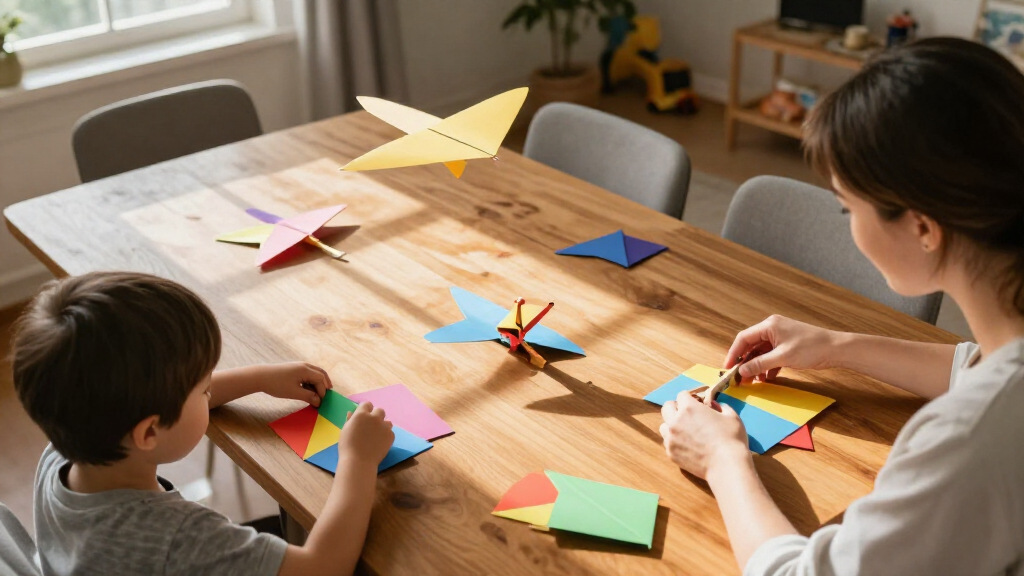
I compared the 15 kits by how directly they support the core activity: folding or preparing a paper plane, launching it, and making changes for another flight. The ranking weighs ease of setup, launch mechanism, plane supply, age fit, build and assembly demands, and repeat-play potential. I also looked at what each kit adds beyond launching, such as electronics, engineering concepts, stunt designs, glow features, or a large collection of paper planes.
The order favors kits that make a clear, usable case for the paper-airplane-launcher buyer rather than simply adding the most accessories or the most elaborate mechanism. A simpler kit can rank well when its purpose is easy to understand; a more involved option earns its place when its added learning or control offers a distinct payoff. Tradeoffs such as batteries, adult assistance, limited plane counts, and extra setup matter because they can affect how often a kit gets used. The product reviews should be read as comparisons of intended features and fit, not as claims of hands-on testing.
Factors to Consider When Choosing Best Paper Airplane Launcher Kits
Before choosing a kit, decide what you want the launch to add to the activity. A launcher can make flights more repeatable, but it can also add assembly, batteries, or a need for more space. These broader factors help separate a fun folding set from a mechanism-focused STEM project.
Choose the Launch Mechanism Around the Play Style
Launcher mechanisms change the experience more than a long accessory list does. Rubber-band designs can be straightforward, but the flight still depends on the plane’s fold and the way it is loaded. Electric and motorized launchers add powered assistance, which can make the activity feel more like a device-based project but brings battery and setup questions. Hydraulic or wooden engineering kits may suit children who want to understand how a mechanism works, though assembly can take time away from flying. Before buying, decide whether the main goal is quick launches or building and learning about the launcher. A more elaborate mechanism is not automatically a better fit if the child mainly wants to fold planes and send them flying.
Match the Kit to the Child’s Folding and Assembly Skills
Age guidance can narrow the options, but it does not tell the whole story. Paper folding, attaching launcher parts, and following a multi-step build are separate skills, and children may find one much easier than another. For younger flyers, prioritize clear instructions and a setup they can repeat with limited help rather than choosing by age label alone. Older children may enjoy kits that include electronics or mechanical construction, especially if they like figuring out why a launch behaves differently. A common mistake is buying a project that is too demanding for independent play when the child wants immediate results. If an adult will be involved, decide whether that is part of the fun or a constraint.
Look Beyond the Plane Count
A large stack of paper planes can keep a group busy, but quantity is only useful if the designs suit the intended activity. Some kits emphasize repeated folding and decorating; others focus on a smaller number of planes paired with a particular launcher. Think about whether the child prefers experimenting with different shapes, personalizing planes, or refining one design through multiple launches. Check whether the kit’s paper supply is likely to support more than one session and whether ordinary replacement paper can be used. Avoid assuming that extra planes mean better flight performance; folding accuracy and launcher compatibility can matter more. For shared play, a generous supply may be more useful than a complex mechanism that only one child can operate at a time.
Plan for Flight Space, Noise, and Supervision
Paper airplanes still need room to fly, and powered launches can cover more ground than a child expects. A clear indoor area helps reduce collisions with furniture, while an outdoor space gives planes room to travel but can make them harder to retrieve. Consider how quickly the launcher can be reset and whether launching requires an adult to steady or load components. Motorized options also raise practical questions about batteries, moving parts, and where the kit will be stored. If the play area is small, prioritize controlled, repeatable launches over maximum distance claims. Matching the kit to the available space can prevent a technically appealing set from becoming an occasional-use toy.
Decide How Much STEM Content You Actually Want
STEM features are most useful when they connect to a child’s interests rather than merely adding steps. A kit that introduces circuits, hydraulics, or engineering can extend play for a child who enjoys building and troubleshooting. For a child who wants to decorate and fly planes, those same mechanisms may feel like a detour. Look at whether the learning activity is integrated with launches or treated as a separate build stage. More parts can mean more opportunities to explore, but also more chances for missing pieces, setup help, or a stalled project. Choose the depth that matches the child’s patience and curiosity, not the longest feature list.
Factor in Reuse and Replacement Supplies
Repeated play depends on more than the launcher surviving its first session. Paper planes can be bent or lost, and some kits may rely on specific parts or accessories to work as intended. Before choosing, check whether the planes can be recreated from ordinary paper or whether a particular template or component is central to the design. Battery-powered kits need a plan for replacement power, while mechanical kits may need careful storage so small parts stay together. A kit with a simple reset process can be more appealing for quick play than one that requires rebuilding after every flight. Think about what will still make the set usable once the included planes or consumables are gone.
Frequently Asked Questions
Which kind of paper airplane launcher kit is easiest for a child to use independently?
Look for a kit with a simple loading process, clear folding instructions, and few assembly steps rather than relying on the age label alone. Rubber-band and paper-focused sets may have less setup than electronic or hydraulic projects, though individual designs differ. A child who can fold planes confidently may still need help attaching launcher parts. If independent play matters, check whether the launcher can be reset without an adult and whether replacement planes are easy to make. An involved STEM kit may be a better choice when shared building time is part of the plan.
Should I choose an electric launcher or a rubber-band launcher?
Choose based on the experience you want, not an assumption that powered means better. An electric launcher adds a motorized element and may suit children curious about devices, but it can introduce battery needs and more parts to manage. A rubber-band launcher can keep the focus on paper-plane folding and launching, although launch consistency still depends on loading and plane design. For a child who wants a hands-on mechanism project, powered or engineering-based kits may be more engaging. For quick play with fewer dependencies, a simpler launcher is often the more practical direction.
Are kits with many included planes a better choice for siblings or groups?
A higher plane count can help when several children want to fold, decorate, and launch at once, especially if the kit supports repeated craft play. It does not guarantee that every plane will work with the launcher or that the set includes multiple launchers. For group use, check whether children can take turns without lengthy resets and whether the planes are easy to identify or personalize. A smaller set with a more involved mechanism may work better for a shared building activity than for simultaneous play. Consider both the number of planes and how many children can participate at the same time.
Do paper airplane launcher kits work well indoors?
Some can, but the available space matters more than the word “indoor” on a product listing. A short, clear hallway or large room may suit controlled flights, while powered launches can send planes farther than expected. Remove fragile objects and avoid aiming toward people or pets. If space is limited, favor a kit designed around easy resets and controlled launches rather than treating distance as the main goal. Outdoor use provides more room but makes wind and retrieving planes additional factors.
Is a STEM-focused launcher worth choosing over a simple plane kit?
It can be a better fit when the child enjoys building, testing mechanisms, or learning how circuits and moving parts work. The added project can give play more structure, but it may also mean longer setup and more adult assistance. A child mainly interested in folding, decorating, and flying may get more use from a direct paper-plane set. Consider whether the learning activity is something the child will return to after the first build. The best choice is the one whose extra steps support the child’s interests rather than delaying the activity they wanted.
Conclusion
My best overall recommendation is the Doctor Jupiter Paper Airplane Launcher Kit for shoppers who want a direct launcher-and-plane experience; the Snap Circuits Flight Deck is the stronger fit when electronics and STEM exploration matter most. For best value in play materials, the Paper Airplane Kit with 100 Planes, Stickers, Launcher, and Rubber Bands makes the most sense for families who want lots of folding and decorating options. For beginners, I would start with a straightforward kit such as the Doctor Jupiter model, while the best premium-style project is better represented by a mechanism-rich option like Smartivity Hydraulic or the Remote-Controlled Paper Airplane Motor Kit for children who welcome extra setup. Choose Fat Brain Toys Sky Surfer for wooden engineering appeal, the 4M Electric launcher for powered play, and the glow or stunt-focused kits when visual design is the main draw. If your priority is a particular age, group size, or build style, use those needs to narrow the list before choosing based on features alone.