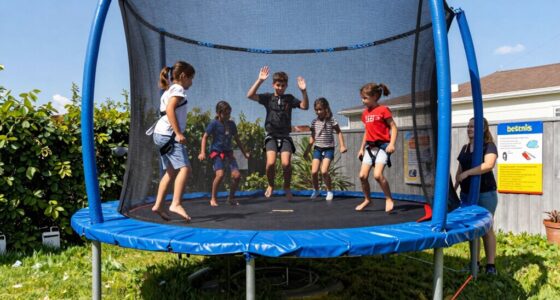
Many people ignore the vital wind safety rule for bounce houses, risking accidents and injuries. You should always check the weather before setup, monitor wind speeds during use, and never exceed manufacturer’s wind limits—usually around 15 mph. Properly anchoring and securing the inflatable is essential, especially if gusts pick up. Ignoring these precautions can be dangerous, but understanding these safety measures helps keep everyone safe; keep going to learn how to stay protected.

Turn the school run and nap time into listening time
- Thousands of audiobooks, podcasts and originals
- Listen on your phone, tablet or Echo — also offline
- Cancel anytime
Key Takeaways
- Many people ignore the critical wind safety rule, which states bounce houses should not operate above manufacturer-specified wind limits.
- Ignoring wind speed thresholds, especially over 15 mph, significantly increases the risk of bounce house lift-off or collapse.
- Proper anchoring and securing are often overlooked, reducing stability during gusty conditions.
- Continuous weather monitoring and immediate deflation when wind exceeds safe limits are essential safety practices.
- Recognizing signs of strong wind, such as shifting or whistling sounds, is crucial but frequently neglected by operators.
Products Worth Considering

LEGO Icons Tranquil Garden Building Set – Japanese Zen Garden DIY Kit for Adults, 10315

Graco TrueCoat 360 Variable Speed Handheld Paint Sprayer

LEGO Boost Creative Toolbox 17101 Fun Robot Building Set and Educational Coding Kit for Kids
As an affiliate, we earn on qualifying purchases.
Why Wind Safety Matters When Setting Up a Bounce House

Wind safety is essential when setting up a bounce house because strong gusts can quickly turn a fun event into a dangerous situation. Knowing the wind speed is critical, as higher gusts increase the risk of the bounce house tipping or becoming airborne. Following safety guidelines helps you determine safe conditions for setup and operation. Typically, if wind speeds reach 15 miles per hour or more, it’s best to postpone or cancel the event. Ignoring these precautions can lead to accidents, injuries, or property damage. Always check local weather reports before inflating the bounce house, and never underestimate the power of the wind. Adhering to established safety guidelines ensures everyone stays safe and the event remains enjoyable.
What Is the Bounce House Wind Safety Rule?

The bounce house wind safety rule is a straightforward guideline that helps prevent accidents caused by unexpected gusts. It states that you should never set up or operate a bounce house if wind speeds surpass the manufacturer’s recommended limit, which is often based on the inflatable design and its wind resistance. Many bounce houses are built with specific wind resistance capabilities, but exceeding these limits can cause the inflatable to become unstable or lift off. Always check local weather conditions and adhere to the wind speed restrictions provided. Ignoring this rule puts everyone at risk. By understanding the importance of inflatable design and wind resistance, and following the guidelines, you ensure a safer environment for kids and peace of mind for yourself. Additionally, being aware of local weather conditions can help prevent dangerous situations before they occur. Recognizing the manufacturer’s guidelines for wind safety can further help in making informed decisions and avoiding accidents. Being proactive about projected wind speeds is essential for maintaining safety during outdoor events, and staying informed about weather forecasts can be a crucial part of your safety preparations.
How to Check Weather Before Setting Up

Before setting up a bounce house, it’s essential to check the weather forecast to guarantee safe conditions. Monitor weather alerts from reliable sources like weather apps or local news to stay informed about any severe weather warnings. Pay close attention to wind speed reports, as high winds can make setting up dangerous. If the forecast predicts strong winds or storms, postpone the setup until conditions improve. Always check for real-time updates, especially on the day of your event, because weather can change quickly. Don’t rely solely on the forecast; use your judgment and err on the side of caution. Proper weather checks help prevent accidents and ensure everyone’s safety during your bounce house event. Additionally, understanding weather patterns can help you better anticipate and prepare for sudden changes, including wind behavior, which is crucial for outdoor safety. Being aware of HRV insights and how weather influences physical responses can also assist in planning safer outdoor activities. Recognizing climate variability can further enhance your preparedness for outdoor setups.
Risks of Ignoring Wind Limits During Your Event

Ignoring wind limits can compromise the structural integrity of your bounce house, increasing the risk of it collapsing or tipping over. When wind speeds are too high, accidents become more likely, putting everyone at risk. Proper securing measures are essential to keep the bounce house safe when the weather changes unexpectedly. Additionally, understanding the wind impact on inflatables can help you better prepare and prevent potential hazards. Being aware of the safe wind thresholds can make a significant difference in ensuring the safety of all participants. Recognizing the importance of weather monitoring can further help in making timely decisions to protect attendees. Moreover, proper anchoring techniques are crucial for keeping the bounce house stable during gusty conditions, especially when considering the performance cookies that track environmental factors affecting safety measures.
Wind-Related Structural Risks
Windy conditions can quickly turn a fun bounce house into a dangerous hazard if you don’t heed the manufacturer’s wind speed limits. Ignoring these limits compromises the structure’s wind resistance, increasing the risk of collapse or tipping over. Properly secured anchor points are essential; they help keep the bounce house stable during gusts. Without enough anchoring, even moderate winds can cause the structure to shift or lift off the ground, risking injuries to participants and bystanders. Wind-related structural risks aren’t just about the bounce house itself—they also threaten nearby objects and people. Understanding wind resistance is crucial for maintaining safety during outdoor events. Additionally, regular inspections for anchor point integrity can prevent failures caused by wear or improper setup. Being aware of safety precautions helps in preventing accidents caused by unexpected wind gusts. Always check the weather forecast and adhere to the recommended wind limits. Failing to do so puts everyone at unnecessary risk and can lead to costly damages or injuries. Proper setup procedures and ongoing supervision are key to ensuring a safe and enjoyable event. Incorporating wind speed monitoring devices can provide real-time alerts and prevent accidents before they happen.
Increased Accident Probability
When you disregard the manufacturer’s wind speed limits during your event, the risk of accidents increases considerably. High wind speeds can cause bounce houses to become unstable or even lift off the ground, jeopardizing everyone nearby. Ignoring safety protocols related to wind limits puts children and adults at serious risk of injury. Without paying attention to wind speed, you might not notice when conditions become unsafe, leading to sudden collapses or tipping over. These accidents can result in broken bones, head injuries, or worse. Staying within recommended wind limits isn’t just about following rules—it’s about protecting your guests. Always monitor the weather, and respect the manufacturer’s safety protocols to reduce the likelihood of dangerous incidents. Proper handling of outdoor equipment and understanding wind safety guidelines can help you respond quickly and effectively if weather conditions change unexpectedly. Additionally, being aware of weather monitoring practices allows you to make informed decisions to ensure everyone’s safety. Being prepared with emergency response plans is essential for managing unexpected weather changes and maintaining a safe environment. Recognizing the importance of regular equipment inspections can further prevent accidents caused by equipment failure. Safety should always come first.
Proper Securing Measures
Proper securing measures are essential to prevent accidents caused by unexpected gusts or increased wind speeds. Ignoring wind limits can turn inflatable hazards into dangerous projectiles, risking injury or property damage. To guarantee safety, follow these safety protocols: 1. Anchor the bounce house securely with stakes or weights suitable for your surface. 2. Regularly check all tie-downs and fastenings before the event begins. 3. Monitor weather conditions continuously, especially wind speeds, and be ready to deflate if limits are exceeded. 4. Keep an emergency plan in place, including quick evacuation procedures. 5. Utilize appropriate tools such as heavy-duty stakes or weights to ensure a secure setup. Proper knowledge of wind safety limits can significantly reduce the risk of accidents during outdoor events. Being aware of AI’s role in safety innovations can also enhance your preparedness and response strategies. Additionally, understanding body piercing aftercare can help prevent injuries or infections that could be worsened by adverse weather conditions. Neglecting these steps compromises proper securing measures and heightens risks. Always prioritize safety protocols to protect guests and prevent inflatable hazards from becoming safety threats during your event.
Top Tips for Securing Your Bounce House Against Wind

To keep your bounce house safe during windy conditions, you need to use secure anchors and stakes properly. Regular weather monitoring helps you stay ahead of changing wind speeds and decide when to deflate if necessary. By following these tips, you can prevent accidents and guarantee everyone stays safe.
Secure Anchors and Stakes
Securing your bounce house with sturdy anchors and stakes is essential to prevent it from lifting or shifting during windy conditions. Proper anchor points ensure stability, and stake installation is key to holding the structure in place. To do this effectively:
- Choose high-quality stakes designed for outdoor use.
- Insert stakes at a 45-degree angle for maximum hold.
- Ensure stakes are driven deep into the ground, at least 12 inches.
- Attach the bounce house’s anchor points to stakes with strong, weather-resistant straps.
Always double-check each stake connection before use. Proper stake installation keeps the bounce house secure, reducing the risk of accidents caused by wind. Remember, well-placed stakes are your best defense against unexpected gusts.
Weather Monitoring Tips
Monitoring the weather closely before and during bounce house use is essential to prevent accidents caused by wind. Stay alert to weather alerts, which provide timely updates on potential wind hazards. Check wind speed forecasts regularly; if wind speeds exceed 15 mph, it’s safest to deflate the bounce house. Use the table below to understand safe wind thresholds:
| Wind Speed (mph) | Action | Notes |
|---|---|---|
| 0-10 | Safe for operation | Regular monitoring recommended |
| 11-15 | Caution advised | Prepare to deflate if winds rise |
| 16-20 | Stop use immediately | High risk of instability |
| 21-25 | Strong winds, deflate now | Do not attempt to operate |
| 26+ | Severe weather, evacuate | Stay indoors |
Always prioritize safety by monitoring weather conditions constantly and acting accordingly.
When to Recognize Wind Is Too Strong and Cancel

When the wind picks up, it’s vital to recognize the signs that conditions are no longer safe for a bounce house. A wind warning indicates it’s time to act. If you notice:
- Sudden gusts that cause instability
- Continuous strong winds exceeding 20 mph
- Unusual movement or shifting of the bounce house
- Whistling or howling sounds indicating increased wind speed
These signs mean you should immediately implement safety protocols, including deflating and securing the bounce house. Ignoring these cues increases the risk of accidents and injuries. Always monitor local weather updates and err on the side of caution. Recognizing when wind is too strong and canceling is vital to ensure everyone’s safety and prevent avoidable hazards.
Common Mistakes That Jeopardize Bounce House Safety in Wind

Ignoring early signs of strong winds or failing to act promptly can lead to dangerous situations. One common mistake is neglecting proper inflatable maintenance, which can weaken the bounce house’s structure and make it more vulnerable in windy conditions. Additionally, inadequate staff training often results in delayed responses or improper procedures when wind picks up, increasing risk. Rushing to inflate or deflate the unit without checking weather conditions or securing anchors can cause accidents. Overlooking these safety protocols puts everyone at risk. To prevent this, ensure your team is well-trained to recognize wind dangers and maintains the bounce house regularly. Proper inflatable maintenance and staff preparedness are critical to keeping everyone safe during windy days.
Best Practices for Operating Bounce Houses on Windy Days

Operating bounce houses safely on windy days requires proactive planning and strict adherence to established safety protocols. Your focus should be on the inflatable design’s wind resistance and the environment. First, check the wind forecast; if it exceeds manufacturer recommendations, postpone setup. Second, secure anchors tightly; proper anchoring enhances wind resistance. Third, avoid inflating during gusty conditions; wait until winds subside. Fourth, continuously monitor wind levels throughout the event, ready to deflate if necessary. Remember, sturdy inflatable design plays a key role in safety—some models are better suited for windy conditions. By following these practices, you minimize risks and ensure a safe, fun experience, even when the weather turns windy. Prioritize safety, and never underestimate the power of wind on inflatable structures.
Teaching Kids and Parents About Bounce House Wind Safety

Educating kids and parents about bounce house wind safety is essential to prevent accidents and guarantee everyone has a fun, worry-free experience. Teaching them about the importance of child safety and proper equipment inspection helps build awareness. Explain that kids should never operate or enter a bounce house during high winds. Show parents how to check equipment for secure anchoring and damage before use. Use simple language and visuals to reinforce these messages.
| Key Point | Action |
|---|---|
| Child Safety | Never let kids play in wind or storms. |
| Equipment Inspection | Check for tears, loose stakes, and secure anchoring. |
| Wind Awareness | Always monitor weather conditions before setup. |
Frequently Asked Questions
Can a Bounce House Be Safely Used in Light Wind Conditions?
You shouldn’t use a bounce house in light wind conditions without checking material durability and anchor maintenance. Even gentle breezes can cause instability if the bounce house isn’t made from durable materials or if anchors aren’t secure. Always verify the material is strong and anchors are properly maintained and firmly in place. If there’s any doubt about wind strength, it’s safest to wait until conditions improve, preventing accidents or injuries.
How Often Should Anchors Be Checked During Windy Events?
You should check your anchors every 30 minutes during windy events. Regular anchor inspection is vital to guarantee they stay secure, especially as wind conditions change. Keep wind monitoring tools handy to track gusts and adjust your inspection frequency accordingly. By staying vigilant and performing these checks often, you reduce the risk of accidents and keep everyone safe while the bounce house is in use.
Are There Specific Wind Speed Thresholds for Different Bounce House Sizes?
Wondering whether wind speed matters for your bounce house? Yes, it does! Different bounce house sizes have specific wind thresholds—smaller units might withstand winds up to 15 mph, but larger ones need protection at just 10 mph. Always check your anchor points and monitor wind thresholds to prevent problems. By paying attention to these parameters, you keep play safe, secure, and sensational, avoiding accidents and ensuring everyone stays happy.
What Are the Legal Requirements for Bounce House Wind Safety?
You need to follow safety regulations that specify wind speed limits, usually around 25 mph, for bounce houses. Check your local laws and verify you have liability insurance in case of accidents. Regularly monitor wind conditions during events, and deflate the bounce house if winds exceed safety thresholds. Staying compliant helps protect you legally and keeps participants safe, reducing liability and ensuring responsible operation.
How Do Weather Apps Compare in Accuracy for Wind Predictions?
You might think all weather apps are equally reliable, but their accuracy varies. Some apps use advanced models and real-time data, improving wind prediction reliability, while others depend on outdated information. To stay safe during bounce house events, don’t just depend on a single app. Cross-check multiple sources and pay close attention to real-time updates, especially for wind speeds. Trustworthy weather apps help you anticipate gusts and ensure safety.
Conclusion
Remember, a bounce house is a fun oasis, but wind can turn it into a dangerous storm if you’re not careful. Picture the bright colors fluttering wildly as gusts grow stronger—your party can quickly turn chaotic. By checking the weather, securing every tether, and knowing when to call it quits, you keep the joy alive without risking anyone’s safety. Stay vigilant, and let the laughter bounce safely on a day that’s calm and clear.