
To create realistic animals and figures in clay, start by building a sturdy armature using wire or foil to support your shape. Apply clay layer by layer, focusing on accurate proportions and anatomy. Use textured tools to add details like fur, feathers, or muscles, then smooth surfaces with water or slip. Take your time drying and finishing your sculpture for durability. If you keep exploring these techniques, you’ll discover how to craft more detailed and dynamic sculptures.

Get baby and family essentials delivered free — and shop member deals
- Fast, free delivery on millions of items
- Access to Prime Big Deal Days deals on October 6–7
- Prime Video, Amazon Music and more included
Key Takeaways
- Start with a sturdy armature using wire or foil to support animal or figure forms.
- Build up clay gradually, focusing on proportions and anatomy for realism.
- Use texture tools like brushes and needles to add fur, feathers, or skin details.
- Smooth surfaces with water or slip, then carve fine details to enhance realism.
- Allow slow drying, then finish with painting or sealing for durability and presentation.
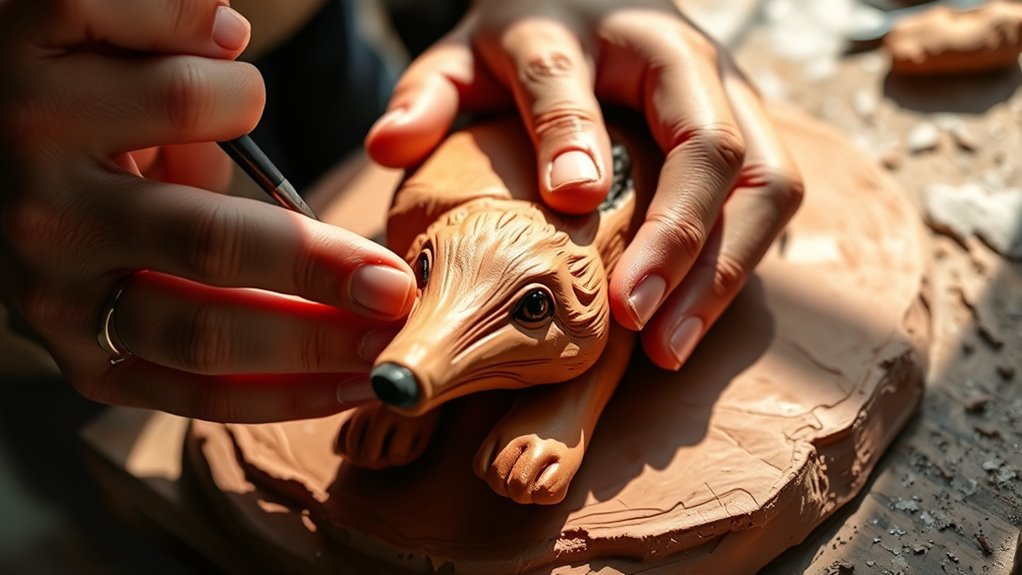
Clay sculpting is a versatile and rewarding art form that allows you to bring your creative ideas to life through shaping malleable material. Whether you’re crafting animals or human figures, the process begins with understanding the foundational techniques that give your sculpture stability and realism. One essential step is creating a clay armature, which acts as a supportive skeleton inside your piece. This armature provides structure, helping you build complex forms without collapsing or losing shape as you work. You can make an armature from wire, pipe cleaners, or crumpled aluminum foil, depending on the size and intricacy of your sculpture. The armature should be slightly smaller than the final figure since you’ll add layers of clay on top. Once the armature is in place, you start applying clay, building up the form gradually.
As you add clay, focus on mastering texture techniques to make your sculpture more lifelike and interesting. Texture techniques include using tools like brushes, sponges, or even household items to create surface details that mimic fur, feathers, skin, or muscle. For animals, you might use a stiff brush to create fur texture, or a fine needle tool to carve in details like wrinkles or veins. These techniques help bring depth and realism, making your sculpture stand out. When working on figures, texturing muscles or clothing folds can add realism and dynamic movement. Keep in mind that controlling your pressure and the type of tool you use influences the final look, so experiment to find what works best for each surface detail.
Additionally, understanding how to measure and evaluate software quality assurance metrics can help ensure your sculpting process remains efficient and consistent, especially when working on complex pieces. Throughout the sculpting process, you’ll want to continuously refine your piece, smoothing certain areas and adding texture where needed. Use water or slip (a mixture of clay and water) to smooth surfaces, or employ tools to carve into the clay for more intricate details. As you progress, keep an eye on proportions and anatomy, especially for animals, to ensure they look believable. Regularly step back and assess your work from different angles; this helps identify areas needing more detail or correction. Once you’re satisfied with the form and surface texture, allow your sculpture to dry slowly to prevent cracking. Finishing touches, like painting or sealing, can further enhance the realism of your animal or figure sculpture.
In the end, mastering clay armature building and texture techniques will empower you to create detailed, dynamic sculptures that truly capture life and movement.
As an affiliate, we earn on qualifying purchases.
Frequently Asked Questions
What Types of Clay Are Best for Detailed Animal Sculptures?
For detailed animal sculptures, you should use polymer clay or high-quality air dry clay. Polymer clay is ideal because it stays soft until baked, allowing you to add fine details easily. Air dry clay works well for quicker projects and doesn’t require firing. Both types enable you to achieve intricate textures and realistic features, making them perfect choices for creating detailed, lifelike animal sculptures.
How Do I Prevent Clay From Cracking During Drying?
Think of your clay sculpture as a delicate flower that needs careful nurturing. To prevent cracking during drying, you must master air drying techniques and moisture control. Slowly air dry your piece in a cool, dry space, covering it loosely with plastic to regulate moisture loss. Gradually remove the cover over days, ensuring even drying. This gentle approach keeps your sculpture strong and crack-free, just like a blooming flower.
Can I Paint or Glaze Finished Clay Sculptures?
Yes, you can paint or glaze finished clay sculptures. Use acrylic paints for detailed painting, applying thin layers with brushes for best results, and seal with a clear acrylic spray. For glazing options, make sure your sculpture is properly bisque-fired first, then apply ceramic glazes and fire again. Experiment with different painting techniques and glaze types to achieve your desired finish, and always follow safety guidelines for firing and handling materials.
What Tools Are Essential for Intricate Figure Detailing?
Think of your tools as your brushstrokes on a canvas; fine detail techniques demand precision. You’ll need small, sharp tools like needle tools, fine-pointed scalpels, and dental picks to carve intricate details. Keep your tools clean and sharp—regular maintenance tips include wiping off excess clay and honing blades. This way, you’re equipped to bring out the delicate, lifelike features of your figures, transforming your sculpture into a true work of art.
How Long Does It Typically Take to Complete a Sculpture?
It usually takes you anywhere from a few hours to several weeks to complete a sculpture, depending on its complexity and your skill level. You should plan your project timeline carefully, breaking it into stages to stay organized. By managing your project planning well, you guarantee consistent progress and avoid rushing. Remember, patience and attention to detail make all the difference in creating a polished, impressive sculpture.
Conclusion
As you explore clay sculpting, you’ll find it’s both relaxing and rewarding, allowing your creativity to flourish. Did you know that the global arts and crafts market is projected to reach over $50 billion by 2027? This growth highlights how many people, like you, are discovering the joy of creating with clay. So, keep practicing and experimenting—your next masterpiece could be just a sculpture away. Embrace the process and enjoy every moment of your artistic journey.
Cold & flu season Picks
humidifiers
As an affiliate, we earn on qualifying purchases.