TL;DR
Family-friendly board games bring players of different ages and experience levels to the same table, but “family game” does not guarantee simple rules or a perfect fit. Check reading demands, play time, player count, interaction, and accessibility before choosing; a short practice round can make a new game easier for everyone.
A game can say “family” on the box and still leave your youngest player staring at tiny cards while everyone else waits. The label is a starting point, not a promise. Family-friendly board games are games the people at your table can learn and enjoy together, and the right fit depends on more than age.

Turn the school run and nap time into listening time
- Thousands of audiobooks, podcasts and originals
- Listen on your phone, tablet or Echo — also offline
- Cancel anytime
This guide helps you match a game to your family’s reading skills, attention spans, group size, and taste for competition. You’ll see how to compare play times, spot rule and accessibility demands, and choose between cooperative, word, dexterity, and strategy games. You’ll also get a simple way to make the first round less stressful.
For example, a quick tile game might suit a Tuesday evening with a tired seven-year-old, while a longer strategy game may be just right for a relaxed weekend afternoon. The goal is simple: find a game that gets everyone leaning toward the board instead of checking the clock.
Treat the box age range as a starting point; check reading, attention, and component demands for the players at your table.
A listed 15–30-minute play time may stretch during a first game, so leave room for setup and questions.
Match the game style to the group’s mood: teamwork, conversation, pattern building, dexterity, or light strategy.
Check the player range, accessibility details, and current CPSC recall notices before buying a child-focused game.
Play the base game first; consider an expansion only if your group wants more variety and the publisher confirms compatibility.
Choose a game your youngest player can actually enjoy
Family-friendly board games work best when their reading, rules, and decisions fit the people playing, not just the youngest age printed on the box. A recommended age gives you a useful first clue, but it cannot tell you whether a child can read the cards, wait through long turns, or manage small pieces comfortably. Look at the whole table before you buy.
Imagine a child who loves animals but is still learning to read. A game with colorful animal tiles and picture-based turns may let them make independent choices, while a card game packed with written instructions may leave an adult translating every move. That adult can join as a teammate, but it helps to know the game will need that support.
Age-appropriateness includes how a game handles frustration, competition, and losing. A young player who gets upset when a token moves backward may enjoy a cooperative puzzle more than a race game. Another child may love a silly, unpredictable contest where a lucky draw can bring them back into the running.
Before buying a child-focused game, check current CPSC recall notices for the product, particularly if it has small components or electronic parts. Follow any age warnings on the packaging, and store pieces where younger siblings cannot reach them. When you’re choosing for a mixed-age group, ask whether an older child can help a younger one without taking over every decision.
- Reading: Can players understand the cards or symbols?
- Attention: Can everyone stay involved between turns?
- Hands-on demands: Are the pieces easy to hold and move?
- Emotions: Will the group enjoy direct competition or prefer a shared goal?
These checks help explain why one game can be a hit with one family and a poor fit for another. A game that a parent can teach in five minutes may still feel frustrating if younger players spend the rest of the evening waiting for their turn.
Products Worth Considering

Nanit Smart Baby Video Monitor with Camera and Wall Mount, 1080p Wi-Fi

UPPAbaby Aria V2 Lightweight Infant Car Seat with Load Leg and Cover – James

LEGO Star Wars Boba Fett 75455 Collectible Building Set
As an affiliate, we earn on qualifying purchases.
Use this five-step check before you buy
To choose family-friendly board games, check the players, time, group size, rules, and play style before you pay. This quick sequence helps you spot a mismatch while you’re still looking at the box or product page. A printed age range is useful, but these practical details tell you what playing together may feel like.
- Name the players. List who will play most often, including their reading confidence, patience, and experience with games. For instance, a six-year-old who enjoys counting may be ready for a game that another child the same age finds too fiddly.
- Pick a realistic time window. Games listed at 15–30 minutes often fit an evening, but a first play can take longer while everyone learns. If bedtime is close, choose something short enough to stop without a dispute.
- Check the player range. Read the minimum and maximum player count. A game can technically support six people yet feel slow if each player waits a long time between turns.
- Inspect the rules and components. Look for clear symbols, manageable setup, and readable text. If the instructions seem dense, watch a publisher’s explanation or read a sample turn before deciding.
- Match the mood. Choose between teamwork, friendly rivalry, wordplay, pattern building, or a little chaos. A group wanting a calm puzzle may not enjoy a fast dexterity contest.
Try the check with a real scenario: four people, including two children, have 25 minutes after dinner. A short game with quick turns and a simple goal is a more promising pick than a long game that takes half the time to set up. Let the family’s routine guide the choice.
Compare game styles to find the right kind of fun
Different family-friendly board games create different kinds of fun: some reward teamwork, others invite conversation, and some turn a wobbly stack into a room full of laughter. Comparing the style matters because the same group can want different things on different nights. Look past the theme and ask what players will actually do on their turns.
| Game style | What players do | Good fit when |
|---|---|---|
| Cooperative | Work together toward a shared win | You want teamwork and less direct rivalry |
| Party or word game | Guess, describe, tell stories, or give creative answers | Your group enjoys conversation and a lively table |
| Tile-laying or pattern | Place pieces to build routes, pictures, or shared designs | You like visual choices and a calmer pace |
| Dexterity | Stack, balance, flick, or move pieces | You want simple turns and a hands-on challenge |
| Light strategy | Plan moves while watching what others do | Older children and adults enjoy making decisions |
Picture a family with a competitive older sibling and a younger child who hates being singled out for losing. A cooperative game gives them a shared problem to solve: perhaps they build a route together before time runs out. On another evening, those same players might want a word game where the funniest answer wins. Neither style is automatically better.
Classic games can be easy to recognize, but familiar rules don’t always mean short play or simple decisions. Newer games often use visual symbols, shorter turns, modular boards, or adjustable difficulty. Some offer solo modes or variants for different group sizes, though those features vary by title. A publisher’s player-count guidance can help you decide whether a game really suits two people as well as a larger group.
Also consider what the game asks of your players. A fast flicking game may be tricky for someone with limited fine motor control, and a color-heavy puzzle may pose a challenge for someone who has trouble distinguishing colors. Check the components and rules themselves, since accessibility features differ from game to game.
Keep the first game night short, clear, and welcoming
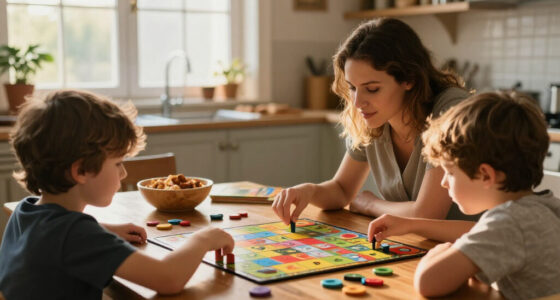
A smooth first game night starts with a clear goal, a quick setup, and permission for everyone to learn as they play. The first round often takes longer than the box suggests because people pause to ask questions, rethink moves, or read a card aloud. A little patience can turn those pauses into part of the fun.
Take a tile game as an example. Instead of reading every rule in one breath, show the group the board, explain how to take a turn, and play one practice round with the pieces open. When a child asks whether they can place a tile in a certain spot, demonstrate what happens and keep going. The rules begin to make sense once the table is moving.
Short turns and a quick practice round help a new player feel involved instead of tested. For a game listed at 20 minutes, leave a little extra time the first night. If dinner runs late, choose a game you can finish before the evening gets rushed.
Here’s a simple teaching order you can use at the table:
- Explain what the group is trying to do in one sentence.
- Show how one turn works with a real piece or card.
- Point out how the game ends and who wins—or whether everyone wins together.
- Start a practice round, letting players ask questions as they come up.
If one person already knows the game, ask them to demonstrate rather than recite the whole rulebook. That keeps eyes on the bright board and hands on the pieces. The group can read details as needed, instead of trying to hold a long explanation in mind before anyone has taken a turn.
Spend on replay value, not a shelf of expansions
A family game earns its place on the shelf when your group wants to play it again, and a high price or long feature list cannot guarantee that. Look for variety in the decisions, scenarios, or ways players interact. Optional expansions may add new choices, but most families can begin with the base game.
Say your family likes a nature-themed tile game. If the board changes every time you play and players can build different patterns, the same box may stay interesting for months. If every round follows the same script, the group may lose interest sooner—even if the game has a stack of extra cards available to buy.
Replay value depends on your players. A simple game that children request after school can be a better buy for your family than a more complex one that adults admire but nobody starts. Think about how often you play, who can explain the rules, and whether the game still works when the usual group size changes.
You can judge that fit without buying add-ons. Ask the players what they liked after a round: choosing a route, making a silly guess, helping the team, or trying to beat a sibling. If the group wants more variety after several plays, check the publisher’s compatibility notes before considering an expansion. Until then, let the original game do its job.
Some family releases also provide a solo mode, alternate rules, or adjustable difficulty. These options can be useful when one family member wants to practise or when the group has fewer players on a particular evening. They are features to check, not guarantees across the category.
Frequently Asked Questions
What makes a board game family-friendly?
A family-friendly game is one the players can learn and enjoy together. Consider its age recommendation alongside reading demands, rules, play time, player count, and accessibility; the label alone cannot predict how it will fit your family.
What should I look for in a game for mixed ages?
Look for straightforward rules, short turns, and choices that don’t depend on adult-level reading or specialist knowledge. A game with visual symbols or a cooperative goal may help younger players join in, and an adult can play as a teammate when needed.
Are cooperative board games better for families?
Cooperative games let players work toward a shared goal, which can suit families who prefer teamwork to direct rivalry. They aren’t the right fit for everyone, though; some groups enjoy the suspense of competing. Choose according to what makes your family want another round.
How long should a family game last?
There is no ideal length for every family. A game listed at 15–30 minutes may fit a busy evening, but teaching rules or helping young players can stretch the first session. Save longer games for times when your group has room to settle in.
How can I make learning a new game easier?
Explain the goal first, demonstrate one turn, then start a short practice round. For example, show a child how to place one tile rather than describing every possible move before anyone touches the board. Players can learn the details as the game unfolds.
Do we need to buy expansions?
Usually, you can start with the base game. Play it first and see whether your group wants more variety; if you do, check that the publisher lists the expansion as compatible with your edition.
Conclusion
Choose a game for the people who will actually sit around your table: their reading skills, patience, available time, and appetite for competition. A quick practice round and a clear explanation can turn a box of unfamiliar pieces into an evening everyone wants to repeat.
When the game ends, the best sign you chose well may be simple: nobody has left the table, and someone is already asking, “Can we play again?”