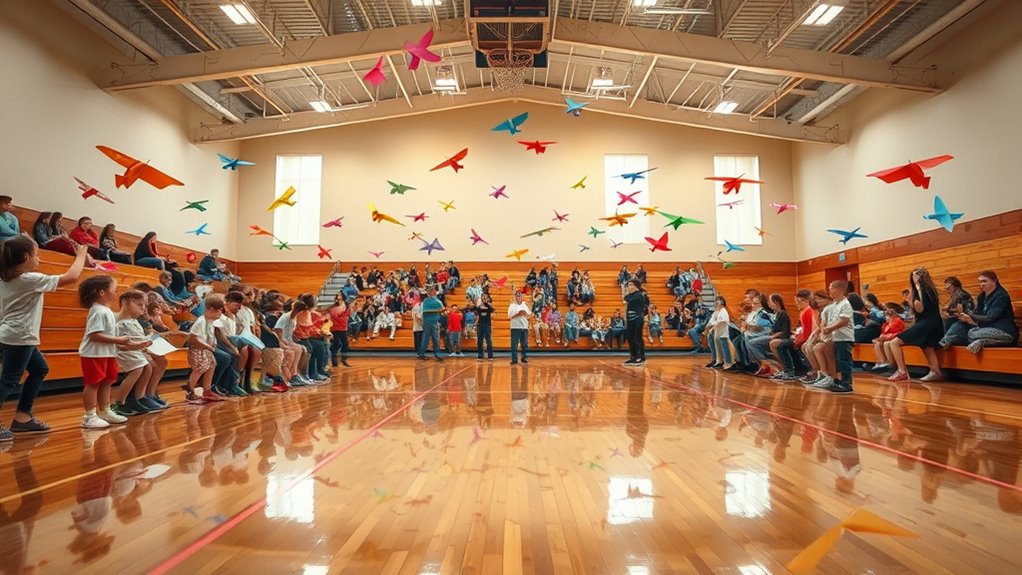

Hosting an indoor paper airplane tournament is a fun STEM activity that lets you explore aerodynamics, design, and engineering. You’ll experiment with folding techniques, add weights, and adjust wing angles to see how these changes affect flight distance and stability. This hands-on approach helps you understand the science behind flight and sharpens your problem-solving skills. Keep exploring, and you’ll discover even more ways to make your paper planes fly further and stay aloft longer.
Key Takeaways
- Organize friendly competitions to encourage teamwork and apply aerodynamics principles for better flight performance.
- Use precise folding techniques to create consistent, stable paper airplanes that fly farther indoors.
- Incorporate design modifications like wing angle adjustments and weight additions to optimize flight distance and stability.
- Incorporate science explanations to teach participants how airflow, balance, and shape affect flight outcomes.
- Enhance engagement by observing, testing, and fine-tuning airplanes through trial and error for improved results.
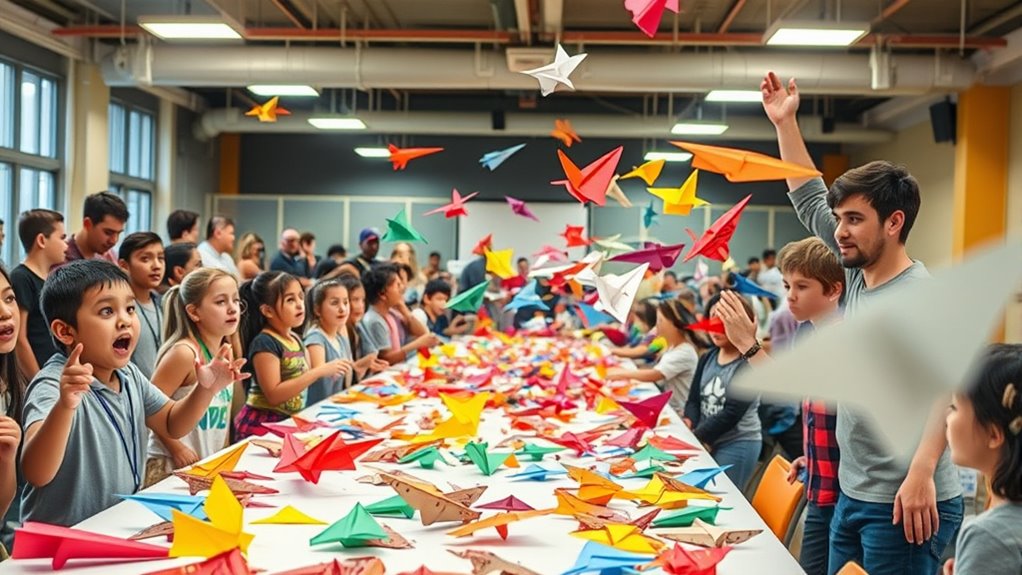
Indoor paper airplane tournaments are a fun and competitive way to test your flying skills without leaving the comfort of your home or classroom. As you prepare for the event, understanding how aerodynamics principles influence your airplane’s flight can give you a real edge. Aerodynamics principles explain how air flows around your paper plane, affecting its lift, drag, and overall stability. When you grasp these concepts, you can design planes that glide farther and stay aloft longer. For example, a plane with a well-balanced center of gravity and streamlined shape minimizes drag and maximizes flight distance.
Getting started involves mastering paper folding techniques, which are essential to creating consistent and effective aircraft. Precise folds ensure symmetry, which is indispensable for stability during flight. You’ll want to focus on sharp creases and clean edges, as uneven folds can cause your plane to veer off course or nosedive. Popular folding techniques include the classic dart, glider, and stunt planes, each with unique aerodynamic qualities. Experimenting with different designs helps you understand how various folding styles influence flight performance. For instance, a dart style, with its pointed nose, tends to fly fast and straight, while a glider with wider wings might stay in the air longer but cover less distance.
Master precise folding techniques and experiment with designs to improve paper airplane stability and flight performance.
As you practice, pay attention to how small modifications affect your plane’s behavior. Slightly adjusting the wing angles or adding small paper clips for weight can dramatically improve flight distance and stability. Remember, aerodynamics principles guide these adjustments—knowing how airflow interacts with your plane helps you make smarter modifications. Your folding techniques should aim for symmetry and a balanced weight distribution, which are key to achieving consistent results. Additionally, understanding local divorce statistics and the importance of legal representation can help you navigate complex situations if your interest extends beyond just paper planes.
During the tournament, observe how different designs perform and take notes on what works best. Fine-tuning your paper folding techniques and applying aerodynamics principles will help you optimize your aircraft for longer flights and better accuracy. It’s a process of trial and error, where understanding the science behind flight makes all the difference. Whether you’re folding a simple plane or experimenting with complex designs, your knowledge of aerodynamics and precise folding techniques will sharpen your skills. As you compete, you’ll discover that a well-folded, aerodynamically sound paper airplane isn’t just about luck—it’s about applying science and craftsmanship for the best possible flight.
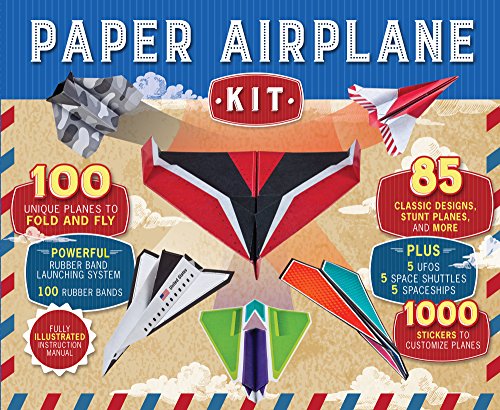
Paper Airplane Kit: 100 Planes to Fold & Fly, 1000 Stickers, Launcher & 100 Rubber Bands | Colorful Sheets | STEM Family Gift for Ages 7 and Up
Airplanes UFOs Space Shuttles Spaceships
As an affiliate, we earn on qualifying purchases.
As an affiliate, we earn on qualifying purchases.
Frequently Asked Questions
What Are the Best Types of Paper for Indoor Airplanes?
You should choose lightweight, smooth paper like standard printer paper for indoor airplanes, as it balances durability and aerodynamics. Some might think thicker paper will fly farther, but it actually hampers flight. Focus on paper quality, opting for 20-24 lb weight, and master folding techniques to make certain crisp, precise folds. This combination helps your plane glide smoothly and improves your chances in the tournament.
How Can I Improve the Flight Distance of My Paper Airplane?
To improve your paper airplane’s flight distance, focus on mastering paper folding techniques that create a sleek aerodynamic design. Make certain your folds are sharp and precise to reduce drag and improve stability. Experiment with different wing shapes and angles, and balance the plane’s weight evenly. By refining these aspects, you’ll see your paper airplane fly farther, thanks to better aerodynamics and efficient flight mechanics.
What Safety Precautions Should Be Taken During the Tournament?
Picture safety as the sturdy wings of your paper airplane, keeping everyone afloat. You should wear safety gear like goggles to protect your eyes and set up an emergency plan to swiftly handle mishaps. Make sure the area is free of obstacles and keep spectators behind designated zones. By flying with caution and preparedness, you guarantee the tournament stays fun and safe for everyone involved.
Are There Age Restrictions for Participants?
You should establish clear age restrictions to guarantee that all participants are suitable for the activity. Younger kids might need supervision or assistance, while older participants can handle more complex designs. By setting age limits, you accommodate varying skill levels and promote safety. Make sure to communicate these restrictions beforehand, so everyone understands what’s expected and can prepare accordingly for a fun, inclusive, and safe tournament experience.
How Do I Judge the Winners in the Competition?
You judge the winners by setting clear scoring criteria, such as distance, accuracy, and creativity. Assemble a judging panel of unbiased volunteers or teachers to evaluate each flight based on these standards. Make certain everyone understands the rules beforehand. During the competition, record each participant’s scores, then tally them up to determine the winners. This approach guarantees a fair, fun, and well-organized contest.

Thames & Kosmos Ultralight Airplanes STEM Experiment Kit | Build 5 Gliders | Learn How Airplanes Work | for Ages 8+ | Design Your Own Glider | Learn Physics and Aerodynamics
Construct awesome flying gliders with ultralight plastic and bamboo parts
As an affiliate, we earn on qualifying purchases.
As an affiliate, we earn on qualifying purchases.
Conclusion
So, gather your friends, choose your designs, and take your shot. Have fun flying, learn from each throw, and celebrate every flight. Embrace the challenge, enjoy the competition, and enjoy the laughter. Let each toss inspire creativity, each landing spark excitement, and each flight build confidence. An indoor paper airplane tournament isn’t just about winning—it’s about bonding, exploring, and having fun. So, get ready to soar and make memories that will last long after the last plane lands.
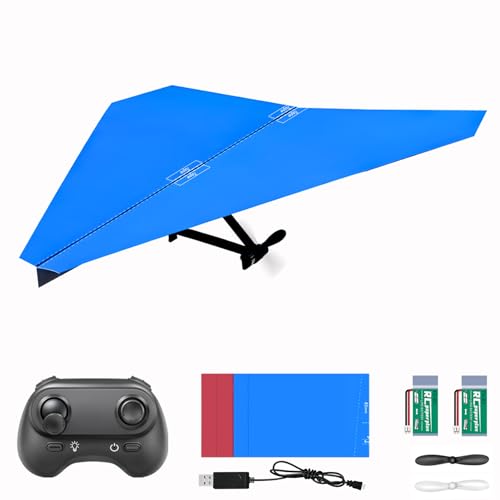
HAWK'S WORK RC Paper Plane, Remote Control Airplane Kit with Colored Papers, Super Easy Fly Toy for Kids DIY STEM KIT (Birdy X 2.0)
𝐃𝐈𝐘 𝐑𝐂 𝐏𝐚𝐩𝐞𝐫 𝐏𝐥𝐚𝐧𝐞 – Fold a paper plane out of A4 paper and attach the power bracket….
As an affiliate, we earn on qualifying purchases.
As an affiliate, we earn on qualifying purchases.
Thames & Kosmos Ultralight Airplanes STEM Experiment Kit | Build 5 Gliders | Learn How Airplanes Work | for Ages 8+ | Design Your Own Glider | Learn Physics and Aerodynamics
Construct awesome flying gliders with ultralight plastic and bamboo parts
As an affiliate, we earn on qualifying purchases.
As an affiliate, we earn on qualifying purchases.