When cooking with little helpers, prioritize safety by setting clear rules and organizing a kid-friendly space. Supervise closely, teach them how to handle utensils and hot surfaces safely, and always keep sharp tools and hazardous materials out of reach. Encourage good hygiene and proper food storage, and prepare for emergencies with a first aid kit and safety drills. Following these tips helps make cooking together both fun and safe—if you keep exploring, you’ll discover even more helpful ideas.
Key Takeaways
- Supervise children closely and use childproofing measures like cabinet locks and safety signs.
- Designate specific zones for tasks such as chopping, hot appliances, and cleaning to promote safety.
- Teach proper handwashing, safe handling of utensils, and awareness of hot surfaces and sharp tools.
- Store hazardous items out of children’s reach and keep hot liquids and sharp objects securely out of sight.
- Regularly check safety devices, maintain cleanliness, and prepare emergency plans to ensure a safe cooking environment.

Chanking 13 Pieces Kids Safe Knife Set for Real Cooking Child-Friendly Plastic Chef Tools Montessori Kitchen Toys for Toddlers Birthday Gifts for Boys and Girls Ages 4+ (A)
【Toddler Kitchen Set for Kids】: Kids cooking sets real includes 1 cooking knife, 1 Y-Shaped peeler, 1 wooden…
As an affiliate, we earn on qualifying purchases.
As an affiliate, we earn on qualifying purchases.
Why Kitchen Safety Matters When Cooking With Kids

Cooking with kids can be a fun and educational experience, but it also comes with safety risks that you can’t afford to overlook. Fire hazards are a top concern, as little hands might accidentally knock over hot pots or reach too close to flames. It’s essential to stay vigilant and keep flames controlled to prevent fires. Chemical safety is equally important; many ingredients and cleaning supplies can be harmful if ingested or mishandled. Always store chemicals out of reach and teach your child about the dangers of certain substances. By being aware of these risks, you create a safer environment where your child can explore cooking while staying protected from accidents and injuries. Safety is the foundation for a positive, enjoyable cooking experience. Additionally, understanding home safety features can help you implement effective measures to prevent potential hazards in the kitchen. Implementing fire prevention tools such as smoke detectors and fire extinguishers adds an extra layer of safety. Being familiar with kitchen safety guidelines can further enhance your preparedness and response to emergencies. Regularly checking your home safety devices ensures they are functioning correctly and ready in case of an emergency. Remember, child-proofing your kitchen is an ongoing process that helps maintain a safe space for your little helpers.
Chanking 13 Pieces Kids Safe Knife Set for Real Cooking Child-Friendly Plastic Chef Tools Montessori Kitchen Toys for Toddlers Birthday Gifts for Boys and Girls Ages 4+ (A)
【Toddler Kitchen Set for Kids】: Kids cooking sets real includes 1 cooking knife, 1 Y-Shaped peeler, 1 wooden…
As an affiliate, we earn on qualifying purchases.
As an affiliate, we earn on qualifying purchases.
Setting Up a Kid-Friendly Cooking Space

To create a safe and enjoyable space for your little helper, start with secure storage solutions for knives and sharp objects. Use kid-friendly utensils and tools to make cooking easier and safer for them. Designate specific zones for different tasks to keep the area organized and minimize accidents.
Safe Storage Solutions
Creating a kid-friendly cooking space starts with organizing your storage to keep essentials accessible and safe. Use child proof cabinet locks to prevent little hands from reaching dangerous items. Labeled storage bins help teach your child where things belong, making cleanup easier and safer. Keep sharp tools and hot items out of reach, and store cleaning supplies in a separate, locked cabinet. Consider placing frequently used ingredients at eye level for easy access. To further enhance safety, incorporate clear containers so your child can identify contents quickly. Use baskets or bins to group similar items, reducing clutter and hazards. Additionally, child-friendly organization helps create an environment where kids can help confidently without risking accidents. Implementing safe storage practices also supports a well-organized kitchen that emphasizes safety and accessibility. Proper storage organization is essential for maintaining a clutter-free and secure kitchen. Incorporating child-proof safety measures can further reduce potential risks and boost confidence when cooking together. Well-designed storage solutions can also support Gold IRA Markets, providing a secure and organized space that emphasizes safety and accessibility. By setting up your storage thoughtfully, you create a safe environment where kids can help confidently without risking accidents.
Kid-Friendly Utensils & Tools
Setting up a kid-friendly cooking space starts with choosing safe, manageable utensils and tools that your little helpers can use confidently. Use child safe utensils and age appropriate tools designed for small hands, which promote independence and safety. Look for items with rounded edges, non-slip handles, and lightweight materials. Here’s a helpful chart:
| Utensil Type | Features | Examples |
|---|---|---|
| Child safe utensils | Safe, non-sharp, easy to grip | Plastic knives, silicone spatulas |
| Age appropriate tools | Sized for small hands | Mini whisks, small spoons |
| Safety accessories | Non-slip, protective covers | Silicone grips, safety scissors |
These tools help your child participate safely and confidently in cooking activities. Incorporating upfitting fundamentals such as securely stored and organized utensils can further enhance safety and efficiency in your cooking space.
Designated Cooking Zones
Designating specific areas for different cooking tasks helps keep your kid-friendly kitchen organized and safe. Creating clear, designated workspaces minimizes accidents and teaches your child about boundaries. Use color coded zones to distinguish areas, such as a blue zone for chopping, a red zone for hot tasks, and a green zone for assembling ingredients. These zones help your little helper know where to focus and avoid confusion. Keep safety in mind by setting up:
- A dedicated space for cutting and prep
- A separate zone for hot appliances
- An area for washing and cleaning
- A station for measuring and mixing
- A corner for storing kid-friendly utensils
Establishing these designated workspaces ensures smoother cooking sessions and keeps everyone safe while having fun together. Incorporating electric appliances can also help make cooking more manageable and safe for young helpers. Additionally, using child-safe utensils designed for small hands can enhance safety and independence during cooking activities. Proper organization of these zones can also promote kitchen safety protocols and help prevent accidents during busy cooking times. Incorporating visual cues such as labels or pictures can further assist children in understanding their designated areas and responsibilities.

Jetec 10 Pieces Cabinet Locks for Babies, U-Shaped Proofing Drawers Safety Child Locks Adjustable, Easy to Use Childproof Latch for Knob Handle on Kitchen Door Storage Cupboard Closet (White)
Quantity: you will get 10 pieces u shape child cabinet locks, enough quantity for you to prevent your…
As an affiliate, we earn on qualifying purchases.
As an affiliate, we earn on qualifying purchases.
Essential Safety Rules for Little Helpers in the Kitchen

To keep everyone safe in the kitchen, little helpers need to follow some essential safety rules. Start by practicing childproofing procedures, such as securing sharp objects, hot appliances, and cleaning supplies out of reach. Make sure your kitchen has clear kitchen safety signs, like “Hot Surface” or “Caution: Slippery Floor,” to remind everyone of potential hazards. Always supervise closely and teach your child to respect safety barriers. Show them how to recognize warning signs and understand their importance. Keep cords tucked away, and ensure pot handles face inward to prevent accidental spills. Encourage good habits, like washing hands before cooking. Additionally, understanding the proper use of small wood stoves can help prevent kitchen fires and burns. Being aware of kitchen safety signs and their meanings enhances overall safety awareness. You can also teach children about water safety to prevent accidents near sinks or open water sources in the kitchen. Regularly reviewing fire safety procedures helps instill a safety-first mindset. Incorporating visual and auditory cues into safety lessons can reinforce important messages and aid comprehension. These simple rules create a safer environment, allowing you and your little helper to enjoy cooking together without unnecessary risks.
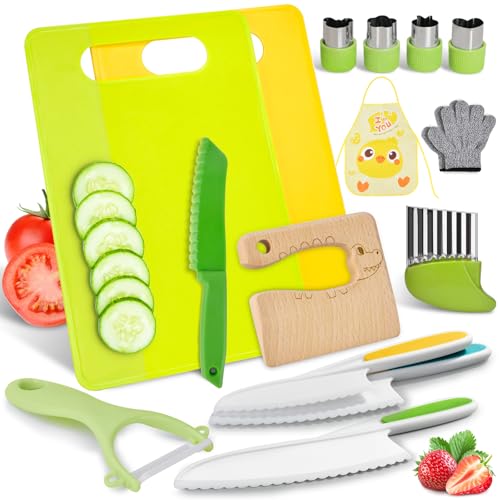
15PCS Montessori Kitchen Toys for Toddlers: Easter Basket Stuffers Gifts for Kids – Kids Safe Cooking Sets Real Knife Set for Real Cooking – Stocking Stuffers Birthday Gifts for Boy Girl
Easter Gifts for Kids: This toddler kitchen cook playset will be an excellent Easter gift/present Easter basket stuffers…
As an affiliate, we earn on qualifying purchases.
As an affiliate, we earn on qualifying purchases.
Teaching Kids How to Handle Sharp Tools Safely

Teaching kids how to handle sharp tools safely is essential for preventing accidents in the kitchen. Proper knife safety teaches them respect for sharp tools and builds confidence. Show your little helpers how to hold a knife correctly, always cut away from their body, and use a stable cutting surface. Remember, supervision is key when working with sharp tools. Keep these safety tips in mind:
Teaching kids safe knife handling builds confidence and prevents kitchen accidents.
- Always use a kid-friendly, dull knife when possible
- Demonstrate proper grip and cutting techniques
- Never rush or distract your helper
- Store knives safely, out of reach when not in use
- Encourage slow, deliberate movements to avoid slips
- Incorporate smart lock systems to keep dangerous tools securely stored when not in use
Keeping Hot Surfaces and Liquids Out of Reach
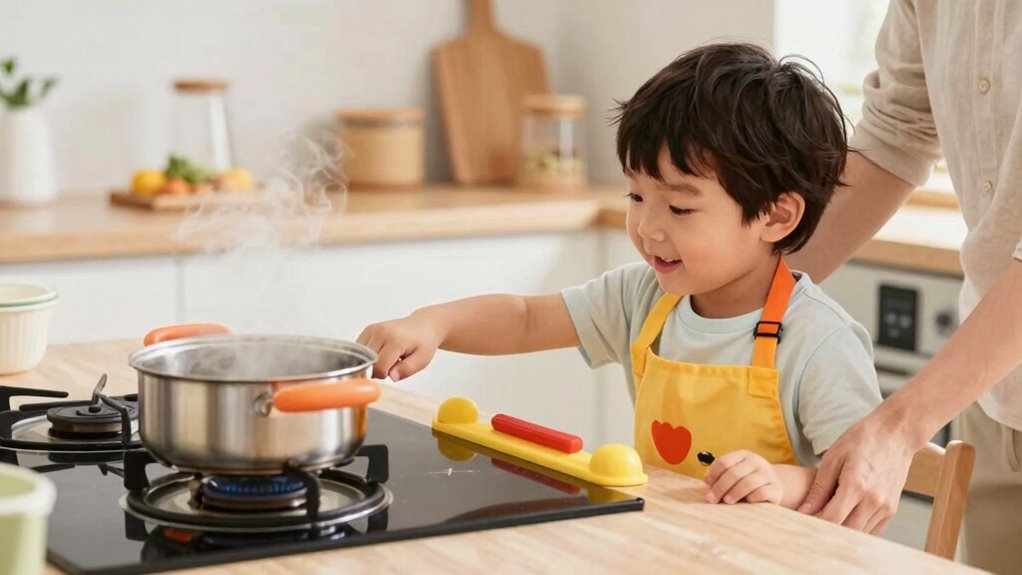
Hot surfaces and liquids pose serious risks in the kitchen, especially when little helpers are involved. Hot surface hazards can cause burns if your child touches stove burners, oven doors, or hot cookware. Liquid burns from spilled hot liquids can happen quickly and cause painful injuries. To prevent these accidents, always keep hot surfaces out of your child’s reach. Use stove knob covers and turn pot handles inward so they can’t be pulled down. Keep hot liquids in high, secure areas, and never leave them unattended. Teach your child to stay away from the stove and hot appliances. Being aware of hot surface hazards and how to prevent them is essential for a safe cooking environment. Additionally, understanding piercing care and hygiene can help prevent infections that might occur if accidental contact happens. Proper hot surface precautions are vital to ensure safety during cooking activities. By creating a safe environment, you reduce the risk of hot surface hazards and liquid burns, making cooking a fun, safe experience for everyone.
Encouraging Safe Food Handling and Hygiene

Teaching your little helpers to wash their hands properly is key to keeping everyone safe. Make sure they understand how to store food correctly to prevent spoilage and contamination. When preparing meals, guide them to handle ingredients safely and follow hygiene habits to keep the kitchen clean and healthy. Additionally, teaching them about air purifier maintenance can help ensure the overall cleanliness of your kitchen environment. Regularly checking and replacing filters can also reduce airborne germs and improve overall kitchen air quality. Incorporating proper food storage practices can further reduce the risk of foodborne illnesses and promote a safer cooking space. Educating children on proper cleaning procedures can further enhance hygiene and safety in your kitchen environment.
Handwashing Importance
Washing hands thoroughly before handling food is one of the simplest yet most effective ways to keep everyone safe in the kitchen. Good hand hygiene prevents germs from spreading and keeps your workspace clean. When you wash your hands properly, you help maintain cleanliness routines that protect everyone. To make handwashing fun and effective, remember to:
- Use soap and warm water
- Scrub for at least 20 seconds
- Rinse well to remove germs
- Dry hands thoroughly with a clean towel
- Wash hands before and after touching raw food
Encouraging these habits teaches kids the importance of cleanliness routines that promote safe food handling. Proper hand hygiene is a simple step with a big impact on kitchen safety.
Proper Food Storage
To keep everyone safe in the kitchen, proper food storage is essential. It helps prevent spoilage and keeps food fresh longer. Always use clear labeling practices, including dates and contents, so everyone knows what’s inside. Store perishable items like dairy and meats in the coldest part of the fridge, and keep dry goods in airtight containers. Use the table below to guide your storage:
| Food Type | Storage Tips |
|---|---|
| Fresh Produce | Keep in crisper drawers |
| Raw Meat & Poultry | Store on bottom shelf, separate from other foods |
| Leftovers | Label with date, refrigerate promptly |
| Dry Goods | Store in cool, dry place in airtight containers |
Following these rules helps prevent spoilage and promotes safe food handling.
Safe Food Preparation
Practicing good hygiene and safe handling during food preparation is essential to prevent cross-contamination and foodborne illnesses. You can guarantee food safety by following simple hygiene practices that keep everyone healthy. Remember to wash your hands thoroughly with soap and water before touching any ingredients. Keep raw meats separate from other foods to avoid cross-contamination. Use clean utensils and cutting boards for different tasks. Cover cuts or wounds with a bandage and gloves if needed. Always refrigerate perishable items promptly. Here are some key points:
- Wash hands before and after handling food
- Keep raw meat away from produce and ready-to-eat foods
- Use separate cutting boards for meat and vegetables
- Cover wounds to prevent germs from spreading
- Refrigerate leftovers quickly to prevent spoilage
What to Do in an Emergency: Preparing for Kitchen Accidents
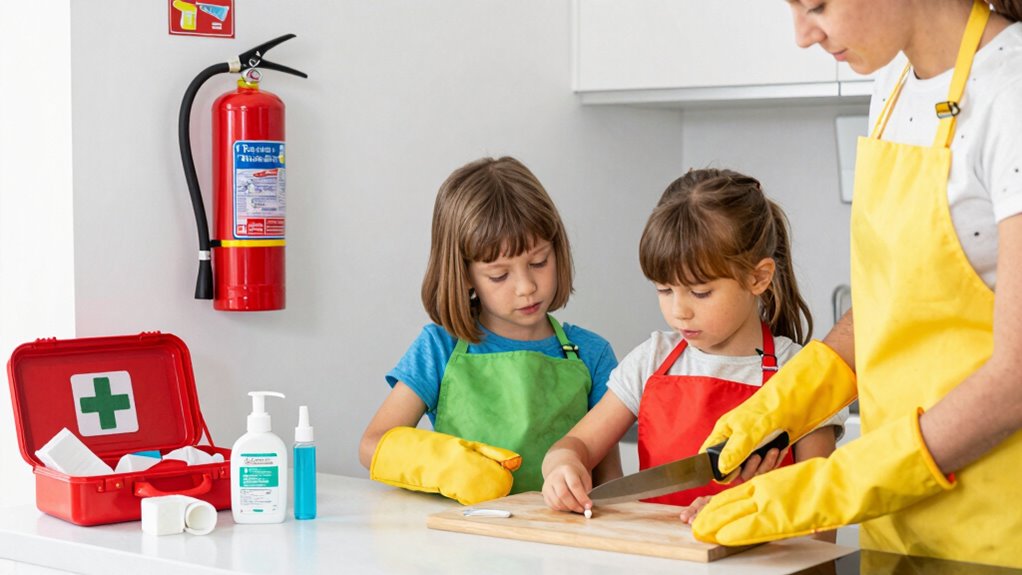
Accidents can happen quickly in the kitchen, so it’s important to be prepared for emergencies before they occur. Knowing first aid basics helps you respond calmly and effectively if someone gets cut, burned, or has a sudden allergic reaction. Keep a well-stocked first aid kit within easy reach and learn how to use its contents. Additionally, emergency contact prep is vital—make sure everyone knows how to quickly dial emergency services and has a list of important numbers, including parents, neighbors, and your doctor. Practice simple safety drills with your little helper so they understand what to do in case of an accident. Being prepared helps you stay calm, act fast, and keep everyone safe during cooking adventures.
Frequently Asked Questions
How Can I Involve Kids in Meal Planning Safely?
You can involve kids in meal planning safely by encouraging family involvement in choosing healthy choices. Let them help pick out fruits, vegetables, and proteins at the grocery store, and discuss why these options are good for the body. Set clear boundaries and supervise their participation to avoid accidents. This way, they learn about nutrition while feeling valued in the decision-making process, making healthy eating fun and engaging.
What Are Some Fun Safety Games for Kids in the Kitchen?
Sure, you can turn kitchen safety into a fun game with safety quizzes and hazard recognition activities. Have your kids identify potential dangers like hot surfaces or sharp tools, making it a playful challenge. Ironically, these activities teach them to be more aware and cautious, turning safety into an engaging adventure. Not only do they learn important rules, but they also develop good habits that last a lifetime.
How Do I Teach Children to Recognize Kitchen Hazards?
To teach children to recognize kitchen hazards, start with safety demonstrations that show common risks like hot surfaces and sharp tools. Engage them in hazard identification by pointing out potential dangers during cooking. Encourage questions and hands-on observation, making safety a fun part of the activity. Reinforce lessons regularly, so they develop awareness and confidence in spotting hazards, helping them stay safe while helping in the kitchen.
Are There Age-Appropriate Cleaning Tasks for Kids?
Ever wondered if kids can handle simple cleaning chores? Absolutely! Age-appropriate cleaning tasks like wiping counters, dusting, or sorting laundry teach responsibility and safety tips. You should always supervise to make certain they don’t use harsh chemicals or handle dangerous tools. These chores boost their confidence and help them learn valuable skills. Remember, making cleaning fun keeps them engaged and promotes good habits early on.
How Can I Keep Kids Engaged While Maintaining Safety?
You can keep kids engaged safely by incorporating interactive storytelling and sensory activities into cooking. As they help, tell fun stories or ask questions to hold their attention. Use sensory activities like feeling textures or smelling ingredients to make the experience exciting and educational. Always supervise closely, setting clear boundaries. This way, they stay interested and safe, learning about the kitchen while having fun.
Conclusion
By following these simple safety rules, you create a warm, inviting kitchen where your little helpers can explore and learn. Imagine the joy in their eyes as they help stir, pour, and taste, all while feeling secure and supported. When safety is your foundation, cooking becomes a delightful adventure—full of laughter, learning, and delicious memories. Together, you’ll turn every meal into a safe, fun-filled journey that your family will cherish forever.