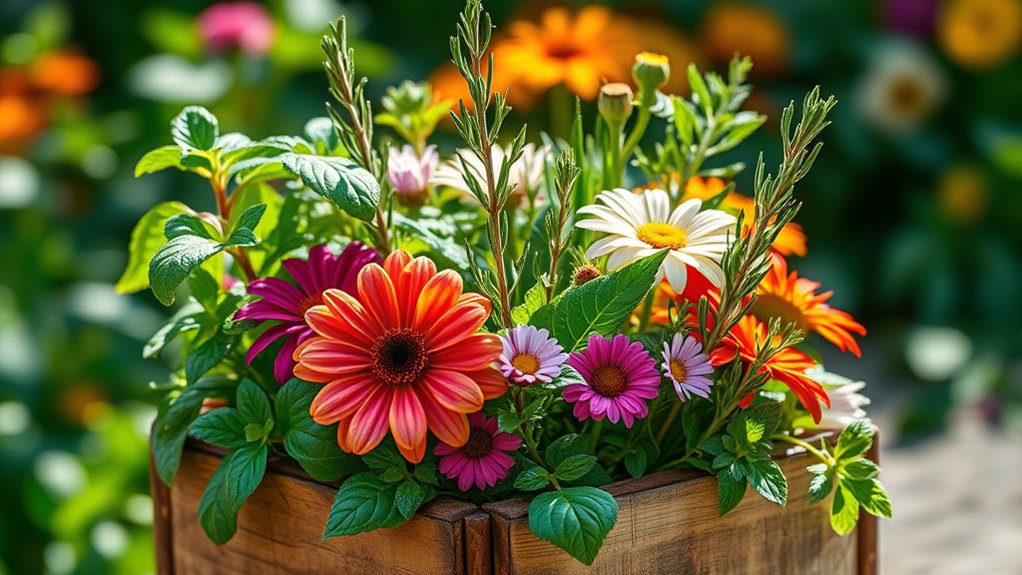

Plant your herbs and flowers together in your mini garden to maximize space and create a healthier, pest-resistant environment. Combine herbs like basil, thyme, or chives with colorful flowers such as nasturtiums or calendula to attract pollinators and deter pests naturally. Use vertical designs and varied containers to keep everything organized and accessible. Continuing with these tips will help you craft a vibrant, thriving mini garden full of beauty and bounty.
Key Takeaways
- Use companion planting to naturally deter pests and promote healthy growth in your mini garden.
- Pair herbs like basil and chives with flowers such as calendula for visual appeal and pollinator attraction.
- Arrange plants with similar sunlight and watering needs to ensure optimal health and reduce maintenance.
- Incorporate vertical space with hanging planters and tiered shelves to maximize limited garden area.
- Label and plan plant placement carefully to prevent competition and support easy care and harvesting.
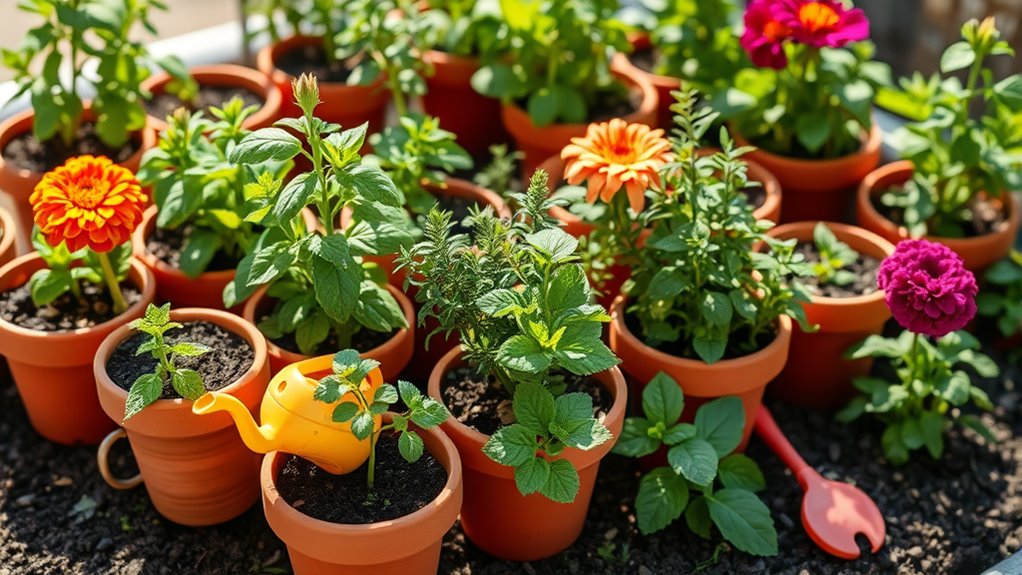
A mini garden is the perfect way to bring greenery into small spaces, whether you have a tiny balcony, windowsill, or outdoor patio. With limited space, every plant matters, so planning your garden carefully becomes essential. One effective way to maximize your space and promote healthy growth is through companion planting. This technique involves pairing herbs and flowers that support each other’s growth, deter pests, or enhance flavors. For example, planting basil near tomatoes can improve flavor and ward off pests, while marigolds can repel nematodes and other harmful insects. When you consider companion planting as part of your garden design, you create a balanced ecosystem that benefits all your plants, reducing the need for chemical pesticides and fertilizers.
A mini garden maximizes small spaces through companion planting, supporting growth and naturally reducing pests.
In a small garden, your garden design should focus on maximizing vertical space and ensuring easy access for maintenance. You can use hanging planters, wall-mounted pots, or tiered shelves to fit more plants into a confined area. This approach not only saves space but also adds visual interest. When selecting herbs and flowers to grow together, think about their mature size, sunlight requirements, and watering needs to prevent overcrowding and ensure each plant thrives. Grouping plants with similar needs simplifies watering and makes your garden more manageable. Additionally, implementing vertical storage solutions can help keep your gardening tools organized and accessible, further enhancing your gardening efficiency.
Choosing the right plants for your mini garden involves understanding their growth habits and how they interact. For instance, thyme and chives are low-growing herbs that can be paired with taller plants like basil, creating layers of greenery. Flowers like nasturtiums or calendula can be added to attract pollinators and beneficial insects, which help keep pests in check naturally. When designing your garden, consider where each plant will get the most sunlight and how airflow will circulate to prevent diseases. This thoughtful garden design ensures your herbs and flowers grow harmoniously and remain healthy.
Moreover, arranging your mini garden with purpose allows you to create an inviting space that’s both functional and attractive. Use containers of varying sizes and heights to break up the space visually and provide room for different plants to flourish. Label your plants to keep track of their needs and give each enough room to grow without competing for resources. Remember, the key to a successful mini garden is not just what you plant, but how you arrange and care for it. With careful planning, your garden will become a vibrant, thriving oasis that offers fresh herbs, colorful blooms, and the satisfaction of nurturing your own green space.
Frequently Asked Questions
What Are the Best Companion Plants for Herbs and Flowers?
For the best companion plants, you should focus on plant synergy through companion planting. Herbs like basil thrive near tomatoes, while marigolds help deter pests for your herbs and flowers. Nasturtiums attract beneficial insects, and lavender repels pests, making them great partners. Mixing herbs and flowers that support each other’s growth creates a healthy mini garden. By selecting plants with complementary needs, you’ll promote healthier growth and a more vibrant, pest-resistant garden.
How Do I Prevent Pests in a Mixed Mini Garden?
In your garden, you notice aphids attacking your basil, but planting marigolds nearby acts as a natural pest deterrent. To prevent pests in a mixed mini garden, practice companion planting by choosing plants that repel pests, like marigolds or garlic. Regularly inspect your plants, remove affected leaves, and encourage beneficial insects like ladybugs. This proactive approach keeps pests at bay and promotes a healthy, thriving garden environment.
Can I Grow Herbs and Flowers Indoors Together?
Yes, you can grow herbs and flowers indoors together. Make certain they share similar needs for indoor lighting and container size, so both thrive. Place your containers where they receive adequate sunlight, like near a south-facing window, and choose appropriately sized pots to prevent overcrowding. This way, your mini garden stays healthy and vibrant, creating a lush, colorful indoor space with both herbs and flowers thriving side by side.
What Soil Type Is Ideal for Diverse Mini Gardens?
Imagine your mini garden as a welcoming home where every plant feels comfortable. You need a light, loamy soil that drains well yet retains moisture. Add soil amendments like compost to boost nutrients, and incorporate drainage solutions such as sand or perlite to prevent waterlogging. This perfect blend guarantees your herbs and flowers thrive together, creating a vibrant, flourishing oasis in your indoor space.
How Often Should I Water a Combined Herb and Flower Garden?
You should water your combined herb and flower garden when the soil moisture feels dry to the touch, typically every 2-3 days. Keep a consistent watering schedule to prevent over- or under-watering. Check the soil moisture regularly, especially during hot weather, to verify your plants stay healthy. Adjust your watering frequency based on weather conditions and the specific needs of your herbs and flowers.
Conclusion
Creating a mini garden with herbs and flowers is like painting a vibrant, living picture on a small canvas. As you nurture your plants, you’ll watch them thrive and brighten your space, turning any corner into a lush oasis. Keep caring for your garden with love and patience, and it will reward you with fresh aromas and colorful blooms. Your tiny paradise is a reflection of your effort—beautiful, lively, and uniquely yours.