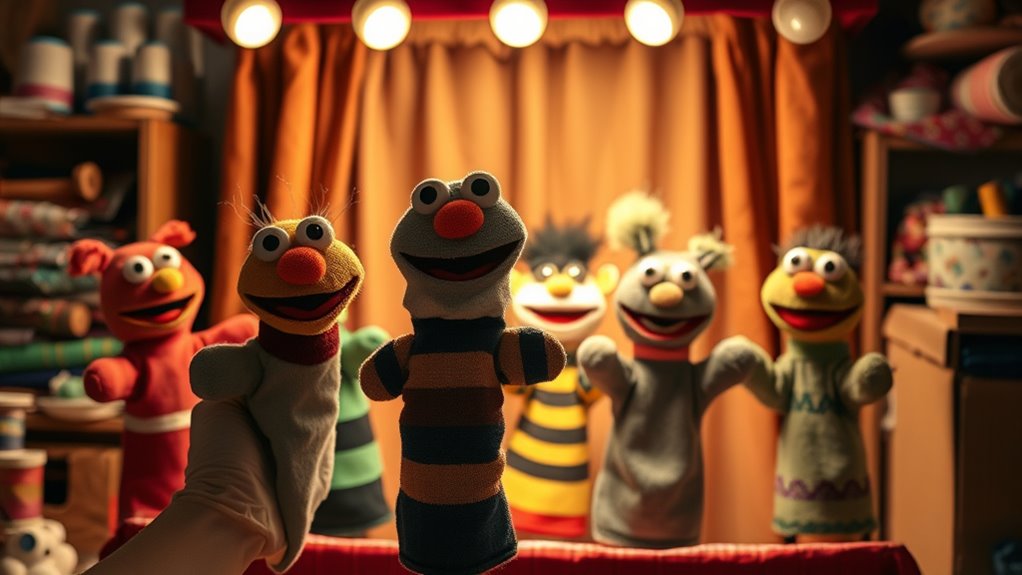

To craft and perform stories in sock puppet theater, start by designing your puppet with expressive features using simple materials, focusing on shape, color, and personality traits. Practice expressive movements and gestures to convey emotions and support your storytelling. Experiment with voice modulation and timing to bring characters to life and engage your audience. As you continue exploring, you’ll discover how to combine creative puppet design with storytelling techniques for mesmerizing performances.
Key Takeaways
- Select the appropriate sock and add features to create expressive, personality-rich puppets for storytelling.
- Use gestures and movements like raising eyebrows or opening mouths to convey emotions effectively.
- Develop engaging plots with conflict, clear messages, and dynamic voice modulation to captivate audiences.
- Practice voice techniques and puppet manipulation to enhance performance and audience interaction.
- Combine creative puppet design with storytelling to produce lively, memorable performances that leave lasting impressions.
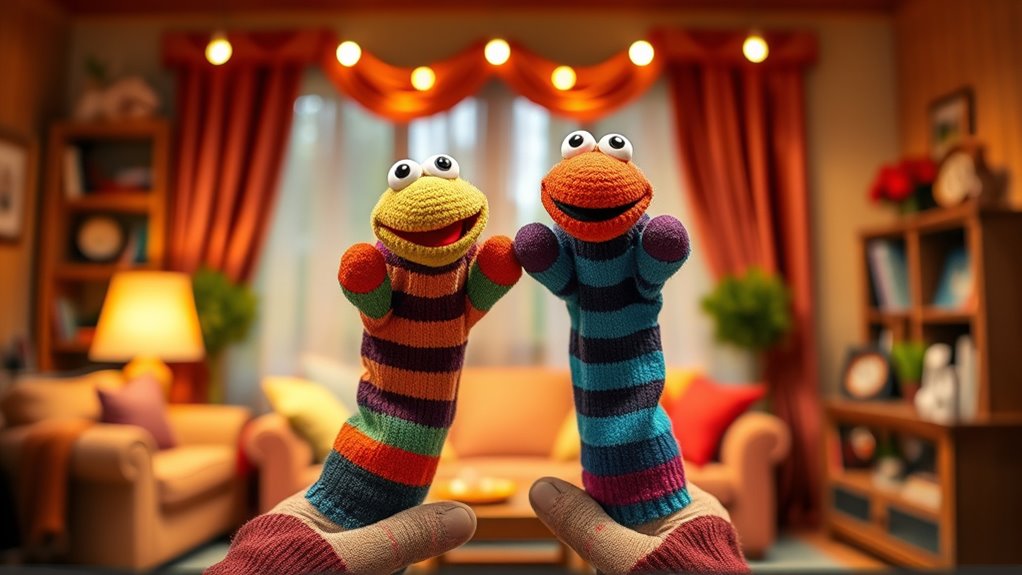
Have you ever wondered how sock puppets can bring stories to life? The secret lies in the art of puppet design and storytelling techniques. When you craft a sock puppet, you’re not just adding a face to a piece of fabric—you’re creating a character that can express emotions, tell a story, and connect with your audience. The puppet design process involves choosing the right sock, adding features like eyes, mouth, and accessories, and giving your puppet personality. Every detail, from the shape of the eyes to the color of the mouth, influences how your puppet communicates and how viewers perceive it. Getting creative with puppet design means you can develop characters that are funny, serious, or whimsical, making your stories more engaging.
Once your puppet is designed, the real magic begins with storytelling techniques. The way you manipulate your puppet, voice your characters, and craft your narrative can turn a simple sock into a fascinating storyteller. Use expressive movements—raising an eyebrow, opening a mouth wider—to convey different emotions. Your voice plays a vital role as well; changing pitch, pace, and tone helps distinguish characters and heightens the story’s impact. Good storytelling techniques also involve planning your plot, creating conflict, and delivering a clear message, all while keeping your audience engrossed. As you perform, focus on timing and gestures, making sure each movement supports the story you’re telling. Additionally, understanding paranormal phenomena and how they influence storytelling can add an intriguing layer to your puppet shows, captivating your audience even more.
Combining thoughtful puppet design with effective storytelling techniques allows you to create a compelling show. It’s not enough to have a cute puppet; you need to bring it to life through your performance. Practice your voice and movements, experiment with different storytelling styles, and observe how your audience reacts. This process helps you refine your craft, making each performance more lively and immersive. Remember, the best sock puppet stories are those that evoke emotions—laughter, sympathy, excitement—and leave a lasting impression. The key is to enjoy the process, letting your creativity flow while paying attention to how your puppet’s design and your storytelling techniques work together. With patience and practice, you’ll discover how simple materials can become powerful tools for storytelling, turning a sock into a memorable character and your performances into delightful experiences for everyone watching.
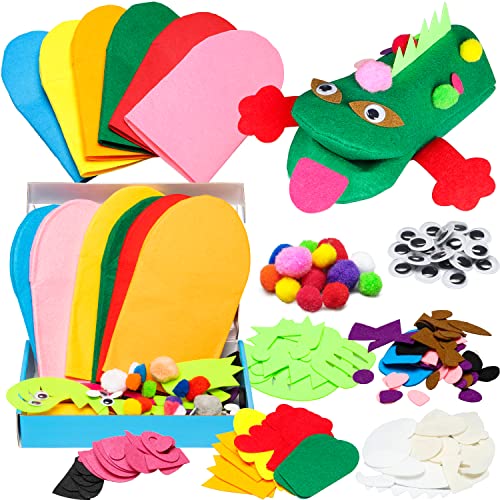
WATINC 6Pcs Hand Puppet Making Kit, Art Craft Felt Sock Puppet Toys, Creative DIY Make Your Own Pompoms Wiggle Googly Eyes Storytelling Role Play Party Supplies Gift for Girls Boys (Animals)
Complete DIY Hand Puppet Craft Kit – This all-in-one DIY hand puppet kit includes 6 colorful unfinished hand…
As an affiliate, we earn on qualifying purchases.
As an affiliate, we earn on qualifying purchases.
Frequently Asked Questions
How Can I Make My Sock Puppets More Durable?
To make your sock puppets more durable, you should reinforce the seams with sturdy stitches that hold up during play. Choosing strong, durable fabrics like felt or canvas also helps prevent tears and stretching. Additionally, double-stitch critical areas and avoid using fragile materials. These steps guarantee your sock puppets can withstand lots of performances and last longer, keeping your storytelling fun and engaging.
What Are Some Creative Themes for Sock Puppet Stories?
You can explore creative themes like fantasy adventures and humorous tales for your sock puppet stories. Imagine your puppets beginning on magical quests or cracking jokes that make your audience laugh. Mix elements of whimsy and comedy to keep viewers engaged. Use colorful characters and playful scenarios to bring these themes to life. This approach adds excitement and humor, making your sock puppet performances truly memorable and fun for everyone.
How Do I Teach Children to Perform With Sock Puppets?
You’re on the right track by encouraging kids to jump right in and practice puppet improvisation. Start with simple storytelling techniques, guiding them to give each puppet a unique voice and personality. Use fun prompts to spark creativity and remind them that practice makes perfect. Help them understand that expressing emotions through their puppet’s movements and voice will bring stories to life—let their imagination run wild and watch them shine!
What Materials Are Best for Customizing Sock Puppets?
You should use fabric paints for customizing sock puppets because they adhere well and are washable, giving your puppets vibrant colors. Add googly eyes for an expressive, playful look that’s easy to attach with glue. Consider using felt or foam for features like noses or mouths, which are simple to cut and stick. These materials make your sock puppets fun, durable, and perfect for lively storytelling performances.
How Can I Record or Film Sock Puppet Performances Effectively?
To record your sock puppet performances effectively, start by choosing a good camera with adjustable angles. Use camera angles that highlight your puppets’ movements and expressions. Guarantee proper lighting with soft, even lighting techniques to avoid shadows and make your puppets stand out. Position lights at different angles to create depth. Keep the camera steady with a tripod, and do multiple takes to capture the best shots for a lively, engaging performance.

Fun Express DIY Hand Puppet Kit Makes 12 Sock Puppets – Arts and Crafts for Kids Ages 4-8 | Craft Kits for Birthday Party Activities & Creative Home Projects | Blank Canvas Material
Complete puppet making kit includes 12 blank canvas hand puppets ready for creative customization – perfect arts and…
As an affiliate, we earn on qualifying purchases.
As an affiliate, we earn on qualifying purchases.
Conclusion
As you bring your sock puppets to life, you’re the puppeteer and the storyteller, weaving worlds from simple stitches. Your creativity transforms fabric and thread into a vibrant stage where imagination blooms like a wild garden. With every performance, you breathe magic into inanimate objects, turning your stories into a living tapestry. Remember, in this theater of your making, your voice is the guiding star, shining brightly amid the playful dance of your sock puppet characters.

TOPZEA 12 Pack Hand Puppet Making Kit, Kids Craft and Art Supplies Felt Sock Puppet Creative DIY Make Your Own Puppets Kits with Pompoms and Wiggle Googly Eyes Storytelling Role Play Party Supplies
Package includes 12 pack colorful pre-sew hand puppets, 2 bundle googly eyes, 2 bundle pompoms, 2 bundle felt…
As an affiliate, we earn on qualifying purchases.
As an affiliate, we earn on qualifying purchases.

Liliful 32 Pcs Hand Puppet Making Kit Felt Arts and Crafts Sock Puppet Toys Creative DIY Make Your Personal Puppets Kits Eyes Felt Accessories Storytelling Role Play Party Supplies
Package Content: the DIY sock puppet kit contains 32 pieces of felt socks in 8 colors, namely red,…
As an affiliate, we earn on qualifying purchases.
As an affiliate, we earn on qualifying purchases.