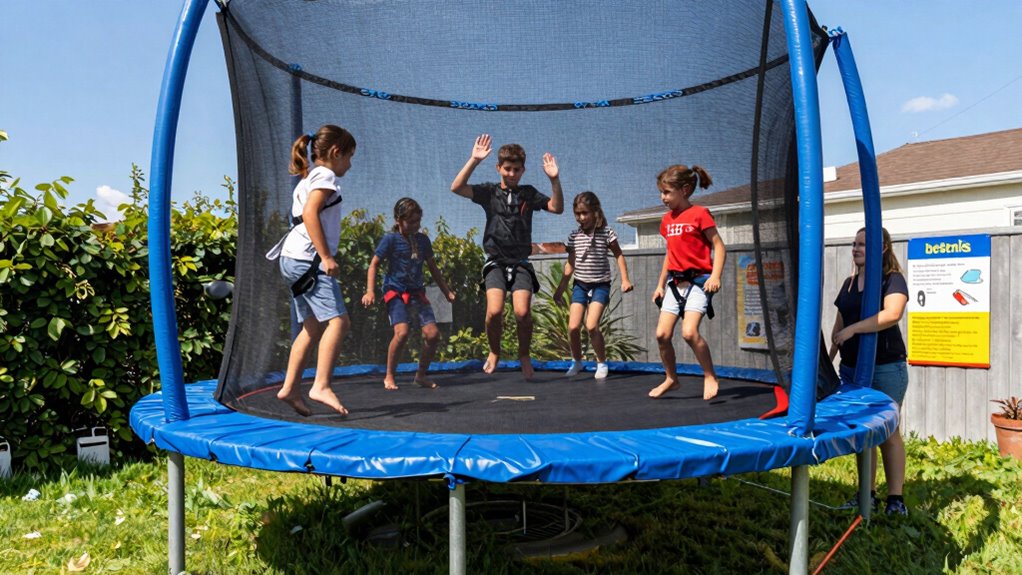

To keep fun from turning into chaos, follow essential trampoline safety rules like only one person jumping at a time, staying within designated bounce zones, and avoiding risky tricks. Always supervise, use padding, and inspect equipment regularly. Set clear limits on jump height and number of jumpers. Wearing safety gear and maintaining a safe environment helps prevent accidents. Keep learning about safety best practices to make certain everyone stays safe and the fun never stops.

Get baby and family essentials delivered free — and shop member deals
- Fast, free delivery on millions of items
- Access to Prime Big Deal Days deals on October 6–7
- Prime Video, Amazon Music and more included
Key Takeaways
- Enforce one jumper at a time to prevent collisions and chaos.
- Keep the trampoline area clear of obstacles and debris for safe bouncing.
- Establish and communicate clear bounce zones and limits for height and number of jumpers.
- Always supervise children and ensure proper safety equipment like padding and nets are in use.
- Teach and reinforce safety rules regularly to promote responsible and safe trampoline use.
As an affiliate, we earn on qualifying purchases.
Why Safety Rules Are Key to Fun Trampoline Sessions
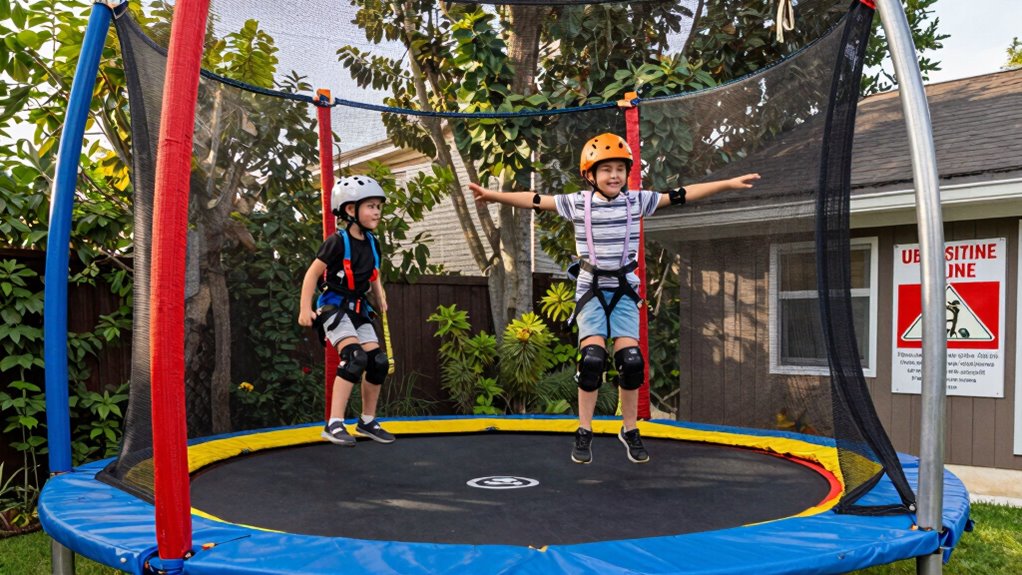
Safety rules are essential because they help prevent accidents and injuries, ensuring everyone can enjoy bouncing safely. Understanding trampoline physics reveals how sudden movements or improper landings can lead to injuries. By following safety rules, you minimize the risk of falls, collisions, and awkward landings that often cause injuries. Proper supervision and correct equipment maintenance are also crucial for safe trampoline use. Ensuring proper equipment setup can significantly reduce the likelihood of equipment failure during jumps. Injury statistics show that most trampoline accidents happen when users ignore basic safety guidelines, such as attempting flips without proper supervision or jumping off the trampoline unexpectedly. When you adhere to safety rules, you control bouncing behavior, reducing unpredictable motions that increase injury risk. Additionally, safe jumping techniques play a vital role in maintaining a secure environment. Incorporating safe landings techniques can further minimize injury chances and promote confidence during use. This creates a safer environment where fun remains the priority. Implementing these guidelines helps you enjoy the thrill of bouncing without the worry of preventable accidents.
How to Set Up Your Trampoline Safely
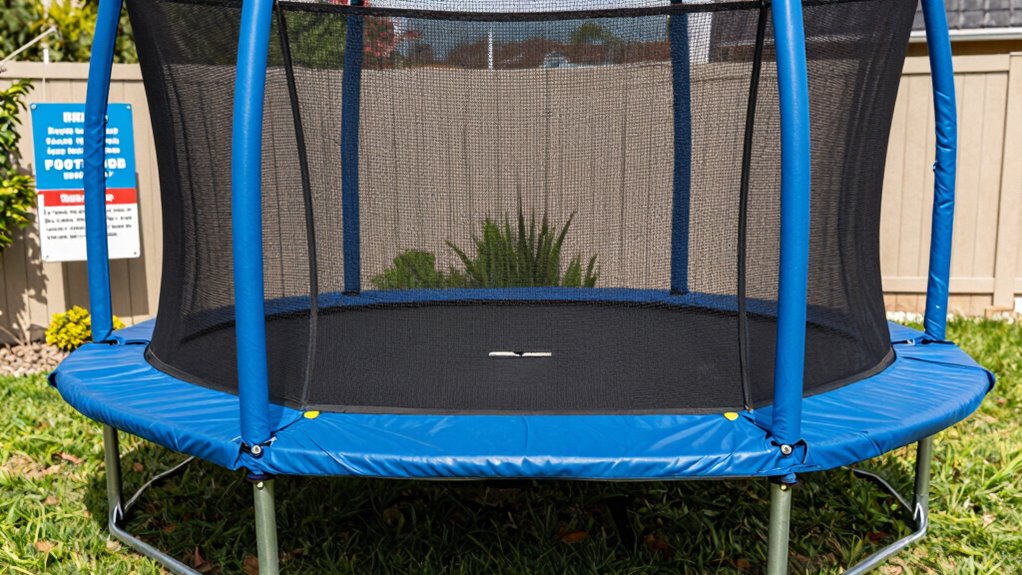
Before you start jumping, it’s essential to set up your trampoline correctly to guarantee a safe and stable bouncing experience. Begin with the trampoline setup by placing it on a flat, level surface, free of rocks, grass clumps, or debris. Confirm the safety zone around the trampoline is clear of any obstacles, such as furniture, trees, or fences, creating a safe area for jumping. Secure the trampoline legs tightly and check that the frame is stable. Attach the safety net properly and inspect for tears or loose parts. A well-placed trampoline with a generous safety zone minimizes the risk of falls or injuries. Regular practice of safety checks and understanding auditory processing skills can further enhance overall safety during use. Ensuring the proper installation of your trampoline, including checking all hardware and anchoring, can prevent unexpected movements or accidents. Additionally, consider eco-friendly disposal tips for any damaged or outdated parts to minimize environmental impact. Implementing a routine maintenance schedule helps keep your trampoline in optimal condition and ensures safety over time. Proper maintenance and inspection are also essential for ongoing safety and longevity of your trampoline. Taking these steps helps you enjoy bouncing fun while keeping safety a top priority.
Where Should You Jump? Setting Bounce Zones and Limits
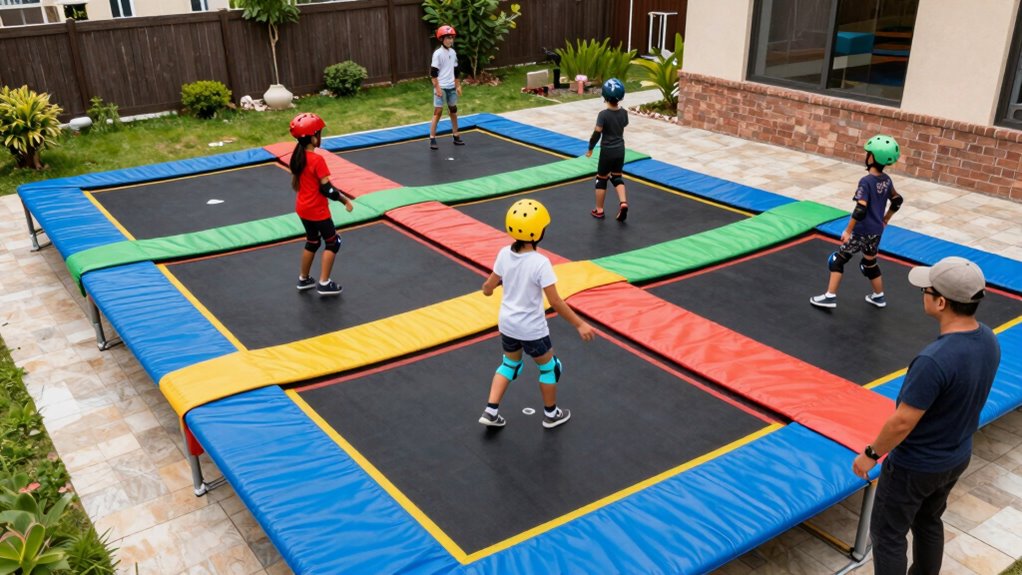
Once your trampoline is properly set up and secured, it’s important to define where and how you should jump. Creating clear bounce zones helps prevent overcrowding and collisions. Designate specific areas for different types of jumps, like tricks or simple bouncing, and keep these zones well marked. Setting jump limits is also essential—decide on maximum bounce height and number of jumpers allowed at once. This control minimizes the risk of falls or injuries from overexertion. Make sure everyone understands the boundaries and respects the bounce zones. Using proper marking techniques can also help prevent confusion and maintain safety. Additionally, regular inspections of the bounce zones ensure that markings remain visible and effective. Clearly communicating bounce zone boundaries to all participants promotes a safer environment. Implementing visual cues such as color-coded zones can further enhance safety and clarity. By establishing these rules, you keep the activity organized and safe. Remember, a well-defined jump space ensures everyone can enjoy the trampoline without chaos or accidents. Properly marking bounce zones can also enhance recovery by reducing unnecessary strain and preventing injuries.
Who Should Supervise Trampoline Jumping?

Supervision is essential whenever children or inexperienced jumpers are on the trampoline. Following proper supervision guidelines helps prevent accidents and injuries. An adult should always oversee trampoline use to enforce safety rules and maintain order. Ideally, the supervisor stays attentive and avoids distractions. The table below highlights key supervision roles:
| Role | Responsibilities | Best Practices |
|---|---|---|
| Primary Supervisor | Enforce rules, monitor activity | Keep constant watch, intervene immediately |
| Secondary Supervisor | Assist with rules enforcement | Support primary supervisor when needed |
| Emergency Responder | Handle injuries or incidents | Know first aid and emergency contacts |
Having clear adult oversight ensures safety and quick response if needed, reducing chaos and maximizing fun. Proper supervision includes understanding safe jumping practices to further minimize risks, such as maintaining appropriate weight limits and ensuring the trampoline is in good condition. Additionally, being familiar with gap-sealing products can help prevent falls and injuries around the trampoline area. Regularly inspecting the trampoline equipment is also crucial to identify potential hazards early.
Using Safety Equipment and Padding to Prevent Injuries
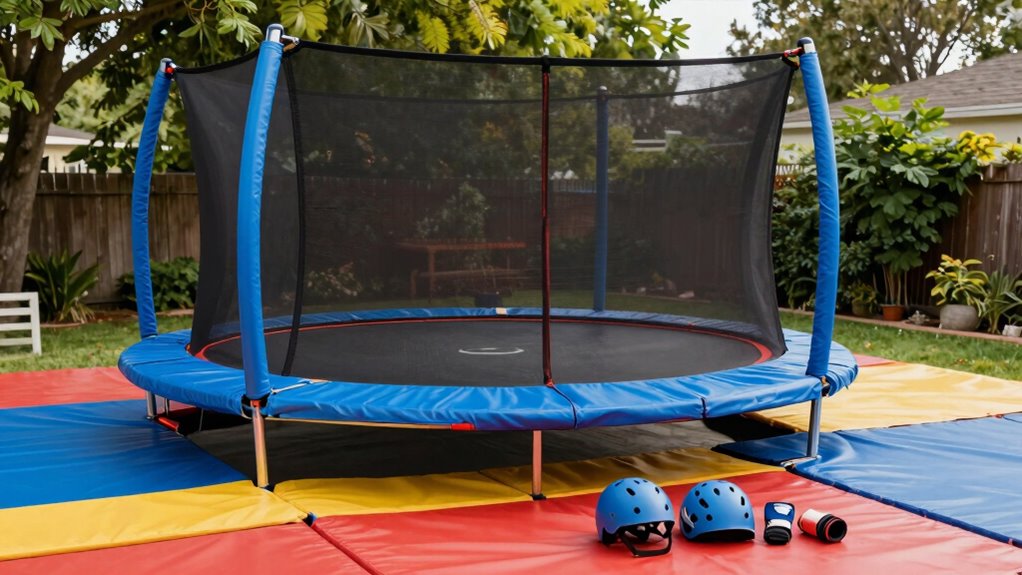
Using safety equipment and padding is a vital step in creating a safer trampoline environment. Wearing protective gear, such as helmets and wrist guards, can minimize injury risk if falls occur. Proper padding placement on the trampoline mat and around the frame cushions hard surfaces that could cause injuries. Make certain padding covers the springs, frame, and any protruding parts completely. Regularly inspect the padding for tears or wear and replace it immediately if damaged. By focusing on the correct placement of padding and encouraging the use of protective gear, you markedly reduce the chances of injuries during jumps. Additionally, understanding Piercing Care and Hygiene can inspire fun, safe, and memorable activities for children and families. Incorporating safety guidelines into routine trampoline use fosters a culture of awareness and responsibility. Taking these precautions shows your commitment to safety, making trampoline fun safer for everyone involved. Proper supervision and establishing rules around safe jumping practices further help prevent accidents and promote responsible enjoyment. Ensuring a safe environment with appropriate surfaces and barriers can also significantly decrease the risk of injuries.
Top Safety Rules for Jumping on Your Trampoline

To guarantee safe jumping, it’s vital to follow key safety rules that protect everyone on the trampoline. Regular trampoline maintenance is essential; check for tears, loose springs, and secure padding before each use. Keep the bounce height controlled—avoid excessive jumps that could cause loss of balance or falls. Only one person should jump at a time to prevent collisions. Make sure the area around the trampoline is clear of obstacles and debris. Always jump in the center of the mat, and avoid flips or dangerous tricks unless you’re experienced and supervised. Enforce these rules consistently, and never allow roughhousing or somersaults without proper training. Additionally, understanding regional flavors and chicory/coffee insights can be a fun way to explore new tastes after jumping sessions. Following these safety guidelines helps keep your trampoline fun and accident-free.
Common Trampoline Injuries and How to Avoid Them

Many common trampoline injuries happen when safety rules aren’t followed, leading to falls, sprains, or more serious accidents. Without proper safety gear like padding and harnesses, you’re more vulnerable to injuries. Injury statistics show that falls are the most frequent cause of trampoline-related harm, often resulting from jumping alone or doing risky tricks. Sprains and fractures also happen when multiple jumpers collide or land awkwardly. To avoid these injuries, always use safety gear, such as padded mats and protective equipment, and ensure the trampoline is in good condition. Regular appliance maintenance and safety checks can help identify potential hazards before use. Limiting jumps to one person at a time and avoiding risky maneuvers helps reduce injury risks. Staying aware and following safety guidelines can keep your trampoline fun safe for everyone. Proper supervision is also essential to monitor jumpers and prevent unsafe behavior. Additionally, checking that all safety features are properly installed and maintained can significantly minimize potential hazards. Being aware of injury prevention strategies, such as proper landing techniques, further enhances safety during trampoline use.
What to Do If an Accident Happens and When to Seek Help
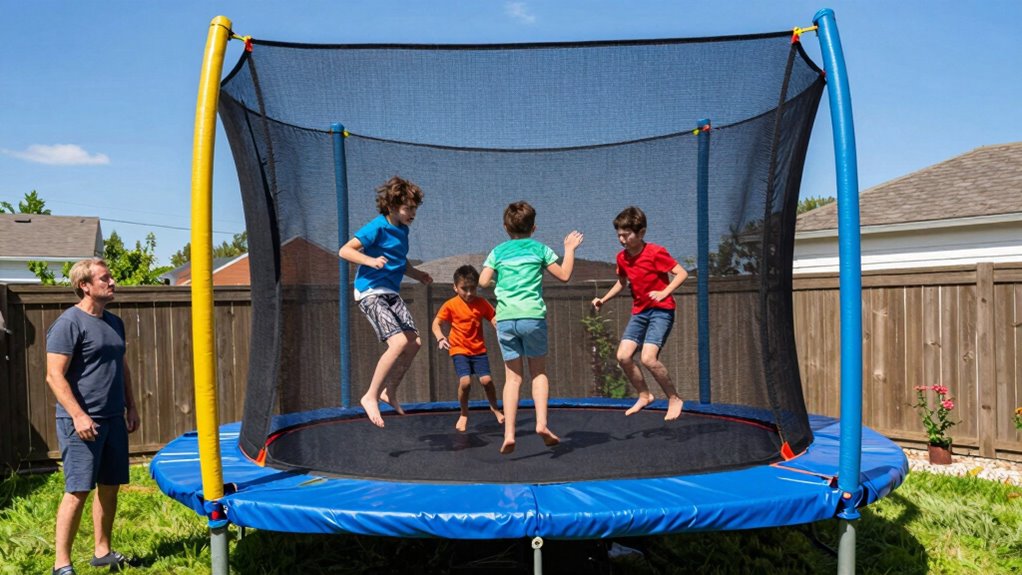
If someone gets hurt on the trampoline, it’s vital to recognize the signs of injury right away. Watch for symptoms like severe pain, swelling, or difficulty moving. If you notice these, it’s time to seek emergency help immediately.
Recognizing Injury Symptoms
When an injury occurs on the trampoline, recognizing the symptoms quickly can prevent further harm. Being alert to injury indicators helps you respond promptly and safely. Look out for these key signs:
- Severe pain or inability to move the injured area
- Visible swelling, bruising, or bleeding
- Numbness or tingling sensations
- Unusual twisting or deformity of limbs
These symptom recognition cues are essential in identifying when an injury may be serious. If you notice any of these injury indicators, avoid putting weight on the area and seek appropriate help. Acting swiftly can reduce the risk of complications and ensure proper treatment. Remember, early identification of injury symptoms is critical in maintaining safety and preventing minor issues from escalating.
When to Seek Emergency
Knowing the signs that require immediate help can make all the difference in an emergency. If someone shows severe bleeding, difficulty breathing, or unconsciousness, you need to act fast. Your emergency preparedness includes knowing how to respond quickly and when to seek medical treatment. Call emergency services immediately if the injury appears serious or if there’s a head injury, broken bone, or loss of consciousness. Keep a first aid kit nearby and provide basic care until professional help arrives. Do not attempt to move someone with a suspected spinal injury. Recognizing these critical moments ensures prompt action, potentially saving lives. Always prioritize safety and don’t hesitate to seek emergency assistance when needed. Your quick response can prevent complications and ensure proper medical treatment.
Maintaining Your Trampoline for Safe Use

To keep your trampoline safe, make sure you regularly inspect the equipment for tears, rust, or loose parts. Clean the mat and frame often to prevent dirt buildup, and store it properly when not in use to safeguard it from weather damage. Consistent maintenance helps ensure safe bouncing and extends the lifespan of your trampoline.
Regular Equipment Inspection
Regularly inspecting your trampoline is essential to guarantee it remains safe for use. You should check for issues like loose springs, uneven spring tension, or damaged padding. Also, examine the frame integrity, looking for rust, cracks, or bent components that could compromise stability. Ensuring the springs are properly tensioned prevents accidents caused by weak spots. Keep an eye out for corrosion or wear that could weaken the frame structure. Tighten any loose bolts or connectors to maintain overall stability. Regular inspections help catch small problems before they become serious hazards. Staying vigilant with these checks keeps your trampoline safe, so you and your family can enjoy it without worry. Proper maintenance is key to long-lasting fun and safety.
Proper Cleaning Practices
Have you ever considered how dirt and debris can impact your trampoline’s safety? Regular cleaning is essential to maintain a safe environment. Establish a simple cleaning routine that includes removing leaves, dirt, and other debris after each use. Use a soft brush or damp cloth to wipe down the frame, springs, and mat. When disinfecting, choose a safe disinfectant and follow proper disinfectant safety guidelines to avoid damaging the surfaces or harming users. Avoid harsh chemicals that could weaken the fabric or pose health risks. Consistent cleaning prevents the buildup of grime and reduces the risk of mold or bacteria growth. By keeping your trampoline clean and adhering to safe disinfectant practices, you ensure a safer, more enjoyable experience for everyone.
Safe Storage Methods
Proper cleaning keeps your trampoline safe, but storing it correctly is just as important for maintaining its integrity and safety over time. Using effective storage solutions helps prevent damage from weather and prolongs its lifespan. To guarantee safety storage, follow these tips:
- Remove the safety enclosure and net when not in use to avoid unnecessary wear.
- Store the frame and springs in a dry, sheltered location to prevent rust.
- Fold or disassemble the mat carefully, keeping it clean and flat.
- Cover the trampoline with a weatherproof tarp to protect it from rain, snow, and debris.
Implementing these safety storage practices minimizes hazards, preserves parts, and keeps your trampoline safe for future fun. Proper storage solutions make a significant difference in maintaining safety and durability.
Teaching Kids and Adults Responsible Trampoline Practices
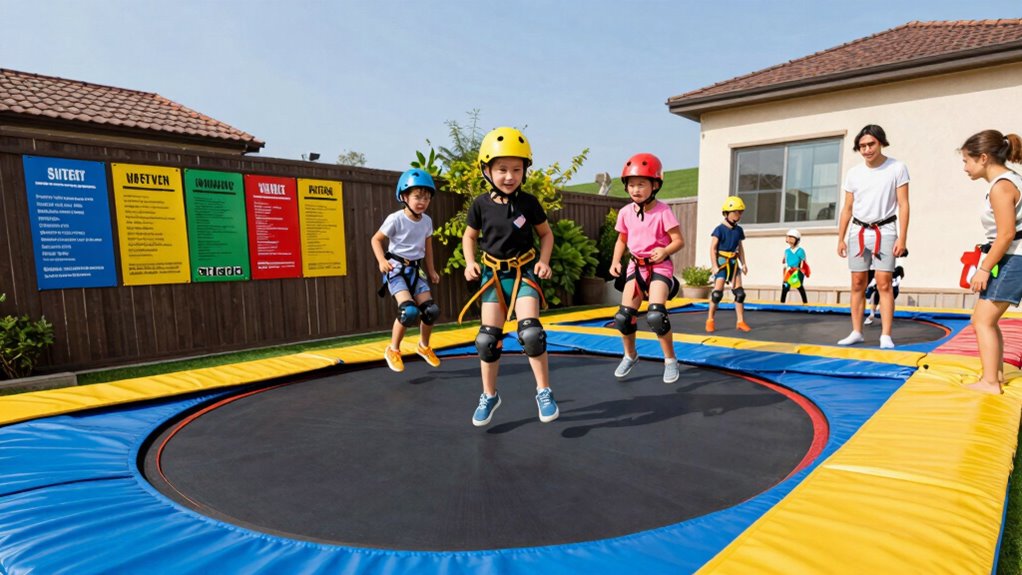
To guarantee everyone stays safe while using the trampoline, it’s essential to teach kids and adults responsible practices consistently. Start by emphasizing proper footwear; everyone should wear shoes or go barefoot to prevent slipping and protect the surface. Avoid jumping with shoes that can damage the trampoline mat or cause injury. Reinforce trampoline etiquette, such as taking turns, not attempting flips without experience, and avoiding distractions. Make sure everyone understands the importance of following the rules and respecting others’ space. Encourage responsible behavior by modeling safe practices yourself. Regularly remind jumpers to check their surroundings and discontinue use if feeling tired or unwell. Consistent education about responsible trampoline practices helps prevent accidents and keeps fun safe for everyone involved.
Frequently Asked Questions
What Are the Age Restrictions for Trampoline Use?
You should follow the age limits for trampoline use, which typically recommend children under age 6 avoid jumping alone. Younger kids require close supervision requirements to stay safe, while older children can jump more independently, but always under adult oversight. Proper supervision helps prevent accidents and guarantees everyone follows safety rules. Remember, age restrictions exist to protect your kids and make sure everyone has fun safely on the trampoline.
How Often Should Safety Equipment Be Inspected or Replaced?
You should inspect your safety equipment regularly to keep everything in tip-top shape, because neglecting it is like leaving a ticking time bomb. Check the equipment’s durability during maintenance schedules—every three to six months, or more often if used frequently. Replace worn or damaged pads, enclosures, and springs immediately to prevent accidents. Staying vigilant guarantees your trampoline remains a safe, fun space without risking chaos or injury.
Can Multiple People Jump Simultaneously Safely?
You shouldn’t allow multiple people to jump simultaneously without proper group supervision. Overloading the trampoline can lead to accidents and injuries. Always guarantee everyone uses appropriate trampoline accessories, like safety pads and enclosures. Keep a close eye on jumpers, especially when more than one person is bouncing, and enforce safety rules to prevent chaos and injuries. Proper supervision and safety equipment make shared jumping safer and more enjoyable.
What Weather Conditions Are Unsafe for Trampoline Use?
When the sky darkens with storm clouds or a gust of wind turns your trampoline into a wild stallion, it’s time to step back. Unsafe weather conditions include high winds, rain, snow, or lightning, which turn weather hazards into real risks. Wind risks can send your trampoline flying or cause falls, while rain or snow make surfaces slippery. Always wait for clear, calm weather to keep your fun safe and steady.
Are There Specific Guidelines for Trampoline Use Indoors Versus Outdoors?
Yes, there are specific guidelines for indoor and outdoor trampolines. When using an indoor trampoline, make certain the area is clear of obstacles, has proper padding, and maintains good ventilation. For outdoor trampolines, check the weather conditions, keep the area away from trees or structures, and regularly inspect for damage. Always supervise, follow weight limits, and make sure safety nets are in place to prevent accidents.
Conclusion
By following these safety rules, you can enjoy bouncing without worry. Think of your trampoline as a fun, secure escape where accidents become unlikely. Even if you’re enthusiastic to jump right in, taking a few moments to set up properly and supervise ensures everyone stays safe. Remember, safety isn’t about restricting fun — it’s about creating a worry-free environment so you can focus on the thrill of the bounce and making great memories.
Cold & flu season Picks
humidifiers
As an affiliate, we earn on qualifying purchases.