

Turn the school run and nap time into listening time
- Thousands of audiobooks, podcasts and originals
- Listen on your phone, tablet or Echo — also offline
- Cancel anytime
Ticket to Ride vs Catan: The Classic First Board Game Dilemma
If you walk into a game store or scroll through a gift guide looking for a board game that works for the whole family, two titles appear on nearly every list: Ticket to Ride and Catan. Both are modern classics that pulled millions of households away from Monopoly-era game closets. Both play three to five players (with extensions available), both cost roughly the same $35–$50 range, and both are regularly recommended as the best first “real” board game. That is exactly why the choice is hard: most families buying a gateway game want to buy one, not both, and the two games offer very different evenings.

What Do You Meme? Family Edition
- ✔ Players: 3+
- ✔ Game Type: Family party board game
- ✔ Core Mechanic: Caption and photo card matching with rotating judge

Sorry! Classic Board Game by Hasbro, for Kids Ages 6 and Up
- ✔ Brand: Hasbro
- ✔ Recommended Age: 6 years and up
- ✔ Players: Multi-player family game
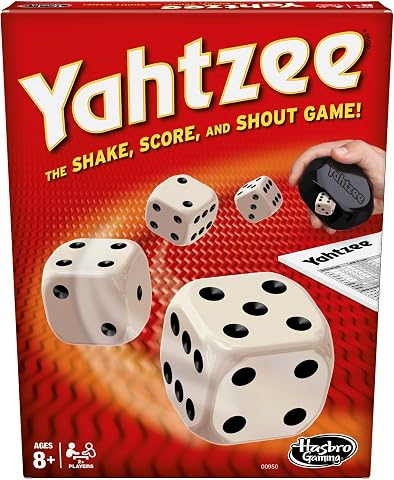
Hasbro Gaming Yahtzee Game
- ✔ Brand: Hasbro Gaming
- ✔ Recommended Age: 8 years and up
- ✔ Players: 2 or more (best with 2 to 4)
The real decision tension is this: simplicity and harmony versus depth and interaction. Ticket to Ride can be taught to a grandparent or a seven-year-old in under ten minutes and rarely produces arguments. Catan produces louder tables, bigger swings of fortune, and more memorable moments — but it also demands more rules-learning, longer sessions, and a tolerance for being blocked, robbed, and out-traded by your own children. This comparison breaks down how the two games stack up across the criteria that actually matter at a family table: learning curve, playtime, age fit, player interaction, luck versus skill, replay value, player count flexibility, and how each one lands with mixed-age groups.
The short version: Ticket to Ride is the safer and more universal family purchase, and Catan is the better purchase for families with older kids or adults who want a game that grows with them. The rest of this guide explains where each wins and what each one sacrifices.
What Do You Meme? Family Edition
When a game needs to entertain grandparents, teens, and a ten-year-old at the same table, most options fail someone. What Do You Meme? Family Edition is the rare exception, which is why it takes our top spot. The premise is simple: players pair caption cards with a photo card, and a rotating judge picks the funniest combination. Because the judge changes every round, no single person’s taste dominates, and the game resets itself constantly — there’s no long strategy arc where a weaker player falls hopelessly behind.Compared with Sorry!, the learning curve is nearly nonexistent. Sorry! requires kids to grasp movement rules and setback mechanics; here, you explain the concept in under a minute and start playing immediately. Compared with Yahtzee, it’s far more social — Yahtzee is largely silent score-sheet calculation, while this game generates conversation, arguments about which caption is funnier, and genuine group laughter. That conversational energy is what makes it the best pick for larger gatherings and parties where the goal is bonding, not winning.The honest tradeoff: winning is entirely subjective. Whoever judges picks their favorite, and if the group’s humor doesn’t click, rounds can fall flat. Competitive families who want a fair, skill-based outcome should steer toward Yahtzee instead. But for pure shared laughter, this option stands out as the easiest recommendation in the lineup.
Pros:
- Works across a wide range of ages, from kids to adults
- Rules take about a minute to learn, so play starts immediately
- Rotating judges keep every round feeling fresh and unpredictable
- Compact and portable, making it easy to bring to parties and on trips
Cons:
- Winning depends on the judge’s personal sense of humor, so results are subjective
- The humor doesn’t land equally with every group — it needs the right crowd
Best for: Families and groups of 3 or more with mixed ages who want a fast, funny party game for game nights and gatherings
Not ideal for: Highly competitive families or groups who want objective, skill-based scoring rather than a judge’s opinion
Bottom line: The best overall pick for families who value laughter and social energy over structured competition.
“The best overall pick for families who value laughter and social energy over structured competition.”
Sorry! Classic Board Game by Hasbro, for Kids Ages 6 and Up
If your game night includes players on the younger end — think ages 6 to 9 — Sorry! is the pick that meets them where they are. The race-to-finish format is instantly graspable: draw a card, move your pawns, and try to get all four home before anyone else does. Where this game earns its place is the drama. The slide, collide, and send-back mechanics create genuine edge-of-your-seat moments, and the ‘sweet revenge’ factor is precisely what kids remember long after the game ends.Against What Do You Meme? Family Edition, Sorry! has a lower minimum age — a six-year-old can play it competently, while the meme game really needs kids old enough to read and get the jokes. Against Yahtzee, it trades strategy for accessibility: Yahtzee asks players to weigh scoring probabilities, while Sorry! keeps decisions simple enough that no one is left behind. That makes it the clear best entry point into board gaming for elementary-school children.The flip side deserves attention, though. Outcomes hinge heavily on which cards you draw, so an adult playing strategically can still lose to pure luck — a feature if you want kids to win, a frustration if you don’t. More importantly, the take-that mechanic of sending opponents back to start can upset younger or more sensitive players. If tears at the table are a real risk in your house, a cooperative or dice-scoring game like Yahtzee is the safer choice.
Pros:
- Classic gameplay that has entertained multiple generations
- Simple enough for kids ages 6 and up to learn and play independently
- Encourages family interaction, light strategy, and playful competition
- An easy, reliable gift choice for kids
Cons:
- Card draws dominate outcomes, so skill plays a smaller role
- Sending opponents back to start can frustrate younger or sensitive players
Best for: Families with kids ages 6 and up who want a simple, dramatic classic that younger players can win
Not ideal for: Groups who dislike luck-driven outcomes or younger children who get upset when their pieces get sent back
Bottom line: The best first board game for families with younger kids, as long as everyone can handle a little friendly sabotage.
“The best first board game for families with younger kids, as long as everyone can handle a little friendly sabotage.”
Hasbro Gaming Yahtzee Game
Yahtzee occupies a different niche than the other two picks, and that difference is exactly why it belongs here. It’s the only option in this lineup where meaningful decisions happen every turn: do you bank a safe full house, or risk everything re-rolling for a five-of-a-kind Yahtzee? That push-your-luck tension, played out across a score sheet, makes it the most mentally engaging of the three — and the one adults are least likely to tire of.Compared with Sorry!, Yahtzee removes the head-to-head conflict entirely. Nobody sends your pieces back to start; each player rolls against the scorecard, not against a sibling’s sabotage. For families where competitive aggression causes arguments, that’s a significant advantage. Compared with What Do You Meme? Family Edition, it’s less social and more focused — there’s no judging or humor required, just dice, math, and nerve. The age recommendation of 8 and up reflects that: younger kids need basic addition comfort and the patience to plan scoring choices.The tradeoffs are real. Yahtzee is best with 2 to 4 players, so it won’t carry a big party the way the meme game can. And dice are dice — a cold streak can sink even a well-played game, which occasionally frustrates kids expecting fairness. Still, for families who want a game they’ll still be pulling out in five years, this model makes the most sense for long-term replay value.
Pros:
- Blends luck with genuine strategy, keeping both kids and adults engaged
- Push-your-luck rolls create excitement on every single turn
- No player-vs-player conflict, so no hurt feelings from sabotage
- Fast-playing rounds work well for weeknight game nights
Cons:
- Best suited to smaller groups of 2 to 4 players
- Dice luck can still decide games despite smart play
- Scoring requires basic math, limiting it to ages 8 and up
Best for: Families with kids ages 8 and up who enjoy a luck-and-strategy balance and quiet, focused competition
Not ideal for: Large groups or parties, and families with kids under 8 who aren’t ready for scoring decisions
Bottom line: The best pick for families who want lasting replay value and real decisions without the drama of direct conflict.
“The best pick for families who want lasting replay value and real decisions without the drama of direct conflict.”
As an Amazon Associate we earn from qualifying purchases.
At a Glance
| Criteria | Ticket to Ride | Catan | Winner |
|---|---|---|---|
| Learning curve | Two rules, taught in 10 minutes | Multiple systems; 30+ minutes to teach | A |
| Playtime | 30–60 minutes | 60–120 minutes | A |
| Minimum age fit | Works from age 6–7 with help | Realistically 10+ for full enjoyment | A |
| Player interaction | Indirect; blocking routes is the only friction | Core mechanic is trading, plus robbing and blocking | B |
| Luck vs skill balance | Moderate luck (ticket draws) with real route planning | Dice-heavy; skill matters but variance is high | A |
| Replay value | High base; huge map expansion ecosystem | High with expansions; base map can grow stale | Tie |
| Player count flexibility | 2–5 (base); strong 2-player version exists | 3–4 (base); needs 5–6 player extension | A |
| Family harmony (conflict level) | Very low — rare for anyone to leave upset | Moderate — negotiation and robber can cause arguments | A |
Key Differences
Key Differences at a Glance
The most important difference is complexity per hour of fun. Ticket to Ride gives you a complete, satisfying game experience for about one tenth of the rules investment. On your turn you do exactly one of two things: draw train cards or claim a route. That is nearly the entire rulebook. Catan asks you to learn resource production, hex terrain types, settlement and city placement costs, the longest road and largest army bonuses, development cards, trading rules, and the robber — all before the first dice roll. For a family with young children, a mixed-age table, or relatives who only play at holidays, that gap is decisive. For a household of teens and adults who already like strategy games, it barely matters.
The second big difference is how players interact. Ticket to Ride is mostly parallel solitaire with occasional blocking — you build your own rail network and mostly ignore everyone else. Some families find that peaceful; others find it slightly sterile. Catan is built on interaction: nearly every turn involves negotiating trades, and the robber lets you steal from other players. That makes Catan more social, more boisterous, and more replayable as a group experience — but it also means someone can be shut out early and spend an hour losing, and sibling rivalries can escalate. Parents of sensitive or younger kids should weigh this heavily.
Third, playtime and pacing differ meaningfully. Ticket to Ride finishes in 30–60 minutes with almost no downtime — turns take seconds. Catan runs 60–120 minutes, with waits between turns that can stretch for younger players, though the trading keeps everyone semi-engaged. If your family game night is a school-night hour, Ticket to Ride fits comfortably and Catan often does not.
Detailed Comparison
Learning curve and accessibility (Ticket to Ride wins — major)
Ticket to Ride is one of the easiest modern board games to teach, period. Two actions per turn, a scoreboard, and destination tickets — a new player can be playing competently within ten minutes, and even people who “don’t play board games” pick it up on the first round. Catan is not a heavy game by hobby standards, but it has real systems: five resource types, build costs, port trading, the robber, development cards, and victory-point bonuses. Expect a 30-minute teach for a first game, and expect new players’ first game to be a learning experience rather than a competitive one. Winner: Ticket to Ride, by a major margin. In practice, this is the single factor that decides the purchase for most families.
Playtime and pacing (Ticket to Ride wins — moderate)
Ticket to Ride reliably ends in 30–60 minutes and turns are nearly instant, so there is no boredom between moves. Catan typically runs 60–120 minutes depending on player count and trading volume, and analysis paralysis or a slow trader can stretch it further. Catan’s saving grace is that trading keeps idle players involved even off-turn. Winner: Ticket to Ride, moderate gap. If your sessions are short or include players with limited attention spans, this matters a lot; for an adults-and-teens weekend night, both are fine.
Age fit and mixed-age play (Ticket to Ride wins — major)
Ticket to Ride’s box says 8+, but children as young as 6 can play with light help — matching colors and counting train cars is the core skill. It genuinely works with a table of a 7-year-old, a parent, and a grandparent. Catan is labeled 10+, and that is roughly accurate: younger children can roll dice and hand over cards, but resource management, trade negotiation, and spatial placement strategy will lose them. Winner: Ticket to Ride, major gap. The wider the age range at your table, the more this favors Ticket to Ride.
This is where Catan earns its keep. Trading, table talk, alliances, betrayals, and the robber create the stories families retell for years. Ticket to Ride is quieter — interaction is limited to noticing someone is about to take the route you need. If your family loves negotiating, bluffing, and loud tables, Catan is clearly more fun. If your family plays games to relax together rather than argue, Ticket to Ride wins by default. Winner: Catan, moderate-to-major gap — it is simply a more social game by design.
Luck versus skill (Ticket to Ride wins — minor)
Both games blend luck and skill. Ticket to Ride’s luck comes from card draws and which destination tickets you pull; skill shows in route planning, card-hoarding timing, and reading opponents’ networks. Catan’s dice can be brutal — a bad starting placement or cold dice can lock a player out of the game entirely, and there is little catch-up mechanism. Skill matters more in Catan over many games (settlement placement is genuinely deep), but single-game variance is higher. Slight edge to Ticket to Ride for consistency: the better player usually wins, and bad luck rarely ruins an entire evening.
Replay value and expansions (minor difference)
Both games have outstanding expansion ecosystems. Ticket to Ride offers a dozen maps (Europe, Nordic Countries, India, Japan, and more), many of which change the feel of the game and some of which support different player counts. Catan’s expansions (Seafarers, Cities & Knights, extensions for 5–6 players) deepen the game rather than refresh it. In the base box alone, both can wear slightly repetitive after 20–30 plays — Catan’s single island map more so. Tie with a caveat: Ticket to Ride refreshes more cheaply via new maps; Catan grows more substantively but at higher cost per expansion.
Player count flexibility (Ticket to Ride wins — moderate)
Base Ticket to Ride plays 2–5, and the standalone Ticket to Ride Europe is widely considered even better for families. Base Catan plays only 3–4 — a two-player household needs Catan duel-style variants or separate products, and a fifth player requires an extension. Ticket to Ride also simply plays better at the extremes: fine as a couples game, fine with five. Winner: Ticket to Ride, moderate gap that matters if your group size varies.
Family harmony and conflict tolerance (Ticket to Ride wins — moderate)
Ticket to Ride produces almost no table-flip moments; the worst thing that happens is a blocked route. Catan’s robber, trade refusals, and longest-road steals are mild by gamer standards but real by family standards — expect at least one “that’s not fair” per session with kids under 12. Winner: Ticket to Ride, moderate gap. Some families will read this as a flaw (boring) rather than a feature (peaceful) — know your table.
Ticket to Ride: Pros and Cons
Pros:
- Teachable in ten minutes to literally anyone, including non-gamers and grandparents
- Short playtime (30–60 minutes) with virtually no downtime between turns
- Works from age 6–7 upward, ideal for mixed-age family tables
- Very low conflict — no trading arguments, no stealing, minimal hurt feelings
- Excellent 2-player support and a huge, affordable expansion map ecosystem
- Gorgeous components; the map and train pieces have broad aesthetic appeal
Cons:
- Can feel like parallel solitaire — less table talk and negotiation
- Strategic ceiling is lower; experienced players may outgrow it
- Winner is sometimes decided by ticket draws more than play
- Blocking routes is the only real interaction, which some find too passive
Catan: Pros and Cons
Pros:
- Trading and negotiation make it a genuinely social, memorable group experience
- Deeper strategy that rewards repeated play and improves with a committed group
- Strong expansions (Seafarers, Cities & Knights) that meaningfully extend the game
- Teaches kids negotiation, resource management, and probability
- Iconic status — widely known, easy to find opponents and replacements for parts
Cons:
- Long teach and 60–120 minute playtime; not a school-night game
- Realistically needs players 10+; younger kids get left behind
- Dice luck and starting placement can eliminate a player early with no catch-up
- Robber and trade refusals spark arguments with sensitive or competitive kids
- Base box only supports 3–4 players; two players requires separate products
Who Should Choose What
Choose Ticket to Ride if:
- You have children under 10, or a table that mixes kids, parents, and grandparents
- Your game nights are short (an hour or less) or happen on weeknights
- Your family includes non-gamers who are intimidated by rules
- You want peace — a game nobody storms away from
- You frequently play with exactly two players
Choose Catan if:
- Your players are roughly 10 or older and can handle a 90-minute session
- Your family loves negotiating, deal-making, and table talk more than quiet planning
- You want a game that deepens over months with the same group
- Your kids enjoy competition and can lose gracefully to a sibling’s robber
- You already own lighter games and want the next step up in strategy
Skip both if: Your group is exactly two adults who want heavy strategy — dedicated two-player strategy or deeper euro games would serve you better than either gateway title. Also skip both if you need a cooperative game: neither works as a team experience.
Value for Money
Value: Is the Deeper Game Worth the Same Price?
Both games sit in the same $35–$50 street-price band, so value comes down to cost-per-play and fit, not price. On raw cost-per-play, both are exceptional — a family that plays either twenty times is paying pennies per session. The honest value difference is this: Ticket to Ride delivers more of its value immediately (everyone can play well from game one), while Catan delivers more of its value over time (a committed group of four will get fifty-plus sessions of escalating skill out of it). Where expansions are concerned, Ticket to Ride is cheaper to refresh — a new map costs $25–$40 and changes the game substantially, whereas Catan’s big expansions cost more and lengthen an already long game. If budget allows only one box and your household matches Ticket to Ride’s profile, it is the higher-value purchase. For a stable teen-and-adult group of three or four, Catan edges it on long-term depth per dollar.
Final Verdict
For the majority of families — the ones asking “which single game should I buy for the household?” — Ticket to Ride is the better purchase. It wins on learning curve, playtime, age range, player count flexibility, and family harmony, and its only real sacrifice is social spark. It is the game that will actually hit the table on a Tuesday night with a ten-year-old and a grandparent, and a game that gets played is worth more than a better game that stays in the closet.
Choose Catan instead if your table is 10+ and craves interaction. If your family’s favorite part of a game night is arguing over trades, forming shaky alliances, and talking trash, Catan is unambiguously the better pick — no other gateway game generates its kind of table energy, and its depth rewards a group that plays together regularly.
The single biggest deciding factor is who is sitting at your table. Young kids, mixed ages, occasional players: Ticket to Ride. Teens and adults who meet weekly and want negotiation and depth: Catan. And if you are buying for a household that spans both situations, start with Ticket to Ride and add Catan in a year or two — the two complement rather than replace each other.
Frequently Asked Questions
Can a 7-year-old really play Ticket to Ride?
Yes, with light supervision. The core mechanics — matching card colors and claiming routes — require only color recognition and counting. Destination tickets add a planning layer a young child may need help reading and pursuing, so pair them with an adult for the first few games. Catan at age 7 is a different story: the trading and resource strategy will generally be beyond them.
Which game is better for exactly two players?
Ticket to Ride, clearly. The base game plays two well out of the box, and standalone versions like Ticket to Ride Nordic Countries are designed specifically for two to three players. Base Catan requires three players; two-player households need the separate Catan duel-style card game or house-rule workarounds.
Which game causes fewer arguments?
Ticket to Ride, and it is not close. Its only conflict is indirect route-blocking. Catan’s robber mechanic lets players steal cards from each other, and its trading relies on negotiation — both are frequent flashpoints with competitive or younger kids. If peaceful coexistence is a feature you are shopping for, that points firmly at Ticket to Ride.
Do I need the expansions for either game?
No — both base games stand alone and were hits for years before any expansion existed. That said, Ticket to Ride’s expansion maps are the best-value refresh in the hobby, and Catan’s Seafarers and 5–6 player extension are worth considering once the base game has run 20+ sessions with your group.
Which game will we still be playing in five years?
It depends on your group’s trajectory. A stable group of older kids and adults will get more years out of Catan because its strategy deepens with repeated play. A family with rotating players, growing kids, and occasional guests will still be pulling out Ticket to Ride, since it never requires re-teaching and always fits the available time.
Halloween Picks
halloween
As an affiliate, we earn on qualifying purchases.