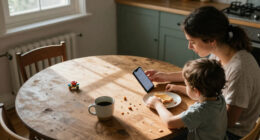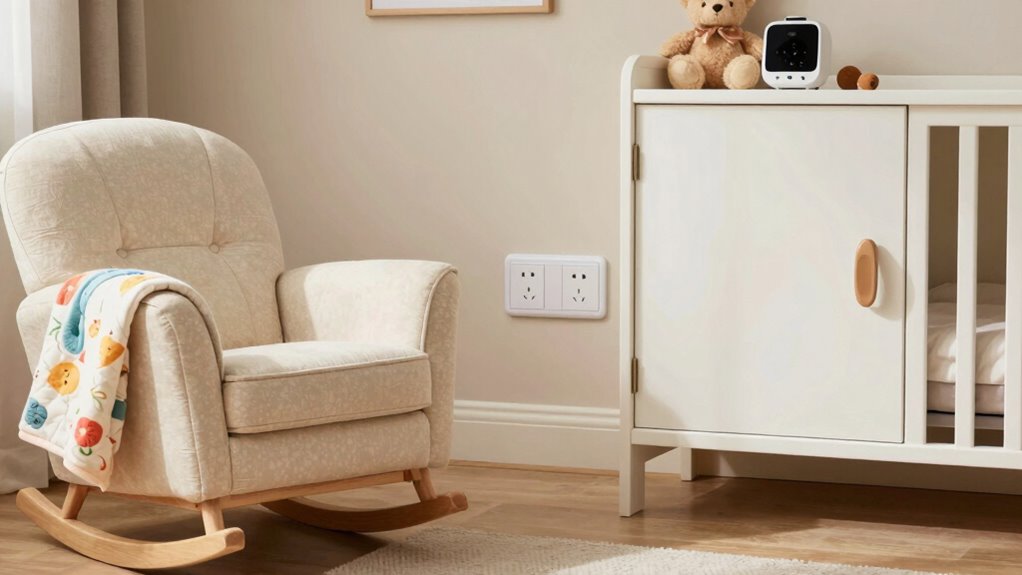

Childproofing your home isn’t a one-time task; it often overlooks hidden dangers like unsecured furniture, small choking hazards, and out-of-sight spaces such as closets or behind furniture. Many parents forget to secure electrical outlets, cords, or check the stability of large furniture, putting kids at risk. Regular inspections and proactive safeguards are essential. Keep uncovering overlooked hazards, and you’ll guarantee your child’s safety is always a step ahead.

Turn the school run and nap time into listening time
- Thousands of audiobooks, podcasts and originals
- Listen on your phone, tablet or Echo — also offline
- Cancel anytime
Key Takeaways
- Regularly inspect and secure hidden areas like closets and behind furniture to prevent access to dangerous objects and trapping risks.
- Anchor heavy furniture, appliances, and tall shelves to walls to prevent tipping and injury.
- Install outlet covers, tamper-resistant outlets, and safety locks on rarely accessed or hidden electrical outlets.
- Remove small objects such as coins, jewelry, and paper clips from low surfaces and clutter to prevent choking hazards.
- Conduct periodic safety assessments to identify and address new hazards as children grow and explore.
As an affiliate, we earn on qualifying purchases.
Identify and Childproof Electrical Outlets and Cords
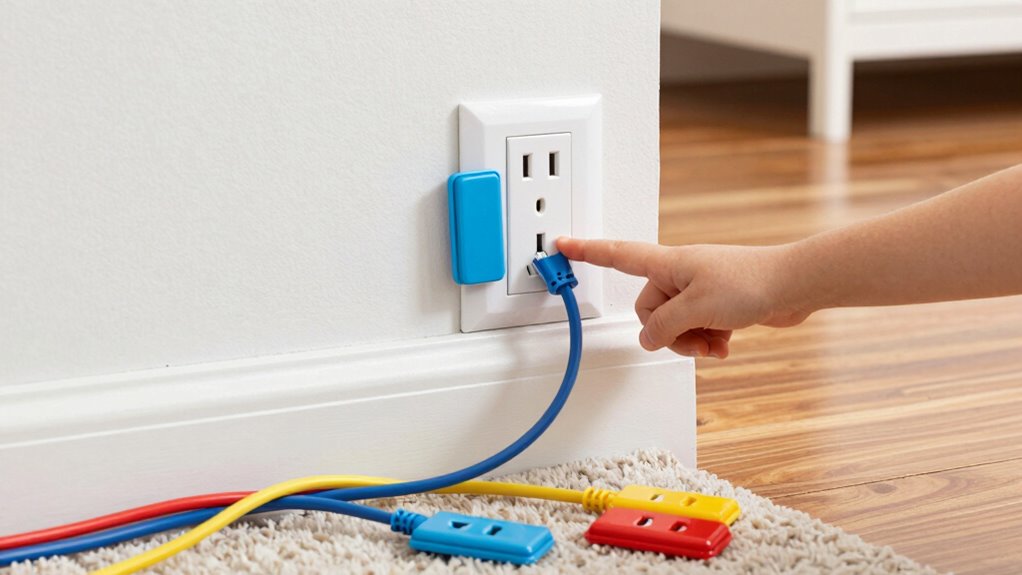
Electrical outlets and cords pose considerable safety risks for children, so it’s essential to address them early. You should start by inspecting all outlets within your child’s reach and installing outlet covers to prevent accidental insertion. Outlet covers are a simple yet effective way to improve electrical safety, reducing the risk of shocks. Make sure cords are kept out of reach or secured with cord organizers to prevent pulling or tripping hazards. Avoid running cords across walkways or under rugs, where they can be hidden and pulled on. Regularly check for damaged or frayed cords, replacing them immediately. Additionally, being aware of early warning signs of electrical hazards can help prevent accidents before they happen. Practicing proper electrical safety practices is essential to create a safer environment. Consider using tamper-resistant outlets that are designed to prevent children from inserting objects. Staying informed about electrical safety standards can further enhance your safety measures. Remember that childproofing methods such as installing ground-fault circuit interrupters (GFCIs) can provide additional protection in areas with water sources. By childproofing electrical outlets and cords, you create a safer environment and markedly lower the risk of electrical accidents, giving you peace of mind.
Secure Furniture and Heavy Items to Prevent Tipping
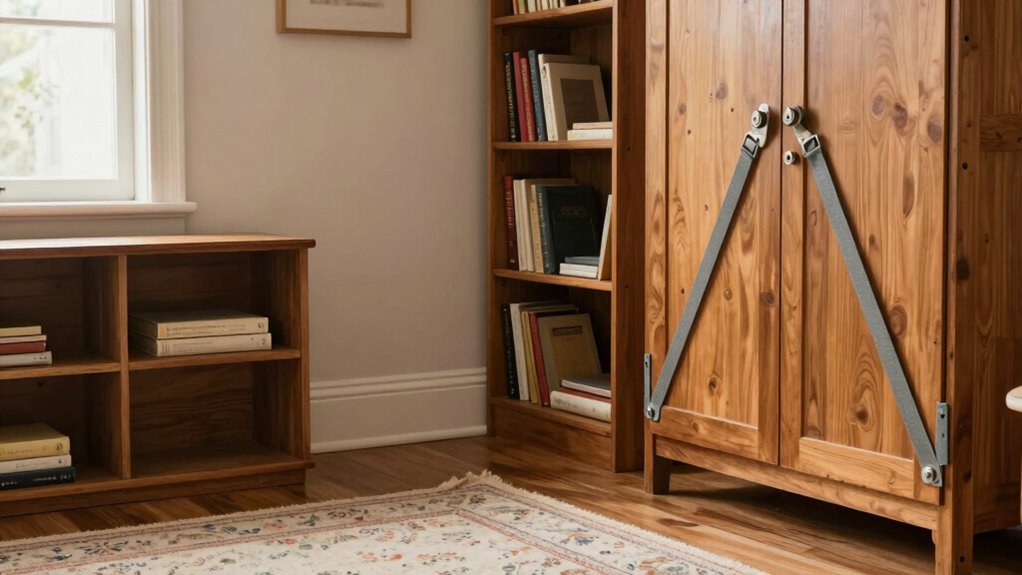
You should anchor heavy furniture to the wall to prevent it from tipping over if your child pulls on it. Keep tempting items out of their reach to reduce the risk of climbing or pulling. Taking these steps helps create a safer environment for your little one. Additionally, regularly assess the safety of your home to identify and address potential hazards before they become emergencies. Being aware of the home safety measures can also help you stay informed about safety tips and community resources. Incorporating preventative home safety strategies can further minimize risks and ensure a secure space for your family. Understanding home safety hazards can help you better recognize and mitigate dangers before they cause harm.
Anchor Heavy Furniture Securely
Heavy furniture and large appliances can pose a serious risk of tipping over if not secured properly. To enhance furniture stability, you need to anchor heavy objects securely to the wall or the floor. Use appropriate straps, brackets, or anchors designed specifically for heavy furniture. Check that each piece is stable and won’t shift easily when pulled or bumped. Heavy object anchoring is essential, especially for tall dressers, bookshelves, or cabinets prone to tipping. Make sure the anchors are tightly secured and regularly inspect them for wear or looseness. Properly anchored furniture not only prevents accidents but also provides peace of mind, knowing your home is safer for curious children. Taking these steps is vital in childproofing your space effectively. Additionally, choosing appropriate tracking gear can help monitor and quickly locate furniture if it becomes unstable. Being aware of furniture stability principles can further guide your efforts to create a safer environment, especially when considering childproofing techniques.
Keep Items Out of Reach
Have you ever considered how easily curious children can pull objects down on themselves? To prevent accidents, keep items out of reach. Start by:
- Securing furniture and heavy items to the wall to avoid tipping over.
- Keeping toys and small objects away from the edges of tables and shelves to ensure toy safety.
- Removing or securing cords and wires that could pose strangulation risks or outdoor hazards.
- Storing cleaning supplies, medicines, and sharp objects in high cabinets, out of your child’s reach.
- Recognizing that fostering curiosity safely supports your child’s development while minimizing risks.
- Being aware that childproofing practices are essential for creating a secure environment for your little explorer.
- Regularly inspecting your environment for potential hazards, such as loose furniture or sharp objects, helps maintain safety.
- Understanding that risk assessment and proactive measures are key to preventing accidents before they happen.
- Implementing safety education with your child can also promote awareness of hazards and encourage cautious behavior.
These steps help minimize risks from falling furniture and choking hazards. Regularly check outdoor play areas for hazards like loose tools or sharp objects. Keeping items out of reach creates a safer environment where your child can explore without danger.
Childproof Hidden Spaces Like Closets and Behind Furniture
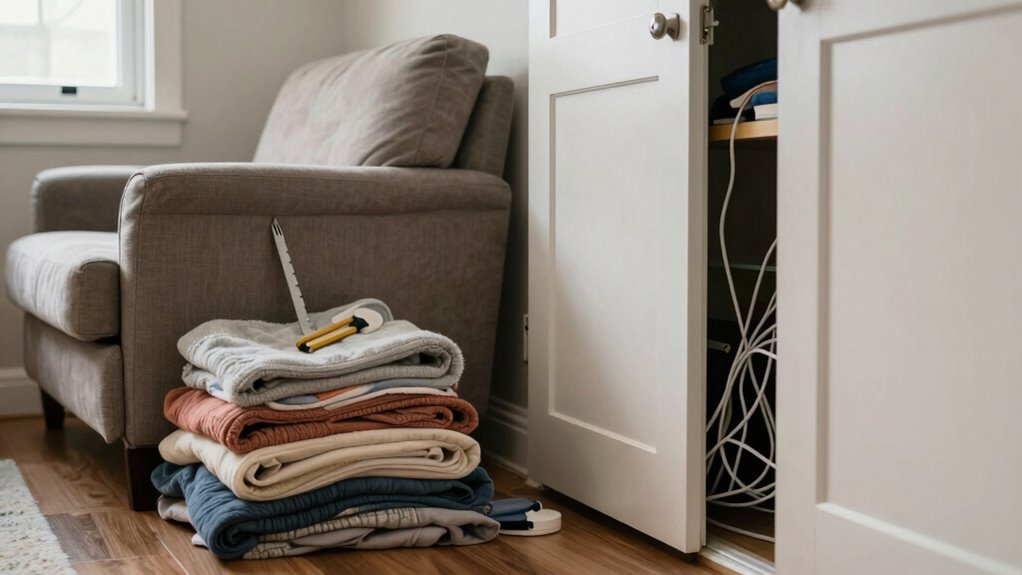
Hidden spaces like closets and behind furniture can hide clutter and small items that pose risks. Securing these areas keeps children from accessing dangerous objects or getting trapped. Regular inspections help you spot and address potential hazards before accidents happen. Being aware of home safety hazards can help you identify and remove online safety risks related to home safety information. Additionally, paying attention to childproofing techniques ensures that all potential hiding spots are safely secured to prevent accidents. Incorporating childproofing tools such as outlet covers and safety locks can further improve the effectiveness of your safety measures. Conducting home safety assessments periodically can help identify new hazards as your child grows and explores.
Hidden Clutter Risks
Clothing piles, cleaning supplies, and small objects often find their way into closets and behind furniture, creating unseen hazards for children. These hidden clutter spots pose risks because kids might access dangerous items or choke on small objects. To prevent accidents, consider these storage solutions:
- Use clear bins to organize toys and supplies, making it easy to spot clutter.
- Install childproof latches on closet doors to prevent unintentional access.
- Regularly check behind furniture for hidden clutter and remove anything unsafe.
- Create designated storage areas for loose items, reducing the chance of small objects being left out.
- Incorporate childproof storage solutions that are designed to keep hazardous items out of children’s reach, and ensure these solutions are secure and durable to withstand curious little hands.
- Additionally, choosing safe storage options that are resistant to tampering can further prevent children from accessing unsafe items.
- Remember that childproofing involves regularly reassessing your space as children grow and their curiosity increases, and understanding that hidden clutter can be an unexpected source of danger.
Securing Small Spaces
To effectively childproof your home, it’s important to secure small spaces like closets and areas behind furniture where clutter can accumulate unnoticed. Baby proofing doors helps prevent your child from wandering into rooms or storage areas unsupervised, reducing risks. Use door knob covers or child-proof locks to restrict access. Behind furniture, secure heavy items or cords that could cause injury if pulled down. Securing stairways is vital—install safety gates at the top and bottom to block access and prevent falls. Check for gaps or loose panels that a curious child might explore. Regularly inspect these hidden spaces to guarantee locks and barriers remain secure. Taking these steps minimizes hazards in small, overlooked areas and keeps your child safe from unexpected dangers.
Regular Inspection Tips
Regularly inspecting your childproofed spaces is essential to guarantee safety measures remain effective. Hidden areas like closets and behind furniture can become hazards over time. To ensure safety:
- Check childproofing furniture for loose straps or broken components.
- Look behind furniture for unsecured cords or small objects kids might reach.
- Inspect closet doors and latches for proper locking and functionality.
- Review childproofing outdoor areas for damaged fences or exposed gaps.
Frequent inspections help identify new risks and maintain secure childproofing. Remember, furniture can shift, and outdoor conditions change, so staying vigilant prevents accidents. By keeping these areas in check, you safeguard your child from unexpected dangers lurking in hidden spaces. Consistent review is key to a truly childproofed home and outdoor environment.
Safeguard Windows and Balcony Areas From Access
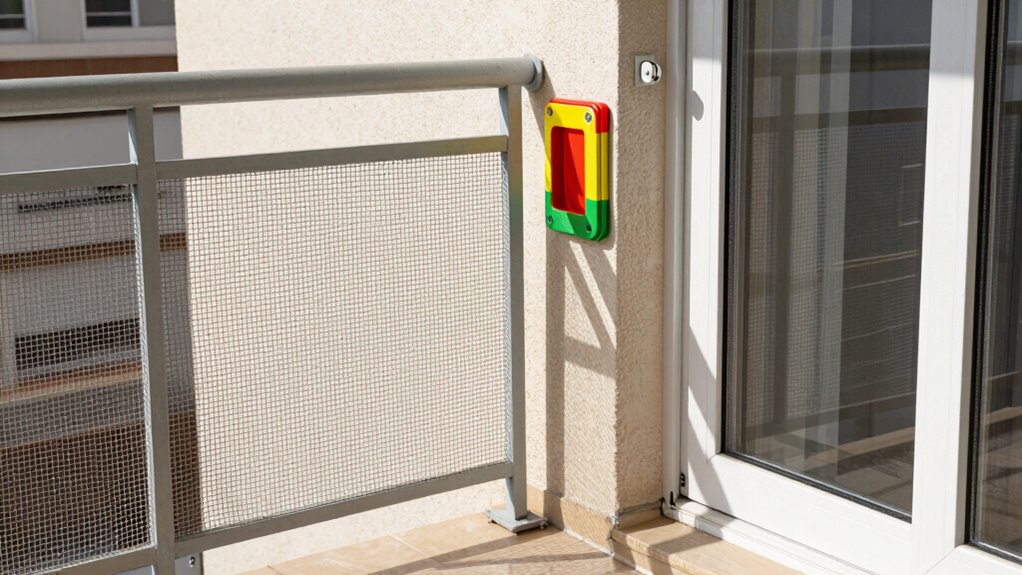
Have you ever considered how easy it is for curious little ones to access windows or balconies? Ensuring window safety is essential to prevent accidents. Install window locks or window stops to keep windows from opening fully. Consider window guards that allow airflow but block access. For balconies, use sturdy balcony barriers or safety netting to create a secure barrier. Make sure these barriers are high enough and firmly attached to prevent climbing or squeezing through. Regularly check the integrity of locks, guards, and barriers to guarantee they remain secure. Never rely solely on screens or furniture as safety measures. Taking these steps minimizes the risk of falls and keeps your child safe in areas that might seem harmless but pose real danger.
Block Off Hidden or Out-of-Sight Areas That Pose Risks

While securing windows and balconies is essential, many hidden or out-of-sight areas around your home can still pose serious risks to curious children. Hidden corner hazards and unseen stair dangers often go unnoticed but can cause serious injuries. To block off these risks:
Hidden corners and unseen stairs can hide dangers; proactively secure these areas to protect curious children.
- Install safety gates at the top and bottom of stairs to prevent falls.
- Use corner protectors on sharp furniture edges hidden in corners.
- Close off or lock access to utility rooms, basements, or storage areas.
- Cover or block off crawl spaces and unused closets that children might explore.
Find and Remove Small Items That Could Cause Choking

Small items scattered around your home can pose a serious choking hazard for young children, especially since they often put things in their mouths out of curiosity. Be vigilant about small toy dangers, such as tiny parts that can break off or easily fit into a child’s mouth. Household choking hazards also include coins, buttons, jewelry, or small household objects like rubber bands or paper clips. Regularly check play areas and tidy up clutter that could be swallowed. Keep small items out of reach or stored in secure containers. Remember, even seemingly harmless objects can become dangerous if they’re small enough to block an airway. Staying proactive helps prevent accidents and keeps your child safe from choking risks.
Install Tamper-Proof Covers on Switches, Thermostats, and Door Locks

Ever wonder how to prevent curious little hands from tampering with household controls and fixtures? Installing tamper-proof covers on switches, thermostats, and door locks is a simple yet effective solution. These covers act as a barrier, keeping children from adjusting settings or opening doors. Here’s what you should do:
- Choose the right tamper-proof covers for switches, thermostats, and door locks.
- Securely install the covers to prevent easy removal.
- Use child safety locks on doors that lead outside or to hazardous areas.
- Regularly check covers and locks to ensure they stay in place.
Store Cleaning Products and Medications Safely Out of Reach
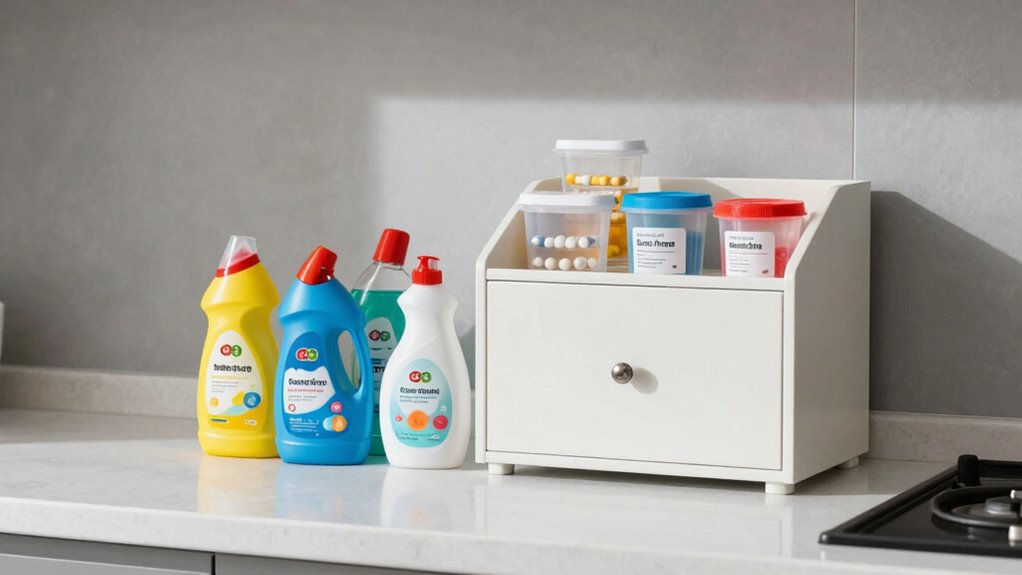
Keeping cleaning products and medications out of children’s reach is a vital step in childproofing your home. Store these items on high shelves or in locked cabinets to prevent accidental ingestion. Use childproofing furniture, like secure storage units, to keep dangerous substances hidden and inaccessible. Securing cabinets with safety latches ensures little hands can’t open them easily. Avoid leaving cleaning supplies or medications out in plain sight or on countertops where curious kids can reach. Regularly check and reorganize storage areas to make certain nothing has been left within reach. Remember, children are naturally curious, so taking these extra precautions helps protect them from harm. Properly securing cabinets and keeping items out of reach creates a safer environment and gives you peace of mind.
Frequently Asked Questions
How Often Should I Review and Update My Childproofing Measures?
You should review and update your home safety measures during routine inspections at least every three to six months. Kids grow quickly, and hazards can change or emerge unexpectedly. Regularly check locks, gates, and electrical outlets to make certain safety devices are effective. Staying proactive with routine inspections helps you spot potential dangers early, keeping your child safe as they explore and grow.
Are There Specific Childproofing Products Recommended for Different Age Groups?
You might think one product fits all ages, but age-appropriate safety measures are vital. For infants, opt for outlet covers and corner protectors, while toddlers benefit from cabinet locks and door latches. As your child grows, switch to higher locks and safety gates. Always check product recommendations for each age group to guarantee maximum safety. Regularly review and update your childproofing measures to keep up with your child’s development and new hazards.
How Can I Childproof Outdoor Play Areas Effectively?
To childproof outdoor play areas, start by installing sturdy outdoor fencing to keep your child within a safe space. Regularly inspect play equipment for safety, making sure there are no sharp edges or broken parts. Use soft mulch or rubber mats under play structures to cushion falls. Keep hazardous items out of reach and supervise your child at all times. These steps guarantee a safe, fun outdoor environment.
What Are Common Hazards in Multi-Story Homes I Might Overlook?
You might overlook staircase hazards and window safety in a multi-story home. Make sure stair rails are secure and have no gaps where a child could slip through. Install safety gates at the top and bottom of stairs. Check that windows have locks or stops to prevent falls, especially on upper floors. Regularly inspect for loose balusters or cracked glass, and always keep furniture away from windows to avoid climbing risks.
How Do I Childproof Appliances Like Ovens and Washing Machines?
To childproof appliances like ovens and washing machines, focus on appliance safety by installing locks on doors and access panels. You should also make certain that knobs and controls are out of reach or secured with childproof covers. Regularly check that locks are functioning properly and replace them if damaged. These steps help prevent your child from opening appliances, reducing the risk of injury or accidents.
Conclusion
Think of your home as a fortress where safety is your shield. By sealing off hidden nooks, anchoring furniture, and hiding dangers behind closed doors, you create a secure playground in a castle. Don’t forget to check every corner, like a vigilant guardian, ensuring tiny hazards don’t sneak in. With each step, you’re weaving an invisible safety net—protecting your little explorer from unseen dangers and turning your home into a safe haven they can roam freely.
Cold & flu season Picks
humidifiers
As an affiliate, we earn on qualifying purchases.