If you notice persistent odors, frequent headaches, allergy symptoms, or visible mold, it’s time to watch your indoor air quality closely. Common pollutants like dust, pet dander, VOCs, and mold can harm your health if left unchecked. Improve air quality by increasing ventilation, using air purifiers, and reducing sources of pollution. If problems continue despite these efforts, expert help may be needed. Keep exploring to learn how you can maintain a healthier home environment.
Key Takeaways
- Persistent odors, allergy symptoms, or respiratory issues indicate potential indoor air quality problems.
- Visible mold, damp areas, or musty smells signal excess moisture and possible mold growth.
- High humidity levels can promote mold and dust mites, affecting air quality and health.
- Recent renovations or new furniture may introduce VOCs that impact indoor air safety.
- Using air quality monitors and maintaining ventilation systems helps detect unseen pollutants and improve air conditions.
As an affiliate, we earn on qualifying purchases.
How to Tell If Your Indoor Air Quality Is Poor

You might notice signs of poor indoor air quality if you frequently experience headaches, dizziness, or respiratory irritation. One common cause is airborne allergens, which can worsen in environments with high humidity levels. When humidity is too high, mold and dust mites thrive, increasing allergen presence. Conversely, low humidity can dry out your nasal passages, making you more sensitive to airborne particles. You may also observe musty odors or visible mold spots, indicating excess moisture and poor air conditions. Poor ventilation can trap pollutants and allergens indoors, intensifying symptoms. Additionally, microplastics in dust can contribute to indoor air pollution and exacerbate health issues. Ensuring proper humidity levels and implementing good ventilation practices can help reduce these risks. Proper air filtration systems can also significantly improve indoor air quality by removing airborne contaminants. Regular cleaning and reducing sources of indoor pollution are crucial steps toward improving air quality. By paying attention to these signs, you can better identify when your indoor air quality is compromised and take steps to improve it, such as controlling humidity levels and increasing ventilation.
When Should You Be Concerned About Indoor Air Quality?

Recognizing when indoor air quality becomes a concern is key to maintaining a healthy environment. If you notice persistent odors, unusual respiratory issues, or allergy symptoms, it’s time to contemplate air quality monitoring. These symptoms often signal that indoor air may not meet established indoor air standards. Regular monitoring helps identify pollutants or deteriorating air quality early, so you can take corrective action. Be especially alert if you’ve recently renovated, introduced new furnishings, or if someone in your household has health sensitivities. When air quality issues persist despite proper ventilation, it’s a clear sign you should investigate further. Keeping track of indoor air quality ensures you’re aware of potential risks and can intervene before problems become severe. Indoor air quality monitoring can provide valuable insights into pollutants that may not be immediately visible or detectable, especially considering that pollutant levels can fluctuate with daily activities and environmental changes. Additionally, understanding indoor air standards helps you assess whether your indoor environment remains safe and healthy. Regular monitoring can also help you understand the impact of environmental factors on indoor air quality, leading to more effective mitigation strategies. Monitoring also allows for the detection of airborne contaminants that might otherwise go unnoticed until health problems arise.
What Are the Most Common Indoor Pollutants?

You probably encounter indoor pollutants every day without realizing it. Common pollutants include dust, pet dander, mold, and secondhand smoke, all from various sources inside your home. Understanding where these contaminants come from helps you reduce your exposure and improve your air quality. Additionally, using field recording techniques can help identify and monitor specific noise-related pollutants that may affect indoor environments. Proper air purifier maintenance is essential to ensure these devices effectively remove pollutants and improve overall indoor air quality. Being aware of indoor pollutant sources can further aid in developing effective strategies to minimize exposure, especially considering the presence of electric bikes and their components, which can sometimes contribute to indoor air quality issues if not properly maintained. Regularly inspecting home ventilation systems can also help prevent the buildup of indoor pollutants and ensure fresh air circulation.
Common Indoor Pollutants
What are the most common indoor pollutants that can affect your health? You’re likely exposed to airborne allergens like pet dander, pollen, and dust mites daily. These allergens can trigger allergies or asthma symptoms. Indoor toxins, such as volatile organic compounds (VOCs) from cleaning products, paints, and furniture, also pose risks. Mold spores thrive in damp areas, releasing spores into the air that can cause respiratory issues. Reducing indoor toxins is essential for maintaining good air quality. Tobacco smoke is another significant indoor pollutant, even from occasional smoking. Additionally, certain chemicals in household products and fragrances contribute to poor air quality. Recognizing these common indoor pollutants helps you take steps to minimize exposure, especially if you or family members have respiratory conditions or sensitivities. Regular cleaning and proper ventilation are key to improving your indoor air quality.
Sources of Indoor Contaminants
Indoor pollutants primarily originate from the everyday items and activities in your home. Paint fumes are common when you’re decorating or doing repairs, releasing volatile organic compounds (VOCs) that can cause health issues. Pet dander from cats, dogs, or other animals is another major source of indoor allergens, especially if you or family members have allergies or asthma. Household cleaning products, tobacco smoke, and cooking emissions also contribute to indoor air pollution. Mold grows in damp areas, releasing spores into the air, while dust mites thrive in bedding and carpets. Free Floating particles can remain suspended in the air for extended periods, increasing exposure. Understanding these sources helps you identify potential risks and take action to improve your indoor air quality. Regular cleaning, proper ventilation, and choosing low-emission products can considerably reduce these pollutants. Additionally, adequate ventilation helps to disperse airborne contaminants and maintain healthier indoor air. Implementing air purifiers with HEPA filters can further capture airborne particles and improve overall air cleanliness.
Easy Ways to Improve Your Indoor Air Quality
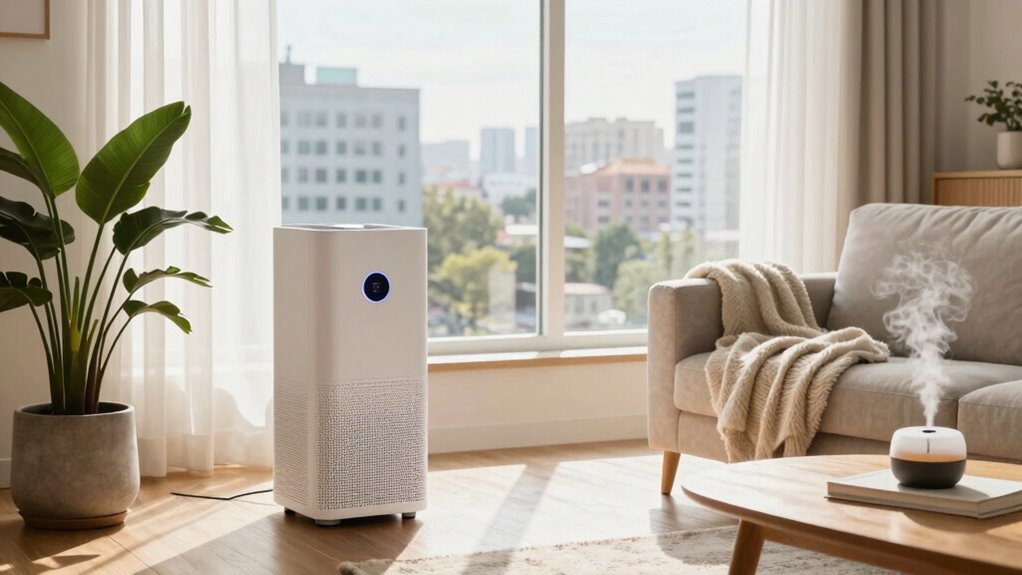
Improving your indoor air quality is easier than you think. You can start by increasing ventilation and using air purifiers effectively to remove pollutants. Additionally, reducing sources of indoor pollutants makes a significant difference in creating a healthier home environment. Incorporating indoor air quality monitors can help you keep track of pollutant levels and make informed adjustments. Regularly inspecting and maintaining smart home devices such as air purifiers and sensors can also optimize their performance and ensure ongoing safety. Implementing proper ventilation systems can further enhance air circulation and reduce pollutant buildup inside your home. Ensuring that your HVAC system is properly maintained can prevent the spread of pollutants and improve overall air quality. Being mindful of eco-friendly disposal practices for household items like kitchen gear can also contribute to improved indoor air quality by minimizing indoor pollutants from waste.
Increase Ventilation Regularly
Increasing ventilation is one of the easiest ways to boost your home’s air quality. Natural ventilation, like opening windows and doors, allows fresh air to replace stale indoor air. This simple step reduces indoor pollutants and humidity, making the environment healthier. You can also enhance natural airflow by strategically placing indoor plants near windows or vents, as they help filter toxins and improve overall air quality. Regularly ventilating your home helps disperse airborne allergens, mold spores, and odors. Even in colder months, opening windows for a few minutes each day can make a significant difference. Remember, consistent airflow is key to maintaining a healthier living space. Incorporating natural ventilation and indoor plants creates a fresher, cleaner atmosphere with minimal effort. Using simple tools like window openers and fans can further improve airflow and make the process easier. Additionally, maintaining a healthy indoor humidity level helps prevent mold growth and improves overall air quality. Proper airflow is especially important for AI-powered air quality monitors, which can provide real-time data to optimize ventilation practices.
Use Air Purifiers Effectively
Using air purifiers effectively can considerably enhance your home’s air quality with minimal effort. To get the best results, choose the right device for your space and needs. Regular air purifier maintenance, like changing filters on schedule, keeps it running efficiently. Place the purifier in high-traffic areas or rooms where you spend the most time, ensuring unobstructed airflow. Avoid running it constantly at high settings unless necessary, as this can waste energy. Pay attention to the CADR (Clean Air Delivery Rate) to match your room size. Keep windows and doors closed when the purifier is on to prevent reintroducing pollutants. By selecting the right device and maintaining it properly, you’ll create a cleaner, healthier indoor environment effortlessly.
- Picture your device quietly working in the corner, filtering allergens and pollutants
- Imagine the fresh, crisp air circulating through your living space
- Visualize regularly replacing filters for ideal performance
Reduce Indoor Pollutants
To reduce indoor pollutants, start by keeping your home well-ventilated; open windows when weather permits and use exhaust fans in kitchens and bathrooms. This helps remove airborne toxins and freshens the air. Adding air purifiers can trap dust, pet dander, and allergens, making a noticeable difference. Incorporate indoor plants like snake plants or pothos; they naturally filter pollutants and boost your mood. Here’s how different options compare:
| Method | Effectiveness | Cost |
|---|---|---|
| Air Purifiers | High, targets specific particles | Moderate |
| Indoor Plants | Moderate, improves ambiance | Low |
| Ventilation | Essential, reduces overall toxins | Free |
| Cleaning Regularly | Eliminates dust buildup | Low |
| Using Natural Products | Avoids chemical pollutants | Low |
Combine these strategies to create a healthier, happier home environment.
When to Call a Professional for Indoor Air Problems
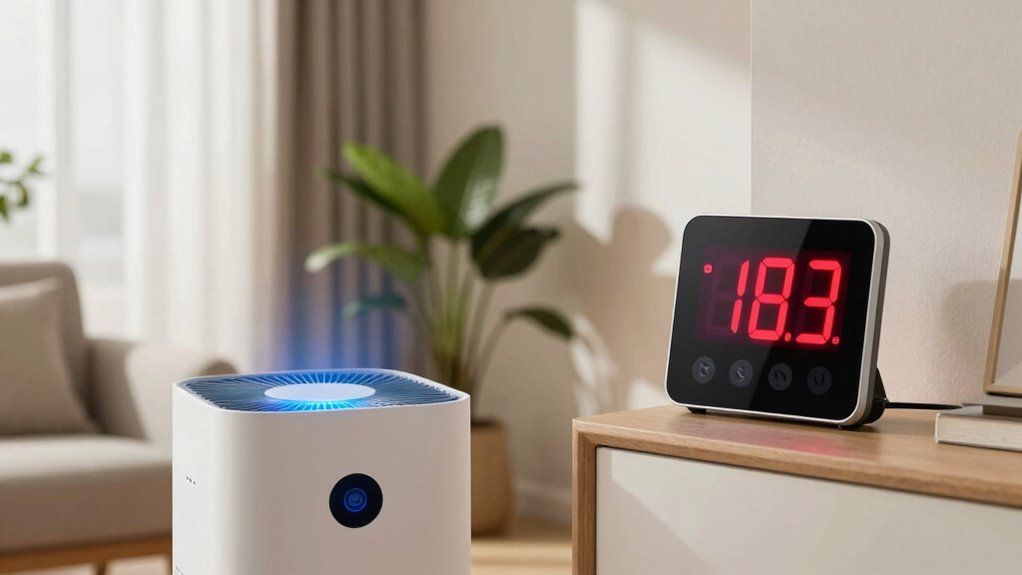
Sometimes, indoor air problems can be more serious than they seem and require professional help. If you notice persistent odors, mold growth, or ongoing allergy symptoms despite cleaning, it’s time to call in experts. A professional HVAC system inspection can identify hidden issues affecting air quality. Consider scheduling a mold inspection if you see black spots or experience musty odors, as mold can cause health problems. You might also need a ventilation assessment if indoor air feels stale or stuffy. Don’t ignore signs like frequent headaches or respiratory irritation. Addressing these issues promptly with trained specialists guarantees your home’s air remains safe and healthy. Remember, early intervention can prevent costly repairs and long-term health effects.
How to Maintain Good Indoor Air Quality Over Time
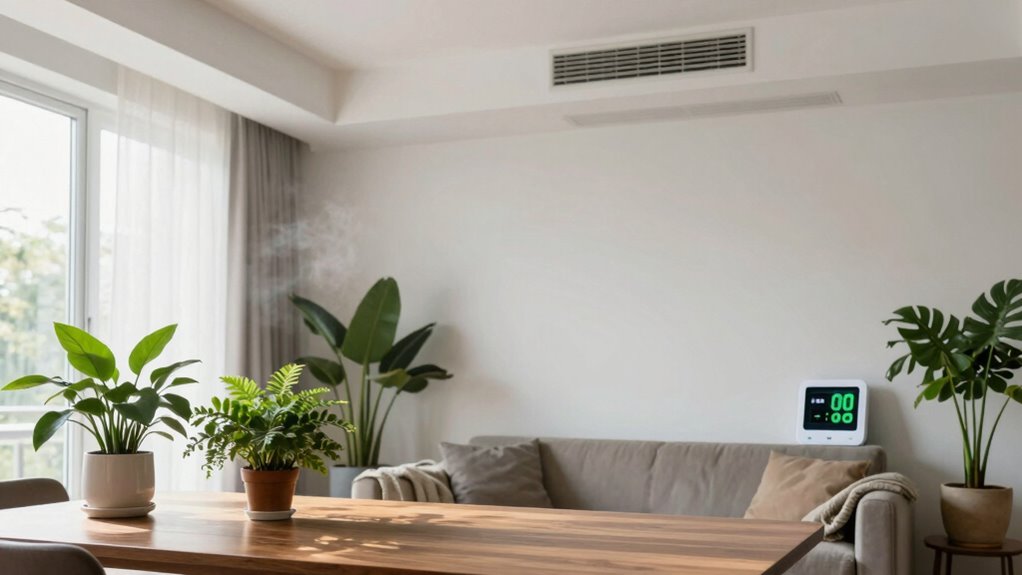
Wondering how to keep your indoor air clean and healthy over time? The key is maintaining good air quality standards through proper ventilation and regular upkeep. Install and use ventilation systems like exhaust fans and air purifiers to reduce indoor pollutants. Ensure your home is well-ventilated daily, especially in areas prone to moisture or odors. Keep surfaces clean to minimize dust, mold, and allergens that can degrade air quality. Regularly check and replace filters in your HVAC system, as clogged filters hinder airflow and trap pollutants. Avoid smoking indoors and limit the use of harsh chemicals. By staying proactive with these practices, you’ll create a healthier environment and preserve good indoor air quality for years to come.
Frequently Asked Questions
Can Pets Affect Indoor Air Quality Significantly?
Yes, pets can considerably affect your indoor air quality through pet dander, which can trigger allergic reactions. When your pets shed fur and skin, they release dander into the air, increasing allergens that may cause sneezing, congestion, or asthma symptoms. To reduce this, regularly clean your home, groom your pets, and improve ventilation. These steps help keep pet dander levels manageable and protect your indoor air quality.
Are Air Purifiers Effective for All Indoor Pollutants?
Air purifiers can be effective, but they don’t remove all indoor pollutants. You might think they’re a cure-all, but air purifier limitations exist, especially with gaseous pollutants or VOCs. They excel at capturing particles like dust, pollen, and pet dander, yet may struggle with chemicals or odors. To improve air quality, combine purifiers with proper ventilation and source control for thorough pollutant removal.
How Does Humidity Impact Indoor Air Quality?
Humidity levels directly impact your indoor air quality by influencing mold growth and dust mites. When humidity is high, it creates a perfect environment for mold, which can worsen allergies and respiratory issues. Keep humidity levels between 30-50% to reduce mold growth and maintain healthy air. Use dehumidifiers or ventilation fans to control moisture, ensuring your home’s air stays clean and safe for everyone.
What Are the Long-Term Health Effects of Poor Indoor Air?
Ironically, neglecting indoor air quality can silently harm your respiratory health over time. Long-term exposure to indoor pollutant sources like dust, mold, and chemicals can lead to chronic respiratory issues, allergies, or asthma. You might think it’s harmless, but these pollutants subtly undermine your health, causing persistent problems that worsen if ignored. Staying aware and improving ventilation can help protect your respiratory health and keep indoor air safe.
Can Cleaning Products Worsen Indoor Air Quality?
Yes, cleaning products can worsen indoor air quality. Many contain chemical fumes that release volatile organic compounds (VOCs), which can irritate your lungs and worsen allergies. Additionally, frequent use can lead to allergen buildup on surfaces and in the air, increasing respiratory issues. To protect yourself, opt for natural or fragrance-free cleaners, guarantee good ventilation during cleaning, and limit your exposure to chemical fumes.
Conclusion
Think of your home’s air as the breath of your sanctuary. Just like a garden needs care to flourish, your indoor air requires attention to stay pure and healthy. When you notice warning signs, take action—like tending to delicate plants. With mindful habits and timely help, you can keep your home’s air fresh and life-giving. Your safe haven depends on it—breathe easy, knowing you’re the gardener of your own well-being.