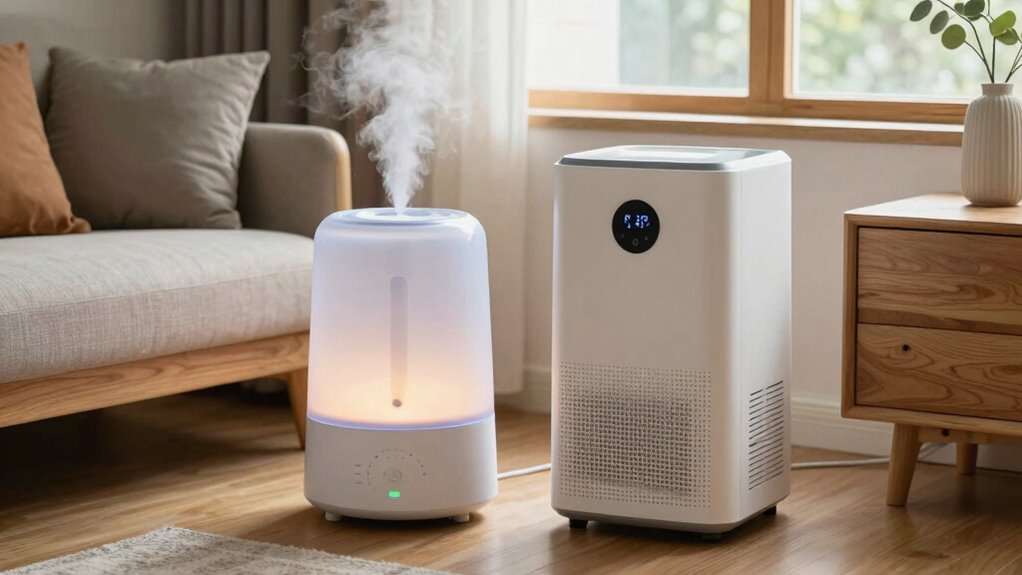

To decide between a humidifier and a dehumidifier, first assess your indoor humidity levels with a hygrometer. If your home feels dry, has dry skin, or irritated sinuses, a humidifier helps add moisture. If you notice musty odors, condensation, or mold, a dehumidifier can reduce excess moisture. Knowing your specific needs guarantees comfort and air quality — continue on to learn how to choose the right device for your space.
Key Takeaways
- Use a humidifier if indoor humidity is below 30%, causing dryness and respiratory discomfort.
- Opt for a dehumidifier if humidity exceeds 60%, leading to mold, mildew, and dust mites.
- Measure indoor humidity with a hygrometer to determine whether to add or remove moisture.
- Consider room size and specific issues like allergies, odors, or mold prevention to choose the right device.
- Maintain proper device placement and regular cleaning to ensure effective humidity control and healthier air quality.

LEVOIT Top Fill Humidifiers for Bedroom, 2.5L Tank for Large Room, Easy to Fill & Clean, 28dB Quiet Cool Mist Air Humidifier for Home Baby Nursery & Plants, Auto Shut-off for Safety, 25H
𝙁𝙖𝙨𝙩 𝙃𝙪𝙢𝙞𝙙𝙞𝙛𝙞𝙘𝙖𝙩𝙞𝙤𝙣 𝘼𝙡𝙡 𝙉𝙞𝙜𝙝𝙩: Runs for up to 25 hours on low thanks to its SUPER LARGE capacity…
As an affiliate, we earn on qualifying purchases.
As an affiliate, we earn on qualifying purchases.
Why Indoor Humidity Matters for Your Health and Comfort
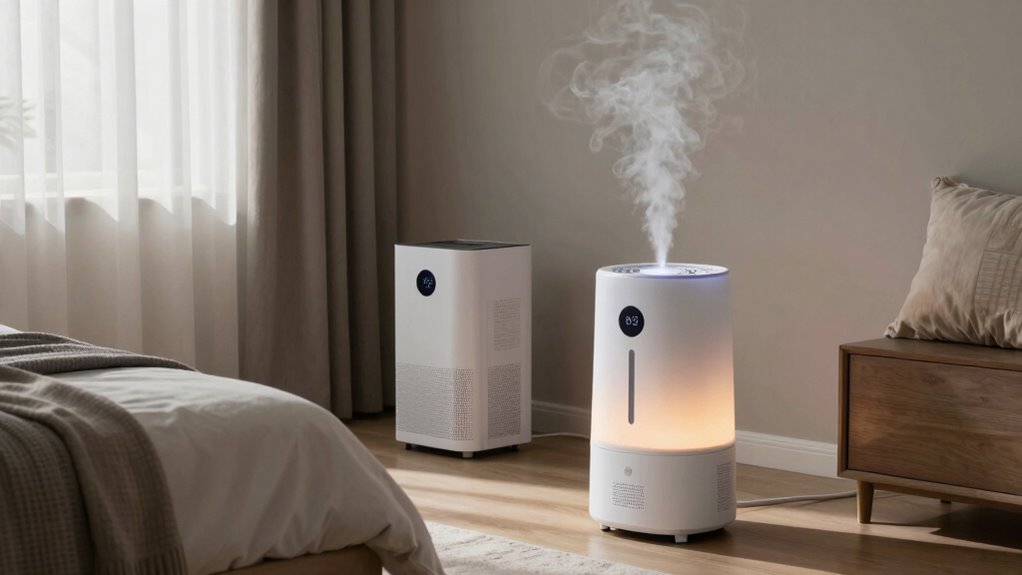
Maintaining proper indoor humidity levels is essential because it directly affects your health and comfort. When humidity is too low, dry air can irritate your respiratory system, worsen allergies, and decrease overall air quality. It can also cause skin dryness and make your home feel uncomfortable. Conversely, high humidity promotes mold growth and dust mites, which can trigger allergies and respiratory issues. Controlling indoor humidity helps manage allergens effectively, creating a healthier environment. Proper humidity levels also help prevent the proliferation of microplastics in dust, which can impact air quality and health. Additionally, maintaining optimal humidity can reduce the presence of airborne pollutants, further contributing to indoor air purity. Ensuring effective humidity control is vital for sustaining a clean and healthy indoor environment. Good air quality is indispensable for your well-being, especially if you suffer from allergies or respiratory conditions. By maintaining balanced humidity, you can breathe easier, reduce allergy symptoms, and enjoy a more comfortable living space. Proper humidity levels are a simple yet critical step toward a healthier home environment. Monitoring indoor humidity levels is a key part of maintaining optimal air quality and comfort, helping to minimize the buildup of harmful indoor pollutants.

KeepGlad Dehumidifier, 98OZ Dehumidifiers for Home(1000sq.ft), Humidity Display Dehumidifier for Basement Bathroom Bedroom, Auto Shut Off, Washable Filter, Drain Hose, Timer, 7 Ambient Lights, Gray
【High Efficient Dehumidification & Digital Controls】Equipped with dual semiconductor design, KeepGlad dehumidifier removes up to 40 OZ of…
As an affiliate, we earn on qualifying purchases.
As an affiliate, we earn on qualifying purchases.
How Do Humidifiers and Dehumidifiers Work?
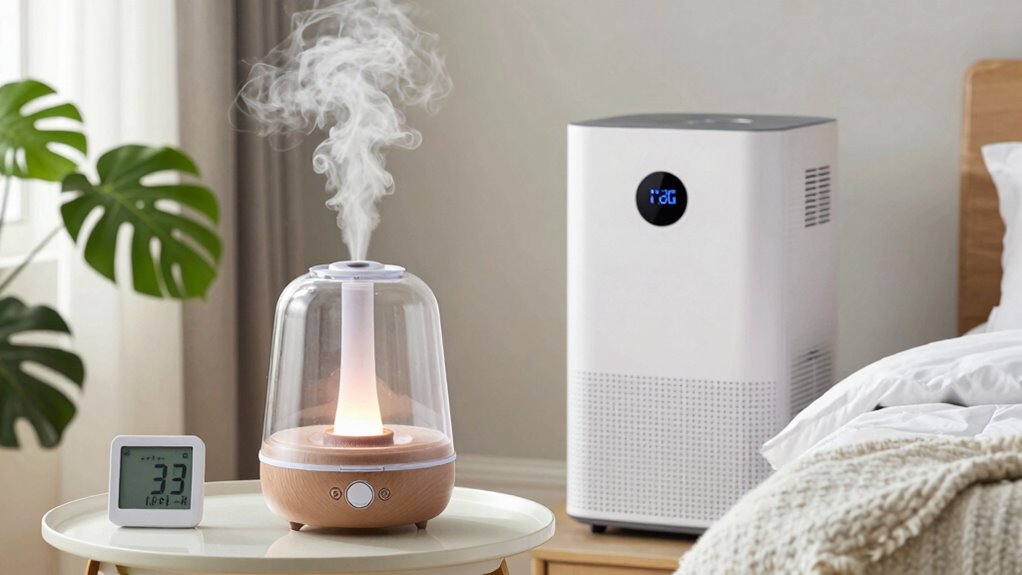
Humidifiers and dehumidifiers are designed to adjust indoor humidity levels by adding or removing moisture from the air. To do this effectively, they incorporate specific mechanisms:
Humidifiers and dehumidifiers adjust indoor humidity using specialized mechanisms for optimal air quality.
- Humidifiers release moisture through a vaporizer or ultrasonic technology, often requiring air filter compatibility to trap minerals and impurities.
- Dehumidifiers pull in humid air, pass it over cooling coils, and condense moisture into a reservoir, with some models featuring air filters for cleaner air.
- Both devices vary in noise level considerations; quieter models are ideal for bedrooms or offices.
- Proper maintenance of filters and components ensures peak performance, preventing mold buildup and maintaining consistent humidity control.
- Understanding the seasons and climate conditions can help determine which device is more suitable for your home environment.
- Regularly checking and replacing filters can help maintain device efficiency and improve air quality.
- Selecting the right device also depends on the size of your space, ensuring effective humidity regulation throughout your home.
LEVOIT Top Fill Humidifiers for Bedroom, 2.5L Tank for Large Room, Easy to Fill & Clean, 28dB Quiet Cool Mist Air Humidifier for Home Baby Nursery & Plants, Auto Shut-off for Safety, 25H
𝙁𝙖𝙨𝙩 𝙃𝙪𝙢𝙞𝙙𝙞𝙛𝙞𝙘𝙖𝙩𝙞𝙤𝙣 𝘼𝙡𝙡 𝙉𝙞𝙜𝙝𝙩: Runs for up to 25 hours on low thanks to its SUPER LARGE capacity…
As an affiliate, we earn on qualifying purchases.
As an affiliate, we earn on qualifying purchases.
Signs You Need a Humidifier or a Dehumidifier?

If you notice persistent dryness or static shocks in your home, it’s a clear sign that you might need a humidifier to add moisture to the air. Poor air quality caused by low humidity can lead to dry skin, irritated sinuses, and breathing issues. Conversely, if you experience musty odors, condensation on windows, or visible mold growth, a dehumidifier can help reduce excess moisture and prevent mold development. Both conditions disrupt air quality and can impact your health. Recognizing these signs early allows you to address the problem before it worsens. Proper humidity levels maintain a healthier environment, protect your home from mold, and improve overall air quality. Monitoring indoor air quality can help you determine the right device for your needs. Staying aware of humidity levels is essential to choosing between a humidifier or dehumidifier and maintaining a comfortable, healthy home environment. Additionally, using a hygrometer can help you accurately measure and manage your home’s humidity levels, ensuring optimal comfort and safety. Incorporating Indonesian decor masks or other cultural artifacts can also enhance your space and create a more inviting atmosphere.

Dehumidifier, 95OZ Dehumidifier for Home 1000 Sq.Ft – Quiet with Auto Shut Off & Relaxing 7 Color Ambient Light,Ideal for Livingroom, Bedroom, Basement(Black)
Semiconductor dehumidifiers use thermoelectric cooling to remove moisture from the air. They create a drier, more comfortable environment…
As an affiliate, we earn on qualifying purchases.
As an affiliate, we earn on qualifying purchases.
How to Choose the Right Device for Your Home
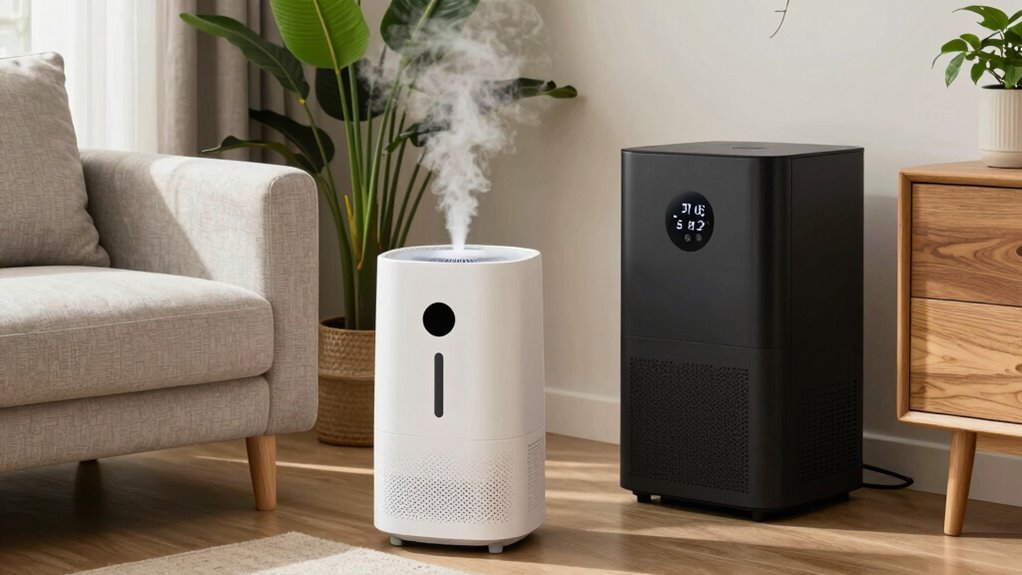
To pick the right device, start by evaluating your indoor climate and identifying whether you need more moisture or less. Consider the size of the rooms where you’ll use the device to guarantee it’s powerful enough. Knowing your specific needs helps you choose the most effective humidifier or dehumidifier for your home. Additionally, assessing your home’s air quality can help determine if improvements are needed beyond humidity control. Being aware of your environmental conditions can also aid in making a more informed decision about which device will best support your household health.
Assess Your Indoor Climate
Understanding your indoor climate is essential before choosing between a humidifier or dehumidifier. To do this, evaluate your home’s air quality and humidity levels.
- Check humidity levels using a hygrometer—ideally, indoor humidity should be between 30-50%.
- Notice if rooms feel damp or musty, which indicates excess moisture and potential mold growth.
- Observe air quality issues like persistent odors or allergy symptoms, which can be worsened by improper humidity.
- Identify areas prone to mold or excessive dryness, helping you decide whether to add moisture or remove it.
- Monitoring indoor environment conditions can help you make informed decisions about managing your home’s climate effectively.
Consider Room Size and Needs
Choosing the right humidifier or dehumidifier depends heavily on your room size and specific needs. For larger rooms, you’ll need a device with a higher capacity to effectively manage humidity levels. Small spaces require compact units that don’t overpower the room or waste energy. Consider your specific needs—if you struggle with dry skin or respiratory issues, a humidifier can add moisture. Conversely, if you notice mold, musty odors, or condensation, a dehumidifier helps reduce excess moisture. Measure your room’s square footage to select a device with the appropriate coverage. Also, think about how often you’ll use it and your comfort preferences. Matching your device to your room size and needs guarantees efficient operation and better indoor air quality.
Pros and Cons of Humidifiers vs Dehumidifiers

Humidifiers can improve air quality and comfort, but they might also cause excess moisture if not used properly. Dehumidifiers help control humidity levels and prevent mold, yet they can sometimes dry out the air too much. Understanding these benefits and limitations helps you choose the right device for your needs. Additionally, selecting the appropriate airflow management system, such as using high-quality filters or properly sized units, can enhance performance and prevent issues like over-humidifying or excessive drying. Regular maintenance, including filter replacements, is essential to ensure your device functions effectively and maintains optimal air quality. Proper humidity regulation ensures a healthy and comfortable indoor environment while avoiding potential problems caused by improper device use. Being aware of capacity and selecting the right size based on room dimensions can also improve efficiency and prevent overworking your device. Incorporating proper placement within the room is also crucial to maximize effectiveness and ensure even humidity control.
Humidifier Benefits and Drawbacks
Humidifiers can substantially improve indoor air quality by adding moisture, which is especially helpful during dry winter months. They help prevent dry skin, sore throats, and respiratory issues. However, they also have drawbacks.
- Air quality can decline if not cleaned regularly, leading to mold or bacteria growth. Proper device maintenance is crucial to ensure healthy air quality. Regular cleaning prevents the buildup of microorganisms that can be harmful when dispersed into the air.
- Maintenance requirements include frequent cleaning to prevent mineral buildup and bacteria.
- Over-humidifying can cause excess moisture, leading to mold and dust mites. Monitoring humidity levels ensures optimal comfort and safety.
- They may increase energy consumption and require ongoing costs for filters and replacement parts.
- Proper sound healing science research suggests that maintaining optimal indoor humidity levels can support overall health and cellular regeneration.
While humidifiers boost comfort and air quality, neglecting proper maintenance can negate benefits and cause health issues. It’s essential to weigh these pros and cons before deciding if a humidifier suits your home.
Dehumidifier Advantages and Limitations
Dehumidifiers offer an effective way to control excess moisture in indoor air, especially in damp or humid environments. They improve air quality by reducing mold, dust mites, and mildew, which can trigger allergies. However, they have limitations, such as energy consumption and noise. They may also dry out the air too much if not properly managed. Additionally, choosing eco-friendly craft patterns can help reduce environmental impact and promote sustainability.
Tips for Proper Use and Maintenance of Your Moisture Control Devices

To guarantee your moisture control devices work effectively and last longer, it’s vital to follow proper use and maintenance practices. First, regularly check and perform filter maintenance to keep airflow ideal and prevent mold buildup. Second, make sure your device is placed in an ideal location—away from walls and vents—to maximize efficiency. Third, clean the water tank or dehumidifier components as recommended by the manufacturer to prevent bacteria growth. Fourth, monitor humidity levels with a hygrometer to maintain perfect indoor moisture. Proper filter maintenance ensures cleaner air, while ideal placement enhances device performance. Additionally, understanding the filtration and suction basics can help you optimize your device’s operation. Regularly inspecting and maintaining device components can prevent common issues and improve longevity. Consistent cleaning and careful positioning help extend the lifespan of your device, saving you money and ensuring a healthier home environment.
How Much Do These Devices Cost and Which Is More Energy-Efficient?

Understanding the costs of moisture control devices can help you make an informed choice for your home. A cost comparison shows that humidifiers typically have a lower upfront price, often ranging from $30 to $200, while dehumidifiers can cost between $150 and $400 or more. Operating expenses also vary; dehumidifiers tend to use more energy due to their larger motors and continuous operation, making them less energy-efficient over time. Humidifiers generally consume less electricity, especially models with adjustable settings. If you’re concerned about ongoing costs, look for energy-efficient units with Energy Star ratings. Remember, while initial costs differ, your long-term savings and energy consumption should influence your decision, aligning with your budget and environmental priorities.
Making the Right Choice: Should You Use a Humidifier or a Dehumidifier?

Choosing between a humidifier and a dehumidifier depends on your home’s specific moisture needs. If your indoor relative humidity is too low, a humidifier can improve air quality and comfort. Conversely, if humidity is too high, a dehumidifier reduces mold risk and enhances air quality.
Consider these factors:
- Measure your home’s current relative humidity with a hygrometer.
- If it’s below 30%, opt for a humidifier to add moisture.
- If it’s above 60%, choose a dehumidifier to remove excess moisture.
- Think about your air quality concerns—dry air can cause irritation, while damp air fosters mold.
Making the right choice helps balance humidity levels, improving overall air quality and comfort.
Frequently Asked Questions
Can Both Devices Be Used Together in One Home?
Yes, you can use both a humidifier and a dehumidifier in your home. They help maintain the ideal humidity balance, especially in varying climates or seasons. Just guarantee device compatibility with your space and needs. Using both can improve air quality and comfort, but monitor humidity levels regularly to avoid over- or under-humidification. Proper management ensures each device works efficiently without conflicting.
What Are the Safety Concerns for Children and Pets?
You should prioritize child safety and pet safety when using humidifiers or dehumidifiers. For example, over 90% of household accidents involving humidifiers are caused by burns or electrical issues. Keep devices out of children’s reach, regularly clean them to prevent mold or bacteria, and use cool mist humidifiers instead of hot steam models. Always unplug devices when not in use and supervise children and pets around these appliances to prevent accidents.
How Long Does It Take to See Results After Installation?
After installation, you’ll start noticing the effectiveness timeline within a few hours to a few days, depending on your home’s humidity levels. The installation impact is usually quick, but it may take longer to see full results if your environment is extremely dry or damp. Keep an eye on the device’s performance and adjust settings if needed to optimize comfort. Consistency guarantees the best results over time.
Are There Any Health Risks Associated With Improper Use?
Improper use of humidifiers or dehumidifiers can pose health risks, affecting indoor air quality and mold prevention. If you over-humidify, mold and dust mites may thrive, leading to allergies or respiratory issues. Conversely, running a dehumidifier too often can dry out your skin and irritate your lungs. To stay safe, follow manufacturer guidelines, monitor humidity levels, and guarantee proper maintenance to protect your health and maintain a healthy indoor environment.
What Are the Best Brands or Models for Small Spaces?
For small spaces, you should look for compact options and budget-friendly models that fit easily without sacrificing performance. Brands like Vicks, Honeywell, and TaoTronics offer reliable, space-saving humidifiers and dehumidifiers. These models are designed for efficiency and affordability, making them perfect for bedrooms or offices. Always check reviews and features to guarantee the model you pick suits your space and needs, providing comfort without breaking the bank.
Conclusion
Choosing between a humidifier and dehumidifier is like tending a delicate garden—you need the right balance to thrive. When I first struggled with constant congestion, a simple humidifier transformed my space, much like watering plants helps them flourish. Remember, understanding your home’s unique needs guarantees you avoid overwatering or drying out your environment. With the right device, you’ll create a comfortable, healthy space—your personal oasis—where every breath feels just right.