To keep your child safe, make certain the harness fits snugly and is adjusted at or below shoulder level, securing them comfortably without slipping or being too tight. Always check that the brakes work properly and lock securely before every use or parking. To prevent tip-overs, avoid overloading and distribute weight evenly. Proper parking, cautious navigation, and regular inspections are key. Stay alert to signs of mechanical issues; learning more can help you keep your little one safe.
Key Takeaways
- Ensure the stroller has a secure five-point harness and adjust it snugly at or below shoulder level.
- Regularly test and maintain brakes to guarantee they lock securely and release smoothly.
- Use stable, flat surfaces for parking and always fully engage brakes before leaving the stroller unattended.
- Distribute weight evenly and avoid overloading to prevent tip-over, especially on slopes or uneven terrain.
- Perform routine safety checks for wear, damage, and proper harness and brake functionality to prevent accidents.

WONDERFOLD W4 Elite Stroller Wagon (4 Seater) – Wagon Stroller with 5-Point Harnesses, Adjustable Push Handle, and Removable UV Sun Canopy – Safety Certified, Volcanic Black
Perfect Baby & Toddler Stroller – Foldable wagon collapses easily for storage and holds up to 4 passengers…
As an affiliate, we earn on qualifying purchases.
As an affiliate, we earn on qualifying purchases.
What Are the Key Safety Features to Look for in a Stroller?
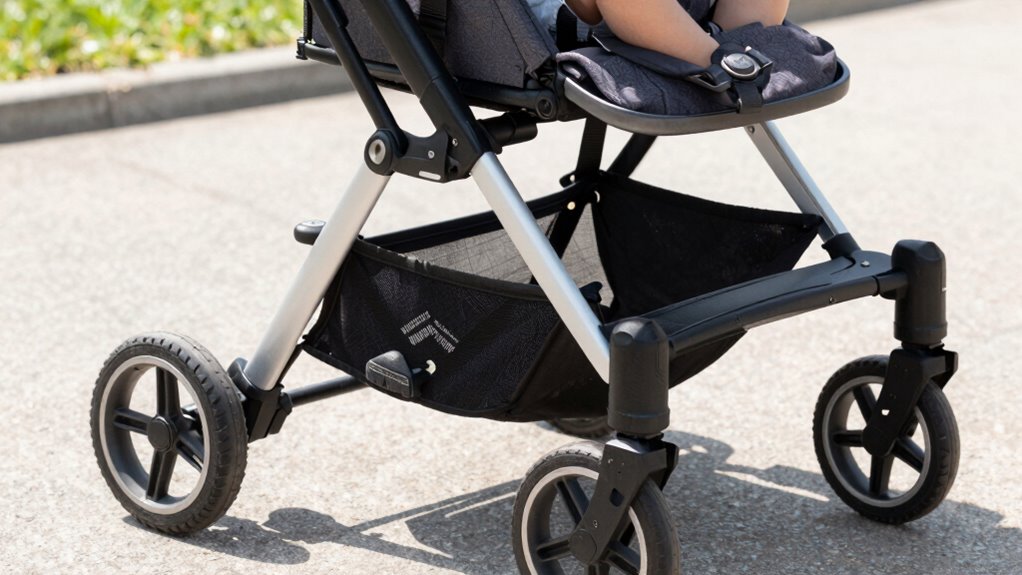
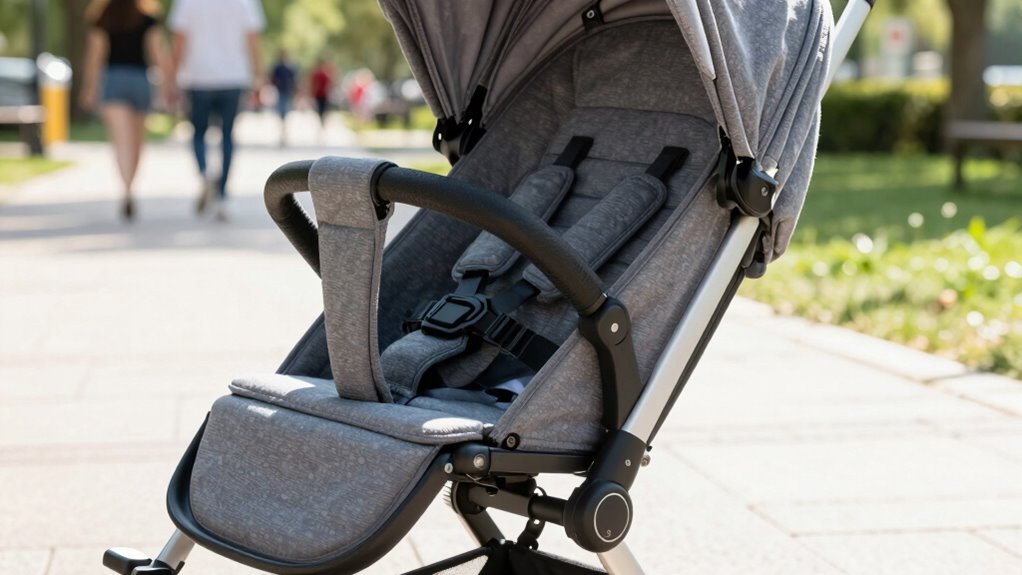
When choosing a stroller, it’s essential to prioritize safety features that protect your child during every outing. Focus on stroller design elements that enhance stability, like a sturdy frame and reliable brakes. Look for ergonomic features that promote comfort and proper positioning, such as adjustable seats and padded harnesses. A well-designed stroller should have a five-point harness system to keep your child secure and prevent falls. Consider the ease of maneuverability, including smooth swivel wheels and responsive brakes, to avoid tip-overs. Reflect on how the stroller’s design minimizes risks and provides ergonomic support. Additionally, evaluating safety standards can help ensure the stroller meets recognized safety criteria. These standards often include rigorous testing for durability and stability, which are crucial for stroller safety and your peace of mind. Ensuring the stroller adheres to regional safety regulations can further enhance confidence in its overall safety. By choosing a stroller with these safety features, you ensure your child’s safety and comfort while making outings more manageable for you. Incorporating market standards can also help you compare different models effectively and select the best option for your needs. It’s also beneficial to look into latest safety innovations that manufacturers may incorporate to improve overall stroller safety.

Alarm Disc Lock Set, Brake Lock, Anti-Theft Waterproof 110 dB 7mm Pin 5ft Reminder Cable for Motorcycles Bike Scooter Carry Pouch (1pcs Black)
【1pcs Black Lock】- This alarm disc lock set includes 1pcs black alarm disc lock, 1pcs Allen wrench, 2pcs…
As an affiliate, we earn on qualifying purchases.
As an affiliate, we earn on qualifying purchases.
How Do I Properly Secure My Child in the Harness?
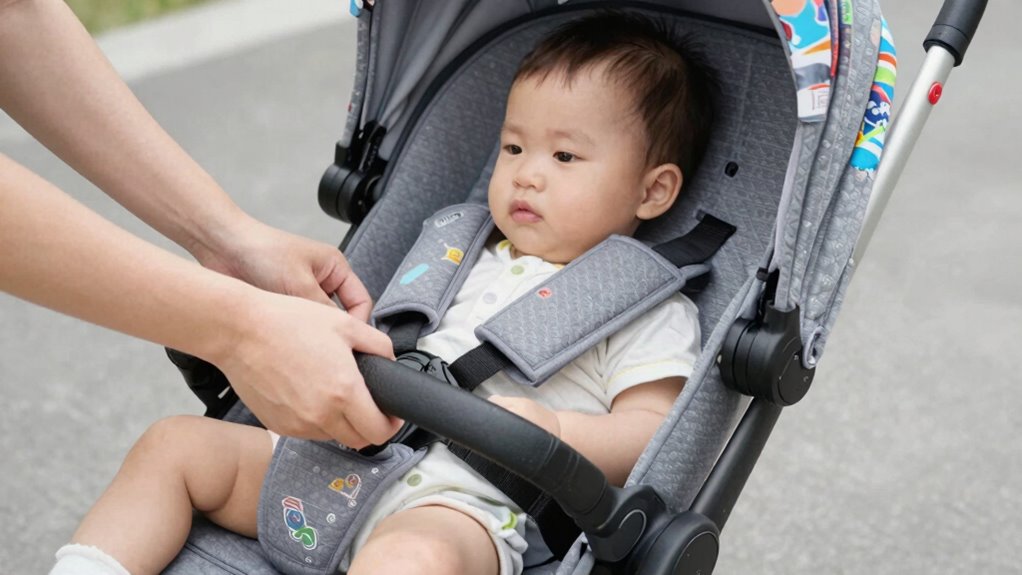
Securing your child properly in the harness is key to guaranteeing their safety during every stroller ride. Start by adjusting harness tension so it’s snug but not too tight—your child should be able to breathe comfortably, with just enough resistance to prevent slipping out. Check harness positioning; straps should be at or slightly below your child’s shoulders for rear-facing strollers, or at shoulder level for forward-facing. Ensure the harness lies flat against their body without twists, and that the buckle is secure and properly fastened. Regularly recheck the fit, especially if your child grows or if you notice any slack. Proper harness adjustment and positioning keep your little one safe and secure during every outing. Additionally, inspecting stroller safety features regularly helps ensure all components function correctly and reduces the risk of accidents. Remember to follow manufacturer guidelines for harness adjustment to maintain optimal safety standards. Being aware of common harness issues can also help you troubleshoot and ensure continuous protection. Keeping a close eye on the fit and positioning of the harness is essential, as even small misalignments can compromise safety. Understanding electric bike horsepower and how it relates to safety can also inform your choices when selecting a stroller with motorized features.

5 Point Seat Belt Safety Strap Belt for Stroller Pushchair Pram Buggy Safe Protection, Adjustable High Chair Baby Straps, Safety Strap Belt
5 Point – The 5-point harness seat belt through the shoulders and hips, buckled on the clasp between…
As an affiliate, we earn on qualifying purchases.
As an affiliate, we earn on qualifying purchases.
How Can I Ensure My Stroller’s Brakes Are Working Correctly?
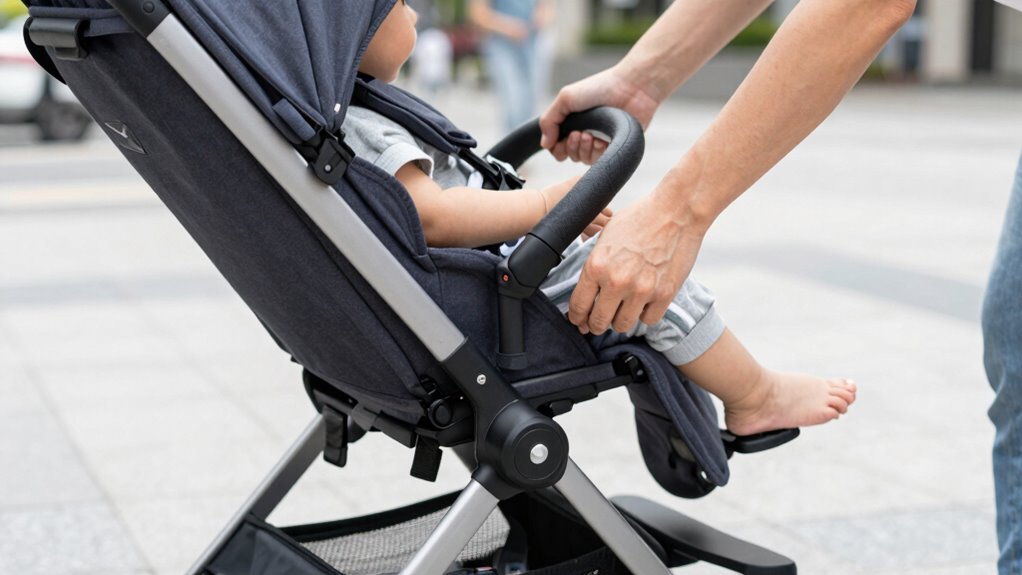
To keep your little one safe, regularly inspect your stroller’s brake mechanism to catch any signs of wear or damage. Make a habit of testing the brake engagement each time you set up the stroller to guarantee it’s functioning properly. Also, double-check that the brake locks securely in place before you start moving. Incorporating regular maintenance routines can help identify potential issues early and ensure ongoing safety.
Inspect Brake Mechanism Regularly
Regularly inspecting your stroller’s brake mechanism is essential to guarantee it functions properly and keeps your child safe. Check that the brakes engage smoothly and hold securely when applied. Ensure you’re aware of the stroller weight limits, as exceeding them can strain the brakes and compromise safety. Keep the stroller folding safety in mind—make sure the brakes stay engaged when the stroller is folded or unfolded. Test the brake function on different surfaces to confirm consistent performance. If you notice any looseness, sticking, or difficulty engaging the brakes, repair or replace the mechanism promptly. Performing these routine inspections helps prevent accidents caused by brake failure and maintains the stroller’s overall safety and reliability. Additionally, understanding the contrast ratio of your stroller’s braking system can help assess its ability to perform reliably in various conditions.
Test Brake Engagement Often
You can verify your stroller’s brakes are working correctly by testing their engagement frequently before each use. Before each outing, push down firmly on the brake lever or pedal until it clicks into place, then try to move the stroller. It should stay still. If it shifts, the brakes need adjustment. Remember, stroller accessories like additional brakes or locking mechanisms can aid safety but shouldn’t replace regular testing. Always check that your stroller remains within its specified weight limits, as excess weight can impair brake function. Regular brake checks are essential for safe, confident stroller use. Incorporating knowledge of DIY tools and safety tips and folklore can also serve as a reminder to stay vigilant about safety in all aspects of daily life. Additionally, considering proper maintenance routines can help ensure the longevity and reliability of your stroller’s brakes. Performing routine inspections can also help identify wear and tear early before it compromises safety.
Ensure Proper Locking Function
Ensuring your stroller’s brakes lock properly is essential for safety. Start by checking the stroller’s design to confirm it has a reliable locking mechanism. Look for models with safety certifications, which indicate the brakes meet industry standards. To test the locking function, park your stroller on a flat surface and engage the brakes firmly. Try to move the stroller gently; it shouldn’t roll or shift. Release the brakes and repeat the process, guaranteeing they disengage smoothly. Regularly inspect the brakes for wear or damage, and always perform these tests before each use. Properly functioning brakes prevent accidental tip-overs and ensure your child’s safety during stops or when parked. Staying vigilant about brake performance is a simple yet vital safety step.

2 Pack Stroller Hooks, Stroller Straps for Diaper Bags,Adjustable Stroller Carabiner Clip,Baby Stroller Accessories for nuna,Uppababy,Bob,Hook for Bike,Scooter,Wheelchair,Walker Accessories(Black)
【High-quality material】 Made of durable high-performance fabrics, large matte black carabiner with artificial leather,can hang multiple bags at…
As an affiliate, we earn on qualifying purchases.
As an affiliate, we earn on qualifying purchases.
What Are Common Causes of Stroller Tip-Over, and How Can I Prevent Them?
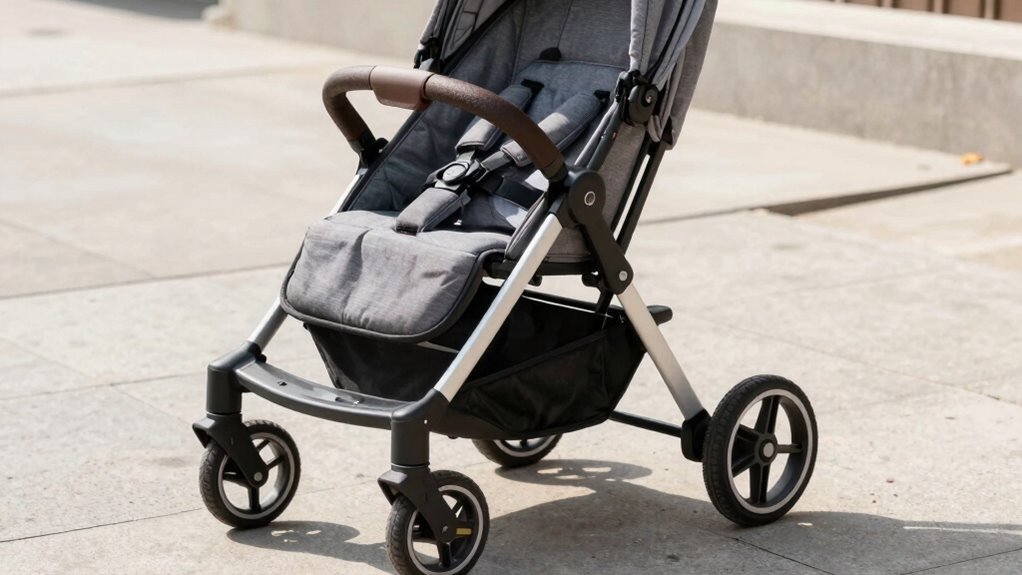
Stroller tip-overs often happen when the stroller is improperly loaded or maneuvered on uneven surfaces. To improve stroller stability and prevent tipping, always keep the weight balanced, with heavier items low and centered. Avoid overloading one side, which can shift the center of gravity. Navigating slopes or rough terrain increases risk, so go slowly and steer carefully. Additionally, ensuring the stroller’s home safety features are in place can help prevent accidents. Here’s a quick guide:
| Cause | Prevention Tip | Effect |
|---|---|---|
| Uneven terrain | Use smooth, flat paths | Less risk of tipping |
| Improper weight distribution | Keep weight low and centered | Increased stability |
| Overloading | Follow manufacturer’s weight limits | Better tipping prevention |
How Do I Safely Park and Store My Stroller?
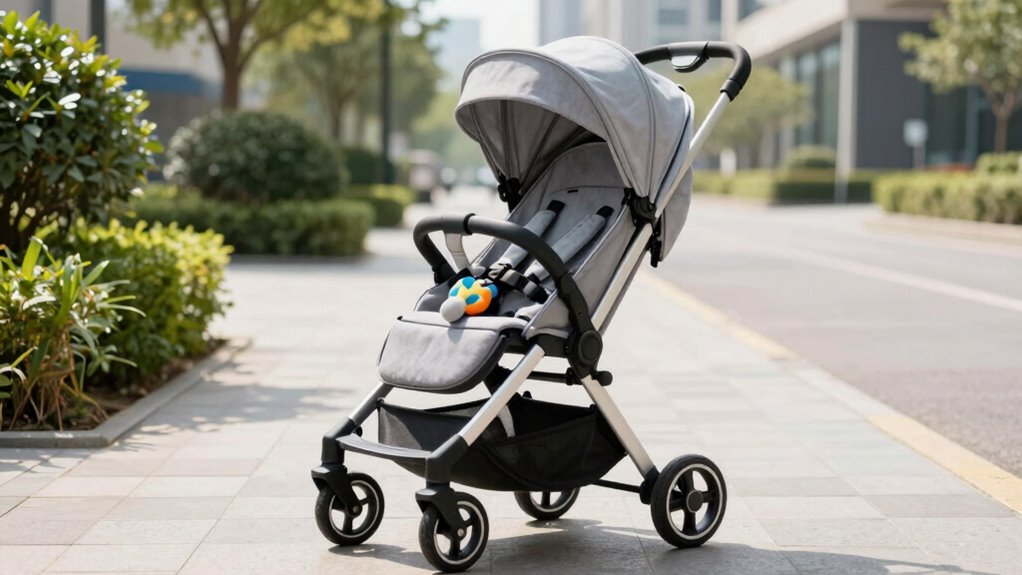
To safely park and store your stroller, always choose a stable, flat surface away from traffic and hazards. Engage the brakes fully to prevent unintended movement. When storing, consider stroller accessories like storage bags or covers to keep it clean and protected from dust and weather. Regular stroller cleaning helps maintain its condition and ensures safety features function properly. If you’re taking a break or leaving it unattended, fold the stroller securely and place it in a designated storage area, avoiding high-traffic zones where it might tip over. Keep it out of direct sunlight to prevent material deterioration. Flywheel upgrades can improve the durability of your stroller components, especially if it’s frequently used outdoors. Additionally, selecting appropriate materials for your stroller accessories can enhance durability and sustainability. Proper storage practices are essential for child safety and prolonging the lifespan of your stroller. Incorporating protective gear such as covers made from weather-resistant materials can further safeguard your stroller from environmental damage. Ensuring your stroller has reliable braking mechanisms is key to preventing accidents during parking.
What Are Signs of a Malfunction or Safety Issue to Watch For?
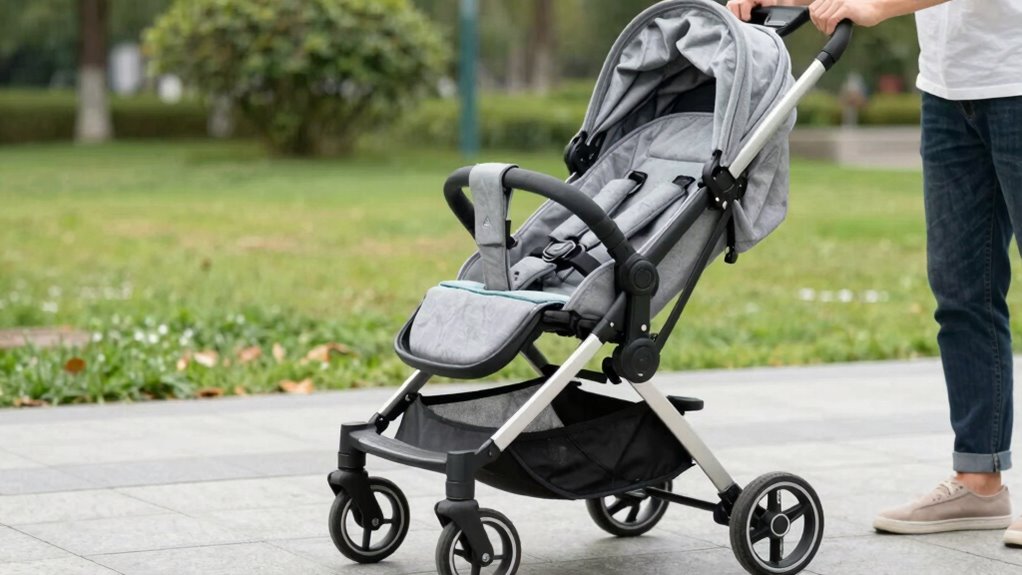
Being vigilant for signs of a malfunction or safety issue is essential to keep your child safe. Regular stroller maintenance helps identify problems early, ensuring all parts function properly. Check for loose or damaged harnesses, brakes that don’t engage fully, or unstable wheels. Listen for unusual noises during use, like squeaking or grinding, which could indicate wear. Inspect the frame for cracks or corrosion. Keep up with safety recalls, as they address critical safety concerns that manufacturers have identified. If your stroller shows any of these signs, stop using it immediately and consult the manufacturer or retailer for repairs or replacements. Regularly checking for loose or damaged parts and staying informed about recall notices and safety alerts can help prevent accidents and ensure your stroller remains a safe environment for your child. Additionally, understanding the best gear and knife roundups for smart shopping can help you choose quality replacement parts or accessories when needed. Staying alert to these issues helps prevent accidents and ensures your stroller remains a safe environment for your child.
What Mistakes Should I Avoid to Keep My Child Safe in a Stroller?
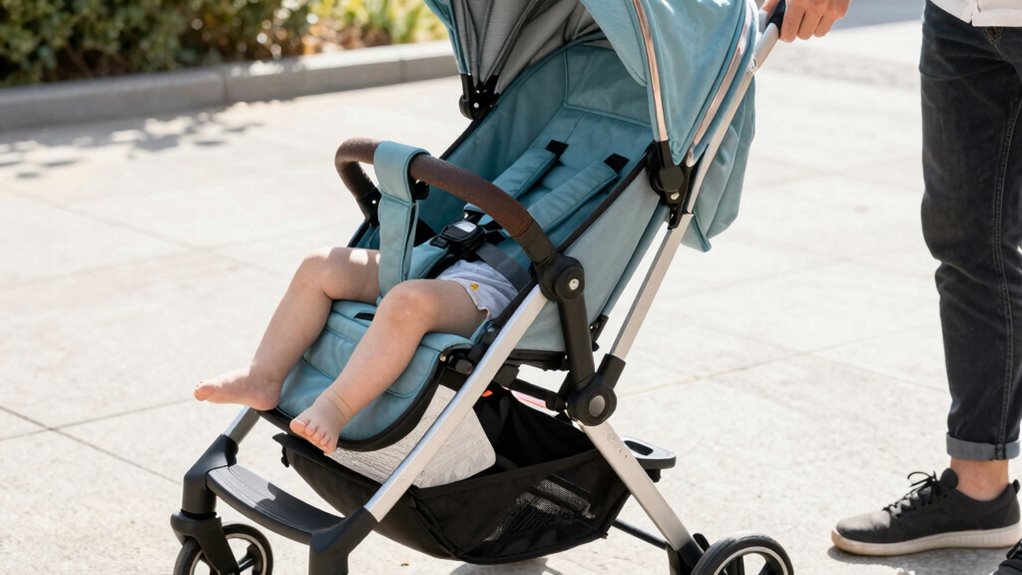
One common mistake is not securing your child’s harness properly, which can lead to serious injuries if they fall out. You should also remember to always check that the brakes are working before placing your child in the stroller or when stopping. Avoid rushing through these steps to make sure your child’s safety at all times.
Incorrect Harness Usage
Using the harness correctly is essential for your child’s safety in a stroller, but many parents make common mistakes that can compromise protection. An incorrect harness can lead to unsafe situations, so proper harness adjustment is crucial. Always ensure the harness is snug but comfortable, securing your child firmly without restricting movement or breathing. Avoid leaving loose straps or relying on the loose harness, which can cause ejection during a tip-over. Check the harness height; it should be at or just below your child’s shoulders. Regularly inspecting the harness and appropriate fit helps prevent accidents and keeps your child safe during stroller rides. Additionally, understanding stroller safety features can provide extra reassurance and protection.
Ignoring Brake Checks
Neglecting to regularly check and maintain your stroller’s brakes can lead to serious safety risks. Brake neglect often results from safety complacency, where you assume the brakes are always functioning properly. This mistake can cause your stroller to roll away unexpectedly, risking injury to your child. Always test the brakes before each use, especially after parking or traversing uneven surfaces. Make sure the brake engages fully and holds the stroller stationary on different terrains. Don’t rely on a quick visual check—engage the brakes and try to move the stroller to confirm it’s secure. Ignoring brake checks can be a costly oversight, so stay vigilant and prioritize regular maintenance to keep your child safe.
How Can I Troubleshoot and Fix Common Stroller Safety Problems?
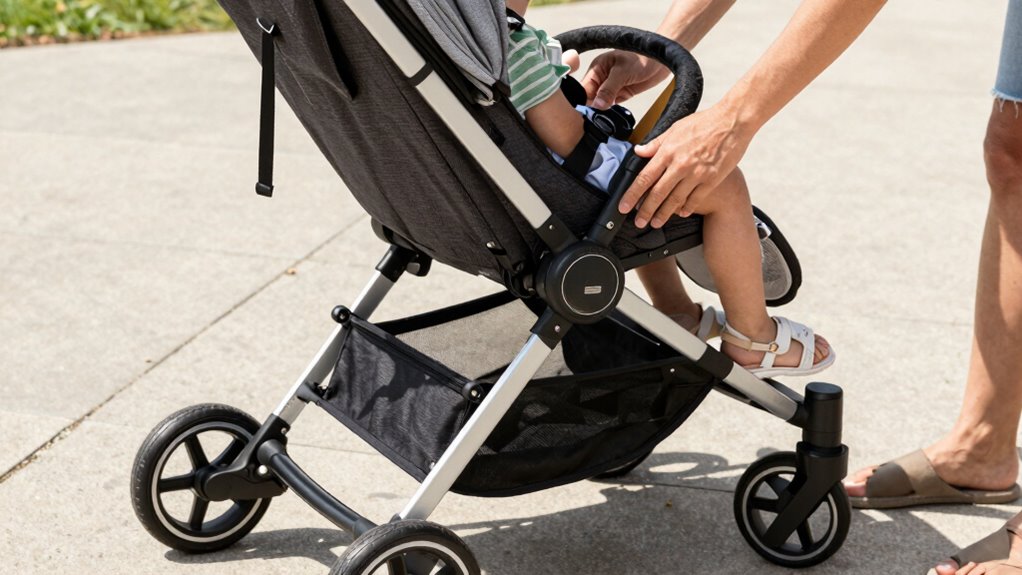
When you notice issues with your stroller, troubleshooting quickly can prevent accidents and keep your child safe. Start by inspecting stroller accessories, like harnesses and brakes, to verify they’re properly installed and functioning. Check for loose or broken parts, which can compromise safety. Regular stroller maintenance, such as cleaning wheels and lubricating moving parts, helps prevent mechanical failures. If your stroller feels unstable or tips easily, examine the frame and weight distribution. Tighten loose bolts and replace worn components as needed. If brakes aren’t holding, adjust or repair the brake mechanism. Always test the stroller after fixing issues to confirm everything works correctly. Staying proactive with maintenance and addressing problems promptly keeps your stroller safe and reliable for every outing.
Frequently Asked Questions
How Often Should I Inspect My Stroller for Safety Issues?
You should inspect your stroller for safety issues weekly as part of your stroller maintenance routine. Regular safety inspections help catch worn or damaged parts early, ensuring your child’s safety. Check the harness fit, brakes, and frame for stability. After any rough use or outdoor adventure, do a quick safety check. Staying consistent with your safety inspection routine keeps your stroller in top condition and reduces the risk of accidents.
Are There Specific Safety Standards My Stroller Must Meet?
Yes, your stroller must meet specific safety standards and certification requirements. Look for labels indicating compliance with safety standards like ASTM F833 or JPMA certification, which guarantee it passes rigorous safety tests. These standards cover harness fit, brakes, stability, and overall construction. Always verify that your stroller meets these certification requirements to guarantee safety, and check for updates regularly to stay compliant with the latest safety regulations.
Can I Use Accessories or Attachments Safely With My Stroller?
Yes, you can use accessories or attachments safely with your stroller, but you need to verify accessory safety and attachment compatibility first. Always read the manufacturer’s instructions to ensure the accessories are designed for your stroller model. Avoid adding incompatible parts, as they can affect stability and safety. Regularly inspect attachments for wear and tear, and remove any that seem loose or damaged to keep your child safe during outings.
How Do I Choose the Right Size Stroller for My Child?
To choose the right size stroller for your child, consider your child’s weight and size to verify it’s appropriate. Look for a stroller with an adjustable handlebar for comfortable pushing as your child grows. Make sure the stroller isn’t too bulky for your storage space or travel needs. Test its maneuverability and folding ease. Proper sizing ensures safety, comfort, and convenience during your outings.
What Safety Precautions Should I Take on Uneven or Crowded Surfaces?
Imagine steering a boat through choppy waters—your stroller faces surface hazards and crowded streets. To stay safe, slow down on uneven terrain, keep a firm grip on the handles, and avoid sudden turns. Watch for obstacles, debris, or gaps, and navigate crowds carefully by maintaining close control. Always use the harness correctly and verify brakes are engaged when stopped. Your attentiveness keeps your little one secure amidst unpredictable surface hazards and busy crowds.
Conclusion
By staying vigilant and understanding your stroller’s safety features, you become its guardian angel on the move. Secure your little one snug in the harness, test those brakes like a pro, and watch for tip-over risks as if you’re dancing with danger. With careful parking and quick troubleshooting, you keep the journey smooth and safe. Remember, you’re the steady beat in your child’s adventure, guiding every step with confidence and care.