To keep your kids safe from window covering cords, regularly check for loose or dangling cords, loops, and tangles that could cause strangulation or injury. Opt for cordless blinds or install safety devices like cord cleats or tensioners to secure cords out of reach. Always inspect the cords for fraying or damage and replace old or hazardous coverings. Stay vigilant and learn simple safety routines to protect your children—more tips await to guarantee your home stays secure.
Key Takeaways
- Regularly inspect cords for fraying, knots, or damage to identify potential hazards.
- Secure loose cords out of children’s reach using cord cleats or tension devices.
- Replace old or corded window coverings with cordless or motorized options for increased safety.
- Check for dangerous loops or tangles that could tighten or hide behind furniture and fix them promptly.
- Educate children about cord hazards and establish safety rules to prevent pulling or playing with cords.

Cordless GII Morningstar 1" Light Filtering Mini Blind 28×64 – White
Cordless Blinds: Filter out light with the Achim Cordless Light Filtering Mini Blinds. These lightweight, vinyl blinds with…
As an affiliate, we earn on qualifying purchases.
As an affiliate, we earn on qualifying purchases.
Why Window Covering Cords Are a Hidden Safety Risk for Kids
You may not realize it, but window covering cords can pose a serious safety threat to children. These cords create hidden curtain hazards that can lead to injury or even suffocation if a child becomes entangled. Poor blind safety practices, like loose or dangling cords, increase the risk of choking or strangulation. Young children are naturally curious and may grab or climb on window cords, putting them in danger. It’s essential to recognize that these hazards aren’t always obvious, so parents should be vigilant. Securing cords out of reach and choosing safer alternatives can considerably reduce the risk. Being aware of curtain hazards and prioritizing blind safety helps protect your little one from preventable accidents. Utilizing safety-certified window coverings ensures the cords meet safety standards designed to minimize these risks. Additionally, understanding childproofing techniques can further enhance your home’s safety measures, especially when it comes to home safety assessments to identify potential dangers. Conducting regular home safety checks can uncover hidden hazards before they cause harm. Implementing cord safety measures is a crucial step in creating a safer environment for children.

Safety Innovations – Childproof Your Windows and Sliding Doors with Our Window and Door Babyproof Safety Lock, (4-Pack)
MOM AND DADS AGREE SAFETY IS FIRST: We know you put your baby's safety at the top of…
As an affiliate, we earn on qualifying purchases.
As an affiliate, we earn on qualifying purchases.
Choosing Safer Window Coverings to Prevent Cord Hazards
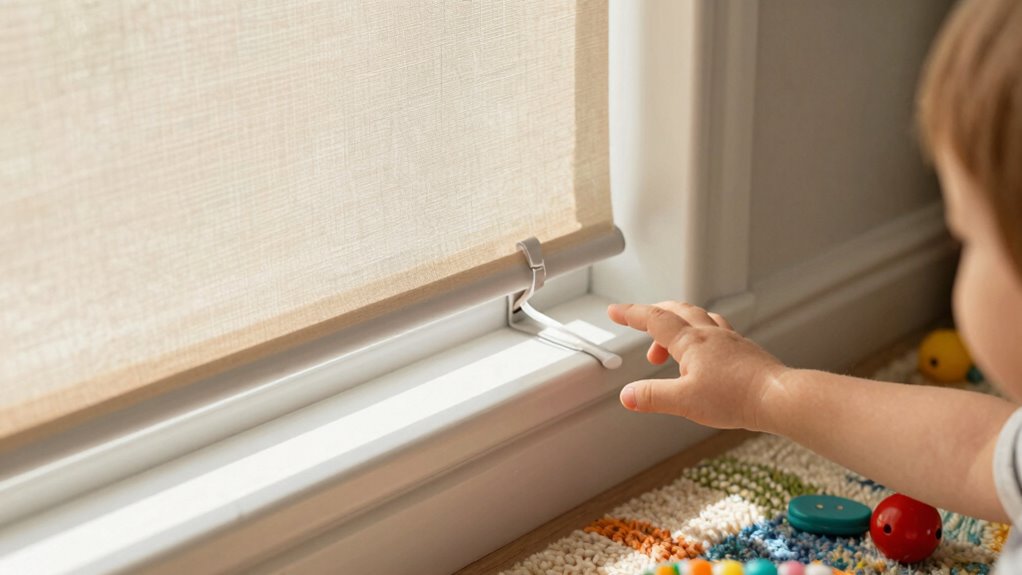
Choosing safer window coverings is a crucial step in reducing cord hazards and protecting children from injury. Opt for window treatment options that eliminate or minimize cords altogether. Look for cordless blinds or shades, which are safer and easier to operate. If cords are necessary, install childproof locks to keep cords out of reach and prevent accidental pulling. Consider motorized or automated window coverings for added safety and convenience. These options reduce the risk of dangerous loops and tangles. Additionally, understanding nail biology can help inform safe handling and maintenance of window treatments, ensuring longevity and safety. Properly designed electric-powered window coverings can further enhance safety by minimizing manual cords and reducing potential entanglement hazards. Here’s a quick comparison:
| Window Treatment Options | Childproof Locks | Safety Features |
|---|---|---|
| Cordless blinds/shades | Yes | No cords, no tangles |
| Motorized coverings | Optional | Remote control safety |
| Venetian blinds | No | Require childproof locks |
| Curtains with ties | No | Ties secure cords |
Choosing the right window treatment can help keep your kids safe. Additionally, regularly checking cord safety features ensures ongoing protection from potential hazards.

Motorized Blinds No Drill Automatic Blinds for Windows Cordless Roller Shades Electric Blinds with Remote Control Smart Blinds (White, 34.5 x 72)
EASY INSTALL BLINDS: The remote blinds have a simple and practical no-drill mechanism(suitable for inside mount). Attach the…
As an affiliate, we earn on qualifying purchases.
As an affiliate, we earn on qualifying purchases.
How to Spot Dangerous Cord Loops and Tangles in Your Home

While selecting safer window coverings reduces the risk of cord hazards, it’s equally important to regularly inspect your existing window treatments for dangerous cord loops and tangles. Start by practicing cord loop identification—look for any loops that can easily tighten or become hidden behind furniture. Tangles are often caused by loose or entangled cords that can trap a child’s head or fingers. Check all cords for signs of fraying or knots, and ensure they hang freely without creating loops. Keep cords out of reach and secure loose ends using cord cleats or cord tidies to prevent tangle formation. Regular inspections help you catch potential hazards early and maintain a safe environment for everyone in your home. Routine safety checks are essential for ongoing protection against cord-related accidents. Additionally, understanding cord safety standards can guide you in choosing safer window treatments and prevent accidents before they happen. Incorporating cord safety measures into your home not only protects children but also promotes overall household safety. Regularly educating family members about cord hazards further enhances your home’s safety measures.

OGGOGOE Window Sash Vent Stops 1712 – Safety Window Opening Control Device for Ventilation, Childproof & Home Security 4 PCS White
Childproof & Home Security: This window opening control device prevents accidental window falls, ensuring child safety and enhanced…
As an affiliate, we earn on qualifying purchases.
As an affiliate, we earn on qualifying purchases.
How Can You Fix or Remove Hazardous Cord Loops?
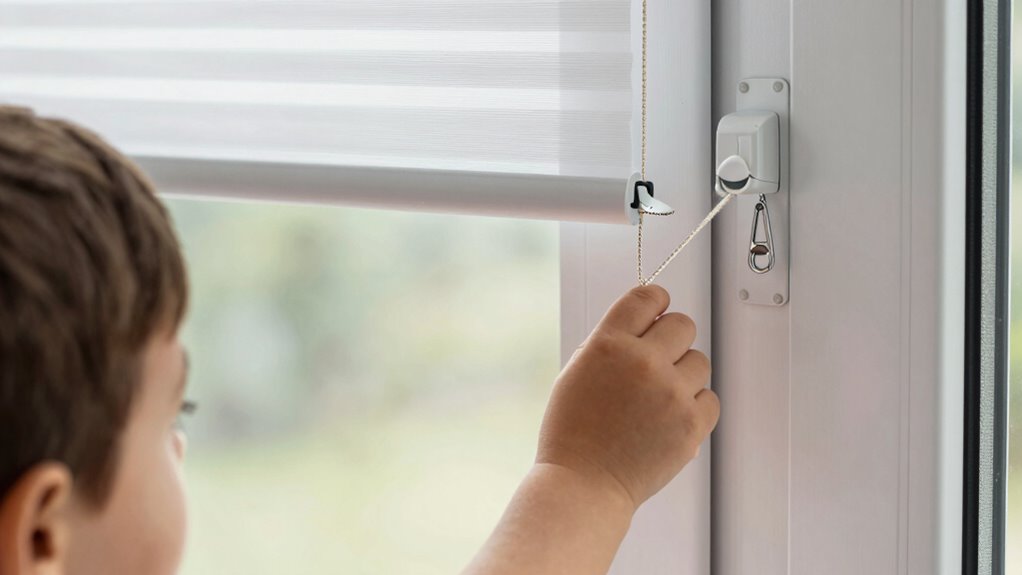
To keep your home safe, start by securing loose cords so they can’t form dangerous loops. You should also remove any excess cord length to reduce the risk of entanglement. Taking these simple steps can make a big difference in preventing accidents. Additionally, consider using cord safety devices designed to keep cords out of reach and minimize hazards. Regularly inspecting window coverings for hazardous cord loops can further help identify and mitigate potential dangers.
Secure Loose Cords Properly
Have you noticed loose cords on your window coverings that pose a safety risk? Securing these cords properly is essential for maintaining cord safety and ensuring window safety in your home. Start by using cord cleats or tie-down devices designed specifically for window cords. Wrap the excess cord neatly and fasten it securely out of children’s reach. Avoid leaving long loops or dangling cords, which can easily become hazards. Regularly check that the cords remain tightly secured and reattach or tighten as needed. If you’re unable to keep cords safely secured, consider replacing your window coverings with cordless options to eliminate risks altogether. Keeping cords organized and out of reach helps protect your children and ensures your home remains a safe environment. Proper storage of cords is also vital for reducing potential hazards and maintaining a safe living space. Additionally, understanding the contrast ratio of your window treatments can help you choose options that minimize glare and improve visibility. Maintaining a cord safety routine ensures ongoing protection and peace of mind for your family. Incorporating cord safety measures into your home safety plan can further reduce the risk of accidents and injuries.
Remove Excess Cord Length
Ever wonder how to safely fix or remove hazardous cord loops from your window coverings? The key is adjusting the cord length to eliminate excess cord that creates dangerous loops. First, measure the current cord length and identify where the excess cord poses a risk. Then, secure the excess cord by tying it back or using cord cleats, ensuring the loop is gone and the cord is out of reach of children. If needed, you can also shorten the cord entirely by reattaching the cord lock at a higher point or installing a cord tension device. Removing or fixing the excess cord reduces the risk of strangulation or entanglement. Proper cord management also helps maintain a tidy and safe home environment. Additionally, implementing child safety devices can further prevent accidents related to window cords. Regularly inspecting window cords for potential hazards is an important part of maintaining a safe environment for curious infants.
Secure Loose Cords and Keep Them Out of Kids’ Reach
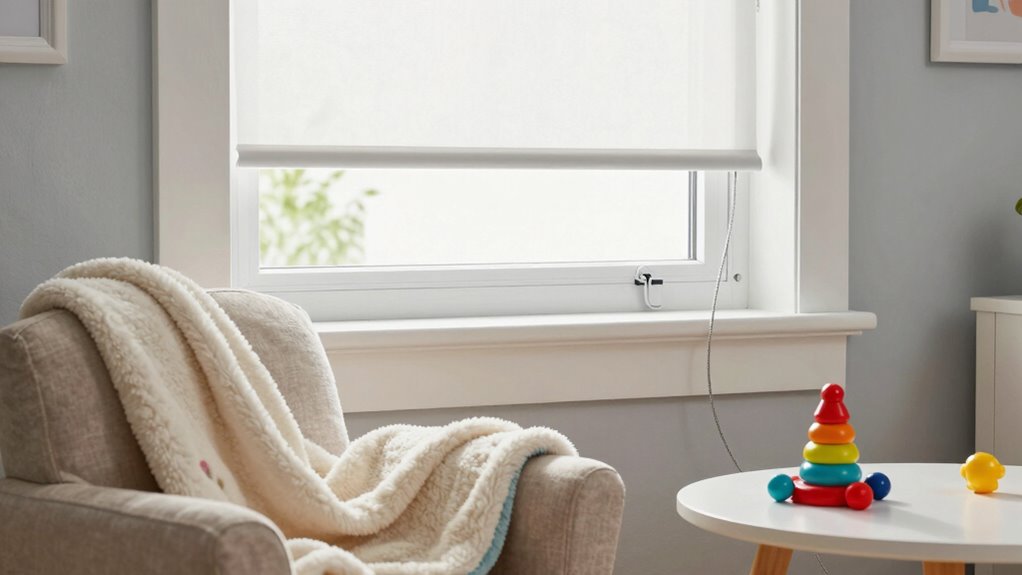
Loose cords from window coverings can pose a serious strangulation hazard for children. To guarantee blind safety, it’s crucial to keep cords out of their reach and manage them properly. Use cord cleats, cord shorteners, or tie cords securely to prevent dangling loops. Always check that cords are secured tightly and avoid leaving long, loose cords that kids could pull or get tangled in. Regularly inspect window coverings for loose or hanging cords and adjust accordingly. Proper cord management minimizes risk and creates a safer environment. Remember, the key is to eliminate accessible cords and keep them well-secured. The table below highlights essential steps for safe blind management:
| Step | Action | Purpose |
|---|---|---|
| Secure cords | Use cord cleats or ties | Prevent hanging loops |
| Shorten cords | Use cord shorteners | Reduce slack |
| Regular checks | Inspect window coverings | Maintain safety |
| Keep out of reach | Place cords high or out of reach | Avoid child access |
Additionally, choosing child-safe window coverings can further reduce hazards and enhance safety, especially when considering cord safety measures in the home. Proper cord management not only improves safety but also contributes to a cleaner, more organized living space. Regularly educating family members about cord safety practices can help maintain a safer environment for everyone. Incorporating drone bee safety principles, such as keeping hazards like dangling cords away from children, can also reinforce the importance of proactive safety measures in the home environment.
How Safety Devices and Cord Shorteners Help Prevent Accidents
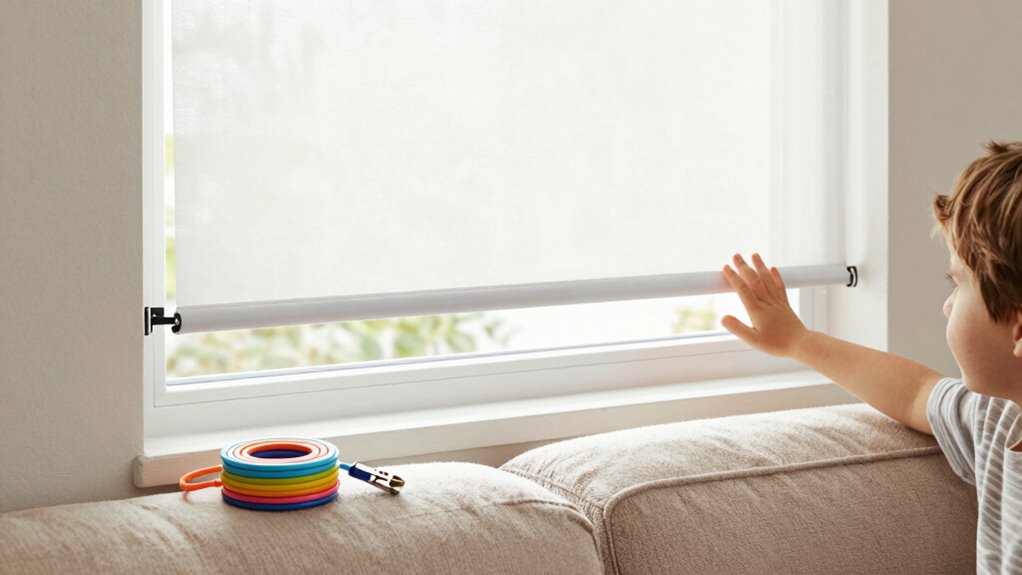
Using safety devices and cord shorteners considerably reduces the risk of accidents involving window covering cords. These tools are essential for enhancing cord safety, especially in homes with children. Safety devices, like cord cleats or tension devices, keep cords secured and out of reach, preventing children from pulling or entangling themselves. Cord shorteners help manage excess length, eliminating hanging loops that can pose strangulation hazards. By installing these safety measures, you minimize the chances of accidental strangulation or injury. They make window coverings safer and easier to use, giving you peace of mind. Regularly check that safety devices are secure and functioning properly. Incorporating these safety steps into your window covering setup is a simple yet effective way to protect your family from preventable accidents. Additionally, understanding the importance of security features in your home can further enhance overall safety and deter potential hazards.
Teaching Your Kids About Window Cord Safety
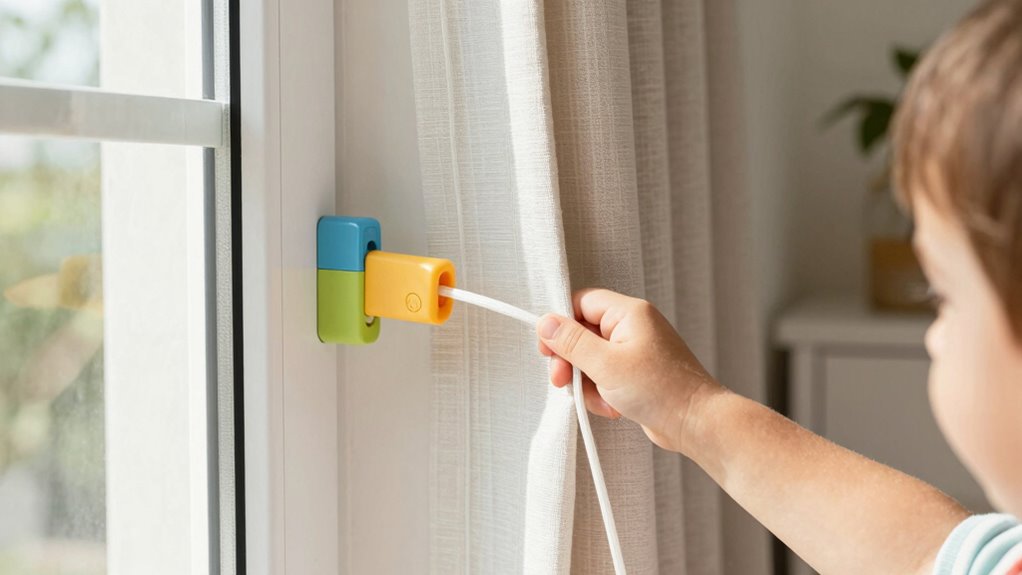
Start by explaining the dangers of window cords in simple terms your kids can understand. Make sure to set safety rules together, so they know what’s expected and why it matters. This approach helps your kids stay aware and responsible around window coverings.
Explain Cord Hazards Clearly
Teaching your kids about window cord safety means clearly explaining the dangers of long, dangling cords. These cords pose serious cord hazards, especially if children pull or get tangled in them. Make sure they understand that loop risks can cause strangulation or injury if cords form loops that a child can trap their head or neck in. Show them how loose cords can be dangerous and why they should never play with or tug on them. Use simple language to emphasize that cords are not toys and should always be kept out of reach. Reinforce that cords can cause serious accidents, and that their safety depends on understanding these risks. By being clear about cord hazards, you help your kids stay safe and avoid dangerous situations.
Set Safety Rules Together
To keep your kids safe around window cords, it’s important to involve them in creating clear safety rules. Child supervision is essential, but teaching your kids about safety education empowers them to make smart choices. Explain why cords are dangerous and establish simple rules, like never pulling on cords or playing near window coverings. Make safety rules consistent and easy to remember, so kids understand the importance of staying away from cords. Reinforce these rules regularly and praise your children when they follow them. By setting safety rules together, you help your kids feel responsible and aware of potential hazards. This collaborative approach encourages ongoing safety awareness, making your home a safer place for your family.
Regularly Inspect and Maintain Window Covering Safety
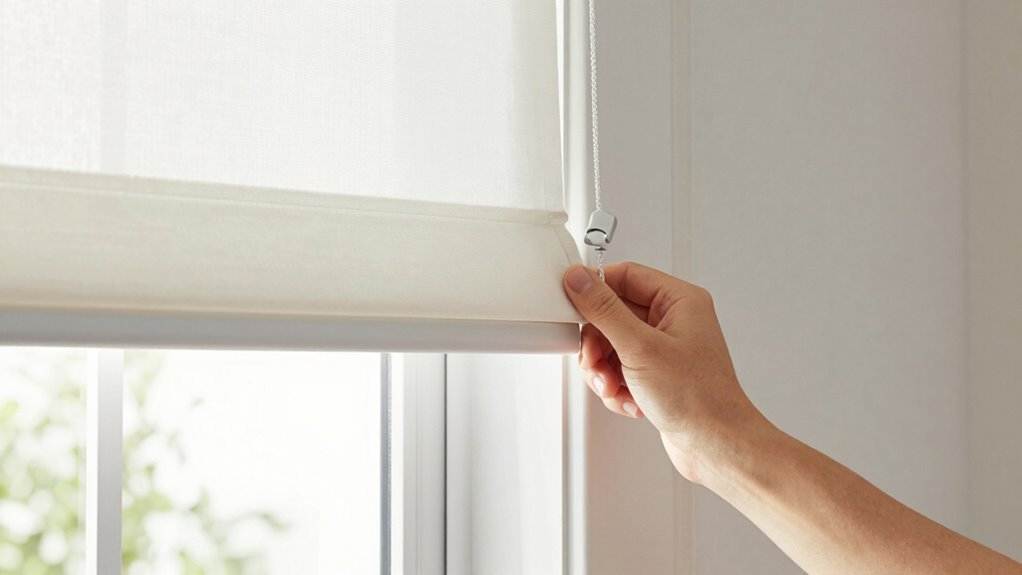
Regularly inspecting and maintaining your window coverings is essential to guarantee they remain safe for everyone in your home. By routinely checking for loose cords, damaged blinds, or frayed fabric, you can identify potential hazards early. Incorporate childproofing measures, such as securing cords out of reach or replacing traditional window treatments with safer window treatment options like cordless blinds or motorized shades. Regular maintenance ensures that safety features stay intact and effective. Always verify that cords are properly anchored and that window coverings function correctly. Staying vigilant helps prevent accidents and keeps your home a safe environment for children. Making these inspections part of your routine can save lives and give you peace of mind.
Frequently Asked Questions
Are Cordless Window Coverings Truly Safe for All Age Groups?
Cordless window coverings are generally safe for all age groups because they feature cordless safety and childproof design. You won’t have to worry about dangling cords that pose strangulation risks. However, it’s essential to verify the product you choose is certified for safety and properly installed. While cordless options are safer, always supervise young children near windows, and regularly check for any wear or damage to maintain safety.
What Are the Best Window Covering Options for Homes With Young Children?
While sleek, trendy window treatments catch your eye, safety should be your top priority. Opt for cordless blinds or shades, which are the safest for young children, aligning with current window treatment trends. Childproofing tips include installing cord cleats and ensuring cords are out of reach. These choices help prevent accidents, giving you peace of mind while blending style with safety. Prioritize these options to create a secure, modern home environment.
How Often Should I Inspect Window Cords for Potential Hazards?
You should inspect window cords at least once a month to guarantee hazard prevention. During cord inspection, look for looseness, fraying, or tangled cords that could pose a danger to children. Regular checks help you catch potential hazards early, reducing the risk of accidents. Make it a habit to verify that cords are out of reach and secure, keeping your home safer for your little ones.
Can DIY Modifications Improve Window Covering Safety Effectively?
Diy safety modifications can effectively enhance your window covering safety, provided you follow proper procedures and use quality materials. You can secure cords with cord cleats, replace dangerous cords with cordless options, and add tension devices to reduce slack. However, assess each modification’s effectiveness carefully, ensuring they meet safety standards. Remember, consistent inspection and professional consultation when needed remain essential for maintaining a safe environment for your children.
What Should I Do if I Find a Hazardous Cord Loop in My Home?
If you find a hazardous cord loop in your home, immediately remove or secure it to prevent injuries. Address cord loop hazards by cutting or anchoring cords out of reach. Then, perform an emergency response by calling emergency services if anyone shows signs of injury or strangulation. Make sure all window coverings are child-safe, and regularly check for new hazards to keep your family safe from cord-related incidents.
Conclusion
By taking these simple steps, you can make your home as safe as a fortress for your kids. Regularly check for loose cords, secure or remove hazards, and teach your children about window cord safety. Think of it like locking all the doors and windows—you’re creating a safe space where accidents can’t sneak in. Stay vigilant and proactive to keep your little ones protected and your home hazard-free.