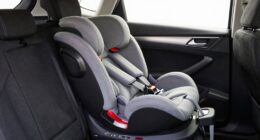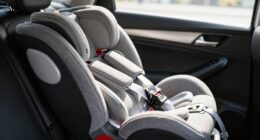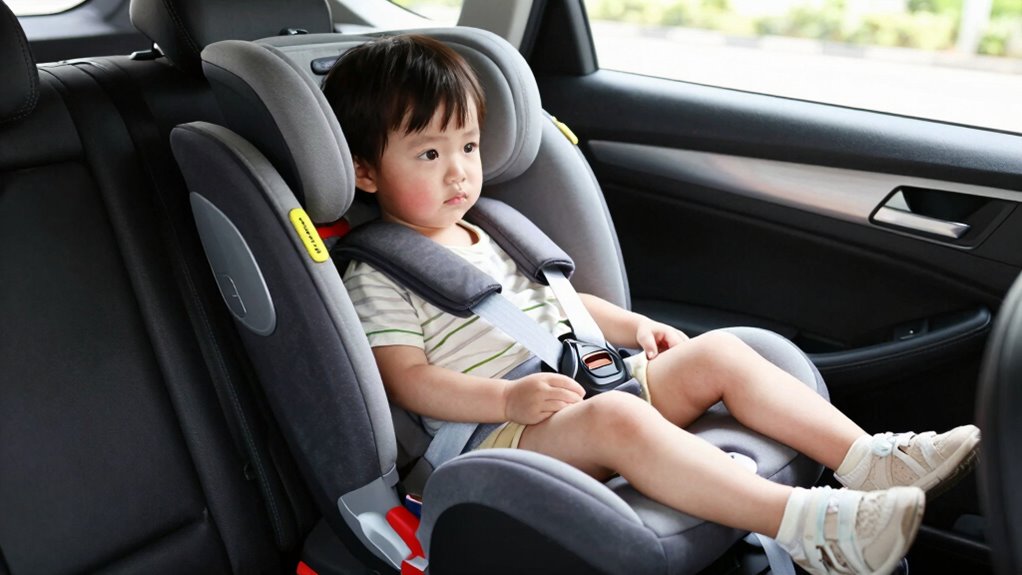
To tell if your child is ready for a booster seat, check if they can sit upright with proper posture and stay still during trips. Confirm the seat belt fits correctly—snug across the hips and chest without crossing the neck or face. Make sure they can buckle and unbuckle themselves and understand seat belt safety. Verify their height and weight meet the guidelines, and that they follow safety rules. If you want to learn more, keep exploring these important signs.
Key Takeaways
- The child fits the booster seat’s height and weight limits as specified by the manufacturer.
- The seat belt lies flat across the chest and hips, fitting snugly without riding up or crossing the face or neck.
- The child can sit upright with good posture and remains seated securely during trips without constant reminders.
- The child can independently buckle and unbuckle the seat belt while maintaining proper positioning.
- The vehicle’s safety features support correct belt placement and are compatible with the child’s size for optimal safety.
When Is My Child Ready for a Booster Seat? Key Signs to Watch For

Knowing when your child is ready for a booster seat is essential for their safety. Car seat laws vary by state, but most require children to use a booster until they meet specific height and weight limits. The booster seat benefits include ensuring the seat belt fits properly across their hips and shoulders, reducing injury risk in a crash. Key signs your child is ready include their ability to sit still and upright in the seat without slouching, and their knees bending comfortably at the edge of the seat. If the seat belt crosses their collarbone and fits snugly over their hips without riding up, they’re likely ready to graduate from a harnessed car seat to a booster. Additionally, understanding age and size guidelines can help determine the appropriate timing for transitioning. Recognizing proper seat belt positioning is crucial for maximizing safety. Proper seat belt positioning involves ensuring the lap belt sits low across the hips and the shoulder belt crosses the chest comfortably, which is supported by research on child safety and proper restraint fit. It’s also important to consider that vehicle seat design can affect how well the booster fits, so testing it in your car before making the switch is recommended. Always check local laws and manufacturer guidelines to confirm.
Does Your Child Fit Properly in the Seat Belt Without a Booster?

Before switching your child from a booster to a seat belt alone, you need to make certain the belt fits properly. The seat belt should lie snug across your child’s chest and shoulder, without cutting into the neck or slipping off the shoulder. The lap belt must sit low across the hips, not the stomach, to guarantee safety and comfort. If the belt feels uncomfortable or rides up, your child isn’t ready to go without a booster. Proper fit improves seat belt comfort and reduces the risk of injury. Also, remember that a booster seat’s lifespan isn’t indefinite; once your child fits the seat belt correctly without it, continuing to use the booster might be unnecessary. Always prioritize proper fit over age or weight alone. Ensuring the seat belt’s correct installation is essential for optimal safety and performance. Additionally, regularly checking the seat belt positioning can help confirm that your child’s safety features remain effective as they grow, especially since Proper fit directly influences the effectiveness of the seat belt in crash scenarios. Recognizing signs of correct fit can help caregivers make informed decisions about transitioning out of booster seats. Since seat belt fit can vary as children grow, periodic reassessment is recommended to ensure ongoing safety.
Can Your Child Sit Upright and Maintain Good Posture During Rides?
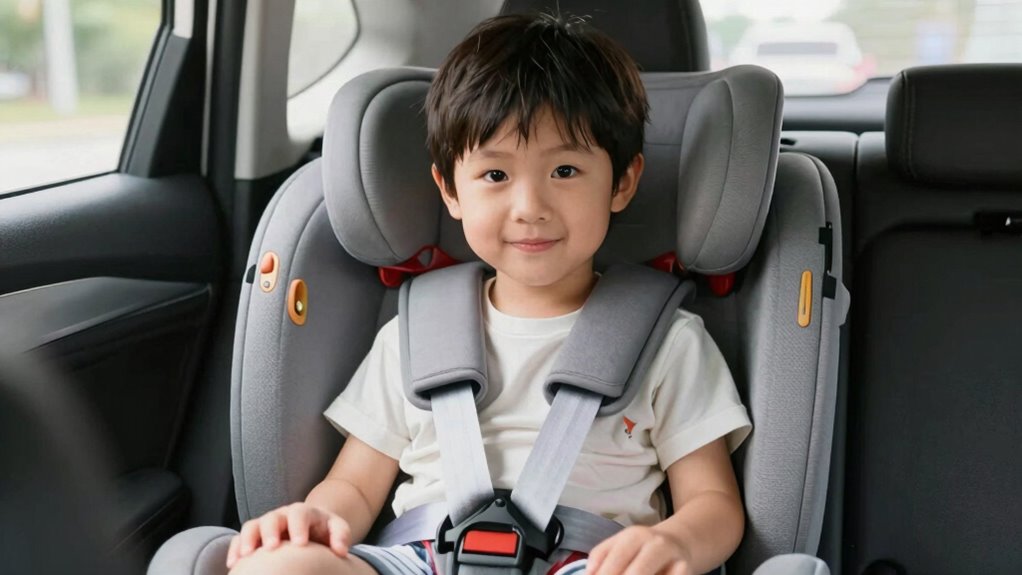
Ensuring your child can sit upright and maintain good posture during rides is essential for safety and comfort. Posture awareness helps your child stay securely positioned, reducing the risk of slouching or slipping out of the seat. Observe whether your child naturally sits with their back against the seat, shoulders relaxed, and hips properly aligned. If they struggle to sit upright, it may indicate they need a booster seat that offers better seat adjustment options. Proper seat adjustment ensures they can maintain good posture without leaning forward or to the side, which can compromise safety. Watch for signs of discomfort or fatigue, as these can affect posture. When your child can consistently sit upright with good posture, they’re better prepared for booster seat use. Additionally, being aware of Posture awareness can help identify early signs of discomfort or fatigue that might otherwise go unnoticed. Recognizing postural stability is also crucial for ensuring your child’s safety during rides. Developing good sitting habits early can also promote better spinal alignment as they grow.
Is the Seat Belt Properly Positioned and Fit When Used Alone?
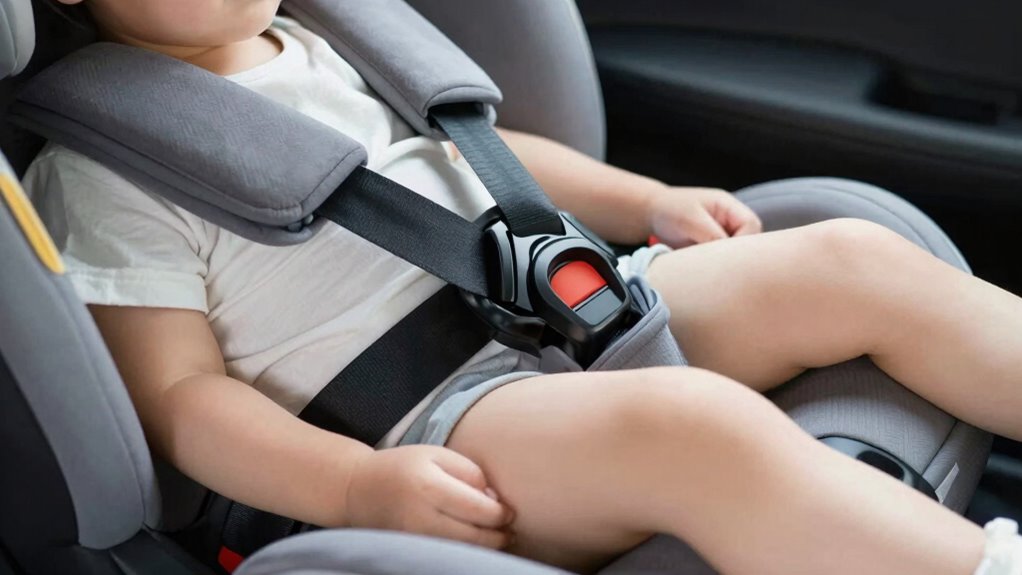
Is the seat belt properly positioned and fitting your child when used alone? Ensuring correct seat belt positioning is vital for safety. The belt should lie snug across your child’s hips, not the stomach, and the shoulder strap should sit flat across the chest, not the neck or face. A proper fit prevents injury during a sudden stop or crash. Use the table below to evaluate:
| Indicator | Correct Fit | Incorrect Fit |
|---|---|---|
| Hip belt | Lies snug over hips | Rides up onto stomach |
| Shoulder belt | Flat across chest | Twisted or on face |
| Overall fit | Secure and comfortable | Loose or riding up |
If the fit isn’t right, your child isn’t ready to ride without a booster. Proper seat belt positioning saves lives. Additionally, seat belt position is crucial in minimizing injury risk and ensuring the safety features work effectively. Ensuring the proper fit of the seat belt also helps optimize its effectiveness in crash scenarios, especially when the seat belt is used properly. Regularly checking the seat belt fit can help you identify and correct issues before they compromise safety. Being aware of indigenous wellness essentials can also influence how families approach holistic safety and health during travel. Maintaining awareness of child passenger safety guidelines ensures you are up-to-date with best practices for your child’s protection.
Does Your Child Understand How to Use the Seat Belt Safely?
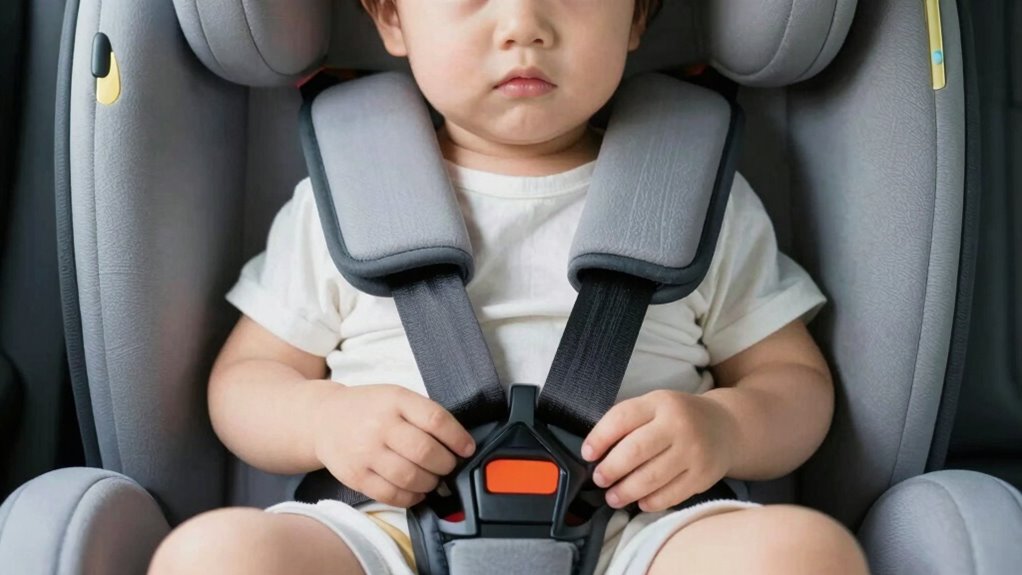
A proper seat belt fit doesn’t just depend on how it’s positioned; your child also needs to understand how to use it safely. Seat belt education is essential during the booster seat shift, guaranteeing your child knows why the belt must lie flat across the chest and hips, not the stomach or neck. You should confirm they can buckle up independently and recognize the importance of keeping the belt properly positioned during the trip. Ask questions to gauge their understanding, like “Is the belt comfortable?” or “Where should the belt sit?” If your child can demonstrate correct seat belt use consistently, it indicates they’re ready to transition from a booster seat to just a seat belt. Proper understanding helps ensure their safety on every ride. Seat belt safety is a crucial part of this education, ensuring your child comprehends the significance of correct belt positioning for optimal protection. Additionally, teaching about correct seat belt fit helps reinforce their understanding of how the seat belt should sit and function properly for safety. Reinforcing belt positioning through practice can further solidify their ability to stay safe without supervision. It’s also beneficial to observe their behavior over time to confirm they maintain proper seat belt habits independently.
Is Your Child’s Height and Weight Within the Recommended Range for Boosters?

Before switching your child to a booster seat, it’s important to check if their height and weight fall within the manufacturer’s recommended range. Most booster seats specify height requirements and weight guidelines to ensure safety. If your child exceeds the height and weight limits, they might need a different restraint system. Use this quick reference to see if your child aligns with typical ranges:
| Height (inches) | Weight (pounds) | Suitable for Booster? |
|---|---|---|
| 40-57 | 40-80 | Yes |
| 45-60 | 50-100 | Yes |
| 50-66 | 60-100 | Yes |
| 44-57 | 40-80 | Usually, verify seat |
| 53-70 | 70-100 | Usually, verify seat |
Always verify your seat’s manual for specific height and weight guidelines.
Is Your Child Mature Enough to Follow Safety Rules During Car Trips?
Once your child is tall and heavy enough for a booster seat, it’s important to contemplate whether they can follow safety rules during car trips. Child behavior plays a vital role in safe travel, and as a parent, you have the responsibility to assess their maturity. Can they sit still and keep the seat belt properly positioned without constant reminders? Do they understand the importance of staying seated and avoiding distractions? If your child shows signs of impulsiveness or struggles to follow instructions, they may not be ready yet. Parental responsibility involves honestly evaluating their ability to adhere to safety measures. Only when you’re confident they can consistently follow rules should you consider them fully prepared for car trips in a booster seat. Additionally, ensuring your child understands the significance of seat belt safety can help reinforce their readiness. Recognizing maturity indicators related to safety can further guide your decision-making process. Developing self-regulation skills in your child can significantly improve their ability to follow safety protocols during travel. Paying attention to behavioral cues can provide valuable insights into their preparedness for safe car travel.
Have You Checked Safety Guidelines and Your Vehicle’s Seat Belt Fit Requirements?

Checking safety guidelines and your vehicle’s seat belt fit requirements is a crucial step before placing your child in a booster seat. You need to verify they meet local seat belt laws and that your vehicle’s safety features support proper restraint. Proper fit means the seat belt lies flat across your child’s chest and hips, not the stomach or neck. Some vehicles have adjustable seat belt anchors or built-in booster seat guides to help achieve correct positioning. Review your vehicle’s manual for specific safety features and fit instructions. Additionally, ensuring your child’s body size and weight are appropriate for booster seat use can help confirm their readiness. Use the table below to compare key considerations:
| Consideration | What to Check |
|---|---|
| Seat belt laws | Age, weight, and height requirements |
| Vehicle safety features | Adjustable seat belts, booster seat guides |
| Proper seat belt fit | Belt positioning on chest and hips |
Are You Confident Your Child Can Ride Safely Without a Booster?
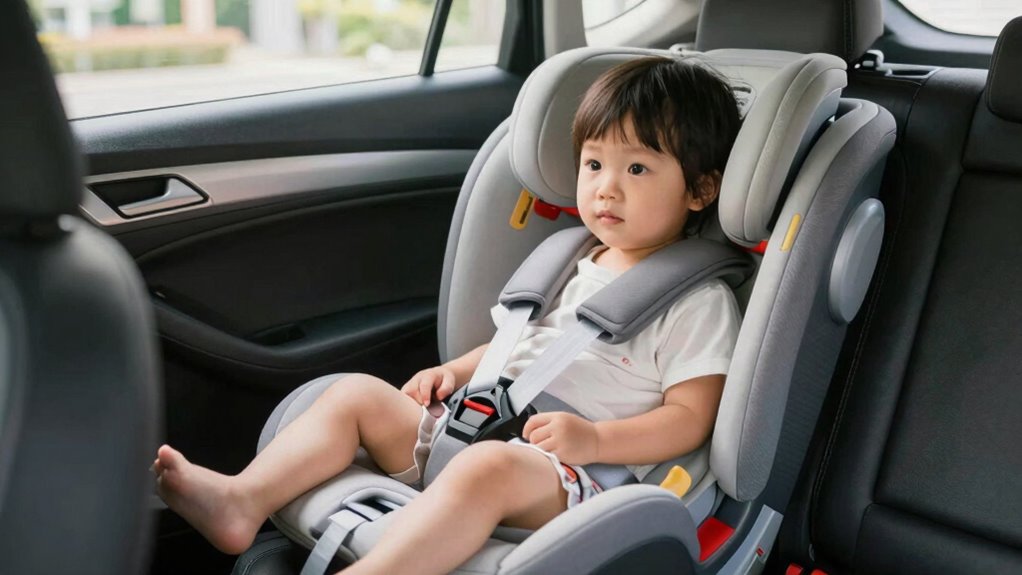
Are you confident your child can ride safely without a booster? Proper car seat installation is vital to guarantee they’re secure without additional support. Check that the seat belt fits correctly—the lap belt should lie snugly across the upper thighs, and the shoulder belt should sit across the chest, not the neck or face. Consider your child’s height and weight; most children are ready when they can sit with their back against the vehicle seat and their knees bend comfortably at the edge. Additionally, evaluate the booster seat types available—high-back or backless—based on your vehicle’s seat design. If your child consistently fits these criteria, they may be ready to ride without a booster, but always double-check safety guidelines and vehicle seat belt fit to confirm.
Frequently Asked Questions
How Often Should I Reassess My Child’s Booster Seat Readiness?
You should reexamine your child’s booster seat readiness every few months, especially as they experience rapid child growth. Keep an eye on safety guidelines, like your child’s height and weight, to make certain they still fit properly. Regular checks help confirm that the booster seat provides maximum protection. If your child outgrows the seat or shows signs of needing a different restraint, update the seat promptly for ongoing safety.
Are There Specific Car Models Better Suited for Booster Seats?
Surprisingly, some car models are better suited for booster seats, making your life easier. Generally, vehicles with adjustable headrests, good seatbelt placement, and ample space work best. When choosing, look for trusted booster seat brands and consider car seat accessories that enhance safety. Ironically, luxury cars often have features that make installing booster seats more straightforward, so don’t overlook the importance of compatibility when selecting your vehicle.
What’s the Best Way to Teach My Child About Seat Belt Safety?
You can teach your child about seat belt safety by using educational games that make learning fun and engaging. Conduct safety demonstrations, showing them how to properly wear the seat belt and explaining why it’s important. Encourage questions and practice together often, emphasizing the importance of buckling up every time they’re in the car. Consistent reinforcement helps your child understand and remember safety rules effectively.
How Do I Handle My Child’s Resistance to Using a Booster Seat?
When your child resists using a booster seat, don’t panic. Start with behavior management by calmly explaining safety reasons and listening to their concerns. Use positive reinforcement—praise and small rewards—to encourage cooperation. Make it fun by involving them in choosing their booster seat or creating a game. Consistency is key; stay firm yet understanding. Before long, they’ll see that safety isn’t optional, and resistance will fade.
When Should I Transition My Child From Booster to Seat Belt Alone?
You should shift your child from a booster seat to a seat belt alone once they’re at least 4’9” tall, typically between ages 8-12, and can sit properly with a snug seat belt. Keep travel tips in mind: make certain their toy safety by avoiding loose objects that can become projectiles. Make the switch gradually, emphasizing the importance of proper seat belt use for safety during all trips.
Conclusion
When it comes to your child’s safety, don’t delay. Detect their development, determine their fit, and decide their readiness. By paying close attention to posture, proportion, and maturity, you guarantee their safety stays solid and secure. Remember, readiness is about more than just size—it’s about safety smarts and self-control. Trust your judgment, stay vigilant, and prioritize their protection. Because when your child’s safety surpasses all, peace of mind follows perfectly.