
TL;DR

Turn the school run and nap time into listening time
- Thousands of audiobooks, podcasts and originals
- Listen on your phone, tablet or Echo — also offline
- Cancel anytime
Amazon has introduced 8.7- and 11-inch Android tablets promoted for children as young as 3, with portability, long battery life and child-focused features. Researchers cited in an Oligarch Watch report raised concerns about frequent device use for calming children and possible effects on development; Amazon disputed the report’s interpretation of its travel-focused marketing and said it consults child-safety organizations.
Amazon has released 8.7- and 11-inch Android tablets marketed for children as young as 3, prompting questions from child-development researchers about a product designed for portability and extended use. The company promotes the devices as children’s first tablets and highlights long battery life for travel; Amazon disputes one report’s characterization that this messaging is meant to keep toddlers quiet or seated.
Amazon’s sales materials describe the Kids Tablets as age-appropriate for young users and feature a child-sized handle and protective case. The company advertises a battery lasting through flights and road trips, along with a vivid display and learning content covering colors, shapes and numbers. One promotional line says the tablet can go in a backpack, the back seat or to the kitchen table.
In a statement to Oligarch Watch, an Amazon spokesperson rejected the report’s claim that the all-day battery was promoted to help toddlers remain seated during flights or stay preoccupied in cars, saying there was no Amazon messaging making that claim. The report pointed to marketing imagery and copy describing battery life as “Enough for the flight” and “Enough for a road trip.” The spokesperson also said Amazon develops products with input from organizations including ConnectSafely, Boston Children’s Hospital’s Digital Wellness Lab and the Family Online Safety Institute.
The tablets also offer children’s content and generative AI features, according to the report. University of Michigan pediatrician and researcher Jenny Radesky questioned the implications of both frequent, portable access and AI tools that may do creative work for children. Amazon’s public product materials and the spokesperson’s response, as quoted in the report, do not detail the specific AI features or explain how they are designed to support children’s independent thinking.
Portability and Toddlers’ Screen Habits
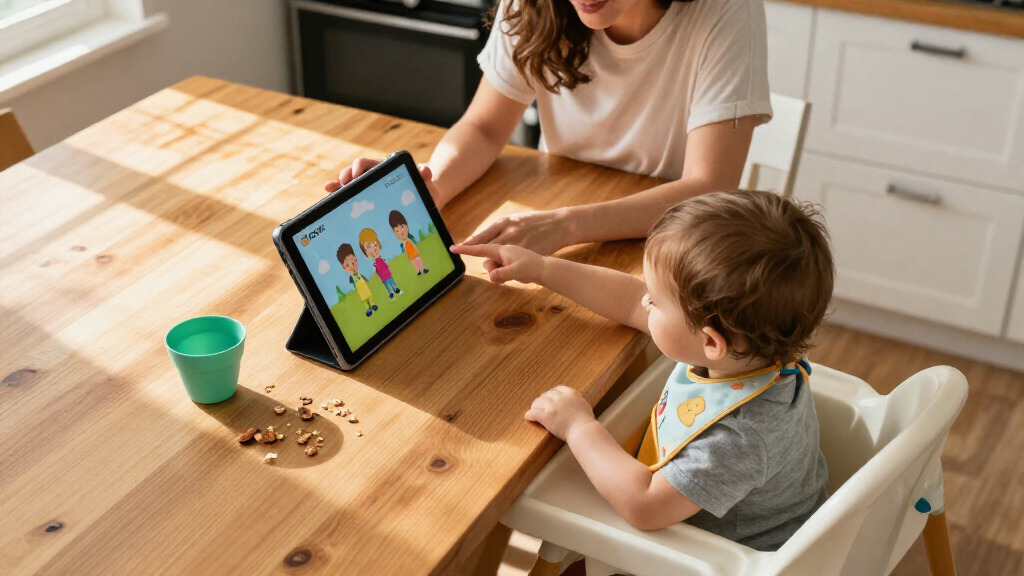
The dispute is about more than screen time in the abstract: Amazon’s product design and marketing place a tablet within easy reach during travel and everyday routines. Radesky warned that problems can arise when a device becomes a child’s “always-available buddy” used to manage behavior, calm a child or keep them quiet. That concern is relevant to caregivers deciding whether to make a personal device part of a young child’s daily routine.
Research cited in the report points to associations, not proof that these specific tablets will cause harm. A 2022 study of 422 children ages 3 to 5, led by Radesky, associated mobile-device use for calming with lower executive functioning and greater emotional reactivity. A recent meta-analysis in JAMA Pediatrics, drawing on 23 earlier meta-analyses and data representing more than 2.8 million children across age groups, found associations between screen exposure and lower academic achievement and language development, as well as more reported emotional and behavioral problems.
Those findings do not establish that all screen use is harmful or predict outcomes for an individual child. They do make the product’s intended age range and the role of screens in daily life relevant to families and pediatric professionals. The report also cites a 2025 study linking consistent handheld-device use with nearsightedness as one predictor; the supplied material does not give enough details to assess that study’s methods or findings further.
Amazon Fire Kids tablet with kid-proof case
As an affiliate, we earn on qualifying purchases.
As an affiliate, we earn on qualifying purchases.
Research Behind the Debate
The source report compares Amazon’s claims that the tablets can support learning and creativity with research on children’s screen exposure. Its cited JAMA Pediatrics meta-analysis found broad associations across a large body of evidence, while researchers cautioned against treating screens as inherently bad. University of Calgary psychology professor Sheri Madigan told CNN that screens can crowd out sleep, physical activity, human connection, learning and play.
Radesky’s concerns also draw on her research into how young children use devices to regulate feelings. In the 2022 study described by the report, use of mobile devices to calm children was associated with measures of executive functioning and emotional reactivity. The researchers wrote that frequent use for calming may displace opportunities to learn emotion-regulation strategies. These are study findings and interpretations, not an evaluation of Amazon’s specific product.
Amazon presents its tablets as learning and entertainment devices, while the report’s author interprets the travel messaging as encouraging use to occupy children. The company contests that interpretation. The available material does not establish how often families will use the tablets, what children will access, or whether the devices will replace other activities.
“Kids want a real tablet, not a toy.”
— Amazon, in product announcement materials
Open Questions on Use and Evidence
The supplied report does not specify the tablets’ exact release date, prices, sales figures or how widely they are expected to be used by toddlers. It also does not provide Amazon’s detailed guidance on daily screen time, parental controls or the scope and safeguards of the generative AI features.
The research cited describes associations between screen use and developmental measures; it does not show that these particular tablets cause developmental, emotional or eyesight problems. Study designs, screen-use definitions and the ages represented vary, and the source material does not establish how the findings apply to a specific child or pattern of use. Amazon’s assertion that its products draw on outside expert input is not accompanied here by details about the advice received or how it shaped this model.
Details Families May Watch For
Further information from Amazon could clarify the tablets’ launch timing, pricing, age guidance, parental controls and how the AI features work. The company may also provide more detail about the child-safety organizations it says inform product development. The report does not identify a forthcoming regulatory review, company response beyond its statement, or additional research tied specifically to these devices.
For families, the immediate practical questions are how the tablet fits into a child’s routine, what content is available and whether its use displaces sleep, play or interaction with other people. The studies cited do not amount to individualized medical advice; caregivers with questions about a child’s development or screen habits can consult a pediatrician.
Key Questions
What tablets has Amazon released?
The report describes 8.7- and 11-inch Android Kids Tablets, marketed for children as young as 3. It cites a protective case, a handle, learning content and long battery life among the advertised features.
Did Amazon say the tablets are meant to keep toddlers quiet during travel?
No. Amazon’s spokesperson told Oligarch Watch that this was an inaccurate characterization and said the company does not claim the battery is meant to keep toddlers seated or preoccupied. The report cites travel-related battery copy and promotional imagery as the basis for its interpretation.
What concerns did researchers raise?
Jenny Radesky raised concerns about devices becoming an always-available tool for calming children and about the tablet’s portability. She also warned that AI apps doing creative work for children could affect independent thinking. These are concerns, not findings about the specific Amazon tablets.
Does the research prove that these tablets harm children?
No. The studies cited report associations between screen exposure or device use for calming and developmental, academic or behavioral measures. They do not establish that Amazon’s tablets cause harm, and they do not predict an outcome for any individual child.
Source: hn
Halloween Picks
halloween
As an affiliate, we earn on qualifying purchases.