
To use a Pikler triangle safely without hovering, set up a secure play space with soft mats and clear boundaries, allowing your child to explore independently within safe limits. Trust their abilities, observe discreetly, and offer support only when needed, enabling confidence and skills to grow naturally. Focus on creating an inviting environment that encourages risk-taking and coordination while maintaining safety. To discover practical tips for balanced supervision and fostering independence, explore further.

Turn the school run and nap time into listening time
- Thousands of audiobooks, podcasts and originals
- Listen on your phone, tablet or Echo — also offline
- Cancel anytime
Key Takeaways
- Establish clear safety boundaries and supervise from a distance to foster independence without hovering.
- Create a safe environment with soft mats, remove hazards, and ensure stable equipment to encourage confident exploration.
- Observe your child’s skills and provide appropriate challenges, supporting self-directed play and risk-taking.
- Use open-ended, child-led activities that promote autonomy and sensory exploration, building confidence and motor skills.
- Maintain consistent routines, check equipment regularly, and intervene only when necessary to ensure safety without over-supervising.
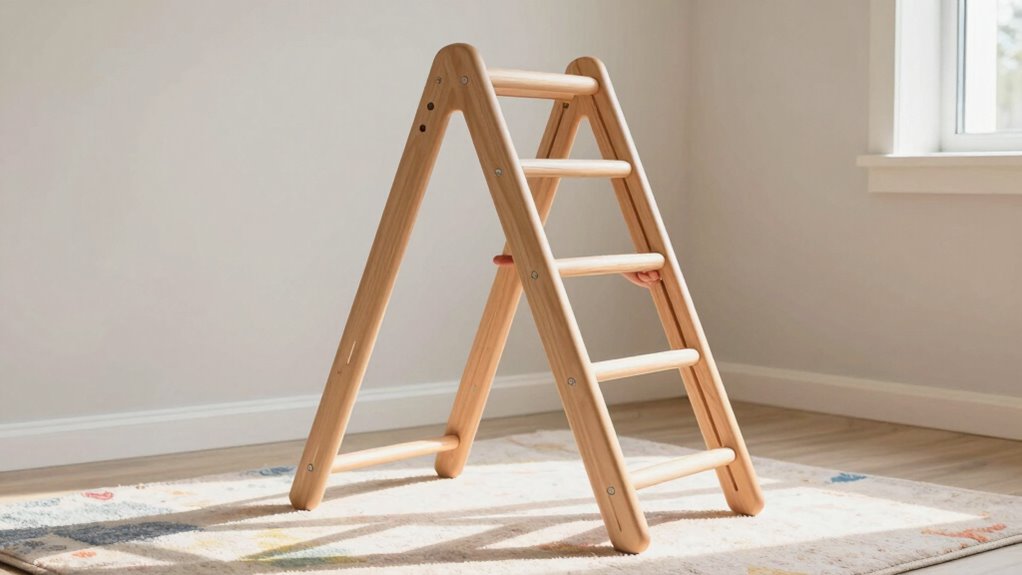
wooden Pikler triangle climbing toy
As an affiliate, we earn on qualifying purchases.
As an affiliate, we earn on qualifying purchases.
What Is a Pikler Triangle and Why It Supports Child Development
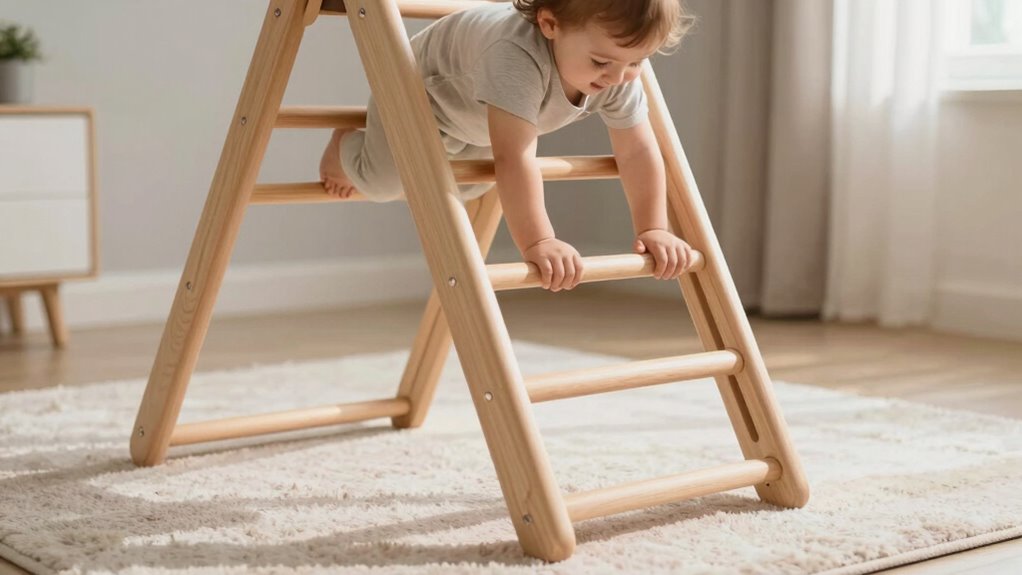
A Pikler triangle is a simple wooden climbing structure designed to promote safe exploration and physical development in young children. As your child climbs and navigates the triangle, they build essential motor skills like coordination, balance, and strength. The open design encourages sensory exploration, allowing your child to feel the texture of the wood and observe their surroundings from different heights. This type of active play helps them develop spatial awareness and confidence in their movements. The design of the Pikler triangle fosters motor development by providing opportunities for natural, unstructured movement. By offering a safe space for climbing, the Pikler triangle supports natural motor development without the need for constant supervision. It invites your child to explore their capabilities, fostering independence and curiosity through sensory-rich physical activity. Additionally, the safe and stable design ensures that children can climb confidently while minimizing the risk of injury. Incorporating such structures into play encourages physical confidence, helping children master their body in a secure environment. Properly designed, it can also serve as an effective climbing aid that boosts confidence and physical skills during early childhood.
How to Set Up a Safe and Inviting Play Space for Your Child

Creating a safe and inviting play space begins with choosing a location that offers both visibility and protection from hazards. You want a spot where you can easily supervise your child while allowing them to explore freely. Use soft, non-slip mats or rugs to create a comfortable surface that encourages balancing independence and fosters creativity. Keep the area clutter-free, with minimal sharp or heavy objects nearby. Position the Pikler triangle at a safe distance from walls or furniture to prevent injuries. Ensure good lighting so your child can see their surroundings clearly. A well-designed space gives your child the freedom to experiment and develop confidence while feeling secure. This balance helps them build independence naturally, supporting their growth through safe, creative play. Incorporating age-appropriate equipment like the Pikler triangle promotes safe exploration and physical development. Additionally, considering the contrast ratio of the environment can help improve visibility and overall safety for your child. Maintaining optimal lighting conditions can further enhance safety and allow your child to better observe their surroundings during play. Proper lighting and environmental contrast are essential for reducing shadows and preventing accidents, creating a more safe and accessible play area. Regularly assessing the environment for potential hazards ensures ongoing safety as your child grows and their abilities change.
Encouraging Independent Play With the Pikler Triangle Without Hovering

Encouraging your child to explore the Pikler triangle independently helps build confidence and problem-solving skills. You can support this by clearly defining safety boundaries and trusting their ability to navigate safely. Remember, your gentle presence should foster independence, not hover over every move. Incorporating play-based approaches that promote autonomy can further enhance their development. Fostering a sense of trust and safety encourages children to take safe risks and develop resilience. Allowing children to experience autonomous exploration within a safe environment helps strengthen their decision-making abilities and resilience. Recognizing signs of readiness and providing appropriate challenges can also promote a positive developmental journey. Additionally, understanding child-led play principles can help you better support their natural curiosity and growth.
Promote Self-Directed Exploration
To foster self-directed exploration with the Pikler triangle, it’s vital to step back and allow your child to play independently. Encourage child-led activities that spark curiosity and confidence. Here are three ways to support autonomous exploration:
- Offer open-ended play options, like different ways to climb or hang, so your child can invent their own challenges.
- Resist the urge to direct every movement; instead, observe how they explore and adapt during play.
- Provide a safe space where they feel free to experiment, stumble, and succeed without interruption.
- Incorporate child-centered learning principles to further promote independence and confidence in their play. Additionally, understanding the importance of play environments helps create a setting that nurtures their innate desire to explore and learn. Creating supportive spaces that encourage risk-taking without fear of failure also plays a crucial role in developing their independence.
Set Clear Safety Boundaries
Allowing your child to explore independently with the Pikler triangle requires establishing clear safety boundaries upfront. This helps manage risks and ensures safety protocols are in place, so your child can play confidently without constant hovering. Set boundaries by defining safe zones and encouraging cautious exploration. Communicate these boundaries clearly, so your child understands limits. Use the table below to visualize the importance of safety boundaries:
| Safety Protocols | Risk Management Strategies | Boundary Examples |
|---|---|---|
| Supervised Play | Prevent falls with spotters | No climbing near sharp edges |
| Clear Rules | Teach safe climbing habits | Stay within designated area |
| Regular Checks | Maintain equipment stability | Keep area free of hazards |
| Child’s Understanding | Foster independence safely | Use mats for cushioning |
Additionally, implementing consistent safety routines can help children develop an understanding of boundaries and promote safer independent play. Understanding proper supervision techniques further enhances safety and confidence during playtime. Incorporating child-led exploration strategies encourages confidence within set boundaries, fostering independence without compromising safety. Moreover, clear communication about safety rules is essential to help children internalize boundaries effectively. Furthermore, setting appropriate difficulty levels can support gradual skill development and build trust in their abilities.
Knowing When and How to Supervise Safely During Play

Supervising your child during play is essential to guarantee their safety and prevent accidents. Knowing when and how to supervise effectively involves applying supervision strategies and conducting ongoing risk assessments. A mindful approach includes being present in the moment to better observe your child’s actions and environment. 1. Observe attentively to identify potential hazards before they become dangerous. 2. Adjust your supervision based on your child’s age and skill level, increasing oversight during risky activities. 3. Stay engaged without hovering, offering guidance when needed but allowing independence. Additionally, understanding golf safety protocols can inform you about specific risks associated with different play areas. Incorporating environmental impact considerations can also help you choose safer and more eco-friendly play setups that promote sustainable play environments. Recognizing the significance of cultural heritage can deepen your appreciation for the environments where children play, especially in culturally rich settings. Being familiar with media literacy techniques can further help you recognize and address unsafe online influences that may affect your child’s behavior during play.
Ways to Help Your Child Explore and Challenge Themselves Safely

Creating a safe environment is the first step to helping your child explore confidently. Encourage independent play by offering appropriate challenges that match their abilities. When you set up these opportunities, your child can test their limits while staying protected.
Set Up Safe Environment
How can you guarantee your child explores their Pikler Triangle safely? Start by addressing key safety measures. First, childproofing hazards: check the area for sharp edges, small objects, or anything your child could trip over. Second, ensure the surface beneath the triangle is soft and non-slip, like foam mats or carpets, to prevent injuries from falls. Third, consider sensory integration by removing overstimulating or distracting objects nearby, helping your child focus while exploring. Regularly inspect the triangle for loose screws or splinters. By creating a secure environment, you empower your child to challenge themselves confidently while minimizing risks. This setup encourages safe exploration, giving your little one the freedom to develop motor skills and independence without hovering.
Encourage Independent Play
Encouraging your child to play independently fosters confidence and motor skill development. When you let them explore the Pikler triangle on their own, they learn to balance, climb, and maneuver safely, strengthening their coordination and strength. This independence also promotes social interaction, as they develop awareness of their space and peers if others join in. By observing their efforts without intervening constantly, you help them build resilience and problem-solving skills. Set clear boundaries and offer gentle guidance when needed, but avoid hovering. Trusting your child to explore encourages curiosity and self-reliance. Over time, they’ll become more comfortable challenging themselves, which boosts both their physical abilities and their social confidence.
Building Confidence and Coordination Through Pikler Triangle Play
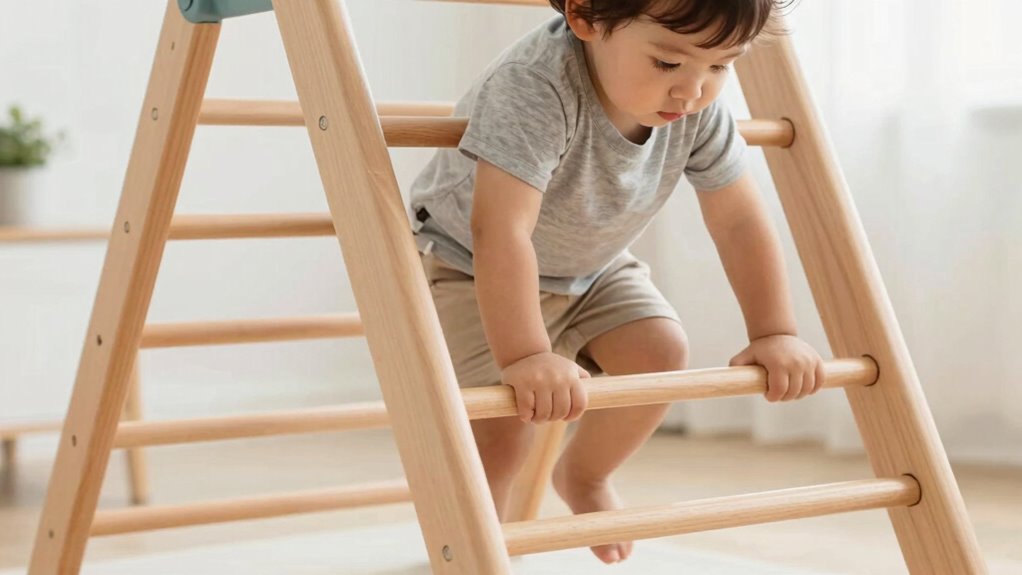
Playing on a Pikler triangle helps children develop confidence and coordination naturally as they explore their abilities. By engaging with the structure, children face balance challenges that boost their stability and trust in their movements. Sensory exploration also plays a key role, as they feel different textures and surfaces while climbing or gripping. To foster growth, try these approaches:
- Introduce varied difficulty levels to encourage overcoming balance challenges.
- Allow open-ended exploration to enhance sensory experiences.
- Celebrate small successes to build confidence and motivate further play.
This process helps children recognize their strengths, master coordination, and gain independence. With consistent, supportive play, they’ll develop a solid foundation for future physical skills.
Troubleshooting Common Issues During Playtime With the Pikler Triangle
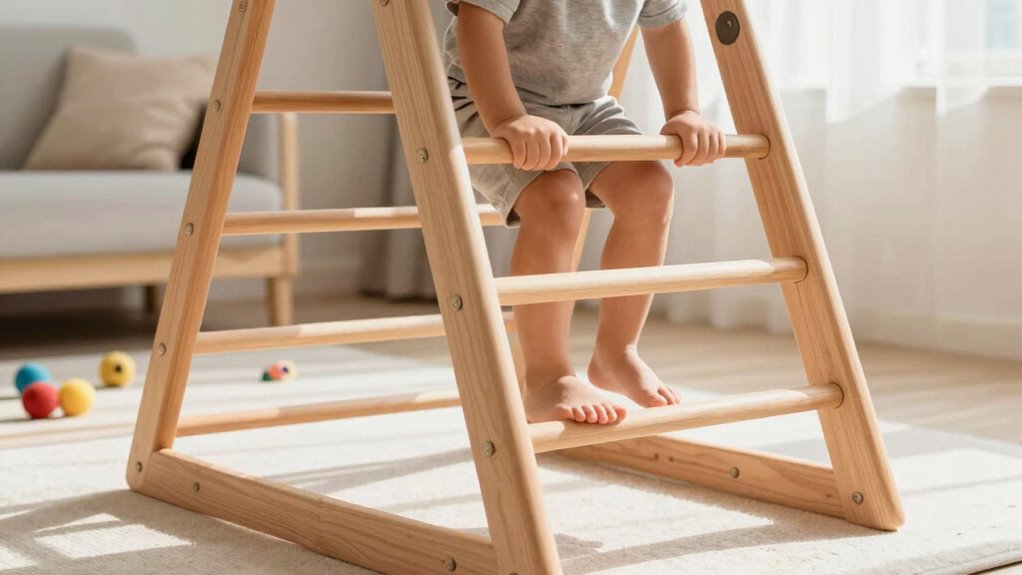
While most children enjoy their time on the Pikler triangle, you may encounter some common issues that can disrupt play or cause frustration. Balance challenges often lead to hesitation, but offering gentle support or encouraging small steps can boost confidence. If your child struggles with obstacle navigation, guarantee the triangle is stable and properly positioned. Sometimes, children may become overwhelmed by height or unfamiliarity.
| Issue | Solution |
|---|---|
| Balance challenges | Provide steady hands or lower the triangle slightly |
| Obstacle navigation | Clear surrounding space and demonstrate climbing |
| Hesitation or fear | Offer reassurance and praise |
| Instability concerns | Check for secure assembly and sturdy placement |
Addressing these issues helps your child enjoy safe, frustration-free play.
Frequently Asked Questions
How Do I Choose the Right Size of Pikler Triangle for My Child?
You should choose a Pikler triangle that fits your child’s height and activity level, guaranteeing they can climb comfortably and safely. Consider fabric options for added comfort and durability, especially if your child prefers softer materials. Always check safety standards to ensure the triangle is sturdy and secure. A size that allows your child to move freely without feeling cramped promotes confidence and safe exploration.
Can the Pikler Triangle Be Used Outdoors Safely?
While the outdoors offer endless adventure, your Pikler triangle can be used safely outside if you consider weather and safety. You should guarantee it’s placed on a flat, stable surface away from rain, snow, or direct sunlight, which can cause damage or make it slippery. Regularly check for rust or wear, and always supervise your child. With proper precautions, outdoor play can be both fun and safe.
What Materials Are Safest for a Pikler Triangle?
You should choose a Pikler triangle made from natural wood with eco-friendly finishes, ensuring it’s safe for your child. Opt for non-slip grips on the steps or rungs to prevent falls and provide extra stability. These materials are safer because they minimize exposure to harmful chemicals and enhance grip. Always verify the finishes are non-toxic and free from VOCs, making the triangle both safe and durable for indoor or outdoor use.
How Can I Encourage My Child to Use the Triangle Independently?
Think of planting a seed—you need patience and space for growth. To encourage your child’s independent play on the Pikler triangle, start by demonstrating safe use and praising their efforts. Offer gentle encouragement, and gradually give them more space to explore on their own. This builds confidence and fosters independence, showing them that they’re capable of maneuvering challenges solo. Over time, they’ll feel empowered to use the triangle confidently and independently.
Are There Age-Specific Guidelines for Pikler Triangle Play?
Yes, there are age-specific guidelines for Pikler triangle play. For infants, focus on developing gross motor skills and guarantee safety precautions like stable placement and supervision. As your child reaches toddlerhood, encourage climbing to support their developmental milestones, always monitoring for safety. Adjust activities to their growth, gradually increasing challenge while preventing falls. Always prioritize safety and observe their comfort level to foster independence confidently and securely.
Conclusion
By understanding how to use a Pikler triangle safely and encouraging independent exploration, you foster your child’s confidence and coordination. Research suggests that self-directed play supports cognitive and motor development more effectively than constant hovering. Trusting your child’s abilities while providing a secure environment helps them thrive. Remember, a well-set-up Pikler triangle isn’t just about physical skills—it’s a tool for building resilience and independence, shaping your child’s growth in profound, lasting ways.
Halloween Picks
halloween
As an affiliate, we earn on qualifying purchases.