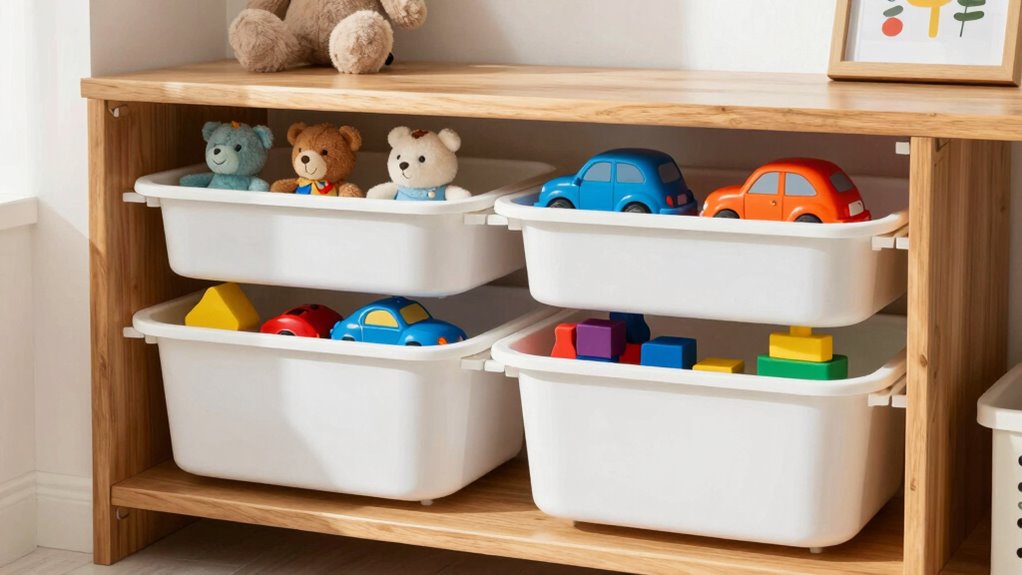

The two-bin toy rotation and storage method helps you keep your child’s play area organized and clutter-free. By dividing toys into active and stored bins, you can swap toys regularly to encourage interest and appreciation. Choose sturdy, clear, or color-coded bins for easy management, and set up a simple schedule for rotating toys every few weeks. If you stick to this system, you’ll find it easier to maintain a fun, tidy space—stay tuned for more helpful tips.

Turn the school run and nap time into listening time
- Thousands of audiobooks, podcasts and originals
- Listen on your phone, tablet or Echo — also offline
- Cancel anytime
Key Takeaways
- The two-bin method divides toys into active and stored groups, rotating them to keep playtime engaging and organized.
- Clear, labeled bins improve visibility and help children identify and access toys efficiently.
- Regular rotation every 2-4 weeks prevents clutter and maintains curiosity and interest in toys.
- Storage solutions like stackable, durable bins maximize space and facilitate easy cleanup.
- Customizing bins with themes or decorations enhances engagement and makes organization fun for children.
As an affiliate, we earn on qualifying purchases.
What Is the Two-Bin Toy Rotation System?

The two-bin toy rotation system is a simple yet effective way to manage your child’s toys. It helps improve toy accessibility by limiting the number of toys available at any one time, making cleanup easier and encouraging your child to play thoughtfully. Toy organization techniques such as this can significantly reduce clutter and streamline your daily routines. With this system, you divide toys into two bins: one actively used and one stored away. When your child gets bored or the bin is empty, you swap the toys between bins. Your involvement is key—you’ll select which toys to rotate and keep things organized. This method reduces clutter and keeps playtime fresh. It also teaches your child to appreciate toys more, as they look forward to rediscovering different items. Incorporating storage solutions can further enhance your organization efforts and make playtime more engaging. Using appropriate toy storage containers helps maintain order and protects toys from damage, prolonging their lifespan. Overall, it’s a straightforward approach that benefits both you and your child.
Why Use the Two-Bin Toy Rotation Method? Benefits for Clutter and Engagement
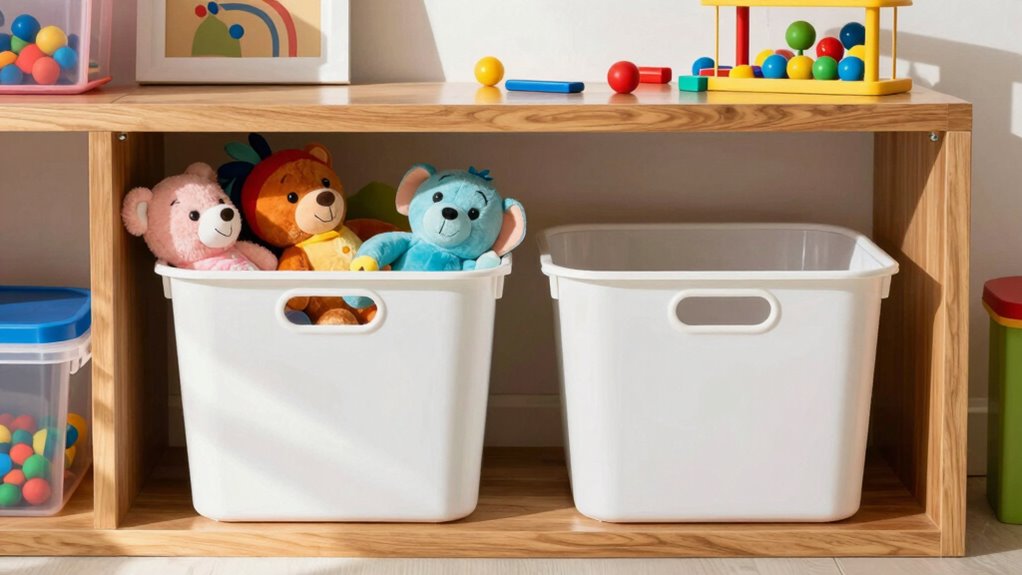
Implementing the two-bin toy rotation method considerably reduces clutter in your home by limiting the number of toys your child has access to at one time. This helps create a more organized space, making cleanup quicker and less stressful. Beyond managing clutter, this approach offers developmental benefits by encouraging your child’s focus and creativity with fewer toys, fostering deeper engagement. When toys are rotated, your child is more likely to explore each item thoroughly, promoting problem-solving and imaginative play. For you, maintaining parental organization becomes easier, as it simplifies toy storage and reduces overwhelm. Using the two-bin method supports a calmer environment while nurturing your child’s growth, making toy management more effective and enjoyable for everyone involved.
How to Choose and Set Up Your Toy Bins for Rotation

How do you choose the right toy bins to make your rotation system effective? Start with sturdy, lightweight, and stackable options for easy access and storage. Clear bins help you see contents quickly, aiding clutter management. Size matters: pick bins that fit your space and hold toys without overcrowding. Label each bin clearly to streamline rotation and prevent confusion. Consider toy storage that encourages independence, like bins with lids or handles. Additionally, selecting durable car protection accessories can help safeguard your toys and gear during storage. Using proper organizing techniques can further enhance your toy management system for long-term success. Incorporating smart yard care principles, such as appropriate storage solutions, can also optimize your overall toy organization system. Choosing appropriate storage solutions ensures your system remains effective and adaptable over time.
How to Create an Effective Toy Rotation Schedule
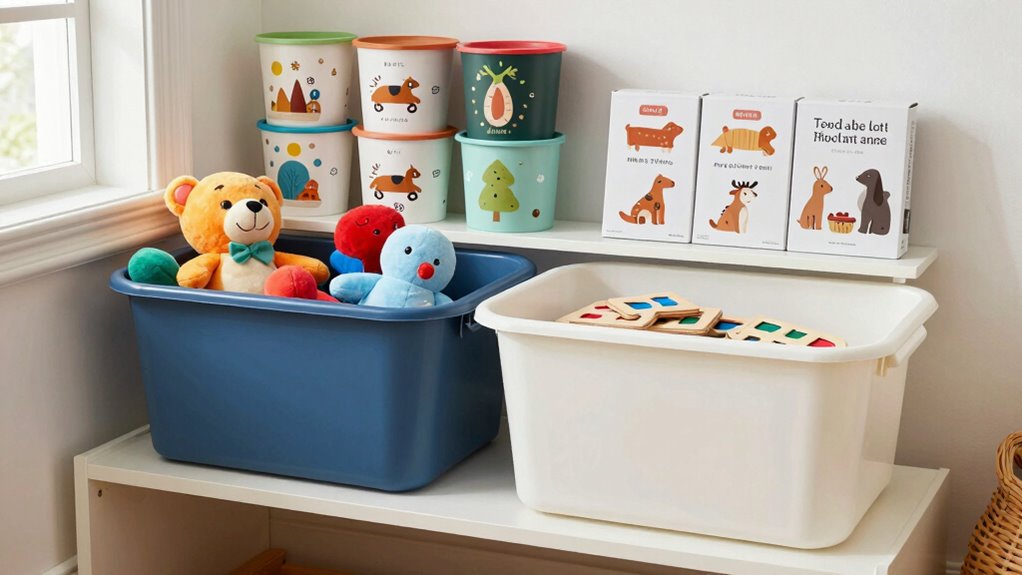
Creating a well-organized toy rotation schedule helps keep your child’s play area tidy and engaging. To do this effectively, plan to rotate toys every week or two, ensuring fresh options and reducing clutter. Consider toy safety by removing broken or unsafe items before storage. Use smart storage solutions to keep toys accessible yet out of sight when not in use. Keep a record of which toys are in each bin to streamline the process. Remember, a consistent schedule prevents overwhelm and encourages independent play. To optimize your system, focus on these key points:
- Regularly assess toy safety and remove hazards
- Label storage bins clearly
- Rotate toys based on your child’s interests
- Limit the number of toys in circulation
- Use accessible storage solutions for easy swapping
- Incorporating storage organization principles can help you create a more efficient rotation system.
- Paying attention to ergonomic principles can help you design a safer, more comfortable play area for your child.
Additionally, applying safety standards when selecting storage furniture ensures a secure environment for your little one.
Tips for Organizing Toys and Preventing Clutter
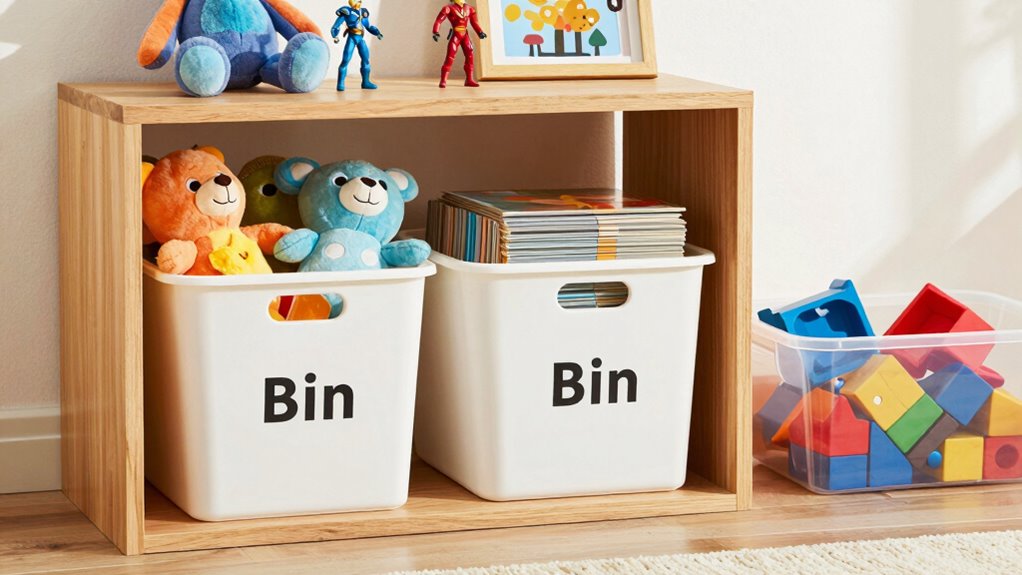
To keep your toy space organized, start by designating specific areas for storage so everything has a place. Make it easy to find and put away toys by rotating them regularly and using clear bins to see what’s inside. These simple steps help prevent clutter and make cleanup quicker. Incorporating Free Floating storage solutions can also maximize space and keep toys accessible. Additionally, organizing toys according to seasons can help manage toy rotation more effectively, ensuring seasonal items are stored separately when not in use. Establishing a consistent toy management routine further supports maintaining an organized and clutter-free environment. Embracing minimalist principles can also reduce the number of toys to manage, making organization even simpler. Implementing a labeling system can further streamline toy retrieval and storage, helping everyone stay organized.
Designate Specific Storage Areas
Designating specific storage areas for toys helps keep your home organized and reduces clutter. Clear, assigned spaces make it easier to find toys and put them away, encouraging consistent tidying. Use storage solutions like bins, shelves, and baskets to create designated zones for different toy types. Implement organizational tips such as labeling storage containers and keeping frequently used toys within easy reach. This organization method can also help prevent overbuying duplicates, which often leads to unnecessary clutter. It minimizes chaos and streamlines cleanup efforts. Consider grouping toys by category or size to enhance efficiency. Regularly rotating toys can also preserve their quality and keep playtime engaging for children. Understanding battery capacity can help in planning toy storage for electronic toys that require batteries. Properly managing toy maintenance can extend their lifespan and reduce the need for replacements. Establishing routines around toy storage can further instill good habits in children, making tidying part of their daily activities. Remember, consistent use of designated spots is key to maintaining an organized environment and reducing clutter over time.
Rotate Toys Regularly
Rotating toys regularly is an effective way to prevent clutter and keep playtime fresh. By limiting the number of toys available at once, you encourage toy diversity, which maintains your child’s interest and reduces overwhelm. Involving your child in the rotation process helps them feel empowered and teaches organization skills. You can select toys together, making it easier to identify favorites and decide what to put away. This proactive approach minimizes mess and ensures your child appreciates the toys they haven’t seen in a while. Incorporating organized storage solutions can further enhance the effectiveness of toy rotation. Additionally, understanding playroom organization techniques can maximize space and accessibility. For example, using storage bins with labels can make it easier for children to help with cleanup and find toys quickly. Overall, regular toy rotation, with your involvement, creates a more organized space and a more engaging, clutter-free environment for everyone.
Use Clear Bins
Using clear bins is one of the simplest ways to organize toys and prevent clutter. They allow you to see what’s inside at a glance, making cleanup easier. To keep things even more organized, consider using a color coded bins and a label system. This way, your child can quickly identify where each toy belongs, fostering independence. When setting up, use different colors for categories like dolls, cars, or art supplies. Labels should be clear and easy to read, preferably with pictures for younger kids. This system helps maintain order over time and reduces the chance of toys being lost or misplaced. Remember, consistent use of clear bins and labels makes toy rotation smoother and keeps your space tidy.
How Often Should You Rotate Toys? Best Practices
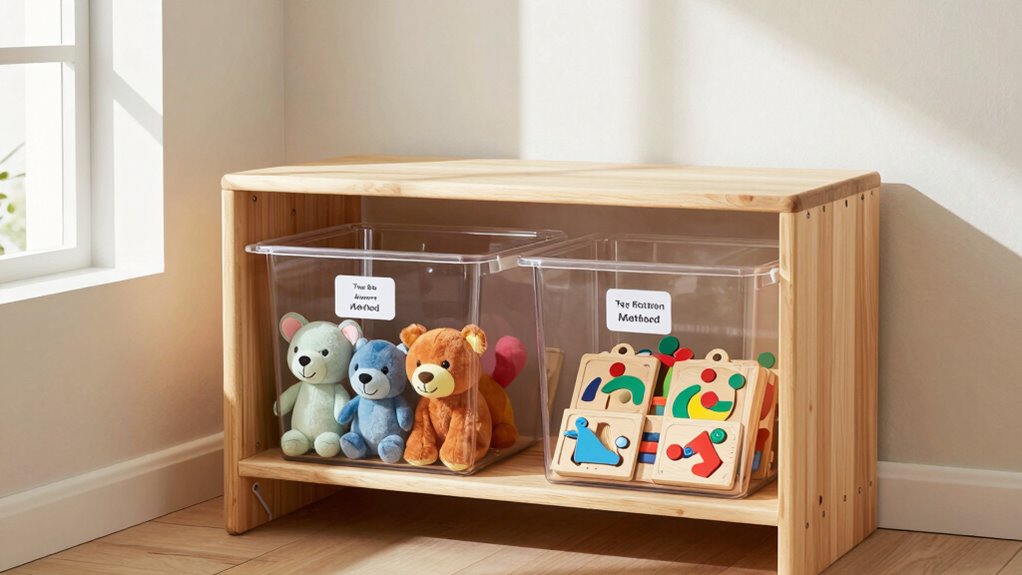
To keep your child engaged and prevent toy clutter, it’s helpful to rotate toys regularly. Generally, rotating every two to four weeks works well, giving your child enough variety without overwhelming them. This frequency helps maintain a fresh playroom decor, making the space inviting and organized. It also promotes toy safety, as you can inspect toys during rotation and remove any that are damaged or unsafe. Be attentive to your child’s interest; if they lose interest quickly, shorter rotations may be better. Conversely, if they still enjoy certain toys, you can keep those in rotation longer. Consistent rotation keeps playtime exciting, reduces clutter, and makes it easier to manage toy safety standards. Incorporating toy maintenance into your routine can further extend the lifespan of your toys and ensure ongoing safety. Adapting the schedule to your child’s preferences for the best results.
Troubleshooting Common Issues With Toy Rotation
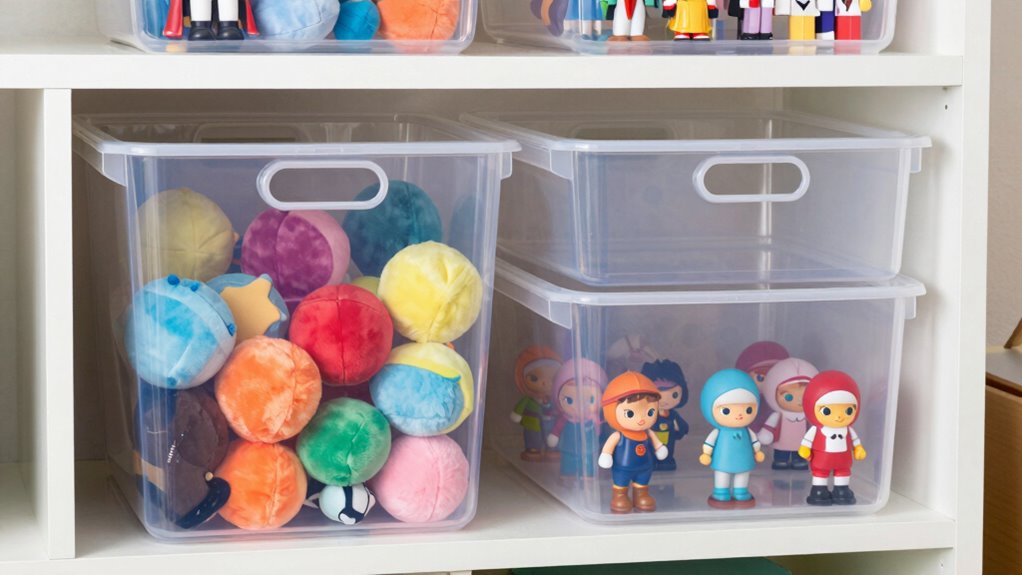
If you notice your child losing interest quickly, it might be due to a limited selection of toys. To keep them engaged, try rotating a few different options regularly and introducing new ones. Addressing these issues can help make toy rotation more effective and enjoyable for your child.
Limited Toy Selection Options
Limited toy options can make it challenging to keep children engaged during rotation. When your selection feels restricted, your child might lose interest quickly. To address this, involve yourself in selecting toys that are age-appropriate and align with their interests. Parent involvement helps ensure the toys are meaningful and safe. Keep these tips in mind:
- Focus on quality over quantity
- Choose versatile toys that can be used in multiple ways
- Rotate a small number of engaging options frequently
- Involve your child in toy selection for better engagement
- Regularly assess toy safety and age appropriateness
Maintaining Child Engagement
When managing toy rotation, you might notice your child’s interest waning sooner than expected or becoming distracted easily. To maintain engagement, regularly refresh the toys in the active bin, ensuring they offer new challenges or variations. Incorporate toys with high educational value that promote problem-solving, creativity, or fine motor skills. Rotating toys that align with your child’s current developmental benefits keeps their curiosity alive and encourages learning. Observe which toys spark the most engagement and swap out less interesting ones. Also, consider involving your child in selecting the toys to foster ownership and excitement. Remember, variety and intentional selection are key to sustaining interest and supporting their growth through meaningful, developmentally appropriate play.
Creative Ways to Customize the Two-Bin System for Your Child
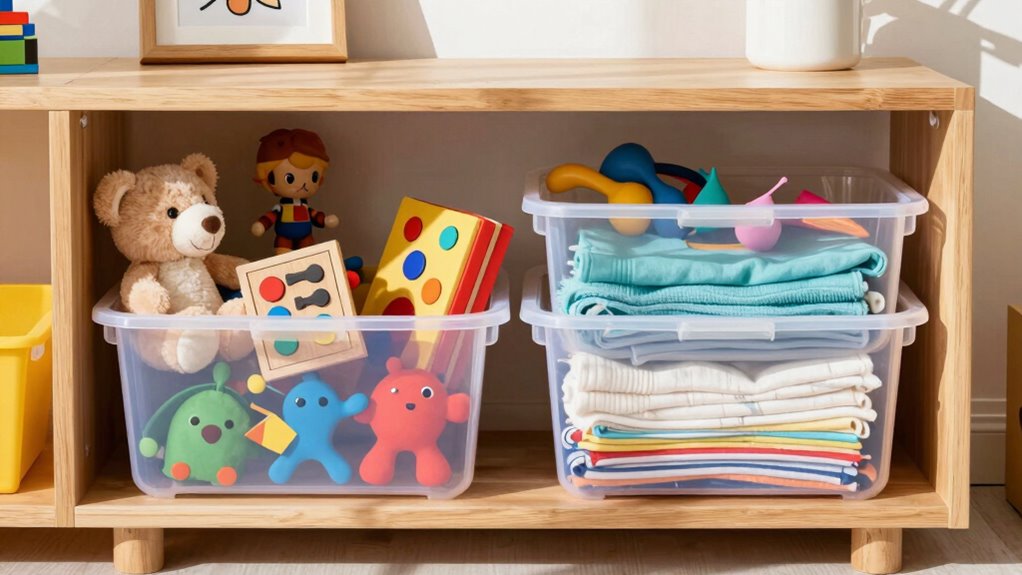
Customizing your two-bin system makes toy rotation more engaging for your child. Personal touches turn storage into a fun project and help your kid connect with their toys. Try DIY customization by decorating the bins with colorful paint, stickers, or fabric. Use decorative labels to clearly identify the contents, making it easier for your child to choose and put away toys. You can also personalize the bins with your child’s favorite themes or characters. Adding a small chalkboard or whiteboard on each bin allows your child to write or draw what’s inside. Consider creating themed bins for different activities or interests. These small adjustments make toy storage more inviting and encourage your child to participate in tidying up.
Frequently Asked Questions
Can the Two-Bin Method Work for All Toy Types?
The two-bin method can work for most toy types, but not all. It’s great for toy organization and clutter reduction, especially with toys that are used regularly or can be easily rotated. However, larger or more complex toys might need different storage solutions. You’ll find it effective for keeping your space tidy and manageable, but adapt it as needed to suit specific toys or your child’s preferences.
How Do I Involve My Child in the Rotation Process?
Imagine your child’s eyes lighting up as they choose which toys to swap, turning the rotation into a fun adventure. Invite your child to participate by giving them age-appropriate tasks like sorting or selecting toys to store. This involvement empowers them, teaches responsibility, and makes the process enjoyable. With your guidance, they’ll feel proud and excited to help, transforming toy organization into a shared, meaningful experience.
What if My Child Prefers Only One Set of Toys?
If your child prefers only one toy, try gently introducing new options during rotation, highlighting the fun or special features of other toys. You can also incorporate their favorite single toy into activities with others, making it feel special. Respect their toy preference while encouraging exploration gradually. Over time, rotating toys can help your child discover new favorites without feeling forced, making playtime more engaging and balanced.
Are There Recommended Storage Containers for Durability?
Oh, because flimsy containers are clearly the secret to messy chaos, right? In reality, you should opt for durable plastic bins or stackable containers. They’re sturdy enough to withstand little hands and last through endless toy exchanges. Look for ones with secure lids and smooth edges—no sharp corners! This way, your toy storage stays neat, and your kids can easily access their favorite toys without risking breakage or accidental spills.
How Does Toy Rotation Affect Sibling Sharing Dynamics?
Toy rotation encourages sibling cooperation by creating sharing boundaries, making it easier for kids to respect each other’s space. When toys are periodically switched, children learn patience and fairness, reducing conflicts over favorites. This method fosters positive sharing habits, helping siblings develop better boundaries and cooperation. By understanding that toys will be available again later, kids feel less possessive, promoting a more harmonious environment and smoother sibling interactions.
Conclusion
With the two-bin system, you become the conductor of a playful symphony, seamlessly switching toys like melodies to keep your child’s curiosity dancing. This simple method transforms chaos into a well-orchestrated rhythm, sparking joy and reducing clutter. Embrace this rhythm, tweak it to fit your family’s tune, and watch as your home blossoms into a haven where play and organization dance in perfect harmony. Your child’s world just got a whole lot brighter.
Cold & flu season Picks
humidifiers
As an affiliate, we earn on qualifying purchases.