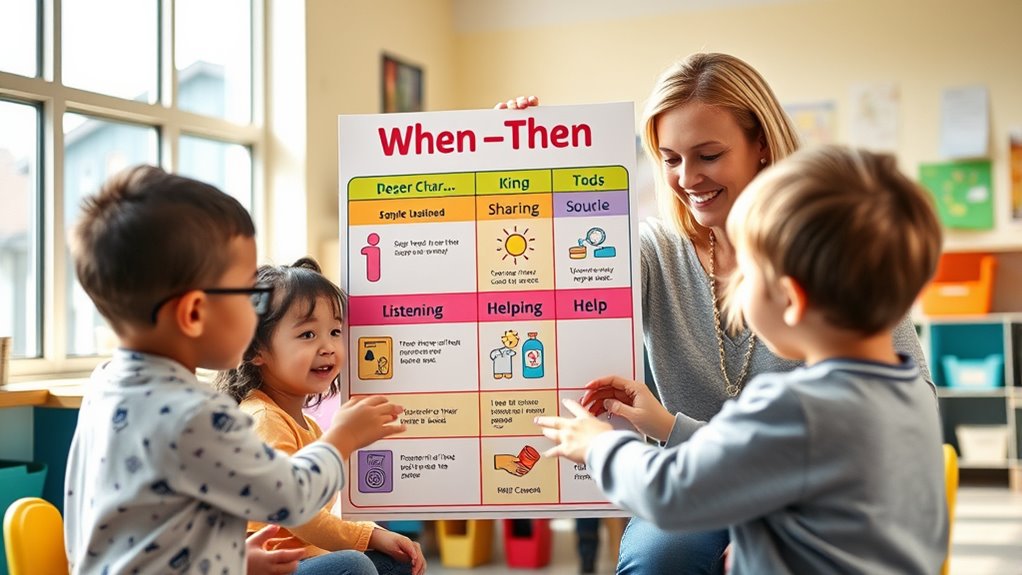

Creating when-then routines can boost cooperation by establishing clear triggers that prompt specific actions, making daily interactions predictable and smooth. Identify natural moments—like arriving home or finishing breakfast—and link them to routines. Consistently respond to these triggers to reinforce behaviors, reducing conflicts and decision fatigue. By aligning routines with shared goals, you’ll foster cooperation and streamline tasks. If you want to learn more about building effective routines, keep exploring how to set up seamless when-then patterns.

Turn the school run and nap time into listening time
- Thousands of audiobooks, podcasts and originals
- Listen on your phone, tablet or Echo — also offline
- Cancel anytime
Key Takeaways
- Identify natural daily triggers, like arriving home or finishing meals, to prompt cooperative behaviors consistently.
- Clearly define specific actions to follow each trigger, ensuring routines are simple and easy to remember.
- Use visual cues or reminders to reinforce triggers and maintain routine consistency over time.
- Repetition of routines in response to triggers strengthens habits and improves cooperation.
- Regularly review and adjust routines to enhance clarity, effectiveness, and alignment with shared goals.

Creating When-Then routines allows you to automate your daily tasks efficiently by defining clear triggers and actions. When you set up these routines, you’re essentially programming your day to follow a predictable pattern, which helps reinforce good habits and minimizes decision fatigue. The key to making these routines work is understanding habit formation—how behaviors become automatic through consistent repetition—and recognizing behavioral triggers that prompt specific actions. By linking triggers to desired behaviors, you create a seamless flow that encourages cooperation and smoother interactions.
Creating effective routines by linking triggers to actions fosters cooperation and automates daily tasks seamlessly.
To get started, identify specific moments in your day that naturally serve as signals for certain actions. For example, when you finish breakfast, then you put away dishes. When you arrive home from work, then you check your mail. These triggers act as behavioral cues that prompt you to act in a particular way, reinforcing the routine over time. Consistency is vital because it helps your brain associate the trigger with the behavior, eventually making the action automatic. When these routines become habitual, they free up mental energy for more complex decisions and foster cooperation because everyone knows what to expect and when to do it.
Incorporating habit formation into your routines requires deliberate reinforcement. You might start by setting reminders or visual cues, like placing shoes by the door so that when you see them, then you remember to leave. Over time, as the behavior repeats in response to the trigger, it becomes ingrained, and cooperation naturally improves because there’s less need for reminders or negotiations. Behavioral triggers are the foundation of effective routines—they create predictability and reduce uncertainty. When everyone understands the trigger and the expected response, cooperation becomes effortless. For example, when the timer rings, then the kids clear the table—this clear cue creates a shared understanding that streamlines household chores.
Creating these routines also involves adjusting triggers and actions based on feedback. If a certain routine isn’t working, refine the trigger or the response so it fits your actual daily flow. The goal is to make the routine intuitive and automatic, so it doesn’t require conscious effort every time. As you develop these habits, you’ll notice that cooperation improves because everyone knows what to do without needing constant instructions or reminders. This clarity reduces conflicts and promotes consistency, making your daily interactions more predictable and cooperative. Additionally, understanding existenital themes can deepen the motivation behind establishing these routines, fostering a greater sense of purpose and shared values.
As an affiliate, we earn on qualifying purchases.
Frequently Asked Questions
How Do I Customize Routines for Different Team Members?
To customize routines for different team members, focus on personalization strategies that align with their preferences. Talk to each person to understand their strengths, work style, and motivations. Then, adapt the When-Then routines to suit their needs, making tasks more engaging and manageable. By tailoring routines based on individual preferences, you foster better cooperation, boost motivation, and create a more harmonious team environment.
What Tools Assist in Implementing When-Then Routines Effectively?
Think of implementing when-then routines like building a sturdy bridge—you need the right tools. Automation tools streamline your routines, ensuring tasks trigger seamlessly, while feedback mechanisms help you fine-tune processes. Platforms like Trello, Asana, or Zapier automate actions and track progress. They help you keep everyone aligned and aware of when to act, making cooperation smooth and reliable. These tools turn your routines into well-oiled machines.
How Often Should Routines Be Reviewed and Adjusted?
You should review your routines regularly, ideally every few weeks, to make certain they’re still effective. Routine evaluation helps you spot any issues early, while feedback integration allows you to make necessary adjustments. By actively monitoring and refining your routines, you keep cooperation high and prevent stagnation. This ongoing process ensures your routines stay aligned with your goals and the needs of those involved, fostering continuous improvement.
Can When-Then Routines Work Across Diverse Cultural Settings?
Yes, when-then routines can work across diverse cultural settings, but you need to be a cultural detective! Cultural differences and communication styles might seem like huge hurdles, but they’re actually opportunities to tailor routines for maximum cooperation. By understanding and respecting these differences, you’ll turn routine success into a global teamwork masterpiece. Remember, flexibility and open-mindedness are your secret weapons for making these routines truly universal!
How Do I Handle Resistance to Adopting New Routines?
You handle resistance by using motivational strategies that highlight benefits and address concerns. Offer positive feedback techniques to reinforce progress, making the routines feel rewarding. Listen actively to understand objections and adapt your approach accordingly. Show empathy and patience, demonstrating how these routines can make cooperation easier. When people see tangible improvements and feel supported, they’re more likely to embrace the change willingly.
Conclusion
By creating when-then routines, you set clear expectations like a map guiding a traveler through unfamiliar terrain. Instead of chaos, you cultivate harmony—like a conductor leading an orchestra to perfect harmony. These routines turn uncertainty into predictability, transforming everyday moments into opportunities for cooperation. When you implement them consistently, cooperation blossoms—much like a garden flourishing after careful tending. Ultimately, your routines become the steady heartbeat that keeps collaboration strong and resilient.
Evergreen bestsellers Picks
bestsellers
As an affiliate, we earn on qualifying purchases.