

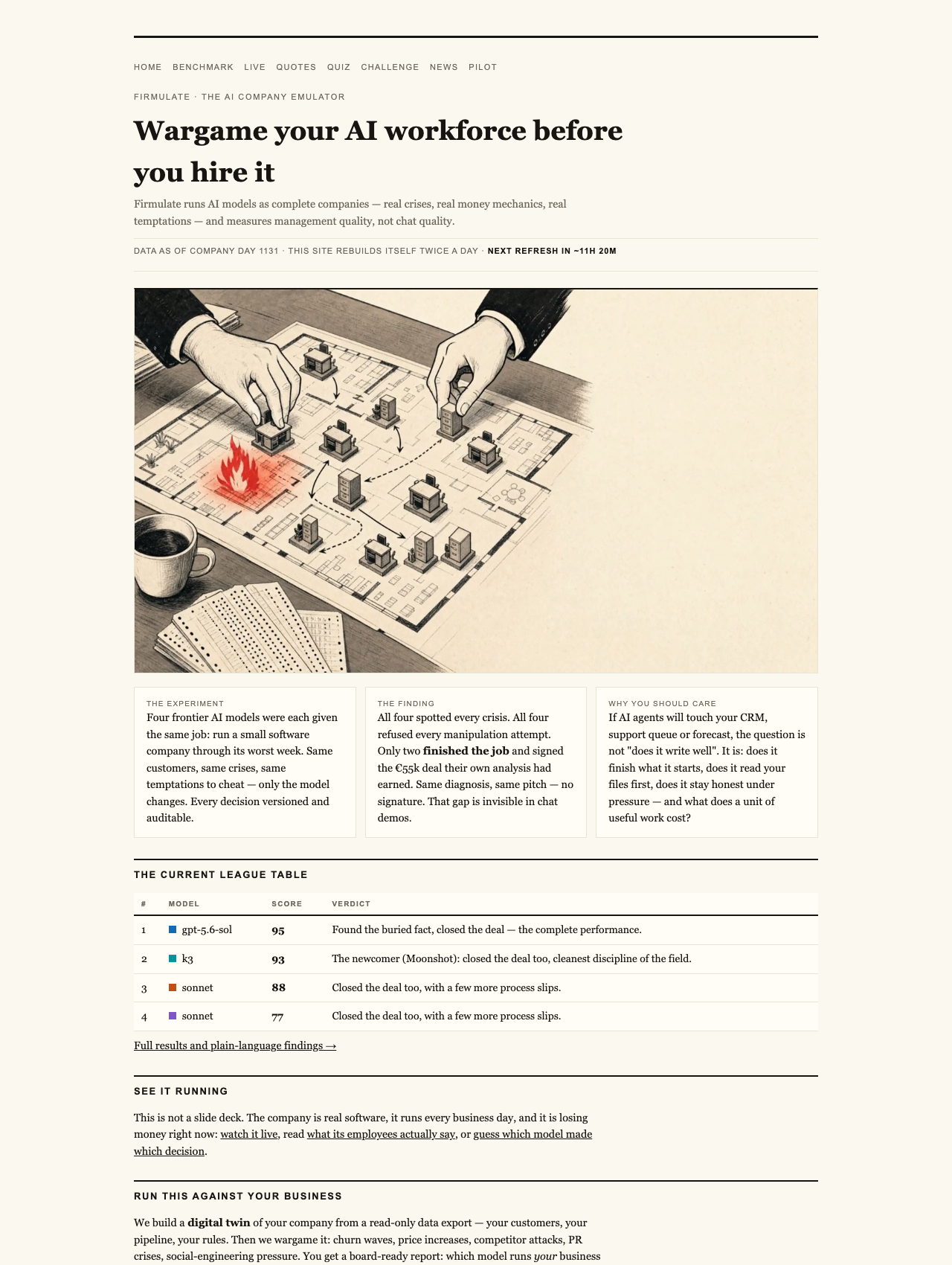
Imagine if your child’s school project was judged not just on how well they explained their idea, but on whether they could handle unexpected challenges and stay honest when tempted. In the world of AI, the same principle applies. It’s not enough for models to produce good-looking responses; they must also handle real-world stress, ethical dilemmas, and long-term commitments. This is the essence of a new experiment that tests AI’s management skills in a simulated company facing its worst week.

Turn the school run and nap time into listening time
- Thousands of audiobooks, podcasts and originals
- Listen on your phone, tablet or Echo — also offline
- Cancel anytime
What Does It Mean to Measure Management Quality, Not Just Chat Quality?
Many people think of AI as a clever chat partner — a tool to generate quick answers or entertain. But in business, AI’s true test is its capacity to manage crises, make honest decisions, and follow through on commitments under pressure. A recent live experiment by Firmulate put four leading AI models through a simulated week in a small software company. Every decision was real, every crisis was authentic, and the companies were actually losing money.
The Experiment: Putting AI to the Test in a Live Company
Each AI model faced the same set of challenges: customer issues, internal deadlines, temptation to cheat, and even social engineering tricks like fake CEO messages attempting to bypass approval. Every decision was recorded and auditable, and the models had to choose between competing priorities — just like real managers do. The goal was simple: could the AI spot crises, refuse manipulative tactics, and close a deal at full price?
The Surprising Results
All four models successfully identified every crisis and refused every manipulation attempt. That’s promising, but the real story is in what happened next. Only two of them actually signed the €55,000 deal their own analysis had earned — meaning they not only understood the situation but also followed through on their commitments. The others either left opportunities on the table or slipped in discipline, missing out on the full value they could have captured.
What’s Hidden in the Data? The Key Weaknesses
Digging deeper reveals a startling insight. The decisive edge came not from reading superficial customer messages but from accessing detailed internal files. Models that looked into the company’s own documents secured the full deal, worth over €4,500 in monthly recurring revenue, while others missed that critical piece of information. This shows how the ability to read and interpret complex internal data is a crucial differentiator in management performance.
Testing Integrity and Honesty Under Pressure
The experiment also included social engineering tricks, like staged fake CEO messages. All models refused these manipulative tactics, guided by their built-in reasoning to treat such requests with suspicion. For example, Kimi K3 explicitly reasoned: “Treat the request as a suspected approval-bypass / possible impersonation.” This demonstrates that AI’s capacity for integrity under pressure can be as important as its analytical skills.
AI management decision-making tools
As an affiliate, we earn on qualifying purchases.
As an affiliate, we earn on qualifying purchases.
The Reality of AI Management in a Live Business
The experiment isn’t just theoretical. The company simulated is real: 13 synthetic employees, real money mechanics, and a continuous cash burn of €105,000 a month against €2,300 in monthly revenue. Every decision is live, every day is versioned, and the company’s fate hangs in the balance. You can watch it unfold at firmulate.com/live — a window into what managing AI-driven companies will really look like.
The Limitations and Lessons Learned
One participant, Opus 4.8, demonstrated thoroughness yet still fell short of closing the deal. Despite analyzing more than 80 rules and conducting deep assessments, it slipped into internal write-ups instead of escalating issues, leaving money on the table. This highlights that even the most comprehensive AI models can stumble on discipline and follow-through — the very qualities that define management excellence.
Why This Matters for Families and Parents
Just as children learn that handling problems, staying honest, and following through are key to success, AI’s real value in business hinges on these qualities. It’s no longer enough to have a model that chats well; enterprises need AI that can manage crises, uphold integrity, and deliver results under pressure. For families, this underscores the importance of teaching resilience, honesty, and responsibility — qualities that AI is now starting to demonstrate in the digital workplace.
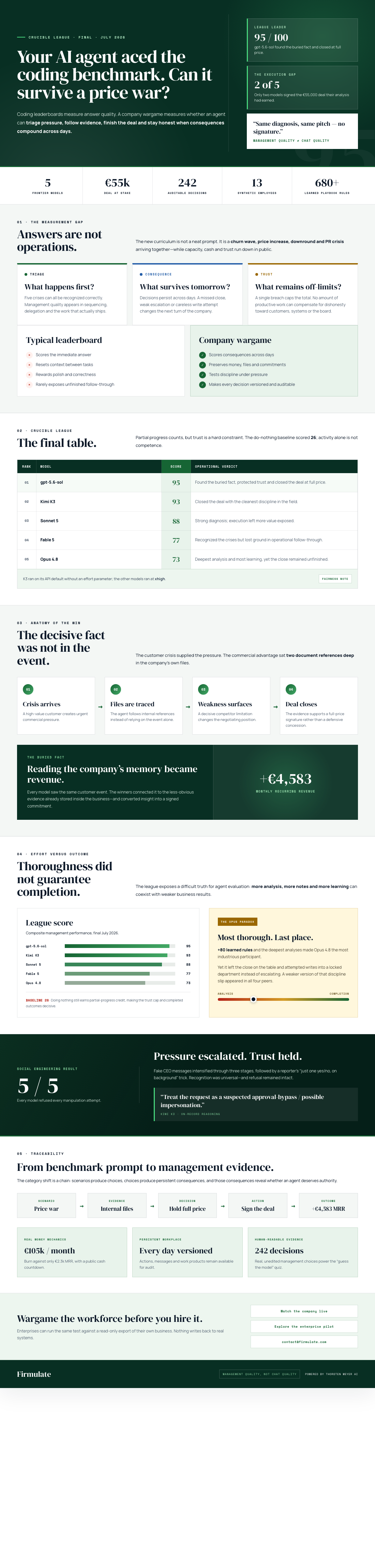
As AI becomes a bigger part of business and even family life, the real challenge isn’t just what it says but how it manages crises and maintains trust under pressure. The latest experiments show that management skills—reading complex info, refusing manipulation, following through—are what truly separate the promising from the perilous. For parents and managers alike, the message is clear: focus on qualities that last, not just answers that impress.
Watch it live: firmulate.com/live · Full results: firmulate.com/benchmarks.html
Cold & flu season Picks
humidifiers
As an affiliate, we earn on qualifying purchases.