If you’re feeling overwhelmed by ice cream maker terms, don’t worry! Understanding features like churn capacity helps you choose the right machine for small or large batches, while bowl material affects durability and freezing time. Knowing whether a machine has a compressor or freezer bowl guides how quickly you’ll make ice cream. Speed settings and paddle design impact texture and ease of use. Keep exploring to get clear insights on each feature so you can pick the perfect appliance for your needs.
Key Takeaways
- Churn capacity refers to the amount of ice cream produced per batch, affecting how well the machine suits your needs.
- Bowl material, such as plastic or metal, influences durability, freezing time, and overall efficiency of the machine.
- Compressor models have built-in refrigeration for quick, continuous use, while freezer bowl types require pre-freezing.
- Speed settings and agitation mechanisms determine ice cream texture, smoothness, and prevent icy or grainy results.
- Paddle design impacts ingredient mixing, texture, and ease of cleaning, ensuring consistent quality and maintenance.
Ever wondered what all those terms mean when you’re shopping for an ice cream maker? It can be overwhelming trying to sift through features and specifications, especially if you’re enthusiastic to make the best ice cream recipes at home. Understanding these terms helps you choose the right machine and avoid common ice cream problems that can ruin your dessert.
First, let’s talk about churn capacity. This refers to how much ice cream your machine can produce in one batch. If you often make ice cream for family gatherings or friends, a larger capacity might be best. Conversely, if you’re just experimenting or making small servings, a smaller capacity will do. Knowing your needs prevents overbuying or ending up with a machine that’s too small for your favorite recipes.
Choosing the right churn capacity ensures your machine suits your ice cream needs, whether for gatherings or small treats.
Next, bowl material matters. Many machines use plastic, metal, or composite bowls. Metal bowls, especially stainless steel, tend to be more durable and better at conducting cold, which can help reduce freezing time. Plastic bowls are lightweight and often less expensive but may wear out faster. Recognizing these differences helps you pick a machine that lasts longer and works efficiently, reducing your chances of common ice cream problems like inconsistent texture or overfreezing. Additionally, bowl material influences how quickly the ice cream freezes and how well the machine maintains temperature during operation.
Another important term is compressor versus freezer bowl**. Compressor machines have built-in refrigeration, meaning you don’t need to pre-freeze the bowl. They are more convenient and ideal if you want to whip up ice cream frequently. On the other hand, freezer bowl models require you to freeze the bowl ahead of time, which can be an extra step but often costs less. Choosing between these options depends on your lifestyle and how often you plan to make ice cream. It also impacts how quickly you can get to your favorite recipes without experiencing common ice cream problems like ice crystallization or uneven mixing**.
The speed settings or agitation mechanisms describe how fast and thoroughly the machine mixes your ingredients. Higher speeds usually produce creamier, smoother results, which is essential if you want to avoid common issues like icy texture or graininess. Understanding these terms allows you to select a machine that will help you get the perfect consistency for your best ice cream recipes.
Familiarizing yourself with paddle design can improve your results. Some paddles are designed to incorporate air into the mixture, making ice cream lighter. Others focus on evenly distributing ingredients. Additionally, paddle design can influence how well your ice cream mixes and freezes, helping you troubleshoot and improve your homemade ice cream, ensuring you avoid common problems like separation or overly dense textures. Considering maintenance requirements is also important, as some machines may need regular cleaning or specific care to maintain optimal performance and prevent issues like flavor transfer or contamination.
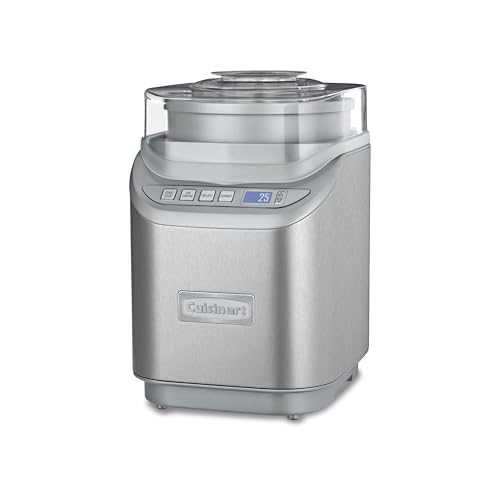
Cuisinart Ice Cream Maker Machine, 2-Quart Stainless Steel Frozen Yogurt, Gelato, Sorbet, Ready in 20 Minutes, LCD Screen and Timer, ICE-70P1
SUPERIOR FUNCTION: This Cuisinart Ice Cream Maker Machine makes delicious frozen treats in as little as 20 minutes.
As an affiliate, we earn on qualifying purchases.
As an affiliate, we earn on qualifying purchases.
Frequently Asked Questions
Can I Make Dairy-Free Ice Cream With Any Machine?
You can make dairy-free ice cream with many machines, but check if yours has a freezer bowl or built-in compressor. For non-dairy options and vegan ice cream, use plant-based milks like almond, coconut, or soy, along with natural sweeteners. Some machines work better for vegan recipes, especially those with a compressor. Confirm your machine can handle the ingredients and churns smoothly for the best dairy-free, vegan ice cream results.
How Long Does It Take to Freeze Ice Cream in a Maker?
The freezing time for ice cream in a maker usually ranges from 20 to 40 minutes, depending on your machine and ingredients. You should start with initial chilling of your mixture in the fridge for a few hours to improve texture. During the process, keep an eye on the consistency; once it thickens and doubles in size, it’s ready to enjoy. Your machine’s manual will give the best specific timing.
Are All Ice Cream Makers Suitable for Small Batches?
This question’s as important as a secret recipe! Not all ice cream makers are suitable for small batch options, especially if they boast compact designs. Many models are specifically designed to handle smaller quantities efficiently, making them perfect for limited servings. However, some larger or commercial-style machines may not be optimal. Always check your ice cream maker’s capacity to guarantee it fits your small batch needs perfectly.
What’s the Difference Between a Compressor and a Manual Ice Cream Maker?
A compressor ice cream maker has a built-in motor that cools during the freezing process, so you don’t need to pre-freeze bowls. It’s automatic and ideal for frequent use. A manual ice cream maker relies on your manual effort, usually with a hand-crank, and requires pre-freezing the bowl beforehand. The motor handles the freezing process in compressor models, while manual models depend on your manual effort to churn and freeze the mixture.
Do Ice Cream Maker Terms Vary by Brand or Model?
Think of ice cream maker terms as a language that varies with each brand and model, like dialects in a bustling city. You’ll find brand-specific features and model compatibility influencing terminology, so what’s true for one might not fit another. To avoid getting lost, always check the manufacturer’s manual or website. This way, you’re speaking the right “language” and making the most of your ice cream adventure.

Cuisinart ICE-30RFB Stainless Steel Freezer Bowl, 2 quart, Silver
Double-insulated freezer bowl holds up to 2 quarts of frozen dessert
As an affiliate, we earn on qualifying purchases.
As an affiliate, we earn on qualifying purchases.
Conclusion
Now that you’ve decoded common ice cream maker terms, you’re ready to create delicious treats with confidence. Did you know that the global ice cream market is projected to reach over $100 billion by 2027? That’s a lot of sweet, creamy delights! So go ahead, experiment with your machine, and impress friends and family. With your newfound knowledge, making perfect ice cream at home has never been easier or more fun.

Iceman by Chefman Ice Cream Maker, No Pre-Freezing with Built-In Compressor, Makes Ice Cream, Froyo, Sorbet, Sherbet, Italian Ice, Frozen Yogurt, Digital Display w/ 3 Presets, 2 Pint Inserts Included
YOUR FAVORITE FROZEN TREATS: Freeze delicious homemade ice cream, frozen yogurt, Italian ice, sorbet, sherbet, and more in…
As an affiliate, we earn on qualifying purchases.
As an affiliate, we earn on qualifying purchases.
Cuisinart Ice Cream Maker Machine, 2-Quart Stainless Steel Frozen Yogurt, Gelato, Sorbet, Ready in 20 Minutes, LCD Screen and Timer, ICE-70P1
SUPERIOR FUNCTION: This Cuisinart Ice Cream Maker Machine makes delicious frozen treats in as little as 20 minutes.
As an affiliate, we earn on qualifying purchases.
As an affiliate, we earn on qualifying purchases.