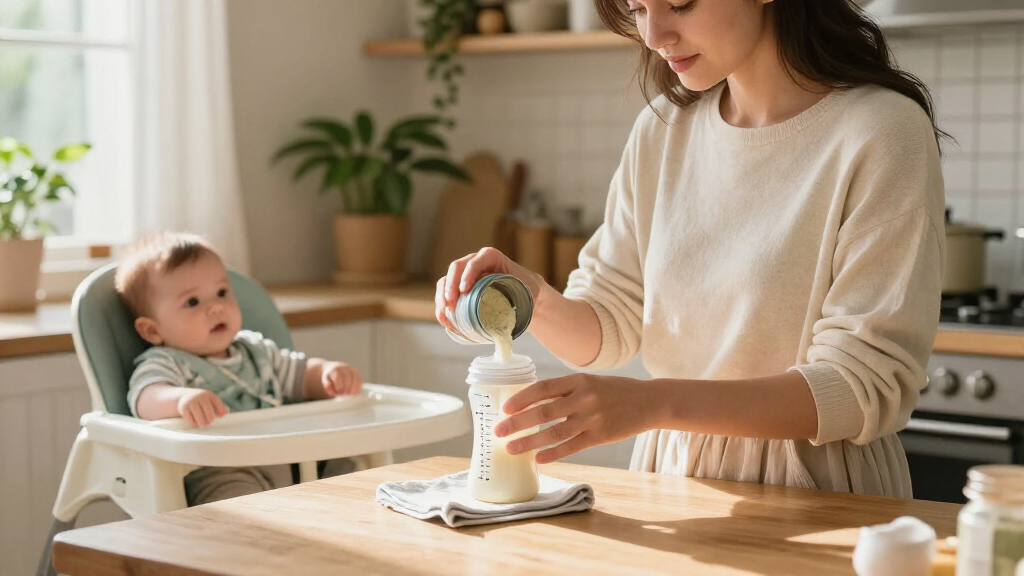
For families comparing the best organic baby formulas, I’d start with Earth’s Best Organic Dairy Infant Formula as the best overall choice for its broad availability and standard milk-based profile. Bobbie Organic Infant Formula stands out for families seeking a premium organic option, while Similac Organic Ready-to-Feed offers convenience when mixing powder is impractical. The main tradeoffs are age-stage fit, standard versus specialty formulas, milk source, and powder versus ready-to-feed packaging. Organic certification alone does not determine which formula suits a baby, and specialized feeding needs call for guidance from a pediatric clinician. Read on for the full breakdown and help matching each option to your priorities.

Give the gift of listening to the whole family
- Choose a 1-, 3-, 6- or 12-month membership
- They pick the audiobooks they love
- Easy to send by email
Complete the kit


Key Takeaways
- Earth’s Best Organic Dairy earns the overall lead for shoppers seeking a standard organic, milk-based powder; its Gentle and Sensitivity variants serve different needs and should not be treated as interchangeable.
- Happy Baby’s three Stage 1 listings give families a choice of package size and A2 formulation, while the Stage 2 product is specifically labeled for older infants.
- Bobbie’s six-pack is the clearest bulk-buy option in this lineup, but a multi-can purchase makes less sense before a baby has accepted the formula.
- Bubs Grass Fed and Bubs Goat Milk differ by milk source, not just branding; goat-milk formula is not automatically a solution for cow’s-milk protein allergy.
- Similac Ready-to-Feed trades the flexibility of powder for pre-portioned convenience, while the powder option is more suited to households that regularly prepare bottles.
| Bubs 365 Day Grass Fed Infant Formula, 0–12 Months, 20 oz |  | Best for Grass-Fed Whole Milk | Age range: 0–12 months | Net weight: 20 oz | Form: Powder | VIEW LATEST PRICE | See Our Full Breakdown |
| Happy Baby Organic Stage 2 Infant Formula, 6–12 Months, 22.9 oz |  | Best for Organic Stage 2 Feeding | Stage: 2 | Age range: 6 months and older | Weight: 22.9 oz | VIEW LATEST PRICE | See Our Full Breakdown |
| Happy Baby Organics Stage 1 Infant Formula, 0–12 Months, 14.1 oz |  | Best for a Smaller Stage 1 Container | Stage: 1 | Age range: 0–12 months | Net weight: 14.1 oz | VIEW LATEST PRICE | See Our Full Breakdown |
| Earth’s Best Organic Dairy Infant Formula with Iron, DHA and ARA, 0–12 Months, 32 oz |  | Best for a Larger First-Year Supply | Product type: Dairy-based powdered infant formula | Age range: 0–12 months | Net weight: 32 oz | VIEW LATEST PRICE | See Our Full Breakdown |
| Earth’s Best Organic Sensitivity Infant Formula with Iron, DHA and ARA, 32 oz |  | Best Reduced-Lactose Pick | Product type: Reduced-lactose powdered infant formula | Age range: 0–12 months | Container size: 32 oz | VIEW LATEST PRICE | See Our Full Breakdown |
| Earth’s Best Organic Gentle Infant Formula with Iron, Milk-Based Powder, 21 oz |  | Best for Sensitive Tummies | Product type: Milk-based infant formula powder | Net weight: 21 oz | Prepared yield: Approximately 154 fl oz | VIEW LATEST PRICE | See Our Full Breakdown |
| Bobbie Organic Infant Formula, Milk-Based Powder, 24 oz, 6-Pack |  | Best for Stocking Up | Product type: Milk-based infant formula powder | Net weight: 24 oz per container | Pack size: 6 containers | VIEW LATEST PRICE | See Our Full Breakdown |
| Bubs Whole Goat Milk Infant Formula, 0–12 Months, Non-GMO, 20 oz |  | Best Goat-Milk Option | Age range: 0–12 months | Net weight: 20 oz | Milk source: Whole goat milk | VIEW LATEST PRICE | See Our Full Breakdown |
| Happy Baby Organic Stage 1 Infant Formula, 0–12 Months, 22.9 oz |  | Best for Prebiotic and Probiotic Support | Stage: 1 | Age range: 0–12 months | Net weight: 22.9 oz | VIEW LATEST PRICE | See Our Full Breakdown |
| Happy Baby Organic Stage 1 A2 Infant Formula, 0–12 Months, 22.9 oz |  | Best Organic A2 Formula | Stage: 1 | Age range: 0–12 months | Net weight: 22.9 oz | VIEW LATEST PRICE | See Our Full Breakdown |
| Similac USDA-Certified Organic Infant Formula Powder |  | Best Organic Powder for Flexible Feeding | Form: Powder | Organic certification: USDA-Certified Organic | Intended use: Complete or partial breast milk substitute for a baby’s first year | VIEW LATEST PRICE | See Our Full Breakdown |
| Similac Organic Ready-to-Feed Infant Formula, 2 fl oz Bottles, Pack of 8 |  | Best Organic Ready-to-Feed for On-the-Go Bottles | Form: Ready-to-feed liquid | Bottle size: 2 fl oz | Pack size: 8 bottles | VIEW LATEST PRICE | See Our Full Breakdown |
| organic baby formula | Age range | Net weight |
|---|---|---|
| Bubs 365 Day Grass Fed Infant | 0–12 months | 20 oz |
| Happy Baby Organic Stage 2 Inf | 6 months and older | — |
| Happy Baby Organics Stage 1 In | 0–12 months | 14.1 oz |
| Earth’s Best Organic Dairy Inf | 0–12 months | 32 oz |
| Earth’s Best Organic Sensitivi | 0–12 months | — |
| Earth’s Best Organic Gentle In | — | 21 oz |
| Bobbie Organic Infant Formula | 0–12 months; full-term infants | 24 oz per container |
| Bubs Whole Goat Milk Infant Fo | 0–12 months | 20 oz |
| Happy Baby Organic Stage 1 Inf | 0–12 months | 22.9 oz |
| Happy Baby Organic Stage 1 A2 | 0–12 months | 22.9 oz |
| Similac USDA-Certified Organic | — | — |
| Similac Organic Ready-to-Feed | — | — |
More Details on Our Top Picks
Bubs 365 Day Grass Fed Infant Formula, 0–12 Months, 20 oz
Whole milk from grass-fed cows gives this Australian-made formula a distinct profile among the organic-focused choices here. It is designed for birth through 12 months and includes DHA, ARA, prebiotics, probiotics, and 16 essential vitamins and minerals. Compared with Earth’s Best Organic Dairy Infant Formula, Bubs emphasizes milk from cows fed grass year-round, while Earth’s Best offers a larger 32 oz container and lists iron and lutein among its fortified nutrients. Bubs is a strong fit for families who prioritize its stated milk source and combined prebiotic-probiotic blend. The tradeoff is practical: once opened, the powder should be used within a month, and prepared formula needs refrigeration and use within 24 hours. It is also powdered, so each feed requires mixing.
Pros:- Made with whole milk from 365-day grass-fed cows
- Includes DHA, ARA, prebiotics, probiotics, and 16 essential vitamins and minerals
- Made without GMOs, corn syrup, artificial colors, flavors, or preservatives
Cons:- Opened powder should be used within one month
- Prepared formula must be refrigerated and used within 24 hours
- Requires measuring and mixing with water for each preparation
Best for: Families seeking a whole-milk formula made with year-round grass-fed cow’s milk and a prebiotic-probiotic blend for babies from birth to 12 months.
Not ideal for: Caregivers who need ready-to-feed convenience or prefer a larger container with a longer opened-powder window; the 20 oz can should be used within a month of opening.
- Age range:0–12 months
- Net weight:20 oz
- Form:Powder
- Milk source:Whole milk from 365-day grass-fed cows
- Key nutrients:Omega-3 DHA, omega-6 ARA, 16 essential vitamins and minerals
- Additional ingredients:Prebiotics and probiotics
- Made in:Australia
- Preparation ratio:1 level scoop per 2 fl oz of water
- Storage after opening:Use within 1 month; prepared formula refrigerated and used within 24 hours
Our verdict“Choose Bubs if year-round grass-fed whole milk is your priority and you can work with its short opened-powder window.”
Happy Baby Organic Stage 2 Infant Formula, 6–12 Months, 22.9 oz
USDA and EU organic certification sets this Stage 2 formula apart for families choosing an organic option after six months. Its age-specific nutrient profile includes DHA, with a patented prebiotic and probiotic blend, and the product is made in Europe without added corn syrup. Compared with Happy Baby Organics Stage 1 Infant Formula, this version is aimed at older infants rather than babies from birth, so it is not a single-stage choice for the whole first year. That narrower age range is useful when you specifically want a formula labeled for babies six months and older, but it means it is not suitable for younger infants. The package may also contain either the previous or updated version during a formula update, so buyers should check the label and preparation directions on the container they receive.
Pros:- USDA and EU certified organic
- Includes DHA and a patented prebiotic-probiotic blend
- Nutrients are tailored for babies six months and older
- Made without added corn syrup and with non-GMO ingredients
Cons:- Not intended for babies younger than six months
- Formula update means the package may contain either the previous or updated version
Best for: Families with babies at least six months old who want a certified-organic Stage 2 powder with DHA and a prebiotic-probiotic blend.
Not ideal for: Caregivers shopping for a newborn or a formula intended from birth; this product is labeled for babies six months and older.
- Stage:2
- Age range:6 months and older
- Weight:22.9 oz
- Organic certifications:USDA and EU certified
- Prebiotics and probiotics:Patented blend
- DHA:At least 0.3% of fatty acids
- Made in:Europe
- Ingredients and exclusions:Non-GMO; no added corn syrup
Our verdict“Pick this Stage 2 option for an older infant when organic certification and its digestive-ingredient blend matter more than birth-to-one-year coverage.”
Happy Baby Organics Stage 1 Infant Formula, 0–12 Months, 14.1 oz
Birth-to-12-month coverage makes this Stage 1 powder more flexible than Happy Baby’s Stage 2 formula, which is intended for babies six months and older. It combines USDA and EU organic certification with DHA and a prebiotic-probiotic blend, and the updated formula is made without palm oil. That gives it a clear role for caregivers seeking an organic option across the first year, especially if avoiding palm oil in the updated version is a priority. Compared with Earth’s Best Organic Dairy Infant Formula, this package is smaller at 14.1 oz, so it may suit households that prefer a smaller container, but it offers less formula per package. A transition between versions adds uncertainty: the package received may contain the previous or updated formula, so check its label rather than assuming every container reflects the new recipe.
Pros:- USDA and EU certified organic
- Suitable for babies from birth to 12 months
- Includes DHA and a prebiotic-probiotic blend
- Updated formula is made without palm oil
Cons:- The package may contain either the previous or updated version during the formula change
- 14.1 oz container provides less formula per package than Earth’s Best’s 32 oz option
Best for: Caregivers seeking a certified-organic Stage 1 powder for birth through 12 months, particularly those who prefer the updated palm-oil-free formula.
Not ideal for: Families who want a larger container or need certainty about which formula version will arrive; this 14.1 oz pack is smaller than Earth’s Best’s 32 oz container and may be part of a formula update.
- Stage:1
- Age range:0–12 months
- Net weight:14.1 oz
- Pack size:1
- Organic certifications:USDA and EU certified
- Prebiotics and probiotics:Included
- DHA:Included
- Made in:Europe
- Palm oil:Removed from updated formula
Our verdict“Choose this Happy Baby Stage 1 powder for first-year organic coverage in a smaller package, while checking which formula version you receive.”
Earth’s Best Organic Dairy Infant Formula with Iron, DHA and ARA, 0–12 Months, 32 oz
32 oz of organic dairy powder makes this the larger-container choice among the Earth’s Best formulas in this batch. It is designed for babies from birth to 12 months and includes iron, DHA, ARA, lutein, and prebiotics. The formula uses organic milk from grass- and grain-fed cows and contains no added corn syrup. Compared with Earth’s Best Organic Sensitivity Infant Formula, this is the standard dairy-based option rather than a reduced-lactose formula; that distinction matters if you are specifically seeking the sensitivity formulation. Its larger package can mean fewer container changes for families using it regularly, and the listed prepared yield is approximately 155 fl oz. The tradeoffs are that it still needs water and mixing, and its dairy base may not fit babies with dairy-related dietary restrictions.
Pros:- 32 oz container with approximately 155 fl oz prepared yield
- Includes iron, DHA, ARA, lutein, and prebiotics
- Made with organic milk from grass- and grain-fed cows
- No added corn syrup; container includes preparation instructions
Cons:- Dairy-based formula may not suit babies with dairy-related dietary restrictions
- Powder must be measured and mixed with water before feeding
Best for: Families seeking a larger-container organic dairy powder for a baby’s first year, with iron, DHA, ARA, lutein, and prebiotics.
Not ideal for: Caregivers seeking reduced-lactose formula or an option for a baby with dairy-related dietary restrictions; this is a standard dairy-based formula.
- Product type:Dairy-based powdered infant formula
- Age range:0–12 months
- Net weight:32 oz
- Key nutrients:Iron, omega-3 DHA, omega-6 ARA, lutein, prebiotics
- Milk source:Organic milk from grass- and grain-fed cows
- Added corn syrup:None
- Prepared yield:Approximately 155 fl oz
- Preparation:Powder mixed with water according to container instructions
Our verdict“Choose Earth’s Best Organic Dairy for a larger first-year supply if a standard dairy formula, rather than a reduced-lactose option, fits your needs.”
Earth’s Best Organic Sensitivity Infant Formula with Iron, DHA and ARA, 32 oz
Reduced lactose is the defining difference here: this organic powder is designed for babies with sensitive stomachs, while Earth’s Best Organic Dairy Infant Formula is the standard dairy-based option. Both are made with organic milk from grass- and grain-fed cows and include DHA and ARA, but this sensitivity formula also lists iron, lutein, and prebiotics. Its 32 oz container is specified to make approximately 236 fl oz when prepared as directed, making the stated yield a notable distinction from the standard Earth’s Best formula’s approximately 155 fl oz. That yield may appeal to families who expect to use this formulation regularly. It is not lactose-free, however, and it remains a powdered formula that must be mixed with water. Buyers looking for a ready-to-feed product or a formula explicitly described as lactose-free should look elsewhere.
Pros:- Reduced-lactose formula developed for babies with sensitive stomachs
- Includes iron, lutein, prebiotics, DHA, and ARA
- 32 oz container with approximately 236 fl oz prepared yield
- Can supplement breastfeeding or serve as primary nutrition during the first year
Cons:- Reduced lactose does not mean lactose-free
- Powder requires preparation with water before feeding
Best for: Caregivers seeking an organic reduced-lactose powder for a baby with sensitivity-related feeding concerns, and who want a 32 oz container.
Not ideal for: Families who need a lactose-free or ready-to-feed formula; this product is reduced-lactose and requires mixing with water.
- Product type:Reduced-lactose powdered infant formula
- Age range:0–12 months
- Container size:32 oz
- Prepared yield:Approximately 236 fl oz
- Key nutrients:Iron, lutein, prebiotics, omega-3 DHA, omega-6 ARA
- Milk source:Organic milk from grass- and grain-fed cows
- Preparation:Mix with water according to the container instructions
Our verdict“Choose this formula over Earth’s Best’s standard dairy option when reduced lactose is the specific feature you need, while noting that it is not lactose-free.”
Earth’s Best Organic Gentle Infant Formula with Iron, Milk-Based Powder, 21 oz
Partially hydrolyzed whey gives this organic milk-based formula a different focus from standard options such as Bobbie Organic Infant Formula, which uses intact milk proteins. That makes Earth’s Best Gentle a candidate for families seeking a formula designed for easier digestion, while still providing iron, DHA, ARA, lutein, and prebiotics. It can serve as a primary nutrition source during the first year or supplement breastfeeding, so it suits more than one feeding plan.
The tradeoff is that “gentle” does not make it suitable for every dietary need, and it still requires mixing with water. Its 21-ounce container yields about 154 fluid ounces, less prepared formula than Bobbie’s six-container pack offers overall. I’d choose this for the hydrolyzed-protein feature, not as a substitute for medical guidance about feeding intolerance.
Pros:- Made with organic milk
- Partially hydrolyzed whey is designed to be easier to digest
- Includes iron, DHA, ARA, lutein, and prebiotics
- Can be used as primary nutrition or to supplement breastfeeding during the first year
Cons:- Requires careful preparation with water before feeding
- Milk-based ingredients may not fit every baby’s dietary needs
- The 21-ounce container yields about 154 fluid ounces, so it may need replacing sooner than larger packages
Best for: Caregivers seeking an organic, milk-based formula with partially hydrolyzed whey for a baby whose feeding plan calls for a gentle-style option.
Not ideal for: Families who need a non-milk-based formula or a ready-to-feed option, or who have been advised to avoid this formula’s ingredients.
- Product type:Milk-based infant formula powder
- Net weight:21 oz
- Prepared yield:Approximately 154 fl oz
- Milk source:Organic milk from grass- and grain-fed cows
- Protein:Partially hydrolyzed whey
- Added nutrients:Iron, DHA, ARA, lutein, and prebiotics
- Use:For the first year; may supplement breastfeeding or serve as primary nutrition
Our verdict“Choose Earth’s Best Gentle if partially hydrolyzed whey is the priority, but look elsewhere for a non-milk-based or ready-to-feed formula.”
Bobbie Organic Infant Formula, Milk-Based Powder, 24 oz, 6-Pack
Six 24-ounce containers make Bobbie a practical pick for caregivers who want a multi-container supply of organic formula on hand. Its 100% lactose carbohydrate source and 60:40 whey-to-casein ratio set it apart from Earth’s Best Organic Gentle, which uses partially hydrolyzed whey for a different protein approach. Bobbie also includes choline and DHA, and its soy-free plant-based fat blend avoids several ingredients some families prefer to leave out.
Independent testing for heavy metals and contaminants adds useful product-specific information, alongside USDA Organic and EU Organic equivalency certifications. The tradeoffs are that this powder still needs preparation and is specified for full-term infants aged 0–12 months, not every feeding situation. It is a better match for families seeking a larger supply of standard milk-based formula than for those specifically looking for hydrolyzed proteins or a goat-milk option.
Pros:- Six 24-ounce containers provide a sizable supply
- Uses lactose as its sole carbohydrate source
- Made with organic milk from grass-fed cows and a soy-free fat blend
- Includes choline and DHA and is independently tested for heavy metals and contaminants
Cons:- Powder requires preparation before feeding
- Specified for full-term infants from birth to 12 months
- The multi-container pack may be less convenient for families who want to try a smaller quantity first
Best for: Families feeding a full-term infant who want a multi-container supply of organic, lactose-based milk formula and value independent contaminant testing.
Not ideal for: Caregivers seeking a single small container, a ready-to-feed product, or a formula specifically made with hydrolyzed proteins or goat milk.
- Product type:Milk-based infant formula powder
- Net weight:24 oz per container
- Pack size:6 containers
- Age range:0–12 months; full-term infants
- Carbohydrate source:100% lactose
- Whey-to-casein ratio:60:40
- DHA:20 mg per 100 kcal
- Certifications and testing:USDA Organic, EU Organic equivalency, Clean Label Project Certified; independently tested for heavy metals and contaminants
- Free from:Soy, corn syrup, palm oil, and maltodextrin
Our verdict“Bobbie is a strong fit for full-term infants when a larger supply, lactose-based recipe, and contaminant testing matter more than a gentle or goat-milk formulation.”
Bubs Whole Goat Milk Infant Formula, 0–12 Months, Non-GMO, 20 oz
Whole goat milk and A2 protein make Bubs distinct from the cow’s-milk recipes in this group, including Bobbie Organic Infant Formula and Happy Baby Organic Stage 1 A2. That distinction may appeal to families seeking a goat-milk formula, though it does not establish that the product will suit a baby with a milk allergy or any specific digestive concern. The recipe includes DHA, ARA, omega-3, omega-6, and GOS prebiotics, and it is made in Australia.
The 20-ounce can is smaller than Happy Baby’s 22.9-ounce container, and the storage directions call for using opened powder within one month. Preparation and storage also need close attention: the stated ratio is one level scoop per two fluid ounces of water, and mixed formula has a limited storage window. I’d favor this for its goat-milk base, not for families seeking a certified-organic claim, which the supplied product details do not list.
Pros:- Made with whole goat milk and A2 protein
- Includes DHA, ARA, omega-3, omega-6, and GOS prebiotics
- Made without GMOs, corn syrup, artificial colors, flavors, or preservatives
- Manufactured and tested in Australia
Cons:- Opened powder should be used within one month
- Requires careful mixing and timely handling of prepared formula
- At 20 ounces, the container is smaller than Happy Baby Stage 1’s 22.9-ounce package
Best for: Caregivers specifically seeking a whole-goat-milk infant formula with A2 protein for a baby from birth to 12 months.
Not ideal for: Families who require a formula explicitly listed as USDA Organic, need a larger container, or want a product that avoids milk proteins.
- Age range:0–12 months
- Net weight:20 oz
- Milk source:Whole goat milk
- Protein:A2 protein
- Nutrients:DHA, ARA, omega-3, omega-6, and GOS prebiotics
- Country of manufacture:Australia
- Preparation ratio:1 level scoop per 2 fl oz of water
- Storage after opening:Use within 1 month; store in a cool, dry place
- Storage after mixing:Feed immediately or refrigerate in a sealed container and use within 24 hours
Our verdict“Choose Bubs for a goat-milk and A2-protein recipe, but not if an explicitly listed organic certification or a longer opened-container window is your priority.”
Happy Baby Organic Stage 1 Infant Formula, 0–12 Months, 22.9 oz
A patented probiotic and prebiotic blend gives this Stage 1 formula a clear point of difference from Bobbie Organic Infant Formula, whose listed benefits center on its milk source, lactose, and testing rather than a stated probiotic-prebiotic blend. Happy Baby also carries USDA and EU organic certifications and includes DHA at a level described as meeting European requirements. Its birth-to-12-month age range makes it a straightforward single-stage option for families who want one formula for the first year.
The 22.9-ounce container is close in size to Happy Baby Stage 1 A2, but this version does not list A2 milk as a defining feature. There is also a packaging caveat: during the palm-oil removal update, a buyer may receive the previous or updated formula. That variability makes it less predictable than choosing a formula with a settled recipe, even though the updated version is made without added corn syrup or palm oil.
Pros:- USDA and EU certified organic
- Includes a patented blend of probiotics and prebiotics
- DHA level is described as meeting European requirements
- Updated formula is made without added corn syrup or palm oil
Cons:- Packaging may contain the previous or updated formula during the recipe change
- The product description does not identify A2 milk as a feature
- Powder requires preparation before feeding
Best for: Caregivers seeking a USDA- and EU-certified organic Stage 1 formula with a listed probiotic-prebiotic blend for babies from birth to 12 months.
Not ideal for: Families who want a guaranteed specific version of the updated recipe or who specifically prefer an A2-milk formula such as Happy Baby Stage 1 A2.
- Stage:1
- Age range:0–12 months
- Net weight:22.9 oz
- Pack size:1
- Certifications:USDA Organic and EU Organic
- Probiotics and prebiotics:Patented blend
- DHA:At least 0.3% of fatty acids
- Made in:Europe
- Formula update:Palm oil removed; previous or updated formula may be received during the change
Our verdict“Pick this Stage 1 formula for its organic certifications and probiotic-prebiotic blend, but skip it if you need certainty about which version will arrive.”
Happy Baby Organic Stage 1 A2 Infant Formula, 0–12 Months, 22.9 oz
A2 milk plus a 60:40 whey-to-A2 beta-casein blend gives this Happy Baby formula a specific protein profile that the standard Happy Baby Stage 1 does not list. It also includes probiotics, prebiotics, and DHA, with USDA and EU organic certifications. Compared with Earth’s Best Organic Gentle, which uses partially hydrolyzed whey, this is a different approach: A2 protein is the defining feature, not protein hydrolysis.
Its 22.9-ounce size matches the standard Happy Baby Stage 1 package, so the decision is chiefly about the stated milk-protein profile rather than container size. The product is made in Europe and carries Clean Label Project certification. One drawback is recipe uncertainty: the supplied details warn that packaging or ingredients may vary during the palm-oil removal change. I’d select it for the A2 formulation, while checking the package details rather than assuming every container reflects the same version.
Pros:- Made with A2 milk and a stated 60:40 whey-to-A2 beta-casein blend
- USDA and EU certified organic
- Includes probiotics, prebiotics, and DHA
- Clean Label Project Certified and made without added corn syrup
Cons:- Packaging or ingredients may vary during the palm-oil removal change
- Milk-based and not described as a partially hydrolyzed formula
- Requires preparation as a powder
Best for: Caregivers seeking a certified-organic Stage 1 formula with A2 milk, a stated whey-to-A2 beta-casein ratio, and added probiotics and prebiotics.
Not ideal for: Families who prefer partially hydrolyzed proteins, need a guaranteed unchanged recipe, or are looking for a non-milk-based formula.
- Stage:1
- Age range:0–12 months
- Net weight:22.9 oz
- Milk type:A2
- Protein blend:60:40 whey to A2 beta-casein
- Certifications:USDA Organic, EU Organic, and Clean Label Project Certified
- Added ingredients:Probiotics, prebiotics, and DHA
- Made in:Europe
- Free from:Added corn syrup, artificial growth hormones, and antibiotics
Our verdict“Choose Happy Baby Stage 1 A2 when its specified A2 protein blend is your priority, and choose the standard Stage 1 if you do not need that distinction.”
Similac USDA-Certified Organic Infant Formula Powder
Similac Organic Powder suits families who want a USDA-certified organic formula they can use for full or partial feeding throughout a baby’s first year. Its DHA, lutein, and vitamin E provide a nutrient profile that also appears in the ready-to-feed Similac option, while powder makes more sense for caregivers who routinely prepare bottles at home. The formula is made without palm olein oil or corn syrup, and is described as easy to digest. Compared with Similac Organic Ready-to-Feed, this version requires measuring and mixing, so it is less convenient when a bottle is needed immediately. The tradeoff is a format that better fits planned, repeat feeding but adds preparation steps. It is not suitable for infants or children with galactosemia.
Pros:- USDA-certified organic
- Suitable for complete or partial feeding during a baby’s first year
- Includes DHA, lutein, and vitamin E
- Made without palm olein oil, corn syrup, or artificial growth hormones
Cons:- Requires measuring and mixing before feeding
- Not suitable for infants or children with galactosemia
Best for: Families seeking USDA-certified organic powder for regular home bottle preparation, including those combining formula with breast milk.
Not ideal for: Caregivers who need bottles ready without measuring or mixing, or families feeding an infant or child with galactosemia.
- Form:Powder
- Organic certification:USDA-Certified Organic
- Intended use:Complete or partial breast milk substitute for a baby’s first year
- Key nutrients:DHA, lutein, and vitamin E
- Free from:Palm olein oil, corn syrup, and artificial growth hormones
- GMO status:Non-GMO
Our verdict“Choose this powder if you want an organic Similac formula for planned home preparation and do not need the convenience of ready-to-feed bottles.”
Similac Organic Ready-to-Feed Infant Formula, 2 fl oz Bottles, Pack of 8
Similac Organic Ready-to-Feed is the convenience pick for caregivers who want an organic formula without mixing a bottle at feeding time. Its 2 fl oz bottles offer a ready-to-feed format for situations where carrying powder and preparing it is less practical. Like Similac USDA-Certified Organic Infant Formula Powder, it is USDA-certified organic, includes DHA, lutein, and vitamin E, and is made without palm olein oil or corn syrup. The distinction is convenience: this liquid skips preparation, while the powder is better suited to households that prefer mixing bottles as needed. The pack contains eight small bottles, so it may be less fitting for families seeking a larger-volume format. It is not suitable for infants or children with galactosemia.
Pros:- Ready to feed with no mixing required
- USDA-certified organic
- Includes DHA, lutein, and vitamin E
- Made without palm olein oil, corn syrup, or artificial growth hormones
Cons:- Limited to 2 fl oz bottles in a pack of eight
- Not suitable for infants or children with galactosemia
Best for: Caregivers who want small, ready-to-feed organic bottles for outings, travel, or times when mixing formula is inconvenient.
Not ideal for: Families who prefer powder preparation or need a format other than eight 2 fl oz bottles; not suitable for infants or children with galactosemia.
- Form:Ready-to-feed liquid
- Bottle size:2 fl oz
- Pack size:8 bottles
- Organic certification:USDA-certified organic
- Key nutrients:DHA, lutein, and vitamin E
- Dietary notes:Non-GMO; made without palm olein oil, corn syrup, or artificial growth hormones
- Intended use:Complete or partial breast milk substitute for a baby’s first year
Our verdict“Pick this ready-to-feed option when skipping bottle preparation matters more than having a powder format for regular home use.”
How We Picked
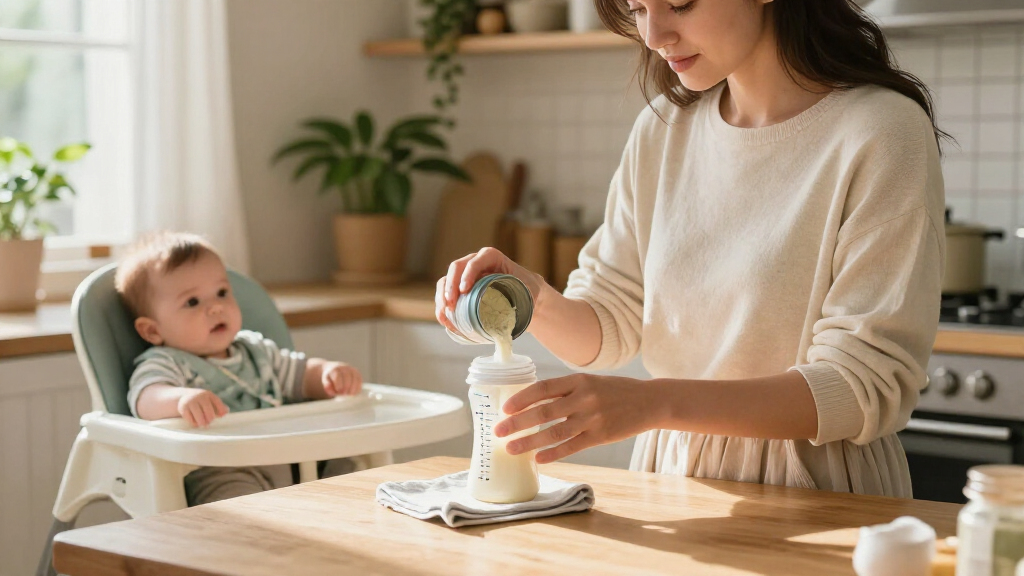
I compared the 12 listed products by the factors that change a family’s day-to-day choice: labeled age range, milk source, standard or specialty positioning, powder or ready-to-feed format, and package configuration. I also considered how clearly a product fits a common buyer need, such as finding a stage-specific formula, trying an alternative milk source, or preparing bottles away from home. Organic status was a starting point for this roundup, not a reason to assume that formulas are nutritionally or clinically interchangeable.
The ranking favors options with a clear role for a broad set of families, then places more specialized or format-specific choices where they make the most sense. Earth’s Best standard dairy formula leads as a straightforward starting point; Bobbie and Bubs offer more distinct premium or milk-source alternatives, while the Happy Baby and Similac options add stage and preparation choices. I treat the Sensitivity, Gentle, goat-milk, and ready-to-feed products as targeted alternatives rather than automatic upgrades. Always check the current label and consult a pediatric clinician about age suitability, allergy concerns, or formula changes.
Factors to Consider When Choosing Best Organic Baby Formulas
Organic is only one part of the decision. I’d narrow the field by checking the baby’s age, any feeding concerns, how bottles are prepared at home, and how much product you can reasonably use before opening another container.
Match the label to your baby’s age
Age-stage labels are not decoration: they identify the age range for which a product is marketed. This roundup includes several 0–12 month Stage 1 options and a Happy Baby Stage 2 product labeled for 6–12 months. Do not assume a Stage 2 formula is the natural next step for every baby at six months; ask the child’s clinician whether changing products makes sense. Likewise, a Stage 1 listing with a different package size is not a different age stage. Read the current can or bottle label rather than relying on an old listing or a product name alone.
Separate standard formulas from specialty options
Gentle and Sensitivity formulas are marketed for particular feeding concerns, but those names do not diagnose the cause of fussiness, gas, or stool changes. A baby with persistent symptoms may need clinical assessment rather than repeated formula switching. Check the exact ingredient and protein details on the package, since similarly named specialty products can differ in formulation. Do not use a specialty option as a substitute for medical advice about suspected allergy or intolerance. If a clinician recommends a change, ask how to introduce it and what signs should prompt follow-up.
Choose a milk source for a clear reason
This lineup includes standard cow’s-milk-based options, grass-fed positioning, A2 labeling, and a goat-milk formula. Those distinctions can matter to a family’s preferences, but they do not establish that one formula will be easier to digest or better for a particular baby. In particular, goat-milk formula is not automatically appropriate for a baby with cow’s-milk protein allergy, because proteins can be similar. A2 labeling also should not be treated as a treatment claim. Ask a pediatric clinician before choosing a different protein source to address symptoms.
Pick powder or ready-to-feed based on routine
Powder is often practical for regular home preparation, while ready-to-feed bottles can reduce measuring and mixing when travel or limited preparation space is a concern. That convenience comes with less flexibility in portioning and may create more packaging to store and discard. Powder requires careful preparation, clean equipment, and close attention to the label’s water-to-powder instructions. Never dilute formula to stretch a container or alter its concentration without medical direction. Choose the format your household can prepare safely and consistently, not just the one that seems easiest on a busy day.
Buy a manageable amount before committing
A large pack can be convenient once you know a formula suits your family, but buying several containers before a baby accepts it can leave you with product you cannot use. This matters especially for Bobbie’s listed six-pack and for families comparing several variants from the same brand. Check package quantity, serving instructions, storage directions, and the date on the product before planning a bulk purchase. Formula changes may also be guided by a clinician, so avoid building a large supply around an unconfirmed plan. Start with a manageable amount when trying a new option, then reassess your household’s usage.
Treat organic certification as one filter, not the whole decision
Organic status can help narrow choices around production standards, but it does not tell you whether a formula fits a baby’s age, feeding needs, or family routine. Compare the complete label, including the product type, ingredients, preparation instructions, and age range. Do not infer that an organic formula is safer, more nutritious, or more suitable for an individual baby simply because it carries an organic designation. If you are comparing products because of a health concern, make that the first conversation with a pediatric clinician. Then use organic preference, format, and package size to choose among appropriate options.
Frequently Asked Questions
Can I switch between two organic formulas if both are labeled for my baby’s age?
Age labeling alone does not mean two formulas have the same ingredients or will suit a particular baby in the same way. If your baby is doing well, there may be no reason to switch just because another option is organic or has a different marketing feature. For a planned change, check both labels and ask your pediatric clinician, especially if the switch relates to feeding symptoms or a medical concern. Follow each product’s preparation directions exactly. If symptoms appear or worsen after a change, contact the clinician rather than cycling through several formulas.
Is goat-milk formula a safe alternative for a baby with a cow’s-milk allergy?
Do not assume it is. Goat-milk proteins can be similar to cow’s-milk proteins, so goat formula is not automatically suitable for a baby with a diagnosed or suspected cow’s-milk protein allergy. An organic or non-GMO label does not change that concern. Ask your pediatric clinician what formula type is appropriate before offering a goat-milk product for allergy-related reasons. Seek medical guidance as well if symptoms suggest an allergic reaction.
Should I choose a Stage 2 formula as soon as my baby reaches six months?
Not necessarily. A Stage 2 label identifies a product marketed for an older age range, but reaching six months does not by itself mean every baby needs a formula change. Feeding patterns and health needs vary, so discuss the timing with your child’s clinician. Check the exact age range and preparation instructions on the current package. Do not change stages to address a feeding problem without asking for guidance.
When does ready-to-feed formula make more sense than powder?
Ready-to-feed can be useful when you need pre-portioned bottles or have limited access to clean water and preparation equipment, provided the product is handled according to its label. Powder may suit a routine built around preparing bottles at home, but it requires accurate measuring and safe preparation. The choice also affects storage, packaging, and how easily you can carry enough for an outing. Check the product’s handling instructions after opening, since ready-to-feed and powder have different storage requirements. Choose the format your caregiver can use correctly every time.
Is it sensible to buy a multi-pack before my baby has tried the formula?
Usually, a smaller initial purchase is the more flexible choice when you do not yet know whether the formula fits your baby and routine. A multi-pack can be convenient after you have settled on an option, but it ties up storage space and may leave unused containers if you change products. Check package dates and storage directions before buying in quantity. If a clinician has recommended a formula for a health concern, ask whether a trial period or specific amount makes sense. Avoid switching repeatedly just to use up a bulk purchase.
Conclusion
For most families seeking a standard organic milk-based powder, I’d begin with Earth’s Best Organic Dairy Infant Formula as the best overall pick. Bobbie Organic Infant Formula is my best premium choice for families who want its bulk-pack format and have already settled on that formula; Happy Baby Stage 1 is a practical best-for-beginners starting point among the age-labeled options. For value-minded shoppers, I’d compare the package size and household usage of Earth’s Best and Happy Baby Stage 1 rather than assuming a larger container is automatically a better buy. For specific needs, consider Earth’s Best Gentle or Sensitivity only when the product’s intended use fits and a clinician supports the choice, and treat Bubs Goat Milk as a milk-source alternative—not an allergy solution. If bottle preparation away from home is the main challenge, Similac Organic Ready-to-Feed is the format-led pick. Choose by age, clinical needs, and preparation routine first, then use organic preference to decide among suitable options.