The best family board games balance easy-to-learn rules with enough interaction to keep different ages involved. I rank Trekking the National Parks as the best overall pick for its accessible strategy and broad family appeal, while Herd Mentality suits lively groups and The Uzzle 3.0 gives puzzle fans a fast, hands-on challenge. The main tradeoffs are whether your family wants thoughtful competition, cooperative play, quick party laughs, or themed action—and how much patience younger players have for rules and turns. Some games reward repeat plays, while others work best as short, occasional diversions. Read on for the full comparison and help matching a game to your group.

Turn the school run and nap time into listening time
- Thousands of audiobooks, podcasts and originals
- Listen on your phone, tablet or Echo — also offline
- Cancel anytime
Complete the kit


Key Takeaways
- Trekking the National Parks leads for families seeking a shared, approachable strategy game; it offers a more measured experience than the slapstick action of Pie Face or Operation.
- Herd Mentality and Blank Slate make group connection the point, but their word and social prompts suit players who enjoy answering aloud more than tactical board play.
- CATAN offers the strongest path toward deeper strategy in this lineup, though its negotiation and resource decisions ask more of new or younger players than the simpler choices.
- Sorry! and Battleship provide familiar, direct competition, while themed editions of The Game of Life are better chosen for franchise appeal than for a major change in core game style.
- The list spans very different formats: Crossfire is a two-player action game, Do You Really Know Your Family? is a card-based conversation game, and the tabletop console bundles several physical-piece games in one unit.
| Hasbro Gaming Pie Face Family Game |  | Best for Silly, High-Energy Game Nights | Age range: 5 years and up | Players: 2 or more | Included components: Pie thrower, throwing arm, 2 handles, chin rest, splash-card mask, and spinner | VIEW LATEST PRICE | See Our Full Breakdown |
| Sorry! Board Game for Kids Ages 6 and Up – Classic Hasbro Game, 4 Pawns per Player |  | Best Classic Race-and-Reset Game | Players: 2–4 | Age recommendation: 6 years and up | Edition: Standard Edition | VIEW LATEST PRICE | See Our Full Breakdown |
| The Sheep: Cooperative Horror Comedy Strategy Board Game |  | Best for Older Families Who Want Cooperation | Players: 2–4 | Recommended age: 14 years and up | Estimated playing time: 120 minutes | VIEW LATEST PRICE | See Our Full Breakdown |
| Trekking the National Parks Board Game, 3rd Edition |  | Best for Families Who Enjoy Travel and Geography | Players: 1–5 | Recommended age: 12 years and up | Playing time: 30–60 minutes | VIEW LATEST PRICE | See Our Full Breakdown |
| The Uzzle 3.0 Family Board Game |  | Best for Quick, Brainy Play Across Ages | Age range: 4 years and up | Players: 1–4 | Puzzles: 100 unique challenges, 25 per difficulty level | VIEW LATEST PRICE | See Our Full Breakdown |
| CATAN Board Game, 6th Edition |  | Best for Strategic Family Game Nights | Players: 3–4 | Recommended age: 10 years and up | Playing time: 60–90 minutes | VIEW LATEST PRICE | See Our Full Breakdown |
| Hasbro Gaming Battleship with Planes Strategy Board Game for Ages 7 and Up |  | Best Two-Player Head-to-Head Game | Players: 2 | Age range: 7 years and up | Genre: Strategy | VIEW LATEST PRICE | See Our Full Breakdown |
| Hasbro Gaming Operation Electronic Board Game |  | Best for Active, Hands-On Play | Players: 1 or more | Age range: 6 years and up | Included components: Gameboard with Cavity Sam, tweezers, 26 cards, 12 Funatomy parts, play money, rubber band, and instructions | VIEW LATEST PRICE | See Our Full Breakdown |
| Herd Mentality Board Game |  | Best for Large Family Groups | Players: 4–20 | Recommended age: 10 years and up | Playing time: 20 minutes | VIEW LATEST PRICE | See Our Full Breakdown |
| Do You Really Know Your Family? Family Trivia Card Game |  | Best for Family Conversation | Players: 3–8 | Age range: 8 years and up | Components: Cards | VIEW LATEST PRICE | See Our Full Breakdown |
| Hasbro Gaming Crossfire Indoor Action Game for 2 Players, Ages 7+ |  | Best for Quick Two-Player Action | Players: 2 | Recommended age: 7 years and up | Play time: Less than 10 minutes | VIEW LATEST PRICE | See Our Full Breakdown |
| Blank Slate Word Association Party Game |  | Best for Mixed-Age Groups | Players: 3–8 | Recommended age: 8 years and up | Playing time: Approximately 30 minutes | VIEW LATEST PRICE | See Our Full Breakdown |
| Hasbro Gaming The Game of Life: Super Mario Edition Board Game (Ages 8+) | 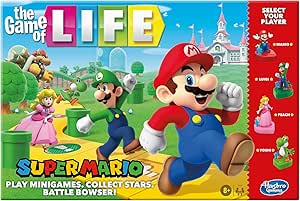 | Best for Mario Fans | Players: 2–4 | Age range: 8 years and up | Language: English | VIEW LATEST PRICE | See Our Full Breakdown |
| The Game of Life: Harry Potter Edition Board Game |  | Best for Harry Potter Fans | Players: 2–4 | Recommended age: 8 years and up | Edition: Harry Potter Edition | VIEW LATEST PRICE | See Our Full Breakdown |
| Board 24-Inch Tabletop Game Console with 7 Games and Physical Pieces |  | Best for Tech-Forward Family Play | Screen size: 24 inches | Display type: LCD touchscreen | Included games: 7 | VIEW LATEST PRICE | See Our Full Breakdown |
| family board game | Players | Included components |
|---|---|---|
| Hasbro Gaming Pie Face Family | 2 or more | Pie thrower, throwing arm, 2 handles, chin rest, splash-card mask, and spinner |
| Sorry! Board Game for Kids Age | 2–4 | Gameboard, 12 pawns, 45 cards, and instructions |
| The Sheep: Cooperative Horror | 2–4 | 1 double-sided board, 12 dual-layer boards, 118 poker cards, 26 tarot cards, 12 standees and bases, 45 wooden sheeples, 16 wooden tokens, 83 cardboard tokens, 4 cloth bags, and 1 rulebook |
| Trekking the National Parks Bo | 1–5 | — |
| The Uzzle 3.0 Family Board Gam | 1–4 | 4 sets of 10 blocks |
| CATAN Board Game | 3–4 | — |
| Hasbro Gaming Battleship with | 2 | 2 portable battle cases, 10 plastic ships, 2 plastic planes, red and white pegs, label sheet, and instructions |
| Hasbro Gaming Operation Electr | 1 or more | Gameboard with Cavity Sam, tweezers, 26 cards, 12 Funatomy parts, play money, rubber band, and instructions |
| Herd Mentality Board Game | 4–20 | — |
| Do You Really Know Your Family | 3–8 | — |
| Hasbro Gaming Crossfire Indoor | 2 | Game arena, 2 blasters, 18 metal marbles, 2 targets, and game rules |
| Blank Slate Word Association P | 3–8 | Scoreboard, 8 dry-erase slates, 250 double-sided word cue cards, and rules |
| Hasbro Gaming The Game of Life | 2–4 | — |
| The Game of Life: Harry Potter | 2–4 | Gameboard with spinner, 4 House movers, 20 pegs, 101 cards, 90 cardboard House Points, 2 secret passages, 2 plastic rivets, and game rules |
| Board 24-Inch Tabletop Game Co | 1–8 | — |
More Details on Our Top Picks
Hasbro Gaming Pie Face Family Game
Pie Face is a party-first pick for families who value shared laughs over strategy. Players take turns spinning and turning the handles, hoping the throwing arm stays still; avoiding a splat earns a point toward the 25-point goal. That simple loop makes it easier to explain than Sorry!, where card draws can send pawns back and change the race. The physical gag also gives Pie Face a different role from quieter games such as The Uzzle 3.0, which focuses on matching patterns.
The tradeoff is mess and setup: whipped cream is sold separately, and a turn can end with a face full of it. I’d choose this for a short, lively gathering, not as the main game for a group seeking tactical choices or a calm tabletop session.
Pros:- Simple spinner-and-handle rules are easy for young players to follow.
- A clear 25-point target gives turns an easy-to-understand goal.
- Physical suspense makes it a lively alternative to card- or board-focused games.
- Can accommodate two or more players.
Cons:- Whipped cream is not included, so play requires an extra item.
- The throwing arm can splat a player, making the game messy and unsuitable for some families.
- The slapstick mechanic offers less strategic depth than Sorry!.
Best for: Families with children ages 5 and up who want a quick, physical party game and don’t mind preparing whipped cream.
Not ideal for: Families looking for strategy, low-mess play, or a game that avoids splats to the face.
- Age range:5 years and up
- Players:2 or more
- Included components:Pie thrower, throwing arm, 2 handles, chin rest, splash-card mask, and spinner
- Material:Plastic
- Power source:Manual
- Indoor/outdoor use:Indoor
- Language:English
- Model number:E7638
Our verdict“Choose Pie Face for a young family or party crowd that welcomes messy slapstick, but skip it for a strategy-focused or tidy game night.”
Sorry! Board Game for Kids Ages 6 and Up – Classic Hasbro Game, 4 Pawns per Player
Sorry! is the familiar competitive choice for families who want simple rules with enough player interaction to keep turns lively. For two to four players, the aim is to get all three pawns home while card draws can send an opponent back. That push-and-pull gives it more direct rivalry than Trekking the National Parks, whose travel-and-geography theme is less about disrupting another player’s progress. It also asks for less sustained problem-solving than The Uzzle 3.0, making it a more straightforward fit for mixed-age family play.
The card-driven movement keeps the game accessible, but chance can frustrate players who want tighter control over outcomes. The included 12 pawns support only four players, and the familiar race can feel repetitive after many sessions. I’d pick Sorry! for an easy-to-start family staple, not for a group seeking fresh scenarios or deeper strategy.
Pros:- Rules and the race-to-home goal are accessible to a broad age range.
- Card draws create chances to disrupt opponents and keep players engaged.
- Includes the board, 12 pawns, 45 cards, and instructions for a complete game.
- Supports two to four players.
Cons:- The four-player limit may not suit larger family groups.
- Card-driven movement can leave players with limited control over progress.
- The core race can feel repetitive after frequent play.
Best for: Families with children ages 6 and up who want a familiar, competitive board game for two to four players.
Not ideal for: Larger families needing more than four player spaces, or groups that tire quickly of repeated race-and-reset gameplay.
- Players:2–4
- Age recommendation:6 years and up
- Edition:Standard Edition
- Included components:Gameboard, 12 pawns, 45 cards, and instructions
- Genre:Family
- Language:English
- Model number:A5065
Our verdict“Choose Sorry! for an approachable, head-to-head family classic, but look elsewhere if your group needs more than four seats or varied scenarios.”
The Sheep: Cooperative Horror Comedy Strategy Board Game
The Sheep is the most involved pick here, aimed at families with teens or adults who want to plan together rather than compete. Players choose among six shepherds and work as a team to defend against sheep that spawn and mutate, while moving caravans across varied maps. Events, equipment, curses, and adjustable difficulty add changing decisions from one playthrough to another. That makes it a substantial contrast with Sorry!, where card draws drive a more direct race between opponents, and with Pie Face, which favors quick physical comedy.
The tradeoff is the commitment: about 120 minutes and a recommended age of 14 and up make this a poor fit for younger children or short family sessions. Its many cards, boards, and tokens also ask players to manage more pieces than the simpler games in this lineup. I’d choose it when the group wants a shared strategy challenge and has time to settle in.
Pros:- Fully cooperative play gives the group a shared goal rather than individual competition.
- Six shepherds offer different character choices.
- Variable maps, events, equipment, curses, and sheep change the strategic demands.
- Adjustable difficulty allows the group to tune the challenge.
Cons:- The estimated 120-minute playing time is a substantial commitment.
- The recommended age of 14 and up excludes many younger family players.
- Numerous cards, boards, and tokens make it more involved than Sorry! or Pie Face.
- Small parts may pose a choking hazard.
Best for: Families with teens aged 14 and up who enjoy cooperative strategy, changing scenarios, and longer game sessions.
Not ideal for: Families with young children, limited table time, or players who prefer simple rules and short rounds.
- Players:2–4
- Recommended age:14 years and up
- Estimated playing time:120 minutes
- Genre:Horror-comedy fantasy
- Game mechanics:Card drafting, cooperative play, and strategy
- Included components:1 double-sided board, 12 dual-layer boards, 118 poker cards, 26 tarot cards, 12 standees and bases, 45 wooden sheeples, 16 wooden tokens, 83 cardboard tokens, 4 cloth bags, and 1 rulebook
- Dimensions:13 × 9.7 inches
- Weight:4.8 pounds
Our verdict“Pick The Sheep for an older family ready for a long, cooperative strategy session, not for a quick or young-child-friendly game night.”
Trekking the National Parks Board Game, 3rd Edition
Trekking the National Parks offers a calmer strategy experience for families who like travel themes and learning about places. Card drafting, area control, and piece movement give players meaningful choices, while the illustrated cards and map board tie those decisions to national parks. Compared with The Sheep, it asks for less time and lacks the same long cooperative campaign feel; its 30–60-minute play window makes it easier to fit into a family evening. Unlike Sorry!, its appeal comes from planning and the geography theme rather than sending an opponent back.
The main limitation is its 12-and-up recommendation, which leaves younger children out of the intended age range. Sessions can also run to an hour, so it is less suited to families seeking a very quick game like Pie Face. Solo play is a useful extra for one player, though this is a better match for groups who enjoy thoughtful turns and a travel theme.
Pros:- Supports solo play as well as groups of up to five.
- Combines card drafting, area control, and movement in a travel-themed game.
- Illustrated cards and a detailed board connect play to national parks and geography.
- Wooden pieces add tactile variety to the components.
Cons:- The recommended age of 12 and up may rule out younger family members.
- Playing time can reach 60 minutes, longer than a quick party game.
- Its thoughtful strategy may be less appealing to players seeking direct, high-energy competition.
Best for: Families with players aged 12 and up who enjoy national parks, geography, and medium-length strategy games, including solo play.
Not ideal for: Families with younger children or groups looking for a short, highly interactive party game.
- Players:1–5
- Recommended age:12 years and up
- Playing time:30–60 minutes
- Edition:3rd Edition
- Components:Cards, wooden pieces, and game board
- Game mechanics:Area control, card drafting, and piece movement
- Educational themes:Geography, national parks, travel, and STEM
- Board dimensions:11.6 × 11.5 inches
Our verdict“Choose Trekking the National Parks for an older family that enjoys geography and considered play, but not for groups with young children or a short time window.”
The Uzzle 3.0 Family Board Game
The Uzzle 3.0 stands out for short, hands-on puzzles that let players compete at matching patterns or take on challenges solo. Its 100 puzzles are split across four difficulty levels, so families can adjust the task rather than ask every player to solve the same level. That makes it a more adaptable fit for mixed abilities than Sorry!, whose shared race rules stay constant, and a much quicker-feeling alternative to The Sheep’s estimated two-hour cooperative session.
Players flip, spin, and combine blocks to match puzzle cards, shifting the focus from moving pieces around a board to visual problem-solving. Four players is the limit for this set, and the harder levels may frustrate younger children even though the listed age range starts at four. I’d choose Uzzle for families who want flexible, repeatable challenges, but not for a big group seeking a traditional board-game race.
Pros:- Four difficulty levels make it easier to match challenges to different abilities.
- One to four players can play, including solo.
- 100 puzzles provide varied challenges across the listed levels.
- Flipping, spinning, and combining blocks gives players a hands-on alternative to card-driven games.
Cons:- The set supports no more than four players.
- Higher difficulty levels may be too challenging for younger children.
- Pattern matching offers a different kind of group interaction than a shared race or strategy board.
Best for: Families with children ages 4 and up who want quick visual puzzles, adjustable challenge levels, and solo play in a set for up to four.
Not ideal for: Larger families, or young players who may find the more difficult pattern challenges frustrating.
- Age range:4 years and up
- Players:1–4
- Puzzles:100 unique challenges, 25 per difficulty level
- Difficulty levels:4
- Included components:4 sets of 10 blocks
- Block size:2× bigger blocks
- Material:Plastic
- Dimensions:8 × 8 × 4 inches
Our verdict“Choose The Uzzle 3.0 for flexible, hands-on puzzle play with up to four family members, but skip it for larger groups or players who want a traditional board-game contest.”
CATAN Board Game, 6th Edition
CATAN is the pick here for families who want more planning and negotiation than a quick party game can offer. Players trade resources and build toward 10 victory points, so choices about what to collect—and whether to trade—shape the route to a win. Its modular board changes the island layout between games, giving repeat plays a different puzzle. Compared with Herd Mentality, which centers on guessing the group’s answer, CATAN rewards tactical decisions over social consensus. That depth comes with a longer commitment: games run 60–90 minutes, and the recommended age is 10 and up. The base game also stops at four players; a separately sold extension is needed for five or six, so it is less flexible for bigger family gatherings.
Pros:- Modular terrain creates a different board layout across games.
- Resource trading gives players room to negotiate and adapt.
- Combines gathering, building, and point-scoring goals.
- Includes wooden pieces, card trays, player aids, and dice.
Cons:- The 60–90-minute play time is a bigger commitment than a short party game.
- The base game supports only three or four players.
- Playing with five or six requires a separately sold extension.
Best for: Families with players aged 10 and up who enjoy trading, tactical choices, and a longer game for three or four people.
Not ideal for: Families seeking a short, low-strategy game or a base game that can accommodate five or more players.
- Players:3–4
- Recommended age:10 years and up
- Playing time:60–90 minutes
- Genre:Strategy
- Edition:6th Edition
- Board:Modular terrain hexes
- Expansion compatibility:CATAN 5–6 Player Extension, sold separately
- Language:English
Our verdict“Choose CATAN for an older family group that wants replayable strategy and trading, not a quick game for a large gathering.”
Hasbro Gaming Battleship with Planes Strategy Board Game for Ages 7 and Up
This Battleship with Planes suits a pair of siblings or a parent and child who want a direct contest without a long rules explanation. The familiar hunt for hidden targets gets an extra layer from aircraft, while portable battle cases keep the setup contained for travel or storage. Compared with Operation, which has players take turns testing fine motor control against a buzzer, Battleship focuses on reading an opponent and choosing where to strike. Its clearest limit is also its defining format: it is strictly for two players, so it cannot carry a whole-family game night. The small pegs and pieces can go missing if they are not returned to the cases, making careful cleanup part of the routine.
Pros:- Aircraft add a variation to the familiar ship-targeting format.
- Two portable cases contain the boards and pieces for storage or travel.
- Straightforward rules make it accessible to younger players.
- A focused one-on-one format makes turns easy to follow.
Cons:- Designed for only two players, excluding the rest of a larger group.
- Small pegs and plastic pieces can be misplaced.
- The head-to-head format offers less shared conversation than a group party game.
Best for: Families looking for a portable, rules-light game for two players, such as siblings or one adult and one child aged seven or older.
Not ideal for: Families who need one game to include three or more players, or who prefer larger, harder-to-lose components.
- Players:2
- Age range:7 years and up
- Genre:Strategy
- Edition:Standard Edition
- Included components:2 portable battle cases, 10 plastic ships, 2 plastic planes, red and white pegs, label sheet, and instructions
- Model number:C3890
- Brand:Hasbro Gaming
Our verdict“Pick Battleship with Planes for portable one-on-one play, but skip it if your family usually gathers around the table as a group.”
Hasbro Gaming Operation Electronic Board Game
Operation turns a family game into a test of steady hands: players use tweezers to remove silly ailments without touching the metal edges, which trigger a buzzer and light Sam’s nose. That immediate feedback makes the rules easy to grasp and gives younger players a concrete skill to practice. It can be played solo or with a group, unlike Battleship with Planes, which is limited to two players. The format is less suited to families seeking a shared strategy puzzle like CATAN: the appeal is careful handling and comic mishaps, not trading or long-term planning. It also needs two D batteries, and success depends on fine motor control, which may frustrate players who find the tweezers tricky.
Pros:- Can be played solo or with other players.
- Tweezers and metal edges make each turn a hands-on challenge.
- Buzzer and light effects give mistakes immediate feedback.
- Includes 12 ailments and instructions in English and Spanish.
Cons:- Requires two D batteries.
- The fine-motor challenge may frustrate players who struggle with precise tweezer movements.
- Offers less strategic depth than games built around trading or tactical planning.
Best for: Families with children aged six and up who enjoy hands-on challenges, buzzer effects, and a game that can also be played solo.
Not ideal for: Families seeking deep strategy or a low-maintenance game without battery-powered sounds and lights.
- Players:1 or more
- Age range:6 years and up
- Included components:Gameboard with Cavity Sam, tweezers, 26 cards, 12 Funatomy parts, play money, rubber band, and instructions
- Skills:Fine motor coordination and strategy
- Batteries:2 D batteries required
- Instruction languages:English and Spanish
- Brand:Hasbro Gaming
Our verdict“Choose Operation for tactile, silly play with younger family members, rather than for a strategy-focused game night.”
Herd Mentality Board Game
When the guest list is bigger than a typical board-game table, Herd Mentality has an advantage: it accommodates 4–20 players and plays in about 20 minutes. Players try to match the group’s answer, so participation does not depend on mastering rules or a long strategy system. That makes it a lighter, larger-group alternative to CATAN, which supports three or four players and takes 60–90 minutes. The social scoring has a catch: an answer outside the majority earns the pink cow of doom, so players who prefer independent answers may not enjoy being penalized for them. Its appeal also relies on the group being willing to answer prompts and laugh about the results, rather than on board-building or tactical play.
Pros:- Supports groups as large as 20 players.
- About 20 minutes of play suits a short game-night slot.
- Simple prompts make it quick to teach.
- Includes 20 extra questions.
Cons:- Requires at least four players.
- The pink cow penalty can frustrate players whose answers differ from the majority.
- Group-answer prompts may not appeal to players seeking strategic board play.
Best for: Families with four or more players, including mixed-age groups who want a quick, easy-to-explain party game.
Not ideal for: Small households with fewer than four players or families who prefer independent strategy over matching group opinions.
- Players:4–20
- Recommended age:10 years and up
- Playing time:20 minutes
- Genre:Family and party
- Mechanics:Social deduction
- Edition:Kids Edition
- Package contents:Main game with 20 extra questions
- Material:Cardboard
Our verdict“Choose Herd Mentality when a large family group wants a quick social game, not when you need a small-group strategy option.”
Do You Really Know Your Family? Family Trivia Card Game
Do You Really Know Your Family? makes family knowledge and conversation the main event, using trivia prompts and silly challenges rather than a detailed board or elaborate strategy. Its 3–8 player range is a good fit for a household-sized group, and the age recommendation of eight and up makes it accessible across kids, teens, and adults. Compared with Herd Mentality, which accommodates much larger groups and asks players to match a majority answer, this game is better suited to a smaller gathering centered on how well relatives know one another. That focus can also limit its repeat appeal: families wanting tactical choices, changing board layouts, or play that does not depend on personal answers may prefer CATAN. It also cannot be played with fewer than three people.
Pros:- Prompts conversation through family trivia questions.
- Silly challenges add variety beyond answering questions.
- Suitable for kids, teens, and adults aged eight and up.
- Compact tin keeps the card-based game contained.
Cons:- Requires at least three players.
- Its family-trivia focus may have less appeal to groups seeking strategy or changing board layouts.
- Card-based prompts offer less physical board play than CATAN or Operation.
Best for: Families of three to eight who want an easy-to-learn game that prompts conversation among children, teens, and adults.
Not ideal for: Solo players, pairs, or families seeking tactical gameplay rather than questions about family members and shared conversation.
- Players:3–8
- Age range:8 years and up
- Components:Cards
- Material:Cardstock
- Language:English
- Container:Tin
- Dimensions:2 x 4.7 x 6.7 inches
- Batteries:Not required
Our verdict“Pick this card game for a small family group that enjoys talking and answering personal prompts, not for solo play or tactical competition.”
Hasbro Gaming Crossfire Indoor Action Game for 2 Players, Ages 7+
Crossfire is the pick for short, head-to-head bursts rather than a full family game night: players fire metal marbles at targets, and the first to move one into the opponent’s endzone five times wins. It sets up quickly and finishes in under 10 minutes, so it suits siblings or a parent and child who want a rematch without a long rules explanation. Compared with Battleship, Crossfire is more physical and immediate, but it offers less room for careful planning. Its handled case and built-in storage make cleanup simpler than a game with loose pieces scattered across a table. The tradeoff is its two-player limit, plus marble firing that calls for a suitable indoor space and adult judgment around younger children.
Pros:- Quick setup and rules make it easy to start a short match
- Games take less than 10 minutes, leaving time for repeat rounds
- Arena and built-in score trackers keep play contained
- Folds into a handled case with component storage
Cons:- Designed for exactly two players
- Aiming and firing metal marbles may not suit every room or household
- Offers less strategic variety than a longer game such as Battleship
Best for: Families with two children or a parent-child pair looking for a fast, active indoor game.
Not ideal for: Families hoping to play together in groups of three or more, or households without a suitable space for firing marbles.
- Players:2
- Recommended age:7 years and up
- Play time:Less than 10 minutes
- Included components:Game arena, 2 blasters, 18 metal marbles, 2 targets, and game rules
- Storage:Built-in component storage; folds into a handled case
- Brand:Hasbro Gaming
- Model number:G2919UU0
Our verdict“Choose Crossfire for quick, lively two-player matches, but skip it if your family needs a game for a larger group.”
Blank Slate Word Association Party Game
Blank Slate makes the most sense when your family enjoys guessing how everyone else thinks. Players finish a word cue and aim to match another player’s response without giving hints, turning familiar phrases into a light contest of shared instincts. With eight slates and play for three to eight people, it accommodates a group better than Crossfire, which is limited to two. Its 500 cues also give families plenty of prompts to draw from, while the simple format helps newcomers join without learning a strategy-heavy ruleset like CATAN. The tradeoff is that the fun depends on conversation and knowing the group; it may feel less engaging for players who prefer a board, movement, or tactical choices. It also cannot fill a two-player evening.
Pros:- Supports groups of three to eight players
- 500 cues offer a broad range of prompts
- Dry-erase slates make answers easy to write and change
- Straightforward play is accessible to newcomers
Cons:- Requires at least three players
- Enjoyment depends on players liking word association and social guessing
- Less suited to families seeking a strategy-focused board game
Best for: Families with at least three players who enjoy wordplay and want a simple group game spanning different ages.
Not ideal for: Two-player households or families who prefer tactical decisions and board-based play over word association.
- Players:3–8
- Recommended age:8 years and up
- Playing time:Approximately 30 minutes
- Included components:Scoreboard, 8 dry-erase slates, 250 double-sided word cue cards, and rules
- Cue count:500
- Game mechanics:Word association, guessing, and deduction
- Language:English
- Batteries:Not required
Our verdict“Pick Blank Slate for a larger family group that likes matching answers, not for a quiet two-player or strategy-focused session.”
Hasbro Gaming The Game of Life: Super Mario Edition Board Game (Ages 8+)
This edition gives Mario fans a recognizable quest instead of Life’s familiar career-and-life framing. Players travel around the Mushroom Kingdom, collect coins and stars, tackle quick minigames, and face Bowser in a final spin. That themed objective can be a stronger hook for children who already know the characters than the Hogwarts setting of The Game of Life: Harry Potter Edition; families without a connection to Mario may find the theme does less to hold their attention. The 2–4 player range works for a small household, while the minigames add variety to the movement-and-collection loop. The main tradeoff is the luck-heavy Bowser finale, which can make the outcome feel less tied to earlier choices. It is a licensed, family-friendly option, not a deep strategy game.
Pros:- Recognizable Mario characters and Mushroom Kingdom setting
- Quick minigames vary the pace
- Quest to collect coins and stars gives the game a clear theme
- Supports two to four players
Cons:- Final Bowser result relies heavily on luck
- Theme may have limited appeal for players who are not Mario fans
- Player count is capped at four
Best for: Families with children aged eight and up who already enjoy Super Mario and want a familiar themed board-game outing.
Not ideal for: Families looking for strategic control, more than four players, or a theme that appeals equally to non-Mario fans.
- Players:2–4
- Age range:8 years and up
- Language:English
- Brand:Hasbro Gaming
- Edition:Standard Edition
- Sub-brand:Super Mario Bros.
- Model number:E9488
Our verdict“Choose the Super Mario edition for a small family of Mario fans who value theme and minigames over strategic control.”
The Game of Life: Harry Potter Edition Board Game
The Harry Potter edition is the better fit for families who want the setting to shape the play. Players choose a Hogwarts house, pass magical classes, collect House Points, and explore a board with movable secret passages. Action, Item, Friend, and Danger cards give turns different prompts, while the goal of earning the most House Points by the End-of-Term Feast provides a clear finish. Compared with The Game of Life: Super Mario Edition, this version leans more on Hogwarts locations, house identity, and card-driven events than minigames and a final Bowser spin. That makes the two editions appealing to different fandoms, rather than interchangeable picks. Its limited two-to-four-player capacity rules out larger family gatherings, and players unfamiliar with Harry Potter may miss much of its appeal.
Pros:- Hogwarts setting includes familiar locations and house choices
- Movable secret passages add a changing board element
- Four card types offer variety across turns
- House Points provide a clear route to winning
Cons:- Supports only two to four players
- Theme may not appeal to players unfamiliar with Harry Potter
- The themed cards and components may feel less relevant to families seeking a broadly neutral game
Best for: Harry Potter fans aged eight and up who want a themed family game built around Hogwarts houses and locations.
Not ideal for: Larger households or players who do not know or care about the Harry Potter setting.
- Players:2–4
- Recommended age:8 years and up
- Edition:Harry Potter Edition
- Language:English
- Included components:Gameboard with spinner, 4 House movers, 20 pegs, 101 cards, 90 cardboard House Points, 2 secret passages, 2 plastic rivets, and game rules
- Brand:Hasbro Gaming
- Winning objective:Earn the most House Points by the End-of-Term Feast
Our verdict“Choose this edition for a small household of Harry Potter fans; larger groups or non-fans will be better served elsewhere.”
Board 24-Inch Tabletop Game Console with 7 Games and Physical Pieces
Board is the outlier here: it pairs a large touchscreen with physical pieces that control games in real time. Its seven included games, solo mode, and capacity for up to eight players make it more flexible for different group sizes than Blank Slate or either two-to-four-player Game of Life edition. The screen-based format also sets it apart from traditional tabletop choices such as Trekking the National Parks, making it a fit for families who want digital interaction without giving up tactile pieces. Wi-Fi 6, Bluetooth, USB-C, and 64 GB of storage support its console-style design, and no subscription is required. The tradeoffs are its large indoor-only footprint and the fact that extra games cost separately. It is less suitable for families seeking a compact, purely analog board-game collection.
Pros:- Physical pieces interact with the touchscreen in real time
- Seven games and their pieces are included
- Supports solo play and groups of up to eight
- No subscription is required
Cons:- The 24-inch screen and wide footprint need dedicated indoor space
- Additional games must be purchased separately
- Digital console format will not suit families looking for purely analog play
Best for: Tech-forward families who want one shared indoor device for solo play and groups of up to eight, with physical pieces in the mix.
Not ideal for: Families short on table or storage space, seeking a portable traditional board game, or unwilling to buy additional games separately.
- Screen size:24 inches
- Display type:LCD touchscreen
- Included games:7
- Players:1–8
- Storage:64 GB
- Connectivity:Wi-Fi 6, Bluetooth, USB-C, and microSD
- Dimensions:25.7 × 13.9 × 1.5 inches
- Platform:Android
- Warranty:1 year
Our verdict“Choose Board if your family wants a shared touchscreen game system with physical pieces and has space for its large indoor setup.”
How We Picked
I compared each option through a family-game lens: how quickly a mixed-age group can grasp the rules, whether players stay involved between turns, how much skill or reading the game asks for, and what kinds of households are likely to enjoy it. I also weighed play length and setup, the kind of interaction each game creates, and whether the format seems suited to repeat family nights or occasional novelty. A game can be a strong family choice without being right for every age mix or group size.
The ranking favors versatility and a clear fit across common family situations over spectacle or a familiar license alone. That places Trekking the National Parks ahead as a balanced all-around option, while deeper strategy, party conversation, two-player action, and novelty play earn distinct roles lower in the list. These products are not direct substitutes: I call out where a narrower format, more involved rules, or reliance on a particular kind of humor makes an option less flexible for a typical household.
Factors to Consider When Choosing Best Family Board Games
Before choosing, match the game to how your family actually gathers. A title that sounds fun can disappoint if the youngest player cannot follow the rules, the group size does not fit, or the play style clashes with your usual game-night mood.
Match Rules to the Youngest Regular Player
Use the youngest person who will play often as your starting point, not the oldest player’s patience or skill. Reading-heavy prompts, multi-step turns, and decisions that depend on planning can leave children waiting for help even when a box lists an age that seems close. At the same time, choosing only for the youngest player can leave older family members bored after a few rounds. Look for simple actions with meaningful choices, then check whether the game allows adults to guide without taking over. A common mistake is treating an age label as a guarantee that every child in that age band will enjoy the same challenge. If your household spans several years, prefer rules that are easy to teach but still leave room for players to make different choices.
Pick the Social Energy You Want
Family games create different kinds of interaction: direct competition, shared problem-solving, wordplay, conversation, or physical action. Decide whether your group enjoys playful teasing and surprise, or prefers calmer turns with time to think. Party-style prompts can bring quieter players into the conversation, but they may feel uncomfortable for anyone who dislikes performing or guessing aloud. Strategy games offer a different appeal, yet can make a casual evening feel more serious if players focus heavily on winning. Think about the mood you want on an ordinary weeknight rather than buying for a rare holiday gathering. If family members disagree on pace, alternating a short social game with a longer strategy game can keep the collection useful without asking one title to suit every occasion.
Check Player Count and Turn Downtime
The number of people at the table matters as much as the age range. Some games shine with a full group but lose energy with only two players; others are designed around a head-to-head contest and may not scale to a large family. Also notice what everyone does while another person takes a turn. Frequent shared decisions, simultaneous guessing, or quick rounds can help keep younger players engaged, while long waits can make even good rules feel tedious. Do not assume a listed player range means every group size produces the same experience. If relatives or friends often join, choose a flexible group game; if game night is usually a parent and child, prioritize a strong two-player fit instead.
Balance Replay Value Against Novelty
Some family games stay fresh because choices, opponents, or group answers change from session to session. Others rely on a surprise mechanic, familiar theme, or set of prompts that may feel less novel after repeated plays. Neither format is automatically better: a light novelty game can be ideal for occasional gatherings, while a game-night regular should have enough variation to invite another round. Ask whether your family likes learning tactics over time or would rather enjoy an easy, self-contained session. A common buying error is assuming a recognizable character or funny gimmick guarantees lasting appeal. Consider whether the game itself—not only its theme—gives players a reason to return.
Account for Setup, Space, and Physical Play
Setup and table space shape whether a game gets played at all. Larger boards, many components, or electronic and action elements can make a title more engaging, but they may take longer to arrange and put away. Small card-based formats are easier to bring to a visit, while tabletop games with physical pieces may need a stable surface and room for players to reach. Think about storage too, especially if shelves are limited or pieces could be misplaced around younger children. Physical play can be a welcome change from sitting still, but it may not suit a crowded table or a household that prefers quiet turns. Choose the amount of setup you will tolerate on a typical evening, not just what looks exciting when unpacked.
Pay for the Kind of Depth Your Family Will Use
A more involved game earns its place when your group enjoys planning, negotiation, or learning tactics across multiple sessions. If your family mainly wants an easy activity after dinner, added rules and components may create friction rather than value. On the other hand, a very simple game can lose appeal if older players want more agency or a longer-lasting challenge. Look at what extra complexity gives you: more meaningful decisions, broader player interaction, or simply more pieces to manage. Avoid buying a heavier game because it seems like a more serious choice; match its demands to your group’s habits. For a mixed collection, one deeper strategy option alongside quick party and head-to-head games often covers more occasions than several games with the same pace.
Frequently Asked Questions
Which game in this lineup is the safest choice for a mixed-age family?
I would start with Trekking the National Parks if your group wants a shared table game that offers more than pure luck without leaning as heavily into strategic negotiation as CATAN. The right choice still depends on the youngest player’s reading and planning comfort, so review the rules and age guidance before buying. If your family prefers quick laughs over thoughtful turns, Herd Mentality may be a better social fit. For a group that wants a very familiar, direct contest, Sorry! is a simpler alternative. No single title in this lineup fits every age mix and mood equally well.
Should I choose CATAN or a simpler classic for our first strategy game?
Choose CATAN if your family enjoys resource decisions, negotiation, and learning a game’s tactics over repeated sessions. A simpler classic such as Sorry! asks less of new players and is easier to teach when the main goal is a straightforward family contest. Think about how your group handles waiting and setbacks: strategy games can feel rewarding to planners, but a long learning curve may frustrate players who want quick turns. You can make the first session easier by having an adult explain the rules before play and guide the opening turns. If that sounds like too much effort for your usual evening, start with the simpler format.
Which picks work best when family game night has only two players?
Crossfire is the clearest fit here because it is designed for two players and centers on quick physical action. Battleship also suits a head-to-head matchup, with a quieter, more tactical feel. Some of the party and conversation options depend on a larger group to create varied answers and social energy, so they may feel less lively with only two people. Check each game’s stated player range before deciding, especially if you hope to use it with both a pair and a crowd. If your household switches between those group sizes, a two-player title may need a separate party game alongside it.
Are the themed Game of Life editions different enough to choose by gameplay?
I would choose The Game of Life: Super Mario Edition or The Game of Life: Harry Potter Edition mainly when that theme will make your family more interested in playing. A licensed setting can help a familiar game feel inviting, but a theme alone does not guarantee that the core play will suit your group better than another option here. Compare the edition-specific rules and components before buying, then ask whether players enjoy the franchise enough to return to it. If your family wants more strategic decisions or a different type of interaction, compare other picks by play style rather than by theme. For fans, the license can be the deciding factor; for everyone else, gameplay fit should lead.
Is the tabletop game console a good replacement for buying several board games?
The tabletop game console may suit a household that values having several built-in games and physical pieces in one format, especially if storage and easy access matter. It is not automatically a substitute for a dedicated game with a deeper theme, developed strategy, or a distinct group experience. Check which games are included, how each one plays, and whether the people in your home will actually choose them. A bundle can be convenient, but variety on a feature list does not guarantee that each game will see regular use. If your family has a clear preference—such as cooperative play, word association, or tactical competition—a dedicated title may be a better match.
Conclusion
For a family seeking one balanced pick, I recommend Trekking the National Parks as the best overall choice in this lineup. Best value depends on what your group will replay: Sorry! is a practical fit for straightforward, familiar competition, while Herd Mentality can suit households that often gather in a larger group. For beginners, start with a simple game whose rules match the youngest regular player rather than jumping straight to CATAN’s deeper decisions. Choose CATAN as the premium strategy pick if your family wants a more involved game to learn over time; pick Crossfire for two-player action, Blank Slate for wordplay, or a themed Game of Life edition for franchise fans. The best choice is the one that fits your usual group size, attention span, and preferred kind of interaction.
Evergreen bestsellers Picks

Shark Navigator Lift-Away Upright Vacuum Cleaner, White (NV356E)

Hisense 43-Inch E6SR Series Hi-QLED 4K UHD Smart Roku TV (2026 Model)

Ninja Crispi 5-in-1 Glass Air Fryer System, Emerald, FN103BF
As an affiliate, we earn on qualifying purchases.