The best kids audio players balance easy controls, age-appropriate content, and a listening setup that fits your family. My best overall pick is the Yoto Player (3rd Gen.), which pairs a screen-free, card-based experience with a starter pack; the Mighty 3 is a standout for offline music without a phone, while the Amazon Echo Dot Kids suits families who want a connected smart speaker. The main tradeoff is between simple, curated listening and the flexibility of general-purpose MP3 or Android players. I also weigh portability, parental controls, and how much setup each option may ask of adults. Read on for the full breakdown of all 15 players and help matching one to your child.

Turn the school run and nap time into listening time
- Thousands of audiobooks, podcasts and originals
- Listen on your phone, tablet or Echo — also offline
- Cancel anytime
Complete the kit


Key Takeaways
- Yoto Player (3rd Gen.) leads for all-around screen-free use: its card-based setup and included starter content make it a more guided starting point than the touchscreen MP3 players.
- Mighty 3 is the clearest fit for phone-free offline music: it prioritizes stored listening and portability, while giving up the story-library experience and broader screen-based controls found elsewhere.
- The amazon.com/dp/B0DCK91DZS?tag=oneboredmommy.com-20&ascsubtag=dc-1181275″ target=”_blank” rel=”nofollow sponsored noopener”>Yoto Mini models prioritize portability over room-based play: they suit travel and smaller spaces, while the full-size Yoto Player is the stronger match for a home listening spot.
- Android MP3 players offer more flexibility, but ask families to do more setup: touchscreen models from Globluum, ZAQE, and Luoran stand apart from the more guided Yoto and WonderBuddy options.
- Not every player serves the same kind of listening: Echo Dot Kids depends on a connected smart-speaker experience, while LeapFrog Let’s Record! is more focused on child-created recordings than a broad music library.
| Globluum SU5 MP3 Player for Kids, 16GB |  | Best for App-Based Listening | Storage: 16 GB | RAM: 2 GB | Screen: 4 inches; 800 × 480 resolution | VIEW LATEST PRICE | See Our Full Breakdown |
| Yoto Player (3rd Gen.) with Starter Pack for Little Kids |  | Best Screen-Free Starter Bundle | Internal memory: 32 GB | Included content: Starter Pack for Little Kids | Speaker: 40 mm, 5 W stereo | VIEW LATEST PRICE | See Our Full Breakdown |
| Globluum 96GB Android MP3 Player with 4-Inch Touchscreen, Bluetooth 5.0, and Wi-Fi |  | Best for a Large Mixed Media Library | Storage: 96GB total: 32GB built-in plus 64GB Micro SD card | RAM: 3GB | Operating system: Android 14 | VIEW LATEST PRICE | See Our Full Breakdown |
| ZAQE M505 16GB MP3 Player with Bluetooth, Wi-Fi, and 4-Inch Touchscreen |  | Best for Format Flexibility | Storage: 16 GB | Screen: 4 inches | Connectivity: Bluetooth, Wi-Fi, USB 2.0 | VIEW LATEST PRICE | See Our Full Breakdown |
| Amazon Echo Dot Kids (5th Gen) Smart Speaker, Rainbow Swirl |  | Best for Shared Listening and Bedtime Routines | Generation: 5th Gen | Design: Rainbow Swirl | Dimensions: 3.9 × 3.9 × 3.5 inches (100 × 100 × 89 mm) | VIEW LATEST PRICE | See Our Full Breakdown |
| Mighty 3 Portable Screen-Free Offline Music Player for Kids & Fitness – Bluetooth & Wired Headphones, Stores 1000+ Songs, No Phone or WiFi Needed – Blue |  | Best for Offline Music | Storage: 8 GB; about 1,000 songs | Battery life: Up to 8 hours | Weight: 20 g | VIEW LATEST PRICE | See Our Full Breakdown |
| Yoto Mini (2024 Edition) with Starter Pack for Little Kids |  | Best Starter Bundle | Model: Yoto Mini (2024 Edition) | Recommended age: 3+ | Battery life: Up to 14 hours per charge | VIEW LATEST PRICE | See Our Full Breakdown |
| WonderBuddy StoryBox Kids Audio Player with 500+ Stories and Rhymes |  | Best for Built-In Stories | Age range: 3–10 years | Preloaded content: 500+ stories and rhymes | Playlists: 10 preloaded; 3 custom | VIEW LATEST PRICE | See Our Full Breakdown |
| Yoto Mini 4th Gen Portable Kids Audio Player |  | Best Rugged Upgrade | Model: Yoto Mini 4th Gen | Age range: 3+ | Battery life: Up to 16 hours | VIEW LATEST PRICE | See Our Full Breakdown |
| Yoto Mini (2024 Edition) Kids’ Screen-Free Travel Audio Player |  | Best for Card-Based Travel | Age range: 3–12+ | Battery life: Up to 14 hours | Playback controls: Physical audio cards, device dials, or free app | VIEW LATEST PRICE | See Our Full Breakdown |
| LeapFrog Let’s Record! Music Player, Teal |  | Best for Toddlers and First-Time Listeners | Brand: LeapFrog | Age range: 18 months–4 years | Included songs: 40 | VIEW LATEST PRICE | See Our Full Breakdown |
| Luoran M4Pro Kids MP3 Player with Spotify and Parental Controls |  | Best for Large App-Based Libraries | Operating system: Android 14 | Storage: 80 GB listed capacity, including a 64 GB memory card | Maximum supported storage: Up to 1 TB | VIEW LATEST PRICE | See Our Full Breakdown |
| 90GB MP3 Player with Bluetooth 5.3 and Dual TF Card Slots |  | Best for Offline Music Collections | Included storage: 90 GB | Expandable storage: Up to 256 GB total via two TF card slots | Bluetooth: 5.3; approximately 10 m range | VIEW LATEST PRICE | See Our Full Breakdown |
| Luoran M4X MP3 Player for Kids with Spotify and Parental Controls |  | Best App-Based Pick with Expandable Storage | Operating system: Android 14 | Built-in storage: 16 GB | Expandable storage: Up to 512 GB | VIEW LATEST PRICE | See Our Full Breakdown |
| Yoto Player (3rd Generation) Screen-Free Audio Player for Kids |  | Best Screen-Free Family Player | Recommended age: 3–12+ years | Internal memory: 32 GB | Offline listening capacity: 600+ hours | VIEW LATEST PRICE | See Our Full Breakdown |
| kids audio player | Weight | Battery life | Connectivity |
|---|---|---|---|
| Globluum SU5 MP3 Player for Ki | 3.46 ounces | Up to 25 hours | Bluetooth 5.0, Wi-Fi, Aux, USB |
| Yoto Player | — | — | Bluetooth, Wi-Fi |
| Globluum 96GB Android MP3 Play | 98 g (3.46 oz) | Up to 25 hours | Bluetooth 5.0, dual-band Wi-Fi, Aux, USB |
| ZAQE M505 16GB MP3 Player with | 150.5 g | — | Bluetooth, Wi-Fi, USB 2.0 |
| Amazon Echo Dot Kids | 10.7 oz (304 g) | — | — |
| Mighty 3 Portable Screen-Free | 20 g | Up to 8 hours | Bluetooth and 3.5 mm headphone jack |
| Yoto Mini | 160 g | Up to 14 hours per charge | Bluetooth |
| WonderBuddy StoryBox Kids Audi | 0.86 kg | Up to 20 hours | Bluetooth; USB for compatible audio files |
| Yoto Mini 4th Gen Portable Kid | 0.2 kg | Up to 16 hours | — |
| Yoto Mini | — | Up to 14 hours | — |
| LeapFrog Let’s Record! Music P | — | — | — |
| Luoran M4Pro Kids MP3 Player w | 140 g | Up to 50 hours | Bluetooth 5.0; dual-band 2.4 GHz and 5 GHz Wi-Fi |
| 90GB MP3 Player with Bluetooth | 83 g | Up to 40 hours with headphones; up to 15 hours in speaker mode | — |
| Luoran M4X MP3 Player for Kids | 140 g | Up to 50 hours | Wi-Fi and Bluetooth |
| Yoto Player | — | — | Bluetooth and Wi-Fi |
More Details on Our Top Picks
Globluum SU5 MP3 Player for Kids, 16GB
The Globluum SU5 suits families who want a small, familiar touchscreen player for streaming music and audiobooks. Its access to apps such as Spotify Kids and Audible Kids gives it a broader listening mix than the Yoto Player (3rd Gen.), which centers on card-based, screen-free content. Wi-Fi and Bluetooth let children use supported services or pair headphones, while parental controls give adults a way to manage access. The included case and wired earphones make it ready for travel without adding separate accessories.
The tradeoff is that this works more like a compact Android device than a dedicated audio player: some services require sign-in, and the 800 × 480 screen is modest for video. Its 16GB storage is also less suited to a large downloaded library than the 96GB Globluum SU7. Choose it for app access and simple controls, not for a screen-free routine.
Pros:- Supports music and audiobook apps, including Spotify Kids and Audible Kids
- Parental controls and a touchscreen interface make access easier to manage
- Bluetooth 5.0, Wi-Fi, and wired headphone connectivity support several listening setups
- Includes a protective case and wired earphones
Cons:- Some music and audiobook apps require account sign-in
- The 800 × 480 display is limited for watching video
- 16GB storage offers less room for offline media than the Globluum SU7
Best for: Families who want a lightweight player for kids to access supported music and audiobook apps, with parental controls and a protective case.
Not ideal for: Parents seeking screen-free listening, a large offline library, or a device that works without signing into music and audiobook services.
- Storage:16 GB
- RAM:2 GB
- Screen:4 inches; 800 × 480 resolution
- Battery capacity:1750 mAh
- Battery life:Up to 25 hours
- Connectivity:Bluetooth 5.0, Wi-Fi, Aux, USB
- Weight:3.46 ounces
- Included accessories:3.5mm wired earphones, protective case, Type-C charging cable, user manual
Our verdict“Pick the SU5 if app access matters more than screen-free simplicity or high-capacity offline storage.”
Yoto Player (3rd Gen.) with Starter Pack for Little Kids
The Yoto Player bundle is the clearest choice here for young children who benefit from a simple, screen-free listening routine. Its included Starter Pack gives families songs, stories, and activities to begin with, while the player’s format avoids the open-ended app access of the Globluum SU5. That makes it a better fit when parents want listening to stay focused on child-friendly audio rather than a touchscreen. It also does more than play stories: a nightlight, alarm clock, room thermometer, and Bluetooth speaker mode can make it useful in a child’s room between listening sessions.
The compromise is flexibility. Unlike the SU5, it is not a general-purpose app player, and some features and controls rely on the companion app. Its up to 16 hours of playback is shorter than the Globluum players’ stated 25 hours, and it is not waterproof. I’d choose this bundle for a screen-free beginning, not for broad streaming access.
Pros:- Screen-free design supports focused listening without a touchscreen
- Starter Pack includes songs, stories, and activities for young children
- Nightlight, alarm clock, and room thermometer add bedroom utility
- Can also work as a Bluetooth speaker
Cons:- Some features and controls rely on the companion app
- Up to 16 hours of playback is less than the Globluum players’ stated 25 hours
- Not waterproof
Best for: Parents of younger children who want a screen-free player with included stories, songs, activities, and useful bedroom functions.
Not ideal for: Families wanting a general-purpose touchscreen player, app-based streaming, waterproofing, or longer stated playback time.
- Internal memory:32 GB
- Included content:Starter Pack for Little Kids
- Speaker:40 mm, 5 W stereo
- Battery capacity:4500 mAh
- Playback time:Up to 16 hours
- Connectivity:Bluetooth, Wi-Fi
- Charging:USB-C
- Waterproof:No
Our verdict“Choose this bundle for screen-free listening and included child-friendly content, especially for a young child’s room.”
Globluum 96GB Android MP3 Player with 4-Inch Touchscreen, Bluetooth 5.0, and Wi-Fi
The Globluum SU7 is the strongest fit for families who want one compact device for downloaded music, audiobooks, reading apps, and occasional video. Its 96GB total storage gives it much more room than the 16GB SU5 or ZAQE M505, which matters when a child’s library needs to travel offline. Android 14, preloaded apps, and 3GB of RAM also make it more flexible than the Yoto Player (3rd Gen.), whose appeal is its screen-free, child-focused format rather than general app access. Lossless audio support and a built-in speaker add options beyond basic headphone listening.
That capacity has a caveat: 64GB comes from a Micro SD card, rather than built-in storage. The four-inch screen is compact for video, and this app-based approach brings more screen exposure than the Yoto. It makes most sense when broad media support and space outweigh simplicity.
Pros:- 96GB total storage offers more space than the 16GB Globluum SU5 and ZAQE M505
- Runs Android 14 with music streaming, audiobook, and reading apps
- Supports lossless audio and multiple video formats
- Lightweight design includes a protective case and wired earphones
Cons:- 64GB of the listed storage is supplied by a Micro SD card
- The four-inch screen may feel small for watching video
- Touchscreen apps make it less suited to families seeking screen-free listening
Best for: Families who want a portable player with room for a large offline mix of music, audiobooks, reading material, and video.
Not ideal for: Parents seeking a screen-free player, a large display for video, or storage that is entirely built in.
- Storage:96GB total: 32GB built-in plus 64GB Micro SD card
- RAM:3GB
- Operating system:Android 14
- Screen:4-inch LCD touchscreen
- Connectivity:Bluetooth 5.0, dual-band Wi-Fi, Aux, USB
- Battery life:Up to 25 hours
- Weight:98 g (3.46 oz)
- Additional features:Built-in speaker, equalizer, FM radio, video playback
- Included accessories:Protective case, wired earphones
Our verdict“Choose the SU7 when a roomy, flexible media library matters more than a screen-free design or a larger display.”
ZAQE M505 16GB MP3 Player with Bluetooth, Wi-Fi, and 4-Inch Touchscreen
The ZAQE M505 earns its place for families who value broad file support and a bundled set of basic accessories. It handles a wide range of audio formats, including FLAC and APE, along with common video formats, plus FM radio and voice recording. That makes it a more format-focused choice than the Globluum SU5, whose strongest case is access to named kids’ music and audiobook apps. The ZAQE also includes wired headphones, a silicone case, and a screen protector, so several practical extras come in the box.
Its 16GB storage is the limiting factor for families building a substantial offline collection; the Globluum SU7 has far more listed capacity. The product data also lists unusually large dimensions for a portable player, so I’d check the size carefully before choosing it for a small child’s pocket or bag. This is a better match for file playback than for a streamlined children’s content system.
Pros:- Supports a broad range of audio formats, including FLAC and APE
- Plays common video formats and includes FM radio and voice recording
- Wi-Fi and Bluetooth support streaming and wireless listening
- Includes wired headphones, silicone case, cable, and screen protector
Cons:- 16GB storage may not suit a large offline media collection
- Listed dimensions are unusually deep for a portable player
- Unlike the Globluum SU5, the supplied details do not identify specific kids’ music or audiobook apps
Best for: Families with existing audio and video files who want wide format support, FM radio, voice recording, and included protection.
Not ideal for: Buyers who need ample offline storage, a clearly compact player, or a dedicated screen-free kids’ content experience.
- Storage:16 GB
- Screen:4 inches
- Connectivity:Bluetooth, Wi-Fi, USB 2.0
- Supported audio formats:MP3, WMA, WAV, OGG, APE, AAC, FLAC
- Supported video formats:AVI, MKV, RMVB, MP4, MOV
- Weight:150.5 g
- Dimensions:5.75 × 0.75 × 5.75 inches
- Included accessories:Wired headphones, Type-C data cable, silicone protective case, screen protector
Our verdict“Pick the ZAQE M505 for flexible file playback and bundled accessories, but check its listed size and plan around 16GB storage.”
Amazon Echo Dot Kids (5th Gen) Smart Speaker, Rainbow Swirl
The Echo Dot Kids is a room-based option for families who want a child to request stories, audiobooks, music, and interactive learning without carrying a player around. Its Alexa features and bedtime routines make it more suited to shared spaces or a bedside table than the headphone-first Globluum SU5. Parents can manage settings remotely and filter age-appropriate listening, while a physical microphone-off button gives them a direct privacy control. The two-year worry-free replacement guarantee is another practical distinction from the other products in this group.
This is not an offline portable player: it relies on Wi-Fi and compatible services, and some content depends on Amazon Kids+ or other subscriptions and services. It also cannot use ad-hoc Wi-Fi networks. Compared with the Yoto Player (3rd Gen.), which is built around screen-free child-directed playback and a Starter Pack, the Echo Dot offers voice interaction and Alexa features but a different kind of content access.
Pros:- Supports children’s storytelling, audiobooks, music, learning, and bedtime routines
- Parents can filter listening and manage settings remotely
- Microphone-off button provides a direct privacy control
- Includes a two-year worry-free replacement guarantee
Cons:- Some content and features depend on Amazon Kids+ or compatible services
- Designed as a home smart speaker rather than a portable, battery-powered player
- Does not support ad-hoc Wi-Fi networks
Best for: Families who want a shared, Wi-Fi-connected speaker for children’s stories, music, learning, and bedtime routines at home.
Not ideal for: Families who need a battery-powered player for travel, offline listening, or content access that does not depend on compatible online services.
- Generation:5th Gen
- Design:Rainbow Swirl
- Dimensions:3.9 × 3.9 × 3.5 inches (100 × 100 × 89 mm)
- Weight:10.7 oz (304 g)
- Speaker:1.73-inch (44 mm) front-firing speaker
- Wi-Fi:Dual-band 802.11a/b/g/n/ac, 2.4 and 5 GHz
- Bluetooth:A2DP audio streaming and AVRCP remote control
- Privacy controls:Microphone-off button; remote parental monitoring
- Guarantee:2-year worry-free replacement
Our verdict“Choose the Echo Dot Kids for a connected home listening hub with parental controls, not for offline listening on the go.”
Mighty 3 Portable Screen-Free Offline Music Player for Kids & Fitness – Bluetooth & Wired Headphones, Stores 1000+ Songs, No Phone or WiFi Needed – Blue
The Mighty 3 is the most music-focused pick here: it stores Amazon Music playlists for offline listening, then plays them without a screen, phone, or Wi-Fi connection. That makes it a better fit for kids who already have playlists than the Yoto Mini, which centers on audio cards and a broader mix of stories and activities. Its Bluetooth and 3.5 mm jack let families use wireless headphones or a simple wired pair, while the 20 g body and IPX4 resistance suit walks and active use. The tradeoff is a narrower library: 8 GB holds about 1,000 songs, and playlists need Wi-Fi to sync initially. It also cannot stream directly, and Spotify support is discontinued after April 2027.
Pros:- Plays synced Amazon Music Unlimited or Prime content offline without a phone
- Bluetooth and 3.5 mm headphone options accommodate different listening setups
- Lightweight 20 g design with IPX4 water resistance
- Up to 8 hours of battery life supports outings and workouts
Cons:- 8 GB capacity limits the offline library to about 1,000 songs
- Requires Wi-Fi for initial playlist syncing and cannot stream directly
- Spotify support is discontinued after April 2027
Best for: Families who want a tiny, screen-free player for Amazon Music playlists on trips, walks, or workouts.
Not ideal for: Children who mainly want stories, card-based discovery, or a player that streams without prior syncing.
- Storage:8 GB; about 1,000 songs
- Battery life:Up to 8 hours
- Weight:20 g
- Dimensions:0.64 × 1.5 × 1.5 in
- Connectivity:Bluetooth and 3.5 mm headphone jack
- Supported services:Amazon Music Unlimited and Amazon Music Prime
- Water resistance:IPX4
- Audio performance:DAC; 100 dB SNR; THD+N -90 dB
Our verdict“Choose the Mighty 3 for compact, offline Amazon Music listening; choose a Yoto Mini instead if stories and child-friendly audio cards matter more.”
Yoto Mini (2024 Edition) with Starter Pack for Little Kids
This Yoto Mini (2024 Edition) with Starter Pack lowers the setup barrier for younger listeners by pairing the player with songs, stories, and activities from the start. Physical audio cards make playback more tangible for a child than choosing tracks on a phone, while parental controls and sleep sounds support everyday routines. Compared with the standalone Yoto Mini (2024 Edition) Kids’ Screen-Free Travel Audio Player, this bundle includes starter content, so it makes more sense for families new to the Yoto system. The cost of that simplicity is dependence on compatible cards or app control; it is not a general-purpose music player with an open library. Its 14-hour battery life is useful for day trips, though the newer 4th Gen Mini lists up to 16 hours.
Pros:- Starter pack provides songs, stories, and activities to begin listening
- Physical audio-card system offers simple, screen-free playback
- Parental controls, sleep sounds, and alarm support daily routines
- Up to 14 hours of battery life and headphone support
Cons:- Playback depends on compatible audio cards or app control
- The 4th Gen Yoto Mini lists up to 16 hours of battery life
- Pixel display means it is not a display-free device
Best for: Parents of children age 3 and up who want a portable first audio player with starter stories and songs included.
Not ideal for: Families seeking an open music library or the longer listed battery life of the Yoto Mini 4th Gen.
- Model:Yoto Mini (2024 Edition)
- Recommended age:3+
- Battery life:Up to 14 hours per charge
- Playback:Audio cards
- Connectivity:Bluetooth
- Display:Pixel display
- Weight:160 g
- Included items:Starter pack, USB-C charging cable, welcome card/Make Your Own card
- Warranty:1 year
Our verdict“Pick this bundle for a young child’s first card-based player when included starter content matters more than the 4th Gen model’s longer listed battery life.”
WonderBuddy StoryBox Kids Audio Player with 500+ Stories and Rhymes
The WonderBuddy StoryBox suits families who want a substantial story library ready without card purchases or app setup. Its 500+ preloaded stories and rhymes, organized into ten playlists, give younger children plenty to browse, and the voice recorder and story-writing kit add a creative activity that the Yoto Mini bundles do not emphasize. It also offers up to 20 hours of battery life, outlasting the listed 14 hours on the Yoto Mini (2024 Edition). The tradeoff is less flexibility: custom playlists require compatible files added over USB, rather than the Yoto card ecosystem. Its 90 dB volume limit and headphone jack are useful family features, but at 0.86 kg it is much heavier than the compact Yoto Mini for travel.
Pros:- Includes more than 500 stories and rhymes across ten playlists
- Voice recorder and story-writing kit encourage original recordings
- Up to 20 hours of battery life
- Screen-free playback works without an app or Wi-Fi
Cons:- At 0.86 kg, it is substantially heavier than the Yoto Mini for carrying
- Custom playlists require compatible audio files added through USB
- Its age range may limit appeal to older children
Best for: Families with children ages 3–10 who want a ready-to-play story library, long battery life, and a recorder for homemade stories.
Not ideal for: Travelers prioritizing a lightweight player, or listeners who want to build playlists without transferring files over USB.
- Age range:3–10 years
- Preloaded content:500+ stories and rhymes
- Playlists:10 preloaded; 3 custom
- Battery life:Up to 20 hours
- Volume limit:90 dB
- Connectivity:Bluetooth; USB for compatible audio files
- Weight:0.86 kg
- Dimensions:4.88 × 1.77 × 3.54 in
- Included accessories:Activity book, story-writing kit, 150+ stickers
Our verdict“Choose the StoryBox for a large built-in story collection and creative recording tools, but pick a Yoto Mini if portability and card-based content matter more.”
Yoto Mini 4th Gen Portable Kids Audio Player
The Yoto Mini 4th Gen is the stronger pick for families who want a familiar card-based player with added capacity and more protection for regular use. It lists over 1,000 hours of audio storage, up to 16 hours of battery life, and water- and dust-resistant construction with drop testing. Those upgrades give it an advantage over the 2024 Mini models in this roundup, whose listed battery life is up to 14 hours. Routine tools such as sleep sounds, volume limits, and an okay-to-wake clock also make it useful beyond story time. The tradeoff is that some interactive features are not yet supported, and the system still centers on Yoto Cards or saved favorites rather than unrestricted music playback. Its durability claims and expanded storage are appealing, but families should check that its card-based format fits their listening habits.
Pros:- Up to 16 hours of battery life, longer than the listed 2024 Mini models
- Over 1,000 hours of audio storage for saved listening
- Water- and dust-resistant construction with 30,000-times drop testing
- Sleep sounds, volume limits, and okay-to-wake clock support routines
Cons:- Some interactive features are not yet supported
- Playback centers on Yoto Cards or saved favorites rather than unrestricted streaming
- The listed battery is nonstandard
Best for: Families who want a portable Yoto player for frequent trips and everyday use, with longer listed battery life and water- and dust-resistant construction.
Not ideal for: Buyers who want unrestricted streaming or need every interactive feature to be available now.
- Model:Yoto Mini 4th Gen
- Age range:3+
- Battery life:Up to 16 hours
- Audio storage:Over 1,000 hours
- Water and dust resistance:Yes
- Drop testing:30,000 times
- Weight:0.2 kg
- Included components:Yoto Mini (4th Gen), Digital Journey Jams Yoto Card, Make Your Own Card, USB-C cable, stickers
- Warranty:12 months
Our verdict“Choose the 4th Gen Mini over the 2024 models if added durability and longer listed battery life are your priorities, not open-ended streaming.”
Yoto Mini (2024 Edition) Kids’ Screen-Free Travel Audio Player
The Yoto Mini (2024 Edition) Travel Audio Player is the straightforward choice for families who already know they want a portable, card-based listening system. Children can start audio with a physical card, use the dials, or let a parent manage playback in the app; that flexibility sets it apart from the Mighty 3, which is aimed at synced music playlists rather than a broad collection of kid-focused stories and routines. The Mini supports stories, music, podcasts, sleep sounds, and timers, with parental controls and up to 14 hours of battery life. Its main limitation is the content model: access to the full selection relies on physical cards, so it is less suitable for buyers who want a conventional open music player. For longer trips, recharging may also be needed.
Pros:- Physical cards and device dials let children control playback without a phone
- App control gives parents another way to manage listening
- Supports stories, music, podcasts, sleep sounds, and timers
- Parental controls and no camera, microphone, or ads
Cons:- Full content selection depends on physical audio cards
- Up to 14 hours of battery life may require recharging on longer trips
- The Yoto Mini 4th Gen lists up to 16 hours and added water- and dust-resistant construction
Best for: Parents of children ages 3–12+ who want a portable player controlled by cards and dials, with app access as an option.
Not ideal for: Families seeking a large built-in library without buying or using audio cards, or a player suited to trips beyond its battery life.
- Age range:3–12+
- Battery life:Up to 14 hours
- Playback controls:Physical audio cards, device dials, or free app
- Display:Pixel display
- Headphones:Headphone compatible
- Safety features:No camera, microphone, or ads; parental controls
- Content library:1,000+ cards
- Audio options:Stories, music, podcasts, sleep sounds, and timers
Our verdict“Choose this 2024 Mini for accessible card-based travel listening, but favor the 4th Gen if its longer listed battery life and added resistance matter more.”
LeapFrog Let’s Record! Music Player, Teal
For younger children, I’d favor the LeapFrog Let’s Record! over the app-based Luoran M4X: its 40 built-in songs and simple music-player focus give toddlers a ready-made listening experience without relying on streaming apps. The mix of learning songs, movement tunes, sing-alongs, lullabies, and classical music makes it useful across play and quiet time. Its standout extra is up to 30 minutes of recording, so a child can hear familiar voices or make their own clips. Adults can also stream music and soundscapes over Bluetooth. The tradeoff is that it is less flexible as a child grows: there’s no listed expandable library, and it needs four AA batteries, with new ones recommended for regular use. I’d choose it for toddler-friendly simplicity, not for a long-term app player.
Pros:- 40 songs cover learning, movement, sing-along, and calming listening
- Records up to 30 minutes for child-made audio or familiar voices
- Bluetooth lets adults stream music and soundscapes
- Songs support early topics such as letters, counting, animals, and weather
Cons:- Requires four AA batteries, and regular use may call for frequent replacements
- Built-in content and toddler-focused features offer less room to grow than the Luoran M4X’s app-based library
Best for: Families with children around 18 months to 4 years who want built-in songs, early-learning themes, and a simple way to record familiar voices.
Not ideal for: Parents seeking a large, changeable library of streaming apps or a rechargeable player; this model depends on AA batteries and is aimed at younger children.
- Brand:LeapFrog
- Age range:18 months–4 years
- Included songs:40
- Recording capacity:Up to 30 minutes
- Bluetooth:Yes
- Power source:4 AA batteries
- Material:Plastic
- Color:Teal
Our verdict“Choose the LeapFrog for a toddler who needs easy, age-focused listening and recording, rather than an expandable app player.”
Luoran M4Pro Kids MP3 Player with Spotify and Parental Controls
The Luoran M4Pro suits families who want a child’s player to run familiar music and audiobook apps, rather than stick to preloaded tracks. Android 14 supports Spotify, Amazon Music, Audible, and other apps, while passcode-based parental controls let adults manage apps and restrict Wi-Fi or Bluetooth. Its included 64 GB memory card brings the listed storage to 80 GB, giving offline listening more breathing room than the Luoran M4X’s 16 GB built-in storage. The included case, wired earphones, and USB-C cable also make it more ready to use out of the box. This flexibility comes with more setup and screen exposure than the screen-free Yoto Player. Online services and downloads need Wi-Fi, and the 4-inch screen is compact for browsing. I’d pick it for app access and storage, not for the simplest independent listening.
Pros:- Runs Spotify, Amazon Music, Audible, and other Android apps
- Passcode controls can restrict apps, Wi-Fi, and Bluetooth
- Includes a 64 GB memory card, silicone case, USB-C cable, and wired earphones
- Supports online and offline playback
Cons:- Online services and app downloads require Wi-Fi
- App access and a 4-inch screen make it less screen-free and simple than the Yoto Player
- The small display may feel cramped when browsing apps or content
Best for: Families who want Spotify, audiobook apps, offline downloads, and parental controls in a dedicated player with substantial included storage.
Not ideal for: Caregivers seeking a screen-free, card-operated experience or children who need a larger display; app setup and the 4-inch screen may not suit them.
- Operating system:Android 14
- Storage:80 GB listed capacity, including a 64 GB memory card
- Maximum supported storage:Up to 1 TB
- Screen:4 inches
- Connectivity:Bluetooth 5.0; dual-band 2.4 GHz and 5 GHz Wi-Fi
- Battery life:Up to 50 hours
- Weight:140 g
- Included accessories:64 GB memory card, silicone case, USB-C cable, wired earphones, and user manual
Our verdict“Choose the M4Pro if your child needs broad app access and generous included storage, and you’re comfortable managing a small Android screen.”
90GB MP3 Player with Bluetooth 5.3 and Dual TF Card Slots
If your child’s library is mostly downloaded music, I’d look at this 90GB MP3 player before an app-dependent model like the Luoran M4X. Its included storage and two TF card slots—supporting up to 256 GB total—make room for a sizable offline collection without requiring Wi-Fi or music-service accounts. The listed up to 40 hours of headphone playback is also a strong fit for long stretches away from a charger, though speaker playback is listed at up to 15 hours. Bluetooth 5.3 connects to headphones or speakers, but this isn’t a general-purpose Bluetooth device: connections to TVs, phones, and computers aren’t supported, and car compatibility may vary. The 2.4-inch screen and touch buttons are more basic than the Luoran players’ 4-inch displays. I’d choose it for stored files, not app browsing or flexible device pairing.
Pros:- 90 GB included storage with two TF card slots and expansion up to 256 GB total
- Up to 40 hours of headphone playback
- Bluetooth 5.3 connects to headphones or speakers
- Built-in speaker and support for several common audio formats
Cons:- Does not support Bluetooth connections to TVs, phones, or computers
- Car Bluetooth compatibility may be limited
- The 2.4-inch screen is less suited to browsing than the 4-inch Luoran M4X
Best for: Families with a child’s own MP3 collection who want extensive offline storage, long headphone playback, and no dependence on Wi-Fi.
Not ideal for: Parents who want Spotify or audiobook apps, a larger touchscreen, or reliable Bluetooth pairing with TVs, phones, computers, or every car system.
- Included storage:90 GB
- Expandable storage:Up to 256 GB total via two TF card slots
- Bluetooth:5.3; approximately 10 m range
- Screen:2.4-inch color
- Battery life:Up to 40 hours with headphones; up to 15 hours in speaker mode
- Charging:USB Type-C; approximately 3 hours to full charge
- Audio formats:MP3, WMA, APE, FLAC, WAV, AAC
- Weight:83 g
Our verdict“Choose this player for a large offline file collection and long headphone sessions, but skip it if app access or broad Bluetooth compatibility matters.”
Luoran M4X MP3 Player for Kids with Spotify and Parental Controls
The Luoran M4X brings app-based listening to a compact player, with Android 14, Google Play access, and support for Spotify, Spotify Kids, Amazon Music, and other services. I like its parental controls for families who want to manage apps, connectivity, and usage limits without handing over a phone. Compared with the higher-capacity Luoran M4Pro, the M4X starts with only 16 GB of built-in storage, but it accepts expansion up to 512 GB; that makes it a more flexible choice if you’re willing to add a memory card. It supports online and offline playback, although downloading apps and using some music services requires Wi-Fi. The 4-inch screen also means it’s not the screen-free experience offered by the Yoto Player. I’d choose it as a controlled app player, not as a ready-filled offline library.
Pros:- Supports Spotify, Spotify Kids, Amazon Music, and Google Play apps
- Parents can manage apps, Wi-Fi, Bluetooth, and usage limits
- Expandable storage supports up to 512 GB
- Supports online and offline playback
Cons:- 16 GB built-in storage may be restrictive without an additional memory card
- Some services and app downloads require Wi-Fi
- A 4-inch touchscreen is less screen-free than the Yoto Player
Best for: Families who want Spotify or Spotify Kids, Google Play access, and parental controls, and are willing to add a memory card for a larger offline library.
Not ideal for: Buyers who want ample storage included from the start or a screen-free, card-based player; the M4X has 16 GB built in and relies on a touchscreen.
- Operating system:Android 14
- Built-in storage:16 GB
- Expandable storage:Up to 512 GB
- Screen:4 inches
- Connectivity:Wi-Fi and Bluetooth
- Battery life:Up to 50 hours
- Weight:140 g
- Included items:Silicone case, USB-C cable, and wired earphone
Our verdict“Choose the M4X for controlled access to music apps with room to add storage, but pick the M4Pro if you want more capacity included.”
Yoto Player (3rd Generation) Screen-Free Audio Player for Kids
For families who want children to operate their own audio without browsing a touchscreen, the Yoto Player (3rd Generation) is the clearest fit in this group. Children can use Yoto cards and large dials, while adults can manage listening through the companion app. That makes it a different proposition from the Luoran M4X: the Luoran gives access to music apps, but the Yoto puts a screen-free listening routine first. Its pixel display, nightlight, alarm with an OK-to-wake function, and room thermometer also give it a place on a bedside table beyond music time. Internal memory supports offline listening, but the listed battery life is up to 16 hours per charge, less than the MP3 player’s headphone figure. It also isn’t waterproof. I’d choose it for independent, card-led listening at home, not app flexibility or rough, wet outings.
Pros:- Children can control listening with cards and large dials instead of a touchscreen
- 32 GB internal memory supports offline listening
- Nightlight, alarm with OK-to-wake function, and room thermometer add bedside utility
- Adults can also use the companion app
Cons:- Up to 16 hours of playback per charge is less than the 90GB MP3 player’s listed headphone playback
- Not waterproof
- Card-led listening is less flexible for app-based music services than the Luoran M4X
Best for: Families with children ages 3–12+ who want an easy-to-operate, screen-free audio player that can double as a bedtime and wake-up device.
Not ideal for: Parents seeking unrestricted streaming-app access, a pocket-sized headphone player, or a waterproof device; the Yoto centers on cards and isn’t waterproof.
- Recommended age:3–12+ years
- Internal memory:32 GB
- Offline listening capacity:600+ hours
- Playback per charge:Up to 16 hours
- Speaker:40 mm, 5 W stereo
- Connectivity:Bluetooth and Wi-Fi
- Charging:USB-C
- Waterproof:No
Our verdict“Choose the Yoto Player for screen-free, child-operated listening and bedtime features, rather than broad music-app access or waterproof portability.”
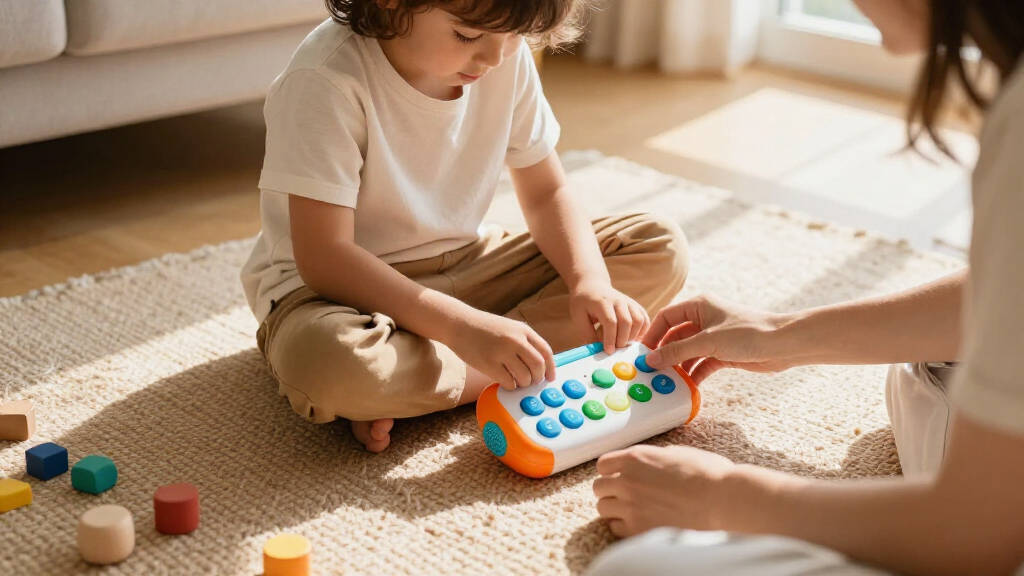
How We Picked
I compared the 15 players by how well they serve common family needs: a child who wants stories, a young listener who needs simple controls, a traveler who needs compact offline playback, or an older child who wants broader music access. I gave weight to ease of use, content access, portability, parental oversight, and whether the product’s format makes independent listening realistic. I also looked at the tradeoffs between screen-free designs, touchscreens, connected speakers, and dedicated offline players.
The ranking favors options with a clear role and a low-friction path from setup to listening, which is why the Yoto Player (3rd Gen.) comes first as a balanced, guided choice. Picks such as the Mighty 3 and Yoto Mini rank highly for narrower needs rather than trying to replace the all-around option. General-purpose MP3 players remain useful for families who value flexibility, but their setup and content decisions make them less straightforward for beginners. I treat similarly named or repeated-generation listings as separate entries from the supplied lineup, while noting that shoppers should check the exact version and included accessories before buying.
Factors to Consider When Choosing Best Kids Audio Players
Choosing a kids audio player is less about finding the longest feature list and more about matching the listening format to your child’s habits. These factors can help you avoid paying for flexibility your family will not use—or choosing a simple player that cannot support the content your child wants.
Match the content system to what your child listens to
Start by deciding whether your child mainly wants stories, songs, or a mix. A card- or story-focused system can make choosing an audiobook feel concrete and manageable, while an MP3 player gives adults more responsibility for finding and loading content. A connected speaker can offer another route, but the experience depends on network access and the available service setup. Check how new content is added, whether it is included or purchased separately, and whether your family can use audio you already own. A common mistake is choosing based on the starter pack alone without checking what listening will look like after that initial selection runs out.
Decide how much independence your child can handle
Large, obvious controls can matter more than a long list of playback features for younger children. Consider whether your child can choose a story, adjust volume, and restart playback without asking for help. Touchscreen menus may give older kids more ways to browse, but can add steps and create another screen-based activity. Physical cards or simple buttons can reduce menu navigation, though children still need to learn the system. If you are buying for siblings, think about whether each child can manage the player independently or whether an adult will be sorting out content and settings.
Choose for home, travel, or both
A compact player is easier to pack and carry, but a small body can be easier to misplace and may not suit a shared room as well as a larger speaker-style device. For regular car trips or flights, check whether playback works without Wi-Fi and whether the player supports headphones your child can use comfortably. At home, decide whether you want sound from a built-in speaker or expect headphones to be the usual setup. Do not assume that a portable design automatically means uninterrupted travel playback; charging, stored content, and headphone compatibility still shape the experience. Families who split use between home and outings may prefer a device that handles both acceptably rather than excelling at only one setting.
Weigh screen-free simplicity against broader features
Screen-free players can keep listening focused and reduce the temptation to browse apps, but they may limit how children search for unfamiliar content. Android-based models offer more flexibility, which can help older kids who want access to different music sources, but the extra options bring setup and supervision work. Before choosing a connected or app-capable player, find out who will manage accounts, downloads, and parental controls. A feature is only useful if the adult responsible can configure it and the child can use it safely. Families seeking a simple first player may get more value from fewer choices than from maximum versatility.
Check offline playback and content ownership
For listening away from home, ask exactly what works offline: a downloaded playlist, a purchased audio file, or content tied to a particular app or card system. These are not interchangeable, and access rules can affect whether favorite audio remains available later. If you already own music or audiobooks, verify supported file formats and how transfers work before choosing a device. Some families will prefer a curated library because it reduces setup, while others will want control over their existing collection. A quick check of storage capacity, card-slot support, and content-management steps can prevent a player from becoming harder to maintain than expected.
Set expectations for parental controls and sharing
Parental controls vary in what they manage: content access, app use, online connectivity, or simply the listening environment. Read the control details rather than assuming that a device marketed for children automatically limits every kind of access. For a shared family device, also consider whether profiles or separate content selections are available, since one child’s listening history may not suit another’s age. If the player will move between caregivers’ homes, simpler controls and a clear charging routine can reduce handoff friction. The best fit is the one adults can maintain consistently, not the one with the most settings on paper.
Frequently Asked Questions
Should I choose a Yoto player or a regular MP3 player?
Choose a Yoto-style player if you want a more guided, child-oriented way to start stories and songs without relying on a touchscreen menu. A regular MP3 player can make more sense if you already have audio files, want broader playback flexibility, or are comfortable managing downloads and settings. The tradeoff is adult setup: a conventional player may need more file organization and supervision before a child can use it independently. Also check how each system handles offline listening and additional content. For a first player for a young child, simplicity may matter more than access to every possible source.
Is a screen-free player a better choice for a young child?
It can be a good fit when the goal is listening without adding a screen for browsing or apps. Screen-free controls may make it easier for a young child to focus on selecting and playing audio, but they can also limit search and discovery. Think about whether an adult is happy to choose or organize content, especially at the start. Older children who want to manage playlists or use different services may prefer a touchscreen device with appropriate supervision. Age alone does not decide the choice; your child’s independence and your family’s content habits matter too.
What should I check before buying an audio player for travel?
Confirm that the player can store or access the audio you need without relying on a live internet connection. Then check battery and charging details, size, headphone compatibility, and whether controls are easy for your child to use while seated in a car or plane. A compact model may pack neatly but be easier to lose, while a larger speaker-based player may be less convenient to carry. Look closely at how offline content is prepared; downloaded files, app-based playback, and physical content cards can work differently. If travel is the main use, test the planned listening routine at home before the trip.
Do I need Wi-Fi for a kids audio player?
Not always: dedicated offline players and devices with stored content can play audio away from Wi-Fi once the content is available on the device. Connected speakers and some app-based players may rely more on a network for setup, streaming, or content management. Check which features stop working offline rather than relying on a general claim that a device supports music playback. This matters for road trips, visits to places with weak connectivity, and homes where children should not need internet access to listen. If offline use is a priority, confirm the exact download or storage process before choosing.
Are the similarly named Yoto Mini and Yoto Player listings interchangeable?
No; the Mini and full-size Player serve different practical roles, and listings may also refer to different generations or bundles. A Mini is the more portable direction for outings, while a full-size Player is better suited to a dedicated home listening spot. Starter packs and included accessories can vary even when product names look nearly identical. Compare the generation, what comes in the box, and the intended use before ordering. If you are replacing or adding to an existing system, verify content and accessory compatibility for the specific listing.
Conclusion
For most families seeking a guided, screen-free starting point, I recommend the Yoto Player (3rd Gen.) as best overall. The Mighty 3 is my best pick for offline music and phone-free portability, while the Yoto Mini suits children who will listen on the move. For a beginner who benefits from simple, curated listening, start with a Yoto or WonderBuddy-style story player rather than a general Android touchscreen model. Families who want broader app and music flexibility can look at the Globluum, ZAQE, or Luoran options, accepting the extra setup and supervision that come with that freedom. Choose the Echo Dot Kids if a connected smart speaker fits your home, and LeapFrog Let’s Record! if making recordings is part of the appeal. The right pick depends on whether your priority is guided stories, offline music, portability, or flexible access—not on the longest feature list.
Columbus Day / Indigenous Peoples' Day Picks
long weekend sales
As an affiliate, we earn on qualifying purchases.