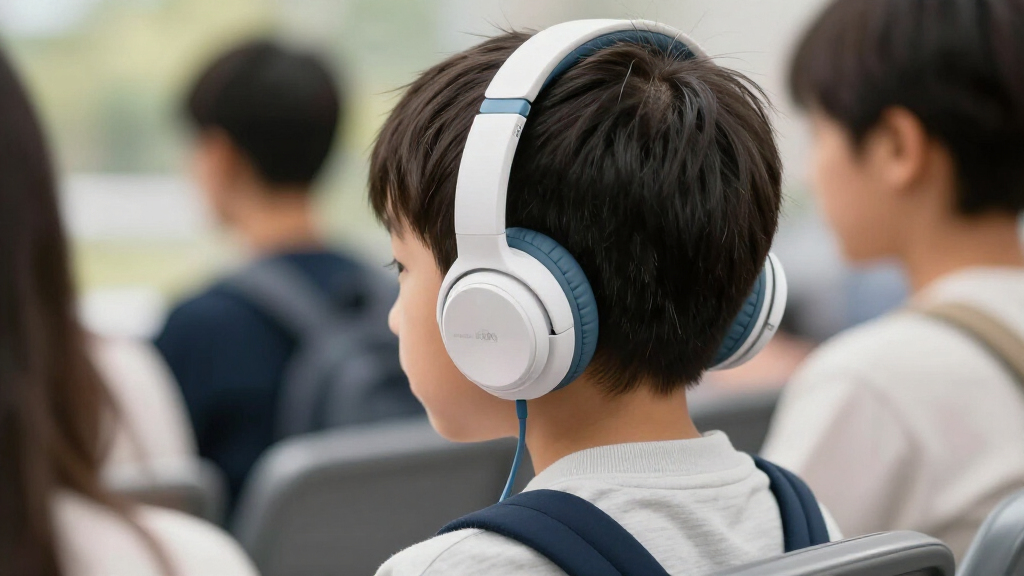

The right kids headphones for travel solve three problems at once: they protect young ears with a safe volume cap, they survive the abuse of a carry-on bag, and they keep a child quietly entertained through a long flight or road trip. My top pick is the iClever BTH12 Kids Bluetooth Headphones, which pairs an 85 dB volume limiter with a huge battery and a foldable frame built for transit. If you want to spend less, the Noot Products K11 delivers the best value among wired models, while the CozyPhones headband styles are the clear choice for kids who sleep in the car or can’t tolerate ear cups. The main tradeoffs in this category are wired versus wireless convenience, on-ear versus over-ear comfort on long trips, and whether a mic and sharing splitter matter for your family. Keep reading for the full breakdown of all fifteen models.

Turn the school run and nap time into listening time
- Thousands of audiobooks, podcasts and originals
- Listen on your phone, tablet or Echo — also offline
- Cancel anytime
Complete the kit


Key Takeaways
- The iClever BTH12 took the top spot because it is the only model here that combines an 85 dB hard volume cap, multi-day battery life and a foldable travel frame — most rivals force you to pick two of the three.
- Volume limiting quality varied more than any other feature: some budget models cap at 93 dB, which is louder than the 85 dB pediatric recommendation, so parents prioritizing hearing safety should check the cap before the price.
- Headband-style options (both CozyPhones models) were the only picks comfortable enough for sleeping children, but they sacrifice sound isolation — a real drawback on a loud plane.
- The iClever HS22 two-pack with an audio splitter is the smartest buy for families with two kids sharing one device, costing less per child than any single premium pair.
- Wired models dominated the under-$25 tier and eliminate charging anxiety entirely, while wireless picks like the iClever BTH22 and Belkin SoundForm Mini justify their price only if your child uses a tablet without a headphone jack.
| Kids Headphones with Microphone, 93dB Volume Limited (Pink/Purple) |  | Best Durability Pick | Volume Limit: 93dB | Connector: 3.5mm audio jack | Microphone: Inline HD microphone | VIEW LATEST PRICE | See Our Full Breakdown |
| iClever HS19 Kids Over-Ear Headphones with Microphone |  | Best Overall Wired | Maximum Volume: 85 dBA | Driver Size: 40 mm | Connectivity: Wired, 3.5mm audio jack | VIEW LATEST PRICE | See Our Full Breakdown |
| Candy Bila Wired Over-Ear Headphones for Kids |  | Best for Airplane Noise | Type: Wired over-ear headphones | Volume Limit: 85/94 dB switchable | Controls: In-line one-button remote | VIEW LATEST PRICE | See Our Full Breakdown |
| iClever HS19S Kids Over-Ear Wired Headphones |  | Best for School and Chromebook Travel Kits | Brand: iClever | Model: HS19S | Type: Wired over-ear headphones | VIEW LATEST PRICE | See Our Full Breakdown |
| CozyPhones Cozy 3.0 Kids Headband Headphones, Pink Unicorn |  | Best for Sleeping in Transit | Brand: CozyPhones | Model: Cozy 3.0 2024 – Unicorn | Connectivity: Wired and wireless | VIEW LATEST PRICE | See Our Full Breakdown |
| Kids Wired Headphones with Safe Volume Limiting and Mic, Navy |  | Best for Airplane Mode Switching | Connection Type: Wired, 3.5mm jack | Volume Limiting: 85dB (study) / 94dB (travel) | Driver Size: 40mm | VIEW LATEST PRICE | See Our Full Breakdown |
| CozyPhones Kids Wireless and Wired Headphones with Fox Headband |  | Best for Sleepy Travelers | Connectivity: Bluetooth wireless and 3.5mm wired | Volume Limit: 90 dB | Controls: In-line volume and audio controls | VIEW LATEST PRICE | See Our Full Breakdown |
| Noot Products K11 Kids Wired Headphones, Navy/Teal |  | Best Budget Backup Pair | Type: Wired on-ear headphones | Connector: 3.5 mm jack | Cable: 5 ft nylon braided | VIEW LATEST PRICE | See Our Full Breakdown |
| iClever BTH22 Kids Bluetooth Headphones |  | Best for Toddlers and Battery Life | Bluetooth: 5.4 | Battery Life: Up to 60 hours | Volume Limit: 85 dBA with selectable 74 dBA mode | VIEW LATEST PRICE | See Our Full Breakdown |
| Belkin SoundForm Mini On-Ear Bluetooth Kids Headphones |  | Best Premium Build | Connection: Bluetooth 5.0, 3.5mm AUX wired option | Battery Life: Up to 30 hours | Volume Limit: 85dB | VIEW LATEST PRICE | See Our Full Breakdown |
| JoySpark Kids Over-Ear Bluetooth Headphones with Microphone, Purple |  | Best for Long Battery Life | Color: Purple | Style: Over-ear | Bluetooth: Version 5.3 | VIEW LATEST PRICE | See Our Full Breakdown |
| Mehomeli Kids Air Conduction Open-Ear Headphones, 3.5 mm Jack |  | Best for Situational Awareness | Brand: Mehomeli | Model: MEKH02A-K2 | Age range: 3–16 years | VIEW LATEST PRICE | See Our Full Breakdown |
| iClever HS22 Wired Kids Headphones, 2-Pack with Audio Splitter |  | Best for Siblings Sharing One Device | Brand: iClever | Model: HS22 | Quantity: 2 headphones | VIEW LATEST PRICE | See Our Full Breakdown |
| iClever BTH12 Kids Bluetooth Headphones with LED Lights, 85H Playtime |  | Best Overall Wireless Pick | Battery life: 85 hours | Charging: USB-C fast charge | Bluetooth: Version 5.2 | VIEW LATEST PRICE | See Our Full Breakdown |
| EarFun K1 Kids Wired Headphones with Microphone and Volume Limit |  | Best Value Wired Pick | Type: Wired over-ear headphones | Microphone: Built into audio cable | Volume limit: 85 dB or 94 dB | VIEW LATEST PRICE | See Our Full Breakdown |
| kids headphones for travel | Volume Limit | Microphone | Design |
|---|---|---|---|
| Kids Headphones with Microphon | 93dB | Inline HD microphone | Foldable, adjustable headband |
| iClever HS19 Kids Over-Ear Hea | — | In-line | Over-ear, foldable |
| Candy Bila Wired Over-Ear Head | 85/94 dB switchable | Yes | Adjustable, foldable |
| iClever HS19S Kids Over-Ear Wi | 85 dBA | — | Foldable |
| CozyPhones Cozy 3.0 Kids Headb | 90 dB | Built-in | — |
| Kids Wired Headphones with Saf | — | Built-in HD mic with in-line controls | Over-ear, foldable, 90° swivel earmuffs |
| CozyPhones Kids Wireless and W | 90 dB | Built-in | — |
| Noot Products K11 Kids Wired H | — | None | Foldable, adjustable headband |
| iClever BTH22 Kids Bluetooth H | 85 dBA with selectable 74 dBA mode | — | — |
| Belkin SoundForm Mini On-Ear B | 85dB | — | — |
| JoySpark Kids Over-Ear Bluetoo | 85/94 dB | Built-in | — |
| Mehomeli Kids Air Conduction O | — | — | — |
| iClever HS22 Wired Kids Headph | 85 dBA | — | Foldable, adjustable headband |
| iClever BTH12 Kids Bluetooth H | 74/85 dBA | Built-in | — |
| EarFun K1 Kids Wired Headphone | 85 dB or 94 dB | Built into audio cable | Foldable, adjustable headband |
More Details on Our Top Picks
Kids Headphones with Microphone, 93dB Volume Limited (Pink/Purple)
Travel with kids is hard on gear, and this is where these headphones earn their spot. The reinforced headband and braided cable are built to survive being stuffed into seatback pockets and backpacks, which is more than I can say for thinner-corded rivals like the Candy Bila over-ears, whose nylon cord is sturdy but whose headband gives less confidence under rough handling. The 93dB volume limit sits slightly above the 85 dBA cap on the iClever HS19 — enough headroom for a child to hear a movie over cabin noise without maxing out. The inline HD mic handles video calls from the back seat, and folding construction keeps the footprint small.
Pros:- Braided cable and reinforced headband resist twisting and breakage
- 93dB limit balances hearing safety with enough volume for noisy planes
- Inline HD microphone and one-button control for calls and virtual learning
- Foldable, lightweight shape packs easily into carry-ons
Cons:- Wired only, with no Bluetooth fallback
- 3.5mm jack requires an adapter on newer devices
- 93dB limit is louder than the stricter 85 dBA some parents prefer
Best for: Parents of rough-and-tumble kids ages 3+ who need headphones that survive airports, car trips, and backpack abuse
Not ideal for: Families whose kids use newer iPhones or tablets without headphone jacks — the 3.5mm-only connection means carrying a dongle
- Volume Limit:93dB
- Connector:3.5mm audio jack
- Microphone:Inline HD microphone
- Age Range:3 years and up
- Design:Foldable, adjustable headband
- Cable:Braided
- Ear Cushions:Memory-protein
- Warranty:12 months
Our verdict“This pick makes the most sense for families who prioritize survivability and want volume headroom for loud travel environments.”
iClever HS19 Kids Over-Ear Headphones with Microphone
For a straight-down-the-middle travel pick, the HS19 hits the sweet spot. The 85 dBA volume limit matches the pediatrician-recommended ceiling, unlike the 93dB cap on the Pink/Purple volume-limited headphones, giving cautious parents firmer peace of mind on long trips. What sets it apart here is the sharing port: two kids can watch the same tablet together without a splitter — a genuinely useful trick on a flight with siblings, and something the iClever HS19S doesn’t offer. The over-ear cups with 40mm drivers also do a modest job of passively hushing engine drone. The tradeoff is simplicity: no wireless mode, and you’ll need a dongle for jack-less devices.
Pros:- 85 dBA limit aligns with pediatric hearing-safety guidance
- Sharing port lets two headphone pairs connect without a splitter
- 40mm drivers deliver fuller sound for movies and music
- Foldable over-ear design offers some passive noise isolation in transit
Cons:- Wired connection only
- Requires a device with a 3.5mm audio jack
- Fixed volume limit may feel quiet in very loud cabins
Best for: Families with two kids who share one screen and want strict 85 dBA hearing protection on flights and road trips
Not ideal for: Travelers using newer phones or tablets without 3.5mm ports who don’t want to keep track of an adapter
- Maximum Volume:85 dBA
- Driver Size:40 mm
- Connectivity:Wired, 3.5mm audio jack
- Microphone:In-line
- Sharing Port:Yes
- Design:Over-ear, foldable
Our verdict“This is the balanced default choice for wired travel — safe volume, shared listening, and no gimmicks.”
Candy Bila Wired Over-Ear Headphones for Kids
The standout feature here is the dual 85/94 dB volume switch — a genuine differentiator in this lineup. The iClever HS19 locks you at 85 dBA, which can leave dialogue muddy against jet engine roar; Candy Bila lets a parent flip to 94 dB for the flight and back down for everyday use. That flexibility is exactly what long-haul travel demands. Build-wise, the tear-resistant nylon cord and foldable adjustable band hold up well, though the headband reinforcement doesn’t feel as burly as the Pink/Purple braided-cable model’s. The inline mic and one-button remote cover calls and track-skipping. It’s still wired-only, so it shares the same dongle problem as every 3.5mm option here.
Pros:- Dual 85/94 dB switch adapts volume for loud planes versus quiet rooms
- Inline remote handles calls, playback, and track switching
- Adjustable foldable fit suits a wide age range
- Tear-resistant nylon cord resists preschool-level abuse
Cons:- Wired connection restricts movement around a seat
- The 94 dB mode can be switched on by the child without supervision
- Requires a 3.5mm jack or adapter
Best for: Frequent flyers who need a higher volume ceiling to overcome cabin noise while keeping a kid-safe default
Not ideal for: Parents who want a single locked safe-volume setting and don’t want a switch a child could flip themselves
- Type:Wired over-ear headphones
- Volume Limit:85/94 dB switchable
- Controls:In-line one-button remote
- Microphone:Yes
- Connection:3.5mm audio jack
- Cable:Tear-resistant nylon
- Design:Adjustable, foldable
- Suggested Age:3 years and up
Our verdict“This option stands out for airplane-bound families who need extra volume headroom without giving up a safe daily default.”
iClever HS19S Kids Over-Ear Wired Headphones
Think of the HS19S as the streamlined sibling of the iClever HS19: same 85 dBA safety cap, same 40mm driver size, but without the sharing port — which most families traveling with one child never use anyway. What you get instead is a lighter, simpler foldable over-ear design with soft cushions that stay comfortable through a full in-flight movie, plus broad compatibility with the devices kids actually carry: Chromebooks, tablets, laptops, and Nintendo Switch. Compared with the Candy Bila, it skips the dual-volume switch in favor of one locked safe setting, which I’d call the better call for younger kids who fiddle with controls. It’s the least feature-packed pick here, and that’s precisely its appeal.
Pros:- Locked 85 dBA limit can’t be overridden by the child
- Soft cushions keep smaller ears comfortable on long trips
- Broad compatibility with Chromebooks, tablets, laptops, and Switch
- Foldable shape with a 12-month warranty
Cons:- Fewer features than similarly wired rivals — no sharing port or dual volume switch
- Wired only, needing an adapter on jack-less devices
Best for: Parents who want a no-frills, locked-volume headphone that doubles for school Chromebooks, Switch, and travel
Not ideal for: Families who want flexibility — no sharing port, no volume switch, no wireless mode limits its versatility
- Brand:iClever
- Model:HS19S
- Type:Wired over-ear headphones
- Connectivity:3.5mm audio jack
- Driver Size:40 mm
- Volume Limit:85 dBA
- Design:Foldable
- Warranty:12 months
Our verdict“This model is better suited to buyers who value simplicity and a tamper-proof volume cap over extra features.”
CozyPhones Cozy 3.0 Kids Headband Headphones, Pink Unicorn
Every other pick in this roundup is a traditional headband-and-cup design; the CozyPhones Cozy 3.0 solves a different travel problem entirely — how a child listens lying down. The soft, stretchy unicorn headband with thin flat speakers sits comfortably against a car-seat headrest or an airplane pillow, where over-ear cups like the iClever HS19S would dig into a sleeping child’s ears. It’s also the only product here offering both wired and wireless modes, cutting the cord tangle during naps, and the band is washable after juice-box incidents. The compromises are real: 90 dB sits between the stricter and looser limits in this guide, battery mode needs charging, and flat speakers can’t match true over-ear sound quality.
Pros:- Headband design is comfortable for lying down during naps in transit
- Both wired and wireless modes add flexibility
- Washable, stretchy band survives spills and stays snug
- Light 3-ounce weight with an included mesh travel pouch
Cons:- Wireless mode depends on keeping the battery charged
- 90 dB volume limit is higher than the 85 dBA pediatric standard
- Flat speakers deliver thinner sound than over-ear alternatives
Best for: Parents of younger kids who nap in cars or planes and need comfortable lying-down listening
Not ideal for: Kids who want rich movie sound — the flat speakers trade audio quality and noise isolation for comfort
- Brand:CozyPhones
- Model:Cozy 3.0 2024 – Unicorn
- Connectivity:Wired and wireless
- Volume Limit:90 dB
- Connector:3.5mm plug
- Controls:Inline volume and audio controls
- Microphone:Built-in
- Weight:3 ounces
- Included Accessories:Mesh travel pouch
Our verdict“This pick makes the most sense for nap-heavy travel days where comfort while lying down beats sound quality.”
Kids Wired Headphones with Safe Volume Limiting and Mic, Navy
Most kids headphones pick a single volume ceiling and force you to live with it. This pair stands out for its two-stage volume limiting: 85dB for quiet rooms and homework sessions, 94dB for planes and trains where engine drone drowns out quieter caps. That flexibility is exactly what travel demands. Compared with the Noot K11, which offers no volume controls at all, this model’s in-line controls and HD microphone make it far more practical for kids who take calls or do online learning on the road. The 4.9ft braided nylon cord is long enough to reach airplane seat ports without yanking, and the foldable frame slips into a carry-on easily. The tradeoff: there is no Bluetooth at all, so device compatibility depends entirely on having a 3.5mm jack or an adapter.
Pros:- Switchable 85dB/94dB volume limits adapt to both quiet and noisy settings
- Built-in HD mic and in-line controls handle calls and online learning
- Long braided nylon cord survives rough handling and reaches airplane seats
- Foldable design packs flat for travel
Cons:- No Bluetooth option limits device compatibility
- 94dB travel mode can still be too quiet against loud engine noise
Best for: Frequent flyers who need a louder travel-mode volume cap to overcome cabin noise without abandoning hearing protection
Not ideal for: Families with USB-C-only tablets or phones — the wired-only design will require adapters for every device
- Connection Type:Wired, 3.5mm jack
- Volume Limiting:85dB (study) / 94dB (travel)
- Driver Size:40mm
- Cable Length:4.9 ft braided nylon
- Microphone:Built-in HD mic with in-line controls
- Design:Over-ear, foldable, 90° swivel earmuffs
- Recommended Age:3 years and up
Our verdict“This pick makes the most sense for families whose trips involve planes, where its dual volume modes beat one-size-fits-all competitors.”
CozyPhones Kids Wireless and Wired Headphones with Fox Headband
For kids who nod off in car seats or want to drift off to a story mid-flight, traditional headphones become a nuisance. The fox headband design here solves that: thin speakers sit inside a soft, washable band that doubles as a sleep mask, and there is nothing hard pressing against a child’s head when they lean against a window. Unlike the Noot K11 or the navy wired pair, this model offers both Bluetooth and a 3.5mm wired connection, so it works even when the battery dies — though wired mode still depends on the unit having charge for the wireless circuitry, which is a quirk worth knowing before a long trip. Volume is capped at 90dB, a reasonable middle ground between the stricter 85dB caps on the Belkin SoundForm Mini and the 94dB travel mode elsewhere. Kids who want big, colorful over-ear cups will find this look too subtle.
Pros:- Band-style design stays comfortable for sleeping in car seats and on planes
- Both Bluetooth and 3.5mm wired listening options
- Washable headband handles spills and kid grime
- Includes mesh travel bag and Cozy Storytime app access
Cons:- Wired mode still requires battery charge, limiting true backup use
- Loose headband fit may shift during active movement
Best for: Parents of kids who sleep during travel and need something comfortable against a car seat or pillow
Not ideal for: Older kids who want the look and feel of conventional headphones — the headband style may feel babyish
- Connectivity:Bluetooth wireless and 3.5mm wired
- Volume Limit:90 dB
- Controls:In-line volume and audio controls
- Microphone:Built-in
- Headband:Soft, stretchy, washable
- Included:Mesh travel bag, activation card
- Model:Cozy 3.0 2024 – FOX
Our verdict“This is the pick for nap-prone travelers, offering a comfort profile no over-ear model in this lineup can match.”
Noot Products K11 Kids Wired Headphones, Navy/Teal
Sometimes you just need a dependable spare — the pair that goes in the backpack, gets dropped, and keeps working. The K11 fills that role well. Its 5-foot braided cable is slightly longer than the navy pair’s 4.9ft cord, and its adjustable headband fits ages 3 through 16, an unusually wide range that makes it a good hand-me-down candidate. The honest tradeoff: there is no microphone, no remote, and no volume control, which puts it behind the CozyPhones fox band and the navy wired model for anything beyond passive listening. It also lacks any stated volume-limiting cap, so parents managing hearing protection will need to control volume at the device itself. Compared with feature-loaded options like the iClever BTH22, its appeal is simplicity and durability over versatility — exactly what a second pair for travel bags should be.
Pros:- Fits an unusually wide age range of 3 to 16 years
- Long braided tangle-resistant cable
- Foldable and lightweight for travel storage
- 24-month warranty backs the budget price
Cons:- No microphone, remote, or volume controls of any kind
- No specified volume-limiting cap for ear protection
Best for: Families who need an affordable, rugged spare pair for backpacks, road trips, or sibling hand-me-downs
Not ideal for: Parents prioritizing hearing safety — with no built-in volume limiter, volume control depends entirely on the source device
- Type:Wired on-ear headphones
- Connector:3.5 mm jack
- Cable:5 ft nylon braided
- Design:Foldable, adjustable headband
- Age Range:3 to 16 years
- Microphone:None
- Warranty:24 months
Our verdict“A no-frills workhorse best bought as a backup rather than a primary pair, especially for families who already own a volume-limited main set.”
iClever BTH22 Kids Bluetooth Headphones
Most volume-limited headphones draw the line at 85dB, but the BTH22 goes further with a selectable 74 dBA mode — a level genuinely suited to toddler ears, and something no other pair in this lineup offers. Rated for ages 2 and up, it also sidesteps a common travel frustration: battery anxiety. With up to 60 hours of playback, it doubles the 30-hour claim of the Belkin SoundForm Mini, meaning a two-week trip is possible without packing a charger. Bluetooth 5.4 provides a steadier connection than older specs, and the included 3.5mm cable keeps it usable if the charge does run out. The materials are BPA- and PVC-free ABS, a thoughtful detail for the youngest listeners. At just 0.33 lb it is easy for small heads to wear, though parents of older kids may find the toddler-oriented design and lower volume ceiling limiting as children grow.
Pros:- Selectable 74 dBA mode offers the strictest hearing protection here
- Up to 60 hours of battery life outlasts every competitor in this lineup
- Wired 3.5mm fallback keeps it usable when the battery is empty
- BPA- and PVC-free materials suit the youngest users
Cons:- Strict volume caps may be inaudible in noisy vehicles for some content
- Toddler-oriented styling may not age well with the child
Best for: Parents of toddlers aged 2 to 5 who want the strictest volume protection and long battery life for extended trips
Not ideal for: Older school-age kids — the 74/85dB caps and toddler-focused design will feel restrictive and babyish
- Bluetooth:5.4
- Battery Life:Up to 60 hours
- Volume Limit:85 dBA with selectable 74 dBA mode
- Speaker Size:40 mm
- Wired Connection:3.5 mm audio cable
- Weight:0.33 lb
- Recommended Age:2 years and up
Our verdict“The clear choice for families traveling with very young children, where its extra-quiet mode and two-day-plus battery justify the pick.”
Belkin SoundForm Mini On-Ear Bluetooth Kids Headphones
Belkin treats kids headphones like small adult ones, and it shows. The SoundForm Mini carries an IPX5 water-resistance rating and durability testing for two years of spills and drops — none of the other picks here make any liquid-resistance claim, which matters enormously around juice boxes and airport drinks. Add touch controls simple enough for young children, USB-C charging, dual microphones, and eco-conscious construction with recycled materials and plastic-free packaging, and this is the most polished package in the roundup. Battery life sits at 30 hours — half the iClever BTH22’s 60 — which is still plenty for most trips. The honest tradeoff is the on-ear fit: compared with over-ear models like the navy wired pair, smaller cushions press on the ear and can get uncomfortable on long flights. The 85dB cap is safe but may struggle against loud cabin noise.
Pros:- IPX5 spill resistance, unique in this lineup for real-world kid accidents
- Touch controls are genuinely easy for young children to operate
- Dual Bluetooth and 3.5mm wired options cover every travel scenario
- Two-year durability testing and recycled materials back the premium positioning
Cons:- On-ear fit is less comfortable than over-ear models for extended wear
- 85dB cap can be too quiet in loud environments like planes
Best for: Parents willing to pay more for spill-proof durability, touch controls, and brand-backed build quality for daily travel use
Not ideal for: Kids sensitive to pressure on their ears — the on-ear fit gets uncomfortable on long-haul flights compared with over-ear alternatives
- Connection:Bluetooth 5.0, 3.5mm AUX wired option
- Battery Life:Up to 30 hours
- Volume Limit:85dB
- Water Resistance:IPX5
- Driver:40mm
- Charging:USB-C (cable included)
- Microphones:2 (earcup and cable control box)
- Warranty:2-year limited
Our verdict“The best-built option here for accident-prone young travelers, provided your child tolerates an on-ear fit on longer trips.”
JoySpark Kids Over-Ear Bluetooth Headphones with Microphone, Purple
For families who dread mid-trip charging, this option stands out with up to 60 hours of listening per charge, and the 3.5 mm backup jack means the headphones keep working even if the battery dies entirely. The memory foam cushions and padded headband make long flights more comfortable than firmer budget picks like the Noot K11. Compared with the iClever BTH12, the dual 85/94 dB volume settings give parents flexibility — 85 dB for younger kids, 94 dB for noisy planes — though the BTH12 still beats it on raw endurance. The tradeoff is that this model skips the fun extras like LED lights, so it plays second fiddle as a boredom-fighter on long hauls.
Pros:- Up to 60 hours of battery life per charge
- 3.5 mm wired backup keeps them usable if the battery dies
- Memory foam cushions and padded headband for long-wear comfort
- Dual 85/94 dB volume limits for quiet and noisy environments
Cons:- Battery life can drop considerably with heavy daily use
- No wired-only fallback features like fold-flat storage or lights that add kid appeal
Best for: Families taking multi-day trips where regular charging isn’t practical
Not ideal for: Kids who want light-up extras — the plain design loses appeal next to flashier picks like the iClever BTH12
- Color:Purple
- Style:Over-ear
- Bluetooth:Version 5.3
- Battery life:Up to 60 hours
- Volume limit:85/94 dB
- Speaker size:40 mm
- Microphone:Built-in
- Wired connection:3.5 mm backup jack
Our verdict“A sensible pick for parents who want maximum runtime and hearing protection without gimmicks on extended journeys.”
Mehomeli Kids Air Conduction Open-Ear Headphones, 3.5 mm Jack
Most headphones in this roundup isolate kids from the world; this one deliberately doesn’t. The air conduction open-ear design leaves ears uncovered so children can still hear announcements at the airport or a parent’s call at the campsite — something neither the EarFun K1 nor the iClever HS22 can do. At 20 grams, it’s lighter than any over-ear model here, and the titanium neckband fits under helmets or alongside glasses, making it a fit for active travel days. The compromises are real: a wired 3.5 mm connection tethers kids to the device, and open-ear audio means practically zero isolation on a loud plane, where engine noise will drown out quiet content.
Pros:- Open-ear design keeps children aware of announcements and parents’ voices
- Featherweight at just over 20 grams for all-day wear
- Memory titanium neckband flexes without breaking and works with helmets or glasses
- Tangle-resistant braided nylon cable
Cons:- Wired-only connection limits movement and won’t work with devices lacking a 3.5 mm jack
- No passive noise isolation makes quiet listening difficult in loud settings
Best for: Parents who want kids to stay audible to their surroundings — airports, hikes, bike rides, theme park lines
Not ideal for: Airplane or train travel — the open-ear design lets engine noise overpower the audio
- Brand:Mehomeli
- Model:MEKH02A-K2
- Age range:3–16 years
- Connection:3.5 mm jack
- Driver size:16.2 mm
- Weight:20.14 g
- Ear placement:Open ear
- Cable:Nylon braided
- Warranty:12 months
Our verdict“Choose this when awareness matters more than isolation — and skip it for cabin-pressure cabin noise.”
iClever HS22 Wired Kids Headphones, 2-Pack with Audio Splitter
The real selling point here is the package: two foldable headphones plus an audio splitter, so two kids can watch the same tablet from one screen — a lifesaver on road trips where a second device isn’t an option. While the EarFun K1 offers a sharing jack for the same purpose, the HS22 gives each child a full set with its own adjustments, avoiding cable-length squabbles. Both pairs cap volume at 85 dBA, and the tangle-resistant nylon cables survive backpack abuse. Compared with the Noot K11, you’re paying a bit more but effectively halving your per-child cost. The drawbacks: everything is wired, so airplane seatback systems and old tablets need jack access, and there’s no water resistance for pool or beach days.
Pros:- Two complete headphones plus a splitter for shared listening from one device
- Safe 85 dBA volume limit on both pairs
- Foldable design and tangle-resistant nylon cables travel well
- Adjustable headbands and large soft cushions fit a range of ages
Cons:- Wired-only — requires devices with a 3.5 mm jack
- Not water resistant, so risky around pools and drinks
Best for: Families with two kids who share one tablet or laptop in the car or on planes
Not ideal for: Households with USB-C-only devices or kids who want wireless freedom — the 3.5 mm dependency is limiting
- Brand:iClever
- Model:HS22
- Quantity:2 headphones
- Connectivity:Wired, 3.5 mm jack
- Driver size:40 mm dynamic
- Volume limit:85 dBA
- Cable:Nylon, tangle-resistant
- Design:Foldable, adjustable headband
- Warranty:12 months
Our verdict“The most practical choice when two kids must share one screen and one budget covers both.”
iClever BTH12 Kids Bluetooth Headphones with LED Lights, 85H Playtime
This model makes the most sense as the do-everything travel headphone. With 85 hours of playtime and USB-C fast charging — 10 minutes plugged in buys 7 hours of listening — it outlasts the JoySpark by a full day of continuous use and charges faster than anything wired-adjacent in this lineup. The 74/85 dBA dual volume limit offers the most conservative option here, suited to very young ears, while the AUX port covers in-flight entertainment systems. Compared with the iClever BTH22, the four LED lighting modes are the differentiator kids actually notice, and they can be switched off when battery matters more than bling. The honest tradeoff: leaving the lights on noticeably drains battery, and the strict 85 dBA ceiling can feel too quiet against cabin noise.
Pros:- Class-leading 85-hour battery life with fast USB-C charging
- Conservative 74/85 dBA volume limits for hearing safety
- Four LED lighting modes that can be switched off to save battery
- Reinforced build resists drops and twisting, plus AUX fallback for seatback screens
Cons:- LED lights drain the battery if left running
- Volume ceiling may be too quiet in loud environments like planes
Best for: Families who want one durable wireless pair that survives long trips and entertains kids in equal measure
Not ideal for: Parents who want maximum volume on noisy flights — the 85 dBA cap stays firm
- Battery life:85 hours
- Charging:USB-C fast charge
- Bluetooth:Version 5.2
- Volume limit:74/85 dBA
- Speaker size:40 mm
- Lighting modes:4
- Microphone:Built-in
- Connectivity:Bluetooth and AUX
Our verdict“The strongest all-around wireless choice for travel thanks to endurance, durability, and kid-friendly fun in one package.”
EarFun K1 Kids Wired Headphones with Microphone and Volume Limit
For straightforward wired listening, this pick covers the basics that matter most on the road: an in-line microphone and controls for calls or videos, a braided cable that survives backpack tangles, and a 3.5 mm sharing jack so a sibling can plug in without a splitter — a neater solution than the iClever HS22‘s separate adapter if you already own a second pair. The foldable frame packs flatter than the Candy Bila over-ears, and the dual 85/94 dB limits are handy for switching between quiet rooms and noisy cabins. The main frustration is that how to switch between the two volume settings isn’t clearly documented, and like every wired model here, it’s useless with USB-C-only devices unless you carry an adapter.
Pros:- In-line microphone and controls handle calls and playback without touching the device
- Built-in 3.5 mm sharing jack lets a second listener plug in directly
- Braided cable and foldable design hold up to travel wear
- Dual 85/94 dB volume limits cover quiet and loud settings
Cons:- Method for switching between volume limits isn’t clearly explained
- Wired-only connection requires a 3.5 mm jack or adapter
Best for: Budget-conscious parents who want mic and controls without paying for Bluetooth
Not ideal for: Families with newer phones and tablets lacking a headphone jack — an adapter becomes mandatory
- Type:Wired over-ear headphones
- Microphone:Built into audio cable
- Volume limit:85 dB or 94 dB
- Driver size:40 mm
- Connector:3.5 mm audio jack
- Cable:Nylon braided
- Design:Foldable, adjustable headband
- Sharing jack:3.5 mm
Our verdict“A sensible budget wired pick that adds mic, sharing, and foldability where cheaper models cut corners.”
How We Picked
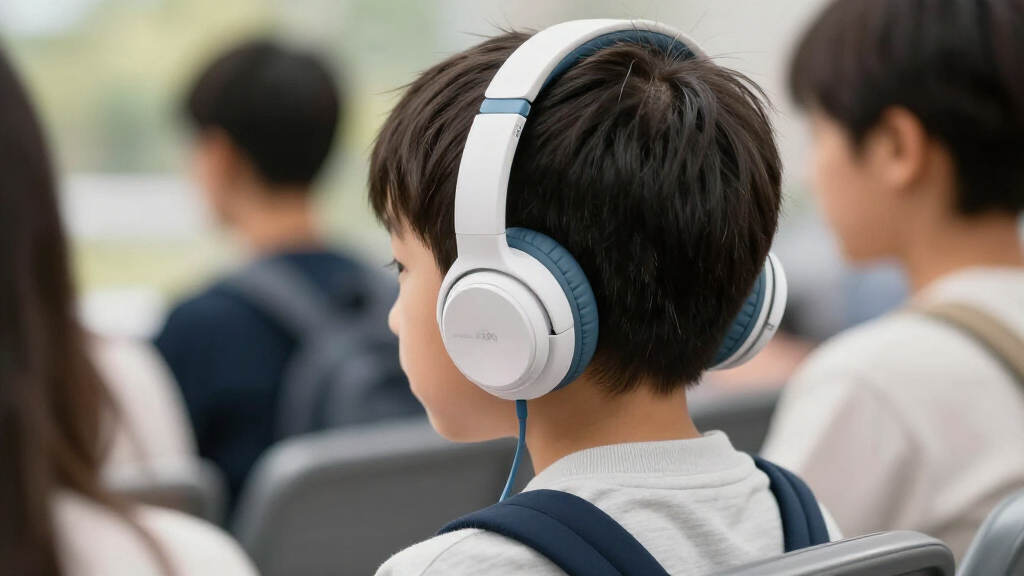
I judged every model against the realities of travel rather than a spec sheet. The first filter was hearing safety: whether the volume cap is a true 85 dB hardware limit or a softer 93 dB ceiling, and whether it can be bypassed. The second was travel durability — folding hinges, headband adjustability, cable length for airplane seat ports, and whether the build tolerates being stuffed into a seatback pocket. Third, I weighed comfort over long sessions, because a child who pulls headphones off an hour into a six-hour flight has effectively broken them.
From there, ranking came down to fit-for-purpose. Wireless models had to justify charging logistics with genuinely long battery life; wired models had to offer something extra — a splitter, a mic, a low price — to rank above plug-and-play commodity pairs. I also favored designs that fit a wide age range, since headphones that only suit a four-year-old get outgrown before their second summer trip. Value was judged per use, not per dollar: a cheap pair that breaks mid-trip is the most expensive option on this list.
| kids headphones for travel | Design |
|---|---|
| Kids Headphones with Microphon | Foldable, adjustable headband |
| iClever HS19 Kids Over-Ear Hea | Over-ear, foldable |
| Candy Bila Wired Over-Ear Head | Adjustable, foldable |
| iClever HS19S Kids Over-Ear Wi | Foldable |
| CozyPhones Cozy 3.0 Kids Headb | — |
| Kids Wired Headphones with Saf | Over-ear, foldable, 90° swivel earmuffs |
| CozyPhones Kids Wireless and W | — |
| Noot Products K11 Kids Wired H | Foldable, adjustable headband |
| iClever BTH22 Kids Bluetooth H | — |
| Belkin SoundForm Mini On-Ear B | — |
| JoySpark Kids Over-Ear Bluetoo | — |
| Mehomeli Kids Air Conduction O | — |
| iClever HS22 Wired Kids Headph | Foldable, adjustable headband |
| iClever BTH12 Kids Bluetooth H | — |
| EarFun K1 Kids Wired Headphone | Foldable, adjustable headband |
Factors to Consider When Choosing Kids Headphones For Travel
Before picking a specific model, it helps to understand what actually separates a good travel headphone from a good everyday one. Travel changes the priorities — battery life, volume caps and physical resilience matter more than audiophile sound quality. These are the factors I would weigh before buying.Volume Limiting: 85 dB vs. 93 dB
Not all “volume limited” headphones limit to the same level, and the difference matters. Most hearing-health guidance points to 85 dB as the safe ceiling for children’s sustained listening, yet many budget models cap at 93 dB — technically limited, but loud enough to cause fatigue and potential damage over hours of use on a plane. Parents should also check whether the limit is a hardware cap or something a child can disable. A related trap: kids crank the volume to overcome cabin noise, so a better-isolating over-ear design often keeps actual listening levels lower than a loose on-ear pair with a stricter cap. If hearing protection is your main reason for buying, treat the dB number as the first spec you check, not a footnote.
Wired vs. Wireless for Different Trip Types
Wireless freedom sounds appealing until you’re mid-flight with a dead battery and no charging port. Wired headphones never need charging and work with airplane seat jacks, but the cable becomes a tangling, yanking hazard with younger children and gets chewed on by toddlers. Wireless models shine on car trips and with tablets that have dropped the headphone jack, but you should look for 30-plus hours of playtime so a single charge covers an entire trip. Some families solve this with a hybrid approach: a Bluetooth pair for the road, a cheap wired backup in the same bag. Also check for a 3.5 mm aux mode on wireless models — it doubles as that backup without buying a second pair.
Fit and Comfort Across Ages
A headphone that fits a nine-year-old will slide off a four-year-old, and most parents underestimate how quickly kids outgrow both the size and the aesthetic. Look for adjustable headbands with generous extension range and ear cups sized for small pinnae rather than just scaled-down adult cups. Weight matters more than it seems: heavy over-ear models cause neck complaints on long rides, while featherweight headband styles suit nappers but shift position when a child leans against a car window. Padding material is the quiet differentiator — memory foam covered in protein leather survives sweaty ears better than thin foam that flattens within a season. If your child is between sizes, err toward adjustable wired models rather than fixed-fit wireless ones.
Durability and the Reality of Kid Handling
Travel headphones live a harder life than home headphones: they’re dropped on airport floors, sat on in cars, and twisted by bored hands. Folding hinges are a double-edged design — they save space but add a break point, so check that the hinge is reinforced rather than bare plastic. Cables remain the most common failure on wired models; a braided or flat cable survives far longer than a round rubber one, and a detachable cable is best of all because it can be replaced. On wireless models, the charging port is the weak spot, so a covered or recessed port resists pocket lint and prying fingers. A realistic expectation: even a durable kids headphone is a two-to-three-year purchase, which is why I weight value heavily in the rankings.
Sharing, Microphones and Sibling Logistics
Two kids, one tablet is the default travel scenario in most families, and it changes what you should buy. A two-pack with an audio splitter is usually cheaper and less frustrating than two separate purchases, and it eliminates the fight over who controls the volume. Built-in microphones matter if your child uses the headphones for video calls with grandparents or online learning, but a mic adds a cable controls module that small fingers fidget with. One caution on shared volume: with a splitter, both headphones receive the same signal, so pairs with different volume caps can end up dramatically unequal in loudness. If your kids share a device often, matching pairs solve more problems than any single premium model.
When to Pay More — and When Not To
The jump from a basic wired pair to a mid-range Bluetooth model buys real things: battery life, stronger volume enforcement, better padding and LED fun factor. But past that mid tier, extra spending mostly buys branding rather than travel benefit — a child cannot meaningfully use audiophile sound on an airplane’s ambient noise floor. Spend more when the headphones will be used weekly at home and on trips; stay cheap if they’ll live in a bag and come out twice a year. The one premium feature I would pay for is battery life, because it’s the spec that can actually ruin a trip when it fails. Skip paying for gimmicks like cat ears or heavy light-up designs if weight is already a comfort concern for your child.
Frequently Asked Questions
Are 93 dB volume-limited headphones safe enough for my child on a plane?
They’re acceptable for short trips but not ideal for long ones. The 93 dB cap exists because airplane cabin noise pushes kids to max out the volume, and a louder ceiling helps overcome that without distortion. The problem is duration: hearing damage is a function of both level and time, so 93 dB for a six-hour flight is a different risk than 93 dB for a twenty-minute car ride. If your child is a frequent flyer or listens daily, I’d steer toward the 85 dB models in this lineup. For occasional travel, a 93 dB pair with good ear-cup sealing is a reasonable compromise, since better isolation keeps actual listening levels down anyway.
Should I buy wired or wireless headphones for airplane travel?
Wired is the safer bet for flights specifically, because airplane entertainment systems use a physical jack and batteries die at the worst moment. Most wireless kids headphones in this roundup include an aux mode, which gives you a fallback, but the cable is usually short and thin. Wireless makes more sense if your child mainly uses a tablet — especially newer tablets with no headphone jack — or if cable-tangling has been a problem in your family. The practical answer for frequent travelers is a Bluetooth pair with a long battery life and a wired mode, which covers both scenarios. If you buy wired only, choose a braided cable and confirm the length reaches an airplane seat port from a child’s seated position.
What’s the best option for a child who sleeps in the car or on flights?
Headband-style headphones are the clear winner here, which is why both CozyPhones models made the list despite their audio limitations. Flat speakers inside a soft fabric band let a child rest their head sideways against a window or pillow with nothing pressing on the ear. Traditional over-ear cups become painful the moment a leaning head puts body weight on them, and on-ear designs are worse. The tradeoff is real, though: headbands provide almost no noise isolation and the speakers shift out of alignment easily, so they suit sleeping or quiet audio rather than blocking cabin noise. For a child who naps on every trip, that tradeoff is worth it.
Do I need a two-pack with an audio splitter, or should I buy individual pairs?
If you have two children who share one device on trips, the two-pack is almost always the better call, and not just for price. A splitter setup means one device, one controls argument, and matching volume behavior across both headphones. Buying two different individual pairs often creates a loudness mismatch — a 85 dB cap on one head and 93 dB on the other leads to immediate complaints about fairness. The counterargument: two separate Bluetooth pairs let each child watch their own content on their own device, which is genuinely better for long trips if you have the screens to support it. Match your purchase to how your family actually travels, not how you wish it did.
Are open-ear air conduction headphones a good choice for travel?
They fill a specific niche, and it’s worth knowing whether it’s yours. Open-ear designs like the Mehomeli in this lineup leave the ear canal completely free, so your child can still hear you, flight announcements, and surroundings — a genuine plus for parents who want situational awareness. The downside on a plane is unavoidable: with nothing sealing the ear, your child competes against 80 dB of engine noise, which either means quiet audio they can barely hear or cranking the volume to unsafe real levels. They make the most sense for car trips where a parent wants to talk to the child, or for kids who find anything touching their ears intolerable. For flights and noisy trains, I’d pick a sealed over-ear design instead.
Conclusion
For most families, the iClever BTH12 is my best overall pick — its 85 dB cap, exceptional battery life and folding frame cover every travel scenario without compromise. If value is the priority, the Noot Products K11 and the EarFun K1 prove that a safe, durable wired pair doesn’t require spending much, and the iClever HS22 two-pack is the smartest money in this roundup for siblings sharing one device. On the premium end, the Belkin SoundForm Mini justifies its price with a trusted brand and refined fit for younger children. For beginners — a first-ever headphone for a toddler or preschooler — the headband styles from CozyPhones are the gentlest introduction, and they’re also the best pick for kids who sleep while traveling. Finally, if your child resists anything on or over the ears, the Mehomeli open-ear pair is the niche answer, best kept for car use rather than planes. Match the pick to your child’s age, your trip type and your tolerance for charging cables, and you’ll land on the right pair.