The best toys for 4-year-olds combine play they can manage independently with room to build, imagine, move, or learn. My best overall pick is the Take Apart Dinosaur Construction Set, which pairs dinosaur play with hands-on building; the Kidnoculars are a standout for outdoor curiosity, while LeapFrog Mr. Pencil suits children ready to practice early writing. The main tradeoffs are choosing between active and quieter play, open-ended fun and guided learning, and toys that need adult setup versus ones a child can start alone. Age labels are a starting point, but a child’s interests, dexterity, and patience matter just as much. Read on for the full breakdown, buying advice, and picks for different play styles.

Turn the school run and nap time into listening time
- Thousands of audiobooks, podcasts and originals
- Listen on your phone, tablet or Echo — also offline
- Cancel anytime
Complete the kit


Key Takeaways
- The Take Apart Dinosaur Construction Set stands out as the most balanced pick: it connects a familiar pretend-play theme with hands-on assembly, though the small parts and tool use may need adult supervision.
- The lineup’s strongest learning options use different approaches: Mr. Pencil focuses on guided early writing, the magnetic maze builds controlled hand movements, and Doctor Jupiter’s kit introduces simple experiments.
- Outdoor and high-energy choices come with space tradeoffs: Kidnoculars encourage observation with little setup, while the pogo jumper, airplane launchers, and basketball set need room to move.
- Several toys work best with another person: walkie-talkies, fishing games, and the basketball set can prompt shared play, while a maze or wooden stacking toy is easier to use solo.
- Theme-heavy toys are less flexible than open-ended picks: dinosaur tracks and rocket play may delight a child with a strong interest, while stacking, maze, and construction toys can support more varied play scenarios.
| Dinosaur Toys for Kids – Take Apart Construction Set with Electric Drill |  | Best for Hands-On Building | Recommended age: 3–8 years | Dinosaur figures: 4: Tyrannosaurus Rex, Velociraptor, Triceratops, and Parasaurolophus | Tools included: Electric drill and manual screwdrivers | VIEW LATEST PRICE | See Our Full Breakdown |
| Dino Walkie Talkies for Kids, 2 Pack |  | Best for Outdoor Pretend Play | Recommended age: 3–12 years | Pack size: 2 walkie talkies | Talking range: Approximately 1,000 feet | VIEW LATEST PRICE | See Our Full Breakdown |
| Let’s Go Fishin’ Game by Pressman – The Original Fast-Action Fishing Game | 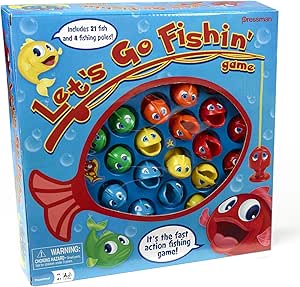 | Best First Dexterity Game | Minimum age: 4 years | Number of players: 1–4 | Included fish: 21 colorful fish | VIEW LATEST PRICE | See Our Full Breakdown |
| IPOURUP Dinosaur Toys for Kids 3-8: Wooden Stacking Montessori Toys |  | Best Quiet, Screen-Free Challenge | Recommended age: 3–8 years | Number of pieces: 11 | Material: Wood | VIEW LATEST PRICE | See Our Full Breakdown |
| Dinosaur Toys Create A Dinosaur World Road Race Track Set |  | Best for Big Imaginative Play | Recommended age: 3–8 years | Total pieces: 252 | Track pieces: 216 | VIEW LATEST PRICE | See Our Full Breakdown |
| Magnetic Wooden Fishing Game Toy for Preschoolers, Alphabet Fish Catching Counting Games Puzzle with Numbers and Letters |  | Best for Early Learning | Material: Wood | Age range: 36 months–5 years | Set includes: Alphabet and number fishing game | VIEW LATEST PRICE | See Our Full Breakdown |
| Flybar My First Foam Pogo Jumper for Kids, Safe and Durable Bungee Pogo Stick for Ages 3 and Up |  | Best for Active Play | Brand: Flybar | Age range: 3 years and up | Weight support: Up to 250 lbs; intended for kids | VIEW LATEST PRICE | See Our Full Breakdown |
| Educational Insights GeoSafari Kidnoculars – Toy Binoculars for Kids, Outdoor Toys for Ages 4-8 |  | Best for Outdoor Discovery | Age range: 3–8 years | Magnification: 2x | Objective lens diameter: 45 mm | VIEW LATEST PRICE | See Our Full Breakdown |
| Montessori Magnetic Wooden Maze Puzzle for Kids Ages 3-6 |  | Best for Travel and Quiet Time | Material: Natural wood | Age range: 3–6 years | Wooden pieces: 16 | VIEW LATEST PRICE | See Our Full Breakdown |
| Fuwidvia 3 Pack Airplane Launcher Toys, 13.2 in LED Foam Gliders for Kids 4-12 |  | Best for Group Outdoor Play | Recommended age: 4–12 years | Number of items: 3 gliders | Airplane length: 13.2 inches | VIEW LATEST PRICE | See Our Full Breakdown |
| LeapFrog Mr. Pencil’s Scribble Write and Read, Green |  | Best for Early Writing Practice | Brand: LeapFrog | Age range: 3 years and up | Material: Plastic | VIEW LATEST PRICE | See Our Full Breakdown |
| Doctor Jupiter My First Science Experiments Kit for Kids Ages 4+ |  | Best for Adult-and-Child Discovery | Recommended age: 4 years and up | Experiment count: More than 100 | Included tools: 2 beakers, 1 conical flask, spatula, 2 stirring sticks, 2 spray bottles, 2 cups, funnel, and tray | VIEW LATEST PRICE | See Our Full Breakdown |
| 5-in-1 Voice Changer for Kids – Voice Changing Device for Boys & Girls |  | Best for Silly Pretend Play | Age range: 3 years and up | Voice modes: 5: Alien, Ghost, Monster, Robot, and standard microphone | Power: Rechargeable battery | VIEW LATEST PRICE | See Our Full Breakdown |
| iPlay, iLearn Rocket Space Toy for Kids Ages 3-8 |  | Best for Space-Themed Building Play | Brand: iPlay, iLearn | Age range: 36 months to 8 years | Number of pieces: 4 | VIEW LATEST PRICE | See Our Full Breakdown |
| Joyin Arcade Basketball Game Set with 4 Balls and Hoop for Kids 3+ |  | Best for Active Indoor-Outdoor Play | Age range: 3 years and up | Material: Plastic | Dimensions: 35.5 x 18.5 x 55 inches | VIEW LATEST PRICE | See Our Full Breakdown |
| toys for 4-year-old | Material | Dimensions | Age range |
|---|---|---|---|
| Dinosaur Toys for Kids | ABS plastic | — | — |
| Dino Walkie Talkies for Kids | — | 2.8 × 1.57 × 4.4 inches | — |
| Let’s Go Fishin’ Game by Press | — | — | — |
| IPOURUP Dinosaur Toys for Kids | Wood | — | — |
| Dinosaur Toys Create A Dinosau | — | 15.7 × 10.7 × 3.2 inches | — |
| Magnetic Wooden Fishing Game T | Wood | 11.8 x 8.9 x 0.6 inches | 36 months–5 years |
| Flybar My First Foam Pogo Jump | — | — | 3 years and up |
| Educational Insights GeoSafari | Plastic | 4.8 x 5.75 x 2.8 inches | 3–8 years |
| Montessori Magnetic Wooden Maz | Natural wood | 5.7 x 8.26 inches | 3–6 years |
| Fuwidvia 3 Pack Airplane Launc | Impact-resistant foam | — | — |
| LeapFrog Mr. Pencil’s Scribble | Plastic | — | 3 years and up |
| Doctor Jupiter My First Scienc | — | — | — |
| 5-in-1 Voice Changer for Kids | Plastic | 6 x 4.1 x 6 inches | 3 years and up |
| iPlay | — | 7.48 x 7.09 x 14.57 inches | 36 months to 8 years |
| Joyin Arcade Basketball Game S | Plastic | 35.5 x 18.5 x 55 inches | 3 years and up |
More Details on Our Top Picks
Dinosaur Toys for Kids – Take Apart Construction Set with Electric Drill
For a four-year-old who wants to take toys apart and put them back together, this set offers more to do than a dinosaur figure alone. The four dinosaurs and electric drill give children a reason to practice turning, matching parts, and trying again, while manual screwdrivers offer another way to build. Compared with IPOURUP’s wooden stacking dinosaurs, this pick focuses on assembly and tool play rather than balance and patience; the stacking set is quieter and simpler to pack, but it does not offer the same construction experience.
The tradeoff is that younger fours may need an adult to help with alignment, and the drill requires batteries that are not specified as included. I’d choose it for children who enjoy guided building, not for a child expecting a ready-to-play dinosaur with no setup.
Pros:- Four dinosaurs provide variety for repeated assembly and pretend play
- Electric drill and manual screwdrivers support hands-on tool practice
- Building encourages fine motor coordination and creative problem-solving
- ABS plastic construction is described as durable and non-toxic
Cons:- Some assembly may be difficult for younger children without adult help
- Electric drill needs batteries, and the listing does not say whether they are included
Best for: Four-year-olds who like dinosaurs, pretend tools, and building activities they can tackle with occasional adult help
Not ideal for: Children who get frustrated by multi-step assembly or families who want a battery-free toy ready to use straight away
- Recommended age:3–8 years
- Dinosaur figures:4: Tyrannosaurus Rex, Velociraptor, Triceratops, and Parasaurolophus
- Tools included:Electric drill and manual screwdrivers
- Material:ABS plastic
- Number of packs:4
- Model number:Take Apart Dinosaur Toys – 817
Our verdict“Choose this set for a dinosaur fan who enjoys building with tools and can accept a little adult assistance.”
Dino Walkie Talkies for Kids, 2 Pack
These dinosaur-shaped walkie talkies suit fours who want to turn a backyard, campsite, or family walk into a shared adventure. The push-to-talk format gives children a simple role to play, and the two-unit set makes communication a game for a child and companion rather than a solo activity. Compared with the dinosaur race track, this toy needs less floor space and invites more movement, but it depends on having another person nearby to join in.
The listed range is about 1,000 feet, though actual use can depend on surroundings. Two channels keep operation straightforward but limit separate groups, and these are not water resistant, so wet-weather play is a poor fit. Batteries are also required and not included. I’d pick these over the fishing game for outdoor make-believe, but not for a child who prefers independent tabletop play.
Pros:- Two units support shared play between siblings, friends, or a child and adult
- Simple push-to-talk operation is suited to young children
- Listed talking range is approximately 1,000 feet
- Lightweight, dinosaur-shaped design is easy for small hands to carry
Cons:- Not water resistant, limiting use in rain or around wet play areas
- Batteries are required but not included
- Two channels may not suit multiple groups playing nearby
Best for: Families with two young children who enjoy outdoor adventures, camping, or role-playing together
Not ideal for: Buyers seeking a water-resistant toy, independent play, or a set that works without supplying batteries
- Recommended age:3–12 years
- Pack size:2 walkie talkies
- Talking range:Approximately 1,000 feet
- Channels:2
- Connectivity protocol:UHF
- Dimensions:2.8 × 1.57 × 4.4 inches
- Item weight:5.28 ounces
- Water resistance:Not water resistant
Our verdict“Choose these for a pair of children who want portable outdoor pretend play and can keep the units dry.”
Let’s Go Fishin’ Game by Pressman – The Original Fast-Action Fishing Game
At four, a game with quick turns and a clear aim can be easier to enjoy than rules-heavy play. This classic set gives children four fishing rods and 21 fish to catch as the pond spins, making hand-eye coordination part of the fun rather than a separate exercise. Compared with the take-apart dinosaur set, it brings more children into the same activity and asks less of a child’s patience with construction. The tradeoff is that catching fish may be tough at first, so a young player may need encouragement or a slower pace.
It supports one to four players and can be used for solo play, though the listed play time is 30 minutes and the set requires a 1C battery that is not included. Unlike the wooden stacking dinosaurs, this is a more energetic, turn-based game, not a quiet balance challenge. I’d choose it for a child ready to practice taking turns and aiming.
Pros:- Four fishing poles allow up to four players to join
- Spinning pond gives the game a clear, engaging goal
- Catching fish practices hand-eye coordination and fine motor control
- Can be played solo or with others
Cons:- Young players may find the moving fish difficult to catch consistently
- Requires one 1C battery that is not included
- Limited to four players
Best for: Families looking for a simple first tabletop game that lets a four-year-old practice aiming and taking turns
Not ideal for: Children who dislike competitive, fast-moving play or buyers who want a battery-free activity
- Minimum age:4 years
- Number of players:1–4
- Included fish:21 colorful fish
- Fishing poles:4 plastic poles
- Game base:Deluxe plastic game base
- Estimated playing time:30 minutes
- Battery requirement:1 C battery, not included
- Model number:0055J
Our verdict“Pick this as a first dexterity game for a four-year-old who enjoys a lively shared challenge.”
IPOURUP Dinosaur Toys for Kids 3-8: Wooden Stacking Montessori Toys
This wooden dinosaur set is a calmer choice for a four-year-old who likes solving a physical puzzle at their own pace. Its 11 pieces, varying dinosaur shapes, and included base create a simple balancing challenge that can reward careful placement and persistence. Compared with the take-apart dinosaur set, it skips tools, batteries, and assembly into separate figures; compared with Let’s Go Fishin’, it is quieter and less about speed or turn-taking. That makes it a good fit for focused solo play or a low-key activity alongside an adult.
The same simplicity can limit its appeal for children who want moving parts, sound, or a more elaborate story. Stacking may also feel frustrating before a child learns how the pieces balance, and the listing describes it for indoor use. The storage bag helps with carrying, though the small set is better suited to a tabletop than energetic floor play.
Pros:- Eleven wooden pieces offer multiple stacking combinations
- Different shapes and difficulty levels let children build skills gradually
- Encourages concentration and controlled placement
- Includes a base, instruction manual, and storage bag
Cons:- Balancing can be frustrating until a child learns how the pieces sit
- Designed for indoor use, limiting where it can be played
- Less engaging for children who prefer moving or sound-based toys
Best for: Caregivers seeking a portable, quiet activity for a four-year-old who enjoys balancing pieces and patient trial and error
Not ideal for: Children who prefer action, powered features, or toys that are easy to play with outdoors
- Recommended age:3–8 years
- Number of pieces:11
- Material:Wood
- Included components:Base, instruction manual, storage bag, and dinosaur blocks
- Weight:0.32 kg
- Model:WJ12104
- Listed features:Educational, non-toxic, indoor use
Our verdict“Choose this for a four-year-old who enjoys quiet, hands-on balance puzzles more than fast or powered play.”
Dinosaur Toys Create A Dinosaur World Road Race Track Set
For a four-year-old who likes cars as much as dinosaurs, this set turns building a route into part of the play. The 216 flexible track pieces can be rearranged into different layouts, while two dinosaur cars, slopes, and traffic signs give children prompts for races and made-up stories. Compared with the take-apart dinosaur set, this is less about assembling a specific figure and more about changing a shared play space; compared with the compact wooden stacking set, it offers much more movement but asks for more room and setup.
The listing describes a 252-piece total, but some assembly is still required, so a four-year-old may need help getting a track connected. One AA battery is required and not included. It suits children who like rebuilding layouts, although the track and accessories may be less appealing to someone who wants a quick, self-contained game.
Pros:- Flexible track pieces allow children to create different layouts
- Two dinosaur cars support shared racing and imaginative play
- Slopes and traffic signs add variety to track-based stories
- Promotes coordination and cooperative play
Cons:- Track assembly may require adult help
- Requires one AA battery that is not included
- The many pieces need space for setup and storage
Best for: Families with a four-year-old who enjoys racing cars, changing track layouts, and playing alongside a sibling or adult
Not ideal for: Homes short on play space or children who want a toy that needs no setup or batteries
- Recommended age:3–8 years
- Total pieces:252
- Track pieces:216
- Dinosaur cars:2
- Slopes:4
- Traffic signs:8
- Dimensions:15.7 × 10.7 × 3.2 inches
- Item weight:1.9 pounds
- Battery requirement:1 AA battery, not included
Our verdict“Pick this for a dinosaur-and-car fan who enjoys building routes and has room for a larger play setup.”
Magnetic Wooden Fishing Game Toy for Preschoolers, Alphabet Fish Catching Counting Games Puzzle with Numbers and Letters
For a four-year-old who likes a clear goal and hands-on play, this wooden magnetic fishing game turns letter and number practice into a simple catching challenge. Guiding the pole toward each piece gives little hands a chance to work on coordination while parents can introduce counting or letter recognition. Compared with the Pressman Let’s Go Fishin’ Game, this version puts more emphasis on learning letters and numbers than on fast-paced group play. Its compact board also asks less space than active picks like the Flybar My First Foam Pogo Jumper. The tradeoff is limited replay variety: once a child knows the pieces, the activity may feel familiar, and it is intended for indoor play. I’d choose it for short, supported learning sessions, not as the main answer for a child seeking energetic play.
Pros:- Combines magnetic catching with opportunities to practice letters and numbers
- Supports hand-eye coordination and fine motor control
- Wood construction with smooth edges and non-toxic materials, according to the product description
- Small board footprint suits tabletop play
Cons:- Indoor activity offers less movement than the pogo jumper or foam gliders
- May feel repetitive after the child has learned the letters and numbers
- Younger players may need adult supervision
Best for: Families looking for a screen-free tabletop activity that pairs letter and number practice with hands-on play for a preschooler
Not ideal for: Children who prefer active outdoor toys, or older kids who may outgrow the straightforward fishing-and-matching activity
- Material:Wood
- Age range:36 months–5 years
- Set includes:Alphabet and number fishing game
- Dimensions:11.8 x 8.9 x 0.6 inches
- Color:Multicolor
- Number of items:1
Our verdict“Choose this compact fishing puzzle for a four-year-old who enjoys tabletop games and is ready to practice early letters and counting.”
Flybar My First Foam Pogo Jumper for Kids, Safe and Durable Bungee Pogo Stick for Ages 3 and Up
When a four-year-old needs a toy that channels energy into movement, the Flybar foam pogo jumper offers a more physical challenge than the magnetic fishing game or Montessori maze. Its foam body and bungee design are intended for young jumpers, while hopping gives children a playful way to work on balance and coordination. It can be used indoors or outdoors, so it is more flexible than the Fuwidvia foam airplane set, which needs a suitable flying area. That flexibility does not make it quiet or space-free: repeated bouncing can be disruptive indoors, and a child needs room to move safely. The single-player format also lacks the shared exploration of the GeoSafari Kidnoculars. I’d pick it for an energetic child and an adult who can supervise, rather than for calm or confined play.
Pros:- Encourages balance and coordination through active bouncing
- Lightweight foam construction is designed for young children
- Suitable for indoor or outdoor play when space allows
- Bungee setup gives jumping a simple, repeatable play pattern
Cons:- Needs clear space and adult supervision for safe use
- Bouncing may be noisy or disruptive indoors
- Single-player activity offers less shared play than the airplane set
Best for: Caregivers seeking an active, single-child toy for a four-year-old who enjoys bouncing and has safe room to move
Not ideal for: Families in small or noise-sensitive spaces, or children who prefer seated puzzles and pretend play
- Brand:Flybar
- Age range:3 years and up
- Weight support:Up to 250 lbs; intended for kids
- Materials:Foam and bungee
- Color:Blue
- Players:1
- Warranty:1 year
Our verdict“Pick the Flybar for a supervised four-year-old who wants an energetic movement toy and has room to bounce.”
Educational Insights GeoSafari Kidnoculars – Toy Binoculars for Kids, Outdoor Toys for Ages 4-8
The GeoSafari Kidnoculars are for four-year-olds who turn a walk or backyard visit into a chance to spot birds, leaves, or far-off details. Their focus-free design makes them simpler for young children to handle than conventional binoculars, and the lightweight build is easier to carry than the Flybar pogo jumper. At 2x magnification, though, they are better for casual nearby viewing than for seeing distant wildlife in detail. Compared with the Fuwidvia LED gliders, they encourage slower observation rather than running after a flying toy, making them a good fit for quieter outdoor time. The fixed focus limits flexibility, and the binoculars are not water resistant, so damp conditions call for putting them away. Choose these for curiosity-led outings, not all-weather or serious bird-watching use.
Pros:- Focus-free design is straightforward for young children
- Lightweight construction supports carrying on walks
- Breakaway neck strap provides a convenient carrying option
- Encourages observation and outdoor curiosity
Cons:- 2x magnification is limited for distant viewing
- Fixed focus offers little adjustment for different viewing situations
- Not water resistant, so rain and wet play are poor fits
Best for: Families who want a simple, lightweight outdoor activity for a four-year-old to use on walks, camping trips, and backyard nature hunts
Not ideal for: Buyers seeking adjustable focus, strong magnification, or gear suited to wet weather
- Age range:3–8 years
- Magnification:2x
- Objective lens diameter:45 mm
- Focus type:Fixed focus
- Field of view:6 degrees
- Material:Plastic
- Dimensions:4.8 x 5.75 x 2.8 inches
- Water resistance:Not water resistant
Our verdict“Choose the Kidnoculars for a four-year-old who enjoys observing nearby nature and needs an easy-to-use outdoor companion.”
Montessori Magnetic Wooden Maze Puzzle for Kids Ages 3-6
For a four-year-old who likes tracing paths and solving small challenges, this magnetic wooden maze is the most travel-friendly quiet activity in this group. The magnetic pen guides pieces around the board, giving children practice with fine motor control and problem-solving without the floor space needed for the Flybar pogo jumper or Fuwidvia gliders. Its 20 double-sided cards provide different prompts, adding more variation than the fishing game’s single described format. The compact 5.7 x 8.26-inch board is convenient for a bag or classroom shelf, but its small pen and pieces can be frustrating for some younger children and easy to misplace. It suits supervised tabletop play better than an unattended travel toy. I’d favor it for calm trips and focused activity, not for children who want large, active play.
Pros:- Portable board is suited to travel and classroom use
- Double-sided cards offer multiple maze activities
- Magnetic pen and pieces encourage fine motor practice
- Supports problem-solving and color recognition
Cons:- Small magnetic pen may be difficult for some younger children to handle
- Loose pieces can be lost without adult oversight
- Focused tabletop play may not hold the attention of children seeking active toys
Best for: Caregivers seeking a compact, screen-free puzzle for a four-year-old who enjoys focused tabletop activities during travel or classroom downtime
Not ideal for: Children who struggle with small pieces or prefer active, open-ended play; also a weaker fit when pieces cannot be kept together
- Material:Natural wood
- Age range:3–6 years
- Wooden pieces:16
- Activity cards:20 double-sided cards
- Dimensions:5.7 x 8.26 inches
- Includes:Magnetic pen, wooden pieces, and activity board
Our verdict“Choose this maze for a four-year-old who enjoys quiet puzzles and needs a compact activity for trips or classroom breaks.”
Fuwidvia 3 Pack Airplane Launcher Toys, 13.2 in LED Foam Gliders for Kids 4-12
The Fuwidvia three-glider set gives a four-year-old a more social, high-movement option than the solo pogo jumper or the quiet GeoSafari binoculars. Three foam planes make it easier to share, while the launcher and two flight modes add a simple cause-and-effect challenge: change the setup and watch how the glider travels. The LED lights offer a playful extra for low-light sessions, though they do not remove the need for a clear, safe flying area. Flight distance varies with launch force and conditions, so families should expect inconsistent results rather than a guaranteed range. Unlike the compact Montessori maze, this set needs room and works best outdoors or in a spacious indoor area. I’d choose it for a child who likes chasing and launching toys with others, not for tight living spaces or calm play.
Pros:- Three gliders support sharing and group play
- Impact-resistant foam is suited to active flying play
- Two flight modes provide variation in how planes launch
- LED lights add visibility and play interest in low-light conditions
Cons:- Needs substantial open space to fly safely
- Flight distance depends on launch force and conditions
- Launcher connector shape may need checking for compatibility
Best for: Families with a four-year-old who enjoys throwing, chasing, and sharing active play in a yard, park, or large open space
Not ideal for: Apartment households or caregivers without a suitable flying area, and children who prefer quieter, more focused toys
- Recommended age:4–12 years
- Number of items:3 gliders
- Airplane length:13.2 inches
- Wingspan:13.6 inches
- Launcher dimensions:9.5 x 4.7 x 1.38 inches
- Material:Impact-resistant foam
- Lights:Colorful LEDs with on/off switch
- Typical flight range:15–25 ft; up to 33–49 ft with a strong launch
Our verdict“Pick this set for a four-year-old who wants to launch and chase gliders with others and has room to fly them.”
LeapFrog Mr. Pencil’s Scribble Write and Read, Green
For a 4-year-old curious about letters, Mr. Pencil turns tracing into an interactive activity rather than a worksheet task. Children can practice uppercase and lowercase letters, numbers, and words, while name practice gives the exercises a personal hook. Drawing and animation activities add a creative break from handwriting practice. Compared with the Doctor Jupiter My First Science Experiments Kit, this is a quieter, more focused choice for building early literacy; the science kit offers more hands-on variety but needs closer adult participation. The tradeoff is that Mr. Pencil depends on batteries and is aimed at early learners, so a child already writing confidently may outgrow its activities sooner. I’d choose it for short, guided practice, not as a substitute for open-ended drawing or shared reading.
Pros:- Interactive tracing supports practice with uppercase and lowercase letters.
- Personalized name activities can make early writing feel relevant to the child.
- Drawing and animation provide creative variety alongside letter practice.
- Demo batteries are included for initial use.
Cons:- Requires 3 AA batteries, which need replacement after the demo set is depleted.
- Activities may feel basic to children who already write letters and simple words.
- Structured practice offers less open-ended play than the rocket or basketball toys.
Best for: Families looking for a screen-based, guided way to help a preschooler practice letters, numbers, and their own name.
Not ideal for: Children already comfortable with early writing, or families who prefer toys that work without batteries.
- Brand:LeapFrog
- Age range:3 years and up
- Material:Plastic
- Activities:Letter, number, and word tracing; name practice; drawing and animation
- Batteries:3 AA batteries included for demo
- Model number:80-617000
- Warranty:90 days against manufacturer defects
Our verdict“Choose Mr. Pencil for a 4-year-old who enjoys guided letter practice and personalized learning activities.”
Doctor Jupiter My First Science Experiments Kit for Kids Ages 4+
The standout here is the range of more than 100 experiments: it gives a curious 4-year-old many chances to mix, observe, and ask questions instead of repeating one play pattern. The kit includes child-sized experiment tools, ingredients, safety goggles, instructions, and a bonus booklet, making it a more activity-rich choice than LeapFrog Mr. Pencil, which focuses on guided literacy practice. That variety comes with a real participation cost: some experiments need adult supervision, and certain activities may call for extra household supplies. The included materials also mean setup and cleanup are part of the experience. I’d rank it for families who enjoy doing activities together; it is less suited to a child expected to play independently for long stretches.
Pros:- More than 100 experiment ideas offer variety across repeated play sessions.
- Includes beakers, a flask, tools, goggles, ingredients, and printed activity guides.
- Hands-on mixing and observation encourage questions and early problem-solving.
- Recommended age begins at 4, matching the roundup audience.
Cons:- Some activities require close adult supervision and participation.
- Certain experiments may need supplies beyond those in the box.
- Preparation and cleanup make it less spontaneous than a ready-to-play toy.
Best for: Caregivers who want a variety of supervised, hands-on STEM activities to do with a curious preschooler.
Not ideal for: Families seeking an independent-play toy with minimal setup, supervision, or extra supplies.
- Recommended age:4 years and up
- Experiment count:More than 100
- Included tools:2 beakers, 1 conical flask, spatula, 2 stirring sticks, 2 spray bottles, 2 cups, funnel, and tray
- Other included items:Safety goggles, food essences, food additives, dried leaves, food colors, instruction manual, and bonus experiment booklet
- Safety standard:ASTM F963-17
- Model number:DJ Junior Science
- Manufacturer:Metis Learning Solutions Pvt. Ltd.
Our verdict“Pick this kit if you want to share guided science activities with a 4-year-old and are comfortable helping with setup.”
5-in-1 Voice Changer for Kids – Voice Changing Device for Boys & Girls
With four altered voices plus a standard microphone setting, this toy makes it easy for a 4-year-old to turn a pretend character into a performance. Rechargeable power, adjustable volume, and echo controls add flexibility that the battery-powered LeapFrog Mr. Pencil does not offer, while colorful lights and a carrying strap support quick, portable play. Its appeal is entertainment rather than skill practice: unlike the iPlay, iLearn Rocket Space Toy, it does not invite assembly or build-focused exploration. The main tradeoff is sensory and build-related. The sound may be too loud for sensitive children, and the plastic construction may not hold up to rough handling. I’d choose it for a child who likes making up voices and performing for others, but skip it if noise control or quieter play is a priority.
Pros:- Five modes provide several ways to change or amplify a child’s voice.
- Rechargeable design avoids routine disposable-battery replacement.
- Volume and echo controls let families adjust the sound effect.
- Lights and carrying strap add visual play appeal and portability.
Cons:- Sound output may bother noise-sensitive children or nearby family members.
- Plastic construction may be less suited to rough, frequent handling.
- Offers less sustained learning or assembly play than the science kit or rocket set.
Best for: Families with a preschooler who enjoys pretend characters, silly voices, and putting on short performances.
Not ideal for: Noise-sensitive households or children who need a sturdy toy for frequent rough handling.
- Age range:3 years and up
- Voice modes:5: Alien, Ghost, Monster, Robot, and standard microphone
- Power:Rechargeable battery
- Controls:Adjustable volume and echo
- Additional features:Colorful lights and carrying strap
- Dimensions:6 x 4.1 x 6 inches
- Material:Plastic
Our verdict“Choose this voice changer for a 4-year-old who loves noisy, character-led pretend play and has a place to use it.”
iPlay, iLearn Rocket Space Toy for Kids Ages 3-8
This rocket set combines take-apart construction with space pretend play, giving a 4-year-old something to assemble before launching into a story. Its four listed components include a cockpit with sound effects, a take-apart instrument cabin, a turbine engine with rotating blades, and a battery-powered drill. Compared with the 5-in-1 Voice Changer, the rocket offers more hands-on building and a clearer role-play setting, while the voice changer is simpler to pick up and use. The tradeoff is that assembly may frustrate a younger preschooler without adult help, and lights and sounds require batteries. At 1.3 kg, it is also heavier than a small handheld toy. I’d favor it for a child who enjoys taking things apart and rebuilding them, rather than one who wants instant, low-effort play.
Pros:- Take-apart components offer a hands-on building activity as well as pretend play.
- Cockpit sound effects and rotating turbine blades add interactive details.
- Electric drill is included for assembly play.
- Recommended age range includes preschoolers and older children.
Cons:- A 4-year-old may need adult help with assembly.
- Lights and sounds require batteries.
- At 1.3 kg and nearly 15 inches tall, it is less portable than smaller toys.
Best for: Families with a space-loving 4-year-old who enjoys assembling pieces and acting out imaginative missions.
Not ideal for: Children who become frustrated by assembly or families wanting a lightweight toy that is ready for independent play.
- Brand:iPlay, iLearn
- Age range:36 months to 8 years
- Number of pieces:4
- Included components:Battery-powered electric drill, space cockpit, take-apart instrument cabin, turbine engine, and tail engine
- Features:Cockpit sound effects and rotatable turbine blades
- Dimensions:7.48 x 7.09 x 14.57 inches
- Weight:1.3 kg
- Model number:0414
Our verdict“Choose the rocket set for a 4-year-old who wants to build, rebuild, and invent space-adventure stories.”
Joyin Arcade Basketball Game Set with 4 Balls and Hoop for Kids 3+
For a 4-year-old who would rather move than sit with a tabletop activity, this basketball set offers repeatable throwing practice with four inflatable balls, an air pump, and an adjustable-height stand. Its indoor-and-outdoor use gives it a broader play setting than LeapFrog Mr. Pencil, which is better for seated, focused practice. The hoop can suit different stages of growth, though the product lists one player at a time, so it is less naturally social than a shared experiment kit. Setup also takes effort, and the plastic construction may not suit rough play or exposure to hard impacts. At 55 inches tall, it needs more storage space than the voice changer or other handheld toys. I’d pick it for a child who enjoys aiming and movement, with room to set up a freestanding game.
Pros:- Adjustable-height stand can suit children at different stages.
- Includes four inflatable balls and an air pump.
- Designed for indoor and outdoor play.
- Throwing and aiming provide an active alternative to seated toys.
Cons:- Assembly is required before play.
- Plastic construction may not withstand rough handling.
- Listed for one player, limiting direct cooperative or competitive play.
Best for: Families with an energetic preschooler who has indoor or outdoor space for solo shooting practice.
Not ideal for: Small homes without room for a 55-inch stand, or buyers seeking a durable group-play game.
- Age range:3 years and up
- Material:Plastic
- Dimensions:35.5 x 18.5 x 55 inches
- Weight:5.2 pounds
- Included accessories:4 inflatable balls and air pump
- Number of players:1
- Use:Indoor and outdoor
- Color:Blue
Our verdict“Choose this set for an active 4-year-old with enough space for a height-adjustable hoop and solo shooting play.”

How We Picked
I compared each option through the needs of a typical 4-year-old: how easily a child can understand the play, whether the activity supports meaningful hands-on practice, and how much adult help is likely to be needed. I also weighed durability and handling, setup and storage, opportunities for repeat play, and whether a toy works alone or is more rewarding with a playmate. Age guidance does not guarantee a good fit for every child, so I treated the child’s coordination, attention span, and interests as part of the decision.
The ranking gives priority to toys that offer a clear play payoff while combining more than one useful quality, such as imaginative play and construction or outdoor exploration with simple operation. More specialized picks sit lower not because they cannot be fun, but because they suit narrower interests, need more space, or depend more on adult involvement. A toy’s place in the list reflects its overall fit for this age, not a claim that every child will prefer it.
| toys for 4-year-old | Material |
|---|---|
| Dinosaur Toys for Kids | ABS plastic |
| Dino Walkie Talkies for Kids | — |
| Let’s Go Fishin’ Game by Press | — |
| IPOURUP Dinosaur Toys for Kids | Wood |
| Dinosaur Toys Create A Dinosau | — |
| Magnetic Wooden Fishing Game T | Wood |
| Flybar My First Foam Pogo Jump | — |
| Educational Insights GeoSafari | Plastic |
| Montessori Magnetic Wooden Maz | Natural wood |
| Fuwidvia 3 Pack Airplane Launc | Impact-resistant foam |
| LeapFrog Mr. Pencil’s Scribble | Plastic |
| Doctor Jupiter My First Scienc | — |
| 5-in-1 Voice Changer for Kids | Plastic |
| iPlay | — |
| Joyin Arcade Basketball Game S | Plastic |
Factors to Consider When Choosing Best Toys For 4-year-olds
Before choosing, I would match the toy to the child’s play habits and the family’s space, rather than buying based on an age label or a learning claim alone. These broader checks can help narrow the list and prevent a toy from becoming a poor fit once it comes out of the box.
Match the challenge to current skills
A good toy should be engaging without requiring a child to manage several difficult steps at once. Look at what the activity asks them to do: hold small pieces, follow directions, coordinate both hands, or wait for a turn. If the task is too advanced, an adult may end up doing most of it; if it is too simple, interest can fade quickly. A useful middle ground is a toy with room to start simply and add complexity later. When choosing between guided learning and open play, consider whether the child enjoys instructions or prefers to invent their own activity.
Check small parts, tools, and supervision needs
Age suitability is not a substitute for checking the actual pieces and play steps. Construction sets, experiment kits, and toys with multiple accessories may call for close adult supervision, even when they are labeled for preschoolers. Think about whether an adult can stay nearby during use and whether the pieces can be stored away safely afterward. A powered or tool-like feature may add appeal, but it can also make play less independent. For a child who often plays without an adult beside them, simpler toys with fewer loose pieces may be the better fit.
Be realistic about room and noise
Active toys can be a welcome outlet, but they need enough clear space to use safely. Airplane launchers, pogo jumpers, and basketball play are harder to enjoy in a crowded room, and some may be better suited to outdoor use. Noise matters too: sound effects or voice-changing features can be fun in short bursts but tiring in shared spaces. Before buying, think about where the toy will live, where it will be played with, and whether it can be put away easily. A compact tabletop activity can be a more practical choice for homes with limited play space.
Choose between independent and shared play
Some toys are most rewarding when a child has a playmate, while others give a child a clear solo activity. Walkie-talkies need someone at the other end; games with turns can help children practice taking turns but may frustrate a child who is still learning to wait. A maze or stacking activity can be picked up for a short solo session without organizing a group. Consider how often siblings, caregivers, or friends are available to join in. Buying a social toy for a child who usually plays alone can mean the adult becomes the required play partner.
Look for play that can change over time
A toy with multiple ways to play may stay useful longer than one built around a single scripted activity. Open-ended building, pretend play, and simple puzzles can change as a child develops new ideas or skills. A themed toy can still be a strong choice when the theme matches a lasting interest, but its appeal may depend more on that interest continuing. Consider whether the child can combine the toy with items already at home, or whether it only works with its own accessories. The best fit is not automatically the toy with the most features; it is the one the child is likely to return to.
Weigh setup and cleanup against play value
Setup can shape how often a toy gets used. If an activity needs assembly, batteries, an adult explanation, or a large clear area, it may be less convenient for everyday play even when the activity itself is appealing. Check whether parts can be stored together and whether cleanup is manageable for a preschooler. Toys that can be started quickly are handy for short play windows, while a more involved kit may suit a planned activity with an adult. Paying more for extra components makes sense only when they add play options the child will actually use.
Frequently Asked Questions
Should I choose an educational toy or a toy focused mainly on imaginative play?
There is no need to treat those as competing goals: many children learn while pretending, building, or solving a simple challenge. Choose based on the kind of play the child returns to willingly, since a learning activity that feels like a chore may see little use. Guided options can help when a child enjoys clear steps, while open-ended toys give more freedom to make up stories and rules. Think about whether you want a toy for a particular skill or one that supports broader play. A mix can work well if each toy has a distinct purpose.
How much adult help should I expect a 4-year-old to need?
It depends on the child and the activity, not just the age printed on the packaging. A child may be able to use a toy independently after an adult demonstrates it once, while setup, small pieces, or multi-step directions can call for continued help. Plan for supervision with tools, experiments, and activities involving small components. If independent play is the main goal, choose something with a simple starting point and easy-to-follow play. It can also help to ask whether you are comfortable being a regular play partner.
Are active toys a good choice if we do not have a yard?
They can be, but measure the available play area and think about nearby furniture, breakables, and other people. Toys that launch, bounce, or involve throwing need more clearance than a tabletop game or puzzle. A park or shared outdoor space may make an active toy practical even without a private yard, though it can be less convenient for spontaneous play. Check the product’s use instructions and plan for safe space rather than assuming a living room will be enough. If room is tight, an observation or tabletop activity may get used more often.
What should I prioritize if the toy is meant to be a gift?
Start with the child’s interests, then check practical details the family may not mention: available space, storage, noise, and whether an adult can help with setup. A strong theme match can make a memorable gift, but a versatile toy may suit a child whose interests change often. Consider whether the toy needs extra components, batteries, or a second player to work as intended. Packaging can make a toy look more self-contained than it is, so check what is included. If you are unsure, a toy with several ways to play is often a safer choice than one tied to a narrow theme.
Is a toy labeled for a wider age range necessarily a better long-term buy?
A broad age range can signal flexibility, but it does not prove that a toy will suit a particular child now or remain appealing later. Check whether the activity can become more challenging or whether older play depends on separate pieces or advanced skills. A toy that is too difficult at the start may sit unused, even if its label extends to later ages. Consider whether the child can enjoy a simple version immediately and build on it over time. Matching the child’s present abilities matters more than choosing the widest age range.
Conclusion
For the strongest all-around balance, I recommend the Take Apart Dinosaur Construction Set as best overall: it combines an appealing theme with active building, though younger or less coordinated children may need help. The Magnetic Wooden Fishing Game is my best value-style pick for mixing play with early letter and number practice in a straightforward format. For a premium-style choice focused on guided learning, LeapFrog Mr. Pencil suits children interested in writing; for beginners, the Kidnoculars offer an easy way to explore outdoors without a complex game to learn. Choose the Flybar Pogo Jumper for a child who needs active play and has safe space, or the Doctor Jupiter Science Kit for a child who enjoys adult-led experiments. The right pick is the one that fits both the child’s interests and the family’s everyday play setup.
Cold & flu season Picks
humidifiers
As an affiliate, we earn on qualifying purchases.