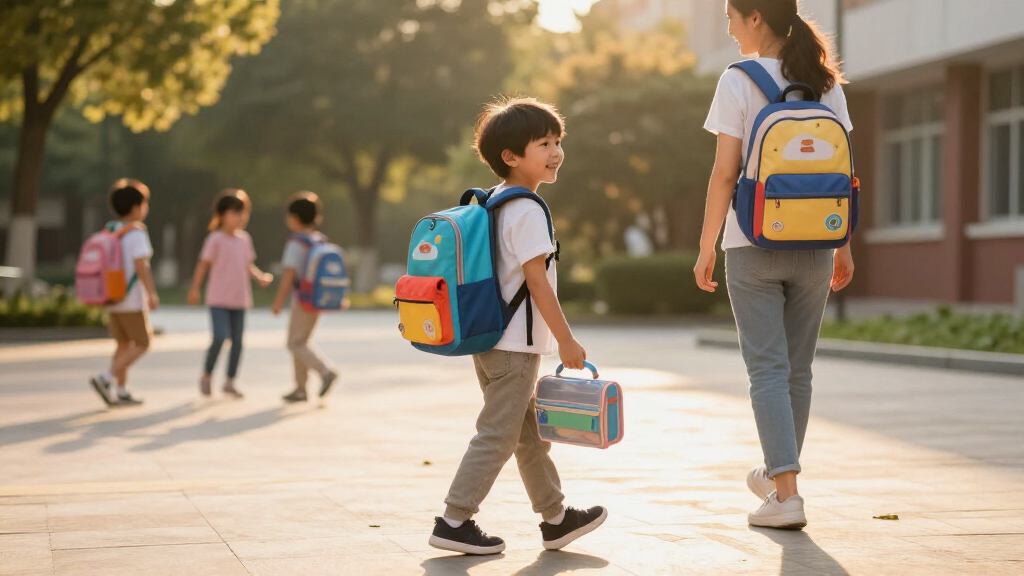
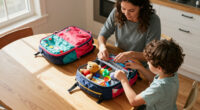
Kids’ educational backpacks range from simple school bags with learning-themed prints to interactive toys that teach letters, numbers, and fine motor skills. The LeapFrog Mr. Pencil’s ABC Backpack stands out as my best overall pick because it turns the backpack itself into a genuine literacy learning tool, while the Kcldeci Alphabet Backpack offers the best value for parents who want letter exposure in an everyday school bag. The main tradeoff in this category is between backpacks that prioritize education and those that prioritize practical school use — durability, capacity, and comfort often suffer when a bag doubles as a toy. Age fit matters too: what works for a 2-year-old won’t survive third grade. Keep reading for the full breakdown of all eight options, including which ones are worth the money and which fall short.

Turn the school run and nap time into listening time
- Thousands of audiobooks, podcasts and originals
- Listen on your phone, tablet or Echo — also offline
- Cancel anytime
Key Takeaways
- The LeapFrog Mr. Pencil’s ABC Backpack was the only option where education is the primary function rather than a decorative theme, making it the clear winner for genuine learning value — but it can’t serve as a full school bag for elementary students.
- Most bags marketed as ‘educational’ only feature learning-themed prints; the Kcldeci alphabet design adds modest letter-recognition value, while the SteamedBun and Trail Maker prints are purely decorative.
- The three-in-one Montessori backpack with busy book and leash is the strongest choice for toddlers aged 1-3, but its educational accessories make it bulky and impractical past preschool.
- Older elementary kids are better served by the Large Capacity 16.5-inch or the Trail Maker 15-inch bags, which trade educational features for real durability, storage, and comfort.
- Sets that bundle lunch boxes and pencil pouches (the 3-Piece Construction Trucks set) offer the best per-item value but sacrifice the ergonomic quality of standalone premium bags.
| abshoo Lightweight Elementary School Backpack, Space Planet Design |  | Best Overall for Elementary School | Material: High-density water-resistant polyester | Capacity: 16.5 liters | Dimensions: 16.5″ H x 11.4″ W x 5.3″ D | VIEW LATEST PRICE | See Our Full Breakdown |
| Kids Backpack 3-Piece Waterproof School Set with Lunch Box & Pencil Pouch, Construction Trucks |  | Best Value Bundle | Backpack Dimensions: 17″ x 12″ x 6.5″ | Lunch Box Dimensions: 10.5″ x 9.5″ x 3.5″ | Pencil Pouch Dimensions: 9.5″ x 4.5″ x 2″ | VIEW LATEST PRICE | See Our Full Breakdown |
| SteamedBun Kids Backpack for Boys 6-8, Kindergarten and Elementary |  | Best Comfort Features | Size: 15″ x 11″ x 5″ | Main Compartment: Yes | Front Pocket: Yes | VIEW LATEST PRICE | See Our Full Breakdown |
| Three-in-One Toddler Backpack, Busy Book & Leash, Montessori Toys for 1-3 Year Olds |  | Best for Toddlers (Learning Through Play) | Material: Polyester and felt | Age Range: 1-3 years | Features: Busy book, backpack, leash, Montessori-inspired activities | VIEW LATEST PRICE | See Our Full Breakdown |
| Trail Maker 15 Inch Kids Backpack with Seafaring Sharks Print |  | Best Budget Basics Pick | Dimensions: 15″ L x 11″ W x 5″ H | Weight: 0.23 kg | Material: 600 denier polyester | VIEW LATEST PRICE | See Our Full Breakdown |
| School Backpack for Girls and Boys, Large Capacity, 16.5 Inch Laptop Backpack | 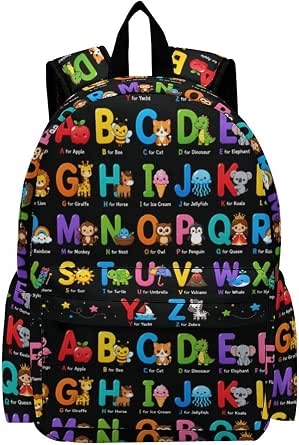 | Best for Growing Grade-Schoolers | Material: Oxford cloth | Dimensions: 16.5″ H x 11.8″ L x 5.9″ W | Capacity: Large capacity | VIEW LATEST PRICE | See Our Full Breakdown |
| Kcldeci Toddler Backpack for Girls and Boys, Cute English Alphabet Design |  | Best Safety-Minded Preschool Pick | Small Size: 10″ × 4″ × 12″ | Medium Size: 10.6″ × 4.13″ × 12.6″ | Capacity: 5L | VIEW LATEST PRICE | See Our Full Breakdown |
| LeapFrog Mr. Pencil’s ABC Backpack |  | Best Learning Toy Backpack | Brand: LeapFrog | Age Range: 3+ years | Includes: ABC Backpack, 26 letter pieces, 2 backpack straps, instruction manual | VIEW LATEST PRICE | See Our Full Breakdown |
| kids’ educational backpack | Material |
|---|---|
| abshoo Lightweight Elementary | High-density water-resistant polyester |
| Kids Backpack 3-Piece Waterpro | Water-resistant polyester |
| SteamedBun Kids Backpack for B | Water-resistant polyester |
| Three-in-One Toddler Backpack | Polyester and felt |
| Trail Maker 15 Inch Kids Backp | 600 denier polyester |
| School Backpack for Girls and | Oxford cloth |
| Kcldeci Toddler Backpack for G | Twill fabric |
| LeapFrog Mr. Pencil’s ABC Back | — |
More Details on Our Top Picks
abshoo Lightweight Elementary School Backpack, Space Planet Design
This option earns the top spot because it balances organization, safety, and durability without overcomplicating things for a school-age child. The multi-pocket layout means permission slips, library books, and lunch money each get a home, which matters more than raw capacity for kids learning to keep track of their things. Compared with the Trail Maker Sharks Backpack, the water-resistant polyester here gives far better protection for worksheets caught in a drizzle. The reflective strips are a genuine safety upgrade over packs like the SteamedBun, which only adds a whistle. The tradeoff: there’s no mention of padded back support, so kids hauling heavier loads may feel it, and the bold space theme may not survive a change in interests a year from now.
Pros:- Water-resistant polyester stands up to daily school wear and light rain
- Reflective strips improve visibility on dark morning walks
- Multiple compartments teach organization and keep supplies sorted
- Adjustable chest strap stabilizes the load on smaller frames
Cons:- No padded back panel for heavier textbook loads
- Heavily themed space design may be outgrown quickly
- Limited color variety if the planet print doesn’t appeal
Best for: Parents of elementary students (5-10) who want a safe, organized daily school bag for under typical brand pricing
Not ideal for: Families in rainy climates hauling heavy loads — the lack of padded back support and only water-resistant (not waterproof) fabric are limits
- Material:High-density water-resistant polyester
- Capacity:16.5 liters
- Dimensions:16.5″ H x 11.4″ W x 5.3″ D
- Recommended Age:3 years and above
- Features:Multi-pocket, reflective straps, adjustable chest strap, breathable shoulder straps
Our verdict“The safest all-around choice for daily elementary school use, as long as the space theme fits your child and the load stays light.”
Kids Backpack 3-Piece Waterproof School Set with Lunch Box & Pencil Pouch, Construction Trucks
This set makes the list on pure cost-per-piece math: backpack, insulated lunch box, and pencil pouch for what a single standalone pack often costs. Compared with the abshoo Space Planet pack, you give up the chest strap and some safety emphasis, but you gain ergonomically padded shoulder straps — the abshoo skips back padding altogether. The insulated lunch box is the quiet standout here; buying one separately typically costs as much as this entire set. The construction trucks theme is a hit with preschool-aged vehicle fans, though it skews young. The tradeoff is capacity: at 17 inches it looks big, but parents of older elementary kids report it runs small for binder-heavy grades.
Pros:- Complete 3-piece set eliminates separate lunch box and pencil case purchases
- Insulated lunch box keeps food at temperature
- Ergonomic padded straps reduce shoulder pressure for small kids
- Water-resistant fabric across all three pieces
Cons:- Runs small for older elementary students
- Trucks theme limits appeal to a narrow age window
- No expandable storage for growth years
Best for: Budget-conscious parents outfitting a preschooler or early elementary student for the full school year in one purchase
Not ideal for: Parents of kids over about 8 — the capacity and theming both skew younger than the 3+ label suggests
- Backpack Dimensions:17″ x 12″ x 6.5″
- Lunch Box Dimensions:10.5″ x 9.5″ x 3.5″
- Pencil Pouch Dimensions:9.5″ x 4.5″ x 2″
- Material:Water-resistant polyester
- Suitable Age:3+ years
- Features:Ergonomic padded straps, reflective strip, multiple compartments
Our verdict“The smartest spend for families buying everything at once, provided your child is young enough for the theme and the size.”
SteamedBun Kids Backpack for Boys 6-8, Kindergarten and Elementary
Where this model pulls ahead of both the abshoo and the Trail Maker is carrying comfort: it pairs a ventilated back panel with padded straps, a combination neither of those offers at this price. For a kindergartner wearing a bag six hours a day, that airflow matters on warm afternoons. The safety whistle on the chest buckle is a feature I haven’t seen elsewhere in this lineup — it gives kids an audible way to signal on the playground or walking home. It’s also the most compact real school pack here at 15 inches, which is a double-edged sword: perfect for a 5-year-old’s frame, tight for a third-grader’s folders. The zippers also demand gentler handling than toddler-proof designs.
Pros:- Ventilated back panel prevents sweat buildup during long school days
- Safety whistle on chest buckle adds an emergency signaling option
- Lightweight build suits smaller bodies
- Padded straps across the shoulders for daily comfort
Cons:- Age ceiling of around 8 due to compact dimensions
- Zippers can jam if handled roughly by younger kids
Best for: Parents of 4-8 year olds who prioritize all-day comfort and want a built-in safety whistle for walking to school
Not ideal for: Kids older than 8 or those carrying wide binders — the compact 15-inch frame and snug compartments won’t fit them
- Size:15″ x 11″ x 5″
- Main Compartment:Yes
- Front Pocket:Yes
- Side Pockets:2
- Material:Water-resistant polyester
- Suitable Age:4-8 years
Our verdict“The most comfortable daily carrier for early elementary students, best bought knowing your child will outgrow it within a couple of years.”
Three-in-One Toddler Backpack, Busy Book & Leash, Montessori Toys for 1-3 Year Olds
This is the only option in the roundup aimed at children who can’t read yet, and it reframes what an ‘educational backpack’ means: rather than carrying school supplies, the bag itself is the lesson. The integrated Montessori busy book builds fine motor skills through buckles, zippers, and matching activities — genuinely useful during flights or waiting rooms. Compared with the Construction Trucks 3-piece set, which serves kids 3 and up, this occupies the earlier developmental window of 1-3 and pairs the pack with a safety leash for crowded places. The tradeoffs are real: small detachable pieces demand adult supervision, and this is a toy-plus-bag, not a school bag — there’s no path to using it past age three.
Pros:- Three functions in one: backpack, busy book, and safety leash
- Montessori-style activities build fine motor and cognitive skills
- Genuinely travel-friendly for flights and long waits
- Child-safe felt and polyester construction
Cons:- Small parts pose a choking risk if pieces detach
- Strictly a 1-3 year product with no longevity beyond toddlerhood
- Activities require adult supervision to be used safely
Best for: Parents of 1-3 year olds who want one item that entertains, educates, and keeps a toddler close during travel
Not ideal for: Anyone shopping for a school-ready bag — this has no organizational capacity and isn’t designed for kids over 3
- Material:Polyester and felt
- Age Range:1-3 years
- Features:Busy book, backpack, leash, Montessori-inspired activities
- Includes:Mini reversible coloring books PDF
Our verdict“Buy this as a toddler travel and learning toy that happens to be a backpack — not as any child’s first school bag.”
Trail Maker 15 Inch Kids Backpack with Seafaring Sharks Print
At roughly a third the weight of the abshoo and at a lower price point, this pack covers the fundamentals: one big compartment, one front pocket, padded straps, done. The 600 denier polyester with double-stitched zippers is sturdier than the price suggests, and the sharks print has broad appeal across ages rather than a narrow window. The honest comparison: unlike the SteamedBun, there’s no ventilated back or whistle; unlike the abshoo, there’s zero water resistance, so a rainy walk home means wet library books. It’s also hand wash only. What you’re buying is simplicity and durability per dollar — a good second bag, camp bag, or first school bag you won’t mourn if it’s lost.
Pros:- Very low price with double-stitched zippers that outlast the cost
- Featherlight at 0.23 kg, easy for preschoolers to carry
- Sharks print appeals across a wide age range
- Large main compartment handles books and supplies
Cons:- Not water resistant — contents get wet in rain
- Hand wash only, no machine washing
- Only two pockets limits organization
Best for: Parents wanting an affordable, no-frills school or camp bag — or a backup pack that won’t hurt to replace
Not ideal for: Anyone in a wet climate or carrying paper-heavy loads — the lack of water resistance and only two pockets are real constraints
- Dimensions:15″ L x 11″ W x 5″ H
- Weight:0.23 kg
- Material:600 denier polyester
- Pockets:2
- Storage Volume:13.5 liters
- Water Resistance:Not water resistant
- Recommended Uses:Travel, school (preschool to elementary)
Our verdict“A dependable, kid-pleasing budget pick if you accept that it offers no weather protection and minimal organization.”
School Backpack for Girls and Boys, Large Capacity, 16.5 Inch Laptop Backpack
This pick stands out as the capacity leader of the entire lineup. Where the Kcldeci toddler pack tops out at 5L, this 16.5-inch bag swallows textbooks, folders, and even a laptop, which makes it a better bet for kids in upper elementary grades who have outgrown cuter, smaller options like the SteamedBun preschool pack. The padded shoulder straps do real work here — a full load of books is heavy, and thinner straps on budget bags like the Trail Maker dig in. The tradeoff is maintenance and durability unknowns: hand wash only is a hassle for a bag that will see lunch spills, and there’s no water-resistance claim, so a rainy walk home could be a problem. The vibrant graphics are fun but may fade with age.
Pros:- Durable, tear-resistant Oxford fabric survives daily abuse
- Genuine large capacity with multiple compartments for organization
- Padded shoulder straps keep heavy book loads comfortable
- Versatile enough for school, travel, hiking, and camping
Cons:- Hand wash only — a real chore for a kid’s bag
- No water resistance, so contents are exposed in wet weather
- Bold graphics may fade with washing and wear
Best for: Parents of kids aged roughly 8-12 who haul textbooks, devices, and gear and need one bag for school and weekend trips
Not ideal for: Preschool and kindergarten families — the size overwhelms small bodies, and the Kcldeci or LeapFrog options fit that stage far better
- Material:Oxford cloth
- Dimensions:16.5″ H x 11.8″ L x 5.9″ W
- Capacity:Large capacity
- Fits:Up to 16.5-inch laptop
- Straps:Padded shoulder straps
- Compartments:Multiple pockets and compartments
- Care:Hand wash only
- Best For:School, travel, hiking, camping
Our verdict“Buy this if your child has outgrown toddler-sized packs and needs one spacious bag that carries everything from homework to hiking snacks.”
Kcldeci Toddler Backpack for Girls and Boys, Cute English Alphabet Design
Where most packs in this roundup stop at cute, the Kcldeci adds something parents actually care about: a detachable sternum strap with an emergency whistle. That feature alone separates it from the SteamedBun preschool backpack and the Three-in-One toddler set, both of which lean on design rather than safety. The alphabet print doubles as passive letter recognition — a light-touch educational angle, though nothing like the active teaching the LeapFrog ABC Backpack delivers. Compared with that electronic rival, this is the practical choice: it’s a real bag kids can carry snacks, folders, and a change of clothes in, at a proper 5L capacity. The catch is the ceiling — kids past age six will find it cramped next to the 16.5-inch large-capacity pack, and the twill fabric is sturdy but not adventure-grade.
Pros:- Emergency whistle and sternum strap add real safety value for outings
- Multiple compartments teach organization from an early age
- Two size options let you match the bag to your child’s frame
- Alphabet design reinforces letter familiarity during daily wear
Cons:- 5L capacity limits what fits — no folders plus lunch plus spare clothes easily
- Whimsical styling ages out quickly once kids hit mid-elementary school
- Twill fabric is durable for daily use but not for rugged outdoor abuse
Best for: Parents of 3-8 year olds who want an organizational, wearable school bag with genuine safety features for outings and crowded places
Not ideal for: Kids carrying textbooks or laptops — the 5L capacity fills up fast, and older elementary students need the roomier 16.5-inch pack
- Small Size:10″ × 4″ × 12″
- Medium Size:10.6″ × 4.13″ × 12.6″
- Capacity:5L
- Material:Twill fabric
- Age Range:3-8 years
- Safety Features:Detachable sternum strap with emergency whistle
- Compartments:Multiple organizational compartments
- Padding:Ergonomic padded straps
Our verdict“This is the pick for preschool and kindergarten families who prioritize safety features and early organization over raw storage or electronic learning.”
LeapFrog Mr. Pencil’s ABC Backpack
This one plays a completely different game than everything else here. The abshoo space-planet pack and the Trail Maker sharks bag are carriers; the LeapFrog ABC Backpack is a portable literacy classroom for ages 3 and up. With 26 letter pieces, a write-and-erase board, and activities covering letter sounds, drawing, and animals, it actively teaches rather than just decorating. Compared with the Kcldeci alphabet print, this is the difference between a child seeing letters and a child practicing writing them. The tradeoffs are real, though: it won’t hold school supplies in any meaningful way, it runs on AA batteries that need replacing, and the plastic shell won’t survive the same rough-and-tumble as Oxford cloth. Think of it as a first learning tool that happens to be wearable, not a school bag.
Pros:- Teaches alphabet, letter sounds, writing, drawing, and animals interactively
- Write-and-erase board and 26 letter pieces encourage hands-on fine-motor practice
- Wearable backpack format makes it genuinely portable for car rides and travel
- Batteries included so it works straight out of the box
Cons:- Requires ongoing AA battery replacements
- Activities are limited for kids who’ve already mastered letters and sounds
- Plastic construction is less durable than fabric bags under rough handling
Best for: Parents and grandparents of 3-5 year olds who want screen-free, hands-on alphabet and pre-writing practice at home or on road trips
Not ideal for: Anyone shopping for an actual school bag — there’s no storage for folders, lunch, or supplies, and kids who already know their letters will outgrow the activities
- Brand:LeapFrog
- Age Range:3+ years
- Includes:ABC Backpack, 26 letter pieces, 2 backpack straps, instruction manual
- Learning Activities:Alphabet, letter sounds, writing, drawing, animals
- Special Feature:Write and erase board
- Batteries:2 AA included (demo); regular use recommended
- Model Number:80-603401
- Product Type:Interactive educational toy
Our verdict“Choose this if your goal is teaching letters and early writing, not carrying school gear — it’s a toy first and a backpack in name only.”
How We Picked
I evaluated each backpack against four criteria, weighted by what actually matters to families shopping in this space: educational value (does the bag teach anything real, or is it just a themed print?), age-appropriate fit (size, weight, and ergonomics matched to the intended child), build quality and durability (zippers, straps, stitching, and materials that survive a school year), and value for money (what you get relative to price, including bundled accessories). Because ‘educational’ means very different things at age 2 versus age 10, I ranked products within age bands rather than forcing a single flat comparison.
The ranking logic follows a simple principle: the more genuinely educational the product, the higher it ranks — as long as it still functions well as a backpack for its target age. That’s why the LeapFrog sits at the top despite limited storage, and why the large-capacity travel bags rank lower on the education axis even though they’re excellent bags. Set-style bundles earned value-based placement when their total utility justified it.
Factors to Consider When Choosing Kids’ Educational Backpacks
Before picking from the eight options above, it helps to understand what separates a genuinely educational backpack from a marketing label — and where most parents go wrong when buying.
Real Learning Value vs. Themed Prints
The most common mistake parents make is assuming a space-planet or shark print delivers educational benefit. Prints can spark conversation and interest, but they don’t teach anything on their own. Bags like the LeapFrog ABC Backpack or the Montessori busy-book option include interactive learning components — letter buttons, tracing activities, tactile pages — that actively build skills. Alphabet prints like the Kcldeci sit in the middle: they reinforce letter recognition through daily exposure without adding cost or weight. Ask yourself whether you want a bag that teaches or a bag that inspires, because that single decision eliminates half the options on the market.
Age and Size Matching
A backpack that’s too large for a toddler causes shoulder strain and frustration; one that’s too small for a fourth-grader leads to broken zippers from overstuffing. Pediatric guidance generally suggests a loaded backpack weigh no more than 10-15% of a child’s body weight, which means toddler bags should stay small and light while elementary bags need real structure. The toddler-focused options in this roundup (the Montessori set and SteamedBun) are sized for shorter torsos and smaller loads. If your child is between sizes, size up only if the straps adjust well enough to prevent the bag from swinging.
Durability Where It Counts
Zippers and strap stitching are where cheap kids’ backpacks fail first — not the fabric itself. Look for reinforced stitching at strap attachment points and smooth-gliding zippers with larger pulls that small fingers can operate. Water-resistant coatings (like on the Construction Trucks set) matter if lunch boxes or water bottles ride inside, since spills are inevitable. A common tradeoff: bundled sets often use thinner materials to hit a price point, while standalone bags at similar cost typically use better construction. If durability is your priority, a single well-made bag beats a three-piece bargain set.
The Toy-Backpack Hybrid Problem
Backpacks with built-in electronics or attached learning toys face a real tension: the features that make them educational also make them heavier, more expensive, and harder to clean. Electronic components can’t go in the washing machine, batteries die at inconvenient moments, and schools sometimes restrict noise-making items. The sweet spot for many families is a hybrid approach: a simple, durable backpack paired with educational accessories that can be swapped out. That said, for pre-readers who resist traditional learning, the engagement boost from an interactive bag can outweigh these practical downsides.
When to Pay More — and When Not To
Premium pricing makes sense when a bag needs to survive multiple school years or includes genuine learning technology. It doesn’t make sense for toddler bags that will be outgrown in 12-18 months regardless of quality. For preschool and kindergarten, mid-range bags in the $15-30 range typically offer the best balance of durability and disposable economics. Reserve bigger budgets for elementary-age bags (which get daily hard use) or for interactive learning bags with proven engagement value. Buying a $50+ bag for a two-year-old is money better spent elsewhere.
School Requirements and Practical Limits
Check your child’s school or daycare policies before buying. Some preschools require bags small enough for cubby storage, ruling out larger 15-16 inch options. Kindergarten teachers often prefer bags that a child can open and close independently — a skill worth testing in-store if possible. Also consider whether the bag needs to carry folders flat, since some soft-sided toddler bags bend and crease papers. These practical constraints should narrow your shortlist before you weigh educational features, because the best learning bag is useless if it can’t come to school.
Frequently Asked Questions
Are educational backpacks actually effective for learning, or is it just marketing?
The honest answer is that it depends entirely on the type. Interactive bags like the LeapFrog ABC Backpack can genuinely support letter recognition and phonics because children engage with them repeatedly and voluntarily — repetition is where the learning happens. Themed prints (sharks, space, trucks) offer incidental value by sparking curiosity and conversation, but a print alone won’t teach a child anything measurable. Alphabet-print bags sit in between, reinforcing letter familiarity through daily exposure. If learning is your primary goal, prioritize bags with interactive elements; if you just want a durable school bag your child likes, the print theme matters more for motivation than education.
What size backpack does my child actually need?
For toddlers ages 1-3, look for bags under 12 inches that carry only a change of clothes and a small toy — the Montessori set in this roundup is sized appropriately. Preschoolers (3-5) need something slightly larger with easy-open zippers, like the SteamedBun or Kcldeci options. Elementary students (6-10) need 15-17 inch bags with padded straps and enough structure to hold folders, lunch, and a water bottle, which is where the Trail Maker and Large Capacity bags fit. A loaded bag should never exceed about 10-15% of your child’s body weight. When in doubt, size for the child’s torso, not the amount of stuff you want to pack.
Is it better to buy a backpack set with accessories or a standalone higher-quality bag?
Sets like the 3-Piece Construction Trucks option make sense for families on a budget who need everything at once — the per-item cost is genuinely lower and coordinating pieces appeal to kids. The tradeoff is that bundled accessories typically use thinner materials and cheaper zippers than standalone equivalents, so the lunch box may wear out within a year. A standalone quality bag costs more upfront but usually survives longer and fits better ergonomically. My rule of thumb: buy the set if this is likely a one-school-year bag, buy standalone quality if you expect hand-me-down potential or multiple years of use.
At what age should I switch from an educational toy-style backpack to a regular school backpack?
The practical transition point is usually kindergarten or first grade, around ages 5-6. Before that, toy-hybrid and small educational bags work well because preschool loads are light and engagement matters more than capacity. Once real schoolwork begins, children need bags that hold folders, books, and lunch without strain — and electronic learning features become distractions in the classroom. Some parents keep the interactive bag as a home or car toy while the child uses a functional school bag, which preserves the learning value without practical downsides. If your child is attached to the educational bag, look for regular bags with learning-themed prints as a compromise.
How do I know if an educational backpack is worth the higher price?
Interactive bags typically cost 50-100% more than standard school bags, so the math only works if your child will actually use the learning features regularly. Worth it when: your child is in the pre-reading window (ages 3-5), shows interest in letters, and you’d otherwise buy separate learning toys — the bag effectively consolidates two purchases. Not worth it when: your child already reads, the bag will be outgrown within a year, or your school restricts noise-making items. Also check battery requirements and replacement costs, since those add to the true price over time. For most families, an interactive bag is a targeted purchase for a specific developmental window, not an everyday school solution.
Conclusion
The right pick here depends almost entirely on your child’s age and what ‘educational’ means to you. For best overall, the LeapFrog Mr. Pencil’s ABC Backpack delivers genuine literacy learning that no themed print can match, making it ideal for pre-readers ages 3-5. For best value, the Kcldeci Alphabet Backpack adds letter exposure at a budget price point that won’t hurt when it’s outgrown. For beginners and toddlers (ages 1-3), the Three-in-One Montessori set with busy book and leash is purpose-built for that stage. For premium everyday use, the Large Capacity 16.5-inch backpack offers the durability and storage older kids need, while the 3-Piece Construction Trucks set is my pick for specific needs — families wanting a complete coordinated school kit at one price. If you’re still torn, default to age: toddler, LeapFrog or Montessori; elementary, the Large Capacity or Trail Maker. Whichever you choose, buy for the child you have now, not the school years ahead.
Halloween Picks
halloween
As an affiliate, we earn on qualifying purchases.