
Searching for the best books about baby development? The right book can provide invaluable guidance during your child’s early years, balancing expert advice with real-world insights. The best overall pick, The Sears Baby Book, offers comprehensive coverage from birth to age two, making it ideal for new parents. For those seeking a more data-driven approach, Cribsheet provides relaxed, evidence-based strategies from birth to preschool. However, the main tradeoffs involve balancing depth versus simplicity and choosing between detailed milestones or quick-reference guides. Continue reading for a detailed comparison that helps you find the perfect match for your needs.

Turn the school run and nap time into listening time
- Thousands of audiobooks, podcasts and originals
- Listen on your phone, tablet or Echo — also offline
- Cancel anytime
Complete the kit


Key Takeaways
- The top-ranked books balance comprehensive developmental guidance with accessible language.
- Many standout options focus on the first year, but some extend to preschool years for ongoing support.
- Books that incorporate data or science tend to be more detailed but may feel overwhelming for some parents.
- Simpler guides excel for quick reference but often lack in-depth developmental explanations.
- Price and author expertise are consistent factors influencing the best choices in this category.




More Details on Our Top Picks
The Sears Baby Book: Everything You Need to Know About Your Baby from Birth to Age Two
This classic guide is a thorough resource covering every aspect of infant and toddler care, making it ideal for parents seeking an all-in-one reference. Unlike more narrowly focused books like Guide & Grow, which centers solely on milestones, The Sears Baby Book offers a broader perspective, including feeding, sleeping, and health advice. Its strength lies in the trustworthiness of the Sears family, known for their approachable, family-oriented advice. However, the lack of detailed or updated content in this edition may leave some parents wanting more current guidance. Still, this book shines for those who prioritize a comprehensive, family-centered approach over quick-reference or highly specialized material.
Pros:- Comprehensive coverage of baby care topics from birth to age two
- Written by trusted, family-oriented experts
- Provides a broad perspective on parenting and development
Cons:- No recent updates or specific focus on latest developmental research
- Lacks detailed, step-by-step developmental milestones
Best for: Parents seeking a detailed, all-in-one guide to infant and toddler care from trusted family authors.
Not ideal for: Parents looking for a quick, focused milestone tracker or the latest research updates—this book offers broad advice but lacks recent data.
- Format:Book
- Age Range:Birth to 2 years
Our verdict“This book is best suited for new parents wanting a trusted, broad overview of early childhood care, rather than quick-reference or highly specialized guides.”
Caring for Your Baby and Young Child, 8th Edition: Birth to Age 5
This reference stands out for covering the entire early childhood period up to age five, making it more comprehensive than Guide & Grow, which focuses only on the first year. Its guidance is backed by the American Academy of Pediatrics, ensuring trusted advice on health, growth, and everyday care. However, its physical size may be cumbersome for quick look-ups during busy moments. This makes it more suitable for parents who prefer having a thorough, authoritative resource at home rather than a portable quick-reference. For those seeking detailed developmental milestones and health advice across early childhood, it offers a reliable, if bulkier, option.
Pros:- Covers a wide age range from birth to age 5
- Pediatrician-backed guidance from the American Academy of Pediatrics
- Comprehensive coverage of health, development, and care
Cons:- Physical copy may be bulky for quick reference
- Some sections may be too detailed for casual browsing
Best for: Parents who want a detailed, pediatric-backed reference covering from birth through preschool, especially for health and developmental questions.
Not ideal for: Busy parents who need quick, on-the-go tips or those preferring digital resources, given its bulk and size.
- Edition:8th
- Coverage:Birth to Age 5
Our verdict“This guide makes the most sense for parents who want a definitive, trusted resource for early childhood health and development over several years.”
Guide & Grow: Baby’s 1st Year – A Monthly Guide to Development, Milestones and Activities
This guide is tailored for new parents wanting a clear, month-by-month outline of their baby’s growth. Compared to The Month-by-Month Baby Book, which provides in-depth advice, Guide & Grow emphasizes practical activities and milestones in an easy-to-reference format. Its strength lies in its organized structure, making it simple to track progress and support development through specific activities. However, without detailed content or evidence of accuracy, it may be less suitable for parents wanting detailed developmental insights or scientific explanations. It’s an accessible choice for those who prefer a straightforward, activity-based approach during the first year.
Pros:- Organized month-by-month format for easy reference
- Includes practical activities to support development
- Clear milestones for new parents
Cons:- Limited content depth and detail
- Lacks scientific or research-backed information
Best for: First-time parents seeking a simple, month-by-month milestone and activity guide for their baby’s first year.
Not ideal for: Parents looking for in-depth developmental explanations or detailed scientific guidance—this focuses more on activities and milestones.
- Format:Book
- Topic:Baby development and milestones
- Coverage:Months 1-12
Our verdict“Ideal for parents wanting a straightforward, activity-oriented guide to their baby’s first year, rather than an in-depth developmental manual.”
The Month-by-Month Baby Book: In-depth, Monthly Advice on Your Baby’s Growth, Care, and Development in the First Year
This book offers comprehensive month-by-month advice, making it especially suitable for parents who want detailed, stage-specific guidance. Compared to Guide & Grow, which provides basic milestones and activities, The Month-by-Month Baby Book dives deeper into growth, care, and development specifics. Its focus on the first year allows for targeted advice during critical early stages, but this narrow scope means it doesn’t support broader age ranges. It’s a strong choice for parents who prefer in-depth, structured guidance during the first 12 months rather than general overviews or broader age coverage.
Pros:- Organized month-by-month for easy navigation
- In-depth advice on growth, care, and milestones
- Focused specifically on the first year, providing detailed guidance
Cons:- Limited scope to the first year only
- Less useful for ongoing developmental tracking after 12 months
Best for: Parents seeking detailed, month-by-month insights and practical advice for their baby’s first year of growth.
Not ideal for: Those interested in broader developmental guidance beyond the first year or looking for quick, surface-level tips.
- Format:Paperback
- Topic:Baby care and development
- Coverage:Birth to 12 months
Our verdict“Best suited for parents who want detailed, stage-specific guidance during their baby’s crucial first year of development.”
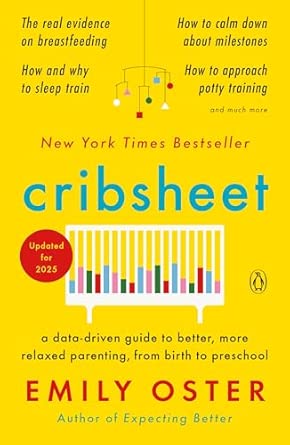
Cribsheet: A Data-Driven Guide to Better, More Relaxed Parenting, from Birth to Preschool (The ParentData Series)
This book appeals to parents who prefer a scientific, data-driven approach over prescriptive advice. Compared to The Sears Baby Book or The Month-by-Month Baby Book, which provide broad or detailed developmental guidance, Cribsheet emphasizes understanding the research behind parenting decisions. It helps reduce anxiety through evidence rather than rules, making it ideal for parents who want to make informed choices rather than follow a fixed plan. The tradeoff is that some conclusions may oversimplify complex research, and it doesn’t offer a step-by-step manual. For parents comfortable with interpreting data and seeking a more relaxed, informed approach, this book is a solid pick.
Pros:- Evidence-based, data-driven approach to parenting
- Helps reduce anxiety by explaining research behind decisions
- Covers a wide age range from birth to preschool
Cons:- Some conclusions may oversimplify complex research
- Lacks prescriptive, step-by-step parenting instructions
Best for: Parents who value science, data, and research when making parenting decisions, especially those interested in a broad age range from birth to preschool.
Not ideal for: Parents seeking specific, step-by-step instructions or quick tips—they may find this book’s approach too analytical or abstract.
- Series:The ParentData Series
- Format:Book
- Topic:Parenting, Birth to Preschool
Our verdict“This book is best for parents who prefer an informed, research-based approach to early childhood parenting rather than rigid rules or quick tips.”
A Child Is Born (Fifth Edition): Completely Revised and Updated
This edition of ‘A Child Is Born’ stands out as a foundational text for understanding fetal development and pregnancy. Its reputation as a beloved classic makes it a go-to for parents seeking a comprehensive overview of prenatal growth. Compared with newer books, its revised content ensures updated scientific insights, but it remains somewhat limited in practical guidance for later child-rearing stages. It offers in-depth information that appeals mostly to expecting parents or those interested in pregnancy science, rather than parents seeking day-to-day parenting tips. Its strength lies in its detailed, authoritative coverage of fetal development, though its scope does not extend into postnatal growth or parenting strategies.
Pros:- Beloved and authoritative classic title
- Completely revised and updated with recent scientific data
- Provides in-depth insights into pregnancy and fetal growth
Cons:- Limited coverage of postnatal development or parenting advice
- Less focus on practical guidance for new parents
Best for: Expectant parents wanting a detailed, scientifically grounded overview of fetal development
Not ideal for: Parents looking for practical baby care tips or parenting strategies during early childhood
- Edition:5th
- Format:Book
Our verdict“This book is ideal for expecting parents or those interested in the science of fetal development, but less suited for hands-on parenting guidance.”
The Whole-Brain Child: 12 Revolutionary Strategies to Nurture Your Child’s Developing Mind
‘The Whole-Brain Child’ makes the list for its clear, actionable techniques for understanding how a child’s brain develops and how to respond to everyday challenges. Unlike books focused solely on pregnancy or early infancy, this one emphasizes nurturing a child’s mental growth through practical methods. Its accessible explanations of brain science help parents implement strategies to foster emotional regulation and cognitive skills. However, the lack of detailed scientific background and absence of specific updates mean it might feel less authoritative than more comprehensive guides like ‘A Child Is Born’. This pick makes the most sense for parents of toddlers and preschoolers eager to apply neuroscience insights directly to parenting.
Pros:- Practical, easy-to-implement strategies
- Accessible explanations of complex brain science
- Focuses on emotional and cognitive development
Cons:- Lacks detailed scientific references
- No recent updates or new research included
Best for: Parents of children aged 1-6 seeking practical, brain-based parenting techniques
Not ideal for: Parents of newborns or those looking for detailed prenatal information
- Format:Book
Our verdict“This book is perfect for parents wanting straightforward, science-backed strategies to support their child’s mental growth during early childhood.”
Ages and Stages: A Parent’s Guide to Normal Childhood Development
‘Ages and Stages’ offers a comprehensive look at childhood development across various stages, making it a valuable resource for parents trying to understand what’s typical at each age. It helps distinguish normal growth from potential concerns, similar to how ‘What to Expect the Second Year’ guides parents through toddler milestones, but with broader coverage spanning from infancy to adolescence. The main limitation is the absence of recent updates or detailed feedback on reader satisfaction, which could affect its applicability for current parenting challenges. This guide is best suited for parents who want a thorough overview of developmental benchmarks to track their child’s progress.
Pros:- Covers multiple childhood stages
- Helps identify normal vs. concerning development
- Written by reputable authors and publisher
Cons:- No recent editions or updates
- Limited information on individual child variations
Best for: Parents seeking a broad, stage-by-stage overview of childhood development
Not ideal for: Parents looking for specific, up-to-date advice on parenting techniques or medical concerns
- Publisher:Wiley
- Format:Book
Our verdict“This book is well-suited for parents wanting to understand developmental norms across childhood, but might lack current practical advice.”
The Simplest Baby Book in the World: The Illustrated, Grab-and-Do Guide for a Healthy, Happy Baby
‘The Simplest Baby Book in the World’ appeals to new parents overwhelmed by complex advice, thanks to its illustrated, visual approach. It simplifies baby care with straightforward, step-by-step instructions for everyday tasks, making it ideal for busy parents who want quick, reliable guidance. Compared with more detailed medical guides like ‘Baby 411’, this book emphasizes simplicity over depth, which could leave parents seeking extensive medical or developmental information wanting more. This pick is best for parents who prefer visual learning and need a quick reference for routine baby care, rather than detailed health guidance.
Pros:- Illustrated format enhances clarity
- Quick, grab-and-do instructions fit busy schedules
- Broad coverage of essential baby care topics
Cons:- Lacks depth for medical or developmental specifics
- May not satisfy parents needing detailed guidance
Best for: New parents seeking a visual, easy-to-follow baby care guide
Not ideal for: Parents needing in-depth medical or developmental advice beyond basic care
- ASIN:1736894706
- Format:Book
Our verdict“This book is ideal for new parents wanting quick, visual instructions for everyday baby care, but less suited for detailed health concerns.”
What to Expect the Second Year: From 12 to 24 Months
‘What to Expect the Second Year’ offers focused guidance for parents navigating the second year, covering developmental milestones, challenges, and practical tips. While it complements books like ‘Ages and Stages’ by providing specific advice for a critical growth period, its limited description and lack of recent updates might reduce its overall comprehensiveness. It’s more targeted than broad, making it ideal for parents of toddlers who want specific, actionable tips during this stage. However, without detailed features or recent editions, it might not provide the latest research or strategies.
Pros:- Focused on the second year milestones
- Provides practical, stage-specific advice
- Helpful for managing common toddler challenges
Cons:- Limited details and no recent updates
- Less comprehensive than broader guides
Best for: Parents of toddlers seeking milestone guidance and practical tips
Not ideal for: Parents of infants or those looking for comprehensive early childhood development info
Our verdict“This book is best for parents of toddlers needing targeted advice on milestones and behavior management, with less emphasis on early infancy.”
Mayo Clinic Guide to Your Baby’s First Years, 3rd Edition (Mayo Clinic Parenting Guides)
This guide stands out for its comprehensive coverage of every stage from birth through toddlerhood, backed by Mayo Clinic’s trusted medical expertise. Unlike the more narrowly focused What to Expect the First Year, it offers clear, medically sound answers to common questions, making it ideal for parents seeking reassurance and authoritative guidance. However, the lack of detailed content or user reviews means some may find it less practical for quick reference. Its broad scope makes it a solid choice for new parents wanting a reliable, all-in-one resource, though it may feel overwhelming for those seeking quick tips rather than in-depth explanations.
Pros:- Backed by Mayo Clinic’s trusted medical expertise
- Covers development, health, and care from birth to toddlerhood
- Provides clear, understandable answers to common questions
Cons:- No detailed content or user reviews available to gauge quality
- Lacks interactive features or multimedia content
- Potentially too broad for those wanting quick, specific tips
Best for: Parents who prefer authoritative, medically-reviewed guidance covering the entire first year and beyond
Not ideal for: Parents looking for a quick, concise reference or interactive content like multimedia tools
- Format:Book
- Edition:3rd Edition
- Series:Mayo Clinic Parenting Guides
- ASIN:B0D7YWDK3K
Our verdict“This guide is best suited for parents who want a comprehensive, medically reliable resource covering their child’s first years.”
Nine Months: Before a Baby is Born
This book offers a detailed look at the nine months of pregnancy, making it ideal for those eager to understand prenatal growth, unlike the more developmentally focused Infant and Toddler Development from Conception to Age 3. It provides rich insights into fetal development, but its focus stays solely before birth, so it’s less useful once the baby is born. For parents seeking a comprehensive guide that follows their child through early childhood, this is more of a prenatal companion than a developmental resource. Its detailed approach benefits those interested in the womb but may leave new parents wanting more postnatal guidance.
Pros:- Provides detailed insights into prenatal growth stages
- Suitable for pregnancy-focused readers and curious parents
- Explains the biological and developmental processes clearly
Cons:- Limited to prenatal content, not helpful after birth
- No multimedia features or interactive tools
- Lacks guidance on postnatal parenting or care
Best for: Expectant parents and pregnancy enthusiasts wanting an in-depth look at prenatal development
Not ideal for: Parents seeking information on post-birth development or parenting strategies
- Format:Book
- ASIN:0823449386
Our verdict“This book makes the most sense for those fascinated by fetal development or expecting their first child, but less so for new parents focused on postnatal growth.”
What to Expect the First Year (Updated in 2026)
Compared with Baby 411, 11th Edition, this updated guide offers a clear month-by-month overview of a baby’s first year, making it highly accessible for new parents seeking structured milestones. While it provides a broad outline of development, it tends to lack the depth found in specialized books like Infant and Toddler Development from Conception to Age 3. Its recent update ensures fresh content, but some may find the guidance too general or superficial for complex concerns. This makes it ideal for parents who want a reliable, chronological overview, though those desiring detailed developmental insights may need supplementary resources.
Pros:- Provides structured, month-by-month guidance
- Recently updated to include current best practices
- Easy to follow for new parents
Cons:- Limited detailed information beyond milestones
- Some may find it too superficial for complex issues
- Lacks multimedia or interactive features
Best for: Parents who want a recent, month-by-month guide to their baby’s first year of development
Not ideal for: Parents seeking detailed, in-depth developmental theories or caregiver responses beyond basic milestones
- ASIN:0761181504
Our verdict“This book is ideal for parents seeking a straightforward, recent guide to their baby’s first year milestones, but not for those wanting in-depth developmental analysis.”
Baby 411, 11th Edition: Your Baby from Birth to Age 1
This edition provides practical, accessible advice for navigating the first year, similar to What to Expect the First Year, but with a focus on hands-on caregiving tips. It’s especially useful for first-time parents who want straightforward guidance without the extensive medical jargon. Compared to the broader coverage of Mayo Clinic Guide, it emphasizes day-to-day care more than developmental theory. Its limited scope—only covering the first year—means parents needing long-term developmental insights will need additional resources. Nonetheless, it excels at offering practical, easy-to-implement advice for new parents.
Pros:- Focuses on practical baby care from birth to age one
- Updated 11th edition ensures current advice
- Simple, easy-to-understand guidance
Cons:- Limited to the first year of development
- No detailed developmental or cognitive insights
- Lacks multimedia or digital features
Best for: First-time parents looking for practical, day-to-day guidance during their baby’s first year
Not ideal for: Parents seeking detailed developmental milestones or guidance beyond age one
- Edition:11th Edition
- ASIN:0593980883
- Age Range:Birth to Age 1
- Product Type:Book
Our verdict“This book is perfect for new parents wanting straightforward, practical guidance for their baby’s first year of care and milestones.”
Infant and Toddler Development from Conception to Age 3: What Babies Ask of Us
This book covers a broad age range, from conception through age three, emphasizing the importance of understanding what babies need at each stage. Compared to Baby 411, which focuses solely on practical care, this title offers a deeper look into the developmental questions babies pose and how caregivers can respond effectively. Its comprehensive scope makes it suitable for parents who want to align their responses with developmental science, but the lack of detailed reviews or interactive features might make it less engaging for some readers. For those interested in a holistic, response-oriented approach, this is a valuable resource.
Pros:- Covers development from conception to age 3
- Focuses on responding appropriately to babies’ needs
- Encourages a holistic understanding of early development
Cons:- No detailed description or review content available
- Lacks multimedia or interactive content
- Potentially less practical for immediate, day-to-day caregiving
Best for: Parents and caregivers seeking a developmental framework from conception through age three with a focus on responsive caregiving
Not ideal for: Parents looking for quick tips or detailed medical guidance without a focus on developmental needs
- ASIN:0807761087
- Format:Book
- Topic:Infant and Toddler Development
Our verdict“This book is best suited for caregivers interested in a broad, developmentally responsive approach to early childhood, but less so for quick reference or medical guidance.”
How We Picked
I evaluated these books based on several key factors: the breadth and accuracy of developmental information, ease of understanding, practicality of advice, and overall usability for parents. Consideration was also given to the credibility of the authors, whether the content is age-appropriate, and if the book offers a balanced perspective—neither overly technical nor too superficial. The ranking emphasizes books that serve different parenting styles, from detailed milestone trackers to quick-reference guides. By comparing these criteria, I identified the titles that best support parents at different stages and preferences, ensuring a well-rounded selection for all readers.Factors to Consider When Choosing Books About Baby Development
Choosing the right book about baby development depends on your specific needs, learning style, and how much guidance you want. Some books provide detailed milestone checklists, while others focus on broader parenting philosophies or practical activities. Understanding what to prioritize can help narrow down your options, ensuring you get a resource that truly supports your journey. Keep in mind that an ideal book should be engaging, credible, and adaptable to your child’s unique pace.
Developmental Scope and Age Range
Consider whether you want a book that covers the entire early childhood period or one focused solely on the first year. Some titles, like The Sears Baby Book, span from birth to two years, offering in-depth monthly insights. Others, such as What to Expect the Second Year, specialize in toddler milestones. Picking a book aligned with your child’s current age ensures the information is relevant and actionable, avoiding unnecessary details about later years if you’re mainly concerned about infancy.
Detail Level and Practicality
Some parents prefer highly detailed, milestone-oriented guides, while others benefit from simplified summaries or activity-based advice. Overly technical books may overwhelm new parents, whereas overly simplistic ones might lack depth. Think about your comfort with science or data—books like Cribsheet cater to those wanting evidence-based strategies, whereas titles like The Simplest Baby Book in the World focus on quick, easy-to-understand tips.
Author Expertise and Credibility
Check the background of the authors—pediatricians, child development specialists, or experienced parents. Credible authors can provide more reliable, scientifically-backed guidance, reducing the risk of misinformation. Conversely, books written by non-experts might still offer valuable personal insights but should be supplemented with professional advice, especially for complex developmental concerns.
Format and Usability
Consider whether you prefer a hardcover, a spiral-bound book, or a digital version. The usability of the layout—such as clear headings, checklists, and illustrations—can make a big difference in how easily you access vital information. For busy parents, quick-reference features like summaries or milestone charts are often more practical, ensuring you can find guidance on the spot.
Price and Value
Price varies widely, from concise paperbacks to comprehensive volumes. Think about whether the investment aligns with how much guidance you need. Sometimes, spending a bit more on a well-reviewed, expert-backed book pays off by providing trustworthy, long-term support. Cheaper books may be suitable for quick tips but often lack the depth necessary for complex questions or ongoing developmental concerns.
Frequently Asked Questions
Should I buy separate books for each developmental stage or one comprehensive guide?
Choosing between multiple books or a single comprehensive guide depends on your preferences and needs. Separate books allow you to focus on specific stages, gaining detailed insights into each period, but this can be more expensive and less convenient. A comprehensive guide, like The Sears Baby Book, provides a broad overview with milestone milestones, making it easier to reference without switching titles. Consider your learning style—if you prefer depth, multiple focused books work well; for simplicity, a single all-in-one resource is often better.
Are science-based books better than anecdotal or experience-based ones?
Science-based books tend to offer more reliable, research-backed information, which can be especially helpful for understanding typical development and addressing concerns. However, experience-based books often provide relatable stories and practical tips that resonate emotionally. The best choice depends on your comfort level with scientific explanations and whether you prefer a more evidence-focused or personal perspective in your parenting resources.
Can a book about baby development help with parenting anxiety?
Yes, well-chosen books can provide reassurance by clarifying what to expect at each stage, reducing fears about whether your child is developing normally. They also offer practical advice on how to support your child’s growth, which can boost confidence. However, it’s important to complement reading with professional guidance when concerns arise, as no book can replace personalized medical advice.
Is it worth paying more for a detailed developmental book?
Spending more on a detailed, expert-authored book can be worthwhile if you want comprehensive, trustworthy guidance and are willing to invest time in reading. These books often cover a wide range of topics, from milestones to common concerns, and can serve as a long-term resource. However, if you prefer quick tips or are on a tight budget, simpler or more concise books may better suit your needs without sacrificing essential information.
How do I choose a book if my child has special developmental needs?
Look for books authored by specialists in developmental delays or specific conditions relevant to your child’s needs. These resources often include tailored advice and strategies that generic books might lack. Additionally, consulting with a pediatrician or child development expert can help you select the most appropriate reading material, ensuring you get guidance that aligns with your child’s unique circumstances.
Conclusion
For new parents seeking comprehensive guidance, The Sears Baby Book emerges as the best overall choice, offering broad coverage with practical advice. Those interested in evidence-based, research-driven insights should consider Cribsheet, especially if they prefer a data-backed approach. Budget-conscious parents might find The Simplest Baby Book in the World provides enough quick tips without the complexity. For parents with specific concerns or those wanting to focus on early milestones, specialized titles like What to Expect the First Year or Ages and Stages are excellent options. Ultimately, your choice should reflect your preferred depth, style, and stage of parenting—selecting the book that best supports your confidence and your child’s growth.
Cold & flu season Picks
humidifiers
As an affiliate, we earn on qualifying purchases.