

Finding the right books on parenting and child development can feel overwhelming given the wide range of approaches and insights available. The Whole-Brain Child stands out as the best overall choice for its practical strategies backed by neuroscience. For parents seeking a straightforward, science-based guide, Bright from the Start offers clear advice from birth to age 3. Meanwhile, Parenting from the Inside Out provides a deep dive into self-awareness to foster healthier parent-child relationships. Each book addresses different needs—whether you’re after practical tips, emotional growth, or developmental science—but choosing the right one depends on your specific goals and parenting style. Keep reading for a detailed breakdown of these top titles and what makes each unique.

Turn the school run and nap time into listening time
- Thousands of audiobooks, podcasts and originals
- Listen on your phone, tablet or Echo — also offline
- Cancel anytime
Complete the kit



Key Takeaways
- The top books combine scientific research with practical parenting strategies to support different child ages and developmental stages.
- Books focusing on emotional intelligence, like ‘Tiny Humans, Big Emotions,’ tend to emphasize emotional regulation over discipline techniques.
- There’s a clear divide between books that prioritize brain development and those emphasizing behavioral management or self-understanding.
- Most highly-rated titles address the importance of understanding a child’s unique needs, rather than applying one-size-fits-all advice.
- Price and depth vary widely; comprehensive guides often cost more but offer more detailed insights for committed parents.



| books on parenting and child development | Pages | Format | Publication Year | Language |
|---|---|---|---|---|
| The Whole-Brain Child: 12 Revo | 368 | Paperback, eBook | 2011 | English |
| Bright from the Start: The Sim | 288 | Paperback, Kindle | 2007 | English |
| Your Baby & Child: The Classic | 512 | Paperback, eBook | 2020 | English |
| Caring for Your Baby and Young | 768 | Hardcover, Paperback | 2023 | English |
| Your Child’s Growing Mind: Bra | 400 | Hardcover, eBook | 2007 | English |
| Hold On to Your Kids: Why Pare | 320 | Paperback | 2001 | English |
| No-Drama Discipline: The Whole | 352 | Hardcover | 2014 | English |
| The Month-by-Month Baby Book: | 448 | Paperback | 2013 | English |
| Beginnings: A Guide to Child P | 288 | Hardcover | 2018 | English |
| What’s Going on in There? How | 320 | Paperback | 2004 | English |
| Raising Mentally Strong Kids: | 256 | Print, eBook | 2023 | English |
| Ages and Stages: A Parent’s Gu | 320 | 2005 | English | |
| Mayo Clinic Guide to Your Baby | 400 | Print, eBook | 2021 | English |
| Tiny Humans | 240 | 2022 | English | |
| Parenting from the Inside Out: | 368 | Print, eBook | 2013 | English |
More Details on Our Top Picks
The Whole-Brain Child: 12 Revolutionary Strategies to Nurture Your Child’s Developing Mind
This book stands out for integrating neuroscience principles into practical parenting strategies, making complex brain development concepts accessible. Compared with Your Child’s Growing Mind, it offers more actionable techniques for daily interactions, though it may lack in-depth scientific explanations. Its focus on emotional and cognitive integration helps parents foster well-rounded development, but it doesn’t provide specific product features or updated editions. For parents seeking a comprehensive, scientifically grounded approach, this is a reliable choice.
Pros:- Simplifies complex neuroscience into practical strategies
- Focuses on emotional and intellectual growth integration
- Suitable for both parents and caregivers
Cons:- Lacks detailed scientific data or recent edition updates
- No specific product features or format details
Best for: Parents who want to understand and apply neuroscience to everyday parenting and emotional regulation
Not ideal for: Parents seeking detailed, research-heavy texts or specific child development milestones without practical strategies
- Author:Daniel J. Siegel and Tina Payne Bryson
- Pages:368
- Format:Paperback, eBook
- Publication Year:2011
- Language:English
- ISBN:0553386697
Our verdict“Ideal for parents who want a practical, neuroscience-based guide to nurturing their child’s mind.”
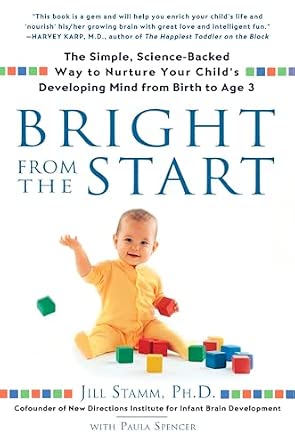
Bright from the Start: The Simple, Science-Backed Way to Nurture Your Child’s Developing Mind from Birth to Age 3
This book offers straightforward, science-backed strategies focusing on infants and toddlers, making it ideal for new parents or those with young children. Compared with The Whole-Brain Child, it emphasizes early brain development through simple, practical advice tailored to the first three years. While it excels in early childhood stages, it doesn’t cover later development or offer detailed scientific explanations. It’s perfect for parents who want quick, reliable guidance during the crucial early years.
Pros:- Provides clear, science-based strategies for early years
- Focuses on practical, actionable advice
- Easy to understand for new parents
Cons:- Limited guidance for children beyond age 3
- No detailed product features or reviews provided
Best for: Parents of infants and toddlers looking for easy-to-implement, science-based parenting tips
Not ideal for: Parents with older children or those seeking in-depth scientific explanations beyond early childhood
- Author:Joanna F. McCartney
- Pages:288
- Format:Paperback, Kindle
- Publication Year:2007
- Language:English
- ISBN:159240362X
Our verdict“A perfect guide for new parents wanting straightforward, science-backed advice for children from birth to age 3.”
Your Baby & Child: The Classic Childcare Guide, Revised and Updated
This classic guide offers extensive practical advice covering from infancy through adolescence, making it versatile for parents at any stage. Compared with Caring for Your Baby and Young Child, it provides broader age-range coverage, though it may lack the latest updates on specific health or safety issues. Its comprehensive nature makes it suitable for both new and experienced parents seeking a trusted reference, despite the absence of detailed features or recent reviews. It’s a solid choice for those wanting a go-to manual that evolves with their child’s growth.
Pros:- Covers a wide age range from infancy to adolescence
- Practical and easy-to-follow advice
- Updated with recent childcare insights
Cons:- Lacks detailed product features or specific recent reviews
- No information on format or editions beyond the revision
Best for: Parents who prefer a broad, all-in-one childcare reference suitable for any age
Not ideal for: Parents looking for specialized, up-to-date advice on specific health or developmental issues
- Author:Penelope Leach
- Pages:512
- Format:Paperback, eBook
- Publication Year:2020
- Language:English
- ISBN:0593321170
Our verdict“Great for parents seeking a comprehensive, all-in-one childcare manual with broad age coverage.”
Caring for Your Baby and Young Child, 8th Edition: Birth to Age 5
This guide offers detailed coverage of health, safety, and development from birth to age five, making it a comprehensive resource for early childhood care. Compared with Your Baby & Child, it emphasizes health and safety updates, although it lacks specific product details or ratings. Its broad scope makes it especially useful for parents who want a detailed, authoritative manual, but it may feel overwhelming for those seeking quick tips. This makes it ideal for parents wanting an in-depth reference for early childhood.
Pros:- Extensive coverage of health, safety, and development topics
- Updated with recent parenting insights
- Suitable for parents seeking detailed guidance
Cons:- Lacks detailed specifications or price info
- Can be too comprehensive for parents seeking quick tips
Best for: Parents of infants and preschoolers who desire a thorough, current guide on health and development
Not ideal for: Parents looking for quick, simplified advice or those with children older than five
- Author:American Academy of Pediatrics
- Pages:768
- Format:Hardcover, Paperback
- Publication Year:2023
- Language:English
- ISBN:0593598199
Our verdict“Perfect for parents wanting a detailed, up-to-date manual on caring for children from birth to age five.”
Your Child’s Growing Mind: Brain Development and Learning From Birth to Adolescence
This book offers a detailed exploration of how children’s brains develop from birth through adolescence, providing insights valuable to both parents and educators. Compared with The Whole-Brain Child, it delves deeper into scientific research and stages of cognitive growth, though it may lack the practical, immediate strategies some parents prefer. Its focus on supporting learning through developmental stages makes it ideal for those interested in educational strategies or understanding their child’s evolving mind. However, it doesn’t include specific product features or recent updates.
Pros:- Provides comprehensive insights into brain development stages
- Useful for both parents and educators
- Offers practical suggestions for supporting learning
Cons:- Limited details on specific content or recent updates
- May be too technical for parents seeking simple advice
Best for: Parents and teachers seeking in-depth understanding of brain development and practical ways to support learning
Not ideal for: Parents looking for quick, straightforward parenting advice or strategies without scientific detail
- Author:Xiaoxia Zhang
- Pages:400
- Format:Hardcover, eBook
- Publication Year:2007
- Language:English
- ISBN:0767916158
Our verdict“Ideal for those wanting a deep understanding of brain development to support learning and growth.”
Hold On to Your Kids: Why Parents Need to Matter More Than Peers
This book stands out for emphasizing the importance of strong parent-child relationships in an age dominated by peer influence, making it a vital read for parents worried about social pressures. Compared to books like The Whole-Brain Child, it focuses more on the relational aspect rather than brain development strategies, offering practical advice for maintaining parental influence. However, it lacks detailed product specifications or reviews, which may leave some readers wanting more concrete data. The focus on emotional bonds makes it ideal for parents seeking to reinforce their role, but less suitable for those looking for specific developmental techniques. Strong emphasis on parent-child connection and practical strategies are key strengths, while the absence of detailed features and reviews are notable drawbacks.
Pros:- Emphasizes the importance of parental influence in a peer-dominated age
- Provides practical strategies for strengthening parent-child bonds
- Focuses on emotional development and relationship building
Cons:- Lacks detailed product specifications or scientific data
- No customer reviews or ratings available for validation
Best for: Parents concerned about peer pressure and wanting to strengthen their influence in their child’s social world
Not ideal for: Parents seeking detailed, evidence-based developmental strategies or scientific explanations
- Publication Year:2001
- Pages:320
- Author:Gordon Neufeld
- Language:English
- Format:Paperback
- ISBN:0375760288
Our verdict“This book is best suited for parents who prioritize emotional connection and influence over peer pressure, but it offers limited technical details.”
No-Drama Discipline: The Whole-Brain Way to Calm the Chaos and Nurture Your Child’s Developing Mind
This pick makes the most sense for parents who want effective discipline combined with emotional nurturing, especially compared with The Whole-Brain Child, which emphasizes brain integration. It offers practical, easy-to-apply strategies that foster emotional regulation and understanding, making discipline less confrontational. Unlike some resources that focus solely on behavior, this book emphasizes understanding the child’s brain, which promotes long-term emotional health. Its main tradeoff is that it doesn’t delve into specific product features or include extensive scientific references, which may be a drawback for those seeking detailed evidence. Overall, this is an excellent choice for parents looking to combine discipline with empathy.
Pros:- Focuses on understanding the child’s brain to improve discipline
- Provides practical, compassionate strategies
- Supports emotional development alongside behavioral management
Cons:- No specific features or scientific references provided
- Limited focus on scientific details may deter some parents
Best for: Parents wanting compassionate discipline techniques that promote emotional intelligence
Not ideal for: Parents seeking a highly technical or neuroscience-heavy guide without practical, straightforward advice
- Publication Year:2014
- Pages:352
- Authors:Daniel J. Siegel & Tina Payne Bryson
- Language:English
- Format:Hardcover
- ISBN:034554806X
Our verdict“Ideal for parents seeking gentle, brain-based discipline strategies that nurture emotional growth, with less emphasis on technical details.”
The Month-by-Month Baby Book: In-Depth Monthly Advice on Your Baby’s Growth, Care, and Development in the First Year
This guide makes the most sense for new parents seeking detailed, month-by-month advice, unlike the more generalized approach of Your Baby & Child. It offers practical tips tailored to each stage of the first year, which helps parents track milestones and anticipate needs. However, it doesn’t highlight specific features or recent updates, potentially limiting its relevance for those looking for the latest research or technology. While comprehensive in scope, it may lack the depth some parents desire for complex developmental issues. It’s a solid choice for those who want structured guidance without the overwhelm of too much technical detail.
Pros:- Provides detailed monthly milestones and advice
- Practical tips for caring for a newborn
- Supports parents through each stage of the first year
Cons:- No mention of recent updates or technological features
- Lacks customer reviews or ratings for validation
Best for: First-time parents wanting detailed, chronological advice on their baby’s growth and care
Not ideal for: Parents looking for an updated or research-heavy guide with recent advances in child development
- Publication Year:2013
- Pages:448
- Author:Lynne Murray
- Language:English
- Format:Paperback
- ISBN:0744086418
Our verdict“A practical, structured guide ideal for new parents who prefer a step-by-step approach to their baby’s first year.”
Beginnings: A Guide to Child Psychology and Development for Parents of 0–5-year-olds
This pick makes the most sense for parents of young children who want a broad understanding of child psychology, similar to Your Child’s Growing Mind, but with more practical guidance. It provides a solid foundation in early childhood development, helping parents interpret behaviors and support growth effectively. Its main tradeoff is that it doesn’t specify detailed features or recent updates, which could matter for those seeking cutting-edge research. Nonetheless, it offers a balanced mix of theory and practical advice, making it suitable for parents eager to deepen their understanding of their child’s psychological needs during formative years.
Pros:- Provides a comprehensive overview of early childhood psychology
- Offers practical guidance for interpreting behaviors
- Supports parents in fostering healthy development
Cons:- No detailed features or recent updates mentioned
- Limited information on content depth
Best for: Parents of children aged 0-5 interested in psychological insights and practical guidance
Not ideal for: Parents seeking highly technical or research-dense texts without much practical application
- Publication Year:2018
- Pages:288
- Author:T. Berry Brazelton
- Language:English
- Format:Hardcover
- ISBN:0349431280
Our verdict“Suitable for parents who want a balanced understanding of early childhood psychology with practical tips for everyday parenting.”
What’s Going on in There? How the Brain and Mind Develop in the First Five Years of Life
This book is best suited for parents and caregivers eager to understand the complexities of early brain development, comparable to The Whole-Brain Child but with more emphasis on neuroscience. It offers in-depth insights into how the brain and mind develop during the first five years, translating scientific research into accessible explanations. Its main limitation is the lack of specific features or recent technical updates, which might be relevant for parents seeking the newest developments. The focus on the psychological and neurological aspects makes this a valuable resource for those wanting a deeper grasp of early cognition and emotional growth, although it may be dense for casual readers.
Pros:- Provides detailed insights into brain and mind development
- Written by a recognized expert in child development
- Makes complex neuroscience accessible for parents
Cons:- No specific features or technical details provided
- Limited reviews or ratings to validate its approach
Best for: Parents and caregivers interested in the neurological basis of early childhood development
Not ideal for: Parents seeking straightforward, non-technical parenting advice or recent research summaries
- Publication Year:2004
- Pages:320
- Author:Daniel J. Siegel
- Language:English
- Format:Paperback
- ISBN:0553378252
Our verdict“Ideal for parents who want a scientifically grounded, detailed understanding of early brain development in children.”
Raising Mentally Strong Kids: How to Combine the Power of Neuroscience with Love and Logic to Grow Confident, Kind, Responsible, and Resilient Children and Young Adults
This book stands out for its integration of neuroscience insights with practical love and logic, making it a comprehensive resource for parents aiming to foster resilience and confidence. Unlike Ages and Stages, which offers broad developmental milestones, this title provides specific strategies rooted in scientific research, making it highly actionable—though it demands time and effort to implement effectively. It’s ideal for parents who want to understand the “why” behind behavior and are willing to apply evidence-based techniques to build mental strength in their children.
Pros:- Provides evidence-based parenting strategies rooted in neuroscience
- Focuses on building resilience, confidence, and emotional strength
- Combines scientific insights with practical love and discipline
Cons:- Lacks specific implementation steps or detailed reviews
- Requires significant time investment to apply concepts effectively
Best for: Parents seeking scientifically grounded strategies to nurture resilience and responsibility in children and young adults.
Not ideal for: Parents looking for quick tips or those preferring an easy read without the need for long-term commitment.
- Author:Dr. Amy Morin
- Format:Print, eBook
- Pages:256
- Publication Year:2023
- Language:English
- Audience:Parents of children and young adults
Our verdict“This book is best suited for parents committed to understanding and applying scientific approaches to foster resilience in their children.”
Ages and Stages: A Parent’s Guide to Normal Childhood Development
This comprehensive overview of childhood development stages makes it invaluable for new parents trying to understand what is typical at each age. Compared to The Mayo Clinic Guide, which offers a more medical and health-focused perspective, Ages and Stages emphasizes developmental milestones and supportive strategies, though it may lack recent updates or detailed guidance on atypical development. It’s perfect for parents wanting a clear roadmap of growth but less suited for those seeking the latest research or specific health advice.
Pros:- Provides detailed developmental milestones and expectations
- Helpful for understanding normal growth patterns
- Supports parents in recognizing typical vs. atypical behaviors
Cons:- No recent editions or updates may limit current relevance
- Lacks specific guidance for dealing with atypical development
Best for: First-time parents needing a detailed overview of childhood milestones and growth expectations.
Not ideal for: Parents looking for up-to-date information on medical issues or recent developmental research.
- Author:Barbara K. K. Lewis
- Format:Print
- Pages:320
- Publication Year:2005
- Language:English
- Audience:Parents and caregivers
Our verdict“This guide is ideal for new parents seeking a detailed, milestone-focused overview of childhood growth.”
Mayo Clinic Guide to Your Baby’s First Years, 3rd Edition
This book offers authoritative advice from the Mayo Clinic, covering every phase of your infant and toddler’s early years. When compared to Parenting from the Inside Out, which emphasizes emotional understanding, this guide provides more practical health and development tips, though it lacks a focus on emotional or behavioral aspects. It’s best suited for new parents seeking reliable, medical-backed advice on health, growth, and common concerns during the first years.
Pros:- Expert advice from Mayo Clinic clinicians
- Covers all phases of infancy and toddlerhood
- Clear, practical guidance for common health concerns
Cons:- No specific price or customer ratings available
- Focuses more on health than emotional or behavioral development
Best for: Parents who prioritize expert health guidance and want a comprehensive, medically-supported resource for their infant’s first years.
Not ideal for: Parents interested primarily in emotional development or behavioral strategies, who might find it too health-centric.
- Author:Mayo Clinic Staff
- Format:Print, eBook
- Pages:400
- Publication Year:2021
- Language:English
- Audience:Parents of infants and toddlers
Our verdict“This guide is perfect for parents needing trusted, medical guidance during their child’s earliest years.”
Tiny Humans, Big Emotions: How to Navigate Tantrums, Meltdowns, and Defiance to Raise Emotionally Intelligent Children
This book offers practical approaches for handling tantrums, meltdowns, and defiance with a focus on fostering emotional intelligence from infancy through age eight. Unlike The Whole-Brain Child, which provides strategies for brain development, this title emphasizes emotional regulation and behavior management, making it more accessible for caregivers facing real-time challenges. Its focus on managing difficult behaviors makes it especially useful for parents dealing with frequent emotional outbursts, though it may lack detailed scientific explanations.
Pros:- Offers practical, easy-to-implement strategies
- Focuses on emotional intelligence and behavior management
- Suitable for a wide age range from infancy to early elementary
Cons:- Limited details on scientific underpinnings
- Lacks extensive content beyond behavior strategies
Best for: Caregivers of children aged 0-8 who want effective, straightforward strategies for emotional and behavioral challenges.
Not ideal for: Parents seeking an in-depth scientific analysis of brain development or emotional growth beyond behavior management.
- Author:Lori Lite
- Format:Print
- Pages:240
- Publication Year:2022
- Language:English
- Audience:Caregivers of children up to age 8
Our verdict“This book is ideal for parents and caregivers seeking straightforward tactics to handle challenging emotions and promote emotional skills.”
Parenting from the Inside Out: How a Deeper Self-Understanding Can Help You Raise Children Who Thrive (10th Anniversary Edition)
This edition emphasizes how understanding your own emotions and past experiences enhances parenting, fostering healthier parent-child relationships. Compared to Raising Mentally Strong Kids, which focuses more on child resilience, this book centers on the parent’s self-awareness as a foundation for effective parenting. It’s especially suited for parents willing to reflect deeply and invest time in personal growth, which can translate into more empathetic and connected children.
Pros:- Provides valuable insights into self-awareness for better parenting
- Helps build stronger, more empathetic relationships with children
- Encourages reflection on personal history and emotions
Cons:- No specific features or updates detailed beyond the 10th anniversary
- May require significant time and emotional investment to see benefits
Best for: Parents interested in self-reflection and improving their emotional awareness to enhance their parenting approach.
Not ideal for: Parents seeking quick parenting tips or those uninterested in personal psychological growth.
- Author:Daniel J. Siegel and Mary Hartzell
- Format:Print, eBook
- Pages:368
- Publication Year:2013
- Language:English
- Audience:Parents seeking personal growth
Our verdict“This book is best suited for parents willing to explore their own emotional landscape to foster healthier relationships with their children.”

How We Picked
These books were selected based on their reputation within the parenting community, reviews from experts, and the depth of content they provide. We prioritized titles that combine evidence-based research with actionable advice, ensuring they are suitable for a broad range of parents—from beginners to experienced caregivers. Each book was evaluated for clarity, practicality, and the ability to address common parenting challenges. The ranking also considers the balance between scientific rigor and readability, so parents can easily apply the insights without feeling overwhelmed. Books that offer unique perspectives or innovative approaches received a slight edge in our evaluation.
Factors to Consider When Choosing Books On Parenting And Child Development
Choosing the right book on parenting and child development depends on your specific needs, goals, and parenting style. Consider the child’s age, the focus of the book—whether emotional, behavioral, or developmental—and how much guidance you prefer. Additionally, think about the author’s background, the scientific backing of the advice, and whether the book aligns with your values. A good book should empower you without feeling prescriptive, helping you understand your child’s needs better while offering practical strategies.Age Focus and Developmental Stage
Many books target specific age ranges, such as infancy, toddlerhood, or school age. Picking a book aligned with your child’s current stage ensures the advice is relevant and actionable. For example, a book focused on early brain development may not address behavioral issues that emerge later. Be cautious about books that try to cover all ages equally, as they might lack depth for your child’s specific stage. Consider whether you want a comprehensive guide or one tailored to a particular phase.
Science vs. Philosophy
Some books are rooted firmly in scientific research, offering evidence-based strategies, while others lean more toward philosophical or anecdotal advice. Decide which approach suits your learning style: if you prefer grounded, data-backed guidance, prioritize titles with references to studies and expert credentials. However, books emphasizing personal stories or values can provide emotional resonance and practical insights that science-based titles might lack. Striking a balance between the two can often provide the most well-rounded perspective.
Author Credentials and Perspectives
Check the background of the authors—are they psychologists, pediatricians, or experienced parents? Their expertise impacts the credibility and depth of the advice. Be cautious of books written by authors with a strong ideological bias or limited professional experience, as this can influence the guidance’s reliability. Also, consider whether the author’s perspective aligns with your parenting philosophy—whether that’s attachment parenting, authoritative, or other models. A well-credentialed author with relevant experience is generally a safer choice.
Practicality and Readability
While some books are dense with research, others are more accessible and easy to implement. Think about how much time you want to invest in reading and applying advice. If you prefer quick, actionable tips, look for concise guides or those with clear summaries. For parents eager to dive deep into understanding child psychology, more comprehensive texts may be suitable, but they often require more time and mental energy. Balance your availability and learning style with the book’s complexity.
Price and Format
Prices vary significantly, from affordable paperbacks to more expensive hardcovers or digital editions. Consider whether a book’s value justifies its cost based on the depth of content and your commitment level. Audiobooks and e-books can add convenience, especially for busy parents. Also, check if the book includes practical tools like exercises or worksheets, which can enhance learning and application. Sometimes, investing a bit more in a well-reviewed, comprehensive guide pays off in the long run.
Frequently Asked Questions
How do I choose a parenting book that’s right for my child’s age?
Focus on books specifically tailored to your child’s current developmental stage. For example, if you have a toddler, look for titles that address early childhood behavior and brain development during that time. Many books specify the age range they cover, ensuring the advice is relevant. Avoid broad books that try to address all ages, as they may lack the depth you need for your child’s specific needs. Matching the book’s focus with your child’s stage helps you apply strategies more effectively.
Should I prioritize scientific research or personal stories in a parenting book?
This depends on your learning style and what you hope to gain. Science-backed books provide evidence-based strategies that are generally reliable and effective across different contexts. Personal stories, on the other hand, can offer emotional connection and practical insights rooted in real-life experiences. Ideally, choose a book that combines both—scientific rigor with relatable anecdotes—so you can understand the reasoning behind advice while feeling supported and understood as a parent.
Are more expensive parenting books worth the extra investment?
Generally, more expensive books tend to offer more comprehensive content, detailed strategies, and expert insights. If you’re committed to understanding your child’s development deeply, investing in a well-reviewed, in-depth guide can be worthwhile. However, not all high-priced books are necessarily better; look for reviews and author credentials to ensure the value justifies the cost. Sometimes, a moderately priced book can be equally effective if it aligns well with your needs and offers practical, actionable advice.
Can I rely on one book for all my parenting questions?
While some books aim to be comprehensive, no single title can cover every aspect of parenting. It’s often best to read multiple books that address different areas—such as emotional intelligence, discipline, and developmental science—so you get a well-rounded perspective. Combining insights from different authors can help you tailor strategies to your specific situation and your child’s unique personality. Relying on a variety of trusted sources enhances your understanding and flexibility as a parent.
How do I know if a parenting book aligns with my parenting philosophy?
Review the author’s background, core principles, and the language used in the book. Many titles explicitly state their approach, whether attachment, authoritative, or other styles. Skim the introduction or summary to see if their values match yours. If possible, look for sample chapters or reviews that discuss the philosophy behind the advice. Choosing a book that resonates with your beliefs will make it easier to implement strategies consistently and confidently.
Conclusion
For parents seeking a comprehensive, science-backed overview, The Whole-Brain Child offers a balanced mix of neuroscience and practical strategies, making it the best overall pick. Budget-conscious readers or those new to parenting might find Your Baby & Child or Mayo Clinic Guide to be excellent value options. Parents looking to deepen their emotional connection and self-awareness should consider Parenting from the Inside Out. For those focused on emotional regulation, Tiny Humans, Big Emotions is a strong choice. Ultimately, your ideal book will align with your child’s age, your parenting style, and your learning preferences—use this guide to find the best fit for your family’s journey in 2026.
Fall Picks
fall essentials
As an affiliate, we earn on qualifying purchases.