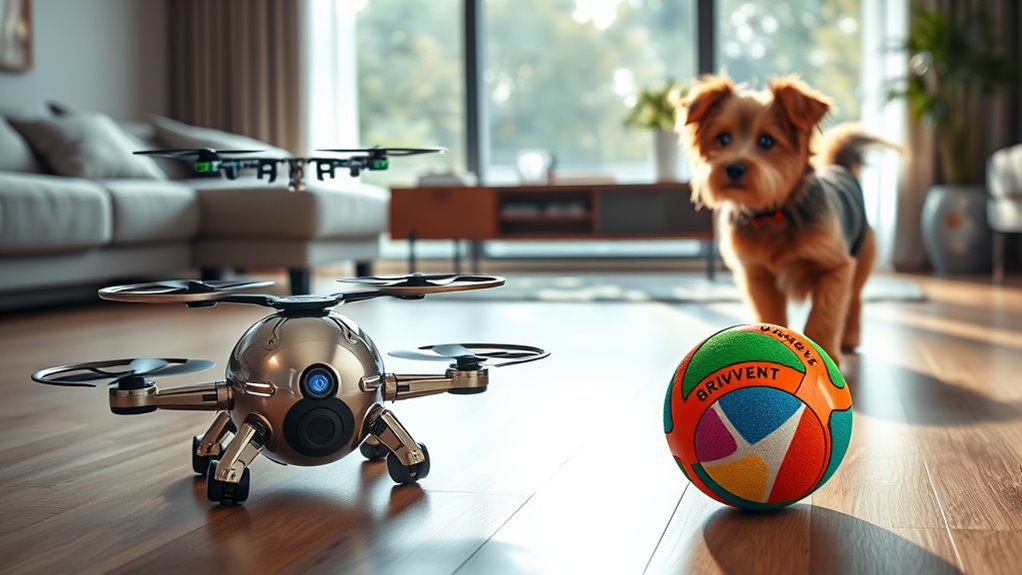

Robotic pet toys have advanced remarkably, blending interactive fun with educational value. For 2026, the lineup includes options with programmable tricks, AI-powered features, and STEM learning. If you’re after a lively, customizable companion, the Ruko 18011 Smart Robot Dog stands out for its expressive LED faces and versatile controls. For those seeking a more educational and social experience, the Loona Robot Pet Dog offers face and gesture recognition with home monitoring. Meanwhile, the Smart Robot Dog by Dingdongwu provides extensive actions and app programming for tech-savvy kids. Each has tradeoffs: battery life, complexity, or price, which I’ll clarify below.

Get baby and family essentials delivered free — and shop member deals
- Fast, free delivery on millions of items
- Access to Prime Big Deal Days deals on October 6–7
- Prime Video, Amazon Music and more included
Complete the kit


Key Takeaways
- The Ruko 18011 excels in expressive animations and programmable tricks, ideal for creative kids.
- Loona offers advanced AI features like face recognition and home monitoring, suitable for tech-forward households.
- Dingdongwu’s robot provides extensive actions and STEM features but comes at a higher price point.
- Battery life varies significantly, from 45 minutes to 6 hours, affecting how long your child can play without recharging.
- Choice depends on whether you prioritize expressive play, AI capabilities, or programmable complexity.
| Ruko 18011 Smart Robot Dog, Interactive Puppy with 30 LED Expressions |  | Best Overall for Expressive Play and Programmability | Dimensions: 9.8 × 8.3 × 9.8 inches | Battery Life: Up to 45 minutes | Charge Time: 3 hours | VIEW ON AMAZON | See Our Full Breakdown |
| Dwi Dowellin Robot Dog Toy, Interactive Programmable Puppy with Gesture Sensing |  | Best for Gesture-Controlled Interactive Play | Material: ABS plastic | Battery: 3.7V rechargeable | Battery Life: Over 60 minutes | VIEW ON AMAZON | See Our Full Breakdown |
| Smart Robot Dog – Interactive STEM Pet with Voice Control, 30+ Actions & APP Programming |  | Best for Tech-Savvy Kids and STEM Learning | Brand: Dingdongwu | Model Name: AI robot dog | Unit Count: 1 | VIEW ON AMAZON | See Our Full Breakdown |
| Loona Robot Pet Dog with AI-Powered Interaction and Home Monitoring |  | Best for AI-Driven Interaction and Security | Charging Time: 2.5 hours | Features: Face recognition, gesture control, voice interaction, autonomous charging | Connectivity: Mobile hotspot compatible | VIEW ON AMAZON | See Our Full Breakdown |
| robotic pet toy | Battery Life |
|---|---|
| Ruko 18011 Smart Robot Dog | Up to 45 minutes |
| Dwi Dowellin Robot Dog Toy | Over 60 minutes |
| Smart Robot Dog | — |
| Loona Robot Pet Dog with AI-Po | — |
More Details on Our Top Picks
Ruko 18011 Smart Robot Dog, Interactive Puppy with 30 LED Expressions
The Ruko 18011 stands out for its engaging movements, cheerful sounds, and 30 animated facial expressions. Its LED features make it highly expressive, appealing for kids who love pretend play and customization. It offers remote and gesture controls, along with the ability to program 50 moves, fostering creativity and STEM skills. Compared with other options, its expressive face and programmable tricks make it a versatile choice, though its battery life caps at 45 minutes, which might limit extended play. The remote control requires 2 AAA batteries (not included), and the USB-C charging cable isn’t included, adding minor inconveniences. This pick is best for children who enjoy lively, expressive, and programmable pets.
Pros:- Highly expressive with 30 animated facial expressions
- Programmable tricks to enhance creativity and STEM skills
- Remote and gesture controls for versatile play
Cons:- Limited 45-minute battery life
- Remote requires 2 AAA batteries (not included)
- USB-C charger not included
Best for: Kids aged 5-12 who love expressive, customizable robotic pets.
Not ideal for: Parents seeking long battery life or simpler toys for very young children.
- Dimensions:9.8 × 8.3 × 9.8 inches
- Battery Life:Up to 45 minutes
- Charge Time:3 hours
- Remote Control Range:98 feet
- Programming Moves:50 custom moves
- LED Expressions:30 animated facial expressions
Our verdict“A lively, expressive robot dog that offers creative play and programmability, ideal for kids who enjoy interactive, customizable toys.”
Dwi Dowellin Robot Dog Toy, Interactive Programmable Puppy with Gesture Sensing
The Dwi Dowellin offers a compelling mix of gesture sensing, programmable actions, and sound effects. It responds to touch and remote commands, making it ideal for encouraging imaginative play and social skill development. Its 60-minute playtime surpasses the Ruko’s, which benefits children who prefer longer sessions. However, the remote requires 2 AAA batteries (not included), and its appeal is primarily for children aged 8-12, potentially limiting engagement for younger kids. While its gesture sensing adds a layer of interactivity, some may find the programming interface less intuitive than more advanced options. This toy suits kids interested in dance, movement, and creative coding.
Pros:- Gesture sensing and sound effects enhance engagement
- Over 60 minutes of playtime
- Encourages creativity and logical thinking through programming
Cons:- Remote control needs 2 AAA batteries (not included)
- Limited appeal for children under 8
- Playtime slightly shorter than some competitors
Best for: Children ages 8-12 interested in gesture-based and programmable interactive pets.
Not ideal for: Parents wanting a simple, low-maintenance toy for younger children.
- Material:ABS plastic
- Battery:3.7V rechargeable
- Battery Life:Over 60 minutes
- Remote Batteries:2 AAA batteries (not included)
Our verdict“A feature-rich robot dog that emphasizes gesture control and programming, perfect for older children who enjoy active, programmable play.”
Smart Robot Dog – Interactive STEM Pet with Voice Control, 30+ Actions & APP Programming
The Smart Robot Dog by Dingdongwu offers an impressive range of over 30 actions, including pranks and Kung Fu moves, all controlled by voice, app, or remote. Its focus on STEM programming makes it particularly appealing for children interested in coding, robotics, and tech challenges. With a durable design and up to 6 hours of runtime, it exceeds most in battery life, making it suited for extended play sessions. However, the need for a compatible iOS or Android device for full app features introduces some complexity and cost. The higher price reflects its advanced features, but for tech-minded families, this robot offers a rich experience that combines play and learning.
Pros:- Over 30 interactive actions and voice control
- Includes STEM programming for coding skills
- Long battery life with fast charging
Cons:- Requires compatible iOS/Android device
- Programming features may be complex for younger children
- Higher price point
Best for: Children aged 6 and up who enjoy coding, voice commands, and extended play.
Not ideal for: Parents seeking a straightforward, basic robot toy without programming or app features.
- Brand:Dingdongwu
- Model Name:AI robot dog
- Unit Count:1
- Age Range:Kid
- Battery Capacity:600mAh
- Charging:USB-C fast charging
- Runtime:6 hours
Our verdict“A comprehensive programmable robot perfect for tech-oriented kids eager to learn coding through interactive play.”
Loona Robot Pet Dog with AI-Powered Interaction and Home Monitoring
Loona stands apart as a smart, AI-powered robotic pet that combines companionship with home security. It recognizes faces, understands gestures, and responds to voice commands using ChatGPT and Amazon Lex, making it feel remarkably intelligent. Its autonomous charging and home monitoring features add a layer of convenience, turning it into a hybrid pet and security device. However, it requires a well-lit environment for optimal face and gesture recognition, and details on battery life are less explicit, which could impact its reliability for extended use. This model is ideal for tech enthusiasts who want their robotic pet to do more than just play—it’s a home assistant as well.
Pros:- Face and gesture recognition for personalized interaction
- Autonomous charging and home monitoring
- Supports voice commands and real-time conversations
Cons:- Requires well-lit environment for best performance
- Charging dock placement needs space
- Limited battery life specifics
Best for: Tech-savvy families seeking a robotic pet with AI and home monitoring features.
Not ideal for: Parents wanting a simple, purely playful toy for young children without security features.
- Charging Time:2.5 hours
- Features:Face recognition, gesture control, voice interaction, autonomous charging
- Connectivity:Mobile hotspot compatible
- Camera:High-definition RGB camera
- Sensors:ToF depth sensor
Our verdict“An AI-powered, interactive companion that doubles as a home monitoring device, suited for families wanting smart tech integration.”

How We Picked
We selected these robotic pet toys based on their interactive features, educational value, versatility, and user feedback. Each product demonstrates a different approach to robotic pet play—whether through expressive animations, AI-powered recognition, or programmable actions—catering to various age groups and interests. We also considered battery life, safety, durability, and ease of use, aiming to highlight options that balance fun and learning while being suitable for children and families.
| robotic pet toy | Battery Life |
|---|---|
| Ruko 18011 Smart Robot Dog | Up to 45 minutes |
| Dwi Dowellin Robot Dog Toy | Over 60 minutes |
| Smart Robot Dog | — |
| Loona Robot Pet Dog with AI-Po | — |
Factors to Consider When Choosing Robotic Pet Toys
Selecting the right robotic pet toy depends on your child’s age, interests, and your family’s tech comfort level. Key factors include expressiveness, programmability, AI capabilities, battery life, and price. Understanding what features truly enhance play and learning will help you choose the best fit for your child’s needs and your household environment.
Expressiveness and Interactivity
If your child loves animated play and pretend scenarios, look for robots like the Ruko 18011 that feature multiple facial expressions and movements. These toys are excellent for imaginative storytelling and social interaction, but they often come with shorter battery life. For more realistic interaction, AI-powered options like Loona provide personalized responses and recognition, creating a more lifelike companion, though they require good lighting conditions and have higher setup complexity.
Programmability and Learning
For children interested in coding and STEM skills, models like the Dingdongwu Smart Robot Dog offer extensive programmable actions, voice control, and app integration. These are better suited for older kids comfortable with technology, but they come at a higher cost and require compatible devices. Simpler programmable toys like the Dwi Dowellin are more accessible for beginners, providing over 60 minutes of play and basic programming, ideal for slightly younger children.
Battery Life and Ease of Use
Extended play sessions depend heavily on battery life. The Dingdongwu model can last up to 6 hours, making it great for long-term engagement, while others like Ruko and Dwi offer around 45 to 60 minutes, requiring more frequent charging. Consider how often you’ll want your child to recharge the toy, and whether quick charging or longer runtime aligns better with your usage patterns. Ease of use is also critical—more complex programming features may require adult supervision or learning curves.
Price and Value
More advanced features, such as AI and app programming, come with a higher price tag. Basic expressive models like Ruko provide excellent value for lively play at a lower cost, while premium options like Dingdongwu’s robot integrate educational tech and long-lasting batteries for dedicated tech enthusiasts. Balance your budget with your child’s interest level and the educational benefits you desire.
Frequently Asked Questions
What should I consider when choosing a robotic pet toy for my child?
Consider your child’s age, interests, and the type of interaction they enjoy most. Think about whether you want expressive animated features, AI-driven conversations, or programmable coding capabilities. Battery life, durability, and price are also important factors to ensure the toy fits your household needs and provides ongoing engagement without frequent recharging or maintenance.
Are robotic pet toys safe for young children?
Most robotic pet toys designed for kids are built with safety in mind, made from non-toxic materials and with rounded edges. However, always check age recommendations and supervision guidelines, especially with programmable or AI-enabled models that may include small parts or require device pairing. Toys like the Ruko and Dwi are suitable for children aged 5 and up, while more complex AI models are often intended for older kids.
How important is battery life in choosing a robotic pet toy?
Battery life significantly impacts how long your child can enjoy the toy in one session. Shorter durations, like 45 minutes, mean more frequent charging, which can interrupt play. Longer-lasting models, such as the Dingdongwu robot, provide up to 6 hours of continuous fun, making them better for extended play or outdoor use. Consider your child’s typical play patterns when evaluating battery capacity.
Do I need a smartphone to operate these robotic toys?
Many advanced models, including the Dingdongwu and Loona, rely on smartphone apps for full functionality, programming, and customization. Simpler toys like Ruko often use remote controls or gesture sensing and do not require a device. If you prefer a straightforward experience without extra tech, opt for models with physical controls and minimal app dependence.
Are robotic pet toys suitable for educational purposes?
Absolutely. Toys like the Dingdongwu robot are designed with STEM learning in mind, encouraging kids to explore coding, robotics, and problem-solving through interactive programming. Even expressive models like Ruko can foster creativity and social skills through pretend play. When selecting a toy, consider whether your child would benefit from features that promote learning alongside fun.
Conclusion
For parents seeking lively, expressive pets that spark imagination, the Ruko 18011 offers engaging play with programmable tricks. Families interested in AI and home security may find Loona’s advanced features appealing, especially for tech-savvy households. For those prioritizing STEM education and longer playtimes, the Dingdongwu robot provides a comprehensive learning experience, though at a higher cost. Ultimately, your choice hinges on your child’s age, interests, and your household’s tech comfort level—each of these options brings something unique to the table.
Halloween Picks
halloween
As an affiliate, we earn on qualifying purchases.