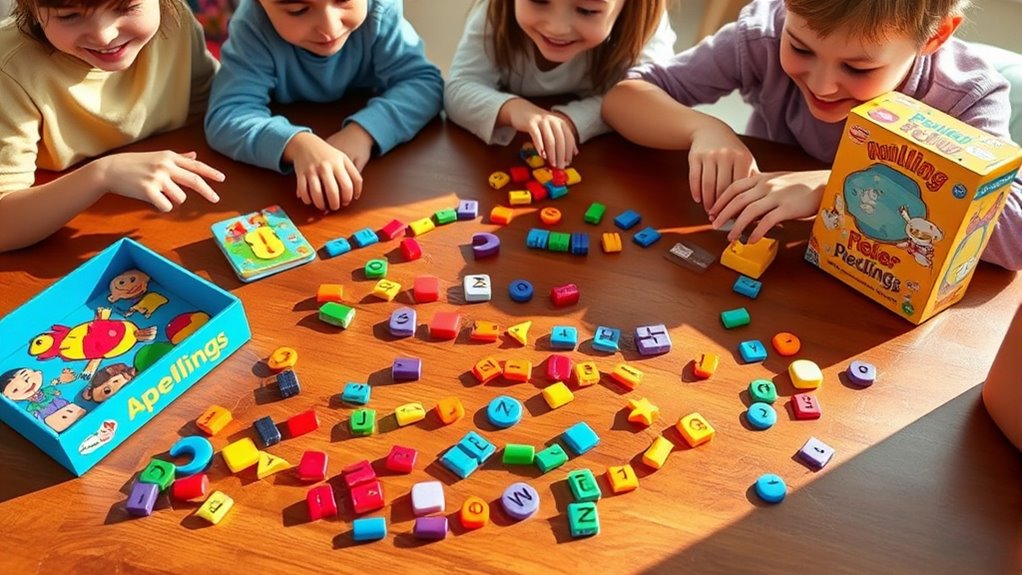

Spelling board games offer a fun way to develop language skills while engaging in friendly competition. The best options balance educational value with gameplay that keeps players interested. My First Lowercase Letter Word Game stands out as an excellent choice for beginners, especially younger children learning letter recognition. Scrabble remains a classic for older players and families wanting a more strategic challenge, but it can be less accessible for younger kids. The main tradeoffs include balancing educational focus versus gameplay complexity and selecting between portable, quick games or more involved, long-form options. Keep reading for a detailed breakdown of these top picks and what makes each one unique.

Get baby and family essentials delivered free — and shop member deals
- Fast, free delivery on millions of items
- Access to Prime Big Deal Days deals on October 6–7
- Prime Video, Amazon Music and more included
Complete the kit


Key Takeaways
- The top-ranking games blend educational value with engaging gameplay suitable for various age groups.
- Simpler, more beginner-friendly options tend to be more accessible but may lack depth for older players.
- Classic games like Scrabble dominate for serious word enthusiasts, but less complex games are better for early learners.
- Portability and ease of setup are key factors for families who want quick, on-the-go fun.
- Price and durability vary, with premium options offering higher build quality and more features for dedicated players.
| Bananagrams My First Lowercase Letter Word Game for Ages 4+ |  | Best for Early Literacy Development | Ages: 4+ | Number of Players: 1-4 | Includes: 80 letter tiles, 13 combo-letter tiles, green banana pouch | VIEW ON AMAZON | See Our Full Breakdown |
| Wordplay for Kids |  | Best for Quick Thinking and Family Fun | Ages: 6 and up | Awards: Teacher’s Choice Award | Game Type: Word challenge | VIEW ON AMAZON | See Our Full Breakdown |
| Bananagrams Classic Word Game, 144 Tiles in Banana Pouch, Travel Game |  | Best for Versatile Word Building and Travel | Number of Tiles: 144 | Player Range: 1-8 | Recommended Age: 7 years and up | VIEW ON AMAZON | See Our Full Breakdown |
| Upwords Classic Word Game with Stackable Letter Tiles |  | Best for Strategy and Creative Word Play | Number of Players: 1-4 | Ages: 8 and up | Includes: 1 game board, 100 letter tiles, 4 tile racks, 4 rubber feet, 1 tile bag, instruction sheet | VIEW ON AMAZON | See Our Full Breakdown |
| Hasbro Gaming Scrabble Board Game, Classic Word Game for Kids Ages 8 and Up |  | Best for Classic, Strategy-Based Word Play | Number of Players: 2-4 | Ages: 8 and up | Includes: 100 wooden letter tiles, wooden racks, gameboard | VIEW ON AMAZON | See Our Full Breakdown |
| Dabble Word Game | Fast-Paced Family Board Game to Enhance Spelling and Vocabulary |  | Best Overall Spelling Game for Family Fun and Learning | Age Range: 8 years and up | Included Components: 148 Word Tiles, 4 Tile Racks, 2-minute Timer, Rules in English and Spanish | Material Type: Plastic | VIEW ON AMAZON | See Our Full Breakdown |
| Hasbro Gaming Scrabble Junior Board Game |  | Best Beginner Word Game with Two-Level Learning | Players: 2-4 | Ages: 5+ | Gameboard: Two-sided with beginner and advanced levels | VIEW ON AMAZON | See Our Full Breakdown |
| Tile Lock Scrabble Board Game |  | Best Portable Scrabble with Secure Tile Locking | Number of Players: 2-4 | Minimum Age: 8 and up | Material: Plastic | VIEW ON AMAZON | See Our Full Breakdown |
| Junior Learning Spelligator – Phonics Word Building Game for Ages 5-9 |  | Best Phonics-Focused Word Builder for Early Literacy | Includes: 4 colorful Spelligators, 75 letter tiles, game guide, word list | Ages: 5 years and above | Skills Developed: Phonemic awareness, spelling, letter patterns, phonics rules | VIEW ON AMAZON | See Our Full Breakdown |
| spelling board game | Ages | Number of Players | Includes |
|---|---|---|---|
| Bananagrams My First Lowercase | 4+ | 1-4 | 80 letter tiles, 13 combo-letter tiles, green banana pouch |
| Wordplay for Kids | 6 and up | Multiple players | — |
| Bananagrams Classic Word Game | — | — | Banana-shaped pouch |
| Upwords Classic Word Game with | 8 and up | 1-4 | 1 game board, 100 letter tiles, 4 tile racks, 4 rubber feet, 1 tile bag, instruction sheet |
| Hasbro Gaming Scrabble Board G | 8 and up | 2-4 | 100 wooden letter tiles, wooden racks, gameboard |
| Dabble Word Game | Fast-Paced | — | — | — |
| Hasbro Gaming Scrabble Junior | 5+ | — | — |
| Tile Lock Scrabble Board Game | — | 2-4 | — |
| Junior Learning Spelligator | 5 years and above | — | 4 colorful Spelligators, 75 letter tiles, game guide, word list |
More Details on Our Top Picks
Bananagrams My First Lowercase Letter Word Game for Ages 4+
This game stands out for introducing young children to letter recognition and spelling in a playful, screen-free way. Compared with the Bananagrams Classic Word Game, this version is simplified for early learners, making it less overwhelming but also limiting complexity. Its portability and compact design make it ideal for travel or small spaces, though the focus is solely on basic literacy skills, so it may not challenge older children or advanced learners. The inclusion of 80 letter tiles and a travel pouch makes setup quick and easy, fostering independent play or family involvement. However, it’s less suitable for children beyond age 6 who might seek more challenging word-building or competitive play.
Pros:- Helps children learn letter recognition and spelling
- Portable and travel-friendly design
- Screen-free and engaging for kids
Cons:- Limited to early literacy, may not suit older children
- No additional game modes or complexity
Best for: Parents or educators seeking an engaging, portable introduction to letter recognition for preschoolers and early kindergarteners.
Not ideal for: Older children or those looking for more advanced spelling or word challenges, since the game is geared toward early literacy skills.
- Ages:4+
- Number of Players:1-4
- Includes:80 letter tiles, 13 combo-letter tiles, green banana pouch
Our verdict“A perfect starter game for parents and teachers introducing preschoolers to the basics of spelling and letter recognition.”
Wordplay for Kids
This award-winning game excels at engaging children ages 6 and up in fast-paced, category-based word challenges, making it ideal for lively family game nights. Unlike the Bananagrams Classic Word Game, which emphasizes spelling and word construction, Wordplay for Kids emphasizes rapid thinking and word association, encouraging quick decision-making. Its award recognition, like the Teacher’s Choice Award, underscores its educational value. However, the game demands active, fast responses, which may be overwhelming for some younger or shy children, and the rules can be somewhat complex for very beginners. It’s best suited for children who enjoy energetic, competitive play and can handle the pressure of quick answers.
Pros:- Engages children with quick-thinking word challenges
- Suitable for family game nights and educational settings
- Award-winning design and quality
Cons:- Requires active participation and quick responses
- Rules may be complex for very young children
Best for: Families or classrooms wanting a lively, fast-paced word game that enhances quick thinking and category vocabulary.
Not ideal for: Children who prefer slower, more contemplative gameplay or have difficulty with rapid decision-making.
- Ages:6 and up
- Awards:Teacher’s Choice Award
- Game Type:Word challenge
- Number of Players:Multiple players
Our verdict“An energetic word game that rewards speed and category knowledge, perfect for competitive families.”
Bananagrams Classic Word Game, 144 Tiles in Banana Pouch, Travel Game
This version of Bananagrams offers a generous set of 144 tiles, making it suitable for up to 8 players and versatile for larger gatherings. It compares favorably to the Upwords game, which introduces stacking and strategy but is less portable. The game’s main appeal lies in its portability, quick setup, and the ability to play solo or in groups, fostering spelling, vocabulary, and quick thinking. Its small parts and tile-based gameplay mean it’s less suitable for children under 3 due to choking hazards. While it excels in casual, family, and travel settings, it doesn’t include structured rules, which may require players to agree on house rules or variations.
Pros:- Portable and travel-friendly design
- Educational and fun for all ages
- Encourages spelling and word-building skills
Cons:- Contains small parts, not suitable for children under 3
- Limited to word game fun, may not appeal to all game preferences
Best for: Families seeking a portable, flexible word game that can accommodate a wide range of ages and group sizes.
Not ideal for: Very young children under 3 or players seeking a structured, rules-based game experience.
- Number of Tiles:144
- Player Range:1-8
- Recommended Age:7 years and up
- Includes:Banana-shaped pouch
Our verdict“A versatile, portable word game that’s great for travel and large family gatherings, with some safety considerations for young children.”
Upwords Classic Word Game with Stackable Letter Tiles
Compared to the simpler Bananagrams, Upwords introduces a strategic element with stacking tiles to form new words, making it more engaging for older children and adults. Its rotating game board adds a dynamic twist, requiring players to think ahead and adapt their strategies. While the game’s complexity makes it less suitable for very young children, it offers a deeper level of gameplay that appeals to those aged 8 and up who enjoy building and strategy. The need for some space to rotate the board and the slightly higher learning curve are tradeoffs for its richer gameplay experience. It’s best for players looking for a challenging and creative word-building game.
Pros:- Engages players in strategic word building
- Rotating game board adds a fun, dynamic element
- Suitable for solo, pair, or group play
Cons:- May be challenging for very young children
- Requires some space to rotate the board during play
Best for: Families or groups seeking a strategic, creative word game that combines spelling with spatial reasoning.
Not ideal for: Younger children under 8 or casual players who prefer simple, straightforward word games without added complexity.
- Number of Players:1-4
- Ages:8 and up
- Includes:1 game board, 100 letter tiles, 4 tile racks, 4 rubber feet, 1 tile bag, instruction sheet
Our verdict“A strategic word game that appeals to older kids and adults who enjoy creative, spatially aware word puzzles.”
Hasbro Gaming Scrabble Board Game, Classic Word Game for Kids Ages 8 and Up
Scrabble remains the benchmark for classic word games, offering a familiar and strategic experience with wooden tiles and racks. Its comparison to the Bananagrams highlights its structured gameplay, which appeals to those who enjoy planning and strategic word placement. While the game’s setup and cleanup can be time-consuming, its enduring appeal lies in its depth and versatility, suitable for family game nights or competitive play. It’s less engaging for very young children due to the need for a certain level of vocabulary and strategy, but it offers a timeless challenge for older kids and adults seeking a classic word-building experience.
Pros:- Classic and engaging word game suitable for all ages
- Includes durable wooden tiles and racks
- Offers multiple ways to strategize and play
Cons:- Requires at least 2 players
- Setup and cleanup can be time-consuming
- Less engaging for very young children
Best for: Families and players wanting a traditional, strategic word game with a proven track record for all ages over 8.
Not ideal for: Younger children under 8 or players seeking quick, casual gameplay without the need for strategic planning.
- Number of Players:2-4
- Ages:8 and up
- Includes:100 wooden letter tiles, wooden racks, gameboard
Our verdict“A dependable, strategic word game that stands out for traditional players and family game nights with older children and adults.”
Dabble Word Game | Fast-Paced Family Board Game to Enhance Spelling and Vocabulary
Dabble stands out as the most versatile choice for families seeking a dynamic, educational word game. Unlike Scrabble Junior, which targets younger children with simpler rules, Dabble offers a fast-paced challenge that pushes players to spell five words within a time limit, making it more engaging for older kids and adults alike. Its bilingual rules expand accessibility, while the inclusion of 148 letter tiles supports varied gameplay. However, the game’s speed can be intimidating for very young children under 8, and the need for space to lay out tiles and track time may be inconvenient in tight settings. This pick makes the most sense for families or groups who want a lively, inclusive spelling challenge that can adapt to different ages and skill levels, although it may be less suitable for those seeking a slow, educational-only experience.
Pros:- Enhances spelling and vocabulary skills through quick gameplay
- Suitable for all ages, making it perfect for family game nights
- Includes bilingual rules in English and Spanish for broader accessibility
Cons:- May be challenging for children under 8 due to speed and complexity
- Requires some space for tile placement and timing, which could be inconvenient
Best for: Families or groups wanting a fast, competitive spelling game that encourages vocabulary building for ages 8 and up
Not ideal for: Parents with very young children under 8 or players who prefer slow-paced, purely educational activities
- Age Range:8 years and up
- Included Components:148 Word Tiles, 4 Tile Racks, 2-minute Timer, Rules in English and Spanish
- Material Type:Plastic
- Model Name:Dabble
- Number of Packs:1
- UPC:856030001391, 093514261203
Our verdict“This game appeals most to families seeking a lively, inclusive spelling challenge with a bilingual twist.”
Hasbro Gaming Scrabble Junior Board Game
Scrabble Junior is designed for young children starting at age 5, making it ideal for introducing spelling and word recognition in a playful format. Its two-sided gameboard offers both beginner and more advanced levels, providing a gradual learning curve that sets it apart from simpler, single-level games like Bananagrams My First. The inclusion of adorable character tokens adds visual appeal, keeping kids engaged. However, its limited 2-4 player capacity can restrict larger family or classroom play, and the basic components may wear out with frequent use. This game makes the most sense for parents seeking a durable, beginner-friendly introduction to spelling that can grow with their child’s skills, though it might not satisfy groups with more players or those looking for longer-lasting components.
Pros:- Suitable for a wide age range with multiple difficulty levels
- Encourages early literacy and spelling development
- Includes engaging, cute tokens that appeal to young children
Cons:- Limited to 2-4 players, restricting larger group play
- Basic components might wear out with frequent use
Best for: Parents of children aged 5 and above wanting an easy-to-understand, multi-level spelling game
Not ideal for: Larger families or groups that prefer more durable components or more complex gameplay
- Players:2-4
- Ages:5+
- Gameboard:Two-sided with beginner and advanced levels
- Tokens:4 adorable character tokens
Our verdict“This game is ideal for parents seeking a gentle, adjustable introduction to spelling for young children.”
Tile Lock Scrabble Board Game
Tile Lock Scrabble offers a practical upgrade for Scrabble fans who frequently play on the go. Its innovative tile lock design keeps tiles securely in place, a feature missing from standard Scrabble sets like Scrabble Junior. The compact size and travel-friendly design make it perfect for trips or limited table space, though the smaller board and tiles can make gameplay less comfortable for some players. The plastic construction feels less premium compared to traditional wood or cardboard sets, and the limited 2-4 player capacity might be restrictive for larger groups. This version suits players who want the classic game with added security during travel, but those seeking a larger, more tactile experience might prefer larger, traditional sets.
Pros:- Secure tile locking prevents tiles from moving accidentally
- Compact and travel-friendly for on-the-go play
- Includes all standard Scrabble components
Cons:- Smaller tiles and board may be less comfortable for some users
- Plastic construction feels less premium
Best for: Travelers or players needing a secure, portable Scrabble set for 2-4 players
Not ideal for: Players who prefer larger, more tactile boards and components for casual home play
- Number of Players:2-4
- Minimum Age:8 and up
- Material:Plastic
- Board Size:Smaller than standard Scrabble
- Tile Size:Slightly smaller than standard
Our verdict“This version is perfect for travel and quick games but may sacrifice comfort for portability.”
Junior Learning Spelligator – Phonics Word Building Game for Ages 5-9
Spelligator makes a strong case as the best choice for early learners focusing on phonics and spelling. Its color-coded, self-correcting tiles offer a clear advantage over more traditional letter games like Scrabble Junior by providing immediate feedback and reinforcing phonemic awareness. The two difficulty levels allow it to grow with the child’s skills, making it a flexible educational tool. However, Spelligator is primarily focused on phonics and spelling, so it may not satisfy those looking for a broader vocabulary or more complex word challenges. Additionally, younger children may need adult supervision to maximize its benefits. It is best suited for parents or educators seeking an engaging, phonics-centered game to support foundational literacy skills.
Pros:- Interactive way to develop phonics and spelling skills
- Color-coded, self-correcting tiles help children learn independently
- Supports different learning stages with two difficulty levels
Cons:- Requires adult supervision for young children to maximize learning
- Limited to phonics and spelling, not broader subjects
Best for: Parents and teachers wanting a targeted phonics and spelling game for children aged 5-9
Not ideal for: Families seeking a comprehensive vocabulary game or larger group play options
- Includes:4 colorful Spelligators, 75 letter tiles, game guide, word list
- Ages:5 years and above
- Skills Developed:Phonemic awareness, spelling, letter patterns, phonics rules
- Design Features:Color-coded tiles, self-correcting shapes, two difficulty levels
Our verdict“This game is ideal for early literacy development, especially for children beginning to grasp phonics and spelling rules.”

How We Picked
We evaluated each spelling board game based on several criteria: educational effectiveness, ease of use for different age groups, gameplay engagement, build quality, and versatility. We prioritized games that balance fun and learning, ensuring they appeal to both children and adults. Durability and portability were also key, especially for families who want games they can take anywhere. Our ranking reflects how well each game performs across these factors, with special attention to value for money and how accessible the game is for different skill levels.Factors to Consider When Choosing Spelling Board Games
Choosing the right spelling board game depends on several factors that influence how much you and your kids will enjoy and benefit from it. Beyond just the theme or price, consider how the game promotes learning, its complexity, and how well it suits your child’s age and skill level. The following sections highlight key aspects to keep in mind to make the best choice for your family.Age Appropriateness and Skill Level
It’s vital to pick a game aligned with your child’s reading and spelling abilities. Younger kids need simple, picture-based or lowercase letter games, while older children and adults can handle more complex word puzzles like Scrabble. Misjudging age suitability can lead to frustration or boredom. Consider whether the game offers adjustable difficulty or multiple levels to grow with your child’s skills.
Educational Value vs. Entertainment
Some games emphasize spelling and phonics, making them excellent learning tools, while others focus more on strategic gameplay. A well-balanced game integrates learning with fun, encouraging repeated play. Beware of overly academic games that may feel like homework, and avoid overly casual games that lack educational benefit. Think about your primary goal—whether it’s reinforcement of spelling rules or just casual family fun.
Game Length and Setup
Consider how much time you’re willing to dedicate to each session. Shorter games are perfect for quick breaks or on-the-go play, while longer, more involved games suit family gatherings or weekend afternoons. Ease of setup also matters—games with minimal pieces and simple instructions save time and reduce frustration. If portability is key, look for compact designs that travel well.
Durability and Material Quality
Spelling games often see frequent handling, so durable materials like sturdy tiles and well-made boards are worth the investment. Cheaper options might chip or wear quickly, leading to disappointment over time. Premium games usually come with better storage options and more resilient components, making them ideal for regular use or gifting.
Price and Value
While budget options are tempting, they may sacrifice quality and longevity. Conversely, higher-priced games often offer richer features, better materials, and longer-lasting fun. Balance your budget with your expectations—sometimes paying a bit more yields a game that remains engaging for years. Consider whether the game’s educational benefits justify the cost for your needs.
Frequently Asked Questions
Are spelling board games suitable for very young children?
Many spelling games are designed for early learners, especially those with lowercase letters, picture cues, or phonics focus. For children as young as three or four, simple games like Bananagrams My First Lowercase Letter Word Game provide a gentle introduction to letters and words. It’s important to choose age-appropriate games that match their developmental level to keep them engaged without causing frustration.
Can these games help improve my child’s spelling skills long-term?
Yes, many spelling board games promote active learning through repeated practice and exposure to words, which can enhance spelling abilities over time. Games that require spelling out words, recognizing patterns, or building vocabulary reinforce literacy skills in a natural, enjoyable way. However, for sustained improvement, these games work best when combined with regular reading and writing activities.
Are there multiplayer options suitable for large families?
Most of these games support multiple players, often up to 4 or more, making them suitable for family gatherings. For larger groups, look for games with quick turnarounds and simple rules to keep everyone engaged. Some options, like Scrabble or Dabble, are especially popular for larger groups due to their straightforward gameplay and competitive nature.
What should I consider if I want a travel-friendly spelling game?
Portability is key for travel games. Look for options with compact size, lightweight materials, and storage pouches, such as Bananagrams Classic. Avoid games with many small parts or fragile pieces that could be lost or damaged during transit. A travel-friendly game should also have simple setup and quick gameplay to fit into busy schedules.
Is it worth investing in premium spelling games?
Premium spelling games often feature higher-quality materials, more durable components, and richer gameplay options, which can translate into longer-lasting enjoyment. If you plan to use the game frequently or want it to be a family keepsake, investing in a premium option makes sense. However, for casual or occasional use, more affordable choices may provide sufficient value without the higher price tag.
Conclusion
For parents seeking a simple, engaging entry point into spelling, Bananagrams My First Lowercase Letter Word Game offers a gentle start. Families wanting a versatile, classic game that appeals to a broad age range will find Scrabble to be the best choice, especially for older kids and adults. Those looking for the highest durability and premium features should consider investing in high-quality options like Tile Lock Scrabble. Beginners or casual players benefit from easy-to-learn games like Wordplay for Kids, while educators or serious word enthusiasts may prefer the challenge of Upwords or Dabble. Ultimately, your choice should align with your child’s age, your gameplay preferences, and how much you’re willing to spend for longevity and educational value.
Cold & flu season Picks
humidifiers
As an affiliate, we earn on qualifying purchases.