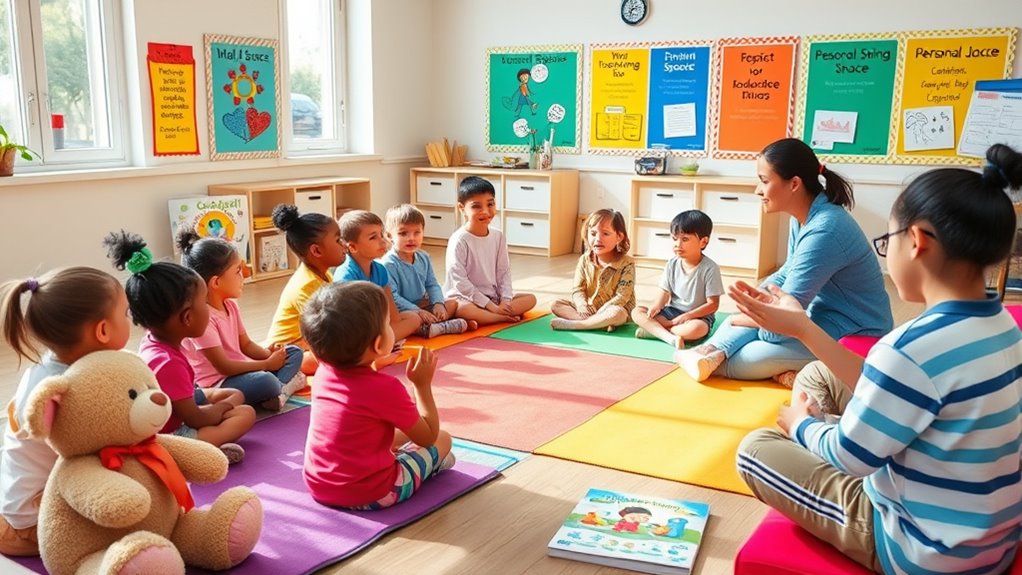

Teaching kids about consent and personal boundaries helps them understand their body autonomy and build healthy relationships. You can start conversations early, model respectful communication, and encourage honest expression of feelings. Let them practice saying “no” and respect others’ boundaries without pressure. Utilizing resources and maintaining ongoing dialogue strengthens their understanding. By fostering these skills now, you help your child develop confidence and respect that will benefit them for a lifetime. Keep exploring to learn effective ways to nurture these essential lessons.
Key Takeaways
- Introduce the concept of body autonomy early, emphasizing that children have control over their own bodies.
- Model respectful communication and active listening to teach children how to express their feelings and boundaries.
- Use age-appropriate scenarios to practice saying “no” and respecting others’ boundaries confidently.
- Reinforce lessons consistently using resources and ongoing dialogue to normalize discussions about consent.
- Foster a respectful environment that promotes mutual understanding, emotional well-being, and healthy relationship skills.

Teaching kids about consent and personal boundaries is essential for helping them develop healthy relationships and self-respect. When you start conversations early, you lay a foundation for respectful communication and empower them to understand their own body autonomy. Children need to know that they have control over their bodies and that their feelings and comfort matter. This understanding encourages them to speak up when they feel uncomfortable and to respect others’ boundaries as well.
To promote respectful communication, you should model active listening and respectful responses. When your child shares feelings or concerns, listen attentively without dismissing or minimizing their experience. Encourage them to express their thoughts honestly and reassure them that their voice is important. When they see respectful communication in action, they’ll learn to navigate social interactions with empathy and confidence. Reinforcing that everyone has the right to set boundaries helps children understand that their body is their own, and no one has the right to touch or interact with them without permission.
Teaching about body autonomy involves discussing that their body belongs to them, and they have the right to say no to any unwanted touch or activity. Use simple language to explain that they can stop an interaction at any time if they feel uncomfortable. Practice scenarios where they can practice saying “no” assertively, and praise their ability to do so. It’s important to emphasize that their feelings are valid and that they should always trust their instincts. Similarly, teach them to respect others’ boundaries by recognizing that everyone has personal limits, and those limits should be honored without pressure or guilt.
Additionally, understanding resources and tools available can help parents and caregivers find appropriate guidance and support in teaching these concepts effectively. Encourage your child to ask questions and express their feelings about boundaries in age-appropriate ways. This ongoing dialogue helps normalize discussions around consent and body autonomy, making it less intimidating as they grow older. Reinforcing these concepts with consistent language and actions builds their confidence and helps them internalize the importance of respect in all relationships. Remember, the goal isn’t just to teach rules but to foster a mindset of mutual respect and understanding. When children learn to communicate respectfully and respect their own body autonomy, they gain essential skills that support their emotional well-being and help them form healthier, more respectful relationships throughout their lives.

Let's Talk About Body Boundaries, Consent and Respect: Teach children about body ownership, respect, feelings, choices and recognizing bullying behaviors
As an affiliate, we earn on qualifying purchases.
As an affiliate, we earn on qualifying purchases.
Frequently Asked Questions
When Is the Right Age to Start Teaching About Consent?
You should start age-appropriate conversations about consent and personal boundaries early, around age three or four. Use simple language and parental guidance to teach kids that they have control over their bodies and their feelings. As they grow, continue these discussions, reinforcing respect and boundaries. Early conversations build a foundation for healthy relationships and empower children to recognize their rights and respect others’.
How Can I Handle My Child’s Questions About Consent?
When your child asks about consent, you should handle their questions with parental empathy and age-appropriate language. Stay honest and open, showing you’re willing to listen and answer their curiosity. Use simple words they understand, and don’t shy away from discussing feelings and boundaries. Remember, it’s better to nip questions in the bud than let them grow wild. Keep the conversation friendly and approachable, and they’ll come to you with trust.
What Are Signs My Child Is Uncomfortable With Boundaries?
You’ll notice signs your child is uncomfortable through their body language and emotional cues. They might avoid eye contact, step back, or turn away when someone gets too close. They may also become quiet, upset, or withdraw from interactions. Pay close attention to these signals, and gently ask how they’re feeling. Respect their boundaries by giving them space, and reassure them it’s okay to say no whenever they’re uncomfortable.
How Do I Address Peer Pressure and Boundary Crossing?
Think of peer influence as a tide you can’t always control. To address peer pressure and boundary crossing, talk openly with your child about their feelings and reinforce the importance of boundary enforcement. Encourage them to stand firm like a lighthouse amid the storm, reminding them they have the right to say no. Support their choices, praise their bravery, and teach them that respecting their boundaries is always a smart, steady course.
What Resources Are Available for Teaching Kids About Consent?
You can find great resources like interactive stories and role-playing exercises that make learning about consent engaging for kids. These tools help children understand boundaries by allowing them to practice real-life scenarios in a safe environment. Look for age-appropriate books, online platforms, and community programs that incorporate these methods. Using fun, hands-on activities will help your kids grasp the importance of respecting others’ boundaries confidently.

Dan&Darci Human Anatomy Squishy Body Model – Science Kits for Kids Ages 4-8 – STEM Toys for 4 5 6 7 8 Year Old Boy Birthday Gift – Learning Educational Toys for Ages 5-7 Boys Gifts – Skeleton Parts
DISCOVER THE HUMAN BODY — SQUISHY, GOOEY, & REAL: Dive into super squishy, stretchable, and totally realistic anatomy!…
As an affiliate, we earn on qualifying purchases.
As an affiliate, we earn on qualifying purchases.
Conclusion
Teaching kids about consent and boundaries helps them build respect and confidence. Did you know that children who learn about personal boundaries early are 40% more likely to communicate their needs effectively? By starting these conversations young, you empower your child to set healthy limits and understand others’ feelings. Remember, fostering open, honest dialogue now sets the foundation for respectful relationships later in life. Your guidance makes a lasting impact—start the conversation today.

Joyreal AAC Device for Autism, Non Verbal Communication Tools for Speech Therapy & Stroke Rehab. Communication Tablet, Autism Talking Aids with 8 Programmable Buttons & Adjustable Volume
37 Easy To Understand Talking Buttons- Our AAC device for speech comes with 37 pre-installed instructions in a…
As an affiliate, we earn on qualifying purchases.
As an affiliate, we earn on qualifying purchases.

Junior Learning Social Skills Board Games, 4 Games, Ages 5-8, Empathy & Manners, Grade 1-2
Targets the development of essential social skills such as empathy, friendship, manners, and emotional understanding.
As an affiliate, we earn on qualifying purchases.
As an affiliate, we earn on qualifying purchases.