

To teach kids about money management and saving, start early by making it fun through games and simple stories. Show them why saving and investing matter, using real-life examples like allowances or goals. Encourage daily conversations about money choices, and involve them in small financial decisions to build good habits. Consistent guidance and practical experiences help children develop responsible money skills. Keep exploring for more ways to make financial lessons engaging and effective.
Key Takeaways
- Use age-appropriate financial literacy games to teach money management and saving strategies interactively.
- Incorporate daily conversations about money to reinforce saving habits and real-world decision-making.
- Demonstrate the benefits of saving allowances and investing to foster patience and long-term financial thinking.
- Model responsible money practices through your own habits, involving kids in small financial decisions.
- Make learning fun with stories and visual tools like charts to help children grasp the value and growth of money.
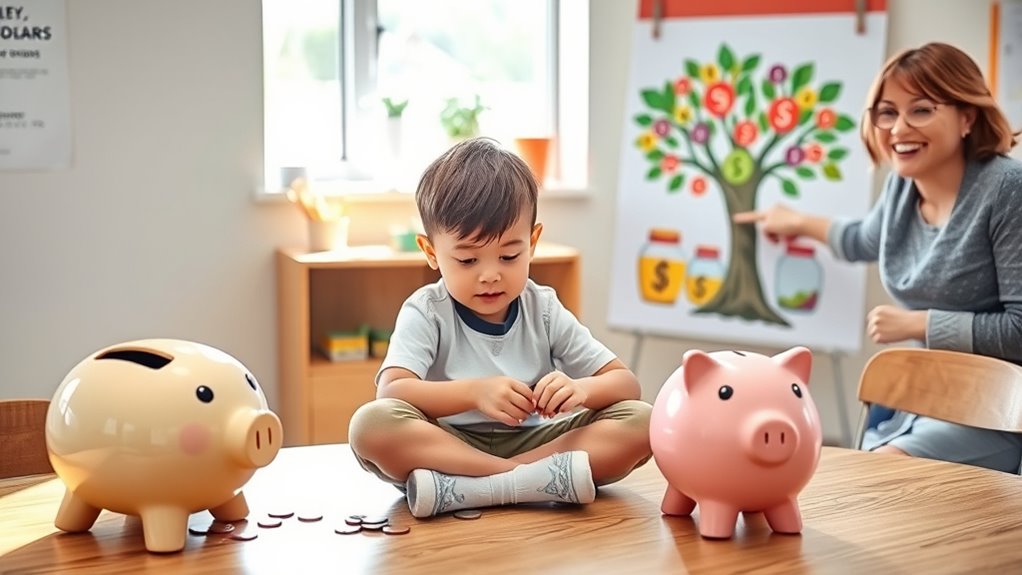
Teaching kids about money management and saving is essential for helping them develop financial responsibility early on. When you introduce concepts like investment strategies and use financial literacy games, you create an engaging way for children to understand money’s value and how to grow it. These tools make learning interactive, helping your child grasp complex ideas in a fun, memorable way.
Start by explaining that money isn’t just for spending; it’s also for saving and investing to build wealth over time. You can introduce investment strategies by showing them how money can grow through different avenues. For example, use simple charts or stories to illustrate how saving a portion of their allowance and investing it can lead to increased savings in the future. Highlight the importance of patience and long-term thinking, emphasizing that investments can grow over years, not days. This sets a foundation for responsible financial planning.
Financial literacy games are a fantastic way to make these lessons stick. Choose age-appropriate games that simulate real-life money scenarios, like managing a virtual store or budgeting a monthly allowance. These games teach kids how to prioritize spending, save for goals, and make informed decisions. As they play, encourage them to think about the consequences of their choices and discuss different strategies they might use to improve their financial outcomes. This hands-on approach helps demystify money management and makes abstract concepts concrete.
Incorporate daily conversations about money, asking questions like, “What would you do if you had this amount of money?” or “How can you save for something special?” Use these moments to connect what they learn through games to real-life situations. For example, if they save a portion of their allowance, talk about how they can allocate it toward a toy, a gift, or even a future investment. Reinforcing the idea that saving and investing are habits helps them see the long-term benefits.
Finally, be patient and consistent. Kids learn best when they see you practicing good money habits yourself. Share your experiences with saving and investing, and involve them in small financial decisions. Over time, these practices will become second nature. By combining educational tools like financial literacy games with real-world examples and ongoing discussions, you’re giving your child a solid foundation in money management and saving that can serve them well into adulthood.
Additionally, understanding the value of patience and long-term growth when it comes to investments can help children develop a realistic perspective on wealth-building.

Paycheck to Billionaire: Master Financial Freedom – Smart Investing & Cost Management Board Game – Ideal for Game Night, Educational Play – Perfect for Boys and Girls Ages 8+, Adults and Family
- Educational for All Ages: Teaches financial skills from age 8+
- Engaging Family Game: Perfect for family game nights
- Fun Economic Learning: Simplifies economics without complexity
As an affiliate, we earn on qualifying purchases.
As an affiliate, we earn on qualifying purchases.
Frequently Asked Questions
When Should I Start Giving My Child an Allowance?
You should start giving your child an allowance around age 5 or 6, when they begin to grasp basic money concepts. Allowance timing helps them develop financial independence early, teaching them about saving, spending, and sharing. By providing a small, regular amount, you encourage responsible money habits and open up conversations about money management, setting a strong foundation for their future financial skills.
How Can I Make Saving Money Fun for Kids?
Did you know kids who enjoy saving are 50% more likely to develop good financial habits? To make saving money fun, use gamification techniques and interactive activities. Turn savings into challenges or reward systems, like earning points for setting aside money. You can also create visual charts or jars for different savings goals. This approach keeps kids engaged and helps them see saving as an exciting, rewarding activity.
What Are Age-Appropriate Money Lessons for Preschoolers?
You can introduce preschoolers to age-appropriate money lessons by giving them children’s piggy banks to encourage saving. Use simple language and money vocabulary like “coins,” “save,” and “spend” to help them understand basic concepts. Make it fun by counting coins together or setting small savings goals. This hands-on approach builds their confidence and lays a foundation for healthy money habits early on.
How Do I Teach Kids About Budgeting With Limited Resources?
You can teach kids about budgeting with limited resources by introducing simple tools like money jars for spending, saving, and sharing. Use chore charts to earn small allowances, helping them understand earning versus saving. Encourage them to allocate their money wisely, making decisions on how to divide their allowance among jars. This hands-on approach builds financial awareness and shows them how to manage limited resources effectively.
What Are Effective Ways to Encourage Long-Term Saving Habits?
Encourage long-term saving habits by setting clear goals and explaining how compound interest helps their savings grow over time. You can motivate them by creating visual charts to track progress and celebrate milestones. Teach them to see saving as a way to reach big dreams, like a new gadget or trip. Reinforce that patience and consistent saving will make their money work harder for them in the future.
Conclusion
By teaching kids about money management and saving early on, you set them up for a lifetime of financial stability. Some might think it’s too early or complicated, but starting simple creates habits that last. Remember, your guidance and openness make learning about money natural and engaging. With patience and consistency, you’ll empower your children to make smart financial choices, giving them confidence and independence long before they face their first big financial decisions.