Sterilizing baby bottles is vital during your infant’s first few months when their immune system is still developing, helping prevent infections like diarrhea. As they grow older and their resistance improves—around 12 months—you can often skip sterilizing and stick to thorough cleaning with hot water and soap. Over-sterilizing can cause skin irritation or harm. To determine when sterilization becomes overkill and explore safe, effective alternatives, check out these helpful tips.
Key Takeaways
- Sterilize baby bottles regularly during the first 6-12 months to prevent infections due to immature infant immune systems.
- Use thorough cleaning methods like hot water and soap or sterilizer bags after each use for newborns and young infants.
- Around 12 months and when infants start solids, daily sterilization becomes less necessary; thorough washing suffices.
- Over-sterilizing or excessive hygiene can weaken skin barriers and contribute to microbial resistance, so balance is key.
- Choose sterilization methods based on need—boiling, steaming, or chemical sterilizers—considering convenience, bottle material, and age.

Dr. Brown's All-in-One Sterilizer and Dryer for Baby Bottles, Parts and Other Newborn Essentials
BABY BOTTLE STERILIZER AND DRYER. Sterilize up to six Narrow or Wide-Neck baby bottles at once, plus bottle…
As an affiliate, we earn on qualifying purchases.
As an affiliate, we earn on qualifying purchases.
Is Sterilizing Baby Bottles Necessary for Your Infant?
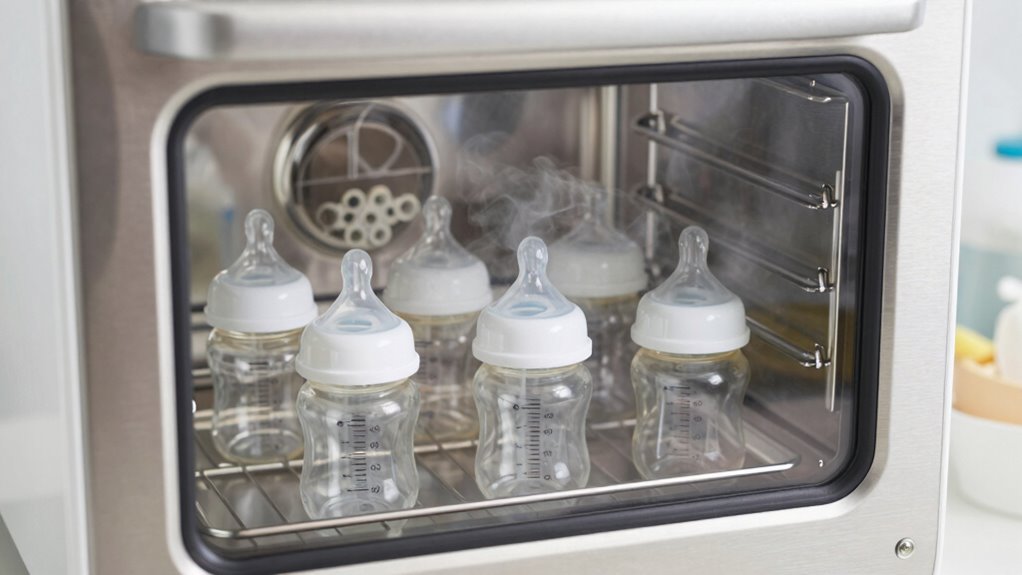
Many parents wonder if sterilizing baby bottles is truly necessary. The answer depends on the baby bottle materials you choose and how often you sterilize. Bottles made from materials like glass or certain plastics are more resistant to bacteria, meaning you might not need to sterilize as frequently. However, even if your bottles are durable, regular sterilization can help prevent germs from building up, especially in the first few months. The sterilization frequency varies based on your baby’s age and health, but many healthcare providers recommend sterilizing after each use during the first few weeks. As your baby grows and their immune system develops, you can gradually reduce sterilization, but always prioritize cleanliness to keep your infant safe.
Dr. Brown's All-in-One Sterilizer and Dryer for Baby Bottles, Parts and Other Newborn Essentials
BABY BOTTLE STERILIZER AND DRYER. Sterilize up to six Narrow or Wide-Neck baby bottles at once, plus bottle…
As an affiliate, we earn on qualifying purchases.
As an affiliate, we earn on qualifying purchases.
Why Do Newborns Need Their Bottles Sterilized?
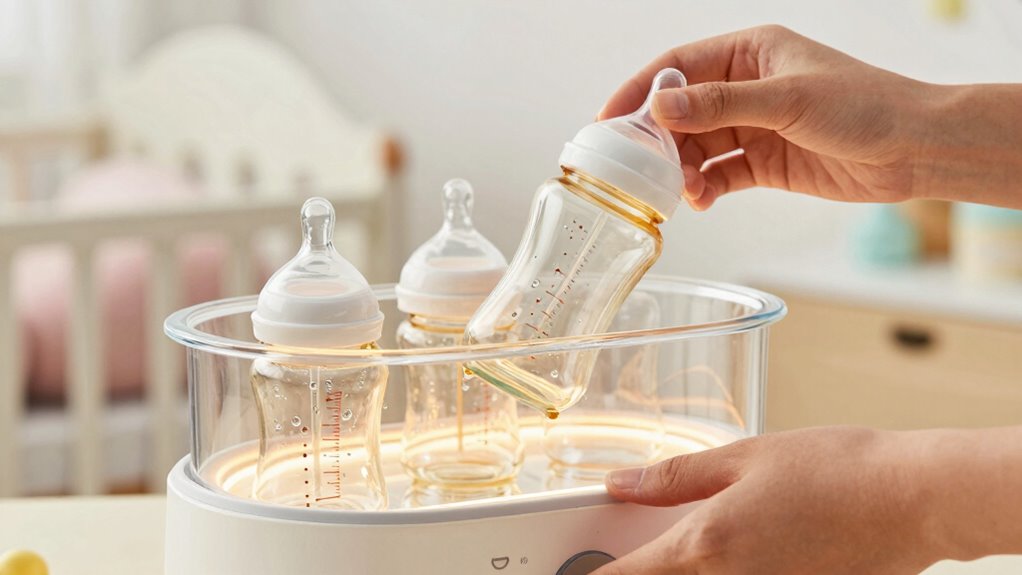
Newborns need their bottles sterilized because their immune systems are still developing and can’t effectively fight off harmful bacteria. This is especially important given the bottle design, which can harbor bacteria in hard-to-reach crevices or small parts. Additionally, choosing bottles made from safe, non-toxic materials is vital, as young infants are more vulnerable to chemicals that might leach from certain plastics or materials. Sterilizing ensures that any bacteria, viruses, or mold present on the bottle’s surface are eliminated, reducing the risk of infections like diarrhea or other illnesses. Since newborns’ immune defenses are limited, thorough sterilization helps protect their health during this essential early stage of development. Proper cleaning and sterilizing routines are indispensable for their safety and well-being. Color accuracy in sterilization practices can also influence the overall safety and effectiveness of the process. Moreover, following established Hopi cultural practices for cleanliness and respect can enhance the sterilization process by emphasizing the importance of purity and safety. Incorporating scientific sterilization methods that are backed by research can further ensure the thorough removal of contaminants.
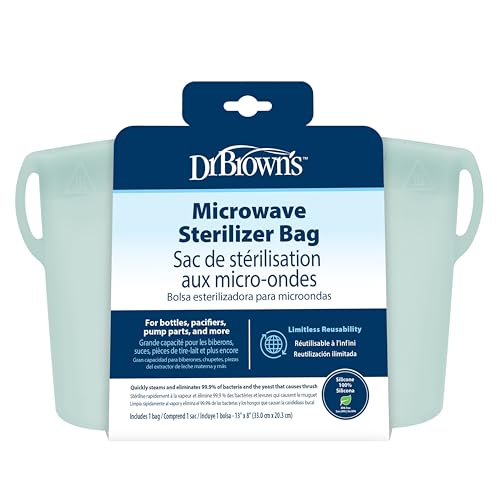
Dr. Brown's Microwave Steam Sterilizer Bag for Baby Bottles, Breast Pump Parts & Other Toddler Accessories, 100% Silicone, Reusable Sterilizing Bag
REUSABLE SILICONE MICROWAVE STERILIZER BAG. Quickly sterilizes baby bottles and parts, breast pump parts, pacifiers, teethers, and more
As an affiliate, we earn on qualifying purchases.
As an affiliate, we earn on qualifying purchases.
When Can You Skip Sterilizing Baby Bottles?
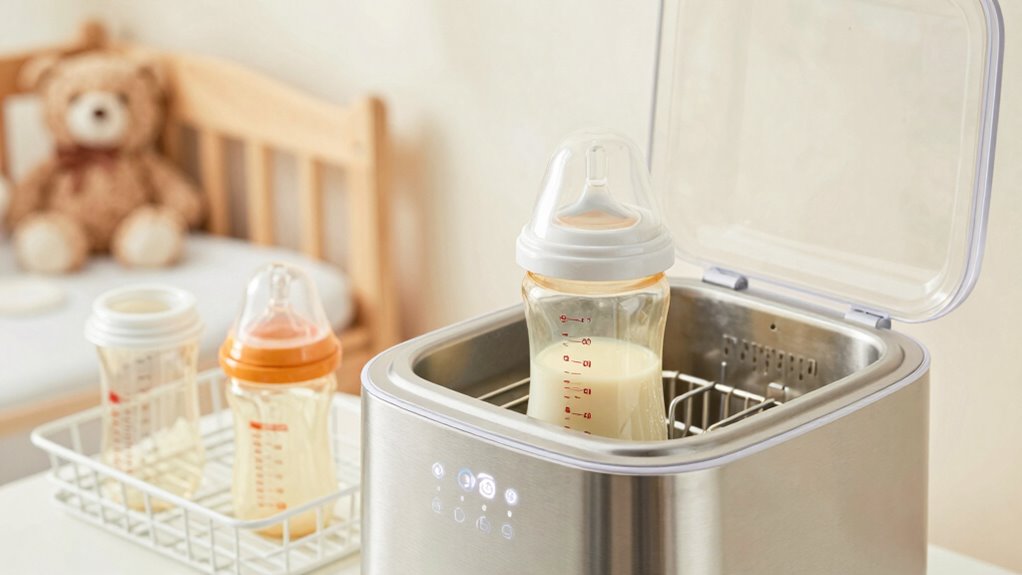
You can start skipping sterilization of baby bottles once your baby is around 12 months old and has begun eating a variety of solid foods. At this stage, their immune system is stronger, and daily cleaning with hot, soapy water usually suffices. The bottle material matters too; glass bottles are less porous and easier to clean thoroughly, reducing bacteria buildup. If your baby takes dietary supplements or uses bottles frequently, ensure they’re cleaned properly daily. Here’s a quick guide:
| Age/Stage | Bottle Material | Cleaning Recommendations |
|---|---|---|
| Under 12 months | Any | Sterilize regularly, especially for newborns |
| 12 months and older | Glass or BPA-free plastic | Daily washing, no sterilizing needed |
| Introducing solids | Any | Rinse thoroughly after feeding |
| Using dietary supplements | Any | Clean bottles immediately after use |
| General hygiene | Any | Hot water and soap are enough |
Proper sanitation practices are essential to prevent bacterial growth, especially in bottle sterilizing routines during the early months. Additionally, electric sterilizers can be a helpful tool for thorough cleaning, particularly in busy households. It’s also important to consider hygienic storage methods to keep bottles safe between uses.

Dr. Brown's Anti-Colic Options+ Narrow Glass Baby Bottle with Level 1 Slow Flow Nipple, BPA-Free, 8 oz/250 mL, 0m+, 4-Pack (Packaging May Vary)
GLASS ANTI-COLIC BABY BOTTLE. Anti-Colic internal vent system is clinically proven to reduce colic. Decreases spit-up, burping and…
As an affiliate, we earn on qualifying purchases.
As an affiliate, we earn on qualifying purchases.
Risks of Over-Sterilizing and Unnecessary Bottle Hygiene Practices
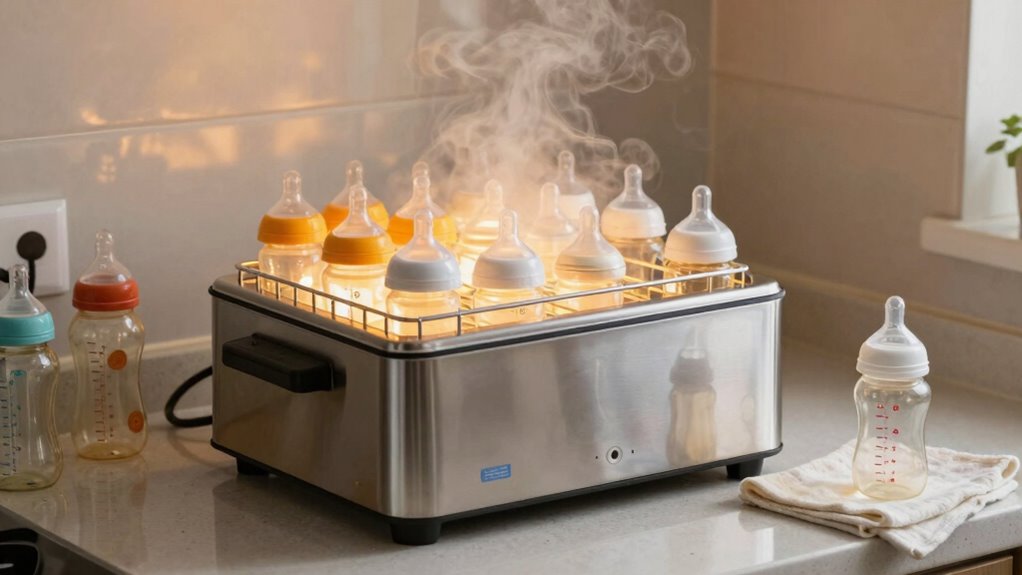
Over-sterilizing your baby’s bottles can lead to unintended health issues. Excessive use of sterilization methods may contribute to microbial resistance and weaken your baby’s skin barrier. It’s important to balance hygiene practices to protect your little one without causing harm. Regularly clean piercings and maintain proper hygiene routines to prevent infections and promote healing. Additionally, understanding free floating bacteria can help you make informed decisions about when sterilization is truly necessary. Recognizing the difference between harmless environmental microbes and harmful pathogens can guide more effective hygiene practices. Being aware of microbial resistance can help prevent the development of bacteria that are harder to eliminate. Proper knowledge of twin flame signs can also inform your overall approach to health and well-being, emphasizing moderation and awareness.
Microbial Resistance Risks
While sterilizing bottles is essential for preventing harmful bacteria, excessive or unnecessary hygiene practices can backfire by promoting microbial resistance. When you over-sterilize, you create an environment where microbes adapt, developing resistance to disinfectants and antibiotics. This microbial adaptation makes it harder to eliminate bacteria in the future, increasing the risk of infections. Overuse of sterilizing agents can kill off sensitive bacteria while allowing resistant strains to survive and flourish. That’s why it’s important to balance hygiene with natural microbial exposure, which helps develop a healthy immune system. Over-sterilization doesn’t just waste effort; it can inadvertently contribute to antibiotic resistance, making it more challenging to combat infections effectively later on. Use sterilization wisely to protect your baby’s health without fostering resistant microbes.
Skin Barrier Disruption
Excessive sterilization of bottles can do more harm than good by compromising your baby’s skin barrier. Over-sanitizing disrupts the delicate balance of skin integrity, making your baby’s skin more susceptible to irritation and infections. Frequent use of harsh sterilizing agents can strip away natural oils that provide barrier protection, leaving the skin dry and vulnerable. This disruption can lead to redness, chapping, and increased sensitivity. Remember, your baby’s skin is still developing, and overly aggressive cleaning practices can weaken its natural defenses. Instead of obsessively sterilizing, focus on regular cleaning with gentle soap and water. Reserve sterilization for specific situations, such as illness or hospital visits, to maintain effective barrier protection without risking skin damage. Proper gear care can help balance hygiene and skin health, ensuring your baby stays protected without unnecessary harm.
Safe and Simple Alternatives to Full Bottle Sterilization
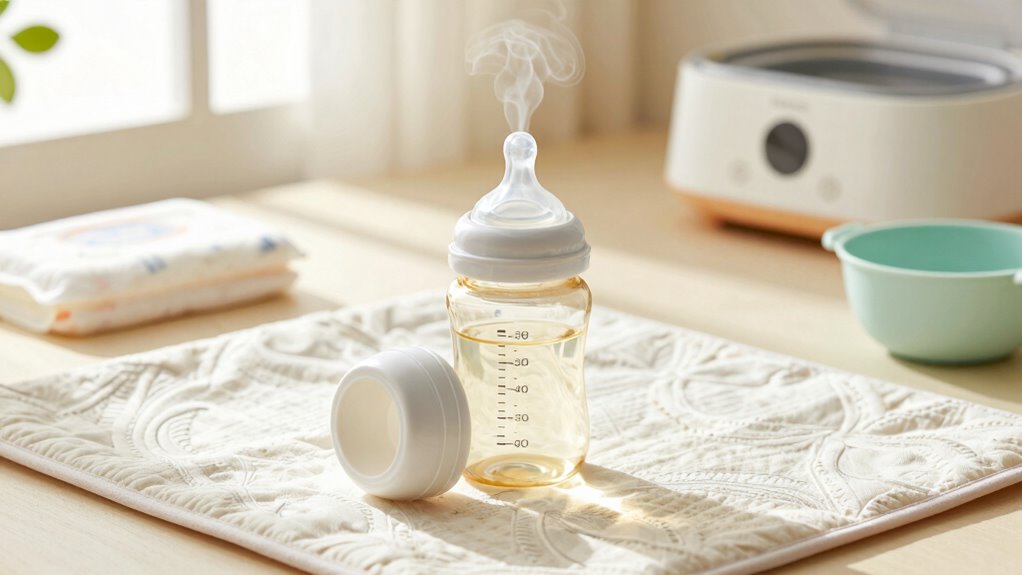
You can keep bottles clean by washing them thoroughly with hot water and soap after each use. Microwave sterilizer bags offer a quick and effective way to sanitize bottles without boiling. These simple methods help maintain hygiene without the complexity of full sterilization. Additionally, understanding pinball machine weight can be useful when considering the placement and handling of equipment in various environments. Regular cleaning and proper storage can further prolong the usability and safety of bottles, especially when sterilization methods are not feasible. Incorporating proper sanitation practices can also prevent the growth of harmful bacteria and ensure your bottles remain safe for use. For environments where smart yard care technologies are implemented, such as multi-unit setups, ensuring proper sanitation becomes even more critical to prevent cross-contamination. Maintaining consistent sanitation routines can also support your caregiver emotional well-being by reducing stress related to hygiene concerns.
Washing With Hot Water
Washing bottles with hot water is a straightforward and effective way to keep them clean without resorting to full sterilization. Many hygiene myths suggest that only boiling water or chemical sterilizers can eliminate all germs, but proper water temperature during washing can be sufficient for everyday cleanliness. Using hot water helps remove milk residues, bacteria, and other contaminants, reducing the risk of illness. Just ensure the water is hot enough—around 130°F (54°C)—to effectively sanitize surfaces without damaging bottles or nipples. Remember, thorough scrubbing with a bottle brush is essential to reach all crevices. This simple method is a safe, quick, and accessible alternative to sterilization, especially when your baby’s immune system is strong or during routine cleaning.
Using Microwave Bags
Microwave sterilizing bags offer a quick and convenient way to sanitize bottles without needing a full sterilizer. Simply place your bottles or parts inside the bag, add a bit of water, and microwave according to the instructions. This method effectively kills germs, helping with bottle preservation and safety. It’s ideal for busy parents who want a fast solution. Keep in mind, though, that microwave sterilizing isn’t a substitute for thorough sterilization when necessary. To ensure proper use, consider these tips:
- Use only microwave-safe bags
- Follow manufacturer’s instructions carefully
- Avoid overfilling the bags
- Ensure bottles are clean before sterilizing
- Replace bags regularly for safety and effectiveness
- Proper sterilization techniques are essential for maintaining hygiene and preventing illness. The importance of evidence preservation in case of contamination underscores the need for effective sterilization methods. This method is perfect for quick, on-the-go sterilization but isn’t always suitable for long-term sterilization needs. Microwave sterilizing bags provide a safe and simple alternative, especially when time and convenience are priorities. Additionally, understanding the differentiation of sterilization methods can help determine when microwave sterilization is appropriate versus more thorough options. Incorporating indoor air quality considerations can also help reduce germs and contaminants in your environment, supporting overall health.
How to Properly Sterilize Bottles When It’s Needed
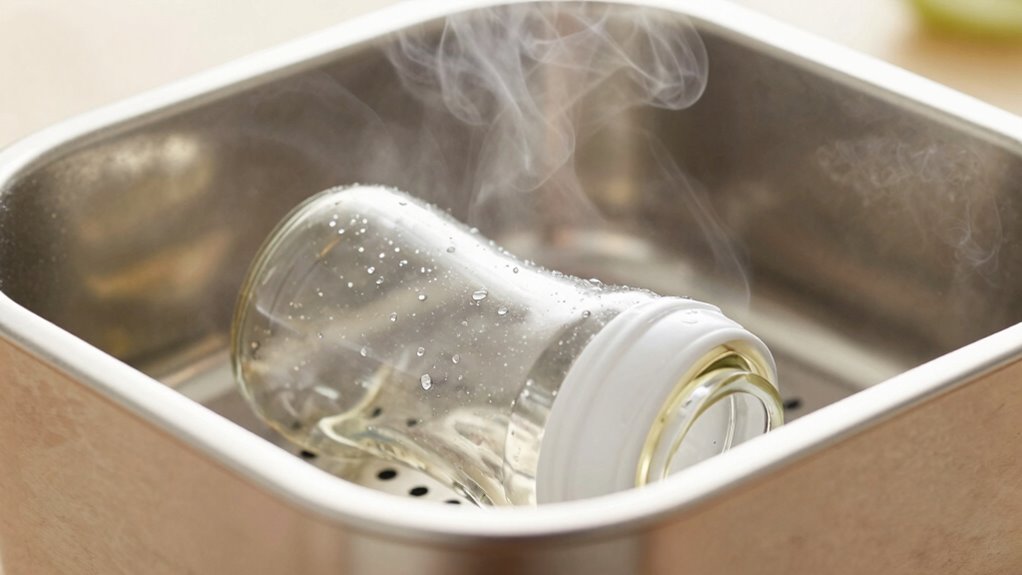
When sterilizing bottles is necessary, it’s important to follow a proper process to guarantee they are completely free of harmful bacteria. For formula feeding, thorough sterilization assures your baby’s safety. First, check your bottle material—glass or certain plastics can withstand high heat, but some plastics may not. Wash bottles and parts with hot, soapy water to remove residue. Rinse well to eliminate soap. Next, sterilize using boiling water, steam, or chemical sterilants, depending on your bottle’s material. Make sure all parts, including nipples and caps, are fully submerged or exposed to sterilizing agents for the recommended time. Proper air drying on a clean surface is essential to prevent recontamination. Proper sterilization minimizes bacteria and keeps your baby safe during formula feeding. Additionally, understanding sterilization protocols can help ensure you are following the safest methods for your baby’s health. Being aware of sterilization techniques can also help streamline the process and ensure consistency in your routine. For added peace of mind, consider using baby-safe sterilizers that are designed specifically for infant bottles and accessories.
Which Sterilization Method Is Best: Boiling, Steaming, or Chemical?
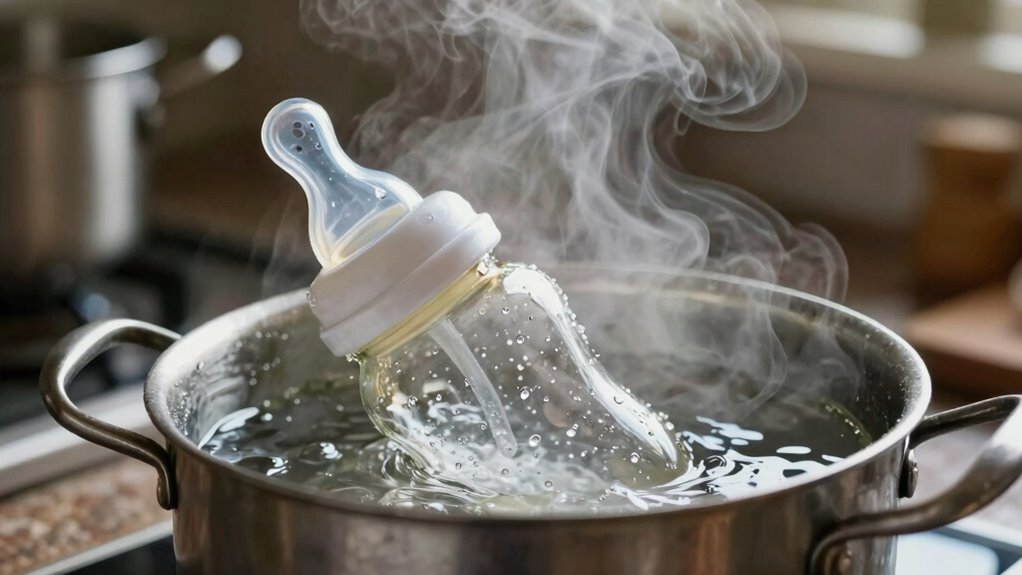
When choosing between boiling, steaming, or chemical sterilization, consider how quickly and easily each method fits into your routine. Boiling and steaming are fast and straightforward, but chemical methods might save time if you prefer minimal effort. However, chemical residues pose potential risks, so weighing safety against convenience is essential. Additionally, understanding different sterilization techniques can help you select the most effective method for your needs.
Sterilization Speed and Convenience
Choosing the quickest and most convenient sterilization method depends on your specific needs and circumstances. If you prioritize speed, steaming is often fastest, taking just a few minutes. Boiling is simple but may take longer, especially with larger quantities. Chemical sterilization offers convenience, especially for busy schedules, but requires proper handling. Your bottle design also influences your choice—wide-neck bottles might be easier to sterilize quickly, while complex shapes could slow you down. Be aware of sterilization myths—like the idea that chemical methods always leave harmful residues—that can misguide your decision. Consider how much time you have, your available equipment, and comfort level to find the best balance of speed and convenience for your routine.
Chemical Residue Risks
Chemical sterilization methods, while convenient, can pose risks of residue buildup if not used properly. You might think that using chemicals like bleach or sterilizing solutions is quick and effective, but improper rinsing can leave behind residue risks that are harmful to your baby. Chemical buildup can occur if you don’t thoroughly rinse bottles after sterilizing, potentially exposing your child to irritants or allergens. These residues may also weaken plastics over time, compromising bottle safety. To minimize these risks, always follow manufacturer instructions carefully and ensure thorough rinsing after chemical sterilization. Additionally, understanding vetted sterilization trends can help you choose the safest method for your baby’s bottles. Being aware of safe sterilization practices can further reduce your child’s exposure to harmful residues and enhance overall safety.
Age Milestones That Signal When Sterilizing Is Less Critical
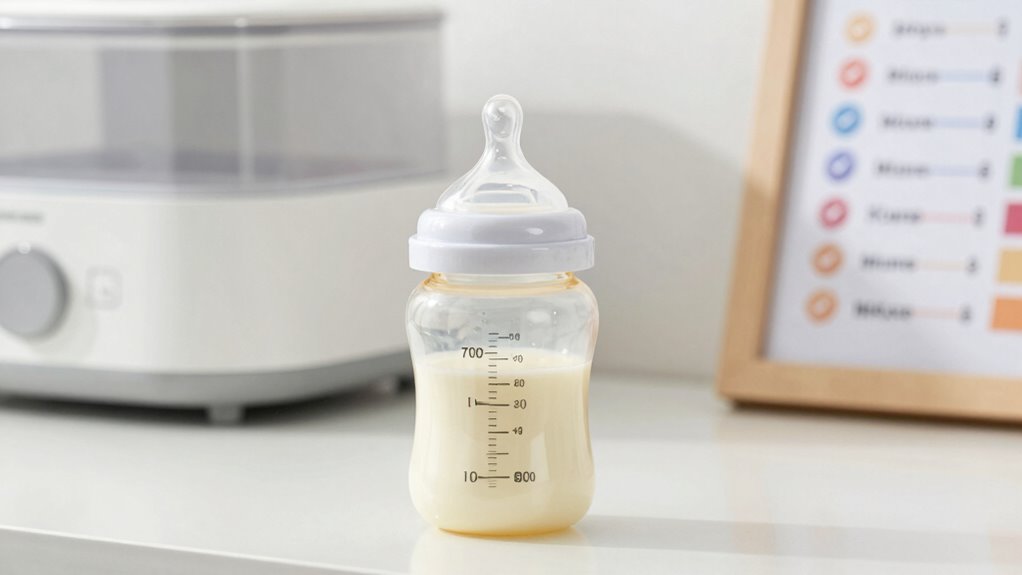
As your baby grows and develops a stronger immune system, the need for sterilizing baby bottles decreases. Around age 6 to 12 months, many parents find that reducing sterilizing frequency is safe, especially if your baby is crawling and exploring. Key age milestones signal when sterilizing becomes less critical, including:
- Starting solids and eating more varied foods
- Increased mouthing of toys and objects
- Becoming more mobile and exploring environments
- Developing immunity to common bacteria
- Shifting to regular cleaning routines
Once your baby hits these milestones, daily sterilizing may no longer be necessary. Instead, focus on thorough washing with soap and hot water, which suffices for maintaining hygiene and safety. Always consult your pediatrician for personalized guidance based on your child’s health.
Common Mistakes Parents Make About Baby Bottle Hygiene

Many parents assume that once they stop sterilizing bottles regularly, maintaining hygiene is straightforward, but this is a common mistake. Failing to thoroughly clean bottles can lead to bacteria buildup, affecting milk storage and risking your baby’s health. Some overlook the importance of rinsing bottles well after use, which can cause lingering residue that impacts bottle flavoring and makes cleaning less effective. Additionally, neglecting proper cleaning can lead to milk flavor contamination, making bottles less appealing to your baby. Avoid shortcuts like skipping sterilization when your baby is very young or when bottles aren’t thoroughly washed, as this can increase the risk of infections. Staying consistent with cleaning routines ensures milk stays fresh and safe, supporting your baby’s health and development.
Expert Tips for Balancing Safety, Convenience, and Cost in Bottle Care
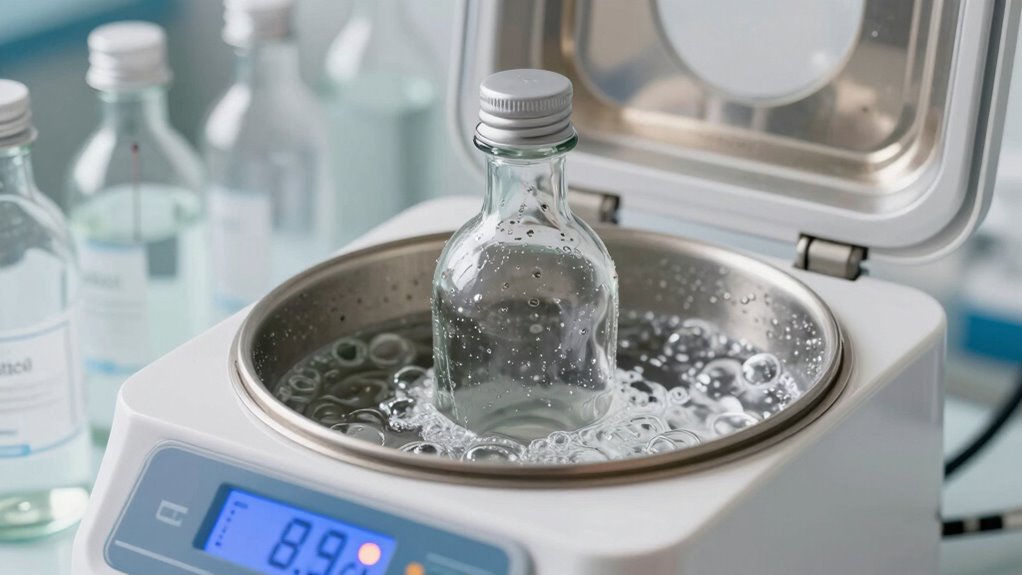
Balancing safety, convenience, and cost in bottle care requires a strategic approach that meets your baby’s needs without overwhelming your routine or budget. Consider cultural practices that influence cleaning methods and adapt them to modern safety standards. To stay eco-friendly and cost-effective, you can:
- Use sterilizing options that align with environmental concerns, like steam or natural disinfectants
- Prioritize daily cleaning over unnecessary sterilizations to save time and money
- Opt for durable bottles that last longer, reducing waste and expense
- Incorporate multi-functional tools to streamline cleaning routines
- Educate yourself on safe practices that balance hygiene with environmental impact
Frequently Asked Questions
How Often Should I Sterilize My Baby’s Bottles During Their First Year?
You should sterilize your baby’s bottles daily during their first year, especially for newborns. Depending on the bottle materials—like plastic or glass—you might need to adjust sterilization frequency. For instance, plastic bottles may need more frequent sterilizing, while glass ones can often be cleaned thoroughly with boiling water. Always follow manufacturer instructions, but regular sterilization helps eliminate germs and keeps your baby safe in those essential early months.
Are There Specific Types of Bottles That Do Not Require Sterilization?
Think of some bottles as the sturdy oak trees of your nursery—they resist the storm of sterilization. Bottles made from glass or certain plastics like polypropylene often don’t need sterilization with every use, especially if you’re cleaning thoroughly. Their material can withstand regular washing, reducing the necessity for sterilization. However, always check the manufacturer’s guidelines, as some materials still benefit from occasional sterilizing to keep your baby safe from germs.
Can Using Tap Water for Rinsing Replace Sterilization Procedures?
Using tap water for rinsing bottles isn’t a reliable sterilization alternative, especially if tap water safety isn’t guaranteed in your area. Rinsing removes visible debris but doesn’t eliminate germs or bacteria. To make sure your baby’s bottles are truly clean and safe, you should sterilize them through boiling or other approved methods. Relying solely on rinsing with tap water can leave harmful microbes behind, risking your baby’s health.
What Are the Signs That My Baby Might Be Getting Sick From Contaminated Bottles?
Did you know that babies’ immune systems are still developing, making them more vulnerable to infections? If your baby shows signs like diarrhea, vomiting, fever, or fussiness after feeding, it could be due to bottle contamination. Keep an eye out for these symptoms, as they indicate your baby’s immune system might be fighting off harmful bacteria from contaminated bottles. Promptly consult your pediatrician if you notice any of these signs.
Is It Safe to Sterilize Bottles Using Microwave Sterilizers or UV Sterilizers?
Yes, microwave sterilizers and UV sterilizers are safe for cleaning bottles if you follow the manufacturer’s instructions. Microwave sterilization uses heat to kill germs quickly, while UV sterilization employs ultraviolet light for effective sanitation without chemicals. Just verify your bottles are microwave-safe and properly positioned. UV sterilizers are convenient and chemical-free. Both methods are good options, but always double-check safety guidelines to avoid damage or ineffective sterilization.
Conclusion
Remember, caring for your baby’s bottles is like tending a delicate garden—you don’t need to obsess over every drop of water, but regular attention keeps it thriving. As your little one grows, so does their resilience, symbolizing your trust in their strength. Striking the right balance between sterilizing and simplicity helps nurture their health while respecting your peace of mind. Ultimately, gentle consistency, like caring for a garden, fosters their safe, vibrant growth.