
To get real protection, place smoke detectors on every home level, especially near bedrooms and living areas. Mount them on ceilings or high on walls where smoke rises, at least 10 feet from kitchens and bathrooms to prevent false alarms. Install CO detectors near bedrooms and fuel-burning appliances, avoiding drafty spots. Proper placement and maintenance can save lives, and if you want to learn exactly where and how to place each detector, keep exploring for detailed tips.

Get baby and family essentials delivered free — and shop member deals
- Fast, free delivery on millions of items
- Access to Prime Big Deal Days deals on October 6–7
- Prime Video, Amazon Music and more included
Key Takeaways
- Install smoke detectors on every level, especially outside bedrooms and living areas, for early warning during emergencies.
- Mount detectors on ceilings or high on walls, at least 10 feet from kitchens and bathrooms to minimize false alarms.
- Place CO detectors near sleeping areas and away from vents, windows, or sources of drafts to ensure accurate detection.
- Keep detectors at least 10 feet from cooking appliances and fuel-burning equipment to avoid false alarms.
- Regularly test, clean, and replace detectors to maintain optimal functionality and ensure continuous protection.
best smoke detectors for home safety
As an affiliate, we earn on qualifying purchases.
As an affiliate, we earn on qualifying purchases.
Why Proper Placement of Smoke and CO Detectors Is Critical

Proper placement of smoke and CO detectors is essential because it guarantees they function effectively when you need them most. Good detector placement enhances your fire safety by ensuring early warning in case of smoke or carbon monoxide buildup. Position detectors on every level of your home, especially near bedrooms and living areas. Keep smoke alarms at least 10 feet from kitchens to prevent false alarms, and install CO detectors on every sleeping level. Avoid placing detectors in drafty areas, near vents, or in humid spaces, which can impair their performance. Proper placement ensures that smoke and CO are detected promptly, giving you crucial time to react. Regularly check your detectors and replace batteries as needed to maintain optimal fire safety throughout your home. Additionally, understanding detector placement guidelines can significantly improve overall safety and ensure compliance with safety standards.
Identifying Fire and Carbon Monoxide Risks in Your Home

You need to recognize common fire hazards like unattended cooking, overloaded outlets, and faulty wiring. Keep an eye out for gas leak indicators such as the smell of rotten eggs or hissing sounds. Identifying these risks early can help you prevent dangerous situations before they happen. Additionally, understanding fire prevention strategies can further reduce the likelihood of emergencies in your home. Incorporating home safety practices can also enhance overall protection against potential hazards. Paying attention to projector technology advancements can help you select safer and more reliable devices for your home. Being aware of fire safety regulations ensures that your home complies with safety standards and reduces risks. Awareness of ethical consumer choices can influence safer and more responsible product selections in your household.
Common Fire Hazards
Many common household items and practices can pose serious fire and carbon monoxide risks if not properly managed. Clutter near heating sources increases the chance of accidental fires, so keeping pathways clear is essential for fire safety. Overloaded electrical outlets and frayed cords can spark fires, making hazard awareness crucial. Cooking remains one of the top fire hazards; never leave stoves unattended. Smoking indoors, especially near combustible materials, markedly raises risk. Faulty heating devices or improper use of space heaters can quickly lead to fires or CO buildup. Regularly inspecting appliances and practicing fire safety helps identify potential dangers before they cause harm. Staying aware of these hazards allows you to create a safer environment and better protect your loved ones from preventable fires and CO incidents. Additionally, monitoring indoor air quality can help identify potential sources of carbon monoxide and other pollutants that may contribute to health risks. Being aware of fire safety equipment placement and maintenance, such as smoke and CO detectors, is also critical to early detection and response. For optimal protection, consider proper detector placement, ensuring alarms are installed in key locations like bedrooms and hallways, as recommended by safety guidelines. According to the Security Zone Info, the proper placement of security devices like detectors can significantly enhance early warning capabilities during emergencies. Ensuring that detectors are regularly tested helps maintain their responsiveness and effectiveness in case of an emergency.
Gas Leak Indicators
Gas leaks can pose serious fire and carbon monoxide dangers, often developing silently behind appliances or within piping systems. To enhance fire safety, consider installing gas leak indicators that utilize advanced detector technology. These devices quickly identify the presence of combustible or toxic gases, alerting you before a dangerous situation escalates. Look for detectors with sensitive sensors and loud alarms to ensure immediate notice of leaks. Proper placement is key—near gas appliances, in kitchens, and within utility rooms. Regular maintenance and testing of these indicators keep them functioning effectively. Incorporating gas detection technology into your home’s safety system provides an extra layer of protection, helping you respond swiftly to potential hazards and prevent fires or CO poisoning. Guided Access and Accessibility Tips can help make safety devices more understandable and accessible for all users. Additionally, ensuring proper installation practices can maximize the effectiveness of these detectors and reduce false alarms. Being aware of common leak sources can also help you identify potential risks before they become hazardous, especially in areas prone to gas accumulation.
How to Choose the Best Spots for Smoke Detectors on Every Floor
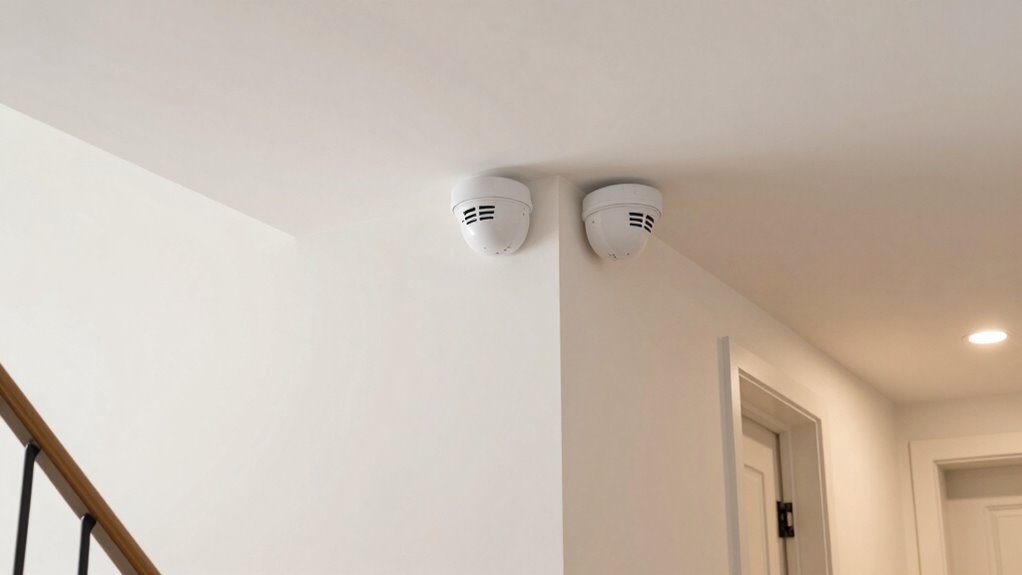
Choosing the right spots for smoke detectors on each floor is essential for effective fire safety. Place detectors near fire escape routes to ensure you’re alerted early and have enough time to evacuate. Avoid installing them directly above or beside windows, doors, or vents, which can interfere with smoke detection. Instead, position detectors on the ceiling or high on walls, where smoke naturally rises. Be mindful of electrical wiring; avoid areas with excessive wiring or potential fire hazards that could cause false alarms or interfere with detector function. Keep detectors at least 10 feet away from kitchens and bathrooms to minimize false alarms due to cooking smoke or steam. Additionally, selecting detectors made from environmentally friendly materials can reduce your carbon footprint and promote sustainability. Proper detector placement is crucial for reliable detection and quick response, keeping everyone safer in an emergency. Incorporating smart technology can also enhance safety and convenience.
Where to Install Carbon Monoxide Detectors for Maximum Safety

To guarantee maximum safety, install carbon monoxide detectors in key areas of your home where the gas is most likely to accumulate. Place them near fire escape routes, so you can quickly evacuate if CO levels rise. Also, install detectors close to electrical wiring areas, especially where appliances like furnaces, water heaters, or gas stoves are connected. Avoid placing detectors directly next to heating vents, windows, or vents that might cause false alarms. Mount them on the wall about 5 feet above the floor for the best detection. Regularly test the units and keep them free of dust. Proper placement assure you’ll be alerted early, giving you enough time to respond safely and avoid dangerous CO buildup. Additionally, understanding the air circulation in your home can help determine the most effective locations for detector placement to ensure comprehensive safety coverage, especially in multi-story buildings with complex airflow patterns. Being aware of home layout can further enhance your detection strategy by identifying areas where gas may tend to concentrate. Incorporating ventilation systems into your safety plan can also improve overall CO dispersion and detection accuracy. Remember that detector maintenance is essential for reliable operation, so check your units regularly and replace them as recommended by the manufacturer.
Placing Detectors Near Bedrooms and Living Areas: What You Need to Know

You should install smoke and CO detectors near your bedrooms to make certain alarms wake you up during emergencies. It’s also important to place detectors in common living areas so everyone in the home is protected. Proper placement helps you respond quickly and stay safe. Additionally, soundproofing techniques can help minimize noise disruptions from alarms or other household sounds. Ensuring detectors are correctly installed and maintained is crucial for reliable operation and overall safety. Proper cabling solutions can also prevent false alarms caused by wiring issues, enhancing overall safety.
Placement Near Sleeping Areas
Placing smoke and carbon monoxide detectors near sleeping areas is crucial for guaranteeing early alerts during emergencies. You should install detectors inside each bedroom and outside sleeping zones, ideally on the ceiling or high on the wall. This placement ensures you’re alerted promptly, giving you enough time to follow fire escape routes safely. Make sure detectors are not too close to electrical wiring or vents that could interfere with their operation. Avoid installing them directly next to windows or doors, which can cause false alarms. Proper placement near sleeping areas reduces the risk of missing essential alerts during the night, providing peace of mind that you and your loved ones will wake up in time to react if danger arises.
Monitoring Common Living Spaces
Monitoring common living spaces is crucial to guarantee early detection of smoke or carbon monoxide leaks throughout your home. Place detectors in living rooms, family areas, and near entry points to ensure quick alerts if an issue arises. This helps you activate fire escape plans promptly and reduces the risk of injury. Additionally, ensure your detectors are installed away from electrical wiring sources that could trigger false alarms, but close enough to detect hazards effectively. Regularly check your electrical wiring safety to prevent sparks or shorts that could lead to fires. Proper placement allows you to stay aware of potential dangers in high-traffic areas, giving you more time to respond and keep your family safe.
Safe Ways to Position Detectors in the Kitchen and Garage

Because kitchens and garages are common sources of smoke and fumes, positioning detectors carefully in these areas is essential for effective safety. Proper fire alarm placement guarantees that detectors respond quickly without false alarms. To optimize detector sensitivity and avoid nuisance triggers, keep detectors at least 10 feet away from cooking appliances and fuel-burning equipment. Place garage detectors near the ceiling, but away from doors and windows that can cause drafts. Avoid installing detectors directly above sinks or vents, which can interfere with operation. Consider the following for safe placement:
- Keep detectors at least 12 inches away from walls and corners
- Install detectors on the ceiling or high on walls
- Use heat-resistant covers if needed in garages
- Test detectors regularly to ensure proper sensitivity
Common Placement Mistakes That Reduce Detector Effectiveness

Many people overlook the importance of proper placement, which can compromise your detector’s effectiveness. For example, ignoring ceiling mounts and installing detectors too low can prevent them from sensing smoke or CO quickly. Additionally, placing detectors near air vents can cause false alarms or missed detections, reducing their reliability.
Ignoring Ceiling Mounts
Ignoring ceiling mounts is a common mistake that can considerably diminish the effectiveness of smoke and carbon monoxide detectors. Many people mistakenly believe wall positioning is enough, but ceiling placement ensures quicker detection since smoke and CO rise. Proper placement maximizes safety and compliance.
Be mindful of these pitfalls:
- Installing detectors too low on walls, delaying alert
- Overlooking the importance of ceiling placement in open spaces
- Placing detectors near vents or windows, which can cause false alarms
- Neglecting the natural rise of smoke and CO, reducing detection speed
Placing Near Air Vents
Placing smoke or CO detectors near air vents is a common mistake that can substantially reduce their effectiveness. Air flow from vents can cause drafts that prevent smoke or gas from reaching the detector properly, leading to delayed or missed alerts. When choosing detector placement, avoid installing them directly next to or below air vents, as the air circulation can disperse smoke or CO before it activates the sensor. Instead, position detectors in areas with good airflow but away from direct drafts—like away from heating or cooling vents. Proper detector placement ensures that smoke and CO reach the sensors quickly, providing early warning and enhancing safety. Remember, effective placement considers air flow patterns to maximize detector response.
Tips for Mounting Detectors at the Right Height and Distance
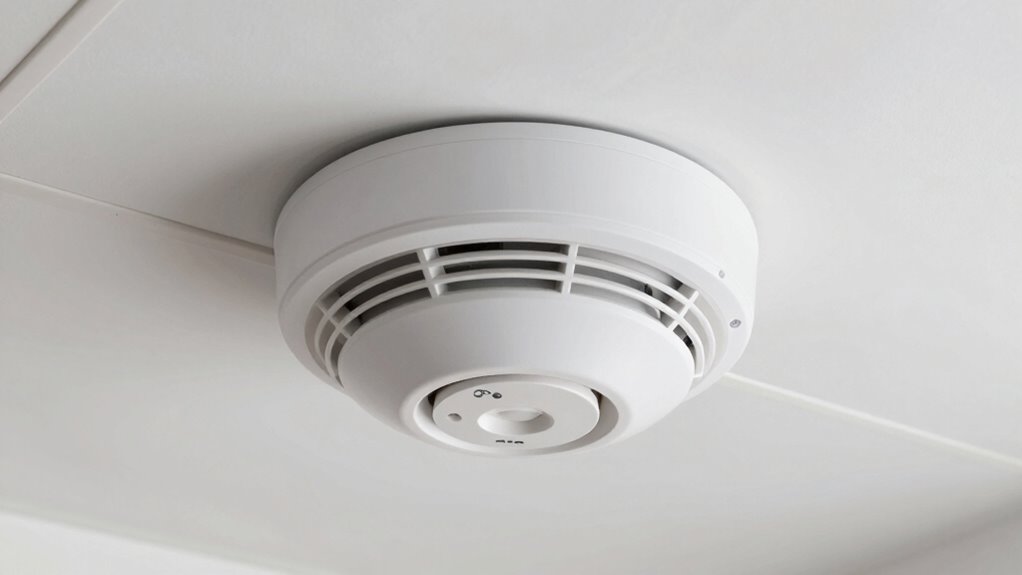
Properly mounting smoke and carbon monoxide detectors is essential for their effectiveness, and positioning them at the right height and distance guarantees they respond quickly in an emergency. Place detectors on the ceiling or high on the wall—about 12 inches below the ceiling—for maximum detection. Keep them away from corners, vents, and drafts to avoid false alarms. Consider decorating ideas and aesthetic considerations to blend detectors seamlessly into your space without sacrificing safety.
Properly position detectors high on the wall or ceiling, away from drafts, for quick, accurate alerts.
- Mount detectors at consistent heights to maintain a uniform look
- Make sure detectors are not too close to lighting fixtures or fans
- Use discreet mounts or paintable covers for better aesthetics
- Maintain proper distances from corners and vents for accurate detection
Should You Use Combination Smoke & CO Detectors or Separate Units?

Deciding whether to use combination smoke and carbon monoxide detectors or separate units depends on your home’s needs and preferences. Combination detectors offer the convenience of one device for both hazards, often with longer battery life due to integrated technology. However, detector types vary, and some combo units might have shorter battery life or limited features compared to dedicated smoke or CO detectors. Separate units can be tailored to specific risks, providing more specialized sensors and longer-lasting batteries. If you prefer simplicity and fewer devices, combo detectors are a good choice. But if you want maximum sensitivity for each hazard and more flexibility in placement, separate units might serve you better. Consider your home layout and maintenance routine when choosing between these options.
How to Maintain and Test Your Detectors for Ongoing Safety

Regularly maintaining and testing your smoke and CO detectors is essential to guarantee they function correctly when needed. Proper fire alarm maintenance and effective detector testing techniques ensure your safety isn’t compromised. You should test your detectors monthly using the test button, and replace batteries at least once a year. Clean them gently with a vacuum or a soft brush to remove dust and debris that can interfere with operation. Additionally, replace the entire unit every 8-10 years or according to manufacturer instructions. Remember, a well-maintained detector is your first line of defense in emergencies.
- Schedule regular testing and maintenance routines
- Use the manufacturer’s recommended testing techniques
- Keep detectors free of dust and debris
- Replace units proactively to ensure continuous protection
Frequently Asked Questions
How Often Should I Replace the Batteries in My Detectors?
You should replace the batteries in your detectors at least once a year, following the recommended replacement schedule. The battery lifespan varies, but most detectors use 9-volt or AA batteries, which typically last about a year. To guarantee continuous protection, mark your calendar or set a reminder for annual replacements. Regularly check your detectors’ batteries and replace them promptly if you hear low-battery alerts or if the devices start to chirp.
Are There Specific Detectors Recommended for Different Home Types?
You should choose detector types suited to your home’s specific needs. For example, ionization detectors work well in kitchens, while photoelectric models excel in living areas. If you have a multi-story house, install detectors on every level, especially near bedrooms and common spaces. This strategic home-specific placement guarantees maximum protection, alerting you promptly to smoke or carbon monoxide, no matter your home’s design or layout.
Can Detectors Be Interconnected for Better Safety Coverage?
Yes, detectors can be interconnected for better safety coverage. Wireless interconnection allows you to link multiple alarms without wiring, making installation easier and flexible. Wired integration creates a hardwired network, ensuring all alarms sound simultaneously when one detects smoke or CO. Both options improve safety by providing immediate alerts throughout your home, so you can respond quickly. Choose the method that fits your home’s setup and your safety preferences.
What Are the Signs That a Detector Needs Replacing?
Did you know that smoke detectors typically last about 8-10 years? If your detector emits frequent false alarms, the alarm sounds oddly or fails to go off during tests, it’s time for replacement. Regular detector maintenance and following installation tips guarantee safety. Don’t ignore worn-out batteries or dust buildup, as these can impair function. Replacing your detector on time keeps your home protected and ensures it works when you need it most.
How Do I Ensure Detectors Are Compliant With Local Regulations?
To make certain your detectors are compliant, start by reviewing your local code requirements and installation guidelines. Check your local regulations regularly, as they may change. Install detectors in recommended locations, such as bedrooms and hallways, following manufacturer instructions and local codes. Keep records of inspections and replacements. Stay informed about updates through local authorities or safety agencies to maintain proper compliance and ensure maximum safety in your home.
Conclusion
If you ignore proper placement, your detectors could be as useless as a chocolate firehose during a blaze. Imagine sleeping peacefully while invisible smoke or deadly CO sneaks in, laughing at your neglect. To truly protect your loved ones, treat your detectors like vigilant guardians—strategically placed, regularly tested, and never ignored. Because when disaster strikes, only the right placement can turn your home into an impenetrable fortress of safety.
Halloween Picks
halloween
As an affiliate, we earn on qualifying purchases.