
TL;DR

Turn the school run and nap time into listening time
- Thousands of audiobooks, podcasts and originals
- Listen on your phone, tablet or Echo — also offline
- Cancel anytime
Choose children’s Halloween costumes by checking fit, movement, visibility, weather, and age-appropriate accessories before you buy or make them. A practice walk in the full outfit can reveal problems with masks, hems, or props, while reflective details and a flashlight help children stand out after dark. Borrowed clothes and reusable pieces can keep costs down without limiting creativity.
A perfect costume can turn into a miserable one when a cape drags through wet leaves or a mask makes it hard to see the next doorstep. Comfort, visibility, and movement matter just as much as the first “wow.”
This guide will help you choose an outfit that suits your child’s interests, the evening’s weather, and your budget. You’ll also find a simple practice check, ideas for reusing what you own, and reminders about age-appropriate accessories and CPSC recall checks.
Fit the costume over the actual outdoor layers and shoes, then check walking, sitting, reaching, and turning.
Test masks for a clear view and comfortable breathing; consider face paint or a headpiece if either feels better for your child.
Use reflective details and a flashlight or glow stick to help your child stand out after dark.
Choose lightweight, blunt accessories suited to your child’s age, and check product labels and CPSC recalls.
Borrow, swap, or build a costume from everyday clothes, keeping hems short and additions secure.
Choose a costume your child can actually move in
Children’s Halloween costumes work best when your child can walk, sit, lift their arms, and see clearly while wearing every piece. Those ordinary movements matter because trick-or-treating involves stairs, curbs, reaching for a doorbell, and carrying a bag. A costume that restricts one movement can make the whole outing tiring or lead to a stumble. Check the fit with the shoes and layers they’ll wear outside: extra clothing can make a loose costume tight, while oversized shoes or a long hem can catch underfoot.
Before buying, check the size chart and inspect hems, ties, and attached accessories. A superhero cape should stay above the ground, and a pumpkin suit should leave enough room for a warm layer. Try a short walk around the block or down the hallway, then ask what feels awkward. If your child keeps tugging at a sleeve or bumping into furniture, adjust the fit or simplify the outfit now. A costume that is slightly less elaborate but comfortable is more likely to stay on for the whole evening.
Think of the fitting as a dress rehearsal. One family might discover that a cardboard robot helmet looks great in a mirror but blocks side vision; trimming the opening or swapping it for a headband can preserve the idea while making the walk easier. The change may soften the character’s look, but a clear view helps your child notice people and obstacles around them.
Make your child easier to see after dark
Children’s Halloween costumes are easier to wear on evening walks when they leave a clear view of the path and include something reflective. Masks and bulky hoods can limit vision or hearing, which matters near sidewalks, driveways, and groups of other costumed children. Have your child try one on and check that they can see comfortably, breathe freely, and notice a person approaching from the side. If the fit blocks those senses, changing the mask may do more for safety than adding another decorative detail.
For many children, face paint or a well-fitting headpiece offers a clearer view than a full mask. Each has a tradeoff: paint can leave the face open, but some children dislike its feel or react to a product; a headpiece avoids makeup but can slip over the eyes or ears. Follow the product label and test face paint on a small patch of skin first, especially if your child has sensitive skin or allergies. If makeup causes discomfort, wash it off and choose another option.
Add reflective tape or bright reflective trim where it won’t interfere with the design, and pack a flashlight or glow stick. Reflective details can help a child show up when light hits them, while a flashlight also helps them see the path; neither replaces an adult staying close. For example, a dark bat costume can keep its wings and still stand out with reflective silver details on the sleeves. Keep a close adult nearby, and check local trick-or-treating hours and event rules before heading out.
Try the full outfit in dim light. A costume that looks bright in a living room may disappear on a dark sidewalk.
Use this five-step fitting check before Halloween
Children’s Halloween costumes need a quick full-outfit check before your child wears them outside. The point is to catch problems while there is still time to alter a hem, replace a prop, or choose another face covering. Use these five steps to see how the pieces work together, since an accessory that seems harmless on its own can snag or obstruct movement when combined with the full outfit.
- Check the fit: Have your child wear the planned base layers and shoes; hems should clear the ground. A costume that fits indoors may ride up or drag once shoes and a coat are added.
- Test movement: Ask them to walk, sit, reach, and turn without pulling or tripping. These motions mimic common moments on a route and can reveal tight seams or loose pieces.
- Check the view: Make sure any mask or hood allows comfortable breathing and a clear view in more than one direction. If your child has to turn their whole body to see, it may be harder to notice what is beside them.
- Inspect accessories: Choose lightweight, blunt props that are easy to carry and don’t resemble real weapons in an alarming way. A prop that is awkward to grip can distract a child, and a realistic-looking one may alarm neighbors or other children.
- Check labels and recalls: Read the costume’s care and material labels, and search the CPSC recall database for the product name or maker. This can flag a known product issue; labels also help you understand care instructions and the materials in the outfit.
For a preschooler dressed as a firefighter, that could mean replacing a hard, heavy plastic tool with a soft toy and shortening loose straps. Young children also need accessories without small parts they could choke on; choose items that match your child’s age and ability. Simpler accessories may be less realistic, but they are easier for a small child to carry and less likely to become a hazard or a distraction.
Compare masks, face paint, and headpieces for comfort
Children’s Halloween costumes can use a mask, face paint, or a simple headpiece, and each choice feels different on a child’s face. The best fit depends on your child’s comfort, skin, and ability to see clearly while walking. Consider the whole evening, too: a child may tolerate a mask for a quick photo but find it hot or tiring after several blocks.
| Option | What it can offer | What to check |
|---|---|---|
| Mask | Quick character details and no makeup | Clear vision, comfortable breathing, and a secure fit |
| Face paint | An open view and a lightweight feel | Label directions, a small skin test, and gentle removal |
| Headpiece | A recognizable look without covering the whole face | Stable fit that does not slip over the eyes or ears |
Imagine your child dressed as a tiger: paint stripes on the cheeks and add soft ears on a headband instead of covering the face with a full tiger mask. That option may work well for a child who dislikes restricted vision, but another child may prefer a mask. Let them try the choices and tell you what feels comfortable. If the most detailed option becomes irritating or obscures the view, simplifying the character can preserve the fun without making the costume harder to wear.
Keep the costume warm, visible, and clear of flames
Children’s Halloween costumes can work in chilly weather when you leave room for layers and keep loose fabric away from feet and flames. Check the forecast and local guidance, then choose base clothes your child can add or remove without hiding the costume completely. Layers help manage changing temperatures, but they can also affect fit: a costume that compresses a warm layer may feel restrictive, and a coat that covers reflective trim may make your child harder to see.
A green dinosaur suit, for example, can go over a thermal shirt and leggings, with the tail secured so it does not drag. Skip long capes or trailing fabric on wet or crowded routes, where hems can catch underfoot. Look for flame-resistant materials, but remember that flame-resistant does not mean fireproof; keep costumes and props away from candles and other open flames. Even treated fabric can be damaged or ignited under the wrong conditions, so distance from flames remains the practical safeguard.
If rain is likely, a compact rain layer can help, as long as it doesn’t cover your child’s face or make walking difficult. It may conceal costume details, so put reflective pieces where the outer layer will not hide them. Check that the costume stays comfortable over the layers you choose, then repeat the walking and visibility check.
Spend less with costumes your child can wear again
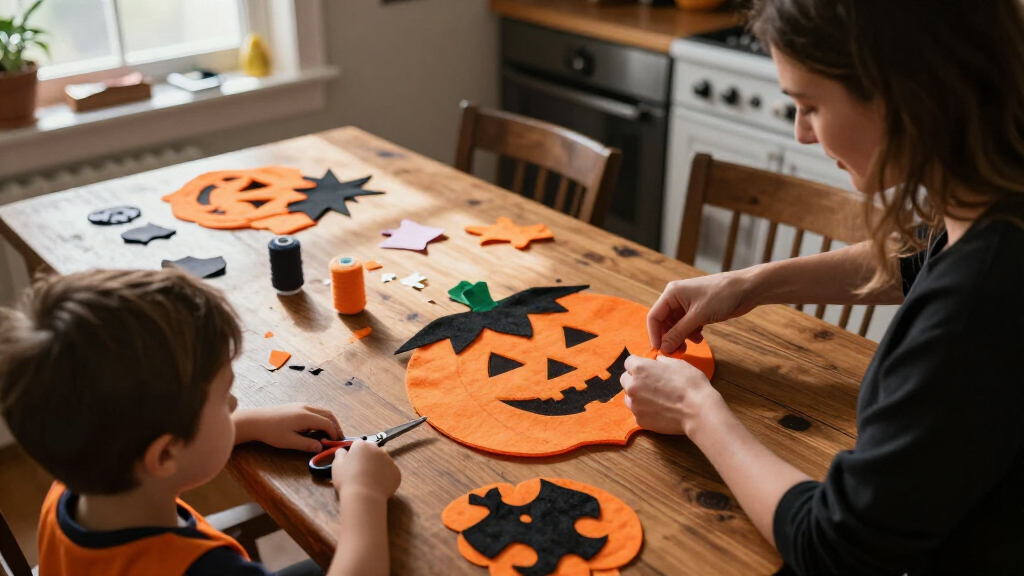
Children’s Halloween costumes don’t have to come from a new costume set: everyday clothes, borrowed pieces, and simple craft supplies can do the job. Starting with familiar clothes can save money and make the outfit more comfortable, though a few recognizable details may be needed to make the idea clear. Start with what your child already enjoys wearing, then add one or two clear details to bring the idea to life.
A black T-shirt and trousers can become a cat costume with paper or felt ears; a striped shirt and cardboard eye patch can suggest a pirate. For a space explorer, try a silver scarf, a reused backpack, and a few paper control-panel shapes attached with tape. These ideas work best when decorations stay secure and don’t limit movement. Lightweight, removable details are easier to adjust if they start to bother your child, and can be saved for another year.
Borrow from a neighbor, visit a costume swap, or check secondhand shops for pieces your child can reuse for dress-up. One family could pass around a wizard cape and add a different hat each year. Before you buy a used product or a new costume, check the CPSC recall database for the maker or product name; inspect secondhand items for damaged fasteners, loose parts, and wear. Reuse can stretch a budget, but condition matters: a worn closure or loose decoration may need repair before the item is ready to wear.
Ask your child what they’d like to represent, whether that’s a favorite animal, hobby, character, or family tradition. Some costumes can misrepresent cultures or rely on stereotypes, so choose details that show appreciation without turning someone’s identity into a costume. When you’re unsure, ask whose story the outfit tells and whether your child can express the idea another way.
Make a costume fit your child’s needs and personality
Children’s Halloween costumes can be adapted around a child’s mobility, sensory preferences, or personal style. Small changes often make an outfit more comfortable without losing the idea behind it. Because children differ in what feels manageable, offering a choice between a full costume and a simpler version can help them take part on their own terms.
If a wheelchair or mobility aid is part of your child’s day, you can make it part of the costume: decorate the chair as a carriage or add safe, removable details to a bicycle helmet. Keep wheels, brakes, handles, and controls clear. Decorations that shift or catch could interfere with using the aid, so check them during a practice walk and remove anything that gets in the way. For a child who dislikes scratchy fabric or tight headwear, soft everyday clothes and a simple prop may feel better than a full-body suit. A less complete-looking costume can be a better fit if it lets the child move and participate comfortably.
Siblings can coordinate with a shared theme rather than matching sets: one child can be the moon, another a star, and a third a cloud. Give each child a real choice in the final details. The outfit your child happily wears for the whole walk beats a more elaborate one they want to take off at the first house. Letting each child make a choice also avoids treating a shared theme as a requirement to wear identical outfits.
Frequently Asked Questions
What are the most popular children’s Halloween costumes this year?
Costume trends shift with films, games, shows, and online culture, so check current local listings or what children around you are talking about before choosing a character. Classic monsters, animals, superheroes, and storybook characters tend to stay useful even after a particular trend fades.
Is face paint safer or more comfortable than a mask?
Face paint can leave a child’s view more open, but comfort depends on the child and the product. Follow the label, test a small patch of skin first, and remove it if your child feels irritation; a simple headpiece is another option.
What should my child wear under a Halloween costume?
Start with clothing that suits the forecast and fits comfortably beneath the costume, such as a thermal shirt and leggings on a cold evening. Check that the extra layers don’t make the costume tight, hide reflective details, or restrict movement.
How do I make a low-cost costume at home?
Build around clothes your child already owns, then add a few secure details made from craft supplies. A striped top, dark trousers, and a paper eye patch can create a pirate look, while a plain shirt and soft ears can suggest a cat without buying a full set.
How can I adapt a costume for sensory needs or mobility aids?
Use soft, familiar clothes if seams, masks, or tight headwear bother your child, and choose a short practice walk to find any uncomfortable spots. You can decorate a mobility aid with removable details while keeping wheels, brakes, handles, and controls clear.
Conclusion
Before Halloween, give your child a short practice walk in the complete outfit, in the shoes and layers they’ll wear outside. Fix anything that blocks their view, drags underfoot, or feels uncomfortable, then add a reflective detail that catches the light.
Let the costume spark the fun; let the fitting make room for it.
Cold & flu season Picks
humidifiers
As an affiliate, we earn on qualifying purchases.