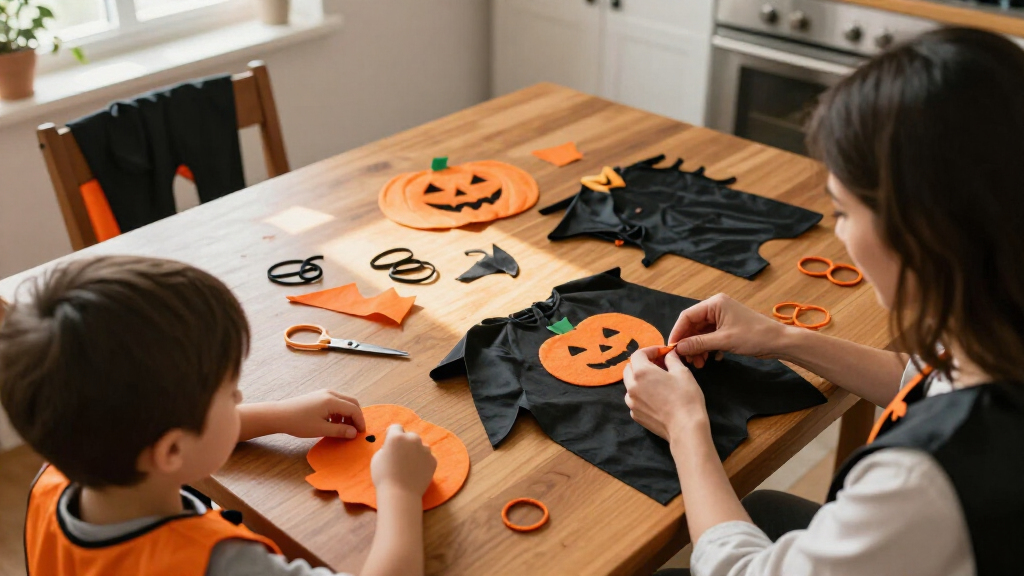
Choose and prepare a Halloween costume your child can wear comfortably, move in, and be seen in while trick-or-treating. This guide is for parents and caregivers planning a store-bought, borrowed, or homemade outfit. Allow about 1-3 hours for planning, fitting, and adjustments; shopping or delivery may take longer. You will finish with a complete outfit, a weather plan, and a short safety check.

Turn the school run and nap time into listening time
- Thousands of audiobooks, podcasts and originals
- Listen on your phone, tablet or Echo — also offline
- Cancel anytime

Spooktacular Creations Kids’ Ninja Costume Set
- ✔ Fabric: Polyester
- ✔ Included outfit: Jumpsuit with attached hood
- ✔ Other included pieces: Face mask, belt, gloves, foam daggers, foam sword, and other foam accessories

Marvel Integrated Spider-Man Youth Deluxe Zentai Costume
- ✔ Fabric: 95% polyester, 5% spandex
- ✔ Fit: Form-fitting
- ✔ Included: Long-sleeved jumpsuit and detachable spandex mask with plastic eyes

Spooktacular Creations Fairytale Witch Costume Set for Girls
- ✔ Material: 100% polyester
- ✔ Included: Matching hat, full skirted dress, and broom
- ✔ Care listed: Machine wash; conflicting hand-wash and line-dry guidance is also reported
Difficulty: Beginner | Time: 1-3 hours, plus time for shopping or delivery
What You’ll Need
Tools & Materials:
- A tape measure or a well-fitting outfit to compare sizes
- The costume and all planned accessories
- Comfortable shoes suitable for walking
- A flashlight or battery-powered light
- Reflective tape or a reflective accessory
- A mirror and a small bag for essential items
Knowledge:
- Your child’s clothing size and any fabric or cosmetic sensitivities
- The event setting, likely weather, and expected walking distance
- Whether the costume will be bought, borrowed, or assembled at home
Start with your child’s preferences, then check the event date and local forecast. Inspect borrowed or stored costumes for loose fasteners, damaged seams, and musty odors. For face paint, wigs, or other products that touch skin, check the label and test a small area ahead of time. Avoid real weapons, candles, and accessories that could obstruct vision or movement.
Spooktacular Creations Kids’ Ninja Costume Set
For children who want their costume to support a whole evening of pretending, the Ninja Costume Set gives us the broadest toolkit in this group. Its jumpsuit, attached hood, face mask, belt, and gloves form the outfit, while foam daggers, a foam sword, and other foam accessories add props without requiring separate purchases. Compared with Spider-Man’s single-piece silhouette and detachable mask, this set is more varied; compared with the witch, it leans toward movement and action rather than a complete storybook look.The design is described as allowing comfortable movement, which makes it a practical match for active role-play as well as Halloween. Its multiple pieces can take longer to keep together, however, and foam accessories may not hold up like solid props. Hand washing and line drying also ask for more attention after use than Spider-Man’s machine-wash care. We rank it first because its combination of wearable elements and play accessories serves more than one kind of costume occasion, provided the family is comfortable with the care routine.
Pros:
- Includes a jumpsuit, attached hood, face mask, belt, gloves, and several foam accessories.
- Designed for comfortable movement during dress-up and role-play.
- Works for Halloween as well as everyday pretend play.
Cons:
- Requires hand washing in cold water and line drying.
- Foam accessories may be less durable than solid props.
- Several separate accessories may take extra time to gather and keep track of.
Best for: Children who want a flexible ninja look with several accessories for trick-or-treating and ongoing action-themed dress-up.
Not ideal for: Families seeking machine-wash convenience or children who need especially robust costume props.
Bottom line: We recommend this as the most adaptable all-around pick for kids who want an active costume and plenty of pieces to play with.
“We recommend this as the most adaptable all-around pick for kids who want an active costume and plenty of pieces to play with.”
Marvel Integrated Spider-Man Youth Deluxe Zentai Costume
When the character matters more than a pile of props, the Spider-Man Zentai Costume makes a more focused choice than the ninja set. It pairs a long-sleeved, form-fitting jumpsuit with a detachable spandex mask featuring plastic eyes, so the recognizable look comes together in two main pieces. Its two-way stretch fabric is intended to move with the wearer, and invisible front and back zippers are designed to make dressing and removal easier.That streamlined shape is also the central compromise. A close fit may limit layering, which can matter on a chilly Halloween evening or for children who prefer roomier clothing. The ninja’s jumpsuit and accessories provide a less character-specific, more mix-and-play setup, while the witch offers a skirt and separate hat. Spider-Man is the easiest care choice here because its instructions allow machine washing, but families should check the fit carefully and plan outer layers around the suit. We place it second: its convenience and stretch are appealing, though the fit is more particular than the ninja set’s broader play format.
Pros:
- Two-way stretch fabric is designed to support movement.
- Detachable spandex mask with plastic eyes is included.
- Invisible front and back zippers are intended to ease dressing and removal.
- Machine-wash care is more convenient than the ninja set’s hand-wash directions.
Cons:
- Form-fitting design may limit layering.
- The listed contents focus on the jumpsuit and mask rather than additional props.
- No size range is included in the supplied product details.
Best for: Children who want a close-fitting Spider-Man costume, stretch for movement, and a mask that detaches for changing.
Not ideal for: Children who prefer loose costumes or need room to wear substantial layers underneath.
Bottom line: Choose Spider-Man when a sleek superhero silhouette and practical zippers matter more than a roomy fit or multiple accessories.
“Choose Spider-Man when a sleek superhero silhouette and practical zippers matter more than a roomy fit or multiple accessories.”
Spooktacular Creations Fairytale Witch Costume Set for Girls
The Fairytale Witch Costume Set serves a different kind of costume fan from the ninja and Spider-Man picks. Its full skirted dress, matching hat, and broom make a coordinated theme in three pieces, without the collection of foam props in the ninja set or the close-fitting superhero shape of Spider-Man. For a child who enjoys classic Halloween characters and imaginative dress-up, that clear silhouette may be the deciding factor.This option is described as suitable for both Halloween and everyday dress-up, and the product details say it is non-toxic and safety tested to meet US toy standards. The main practical snag is care: one detail says machine wash, while the supplied drawback notes conflicting guidance of hand wash cold and line dry. We would confirm the garment’s label before cleaning rather than assume which instruction applies. Compared with the other two costumes, it offers the most traditional dress-up feel, but the care uncertainty keeps it third in our ranking. Choose it for the theme and coordinated pieces, with the wash question in mind.
Pros:
- Includes a matching hat, full skirted dress, and broom.
- Suitable for Halloween and everyday dress-up play.
- Described as non-toxic and safety tested to meet US toy standards.
Cons:
- Care information conflicts between machine washing and hand washing with line drying.
- The classic dress-up silhouette may not suit children who prefer superhero or action costumes.
- The supplied details do not specify fabric stretch or layering fit.
Best for: Children who enjoy classic witch characters, a skirted costume, and accessories that support story-based pretend play.
Not ideal for: Families who need unambiguous care instructions or children seeking a close-fitting action costume with stretch.
Bottom line: This is the clearest choice for a child who wants a classic witch outfit, as long as the family checks the garment label before washing.
“This is the clearest choice for a child who wants a classic witch outfit, as long as the family checks the garment label before washing.”
As an Amazon Associate we earn from qualifying purchases.
Before You Start
Set a spending limit and decide whether you will buy a complete costume or combine clothes and simple accessories you already have. Check the return policy before removing tags or altering a new outfit. Plan for the temperature at the time of the event, not just the afternoon weather: a costume may need warm layers underneath or a coat that fits over it. If your child will wear the outfit to school, confirm any school rules about masks, props, or face paint.
Step-by-Step Instructions
Step 1: Choose a costume your child can wear
Ask your child to name a few characters, animals, or themes they like, then agree on one that fits your budget and the event rules. Check whether the costume includes a mask, headpiece, cape, wings, or prop, and decide if each piece is needed. Favor an outfit your child can put on and take off with little help, especially if they will wear it for several hours.
Tip:For younger children, simple outfits made from familiar clothes can be easier to manage than layered costumes with many small parts.
Check: Your child likes the idea, can describe what they will wear, and the planned outfit follows the event’s rules.
Step 2: Check sizing and materials
Compare the size chart with your child’s current measurements or a well-fitting outfit. Check the listed chest, waist, and length measurements instead of relying on age alone. Read the care label and look for scratchy seams, stiff pieces, strong odors, or materials that may bother your child’s skin. If possible, try the costume on before removing tags or making changes.
Tip:Leave room for the clothing layers the child will wear underneath. A costume that fits over a T-shirt may feel tight over a sweater.
Check: The outfit sits comfortably at the shoulders, waist, and legs, and your child can raise their arms and bend without pulling or pinching.
Step 3: Gather every costume piece
Lay out the main outfit, shoes, outerwear, and each accessory together. Check the package or your plan for missing pieces, such as tights, a belt, a hat, or a fastening. Replace sharp or heavy props with lightweight alternatives, and remove any accessory that could catch on doors, stairs, or other people. Keep small parts away from young children who might put them in their mouths.
Tip:Put costume parts in one labeled bag or container so that a glove or headpiece is less likely to go missing on event day.
Check: Every necessary piece is present, and the outfit has no sharp, loose, or choking-size parts within a young child’s reach.
Step 4: Fit the costume with walking shoes
Have your child put on the complete outfit with the shoes they will wear. Ask them to walk, turn, sit, climb a step, and reach forward. Shorten hems that drag, secure loose straps, and move decorations away from the eyes, mouth, and hands. Check that sleeves and trouser legs do not cover the fingers or catch underfoot.
Tip:Do not assume new costume shoes will be comfortable after a short try-on. Familiar closed-toe shoes with a secure fit are usually easier for a long walk.
Check: Your child can see the ground, walk without tripping, and move without the outfit slipping or restricting normal movement.
Step 5: Add warmth without hiding the costume
Check the forecast for the event hours and choose a base layer, tights, leggings, or coat for the expected temperature. Dress your child in those layers during the costume fitting. If a coat covers key costume details, choose a matching color or use visible accessories over it. Pack an extra layer if the weather may change.
Tip:Do not rely on a thin costume to keep a child warm outdoors. A warm layer underneath is easier to manage than trying to add a coat that restricts the outfit.
Check: The child can wear the planned layers and costume together, with enough warmth for the outing and no clothing dragging on the ground.
Step 6: Make the child visible
Add reflective tape, a reflective band, or another bright detail to the front, back, and sides of the costume or outer layer. Give the child a flashlight or battery-powered light that they can hold or wear securely. If you are considering a mask, have the child try it on and check their forward and side vision, breathing, and ability to hear instructions. Replace a mask that blocks these senses with face paint or a headpiece that leaves the face open.
Tip:Dark costumes can be difficult to see after sunset. Place reflective details where they remain visible when the child turns or wears a coat.
Check: A caregiver can see reflective or bright details from more than one direction, and the child can see clearly without the mask or headpiece shifting.
Step 7: Prepare face paint and accessories
Use products labeled for skin, follow their directions, and test a small amount on the child’s skin before the event. Keep paint away from the eyes and mouth, and pack a cloth or wipes for removal. Secure hats, wings, capes, and jewelry so they do not slide over the face or catch on objects. Leave toy weapons and look-alike dangerous props at home if the event does not allow them.
Tip:Do not use craft paint or markers on skin. Stop using a product if it causes itching, redness, or discomfort.
Check: Accessories stay in place during movement, and any face product is suitable for skin and tolerated during the advance test.
Step 8: Run a final dress rehearsal
Have your child wear the full outfit, including weather layers, for several minutes. Check the fit again after they sit and move. Make a small repair kit with a safety pin, tape, wipes, and a spare light, and put it in an adult’s bag. Set aside water and a small bag for candy or other items so your child does not need to carry loose accessories.
Tip:Agree on a meeting point and an adult who will stay with the child before leaving for the event.
Check: Your child can wear the outfit comfortably, the light and reflective details work, and the caregiver has the items needed for small fixes.
Common Mistakes to Avoid
- Choosing a costume by age label alone. — Check the size chart and compare measurements, then try the outfit on with the layers and shoes planned for the event.
- Adding a mask that limits sight or breathing. — Test the mask while the child moves and speaks. Use face paint or an open-face headpiece if the mask shifts or blocks vision.
- Leaving long hems, capes, or straps loose. — Check the complete outfit while the child walks and climbs a step; shorten or secure anything that drags or catches.
- Forgetting that dark clothing is hard to see after sunset. — Add reflective details on several sides and provide a working flashlight or battery-powered light.
Troubleshooting
Problem: The costume is too long or keeps slipping.
Solution: Fold or shorten the hem with a suitable temporary fix, tighten adjustable fasteners, or use a better-fitting base layer. Repeat the walking check before leaving.
Problem: Your child says the costume itches or feels too hot.
Solution: Remove the irritating accessory or layer, check for rough seams and tags, and try a soft layer underneath. If discomfort continues, switch to familiar clothes with a simple costume detail.
Problem: The mask fogs up or the child cannot see well.
Solution: Take the mask off and use face paint or a headpiece that leaves the face open. Do not cut or alter a mask in a way that leaves sharp edges.
Problem: The weather changes before the event.
Solution: Add a warm, visible layer that fits over or under the costume, and recheck that sleeves, hems, and accessories do not block movement or visibility.
What Success Looks Like
The finished costume fits over the planned clothing layers, and the child can walk, sit, see, and breathe comfortably. Shoes are secure, hems and accessories do not drag or snag, and reflective details or a working light make the child visible. Your child is willing to wear the outfit, and you have a plan for warmth, small repairs, and staying together during the event.
Next Steps
After the event, remove face products according to their labels and check your child’s skin for irritation. Clean and dry reusable costume pieces as directed, then store them with their accessories in a labeled container. Replace batteries in lights if needed, and note any fit or comfort issues before reusing or passing the costume along.
Frequently Asked Questions
How early should I prepare a child’s Halloween costume?
Start a few weeks ahead if you need to order a costume, make alterations, or test skin products. For an outfit made from clothes you already own, a few days may be enough, but leave time for a full fitting and any simple repairs.
Should my child wear a mask?
Only use a mask if the child can see clearly in every direction, breathe comfortably, and hear instructions while wearing it. A mask that shifts or blocks vision should be replaced with face paint or an open-face accessory.
How can I keep a costume warm without hiding it?
Use a warm base layer, tights, or leggings under the costume. If a coat is needed, choose one that fits comfortably and add reflective details where they remain visible.
What shoes should a child wear with a costume?
Choose secure, comfortable shoes that fit the walking route and weather. Familiar closed-toe shoes are often easier to walk in than costume footwear; check that hems do not cover the shoes.
What should I do if my child refuses the costume on the day?
Offer a simpler version using comfortable clothes and one recognizable accessory, such as a hat, cape, or themed shirt. Keep the child warm and visible, and do not force them to wear an item that causes distress or limits movement.
Fall Picks
fall essentials
As an affiliate, we earn on qualifying purchases.