Using candy in math games makes learning both fun and memorable. You can sort candies by color, shape, or size to practice classification, or count and compare quantities to explore addition, subtraction, and fractions. Creating patterns and solving word problems with treats helps reinforce understanding in a playful way. If you keep exploring, you’ll discover even more engaging activities that turn everyday sweets into valuable math tools.
Key Takeaways
- Use candies to practice counting, addition, and subtraction through interactive, hands-on activities.
- Create pattern and sequence games with candies to enhance recognition and early algebra skills.
- Develop math word problems using candies, encouraging critical thinking and real-world application.
- Sort candies by color, shape, or size to reinforce classification and data organization skills.
- Turn candy activities into engaging games that make learning math concepts fun and memorable.
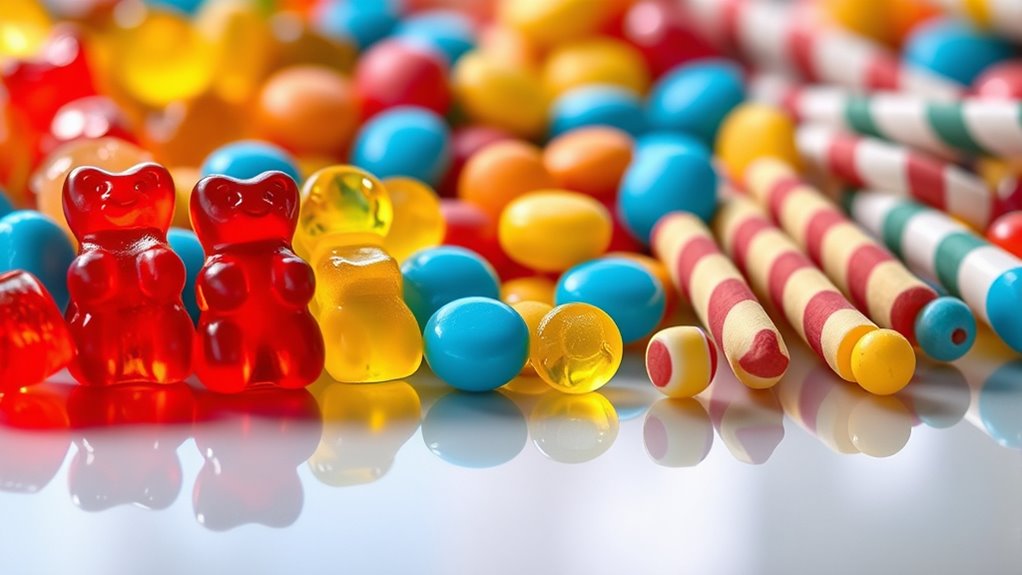
Have you ever thought about turning candy into a fun way to learn math? With just a handful of colorful treats, you can create engaging activities that make math both exciting and delicious. One simple yet effective game involves candy sorting, where you categorize candies by color, shape, or size. As you sort, you’re practicing essential skills like classification and pattern recognition. It’s a hands-on activity that helps develop your ability to organize and analyze data—core components of math. Plus, it’s satisfying to see all your candies neatly arranged, and it sets the stage for tackling more complex math challenges.
Once you’ve sorted your candies, you can introduce math challenges that build on this foundation. For example, try counting how many candies of each type you have. You might discover you have twice as many red candies as yellow ones, or a different quantity for each color. These exercises enhance your counting skills and introduce basic concepts like addition and subtraction in a fun, tangible way. You can also set up more advanced challenges, like dividing candies into equal groups or figuring out what percentage of your total candies each color makes up. These activities reinforce proportional reasoning and introduce the idea of fractions—all with candy as your visual aid.
Another way to spice up your candy-based math game is by creating simple equations or word problems. For instance, you could ask, “If I eat three blue candies, how many will I have left?” or “If I add two more red candies, what’s the new total?” These questions push you to think critically and apply your math skills in real-world scenarios. As you work through these problems, you’ll strengthen your understanding of numbers and operations, all while enjoying your favorite sweets. It’s a perfect way to make learning feel less like a task and more like a playful challenge.
Using candy to explore math concepts also opens the door to experimenting with patterns and sequences. Arrange candies in a repeating pattern, like red, blue, red, blue, and then challenge yourself to extend the sequence or create your own. Recognizing and creating patterns is a essential skill that supports algebra and higher-level math. Plus, by manipulating candies in different ways—grouping, counting, sorting—you’re engaging multiple areas of your brain, making the learning process more interactive and memorable.
In short, candy sorting and math challenges turn everyday treats into powerful learning tools. They make abstract concepts concrete and approachable, especially when you’re actively involved in handling and organizing candies. The best part? You’re having fun while sharpening your math skills. So next time you reach for a sweet snack, consider turning it into a mini math adventure—you might just find that math is sweeter than you ever imagined.

Aizweb Counting and Color Sorting Toys for Toddlers,Tweezer Tongs Color Sorting Kit,Montessori Preschool Kindergarten Learning Activities,STEM Math Manipulatives,Educational Fine Motor Skills
【Perfect for Little Fingers】Our ergonomic tweezers are specially designed for little hands to grasp beads, this tweezer tongs…
As an affiliate, we earn on qualifying purchases.
As an affiliate, we earn on qualifying purchases.
Frequently Asked Questions
What Age Group Is Best Suited for Candy Math Games?
You’ll find that candy math games are best suited for children aged 4 to 8, as they align with their developmental skills. These games promote age-appropriate learning by improving counting, basic addition, and pattern recognition. Plus, they offer developmental benefits like boosting fine motor skills and encouraging healthy, engaging practice of math concepts. Keep the activities fun and interactive to maximize learning and keep your kids motivated.
Can These Games Be Adapted for Classroom Learning?
Did you know that 85% of teachers find hands-on activities boost student engagement? You can definitely adapt these games for classroom integration by using candy substitution for more manageable options, making it easier to incorporate into lessons. These games promote active learning and can be customized to fit different subjects or skill levels. Plus, students stay motivated and enjoy math more when they have a tasty incentive!
Are There Healthy Alternatives to Candy for Math Activities?
Yes, you can substitute healthy snacks like fruit pieces or veggie sticks for candy during math activities. These options make the game nutritious and fun. Alternatively, use non-edible counters such as buttons, coins, or colorful counters to keep the focus on learning without any health concerns. Both choices help maintain engagement while promoting healthy habits and ensuring safety during classroom math games.
How Can I Modify Games for Different Skill Levels?
You can modify games for different skill levels by incorporating differentiated instruction and skill-based modifications. Adjust the difficulty by changing the number of candies or points, or add challenges like timed tasks for advanced learners. For beginners, use visual aids or simplified rules. As a teacher or parent, observe each child’s progress and adapt the game accordingly, ensuring everyone stays engaged and develops their math skills at a comfortable pace.
What Are Some Safety Tips for Handling Candy During Play?
When handling candy during play, you should prioritize safety by checking for candy allergies beforehand and avoiding any that could trigger reactions. Keep an eye out for choking hazards, especially with small candies, and supervise children closely. Confirm candies are age-appropriate, and encourage kids to chew carefully. Always have water nearby for kids to rinse or swallow, and clean up broken pieces promptly to prevent accidents.

Barnacle Toys Sweet Sums | Kindergarten Addition & Subtraction Math Games for Kids Ages 4-8 | Math Manipulatives
MAKE MATH SWEET! Help your little learners PRACTICE ADDITION AND SUBTRACTION with Sweet Sums. A perfect beginner game…
As an affiliate, we earn on qualifying purchases.
As an affiliate, we earn on qualifying purchases.
Conclusion
Next time you’re snacking on candy, remember how math games can turn a simple treat into a fun learning adventure. It’s funny how the sweetest moments often happen when you least expect them—like discovering new ways to count and compare with just a handful of candies. So, whether you’re sharing with friends or playing solo, these games make learning feel just as delightful as your favorite sweets. Who knew math could be so sweet?

LOKIPA Counting Dinosaurs Toys Matching Game with Rainbow Sorting Cups, Color Sorting Set Preschool Learning Activities Education Toys for Toddlers Kids Ages 3 Years and Up
【Counting Dinosaurs Toys】: The counting dinosaur toys matching game with 48 multi-color dinosaurs, 2 tweezers, 6 rainbow sorting…
As an affiliate, we earn on qualifying purchases.
As an affiliate, we earn on qualifying purchases.

eeBoo Pattern Recognition
DEVELOP Logical thinking, and early math and reading skills. A great brain exercise.
As an affiliate, we earn on qualifying purchases.
As an affiliate, we earn on qualifying purchases.