To keep cleaning products safe around kids, always store them out of their reach, ideally in locked cabinets or high-up shelves. Avoid using food containers for chemicals and clearly label all storage areas. Choose child-proof cabinets with locks and organize supplies with labels or color codes to prevent mishaps. Regularly check your storage system to make certain safety measures stay effective. Keep your family protected—continue to learn how to create truly safe storage solutions.

Turn the school run and nap time into listening time
- Thousands of audiobooks, podcasts and originals
- Listen on your phone, tablet or Echo — also offline
- Cancel anytime
Key Takeaways
- Store cleaning products in high, locked cabinets out of children’s reach.
- Use childproof locks or latches on all cabinets containing hazardous supplies.
- Clearly label all cleaning containers and storage areas to prevent mishandling.
- Avoid storing cleaning chemicals in food or beverage containers to prevent confusion.
- Regularly inspect storage areas for leaks, damage, or misplaced items to ensure ongoing safety.
childproof cabinet locks for cleaning supplies
As an affiliate, we earn on qualifying purchases.
As an affiliate, we earn on qualifying purchases.
Recognizing the Risks of Household Cleaning Products for Kids
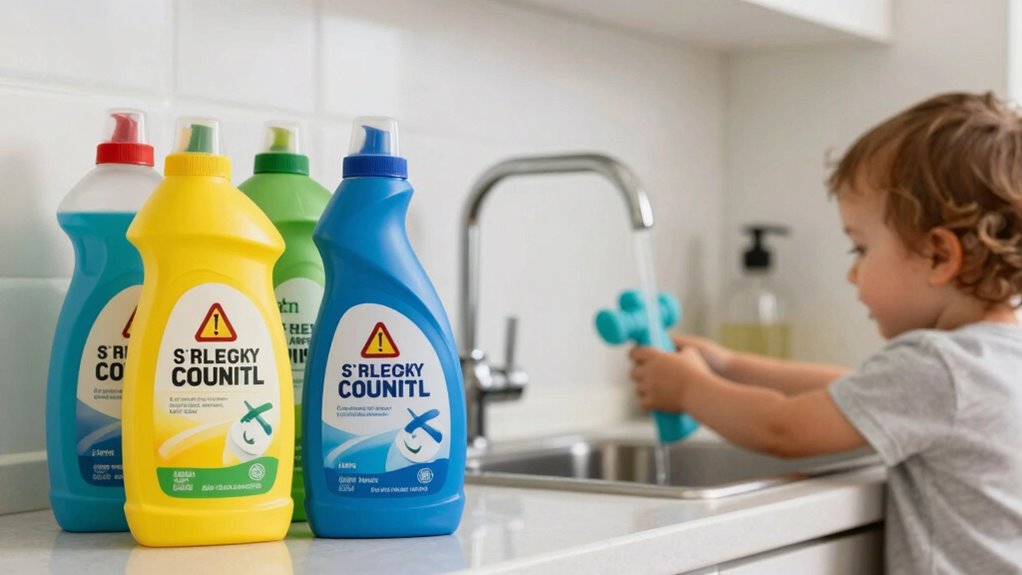
Household cleaning products can pose serious health risks to children because they often contain toxic chemicals that kids might accidentally ingest or come into contact with. As a parent or caregiver, improving your child safety awareness is essential. Recognize that spills, leaks, or improper storage increase the hazard risk. Many cleaning products have ingredients that can cause poisoning, skin irritation, or respiratory issues if touched or ingested. Being aware of these hazards helps you take proactive steps to prevent accidents. Always read labels carefully, store products out of children’s reach, and educate yourself about the potential dangers lurking in everyday cleaners. Additionally, understanding indoor air quality can help you identify other sources of indoor pollutants that may affect your child’s health. Proper cable management and safe wiring practices can also prevent fire hazards that might release toxic fumes in emergencies. Implementing effective storage solutions can further reduce the chance of accidental exposure. By understanding the risks, you can better protect your kids from harmful exposures around the home.
How to Pick Safe, Child-Proof Cabinets for Storage

Are you wondering how to keep cleaning supplies safely out of your child’s reach? One effective way is choosing cabinets with built-in safety features or adding child proof locks. Look for cabinets with secure latches or locks designed specifically for child safety—these help prevent accidental access. When selecting storage options, prioritize cabinet safety by ensuring locks are easy for adults to open but difficult for little ones. Install locks high enough that your child can’t reach them, and consider cabinets with self-closing doors for added security. Avoid cabinets with loose or easily removable hardware. By choosing the right cabinets and installing child proof locks, you create a safer environment and reduce the risk of your child getting into cleaning products. Incorporating proper storage solutions and child-proofing strategies can further enhance your home safety measures. Additionally, selecting cabinets with elder-friendly features can make daily routines easier and safer for all family members. For added safety, consider child safety standards, which guide the selection of furniture and fixtures suitable for households with children. Ensuring your cabinets meet these safety standards can give you extra peace of mind.
Easy Ways to Organize Your Cleaning Supplies Safely

To keep your cleaning supplies organized and safe from curious little hands, start by designating a specific storage area that’s easy for you to access but out of reach for your kids. Use clearly visible storage labels to identify each container, making it easier to find what you need and reducing the risk of accidental misuse. Properly labeled bottles with chemical labels help you quickly recognize ingredients and hazards. Consider storing items in a lockable cabinet or high shelf. To reinforce safety, create a simple system with categories like “Cleaning Agents,” “Disinfectants,” and “Tools.” Here’s a helpful overview:
| Storage Area | Label Type | Item Category |
|---|---|---|
| High Shelf | Storage Labels | Disinfectants |
| Cabinet | Chemical Labels | Cleaning Agents |
| Drawer | Clear Labels | Tools |
| Closet Door | Warning Labels | Hazardous Items |
Implementing a home safety plan can further reduce risks associated with household chemicals, especially for families with young children. This approach keeps your supplies organized and safe, especially when child-proofing your home. Additionally, understanding the importance of chemical safety and proper storage techniques is essential for preventing accidents and ensuring a secure environment for everyone. Incorporating interdisciplinary insights from fields like human factors and behavioral science can also enhance safety practices. Regularly reviewing your storage system and educating household members about chemical hazards further enhances safety awareness.
Building a Household Safety Plan to Protect Kids From Cleaning Hazards

Building a thorough safety plan is essential for protecting kids from the dangers of cleaning products. Start by emphasizing labeling safety—make sure all cleaning supplies are clearly labeled and stored out of reach. Use childproof locks and designated storage areas to prevent accidental access. Develop an emergency preparedness plan that includes quick access to poison control numbers and first aid supplies. Teach your family what to do if a child ingests or comes into contact with a hazardous product, and regularly review these procedures. Keep cleaning products in their original containers to avoid confusion. Proper storage practices are crucial for minimizing accidental exposure and ensuring safe household management. Incorporating indoor air quality and humidity control measures can also help minimize potential respiratory issues caused by cleaning chemicals. Additionally, educating children about the dangers of cleaning chemicals and supervising their activities around the house can further prevent accidents. Establishing a household safety routine ensures that safety measures are consistently followed and maintained over time.
Safe Methods to Teach Kids About Household Hazards
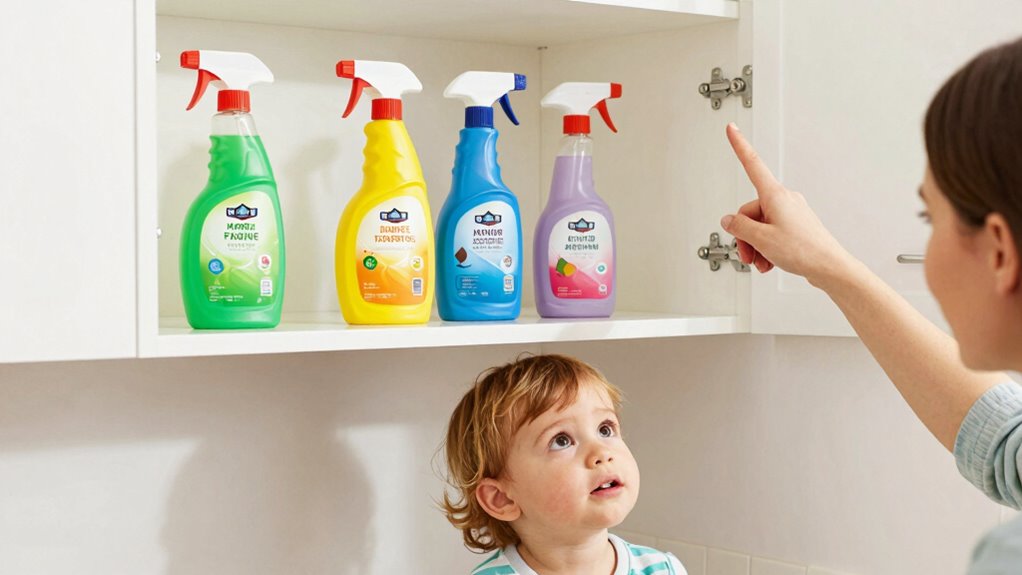
Teaching kids about household hazards is vital for fostering their awareness and promoting safety. Start by explaining that household hazards, like cleaning products and sharp objects, can be dangerous. Use simple language and real-life examples to illustrate risks. Reinforce child safety by setting clear boundaries, such as not touching cleaning supplies. Engage children through interactive lessons, like supervised safety games or demonstrations. Incorporate lessons on air quality considerations to help children understand the importance of a healthy environment. Additionally, discussing cabling and electrical safety can help children recognize the dangers associated with cords and electronic devices. Educating children about proper storage practices can further prevent accidents and ensure household items are kept out of reach. Teaching children about herbal wellness and the safe use of natural remedies can also promote a balanced approach to household safety. Explaining household chemical labeling helps children identify and understand warning signs. Consistent conversations help kids understand risks. Remember, teaching safety is an ongoing process that builds their confidence and awareness around household hazards.
Common Storing Mistakes That Put Kids at Risk

Many common storage mistakes can unintentionally put kids at serious risk. Leaving cleaning products within reach increases their chances of chemical exposure and accidental poisoning. To avoid these dangers, be mindful of what you store where. Here are key mistakes to watch out for:
- Storing cleaning supplies in unlocked cabinets or on low shelves.
- Using food containers to store chemicals, causing confusion.
- Leaving bottles uncovered or unsecured.
- Failing to label storage areas clearly.
- Ignoring child safety guidelines that recommend proper storage practices. Proper storage techniques are crucial to preventing accidents and ensuring hazardous substances are kept safely away from children. For added safety, consider implementing child-proof locks on cabinets containing hazardous substances. Additionally, understanding regional flavor differences in cleaning products can help you choose safer options tailored to your area. Being aware of vetted brands known for safety and quality can further reduce risks associated with accidental exposure.
These mistakes can lead to dangerous situations if kids accidentally ingest or come into contact with harmful substances. Always keep cleaning products out of reach, secure, and properly labeled. Remember, preventing accidental poisoning starts with smart storage practices that prioritize your child’s safety.
Creative Storage Ideas to Keep Cleaning Products Out of Kids’ Reach
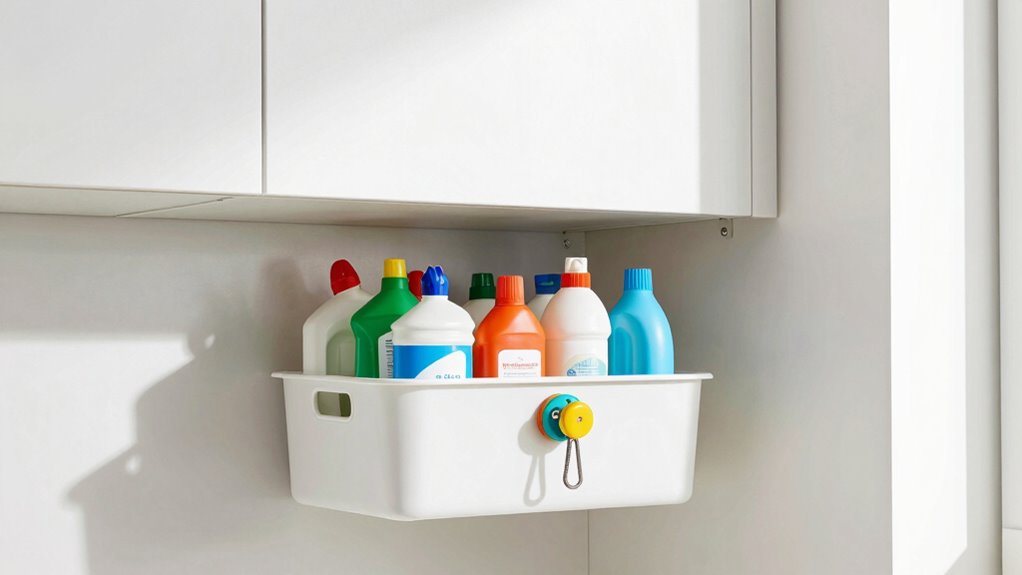
To keep cleaning products safely out of kids’ reach, innovative storage solutions can make a big difference. Consider using labeled storage bins or cabinets with clear labeling systems to distinguish cleaning supplies from other items. Color coding can also help by assigning specific colors to hazardous products, making them easily identifiable and less likely to be mishandled. Mount shelves or cabinets high on the wall, out of children’s sight and reach, and install locks or latches for added security. Using childproof locks on cabinets further enhances safety by preventing accidental access. Here’s a quick overview:
| Storage Method | Key Feature |
|---|---|
| Labeled Bins | Easy identification, prevents mix-ups |
| Color Coding | Visual cue for safety, quick access |
| High Cabinets | Out of reach, minimizes temptation |
| Lockable Containers | Extra security, peace of mind |
These ideas help create a safer environment while maintaining organization.
How to Maintain Your Child-Safe Storage System Over Time

Maintaining a child-safe storage system requires regular attention and proactive habits. To guarantee ongoing safety, you should schedule routine checks to verify that labels remain clear and intact. Proper labeling systems help you quickly identify chemicals and prevent accidental misuse. Additionally, periodically inspect storage areas for damage, leaks, or misplaced items. Keep these tips in mind:
- Perform routine checks weekly to confirm labels are visible and accurate
- Replace worn or faded labels immediately for clarity
- Store new cleaning products in designated, labeled containers
- Regularly assess your storage setup to ensure it stays out of kids’ reach
Frequently Asked Questions
Are There Eco-Friendly Cleaning Products Safe for Children?
Yes, there are eco-friendly options that are safe for children. Look for cleaning products labeled with child-safe ingredients and environmentally friendly certifications. These products often avoid harsh chemicals, ensuring your little ones aren’t exposed to harmful substances. Always read labels carefully and choose brands committed to sustainability and safety. Using eco-friendly options helps protect your kids and the planet, making cleaning safer and more responsible for your household.
How Often Should I Review My Household Cleaning Storage System?
You should review your household cleaning storage system at least every three to six months. Use storage rotation to make certain products stay effective and safe, especially around kids. Labeling strategies help you easily identify and organize cleaning supplies, reducing the risk of accidental exposure. Regular checks let you discard expired or unused items, keeping your storage safe, efficient, and kid-friendly. Make these reviews part of your routine for peace of mind.
Can Natural Cleaning Solutions Be Stored Safely Around Kids?
Think of natural cleaning solutions as gentle whispers of nature that need protection. You can store them safely around kids by using child-proof containers and clearly labeling natural ingredients. Keep these bottles out of reach and in a designated, secure cabinet. This way, you’re safeguarding your little one while enjoying eco-friendly cleaning. Proper storage guarantees the natural solutions remain safe, accessible, and effective without risking accidental ingestion.
What Are Signs My Child Has Accessed Cleaning Products?
If your child has accessed cleaning products, watch for signs like unusual odors, difficulty breathing, or redness and swelling on their skin or eyes. They may also show vomiting, stomach pain, or confusion. To guarantee child safety, stay alert to cleaning product signs and act quickly if you notice any symptoms. Keep all cleaning supplies out of reach, and educate your child about the dangers of these substances.
How Can I Involve Kids in Learning About Safe Cleaning Practices?
You can involve your kids in learning about safe cleaning practices by making cleaning education fun and interactive. Show them how to use child-safe cleaning supplies, explain the importance of child safety, and supervise their activities. Encourage questions and demonstrate proper techniques. By actively engaging your children in cleaning routines, they learn responsibility and safety, helping them understand the importance of safe cleaning practices from an early age.
Conclusion
By recognizing the risks, choosing safe storage solutions, organizing effectively, and teaching your kids about hazards, you create a safer home. By maintaining your safety plan, avoiding common mistakes, and using creative storage ideas, you keep your children protected. By staying vigilant, staying proactive, and staying committed, you turn safety into a habit. Remember, a safe home isn’t built overnight—it’s built daily through your awareness, your actions, and your care.
Cold & flu season Picks
humidifiers
As an affiliate, we earn on qualifying purchases.