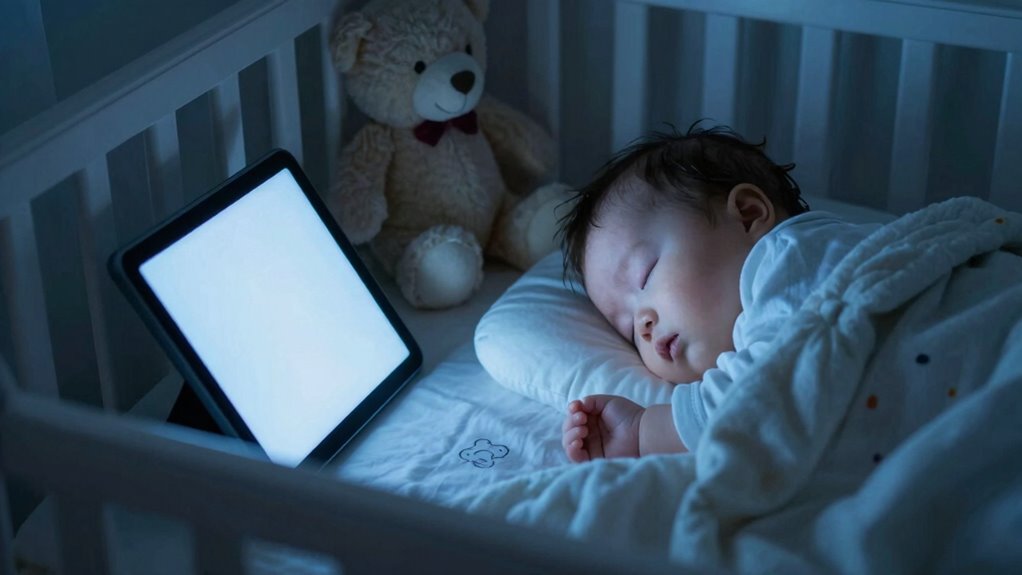
Blue light emitted from screens like tablets and smartphones can delay your child’s sleep by suppressing melatonin, especially since kids’ eyes are more sensitive to this blue spectrum. Using screens before bed often leads to trouble falling asleep and disrupted routines. To help, set limits on screen time, encourage calming activities, and use blue light filters or glasses. If sleep issues persist, seeking professional advice can provide further guidance—continue to learn how to protect your child’s sleep health.
Key Takeaways
- Blue light from screens suppresses melatonin, making it harder for children to fall asleep.
- Children’s eyes are more sensitive to blue light due to developmental factors.
- Limiting screen time before bed and using blue light filters can improve sleep quality.
- Blue light glasses may help, but good sleep hygiene and routines are essential.
- Parents should set screen boundaries and seek professional advice if sleep issues persist.

Okany Blue Light Glasses for Kids 3 Pack Blue Light Blocking Glasses for Teen Boys Girls Age 3-10,Computer Screen Gaming TV Phone Glasses Anti Glare,UV & Eye Strain (Grey Black+Transparent+Blue)
【Protect Children's Eyes】Prolonged exposure to blue light will damage light-sensitive cells of the retina cause eye fatigue and…
As an affiliate, we earn on qualifying purchases.
As an affiliate, we earn on qualifying purchases.
What Is Blue Light and Why Does It Keep Kids Awake?

Blue light is a type of high-energy visible light emitted by screens on devices like smartphones, tablets, and computers. It’s a common part of modern life, but blue light hazards can impact your child’s sleep hygiene. When exposed to blue light before bed, it suppresses melatonin, the hormone that helps regulate sleep, making it harder for kids to fall asleep. This disruption can lead to insufficient rest, affecting mood, focus, and overall health. Because children’s circadian rhythms are still developing, they’re especially vulnerable to these effects. Limiting blue light exposure in the evening and encouraging a screen-free bedtime routine helps protect sleep hygiene. Being mindful of blue light hazards can improve your child’s sleep quality and overall well-being. Additionally, creating a relaxing bedtime environment can further support healthy sleep patterns. Understanding light exposure and its effects on sleep can help parents develop better routines for their children. Recognizing the importance of circadian rhythms can aid in establishing consistent sleep schedules for children. Being aware of blue light and its impact on melatonin production can help you make informed decisions about screen time during evening hours. Incorporating age-appropriate screen time limits can further reduce blue light exposure and promote better sleep habits.
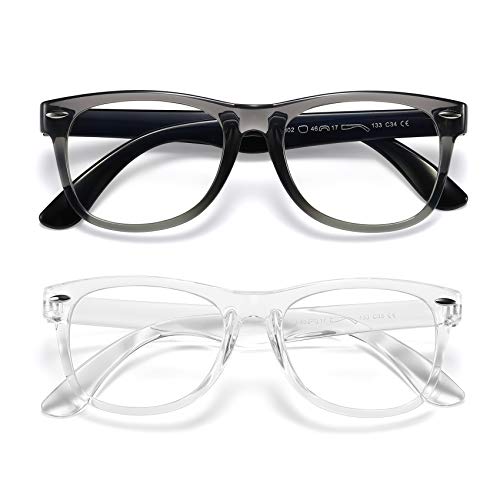
DYLB Kids Blue Light Blocking Glasses girls boys 2 pack, computer video gaming glasses for kids girls boys Age 3-10,Anti blue light & Headache (transparent black + transparent)
[Kids Blue Light Blocking Protection] blue light glasses for kids girls boys can block harmful blue light with…
As an affiliate, we earn on qualifying purchases.
As an affiliate, we earn on qualifying purchases.
Why Are Children More Sensitive to Blue Light Than Adults?
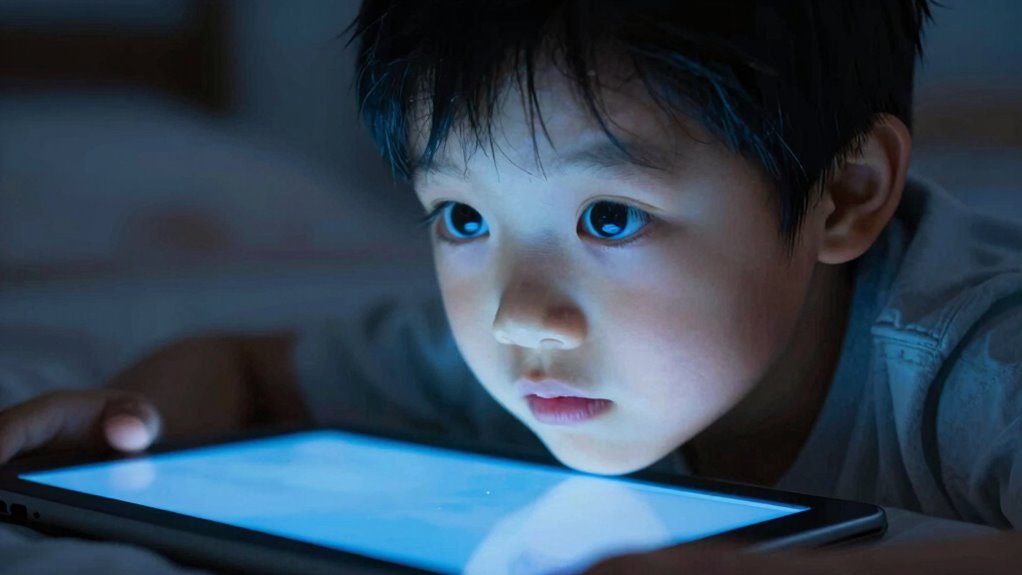
Children are more sensitive to blue light than adults because their eyes allow more of it to reach the retina. During eye development, the lens and cornea are still maturing, making them less effective at filtering blue light. This increased blue light sensitivity can lead to greater disruptions in sleep patterns. As a result, exposure to screens can interfere more with a child’s natural sleep cycle. To understand this better, consider these points:
- The developing eye lens allows more blue light to pass through.
- Eye development in children isn’t complete, reducing filtering ability.
- Children’s retinas are more responsive to blue light signals.
- Greater blue light sensitivity impacts melatonin production.
- This makes children more prone to sleep disturbances from screen time.
- Eye development plays a crucial role in how blue light affects sleep in children.

Kids Sleep Mask, 3D Sleeping Eye Mask for Kids with Adjustable Elastic Strap, Bear Shape Eye Cover with Memory Foam, Soft & Light-Blocking, Gift for Boys Girls Teens Age 5–15 (Blue)
【3D Bear Shape with Pressure-Free Fit】Designed with a fun and friendly bear face, this 3D kids sleep mask…
As an affiliate, we earn on qualifying purchases.
As an affiliate, we earn on qualifying purchases.
How Does Screen Time Before Bed Disrupt Your Child’s Sleep?

Using screens before bedtime can profoundly disrupt your child’s sleep, especially because the blue light emitted by devices signals the brain to stay alert. This delay in melatonin production makes it harder for your child to fall asleep quickly. Prolonged screen time can also lead to digital eye strain, causing discomfort and fatigue that interfere with rest. Additionally, children may develop screen dependency, preferring devices over sleep, which further disrupts their natural sleep cycle. The overstimulation from engaging content can make winding down difficult, extending the time it takes for your child to feel sleepy. Moreover, the well-drained soil and full sun requirements for many plants like daisies highlight the importance of a healthy environment for growth, reminding us that healthy sleep habits also depend on a conducive environment. Creating a healthy sleep environment free of screens and distractions is essential to support better rest. Ensuring proper indoor air quality can also help your child breathe more easily during sleep, enhancing comfort. Proper screen settings and blue light filters can minimize the impact of blue light and promote better melatonin production, aiding sleep. Incorporating consistent bedtime routines can further signal to your child’s body that it’s time to wind down, improving sleep quality. Ultimately, these effects contribute to poorer sleep quality, leaving your child tired and less alert during the day. Reducing screen exposure before bed is essential for healthier sleep habits.

emagine A Sleep Aid Red Night Light Outlet Plug in with Dusk to Dawn Auto Sensor, Low Blue LED Promotes melatonin Production and Healthy Sleep, ON-Off-Auto Toggle, 2-Pack
Long wavelength red LED source promotes sleep, will not affect sleep hormone melatonin production
As an affiliate, we earn on qualifying purchases.
As an affiliate, we earn on qualifying purchases.
Simple Ways to Reduce Blue Light Exposure in Kids

Reducing blue light exposure can substantially improve your child’s sleep quality. Limiting blue light from screens minimizes sleep disruption and helps establish healthier bedtime routines. To create effective strategies, consider these simple tips:
- Set a screen curfew at least an hour before bedtime
- Use built-in blue light filters or night mode on devices
- Encourage activities that don’t involve screens during winding-down time
- Replace screen time with calming activities like reading or listening to music
- Keep screens out of your child’s bedroom altogether
- Incorporate proper gear maintenance practices to ensure devices emit less blue light and function effectively. Regularly cleaning and updating device settings can also help optimize blue light reduction and air quality considerations, making screen use safer and more comfortable for your child.
- Maintaining device performance through proper upkeep can further enhance blue light reduction and device longevity. Additionally, choosing high-quality screens with color accuracy features can improve visual comfort during use.
Do Blue Light Glasses Help Kids Sleep Better?

You might wonder if blue light glasses actually help kids sleep better. While they can reduce blue light exposure, their effectiveness varies and isn’t guaranteed for everyone. Exploring other sleep strategies alongside glasses can also improve your child’s sleep quality. Additionally, managing overall screen time and ensuring a comfortable sleep environment can further support better rest. Increasing awareness of blue light’s impact on melatonin production can help parents make informed choices about evening routines. Incorporating sleep environment adjustments, such as blackout curtains or white noise machines, can further enhance sleep quality for children. Moreover, understanding how essential oils for sleep support can promote relaxation might provide additional natural assistance for restful nights.
Blue Light Effects
Blue light emitted from screens can interfere with the production of melatonin, the hormone that regulates sleep, making it harder for kids to fall asleep at night. This blue light exposure can cause sleep disruption, leading to difficulty both falling asleep and staying asleep. Understanding how blue light affects sleep is essential for managing your child’s bedtime routine. Additionally, incorporating herbal remedies such as herbal baths and spices like turmeric and ginger may help promote relaxation and improve sleep quality naturally. Research also suggests that limiting screen time before bed can significantly reduce blue light exposure and improve sleep patterns for children. Recognizing the impact of light exposure on circadian rhythms can further help in establishing effective sleep hygiene practices for kids. Furthermore, using blue light glasses has been shown to filter out a significant portion of blue light, potentially reducing its disruptive effects on melatonin production. Being aware of blue light’s influence on sleep cycles underscores the importance of creating a calming bedtime environment for children.
Glasses’ Effectiveness
Blue light glasses have become a popular tool for limiting blue light exposure from screens, with many parents wondering if they can actually help kids sleep better. While some believe these glasses improve sleep hygiene, scientific evidence remains mixed. Research suggests they may reduce blue light exposure temporarily but don’t eliminate all blue light myths. Their effectiveness depends on consistent use and timing, especially before bedtime. Remember, glasses alone won’t solve sleep issues; good sleep hygiene is essential. Additionally, understanding urban pursuits in various areas can help families find relaxing environments that promote better sleep habits. Incorporating restroom solutions into outdoor and event settings can also create more comfortable and inviting spaces that support relaxation and well-being. Being aware of sleep environment factors can further enhance the chances of restful sleep for children.
Alternative Sleep Strategies
While blue light glasses may help reduce screen exposure, they are just one piece of a broader strategy to improve kids’ sleep. Establishing consistent bedtime routines can signal to your child that it’s time to wind down, making sleep easier. Creating a calming sleep environment—dim lighting, comfortable bedding, and minimal noise—enhances relaxation. Limiting screen time at least an hour before bed helps reduce blue light exposure naturally. Incorporate relaxing activities like reading or gentle stretching into the routine. Avoid caffeine and heavy meals near bedtime to prevent disruptions. By combining these strategies, you can help your child develop healthy sleep habits and improve their overall sleep quality.
How to Create a Screen-Free Bedtime Routine for Better Sleep
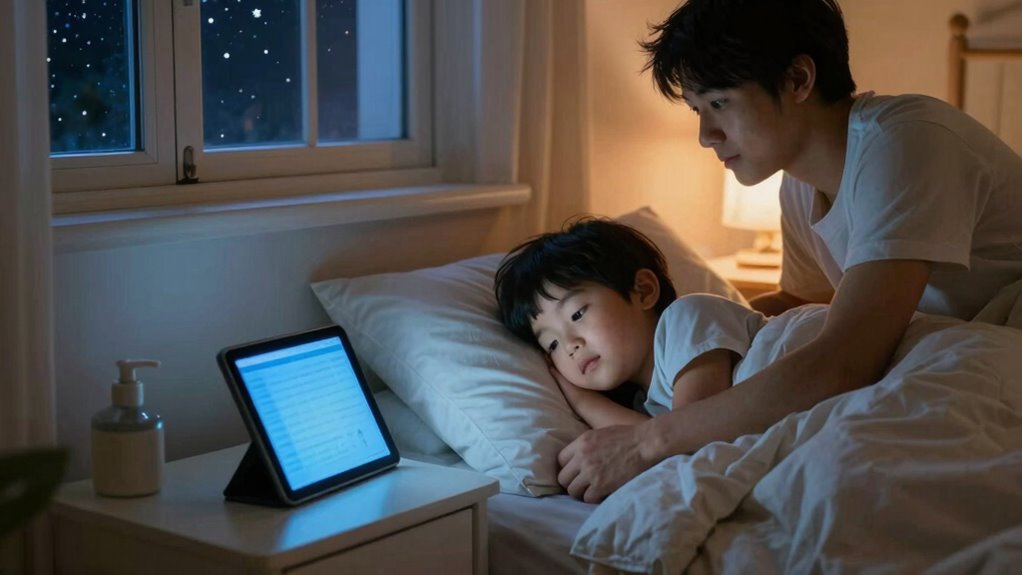
Creating a screen-free bedtime routine can substantially improve your sleep quality by reducing exposure to blue light and calming your mind before bed. To establish effective bedtime habits, start winding down at least 30 minutes before sleep. Replace screen time with relaxing activities like reading a book, listening to calming music, or practicing gentle stretches. Make your sleep environment inviting by dimming lights, keeping the room cool, and removing electronic devices. Consistency is key—stick to the same routine every night to signal to your body that it’s time to sleep. Avoid screens and stimulating activities, and focus on calming, screen-free rituals that promote relaxation. This approach helps your circadian rhythm stay regulated and prepares your mind and body for restful sleep.
Effective Strategies Parents Can Use During Screen Time to Protect Sleep
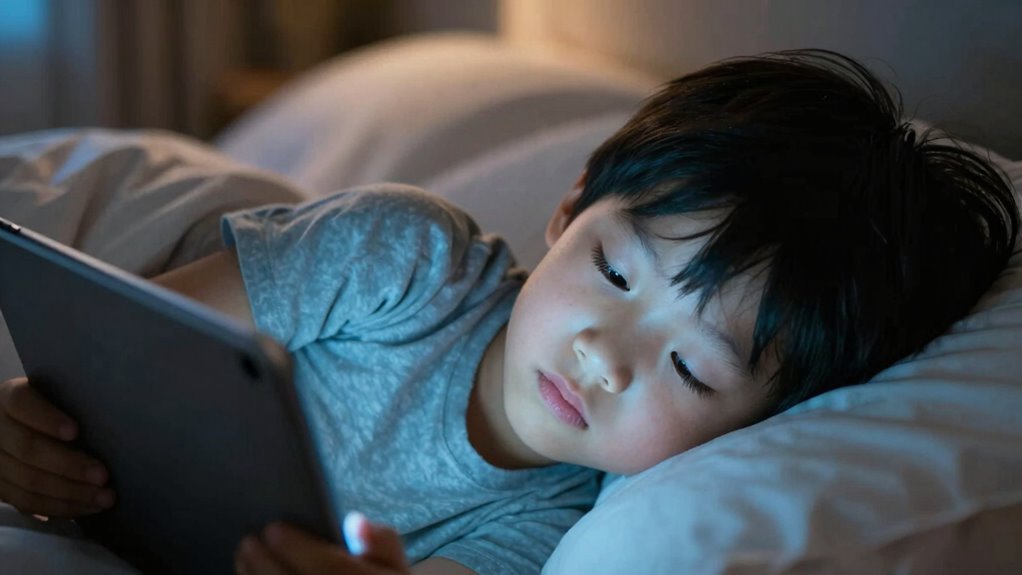
To protect your child’s sleep during screen time, you should set clear limits on daily usage. Turning on night mode and blue light filters can reduce eye strain and disruption to sleep patterns. Additionally, encouraging offline activities helps your child unwind and prepares them for a restful night.
Set Screen Time Limits
Setting clear screen time limits is one of the most effective ways to protect your child’s sleep. By establishing boundaries, you help prevent excessive exposure to blue light and encourage healthier routines. Implement a digital detox period before bedtime to wind down and improve sleep quality. Use parental guidance to set consistent rules, such as no screens an hour before bed or during meals. Consider creating a family schedule that balances screen time with outdoor activities and sleep. Keep devices out of bedrooms to minimize temptation. Regularly review and adjust limits as needed, ensuring they suit your child’s age and needs. These strategies promote healthier habits and make it easier for your child to disconnect and rest well.
Enable Night Mode Settings
Enabling night mode settings on your child’s devices is an effective way to reduce blue light exposure during screen time. Turning on features like night shift adjusts the display’s color temperature, shifting it toward warmer tones that are less likely to interfere with sleep. This setting also helps lower screen brightness, making screens easier on the eyes and less disruptive before bedtime. By activating night mode, you create a more sleep-friendly environment, especially during evening use. It’s simple to enable on most smartphones, tablets, and computers, often found in display or accessibility settings. Using night shift consistently can help minimize blue light’s impact on melatonin production, supporting your child’s natural sleep cycle and promoting better rest.
Encourage Offline Activities
Encouraging your child to engage in offline activities during screen time can considerably protect their sleep. A digital detox helps reduce blue light exposure and relaxes the mind before bedtime. Incorporate outdoor play to promote physical activity and natural light exposure, which supports healthy sleep patterns. Setting boundaries for screen time also encourages kids to explore other interests. To make this effective, try these strategies:
- Schedule regular outdoor play sessions daily
- Replace screen time with creative activities like drawing or puzzles
- Encourage reading physical books instead of digital devices
- Limit screens an hour before bedtime to wind down naturally
- Plan family activities that don’t involve electronics
These steps help reduce reliance on screens, improve sleep quality, and foster healthier habits.
When Should You Talk to the Pediatrician About Sleep and Blue Light?

You should consider talking to your pediatrician about sleep and blue light if your child’s sleep patterns are consistently disrupted despite making adjustments at home. Poor sleep hygiene, such as excessive screen time before bed, may require professional guidance. Schedule a pediatric consultation if your child shows signs like difficulty falling asleep, frequent awakenings, or daytime drowsiness. Early intervention can address underlying issues and improve sleep quality. Use this table to evaluate when to seek help:
| Concern | Action |
|---|---|
| Persistent sleep difficulties | Consult your pediatrician promptly |
| Behavioral signs of sleep issues | Discuss during pediatric visit |
| Impact on daily activities | Seek professional advice |
Timely advice helps ensure your child develops healthy sleep habits and reduces blue light exposure’s effects.
Frequently Asked Questions
Are There Safe Alternatives to Blue Light Filters for Kids?
Yes, there are safe alternatives to blue light filters for kids. You can manage their screen time effectively by setting limits and encouraging breaks. Using natural lighting benefits their sleep by reducing reliance on screens altogether, especially before bedtime. Promote activities outdoors and establish tech-free zones in the house. These strategies help minimize blue light exposure naturally, supporting healthier sleep patterns without needing specialized filters.
Can Blue Light Exposure Affect My Child’s Eye Development?
They say, “An ounce of prevention is worth a pound of cure,” and that’s true for your child’s eye health. Blue light exposure can impact their visual development, potentially leading to eye strain or discomfort. While research is ongoing, limiting screen time and encouraging outdoor activities support healthy eye development. You’re doing your part by staying informed, helping make certain your child’s eyes grow strong and healthy over time.
How Long Before Bedtime Should Screens Be Turned Off?
You should turn off screens at least one hour before bedtime to help establish effective screen time limits. This allows your child’s body to wind down and prepares them for restful sleep as part of a consistent bedtime routine. Avoiding screens too close to sleep helps reduce blue light exposure, which can interfere with melatonin production. Stick to these routines regularly to improve your child’s sleep quality and overall well-being.
Are There Specific Age Recommendations for Blue Light Protection?
You should follow age-specific recommendations for blue light protection, as they vary by developmental stage. For example, children under 2 should have minimal screen time, while older kids can have limited exposure, especially before bedtime. Adhering to screen time guidelines helps reduce blue light impact on sleep. Encourage breaks and use blue light filters or glasses when your child needs to use devices, promoting healthier sleep habits.
Do All Types of Electronic Devices Emit the Same Amount of Blue Light?
Not all electronic devices emit the same amount of blue light. You’ll notice differences in screen brightness and device type—smartphones, tablets, and computers each vary. Smartphones tend to emit more blue light than e-readers, for example. As you select devices or adjust settings, consider how screen brightness and device type influence blue light exposure, helping you protect your child’s sleep and eye health effectively.
Conclusion
As you consider these tips, imagine your child drifting into a peaceful sleep, free from the interference of blue light. But the real question remains: are you prepared to take the steps that could transform their bedtime routine forever? The choices you make now could hold the key to nights of restful sleep or endless tossing and turning. Will you act today to *unseal* the secret to better sleep for your child?