
TL;DR

Turn the school run and nap time into listening time
- Thousands of audiobooks, podcasts and originals
- Listen on your phone, tablet or Echo — also offline
- Cancel anytime
Berryessa Union and Los Angeles Unified are expanding early-childhood programs in school buildings, responding to demand for affordable care while enrollment declines. District leaders hope families who enter through childcare will later enroll in district schools, but research and examples from other cities do not guarantee that outcome.
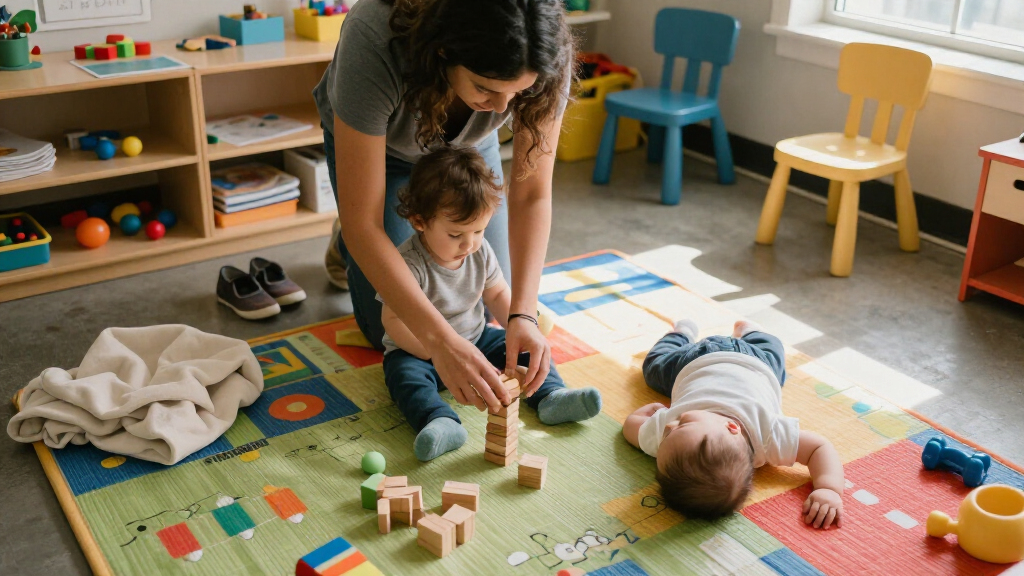
California school districts losing students are turning some underused school space into infant, toddler and preschool programs, seeking to meet demand for affordable childcare and possibly connect families with district schools before kindergarten. Berryessa Union opened the Toyon Early Learning Center for 150 young children after closing three elementary schools, while Los Angeles Unified has voted to expand early education.
At Toyon, north of San Jose, Berryessa Union added child-sized sinks and toilets to prepare the campus for early learning. The district leased the site to Kidango, a nonprofit provider serving about 4,000 children in the East Bay, according to the report. The arrangement puts a childcare service in a former elementary school, but does not guarantee that enrolled families will later choose Berryessa schools.
Superintendent Roxane Fuentes said the district wanted to reach families before children turn four. The center also hosts parenting education events, and district leaders plan to present information about transitional kindergarten and kindergarten during spring open enrollment. Berryessa has not established an admissions preference for children attending Toyon, the report said.
The Los Angeles Unified school board voted earlier this year to expand early education. The plan calls for using empty elementary classrooms for additional preschool and reopening previously closed district childcare centers, with the district aiming to double its infant-care programs. Board members said officials are still identifying where childcare need is greatest; possible use of space made available through school consolidations remains under discussion.
Childcare Meets Enrollment Declines
The strategy addresses two pressures at once: falling school enrollment has left some districts with unused facilities, while families face limited access to affordable early care. A 2024 study cited by the report found that only 11% of children eligible for subsidized childcare in Los Angeles County were enrolled in a program. The figure indicates a gap between eligibility and participation, though it does not by itself measure demand at particular district sites.
For school systems, early-childhood programs can provide a community service while making use of existing buildings. District leaders also hope that establishing relationships with families earlier may support later enrollment. That potential matters as districts decide how to use campuses amid demographic shifts and, in Los Angeles, a reported $3.6 billion deficit. Childcare conversion can require costly renovations, so the approach is not simply a matter of filling empty rooms.
Products Worth Considering

LEGO The Legend of Zelda Great Deku Tree 2-in-1 Building Set

LEGO Art The Milky Way Galaxy Building Set, 3,091 Pieces

Graco Magnum ProX19 Cart Airless Paint Sprayer
As an affiliate, we earn on qualifying purchases.
How Districts Are Repurposing Campuses
California districts are acting as the state invests in subsidized early care. The report says a 2021 state funding expansion added 200,000 childcare slots and raised hourly reimbursement rates for caregivers. Kidango CEO Scott Moore said the funding enabled the nonprofit to expand services, including through leases in underused school buildings.
The enrollment challenge is not unique to California. The report points to lower birth and immigration rates nationally and the rising cost of raising a family as factors districts cannot control. It also describes Washington, D.C., Boston and Tulsa as places where outreach to families with young children helped increase enrollment. Urban Institute senior fellow Erica Greenberg said affordability and convenience were important features of those programs; the report does not establish that the same results will follow in California.
“It was really about trying to find another avenue of getting to families before age four.”
— Roxane Fuentes, Berryessa Union superintendent
Enrollment Benefits Remain Unproven
It is not yet clear whether the California programs will increase later enrollment in transitional kindergarten or kindergarten, or keep families living in the districts. Greenberg cautioned that attracting families through early care does not necessarily lead to more kindergarten students. The source report provides no measured enrollment results for Toyon or the Los Angeles expansion.
Los Angeles Unified is still working out where childcare need is highest, and the precise locations and timing of planned services are not detailed in the report. Costs also remain a constraint: childcare facilities require changes to meet licensing rules, including small sinks and toilets in classrooms. The available source ends while describing conversion costs, so it does not provide a complete account of the required upgrades or their price.
Plans Depend on Space and Funding
Los Angeles Unified is expected to continue identifying areas of need and developing its early-education expansion. School consolidations are also on the table this year as the district addresses its reported deficit; any facilities freed up could become candidates for childcare, but board member Tanya Ortiz-Franklin described that as a possibility rather than a finalized plan.
At Berryessa, district leaders plan to use spring open enrollment to introduce Toyon families to transitional kindergarten and kindergarten programs. Whether that outreach changes enrollment will take time to assess. The key measures to watch are the number of children served, the costs of converting and operating sites, and whether families later enroll in district schools.
Key Questions
Why are California school districts opening childcare programs?
Districts are responding to unmet demand for affordable care and using classrooms or campuses left underused as enrollment falls. Some leaders also hope early contact with families will encourage later school enrollment.
What is happening at Berryessa Union’s Toyon center?
Berryessa Union leased a former elementary-school campus to Kidango for a center serving 150 infants, toddlers and preschoolers. The district added child-sized sinks and toilets and plans to share information about its TK and kindergarten programs with families.
Will childcare expansion bring more children into district schools?
That is not yet known. District leaders see it as a possibility, but Urban Institute researcher Erica Greenberg said early-childhood outreach does not necessarily translate into more kindergarten enrollment.
What is Los Angeles Unified planning?
The district voted to expand early education by using empty elementary classrooms for preschool, reopening some closed childcare centers and aiming to double infant-care programs. Officials are still identifying where services are most needed.
Source: rss