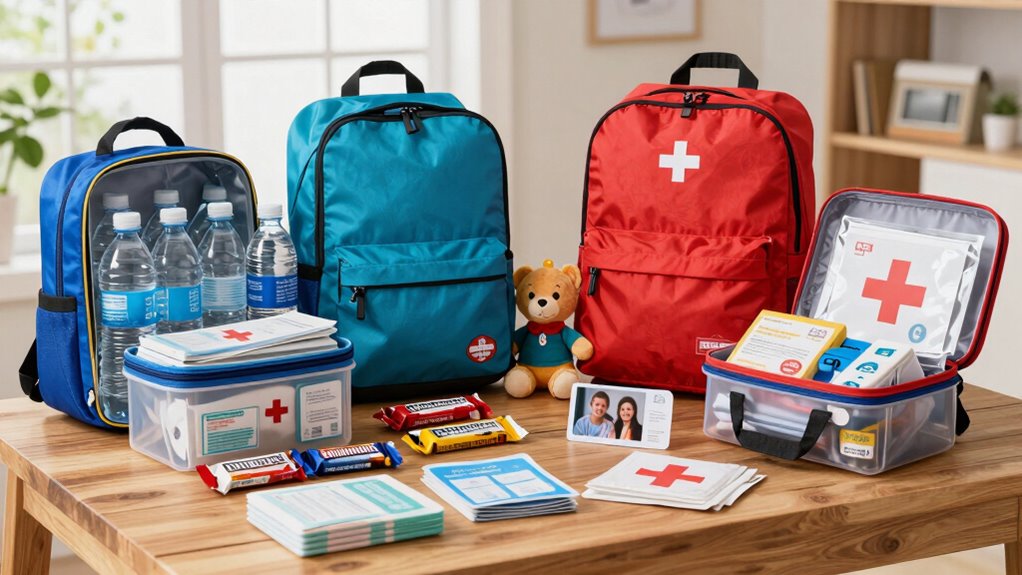
To prepare an emergency kit that you actually use, focus on keeping it simple, organized, and easily accessible. Prioritize essentials like water, non-perishable food, first aid supplies, flashlights, and communication tools. Use durable containers stored in visible places and review them regularly to replace expired items. Customize the kit for your family’s specific needs and teach everyone how to access and use it confidently. Continue exploring how to make your family’s emergency plan more effective.
Key Takeaways
- Focus on simple, essential items like food, water, first aid, and safety gear for quick access and ease of use.
- Use durable, organized containers stored in accessible, visible locations to ensure rapid retrieval during emergencies.
- Regularly review and update your kit every three to six months, replacing expired supplies and testing equipment.
- Educate family members, including children, on how to locate and use emergency supplies confidently.
- Tailor the kit to your family’s specific needs, local hazards, and seasonal changes to stay prepared and reduce clutter.

Family Emergency Kit | All-in-one Survival Kit Backpack for Earthquake, Flood, Disaster Relief, Civil Unrest & Outdoor – Survival Bag & Emergency Preparedness Kit for Families (4 Person)
✅【Compact Design】: Featuring a compact and lightweight 19"x15"x10" design, this backpack kit ensures effortless mobility while efficiently organizing…
As an affiliate, we earn on qualifying purchases.
As an affiliate, we earn on qualifying purchases.
Why a Simple Emergency Kit Works Better Than Overly Complex Gear
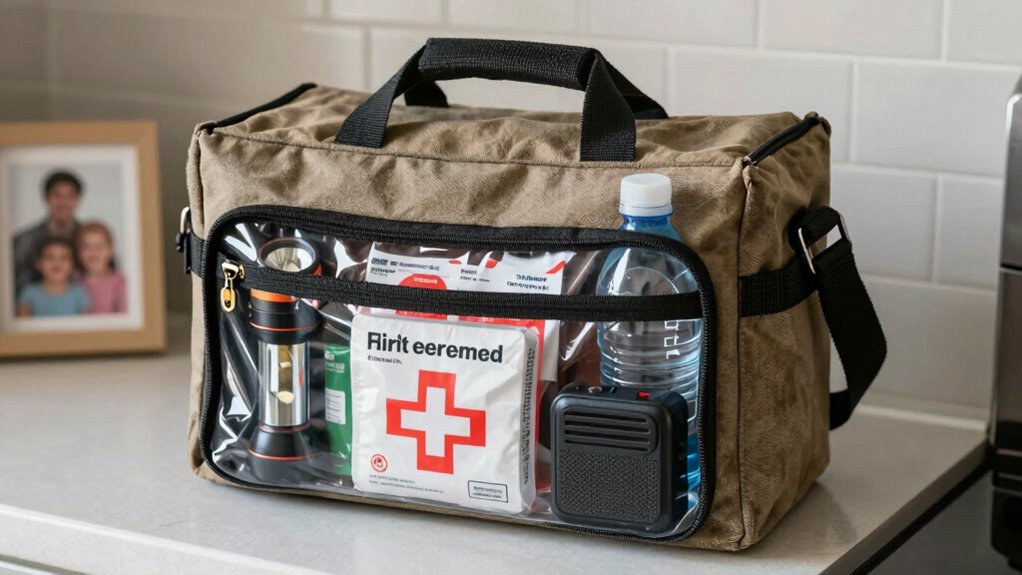
A simple emergency kit is often more effective than a bulky, complex setup because it’s easier to use and carry. Overly complex gear can overwhelm you during stressful situations, making it harder to find what you need quickly. Unnecessary items only add weight and clutter, reducing mobility and delaying your response. When your kit is simplified, you can focus on the essentials, ensuring you don’t waste time searching through a jumble of supplies. It also encourages regular checks and easy restocking, keeping your kit reliable. Prioritizing essential items ensures that your kit remains practical and accessible in emergencies. Incorporating simplicity and clarity principles can help you design a versatile and adaptable emergency kit suitable for various situations. Additionally, understanding emergency response strategies can improve your preparedness and confidence during critical moments. Being aware of body piercing aftercare can also be beneficial if you or your children have piercings and need quick guidance in an emergency.
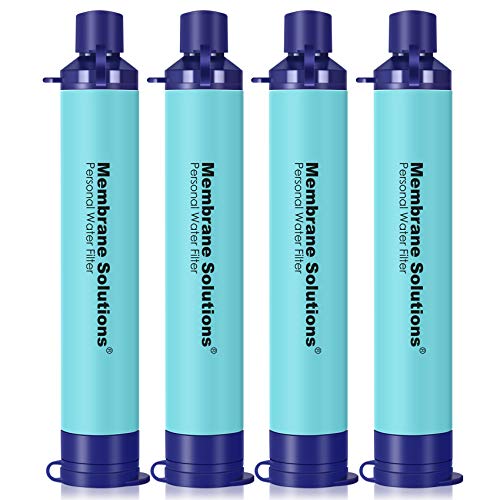
Membrane Solutions Personal Water Filter, Survival Filtration Straw Portable Gear, Emergency Preparedness, Supply for Drinking Hiking Camping Travel Hunting Fishing Team Family Outing (Blue, 4 Pack)
Drink Anywhere, Certified by Science – This survival-grade straw filter meets strict NSF/ANSI 42, 372, 401 standards (Test…
As an affiliate, we earn on qualifying purchases.
As an affiliate, we earn on qualifying purchases.
What Essentials Every Family Emergency Kit Should Include
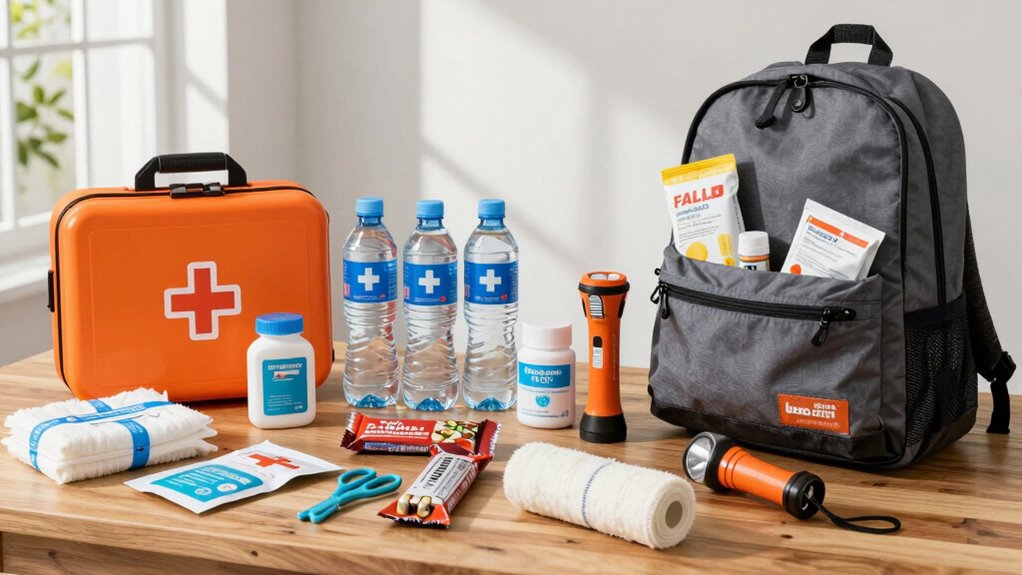
Every family emergency kit should include must-have food and water to keep everyone nourished and hydrated during a crisis. Essential safety gear, like flashlights and first aid supplies, helps you handle unexpected situations safely. Make certain your kit is prepared with these basic essentials to ensure you’re ready for anything.
Must-Have Food and Water
Having enough food and water is vital for staying safe during an emergency. You should focus on good food storage by selecting non-perishable items like canned goods, granola bars, and dried fruit that can last without refrigeration. It’s also wise to include a variety of kid-friendly options. Water purification methods, such as water filters or purification tablets, are essential if your stored water runs low or becomes contaminated. Aim to have at least a three-day supply of water—about one gallon per person per day. Make sure your water is stored in clean, sealed containers and replace it periodically. Being prepared with sufficient food and water guarantees your family stays nourished and hydrated, even when access to fresh supplies is limited. Additionally, understanding the importance of emergency food supplies can help you choose the most effective options for your family’s needs. To ensure safety, consider the storage conditions to prevent spoilage and contamination of your supplies. Regularly checking your supplies and understanding emergency food storage techniques can help you maintain an effective stockpile. It’s also helpful to periodically review your emergency preparedness plan to stay up-to-date with your supplies and procedures.
Essential Safety Gear
To guarantee your family is prepared for emergencies, you need to include essential safety gear in your kit. First aid supplies are vital for treating minor injuries and preventing infections. Communication tools ensure you can stay connected when phones or networks are down. Make sure your kit includes items like a whistle to signal for help, a flashlight with extra batteries, and a multi-tool for versatile tasks. Also, pack a face mask to protect against airborne hazards and a sturdy, waterproof container to keep everything organized and dry. Including a mammography guideline can help you stay informed about health screening needs, even in emergencies. Regularly checking your kitchen gear for damage or wear can prevent accidents during critical moments. Being aware of yarn for scarves maintenance can also help you prepare for potential emergencies involving sewing or repair tasks. Staying aware of vacuum safety tips can also help avoid mishaps when handling cleaning equipment during emergencies. Having these essentials on hand can make a significant difference in an emergency, helping you respond quickly and effectively while keeping everyone safe. Additionally, including emergency preparedness supplies specific to your family’s needs ensures comprehensive readiness.

First Aid Only 91248 OSHA-Compliant First Aid Kit, All-Purpose 50-Person Emergency First Aid Kit for Business, Worksite, Home, and Car, 260 Pieces
OSHA-Compliant Emergency Kit: Includes supplies including bandages, gauze, butterfly closures, burn cream packets, antibiotic ointment, BZK antiseptic towelettes,…
As an affiliate, we earn on qualifying purchases.
As an affiliate, we earn on qualifying purchases.
How to Choose a Durable, Easy-to-Access Container for Your Supplies

When selecting a container for your emergency supplies, look for one that’s lightweight and easy to carry so you can quickly grab it when needed. It’s also important to choose a storage spot that’s accessible and familiar, like a closet or near the main exit. This way, you can grab your kit swiftly without searching for it in a crisis. Additionally, consider using essential DIY tools to make any necessary repairs or adjustments quickly during an emergency.
Portable and Lightweight Design
Choosing a portable and lightweight container is essential for quick and easy access to your emergency supplies. You want a container with a compact design that can fit easily in your home or car, yet hold everything you need. Opt for lightweight materials that won’t add unnecessary bulk or weight, making it easier to carry if needed. Look for features like sturdy handles, secure closures, and easy-open lids. A well-designed container should be durable enough to withstand rough handling and weather conditions. Keep your supplies organized with compartments or pockets to find items swiftly. Select a size that balances capacity with portability, ensuring you can grab it quickly during an emergency. Remember, the easier it is to carry, the more likely you’ll actually use it when it counts. Incorporate weather-resistant durability to protect your supplies from the elements and ensure longevity in various conditions. Additionally, consider containers made from impact-resistant materials to prevent damage if dropped or knocked over. When selecting your container, also consider its design for accessibility to ensure you can quickly retrieve items under stress. For added peace of mind, choose a container with additional weatherproof features like sealing gaskets or waterproof zippers to further safeguard your supplies. Incorporating emergency preparedness principles can help you select the most effective container for your needs.
Accessible Storage Locations
Ever wondered how to guarantee your emergency supplies are both protected and easy to access when it matters most? The key is choosing the right storage solutions. Opt for durable containers made of sturdy, weather-resistant materials that can withstand rough handling. Place them in accessible locations—near exits, in a closet, or under a bed—where you can reach quickly. Ensure labels are clear and visible, so you can identify supplies instantly without rummaging. Use large, bold fonts and color-coded labels for added visibility. Avoid stacking containers too high or placing them in hard-to-reach spots. Remember, the goal is a storage solution that’s both secure and convenient, so you can grab what you need fast during an emergency. Additionally, consider seasonal weather conditions when selecting your storage location to prevent damage from extreme temperatures or moisture. Incorporate durable, weather-resistant containers that can withstand temperature fluctuations and humidity to further protect your supplies. Being aware of market manipulation can help you avoid panic-driven decisions if you’re also involved in crypto investments.

TrixHub Rechargeable Flashlights 2 Pack, Super Bright High Lumens Flash Light, 5 Modes Zoomable Linternas with LCD Digital Display, Powerful Handheld LED Flashlights for Home Emergencies Camping
【BRIGHT FLASHLIGHT】Flashlights high lumens equipped with an LCD real-time battery level display, which provides a clear and accurate…
As an affiliate, we earn on qualifying purchases.
As an affiliate, we earn on qualifying purchases.
When and How to Regularly Review and Update Your Emergency Kit

Regularly reviewing and updating your emergency kit guarantees it remains effective when you need it most. Set a schedule, such as every three to six months, to check your kit’s contents. During these reviews, focus on inventory management and kit maintenance to ensure everything is current and usable. Replace expired food, medications, or batteries, and verify that supplies are in good condition. Keep an organized list of what’s in your kit to make updates easier. Consider seasonal changes and any new family needs. Also, test any equipment, like flashlights. Additionally, staying informed about potential disaster risks in your area can help you tailor your kit to specific emergencies. Conducting metabolic health assessments can also provide valuable insights into potential health vulnerabilities that might impact emergency preparedness. Incorporating insights from electric bike capabilities, such as battery life and reliability, can be useful when planning for longer-term emergencies. Finally, update your contact information and emergency plans as needed. Incorporating essential oils for emergency relief can also help create a calming environment during stressful situations. Consistent reviews help you stay prepared, giving peace of mind that your kit will serve you well in an emergency. Regularly practicing emergency preparedness procedures can also improve your response during a real crisis.
How to Customize Your Emergency Kit for Your Family’s Unique Needs
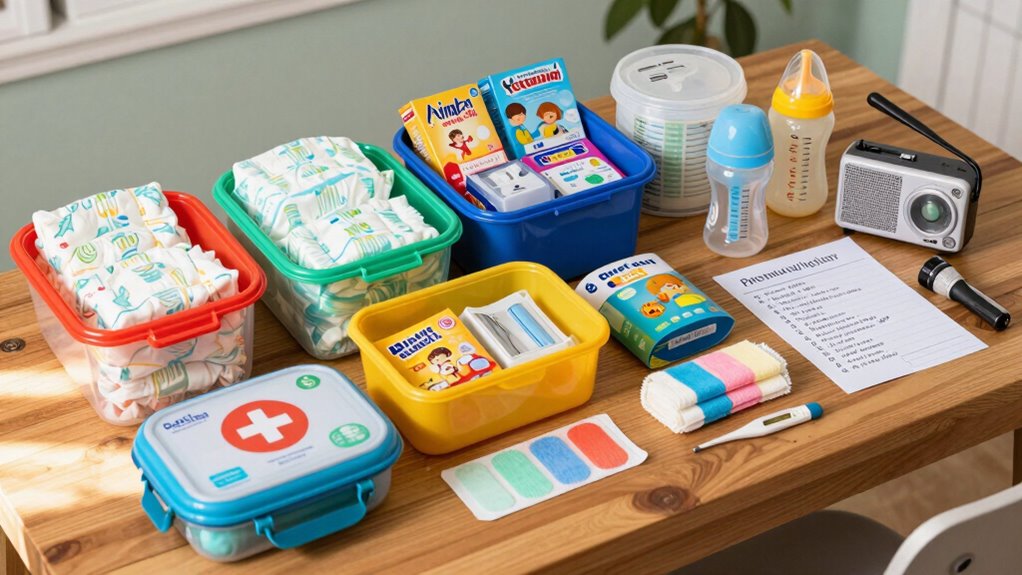
Once you’ve reviewed and updated your emergency kit, it’s time to tailor it to your family’s specific needs. Consider your family preferences, such as dietary restrictions, medical conditions, and comfort items. Include supplies like medications, glasses, or baby essentials if needed. Also, assess your local hazards—whether earthquakes, floods, or hurricanes—and add relevant items like water purification tablets or dust masks. Think about your children’s ages and special needs, ensuring you have appropriate gear or comfort items. Customize your kit to reflect daily routines and potential scenarios your family might face. This personalized approach makes your emergency kit more effective and reassuring, so you’re better prepared to handle whatever comes your way.
Common Mistakes That Can Reduce Your Emergency Kit’s Reliability

Failing to regularly check and update your emergency kit can seriously compromise its reliability when you need it most. Poor storage organization makes it hard to find essentials quickly, wasting precious time during an emergency. Ignoring kit customization means missing specific items your family needs, reducing its effectiveness. Common mistakes include neglecting to replace expired supplies, forgetting to test equipment like flashlights, and overcrowding the kit with unnecessary items. To avoid these issues:
- Keep items in clearly labeled, accessible containers
- Regularly verify expiration dates and replace outdated supplies
- Customize your kit to include family-specific needs
- Maintain a tidy storage system for quick access
- Review and update your kit seasonally or after major events
Avoid these pitfalls to ensure your emergency kit remains reliable and ready when it counts.
Teaching Your Kids How to Use and Access the Emergency Kit
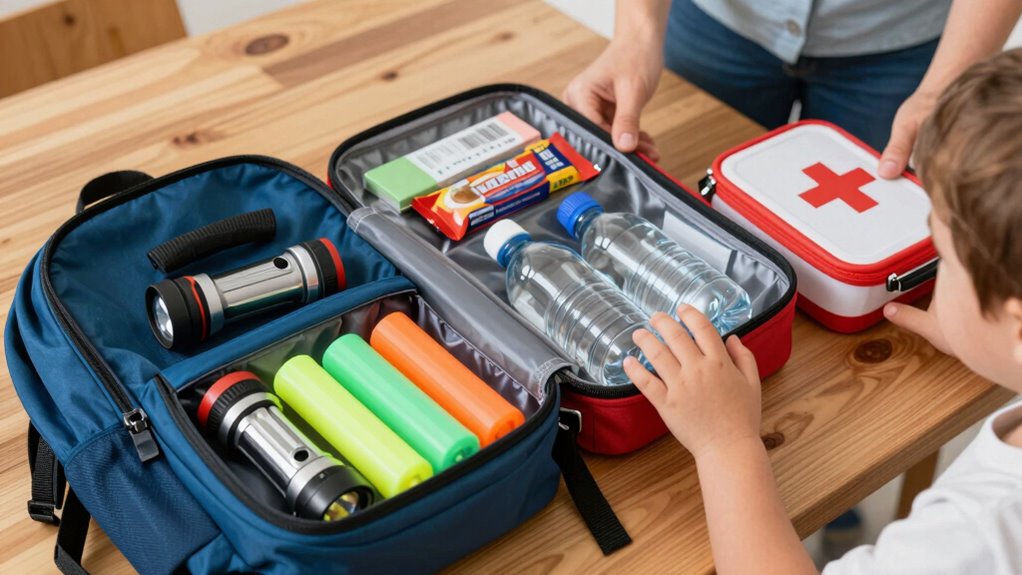
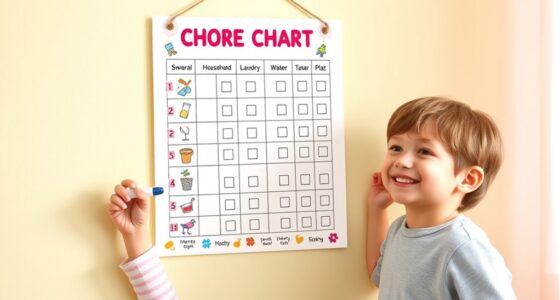
Teaching your kids how to use and access the emergency kit is essential for ensuring their safety during an urgent situation. You want them to feel confident and capable, which means practicing clear communication strategies. Show your children where the kit is stored and explain what each item is for, using simple language. Encourage them to ask questions and repeat instructions to reinforce understanding. Emphasize the importance of child safety by teaching them how to recognize emergency signals and when to access the kit. Role-playing different scenarios can help your kids become familiar with the process, reducing panic and confusion during real emergencies. The goal is to empower them with the knowledge and skills needed to stay safe and act swiftly.
Where to Store Your Emergency Kit for Fast and Easy Access
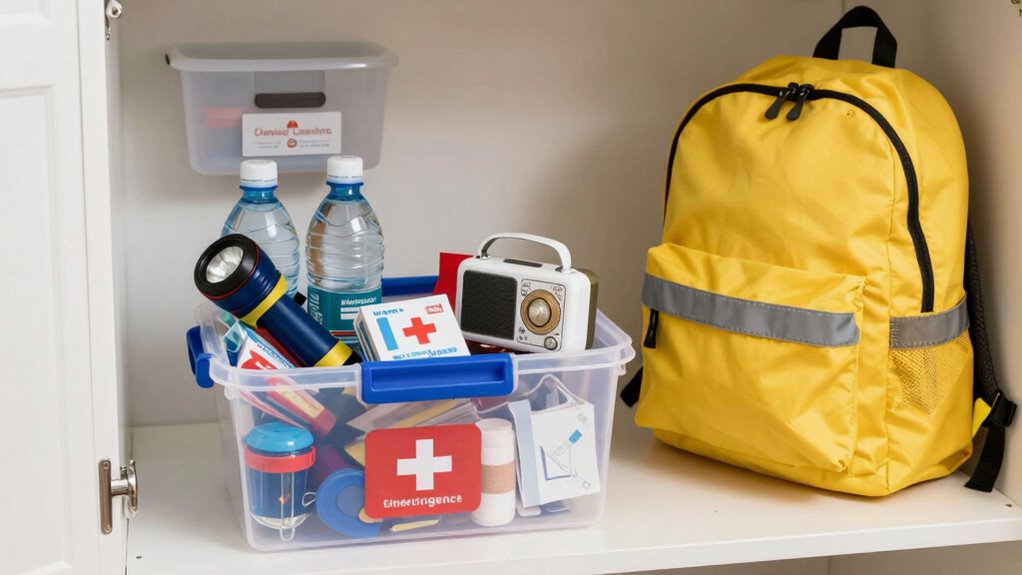
Choosing the right location for your emergency kit is essential to guarantee quick and easy access when seconds matter. Think about storage options that are both visible and reachable for everyone in your family. Place your kit in a central spot, like a hallway closet or a designated cabinet, so it’s not buried or hard to find. Use accessibility tips such as labeling containers clearly and keeping the kit at a height suitable for all ages. Consider storing it near exits or in a consistent spot where everyone knows it’s located. Avoid areas prone to flooding, extreme heat, or heavy traffic. Remember, the goal is fast retrieval during an emergency, so prioritize visibility, simplicity, and proximity. Your preparedness depends on quick access when it counts.
Frequently Asked Questions
How Big Should My Emergency Kit Be for My Family?
Your emergency kit should be compact enough to store easily, yet large enough to hold essentials for your family. Consider size considerations like space in your closet or under the bed, and choose storage solutions that are portable and organized. A good rule of thumb is a kit that fits in a sturdy, accessible container—large enough for supplies, but small enough to grab quickly when needed.
What Are Signs That My Emergency Supplies Are Expired or Damaged?
Think of your emergency supplies like a well-tended garden—if you neglect them, they’ll wither. Check the shelf life on food and medicine, and inspect container integrity regularly. Signs of expiration include strange odors, discoloration, or bulging containers. Damaged packaging can indicate compromised contents. If anything looks off, replace it promptly to make certain your kit remains reliable when you need it most.
How Can I Involve My Kids in Emergency Preparedness Effectively?
You can involve your kids in emergency preparedness by turning it into a fun, educational activity focused on family involvement. Teach them basic safety rules and practice drills together, making sure they comprehend how to stay safe. Use age-appropriate language and encourage questions. When kids feel included, their understanding of safety improves, and they become more confident, helping ensure their safety and your peace of mind during emergencies.
Are There Specific Emergency Kits Recommended for Different Climates?
Yes, climate-specific gear is essential for seasonal preparedness. For cold climates, include warm clothing, blankets, and hand warmers. In hot areas, pack sunscreen, lightweight clothing, and extra water. In rainy regions, add waterproof gear and tarps. Tailoring your emergency kit to your climate guarantees you’re prepared for local weather conditions, making it more effective and practical during emergencies. Regularly update your kit to reflect seasonal changes and new gear needs.
How Do I Coordinate My Emergency Kit With Community or School Plans?
Think of your emergency kit as a puzzle piece fitting into the larger community picture. You should coordinate it with community drills and stay updated through school communication channels. Attend local emergency preparedness events, ask about school plans, and make sure your kit complements what’s in place. This way, your family’s safety aligns seamlessly with community efforts, making everyone better prepared for any crisis.
Conclusion
Remember, an emergency kit is your family’s lifeline in tough times. Keep it simple, accessible, and regularly updated—like a trusted friend always ready to support you. Don’t let complexity drown out its purpose; instead, craft a kit that’s easy to use and tailored to your family’s needs. When chaos strikes, your preparedness will shine like a lighthouse guiding you safely home. Stay vigilant, stay ready—your peace of mind depends on it.