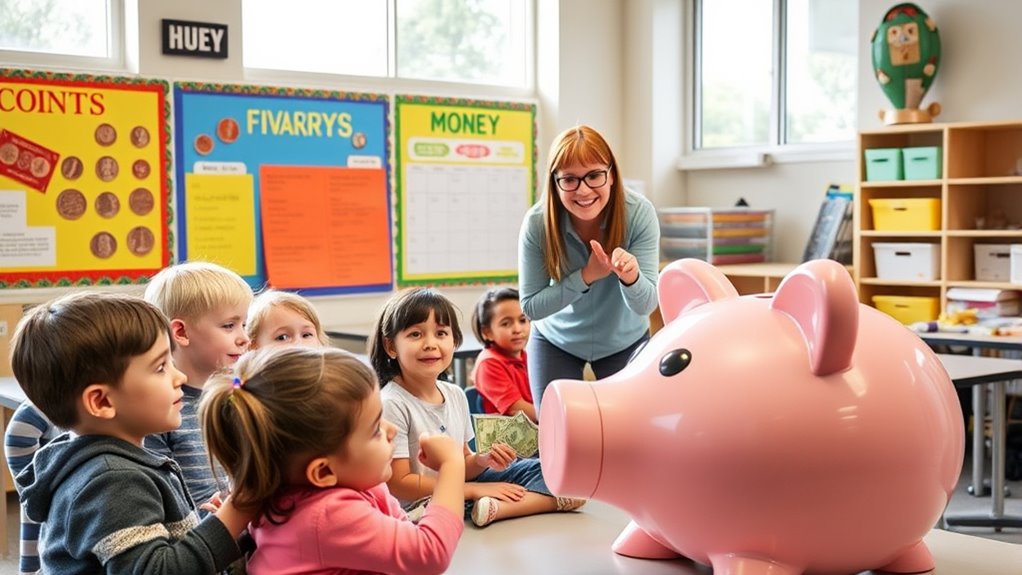

Financial literacy programs for kids are designed to help you teach children responsible money habits early on. These programs introduce key concepts like saving, investing, and understanding interest with fun, simple activities. They motivate kids to set financial goals and see how money grows over time. By starting young, your children will develop healthy financial behaviors that last a lifetime. Keep exploring to discover more ways to empower your child’s financial future.
Key Takeaways
- Many programs focus on teaching kids basic money management and savings concepts through fun activities and interactive lessons.
- Some initiatives introduce investment strategies by showing how small amounts can grow over time.
- Financial literacy programs often include goal setting and motivation to encourage disciplined saving habits.
- Programs emphasize understanding interest, compound growth, and the importance of regular saving for future needs.
- Schools and organizations partner to provide accessible resources and workshops tailored for children’s financial education.
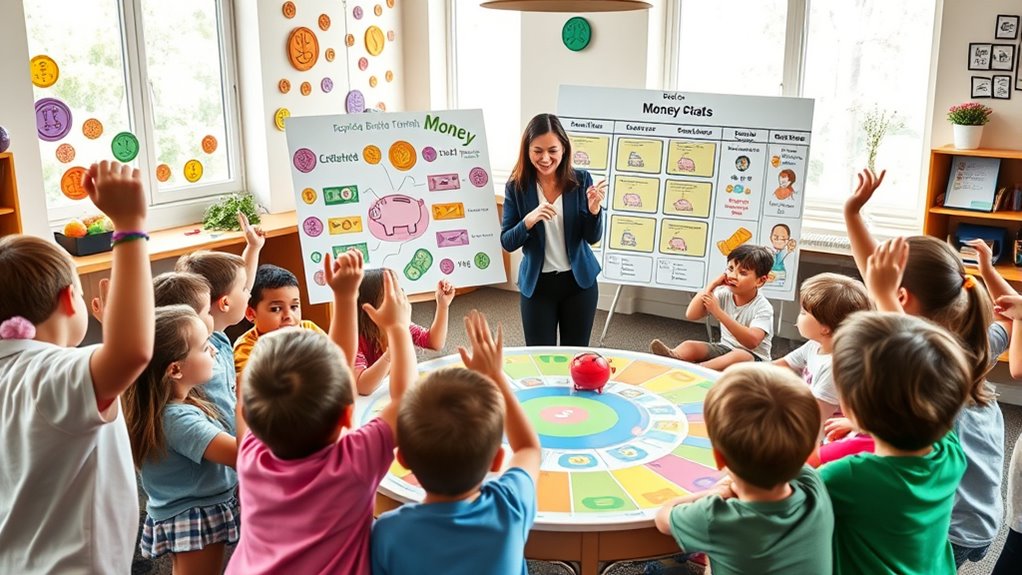
Have you ever wondered why teaching kids about money is so important? Introducing financial literacy early helps set a foundation for responsible money management later in life. One of the key aspects of this education involves explaining investment strategies and the benefits of savings accounts. When you teach kids about investment strategies, you’re showing them how money can grow over time through smart choices. You might start by explaining that investing isn’t just for adults with lots of money; even small amounts can be invested to see how they grow. Using simple examples, like buying a small stock or a share in a company, can help demystify the process. This way, kids learn that investments can be a way to make their money work for them, rather than just sitting idle. Additionally, teaching them about financial benefits like compound interest helps underscore how their savings can increase over time. It’s equally important to help kids understand savings accounts. These are safe places where they can put their money and watch it earn interest. You can compare a savings account to a piggy bank, but one that earns a little extra money while it’s stored inside. When kids see their savings grow, they learn the value of saving regularly. Encourage them to set goals, like saving for a toy or a special trip, which makes the process more tangible and motivating. Teaching them about interest rates and how banks pay them for keeping money there turns an abstract concept into something concrete. This understanding helps build a habit of saving early, which is vital for financial stability in the future.
Frequently Asked Questions
How Early Should Kids Start Learning About Money?
You should start teaching kids about money as early as age three. Early lessons help shape good money habits and set the foundation for future financial success. Encourage them to understand savings goals and the value of money through simple activities. By introducing these concepts early, you help your child develop responsible money habits that can lead to smart financial decisions as they grow.
What Are the Most Effective Teaching Methods for Children?
You should focus on using interactive games and real-world simulations to teach children effectively. These methods engage their curiosity and make learning fun, helping them understand money concepts practically. By involving kids in activities like shopping or saving simulations, you give them hands-on experience. This active approach builds their confidence and financial skills, making it easier for them to grasp complex ideas and develop healthy money habits early on.
How Can Parents Reinforce Financial Lessons at Home?
Reinforcing financial lessons at home is like tending a garden—you nurture habits daily. You can do this by involving your child in allowance management, giving them real-life experience with budgeting and spending. Encourage setting savings goals, making it fun to track progress together. Use everyday situations to discuss money, helping your child understand the importance of responsible financial choices, which fosters lifelong skills.
Are There Age-Appropriate Apps for Teaching Kids About Money?
Yes, there are age-appropriate apps that teach kids about money management through engaging educational games. These apps are designed to match different developmental stages, making learning fun and effective. You can find apps for young children that introduce basic concepts like saving and spending, while older kids can explore more advanced topics like budgeting. Using these tools regularly helps reinforce financial lessons and builds strong money habits early on.
How Do Financial Literacy Programs Impact Kids’ Long-Term Financial Habits?
Think of financial literacy programs as planting seeds in young minds. You help kids build strong savings habits and develop financial discipline early on, which grows into a sturdy tree of responsible money management. These programs shape their attitude toward money, guiding them to make smarter choices and avoid financial pitfalls later. By fostering these skills now, you set them on a path toward long-term financial success and independence.
Conclusion
By participating in financial literacy programs, you’re planting seeds of knowledge that will grow into a strong financial future. Think of these lessons as the roots of a sturdy tree—once grounded, your kids will stand tall and confident, ready to face any financial storm. The sooner they learn these skills, the more they can branch out and thrive. Remember, you’re nurturing their future, one lesson at a time, shaping a brighter financial tomorrow.