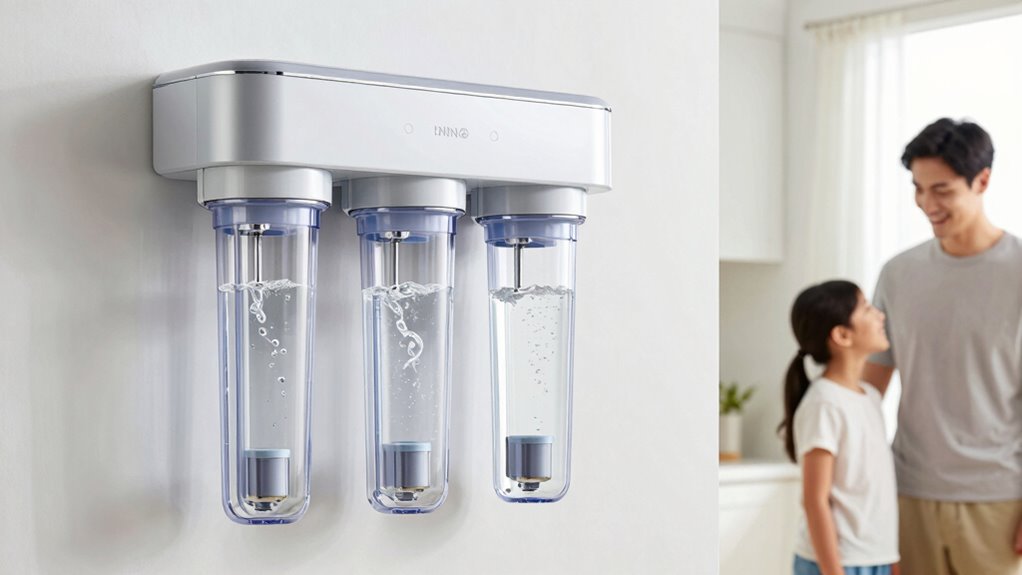

As a parent, ensuring your family has safe, clean water is crucial for health and well-being. Whole-house water filters remove contaminants like heavy metals, chlorine, bacteria, and chemicals from every tap, improving water quality, taste, and safety. Proper installation and regular maintenance keep the system working effectively. While costs vary, they offer long-term benefits for your family’s health. Keep exploring to understand how these systems can protect your loved ones and fit your needs.

Turn the school run and nap time into listening time
- Thousands of audiobooks, podcasts and originals
- Listen on your phone, tablet or Echo — also offline
- Cancel anytime
Key Takeaways
- Whole-house filters improve water safety by removing contaminants, bacteria, and chemicals from all household water sources.
- Proper installation at the main water entry point ensures efficient filtration and protects family health.
- Regular filter replacement every 3 to 6 months maintains water quality and system effectiveness.
- Choose filters with certifications and appropriate media to effectively target regional contaminants and improve taste.
- Ongoing maintenance and system checks prevent issues like leaks and pressure drops, ensuring continuous access to clean water.
As an affiliate, we earn on qualifying purchases.
Why Clean Water Matters for Your Family’s Health
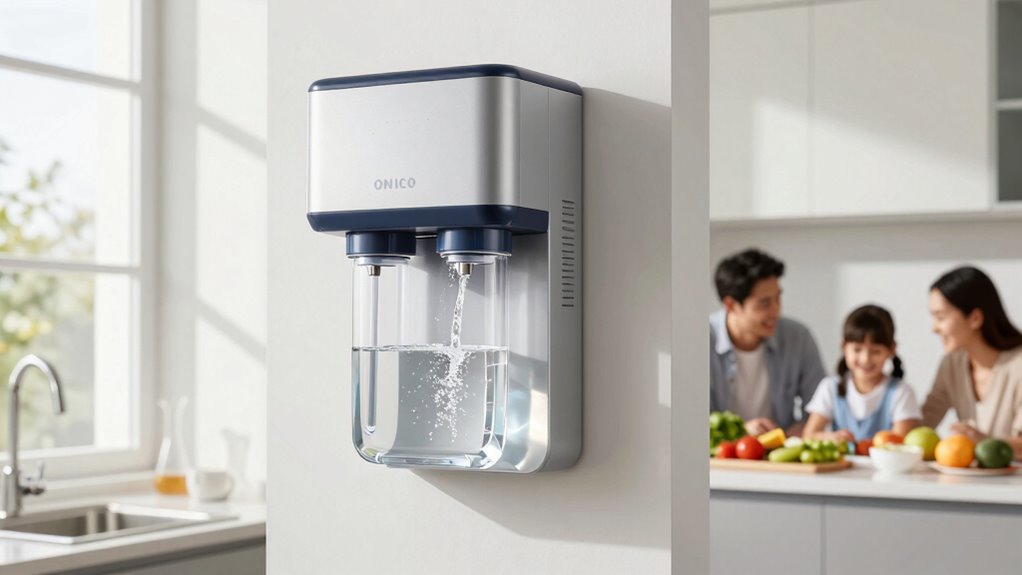
Clean water is essential for your family’s health because it directly impacts your overall well-being. Poor water quality can introduce contaminants, bacteria, and chemicals that threaten your health. Investing in a whole-house water filter improves filtration efficiency, ensuring that every tap provides clean, safe water. When your water is properly filtered, you reduce the risk of waterborne illnesses and exposure to harmful substances. High filtration efficiency means contaminants are effectively removed, giving you peace of mind about your family’s safety. Water quality plays a vital role in maintaining overall health, making reliable filtration systems a smart choice. Regular maintenance and timely filter replacements are crucial for maintaining optimal filter performance. Additionally, understanding the different types of contaminants that can affect water safety helps you choose the most suitable filtration system for your home.
What Are Whole-House Water Filters & How Do They Work?
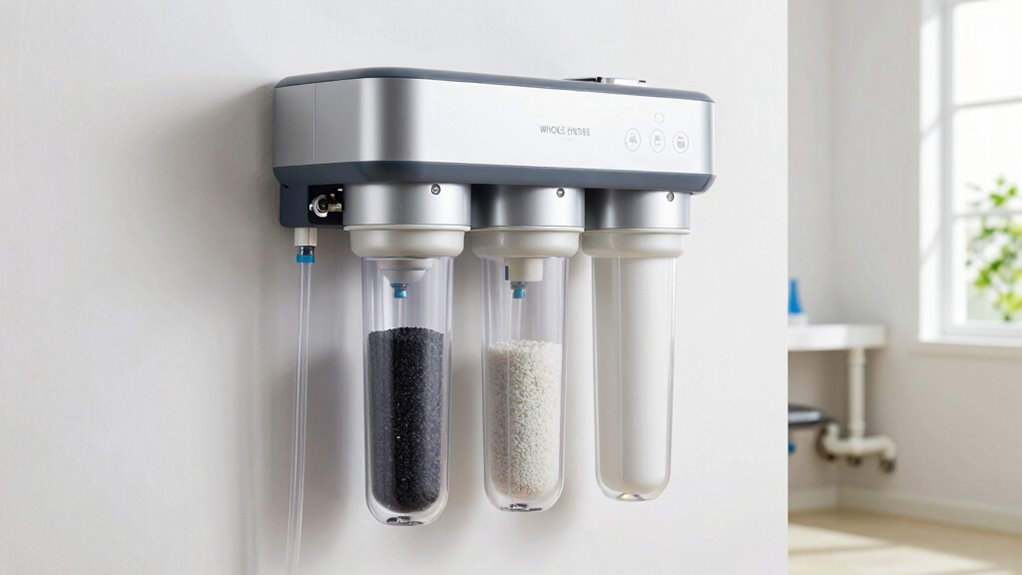
Whole-house water filters are all-encompassing systems installed at your home’s main water entry point, guaranteeing that every tap delivers purified water. These filters work by removing contaminants such as chlorine, sediment, heavy metals, and bacteria, markedly improving water quality throughout your home. As water passes through the filter, it’s treated to reduce impurities, making it safer and more pleasant to drink, bathe in, and use for laundry. It’s important to monitor the filter’s lifespan, as overused filters can become less effective, potentially compromising water quality. Regular maintenance and timely replacement help ensure your whole-house filter continues to protect your family’s health. Understanding how these systems work empowers you to maintain ideal water quality and maximize your investment. Understanding the filtration process can help you better appreciate how contaminants are removed and what maintenance is required to keep your system functioning effectively.
Top Benefits of Whole-House Water Filters for Your Family’s Comfort and Safety
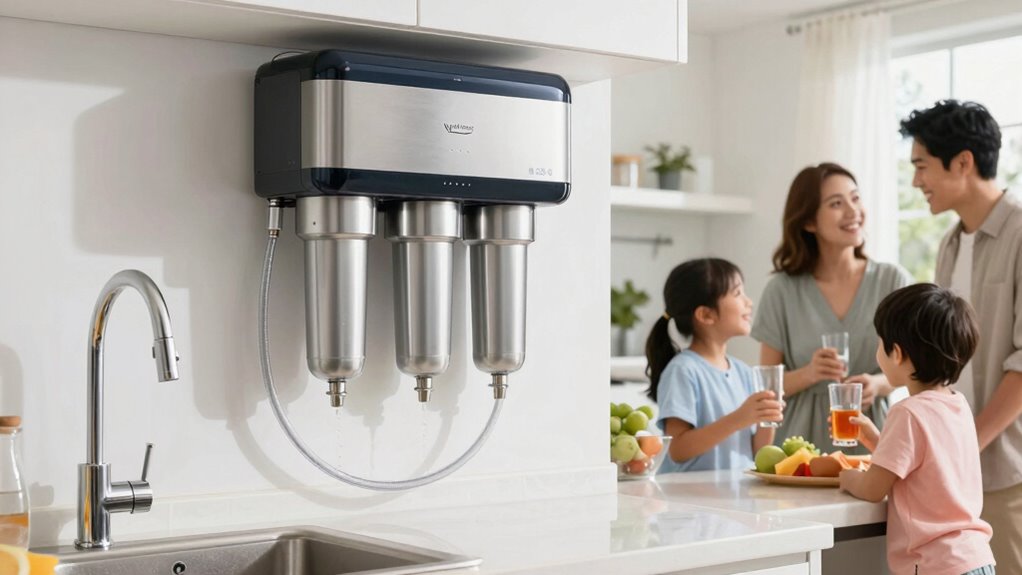
Since your family uses water every day, having a whole-house water filter offers essential benefits that enhance both comfort and safety. Improved water quality means you’ll notice better tasting and smelling water straight from every tap. Advanced filter technology effectively reduces contaminants, ensuring your family’s health isn’t compromised. These systems provide consistent, clean water for drinking, cooking, bathing, and laundry, eliminating the need for multiple point-of-use filters. By investing in a whole-house filter, you also protect your plumbing and appliances from mineral buildup and corrosion, which can cause costly repairs. Furthermore, understanding support vs. boundaries in daily routines helps you maintain a healthy balance while caring for your loved ones. Recognizing the importance of water filtration technology can further improve your household’s overall health. Proper maintenance of these systems ensures they operate efficiently over time, maximizing their benefits and longevity. Maintaining the system’s filter replacement schedule is crucial for optimal performance and continued protection. Overall, this setup offers peace of mind, knowing your family’s water is safe, clean, and reliable—making daily routines more comfortable and worry-free.
Common Contaminants a Whole-House Water Filter Can Remove

A whole-house water filter can effectively remove common contaminants like chlorine and chloramine, improving your water’s taste and smell. It also targets heavy metals such as lead and mercury, ensuring safer drinking water. Additionally, it filters out microbial contaminants, giving you peace of mind about your household’s water quality. Using a car protection system can further enhance your home’s safety and maintenance. Regular maintenance and filter replacements are essential to keep the system functioning optimally and to maintain a safe water supply.
Chlorine and Chloramine
Chlorine and chloramine are common disinfectants added to municipal water supplies to kill bacteria and other pathogens, but they can also cause unpleasant tastes and odors. To guarantee your water is clean and fresh, a whole-house water filter with effective chlorine removal and chloramine filtration is essential. Imagine:
- A clear, odor-free stream flowing from your faucet.
- Better-tasting water without chemical aftertastes.
- Reduced exposure to harsh disinfectants that can irritate skin and eyes.
A quality filter targets these contaminants, making your water safer and more enjoyable. Chlorine removal is crucial for taste and health, while chloramine filtration ensures the chemical byproducts don’t linger. Proper filtration can also help preserve the integrity of your plumbing and appliances over time. Additionally, understanding contaminant removal efficiencies can help you choose the most effective system for your needs. Incorporating advanced filtration technologies can further enhance contaminant removal capabilities, providing even greater assurance of water quality. Regular maintenance and filter lifespan considerations are important to keep your system functioning optimally. Protect your family by choosing a system that effectively tackles both, providing peace of mind every time you turn on the tap. For optimal performance, selecting a filter with proven contaminant removal capabilities is highly recommended.
Heavy Metal Removal
Heavy metals like lead, mercury, arsenic, and cadmium can infiltrate your water supply from aging pipes, industrial runoff, or natural deposits. These contaminants pose serious health risks, especially for children and pregnant women. Whole-house water filters equipped with activated carbon or specialized media can effectively remove many heavy metals. To guarantee your filter is doing its job, regular water testing is essential. Water testing helps identify the presence and levels of industrial pollutants and heavy metals so you can choose the right filtration system. Keep in mind that not all filters remove heavy metals equally, so verify product specifications. Proper filtration can considerably reduce your family’s exposure to these harmful substances, making your water safer to drink and use throughout your home. Additionally, understanding the types of filtration media used in these systems can help you select the most effective option for your needs. Regular maintenance and media replacement are crucial to ensure ongoing heavy metal removal efficiency. Incorporating testing results interpretation can further optimize your filtration setup and ensure your water quality remains high. Recognizing the importance of filter performance assessment can help you maintain optimal contaminant removal over time.
Microbial Contaminant Filtration
Wondering what microbial contaminants your whole-house water filter can remove? These filters are designed to target various microbes, ensuring safer water for your family. They can effectively reduce:
- Bacteria that cause illnesses, preventing infection and illness
- Viruses that resist typical disinfection, thanks to advanced filtration
- Biofilms that form on surfaces, aiding in biofilm control and reducing microbial resistance
- Some filters also target regional flavors and other organic compounds, enhancing water quality and taste. Additionally, microbial removal mechanisms play a key role in ensuring comprehensive protection against diverse microbial contaminants. Understanding filtration technology can help you choose the most effective system for your household needs, including how contaminant removal is achieved through various methods. Recognizing the importance of filter maintenance can also extend the lifespan and effectiveness of your water treatment system.
Which Filter Types Are Best for Different Contaminants?

Choosing the right filter type depends on the specific contaminants you want to remove from your water. For heavy metals like lead and mercury, activated carbon filters excel at adsorption, improving both taste and safety. If your water has high levels of nitrates or pesticides, reverse osmosis systems are effective at filtering these out. To maintain proper pH balance and mineral content, mineralization filters can add beneficial minerals back into the water after filtration. For sediment and particulate matter, sediment filters are your best choice, preventing clogging and protecting other filter stages. Additionally, some contaminants require specialized filters, so identifying your water’s specific issues is key. Conducting a comprehensive water test can help you determine exactly which contaminants need to be addressed. Incorporating traditional Indonesian decor masks can also inspire a holistic approach to creating a healthy and culturally enriching home environment. Selecting the appropriate filter guarantees your water remains safe, balanced, and healthy for your family. Additionally, implementing a holistic SEO approach can help ensure your water quality information reaches the right audience effectively.
How Much Do Whole-House Water Filters Cost, and What Maintenance Is Needed?

Whole-house water filters vary widely in cost, depending on the type, size, and features you choose. Expect to spend anywhere from a few hundred to several thousand dollars for installation. As you consider costs, keep in mind:
- The water filter lifespan, which determines how often you’ll need replacements.
- The filter replacement costs, which can range from $20 to $100 or more per cartridge.
- The ongoing maintenance, including periodic system checks and filter changes to guarantee peak performance.
Regular filter replacements maintain water quality and protect your plumbing. Typically, filters last 6 to 12 months, but high-quality systems may last longer. Budget for both the initial purchase and ongoing upkeep to keep your water safe and clean.
Are Whole-House Water Filters Worth It? Pros and Cons
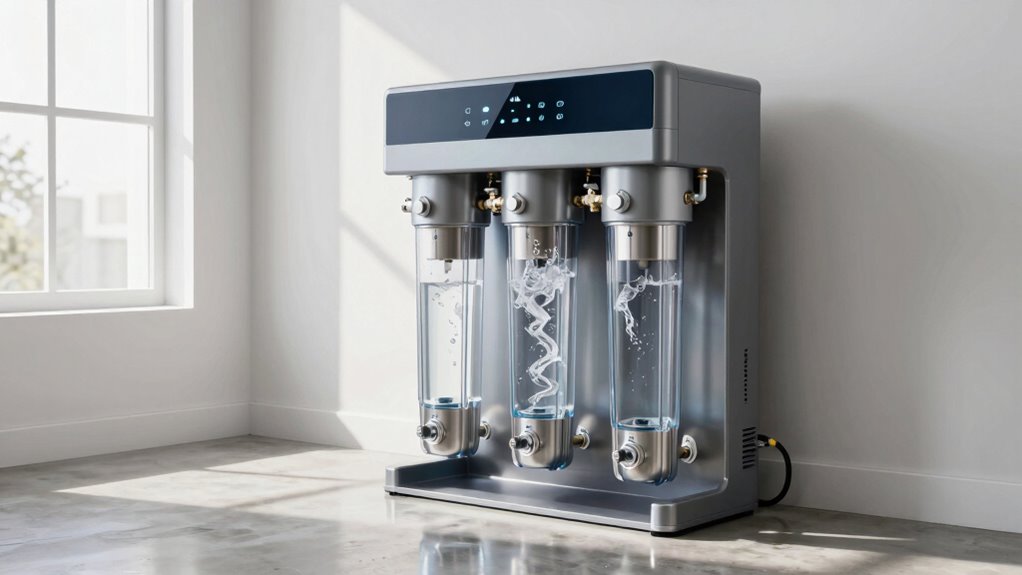
Considering the investment involved in installing a whole-house water filter, it’s important to weigh the benefits against potential drawbacks. A clear cost comparison shows that upfront expenses vary by brand reputation and system complexity, but long-term savings on bottled water and repairs can be significant. Whole-house filters effectively remove contaminants, making your water safer for your family. However, some systems require ongoing maintenance and filter replacements, which add to the overall cost. While reputable brands often guarantee better performance and durability, they may also come with higher prices. Ultimately, if you prioritize water quality and have the budget, a whole-house water filter can be a worthwhile investment. But, if costs outweigh the benefits for your situation, you might consider point-of-use options instead.
Installing and Maintaining Your Whole-House Water Filter System

Installing your whole-house water filter correctly guarantees it works effectively and lasts longer. Regular maintenance, like changing filters and checking for leaks, keeps your system running smoothly. When issues arise, troubleshooting common problems can help you fix them quickly and avoid costly repairs.
Proper Installation Procedures
To guarantee your whole-house water filter functions effectively, proper installation is vital. Focus on installation safety and correct filter placement to ensure maximum performance. First, turn off your main water supply to avoid leaks or flooding. Second, select a spot with easy access for future maintenance, ideally near the main water line. Third, carefully connect the filter housing, ensuring all fittings are tight and secure to prevent leaks. Remember, correct filter placement is essential—install the filter upright in a clean, stable location. Follow manufacturer instructions closely, and double-check all connections. Proper installation not only safeguards your home but also guarantees your family receives clean, safe water. Take your time; a well-installed system works efficiently and lasts longer.
Routine Maintenance Steps
Regular maintenance keeps your whole-house water filter system working efficiently and extends its lifespan. To do this, follow the manufacturer’s guidelines for routine checks and filter replacements. Keep an eye on the water quality and flow rate, as changes may indicate it’s time for a new filter. Establish a replacement scheduling based on your system’s specifications, typically every 3 to 6 months, depending on usage and water quality. Regularly inspect for leaks, corrosion, or blockages, and clean any pre-filters or sediment traps. Proper maintenance ensures your water filter performs at its best, providing clean water for your family. Staying consistent with these steps helps maximize your system’s lifespan and guarantees reliable, safe water every day.
Troubleshooting Common Issues
Even with proper installation and routine maintenance, issues can still arise with your whole-house water filter system. You might notice a drop in water pressure, which can be frustrating. To troubleshoot, start by checking these common problems:
- Clogged Filter: A buildup of sediment reduces flow, impacting water pressure and shortening filter lifespan. Replace or clean the filter as needed.
- Incorrect Installation: Poor connections can cause leaks or pressure drops. Ensure all fittings are tight and correctly aligned.
- System Bypass or Damage: A bypass valve left open or a damaged component can lead to inconsistent water flow. Inspect and repair or replace faulty parts.
Addressing these issues keeps your system running smoothly, maintaining ideal water pressure and prolonging filter lifespan.
Questions to Ask When Choosing a Whole-House Water Filter
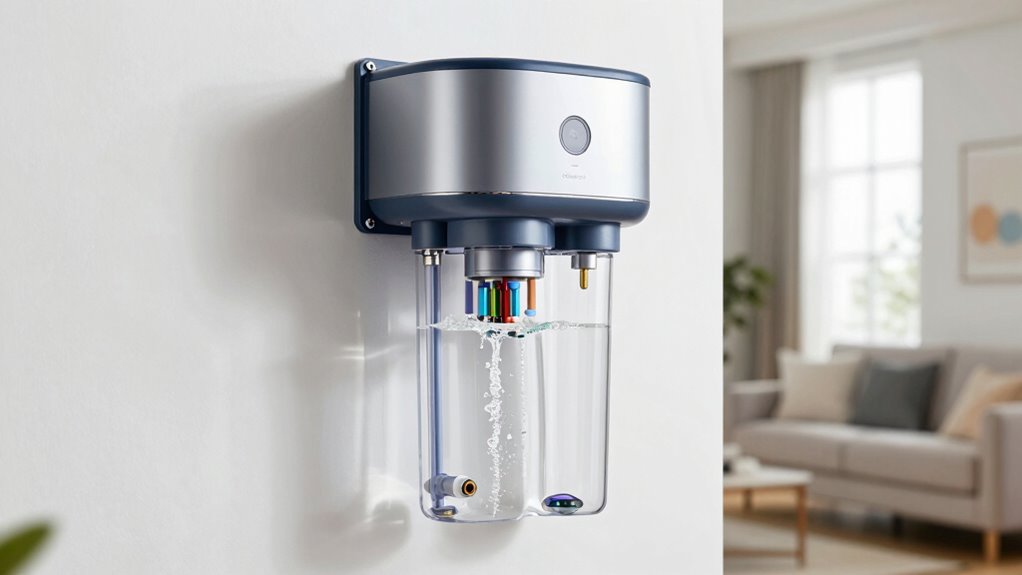
Choosing the right whole-house water filter requires asking the right questions upfront. Start by considering your water quality—what contaminants are present and what needs removal? Ask if the filter is effective against specific pollutants like chlorine, heavy metals, or bacteria. Equally important is understanding the filter lifespan—how long it lasts before needing replacement. Find out how often you’ll need to change the filter and if replacement parts are easily accessible. Consider the flow rate to ensure your household’s water demand is met without sacrificing pressure. Also, inquire about maintenance requirements and certifications to verify the filter’s effectiveness. Asking these questions helps you select a system that provides safe, clean water for your family while minimizing ongoing costs and effort.
Frequently Asked Questions
How Do I Know if My Water Has Harmful Contaminants?
You can determine if your water has harmful contaminants through contaminant detection and water quality testing. Start by reviewing your local water quality report, which provides details on common pollutants. For thorough results, consider hiring a professional to perform water testing or use at-home testing kits. Regular testing helps you identify any contaminants early, ensuring your family’s water remains safe and clean.
Can a Whole-House Filter Affect Water Pressure?
Imagine a family notices water pressure fluctuations after installing a whole-house filter. Yes, it can affect water pressure if the filter becomes clogged or isn’t maintained properly. To prevent this, follow filter maintenance tips like regular replacements and checking for blockages. This guarantees consistent water flow and avoids pressure drops, keeping your home’s water system running smoothly while providing clean, safe water for your family.
What Is the Lifespan of Different Filter Components?
The lifespan of filter components varies; pre-filters typically last 3 to 6 months, while activated carbon filters may need replacement every 6 to 12 months. Reverse osmosis membranes last about 2 to 3 years, and UV sterilizers often need annual bulb replacements. To guarantee peak performance, follow the manufacturer’s recommended replacement schedule and regularly check filter components, replacing them promptly to maintain clean, safe water for your family.
Are There Eco-Friendly or Sustainable Filter Options?
Think of eco-friendly options as the green shoots of sustainable filtration. You can choose filters made from eco-friendly materials like coconut shell carbon or biodegradable resins. These options reduce environmental impact and support a healthier planet. By selecting sustainable filtration, you’re not only protecting your family’s water but also contributing to a cleaner Earth. Embrace these greener choices to guarantee safety and sustainability go hand in hand in your home.
How Often Should I Replace or Service My Water Filter System?
You should replace or service your water filter system according to the recommended replacement schedule, usually every 6 to 12 months. Regular filter maintenance is essential to guarantee peak performance and water quality. Keep an eye on your filter’s condition, and if you notice reduced water flow or odd tastes, it’s time for a replacement. Staying on top of your filter maintenance helps protect your family’s health and maintains system efficiency.
Conclusion
Think of a whole-house water filter as the backbone of your family’s health, holding everything together like the roots of a mighty tree. When you choose the right system and keep it maintained, you’re nurturing a safe, pure water source that supports your loved ones every day. Investing in clean water is like planting seeds for a healthier future—strong, resilient, and ready to grow. Your family’s well-being depends on it.
Cold & flu season Picks
humidifiers
As an affiliate, we earn on qualifying purchases.